
Search
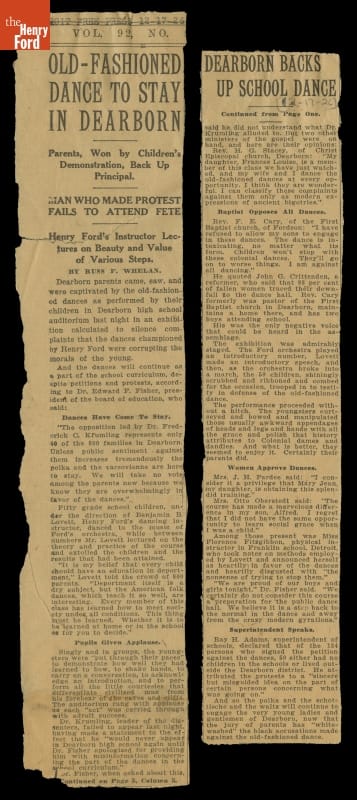
- Newspaper Article, "Old-Fashioned Dance to Stay in Dearborn...Dearborn Backs Up School Dance," 1926 - As Henry Ford extended his traditional American dance classes to local Dearborn schoolchildren, some parents grew alarmed--they weren't sure they approved of boys and girls dancing together. A dance demonstration by the children soon set most of the parents' minds at ease. They quickly realized the benefit of having their children learn these old-time dances--and the good manners that went along with them.
- December 17, 1926
- Collections - Artifact
Newspaper Article, "Old-Fashioned Dance to Stay in Dearborn...Dearborn Backs Up School Dance," 1926
As Henry Ford extended his traditional American dance classes to local Dearborn schoolchildren, some parents grew alarmed--they weren't sure they approved of boys and girls dancing together. A dance demonstration by the children soon set most of the parents' minds at ease. They quickly realized the benefit of having their children learn these old-time dances--and the good manners that went along with them.
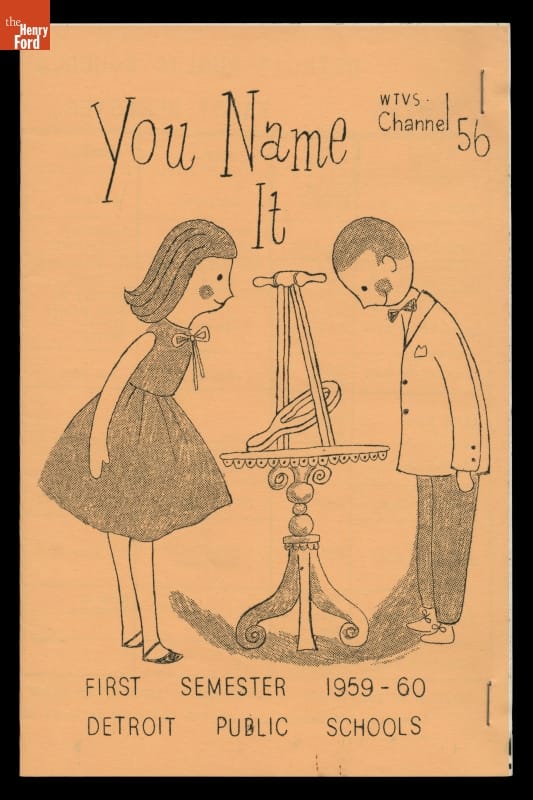
- "WTVS Channel 56 'You Name It,' 1st Semester 1959-1960, Detroit Public Schools" - Beginning in the 1950s, Henry Ford Museum and Greenfield Village partnered with WTVS, Detroit's local educational television station, to bring American history into the classroom. Marion Corwell, the museum's Manager of Educational Television, produced and hosted <EM>You Name It</EM> -- a half-hour quiz show. Students from grades 5 to 8 tried to identify and give the historical significance of objects from the museum's collection.
- 1959-1960
- Collections - Artifact
"WTVS Channel 56 'You Name It,' 1st Semester 1959-1960, Detroit Public Schools"
Beginning in the 1950s, Henry Ford Museum and Greenfield Village partnered with WTVS, Detroit's local educational television station, to bring American history into the classroom. Marion Corwell, the museum's Manager of Educational Television, produced and hosted You Name It -- a half-hour quiz show. Students from grades 5 to 8 tried to identify and give the historical significance of objects from the museum's collection.
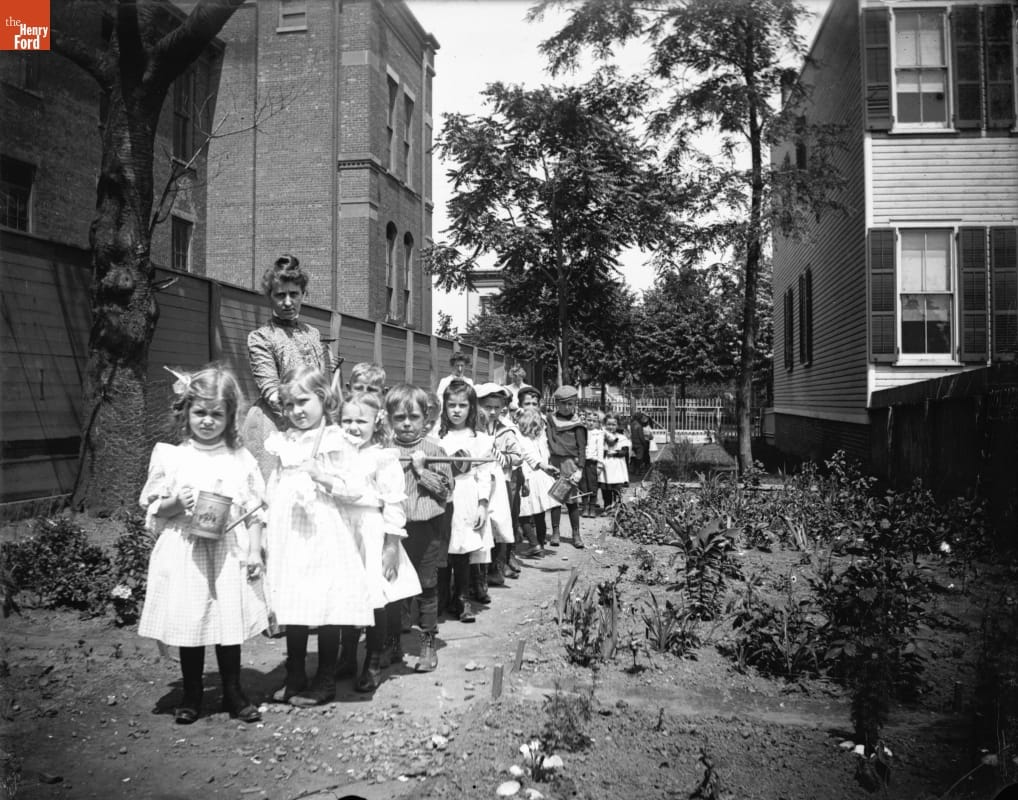
- Children and Teacher outside Public School 65, Brooklyn, New York, 1890-1915 - In 1890, Jenny Young Chandler, 25 years old and recently widowed, began working for the <EM>New York Herald</EM>. As a photojournalist and feature writer, Chandler captured life in Brooklyn, New York, and vicinity. By 1922, the time of her death, she had produced over 800 glass plate negatives. Her sensitive, insightful photographs depict people from all walks of life and the world in which they lived.
- 1890-1915
- Collections - Artifact
Children and Teacher outside Public School 65, Brooklyn, New York, 1890-1915
In 1890, Jenny Young Chandler, 25 years old and recently widowed, began working for the New York Herald. As a photojournalist and feature writer, Chandler captured life in Brooklyn, New York, and vicinity. By 1922, the time of her death, she had produced over 800 glass plate negatives. Her sensitive, insightful photographs depict people from all walks of life and the world in which they lived.
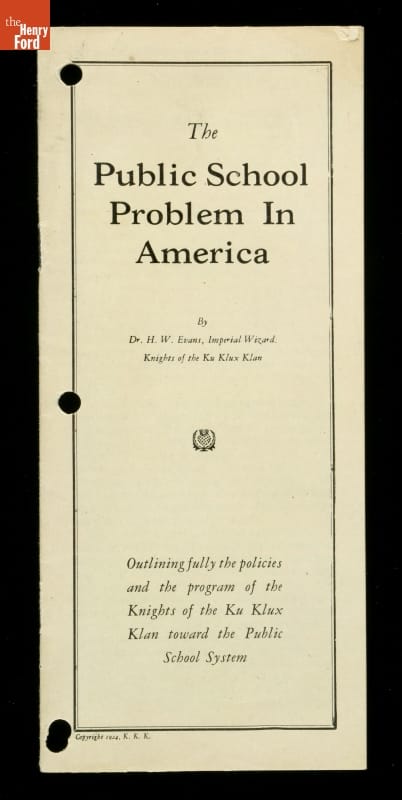
- "The Public School Problem in America," 1924 - This 1924 Ku Klux Klan-authored pamphlet attacked the problems of the American public educational system -- lack of school funding and high rates of illiteracy. The pamphlet also stirred up fears about immigrants and Catholics -- targets of Klan assaults. These groups, the Klan believed, were not becoming assimilated into an American way of life because of poor schooling or the role of church-dominated institutions.
- 1924
- Collections - Artifact
"The Public School Problem in America," 1924
This 1924 Ku Klux Klan-authored pamphlet attacked the problems of the American public educational system -- lack of school funding and high rates of illiteracy. The pamphlet also stirred up fears about immigrants and Catholics -- targets of Klan assaults. These groups, the Klan believed, were not becoming assimilated into an American way of life because of poor schooling or the role of church-dominated institutions.
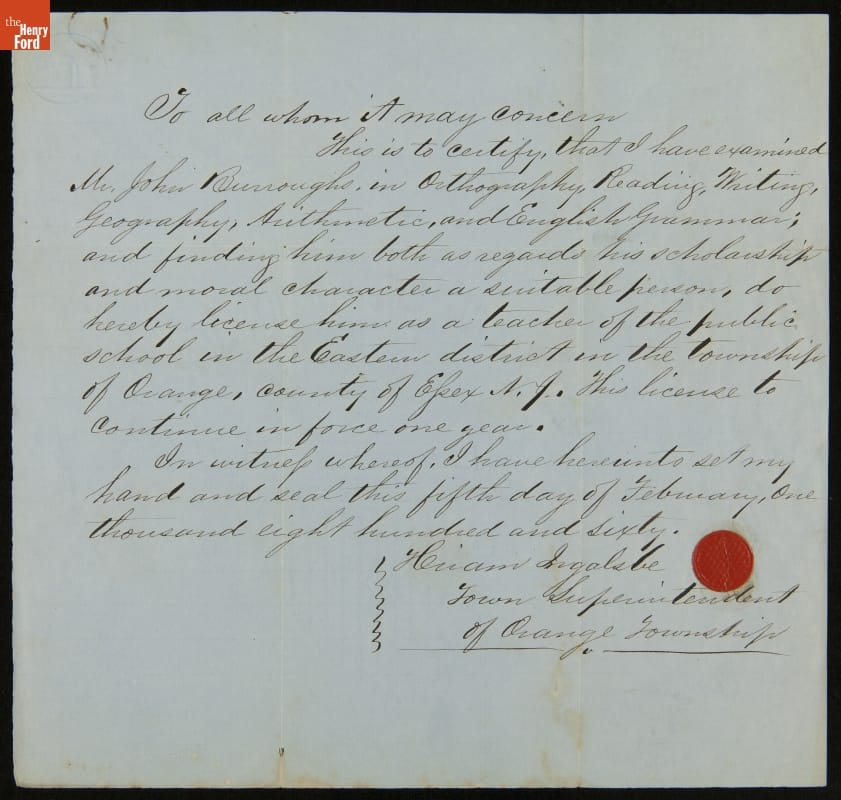
- Teaching Certificate for John Burroughs, from Orange Township, New Jersey, February 7, 1860 - Before John Burroughs (1837-1921) became an internationally known naturalist and writer he earned a living as a teacher. In 1860, Burroughs -- twenty-three, married and an aspiring writer -- taught briefly in Essex County, New Jersey. Later that year he wrote an essay that was published in the <EM>Atlantic Monthly</EM>. The article gained widespread recognition and changed the course of Burroughs's life.
- February 05, 1860
- Collections - Artifact
Teaching Certificate for John Burroughs, from Orange Township, New Jersey, February 7, 1860
Before John Burroughs (1837-1921) became an internationally known naturalist and writer he earned a living as a teacher. In 1860, Burroughs -- twenty-three, married and an aspiring writer -- taught briefly in Essex County, New Jersey. Later that year he wrote an essay that was published in the Atlantic Monthly. The article gained widespread recognition and changed the course of Burroughs's life.
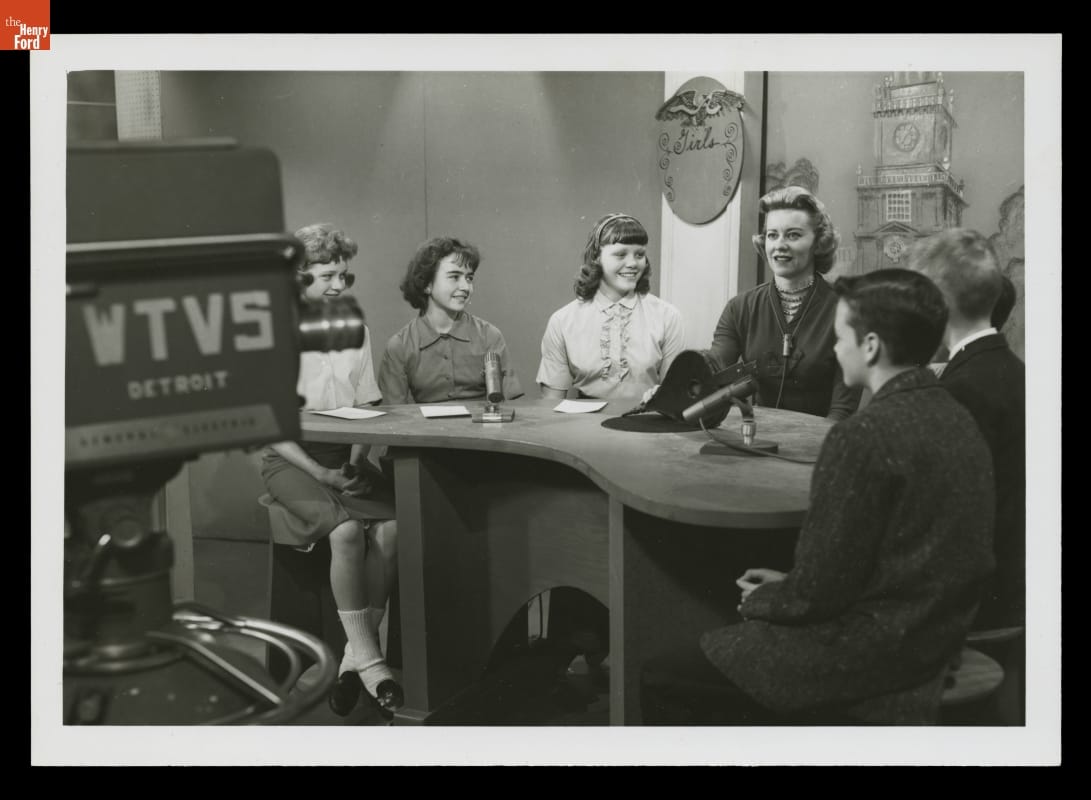
- Host Marion Corwell and Sixth-Graders on Educational TV Show, "You Name It," WTVS-Detroit, March 1960 - Beginning in the 1950s, Henry Ford Museum and Greenfield Village partnered with WTVS, Detroit's local educational television station, to bring American history into the classroom. Marion Corwell, the museum's Manager of Educational Television, produced and hosted <EM>You Name It</EM> -- a half-hour quiz show. Students from grades 5 to 8 tried to identify and give the historical significance of objects from the museum's collection.
- March 01, 1960
- Collections - Artifact
Host Marion Corwell and Sixth-Graders on Educational TV Show, "You Name It," WTVS-Detroit, March 1960
Beginning in the 1950s, Henry Ford Museum and Greenfield Village partnered with WTVS, Detroit's local educational television station, to bring American history into the classroom. Marion Corwell, the museum's Manager of Educational Television, produced and hosted You Name It -- a half-hour quiz show. Students from grades 5 to 8 tried to identify and give the historical significance of objects from the museum's collection.
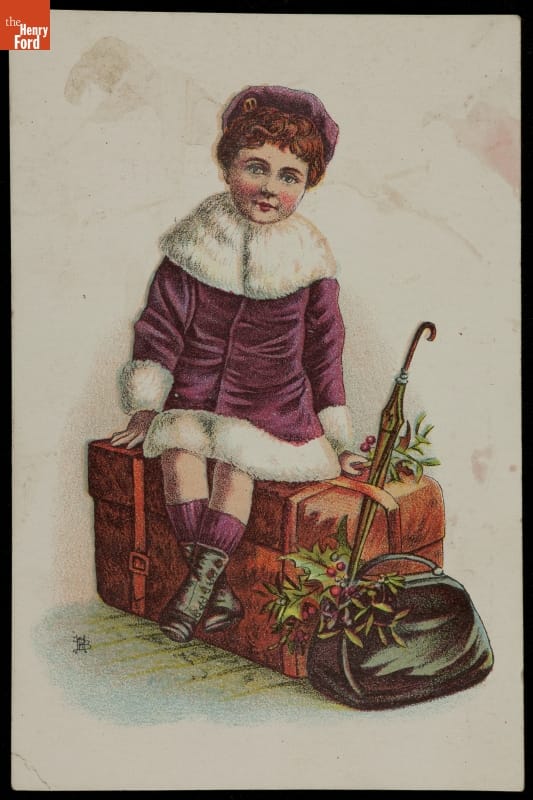
- Trade Card for Lee's Drug Store, Detroit, Michigan, circa 1885 - Trade cards were advertisements found in product packages or distributed by local merchants. This card advertises textbooks and other school supplies at Lee's Drug Store. Textbooks were not provided by schools, even in large cities like Detroit. Books were passed down as students advanced and students often shared books. Note that these prices are in cents, not dollars.
- circa 1885
- Collections - Artifact
Trade Card for Lee's Drug Store, Detroit, Michigan, circa 1885
Trade cards were advertisements found in product packages or distributed by local merchants. This card advertises textbooks and other school supplies at Lee's Drug Store. Textbooks were not provided by schools, even in large cities like Detroit. Books were passed down as students advanced and students often shared books. Note that these prices are in cents, not dollars.
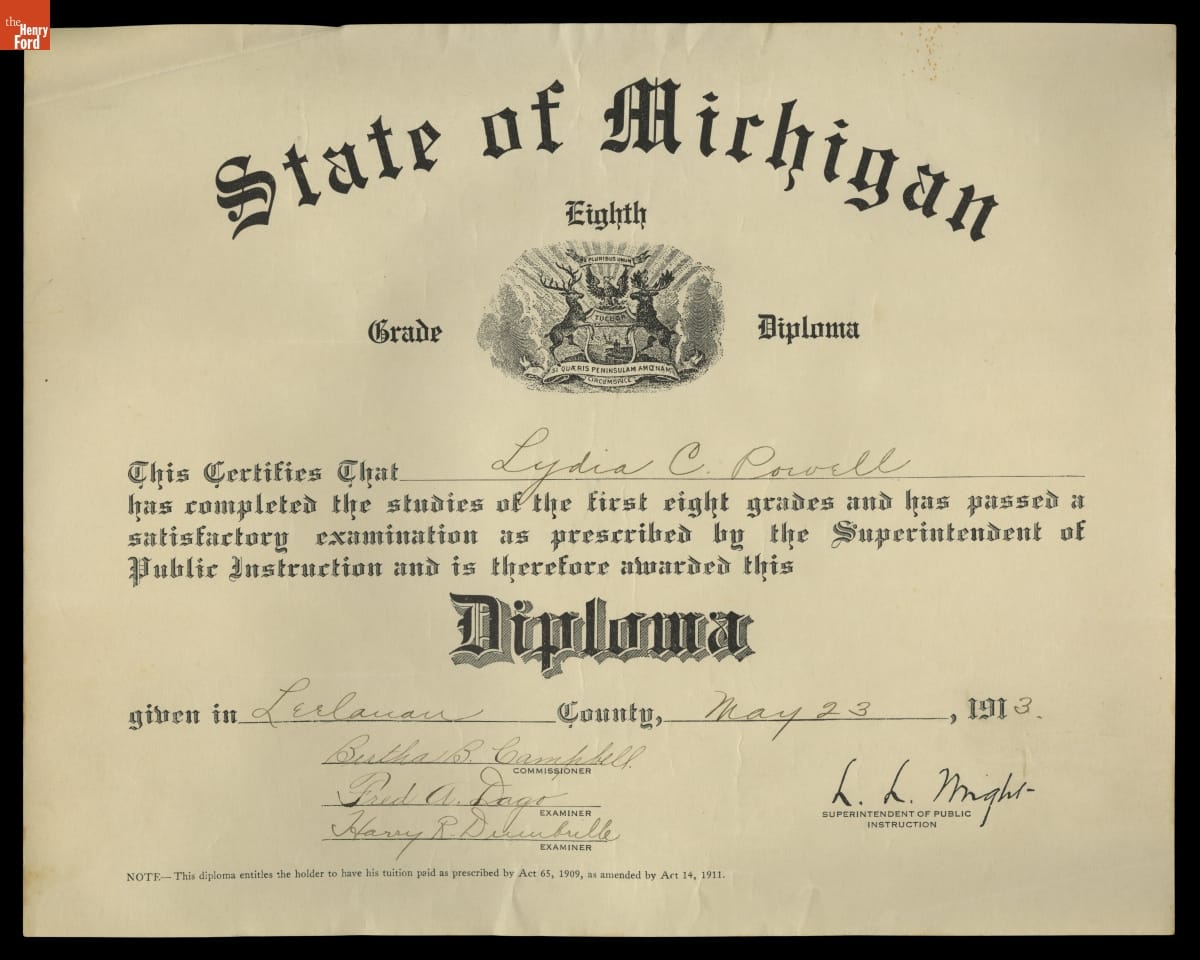
- State of Michigan Eighth Grade Diploma Awarded to Lydia C. Powell, May 23, 1913 -
- May 23, 1913
- Collections - Artifact
State of Michigan Eighth Grade Diploma Awarded to Lydia C. Powell, May 23, 1913
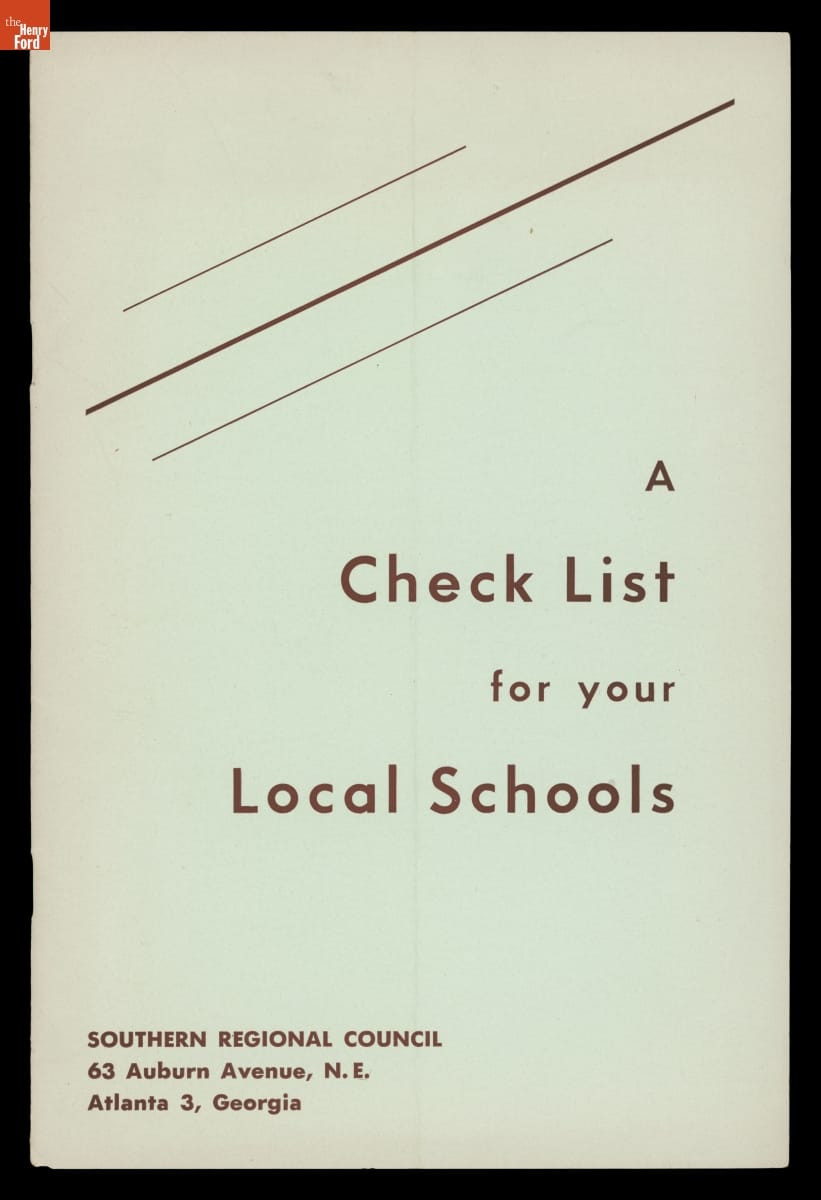
- "A Checklist for Your Local Schools," September 1953 -
- September 01, 1953
- Collections - Artifact
"A Checklist for Your Local Schools," September 1953
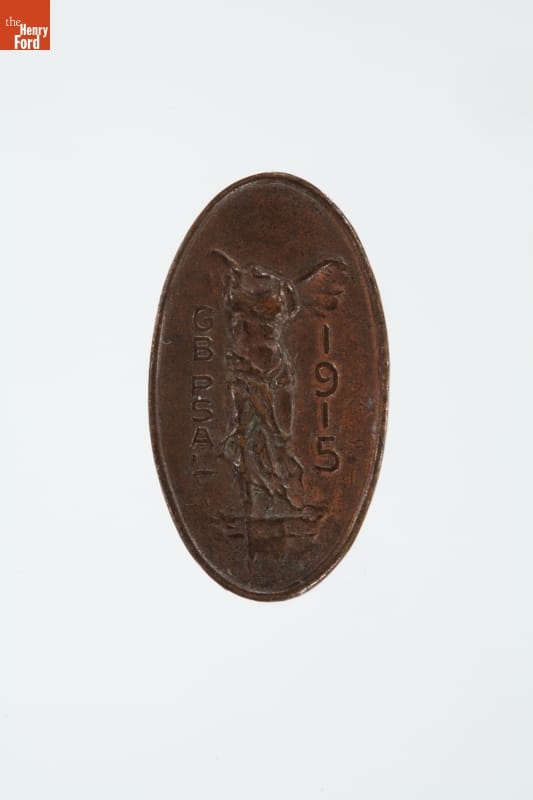
- Public Schools Athletic League Pin, 1915 - The Panama-Pacific International Exposition celebrated the completion of the Panama Canal and the 400th anniversary of the discovery of the Pacific Ocean. Nearly nineteen million people visited the fair in San Francisco fair throughout 1915. This nearly year-long exhibition featured many special events, including several championships of the Public Schools Athletic League.
- 1915
- Collections - Artifact
Public Schools Athletic League Pin, 1915
The Panama-Pacific International Exposition celebrated the completion of the Panama Canal and the 400th anniversary of the discovery of the Pacific Ocean. Nearly nineteen million people visited the fair in San Francisco fair throughout 1915. This nearly year-long exhibition featured many special events, including several championships of the Public Schools Athletic League.