
Search
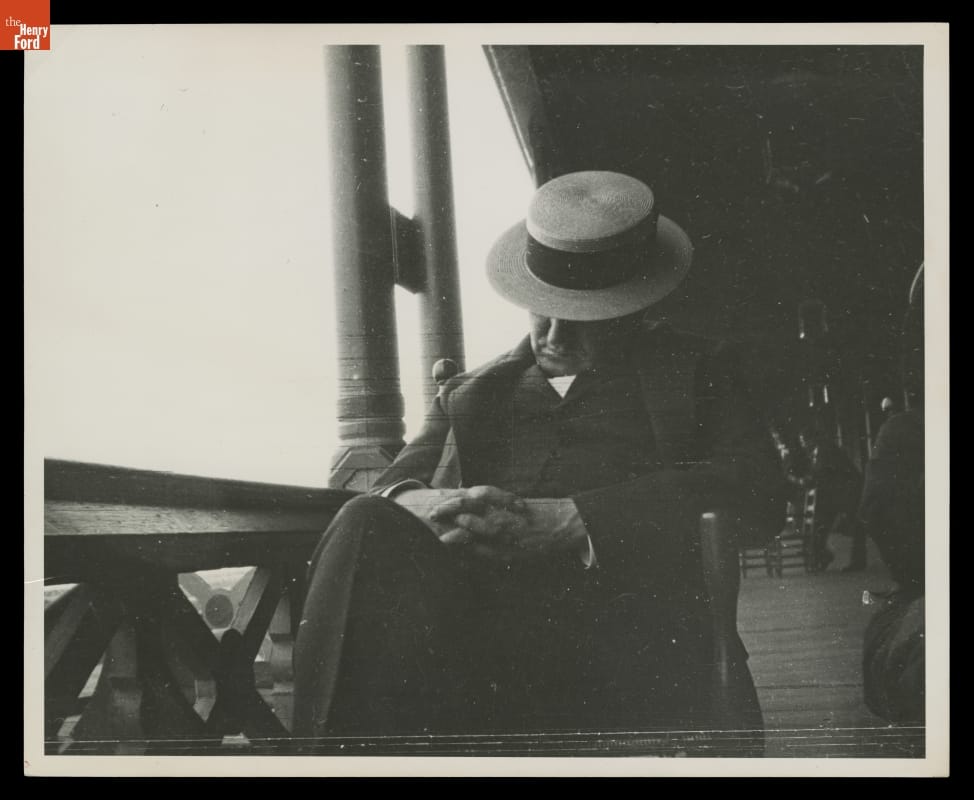
- Thomas Edison Asleep at the Oriental Hotel, Manhattan Beach, Snapshot by Henry Ford, 1896 - Henry Ford attended the 1896 meeting of the Association of Edison Illuminating Companies in Brooklyn, New York, with camera in tow. During the convention, Ford captured several candid shots of his boyhood hero, Thomas Edison. He also had a personal encounter with Edison at a banquet -- a brief but encouraging landmark in the ambitious engineer's life.
- 1896
- Collections - Artifact
Thomas Edison Asleep at the Oriental Hotel, Manhattan Beach, Snapshot by Henry Ford, 1896
Henry Ford attended the 1896 meeting of the Association of Edison Illuminating Companies in Brooklyn, New York, with camera in tow. During the convention, Ford captured several candid shots of his boyhood hero, Thomas Edison. He also had a personal encounter with Edison at a banquet -- a brief but encouraging landmark in the ambitious engineer's life.
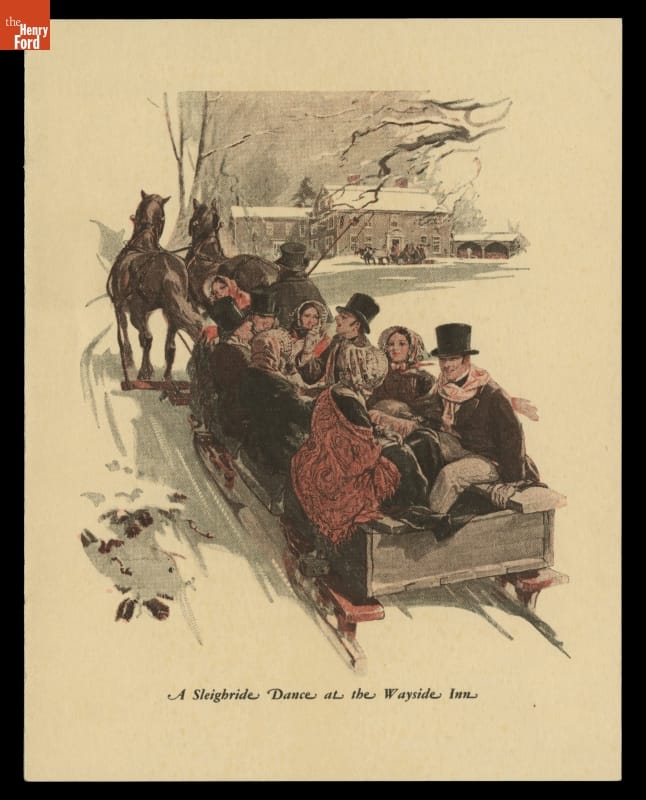
- Souvenir Card, "A Sleighride Dance at the Wayside Inn," 1927 -
- January 18, 1927
- Collections - Artifact
Souvenir Card, "A Sleighride Dance at the Wayside Inn," 1927
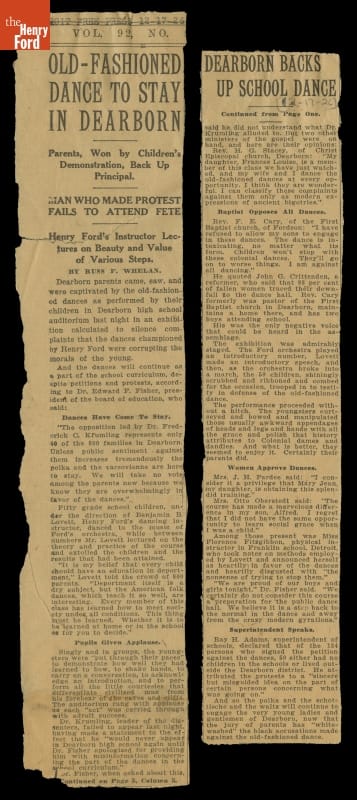
- Newspaper Article, "Old-Fashioned Dance to Stay in Dearborn...Dearborn Backs Up School Dance," 1926 - As Henry Ford extended his traditional American dance classes to local Dearborn schoolchildren, some parents grew alarmed--they weren't sure they approved of boys and girls dancing together. A dance demonstration by the children soon set most of the parents' minds at ease. They quickly realized the benefit of having their children learn these old-time dances--and the good manners that went along with them.
- December 17, 1926
- Collections - Artifact
Newspaper Article, "Old-Fashioned Dance to Stay in Dearborn...Dearborn Backs Up School Dance," 1926
As Henry Ford extended his traditional American dance classes to local Dearborn schoolchildren, some parents grew alarmed--they weren't sure they approved of boys and girls dancing together. A dance demonstration by the children soon set most of the parents' minds at ease. They quickly realized the benefit of having their children learn these old-time dances--and the good manners that went along with them.
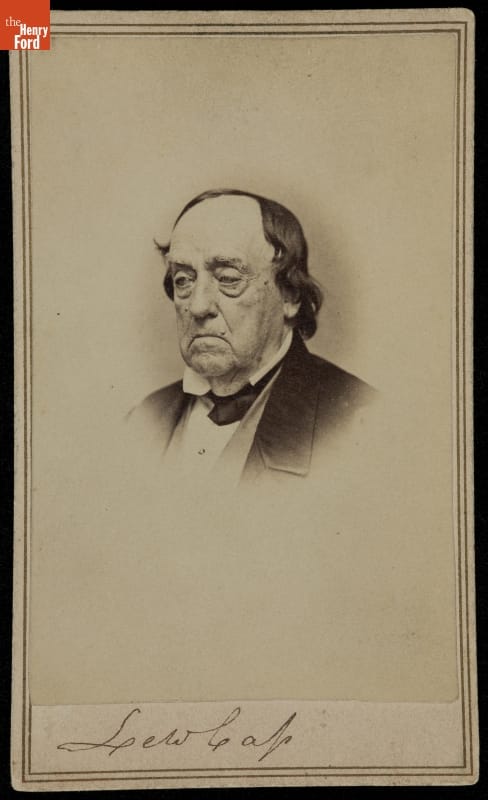
- Lewis Cass, circa 1860 - Politician Lewis Cass, who served from 1857 to 1860 as Secretary of State under President James Buchanan, posed for this carte-de-visite in a professional photographer's studio around 1860. Cartes-de-visite, small photographic prints on cardboard stock, remained popular from the Civil War in the 1860s through the 1880s. Americans commonly collected and exchanged them to commemorate family members or celebrities.
- circa 1860
- Collections - Artifact
Lewis Cass, circa 1860
Politician Lewis Cass, who served from 1857 to 1860 as Secretary of State under President James Buchanan, posed for this carte-de-visite in a professional photographer's studio around 1860. Cartes-de-visite, small photographic prints on cardboard stock, remained popular from the Civil War in the 1860s through the 1880s. Americans commonly collected and exchanged them to commemorate family members or celebrities.
- Amelia Earhart at London's Hyde Park Hotel, June 1928 - After her June 1928 transatlantic flight with Wilmer Stultz and Louis Gordon, in which she became the first woman to fly the Atlantic, Amelia Earhart was given a hero's welcome wherever she went. Receptions in Southampton and London, England, were followed by a ticker-tape parade through New York City and a visit with President Calvin Coolidge at the White House.
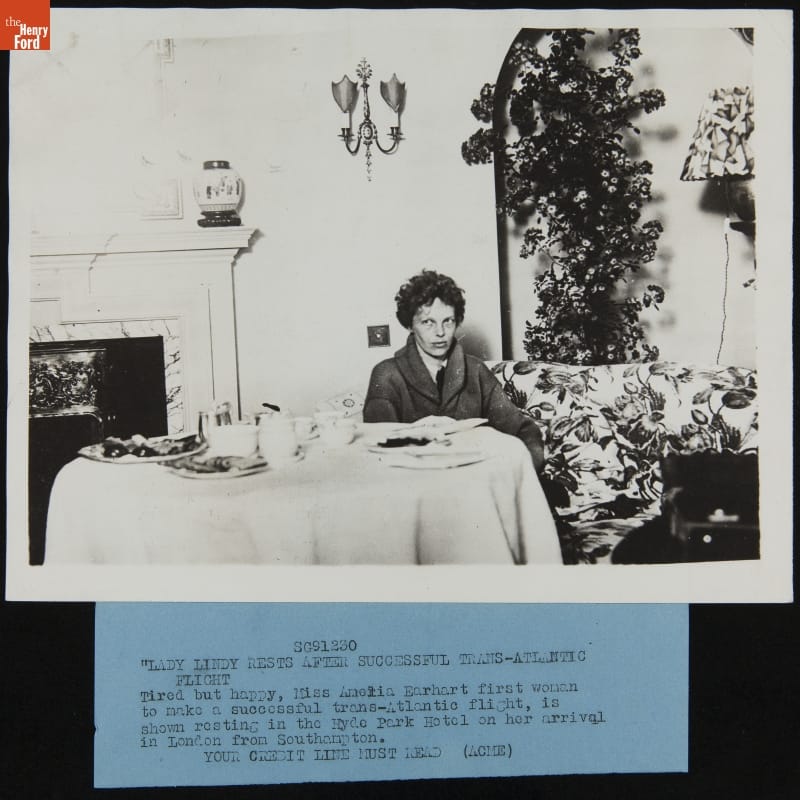
- June 01, 1928
- Collections - Artifact
Amelia Earhart at London's Hyde Park Hotel, June 1928
After her June 1928 transatlantic flight with Wilmer Stultz and Louis Gordon, in which she became the first woman to fly the Atlantic, Amelia Earhart was given a hero's welcome wherever she went. Receptions in Southampton and London, England, were followed by a ticker-tape parade through New York City and a visit with President Calvin Coolidge at the White House.
- Employees with the 4,000,000th Ford Tractor and a Fordson Tractor at the Highland Park Plant, 1972 -
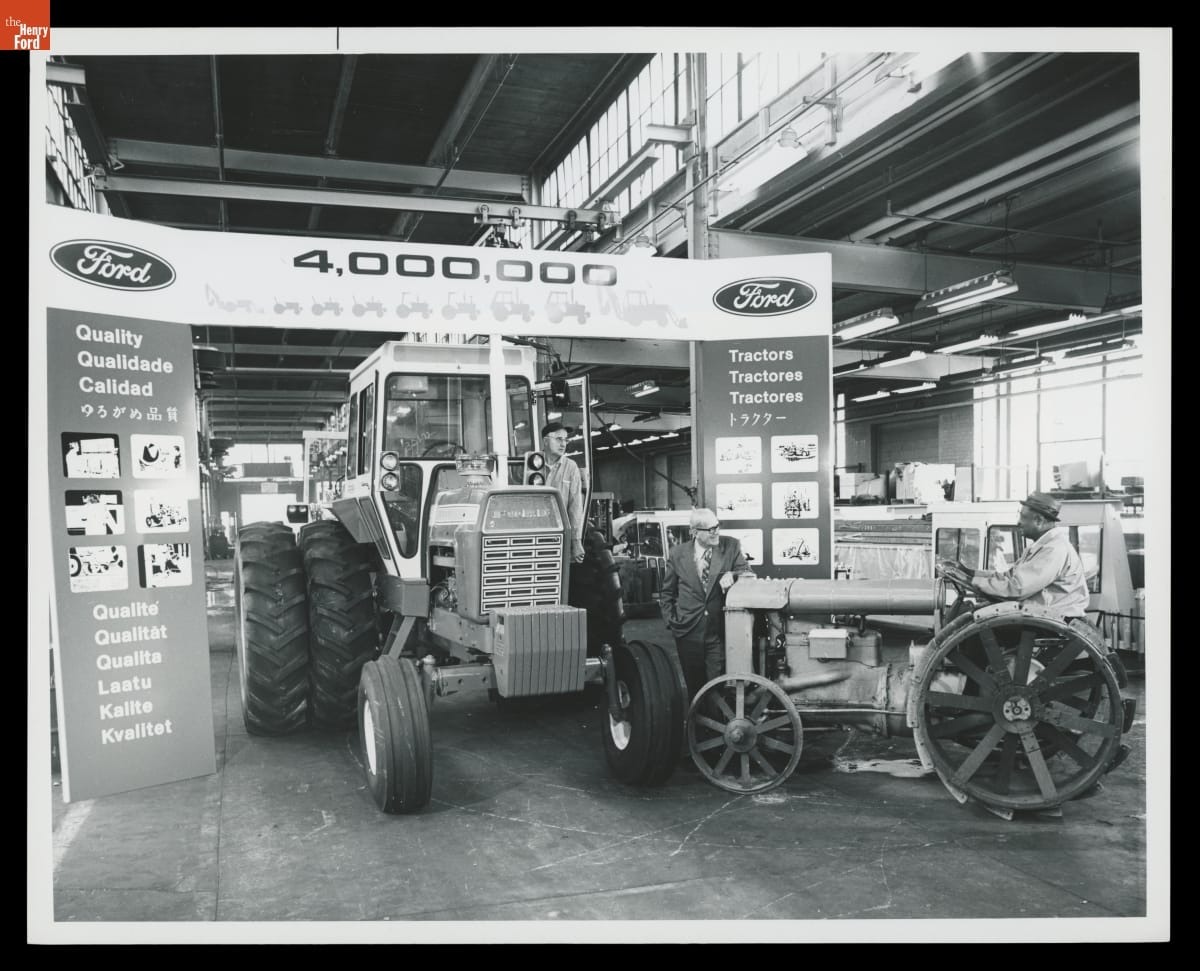
- 1972
- Collections - Artifact
Employees with the 4,000,000th Ford Tractor and a Fordson Tractor at the Highland Park Plant, 1972
- Public Service Poster, "Say Howdy without the Hands," 2020 -
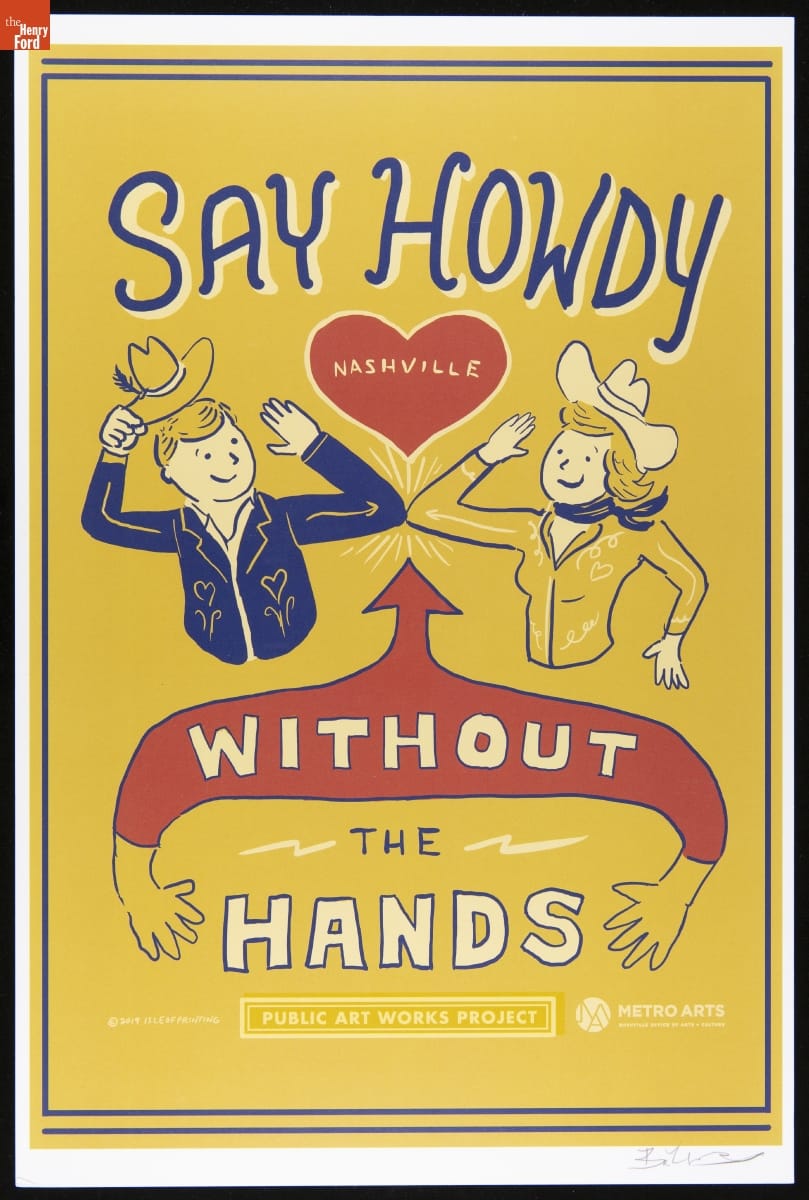
- 2020
- Collections - Artifact
Public Service Poster, "Say Howdy without the Hands," 2020
- Airplane Flying over Dearborn Inn, Dearborn, Michigan, 1931 - Edsel and Henry Ford conceived the Dearborn Inn as a business opportunity, a first-class hotel hosting pilots and travelers transiting through the adjacent Ford Airport. It is noted as one of the first airport hotels. It also served traveling Ford employees and dealers, and visitors to the nearby Edison Institute (later renamed The Henry Ford).
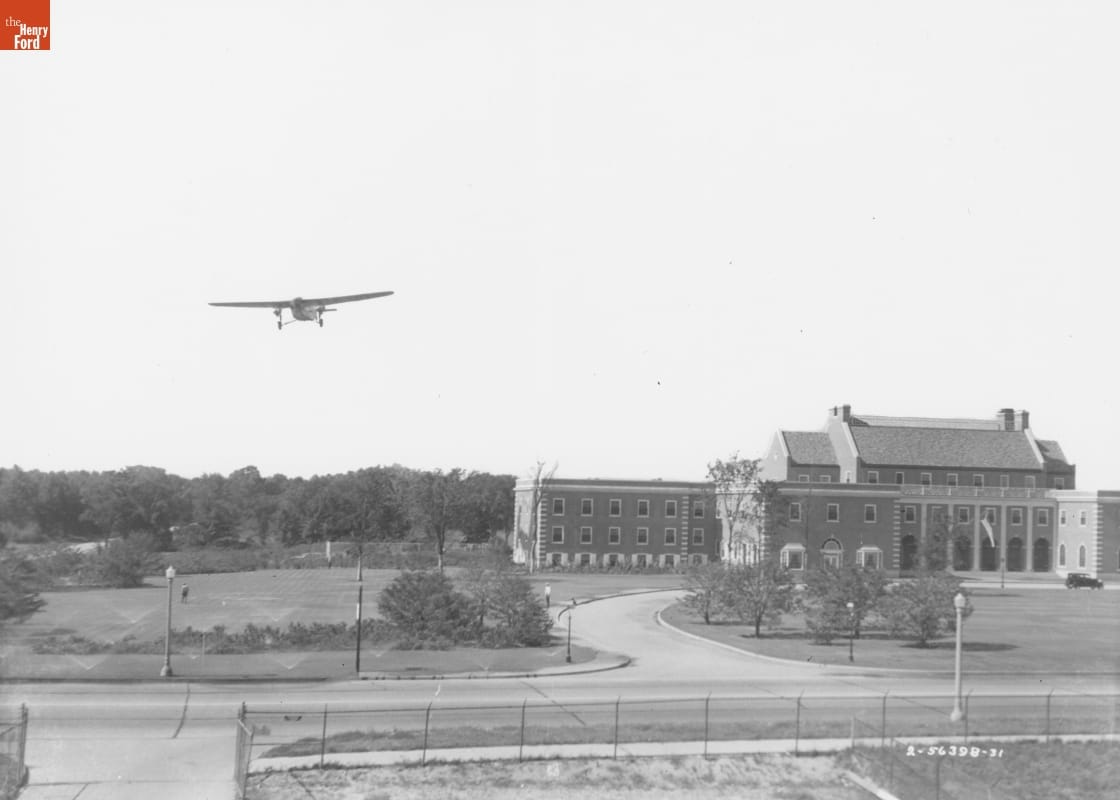
- 1931
- Collections - Artifact
Airplane Flying over Dearborn Inn, Dearborn, Michigan, 1931
Edsel and Henry Ford conceived the Dearborn Inn as a business opportunity, a first-class hotel hosting pilots and travelers transiting through the adjacent Ford Airport. It is noted as one of the first airport hotels. It also served traveling Ford employees and dealers, and visitors to the nearby Edison Institute (later renamed The Henry Ford).
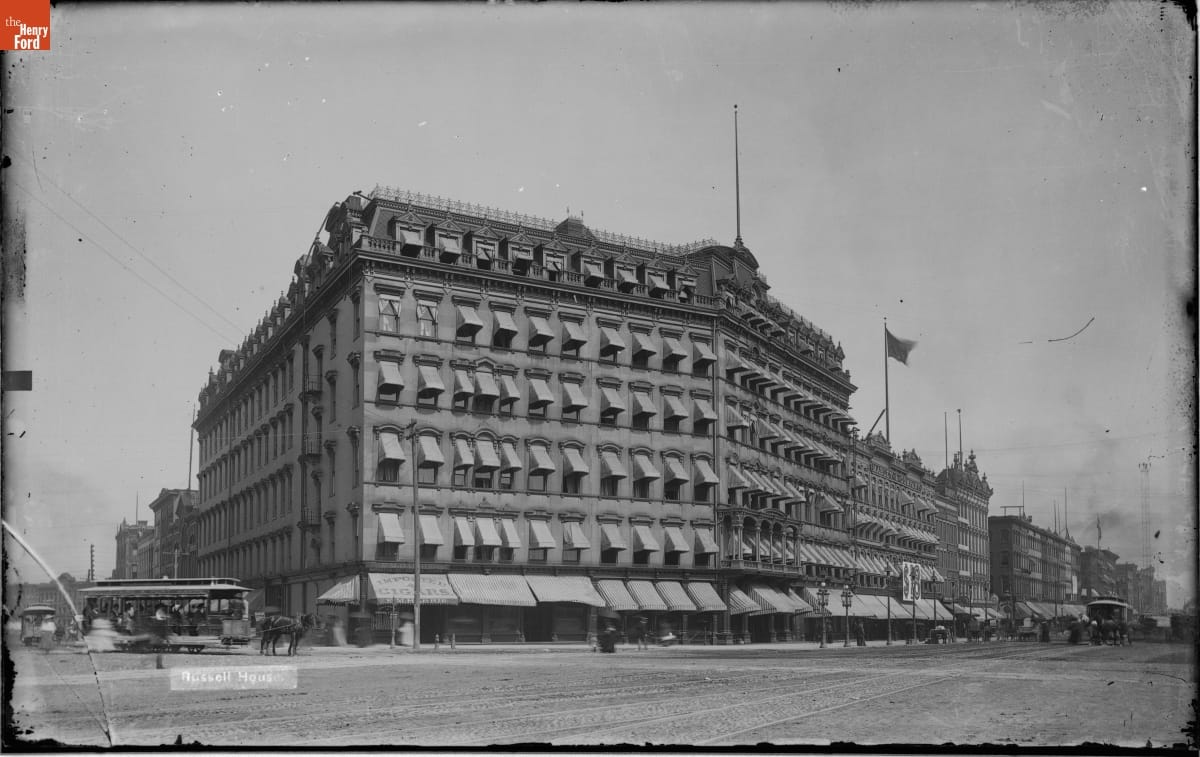
- Russell House Hotel, Detroit, Michigan, 1880-1895 -
- 1880-1895
- Collections - Artifact
Russell House Hotel, Detroit, Michigan, 1880-1895
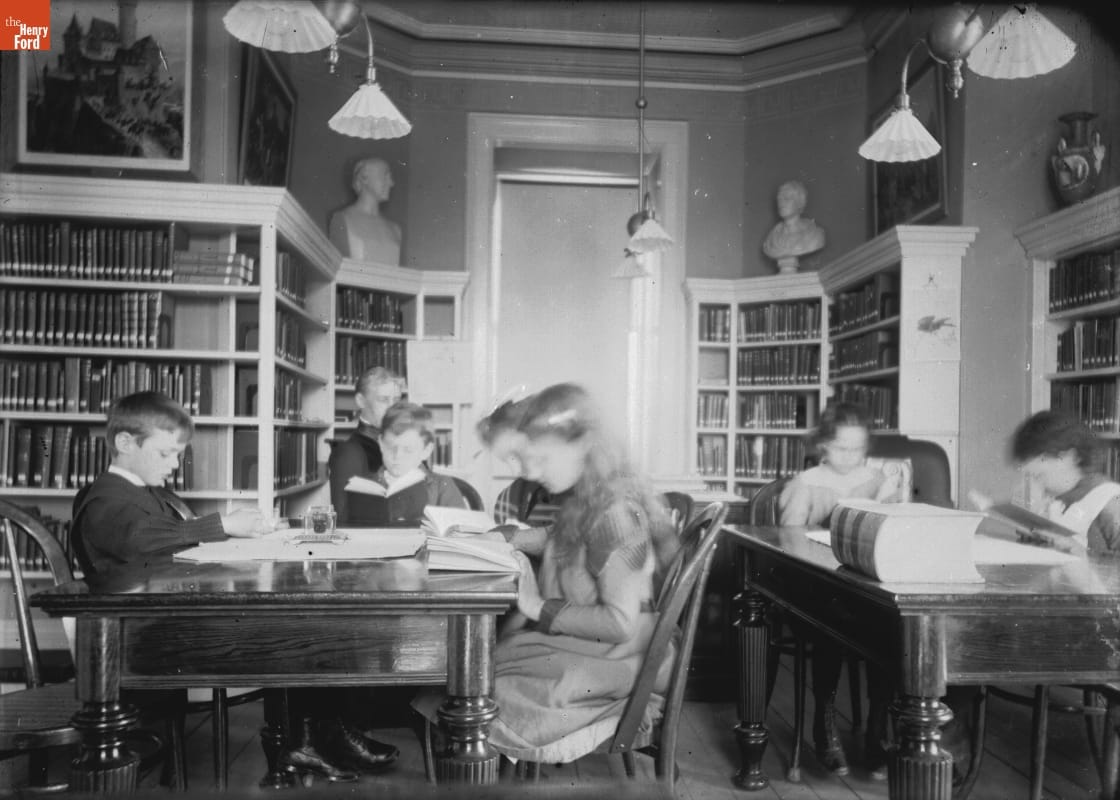
- Newark Library, 1901-1915 - In 1890, Jenny Young Chandler, 25 years old and recently widowed, began working for the <EM>New York Herald</EM>. As a photojournalist and feature writer, Chandler captured life in Brooklyn, New York, and vicinity. By 1922, the time of her death, she had produced over 800 glass plate negatives. Her sensitive, insightful photographs depict people from all walks of life and the world in which they lived.
- 1901-1915
- Collections - Artifact
Newark Library, 1901-1915
In 1890, Jenny Young Chandler, 25 years old and recently widowed, began working for the New York Herald. As a photojournalist and feature writer, Chandler captured life in Brooklyn, New York, and vicinity. By 1922, the time of her death, she had produced over 800 glass plate negatives. Her sensitive, insightful photographs depict people from all walks of life and the world in which they lived.