
Search
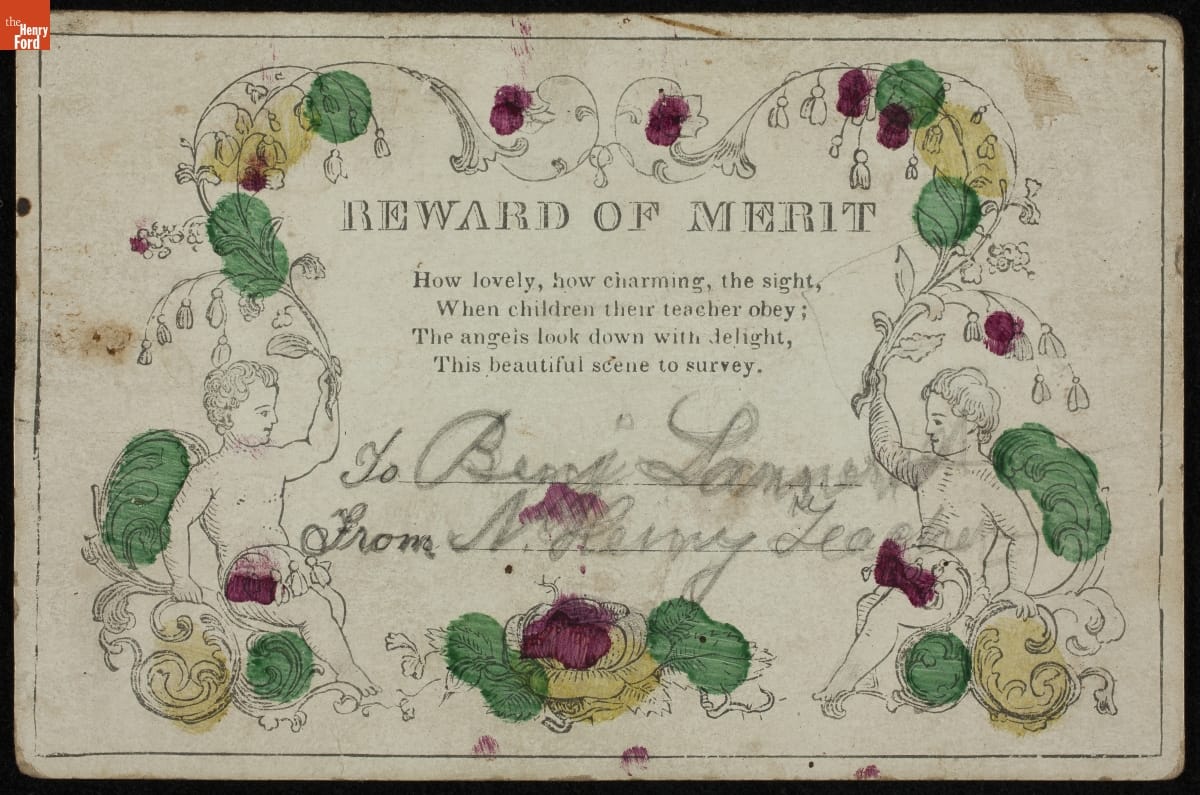
- School Reward of Merit, 1850-1900 - During the nineteenth-century, teachers recognized students with paper "rewards of merit." These small tokens commended a student's excellent work, perfect attendance, good behavior or other noteworthy accomplishment. Some contained simple handwritten sentiments from the teacher to the pupil. Many were printed and colorful, with space available to write in the student's name as well as their own.
- 1850-1900
- Collections - Artifact
School Reward of Merit, 1850-1900
During the nineteenth-century, teachers recognized students with paper "rewards of merit." These small tokens commended a student's excellent work, perfect attendance, good behavior or other noteworthy accomplishment. Some contained simple handwritten sentiments from the teacher to the pupil. Many were printed and colorful, with space available to write in the student's name as well as their own.
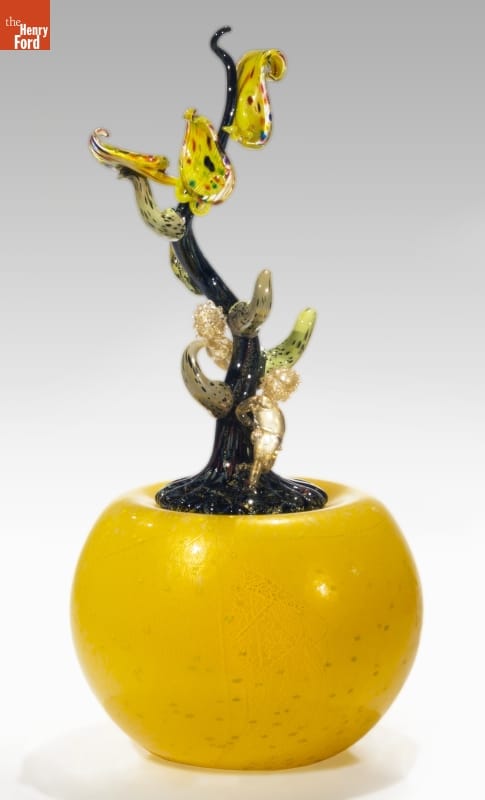
- "Yellow Chiffon Venetian Ikebana with Putti and Prunts" by Dale Chihuly, 2002 -
- 2002
- Collections - Artifact
"Yellow Chiffon Venetian Ikebana with Putti and Prunts" by Dale Chihuly, 2002
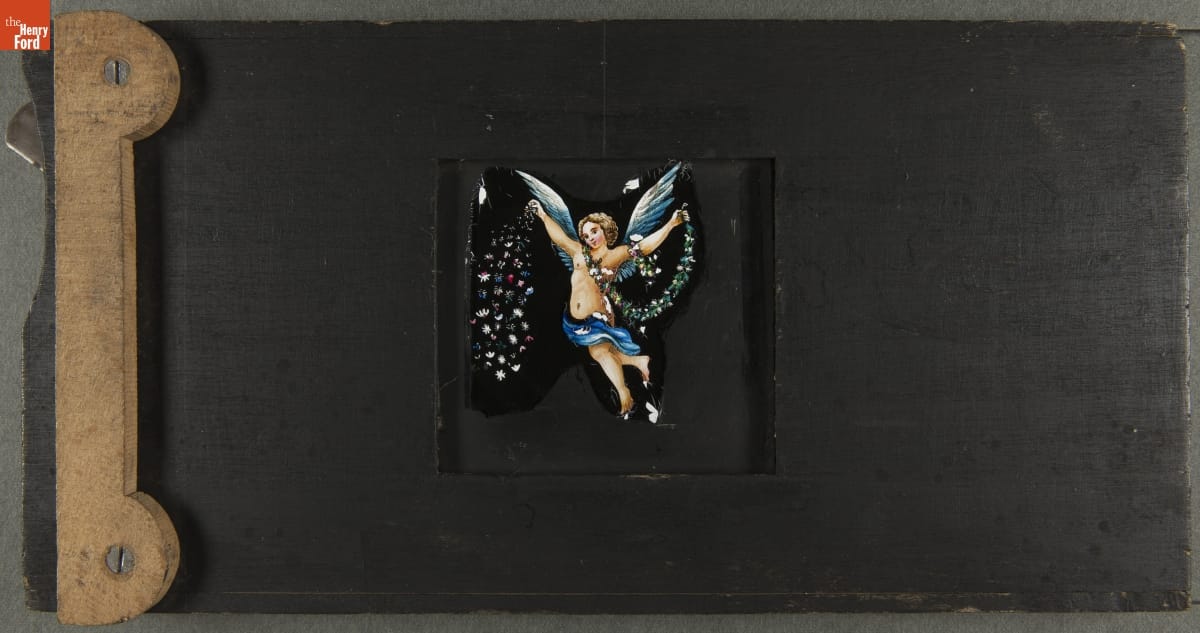
- Mechanical Lantern Slide, "The Birth of Flowers," 1860-1900 - Magic lanterns use a concave mirror and light source to project images on glass slides with painted or photographic scenes. Developed in the 17th century, magic lanterns predate slide projectors and motion pictures. In the hands of magicians, they became "lanterns of fright," projecting wondrous images and apparitions. Slide themes ranged widely: exotic travel, folklore, advertising, history, science, and art.
- 1860-1900
- Collections - Artifact
Mechanical Lantern Slide, "The Birth of Flowers," 1860-1900
Magic lanterns use a concave mirror and light source to project images on glass slides with painted or photographic scenes. Developed in the 17th century, magic lanterns predate slide projectors and motion pictures. In the hands of magicians, they became "lanterns of fright," projecting wondrous images and apparitions. Slide themes ranged widely: exotic travel, folklore, advertising, history, science, and art.
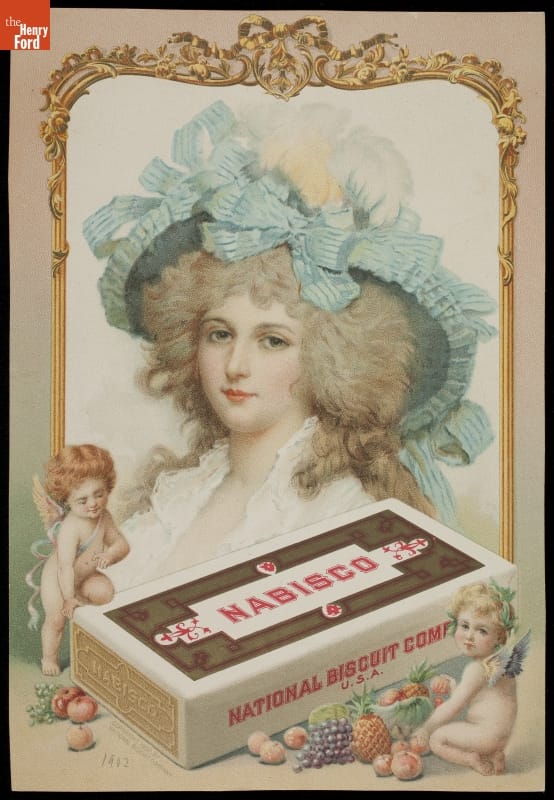
- Trade Card for Sugar Wafer Cookies, National Biscuit Company, 1902 - In the last third of the nineteenth century, an unprecedented variety of consumer goods and services flooded the American market. Advertisers, armed with new methods of color printing, bombarded potential customers with trade cards. Americans enjoyed and often saved the vibrant little advertisements found in product packages or distributed by local merchants. Many survive as historical records of commercialism in the United States.
- 1902
- Collections - Artifact
Trade Card for Sugar Wafer Cookies, National Biscuit Company, 1902
In the last third of the nineteenth century, an unprecedented variety of consumer goods and services flooded the American market. Advertisers, armed with new methods of color printing, bombarded potential customers with trade cards. Americans enjoyed and often saved the vibrant little advertisements found in product packages or distributed by local merchants. Many survive as historical records of commercialism in the United States.
- School Reward of Merit, 1850-1900 - During the nineteenth-century, teachers recognized students with paper "rewards of merit." These small tokens commended a student's excellent work, perfect attendance, good behavior or other noteworthy accomplishment. Some contained simple handwritten sentiments from the teacher to the pupil. Many were printed and colorful, with space available to write in the student's name as well as their own.
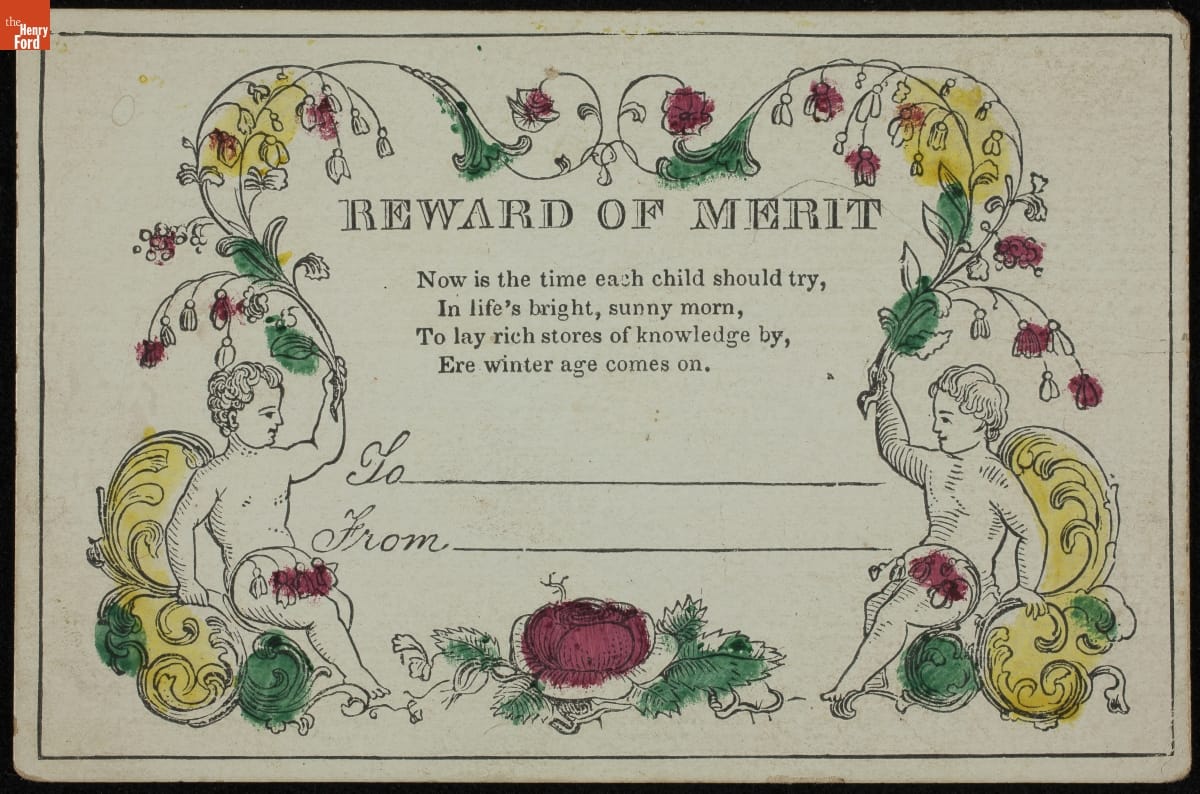
- 1850-1900
- Collections - Artifact
School Reward of Merit, 1850-1900
During the nineteenth-century, teachers recognized students with paper "rewards of merit." These small tokens commended a student's excellent work, perfect attendance, good behavior or other noteworthy accomplishment. Some contained simple handwritten sentiments from the teacher to the pupil. Many were printed and colorful, with space available to write in the student's name as well as their own.
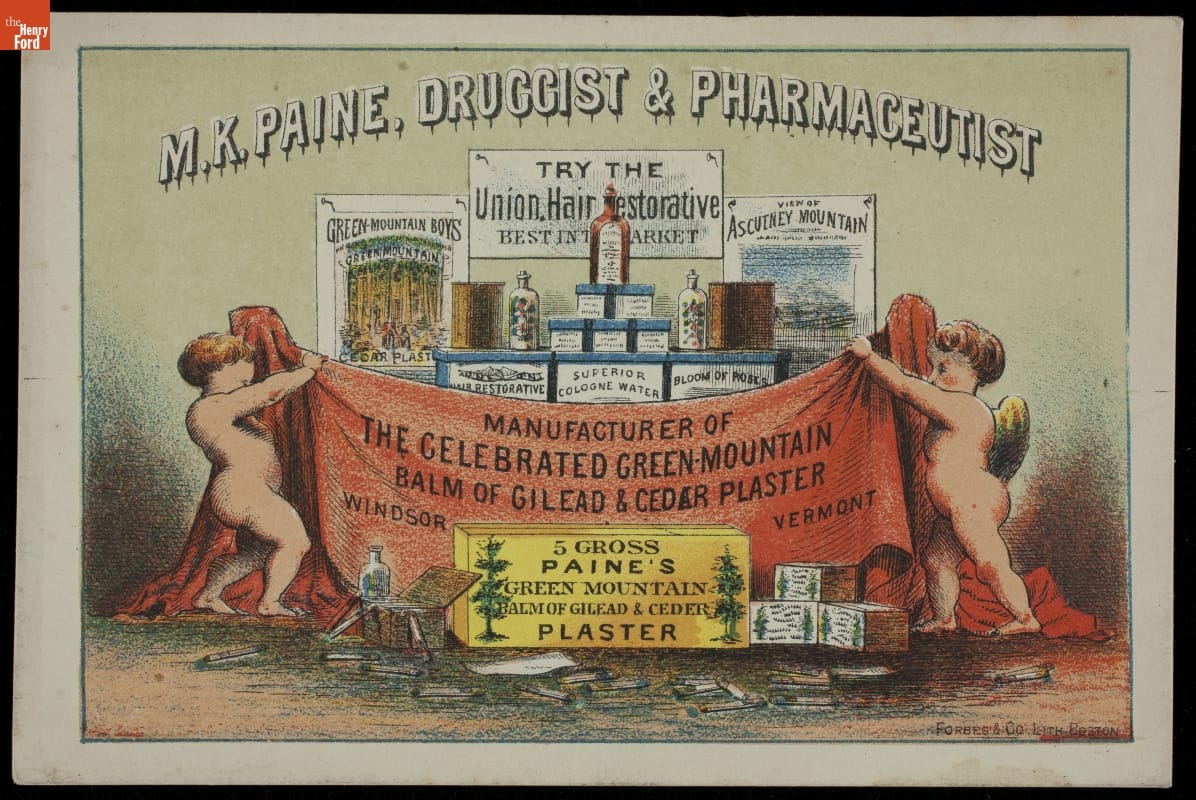
- Trade Card for Green Mountain Balm of Gilead & Cedar Plaster, M. K. Paine, 1870-1890 - In the last third of the nineteenth century, an unprecedented variety of consumer goods and services flooded the American market. Advertisers, armed with new methods of color printing, bombarded potential customers with trade cards. Americans enjoyed and often saved the vibrant little advertisements found in product packages or distributed by local merchants. Many survive as historical records of commercialism in the United States.
- 1870-1890
- Collections - Artifact
Trade Card for Green Mountain Balm of Gilead & Cedar Plaster, M. K. Paine, 1870-1890
In the last third of the nineteenth century, an unprecedented variety of consumer goods and services flooded the American market. Advertisers, armed with new methods of color printing, bombarded potential customers with trade cards. Americans enjoyed and often saved the vibrant little advertisements found in product packages or distributed by local merchants. Many survive as historical records of commercialism in the United States.
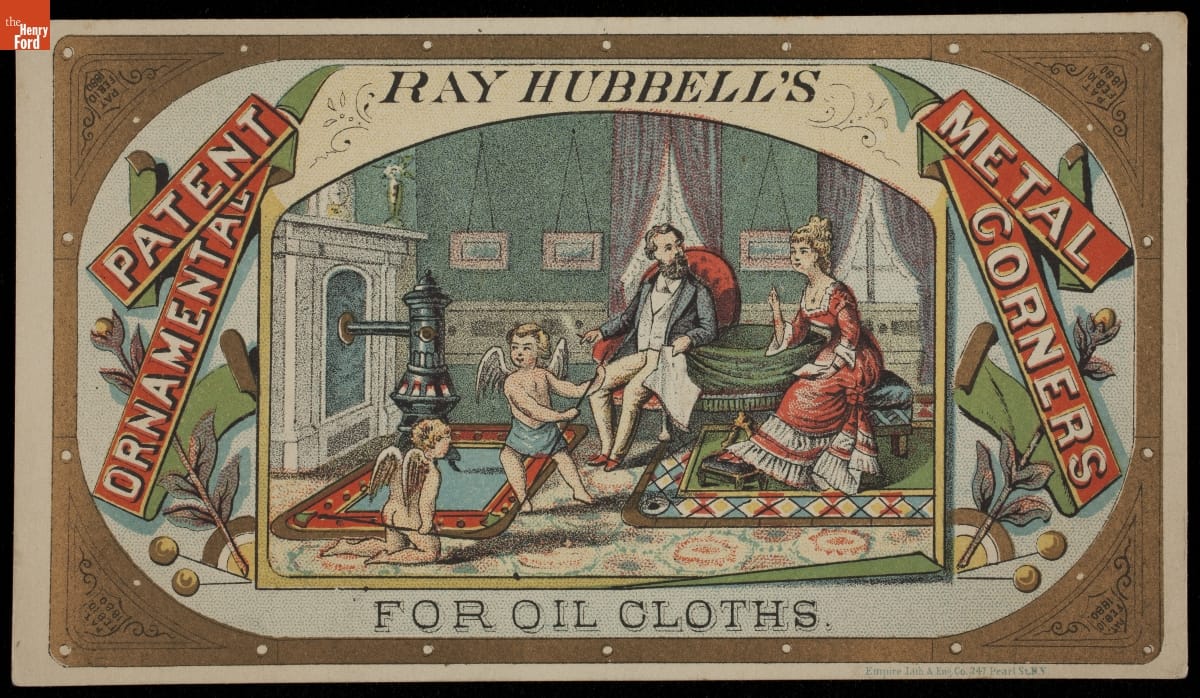
- Trade Card for Floorcloth Metal Corners, Ray Hubbell, circa 1880 - In the last third of the nineteenth century, an unprecedented variety of consumer goods and services flooded the American market. Advertisers, armed with new methods of color printing, bombarded potential customers with trade cards. Americans enjoyed and often saved the vibrant little advertisements found in product packages or distributed by local merchants. Many survive as historical records of commercialism in the United States.
- circa 1880
- Collections - Artifact
Trade Card for Floorcloth Metal Corners, Ray Hubbell, circa 1880
In the last third of the nineteenth century, an unprecedented variety of consumer goods and services flooded the American market. Advertisers, armed with new methods of color printing, bombarded potential customers with trade cards. Americans enjoyed and often saved the vibrant little advertisements found in product packages or distributed by local merchants. Many survive as historical records of commercialism in the United States.
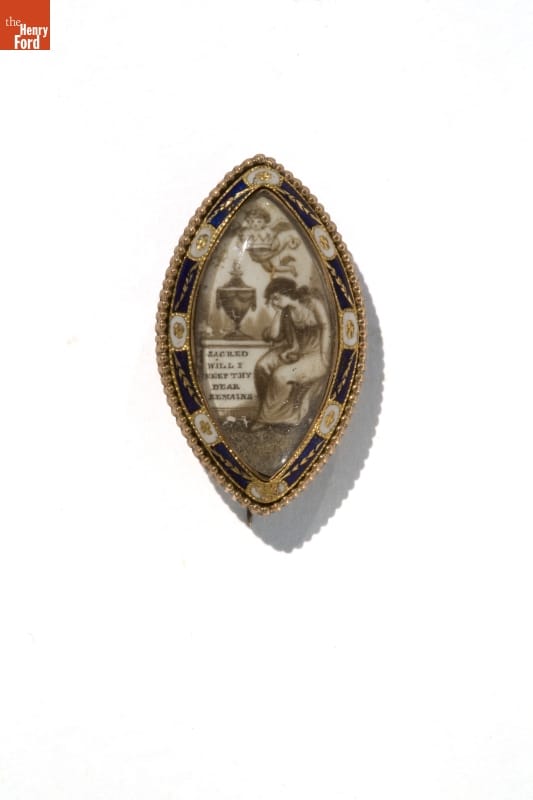
- Mourning Brooch for Susanna Mason, 1785 - Before the 20th century, death came early and often. One way people coped was to wear jewelry as memorials to their loved ones. Over the centuries, mourning jewelry followed the prevailing fashions. Shortly after independence, Americans favored illuminated, miniature brooches and pendants painted on ivory. These featured shapes derived from classical design, symbols such as urns and weeping women dressed as ancient Romans.
- November 01, 1785
- Collections - Artifact
Mourning Brooch for Susanna Mason, 1785
Before the 20th century, death came early and often. One way people coped was to wear jewelry as memorials to their loved ones. Over the centuries, mourning jewelry followed the prevailing fashions. Shortly after independence, Americans favored illuminated, miniature brooches and pendants painted on ivory. These featured shapes derived from classical design, symbols such as urns and weeping women dressed as ancient Romans.
- Pendant, 1780-1800 - Before the 20th century, death came early and often. One way people coped was to wear jewelry as memorials to their loved ones. Over the centuries, mourning jewelry followed the prevailing fashions. Shortly after independence, Americans favored illuminated, miniature brooches and pendants painted on ivory. These featured shapes derived from classical design, symbols such as urns and weeping women dressed as ancient Romans.
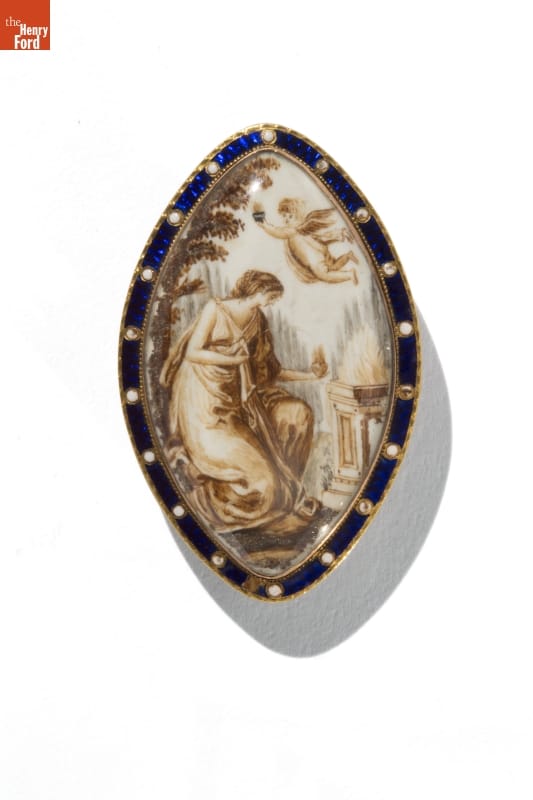
- 1780-1800
- Collections - Artifact
Pendant, 1780-1800
Before the 20th century, death came early and often. One way people coped was to wear jewelry as memorials to their loved ones. Over the centuries, mourning jewelry followed the prevailing fashions. Shortly after independence, Americans favored illuminated, miniature brooches and pendants painted on ivory. These featured shapes derived from classical design, symbols such as urns and weeping women dressed as ancient Romans.
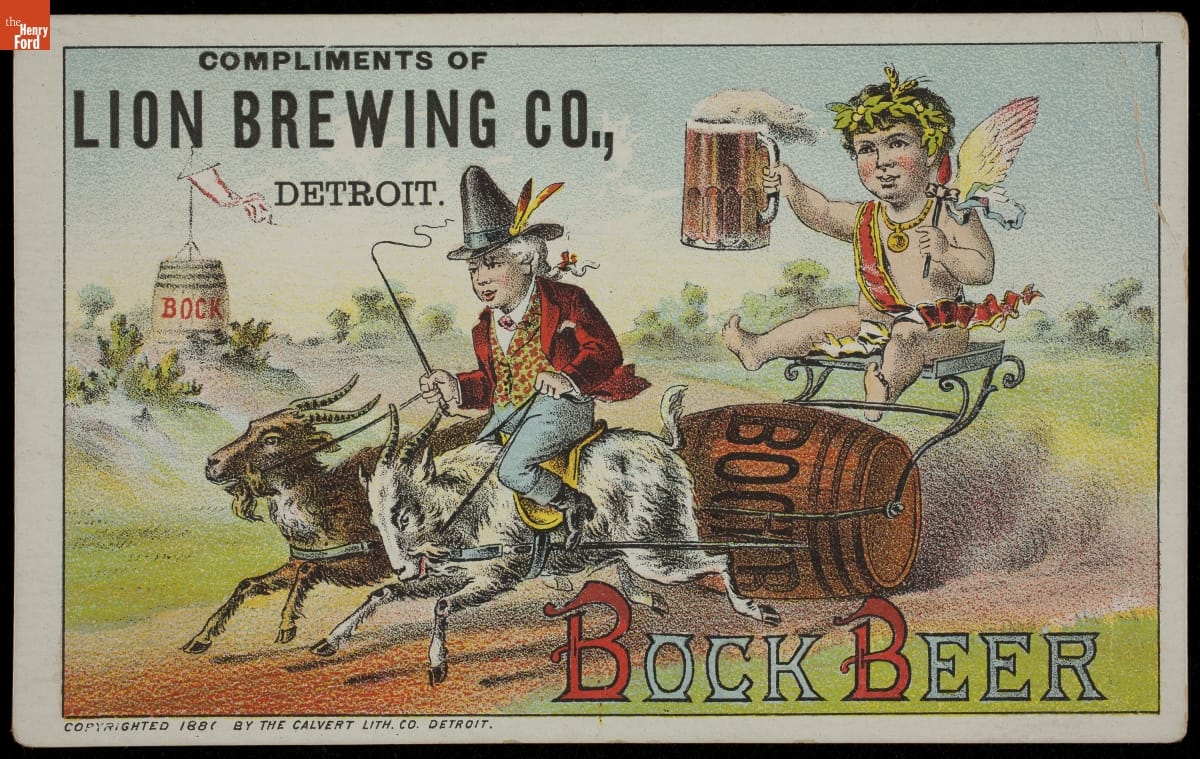
- Trade Card for Bock Beer, Lion Brewing Co., 1881 - In the last third of the nineteenth century, an unprecedented variety of consumer goods and services flooded the American market. Advertisers, armed with new methods of color printing, bombarded potential customers with trade cards. Americans enjoyed and often saved the vibrant little advertisements found in product packages or distributed by local merchants. Many survive as historical records of commercialism in the United States.
- 1881
- Collections - Artifact
Trade Card for Bock Beer, Lion Brewing Co., 1881
In the last third of the nineteenth century, an unprecedented variety of consumer goods and services flooded the American market. Advertisers, armed with new methods of color printing, bombarded potential customers with trade cards. Americans enjoyed and often saved the vibrant little advertisements found in product packages or distributed by local merchants. Many survive as historical records of commercialism in the United States.