
Search
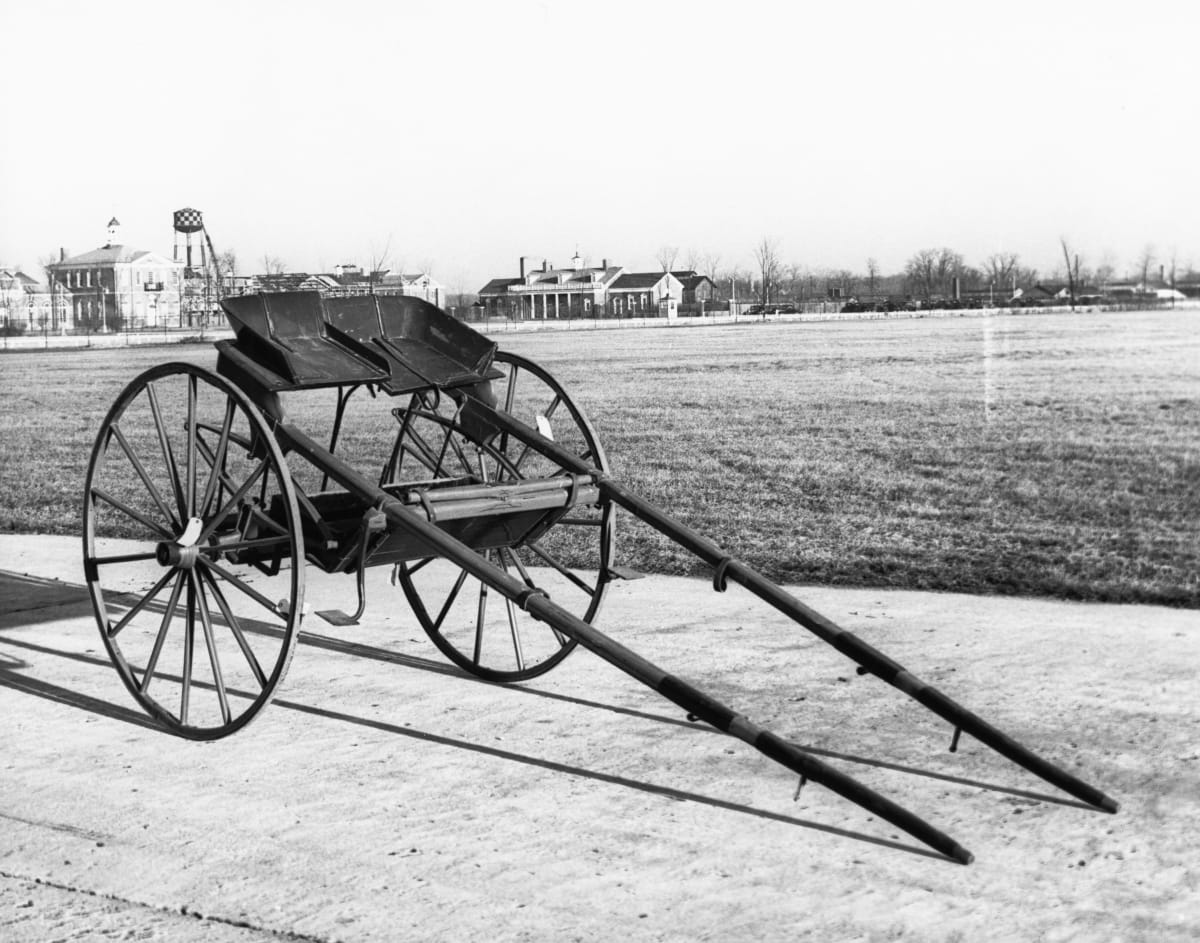
- Breaking Cart, circa 1890 - Drivers used breaking carts to train and exercise horses. It took great skill to prepare a horse to accept the weight of a vehicle, get used to the noise of the moving carriage, learn to pull in harness with other horses, and respond to the driver's commands. This cart was used to train horses owned by railroad mogul Leland Stanford.
- circa 1890
- Collections - Artifact
Breaking Cart, circa 1890
Drivers used breaking carts to train and exercise horses. It took great skill to prepare a horse to accept the weight of a vehicle, get used to the noise of the moving carriage, learn to pull in harness with other horses, and respond to the driver's commands. This cart was used to train horses owned by railroad mogul Leland Stanford.
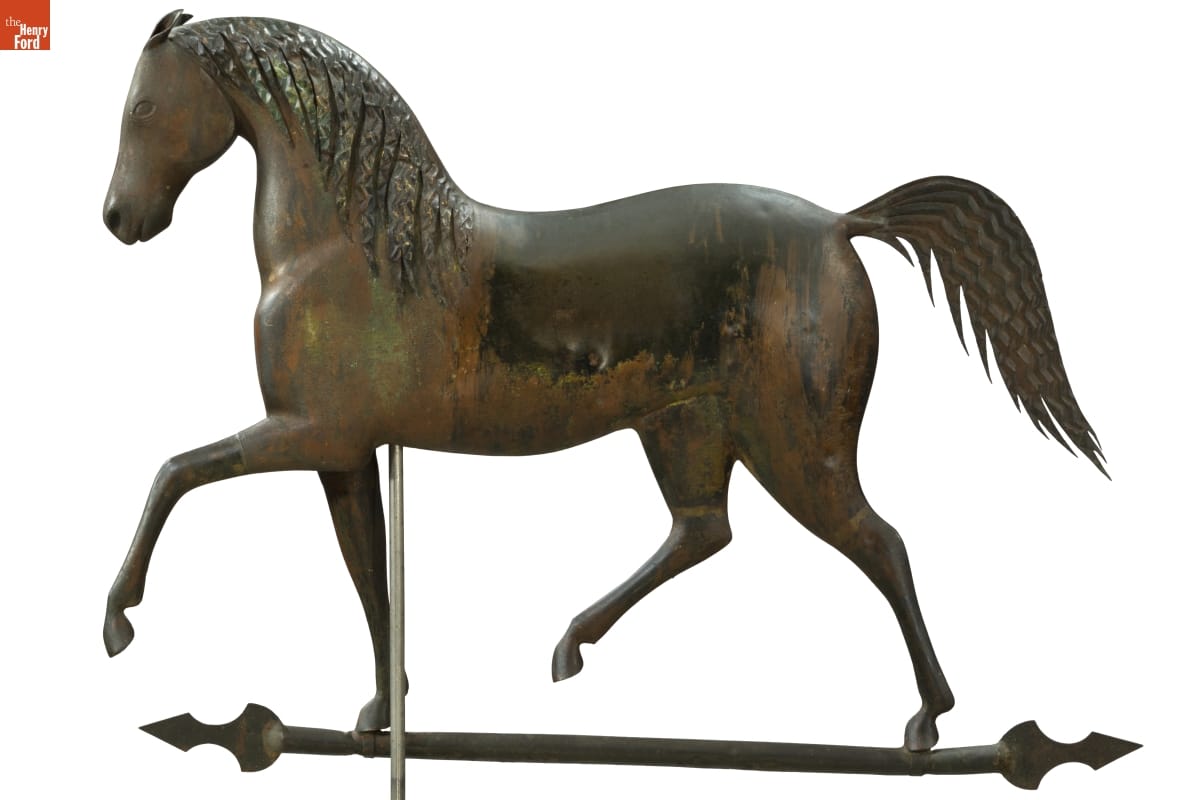
- Horse "Lady Suffolk" Weathervane, 1840-1860 - Weathervanes point into the direction of the wind. This helped viewers anticipate weather changes before local forecasts became common after 1920. Functional weathervanes required a basic pointing device and directional arms, but manufacturers added decorative elements, or ornaments, to appeal to consumer interests. They most often featured horses. This example with a crimped copper mane and tail depicts Lady Suffolk, a famous racehorse.
- 1840-1860
- Collections - Artifact
Horse "Lady Suffolk" Weathervane, 1840-1860
Weathervanes point into the direction of the wind. This helped viewers anticipate weather changes before local forecasts became common after 1920. Functional weathervanes required a basic pointing device and directional arms, but manufacturers added decorative elements, or ornaments, to appeal to consumer interests. They most often featured horses. This example with a crimped copper mane and tail depicts Lady Suffolk, a famous racehorse.
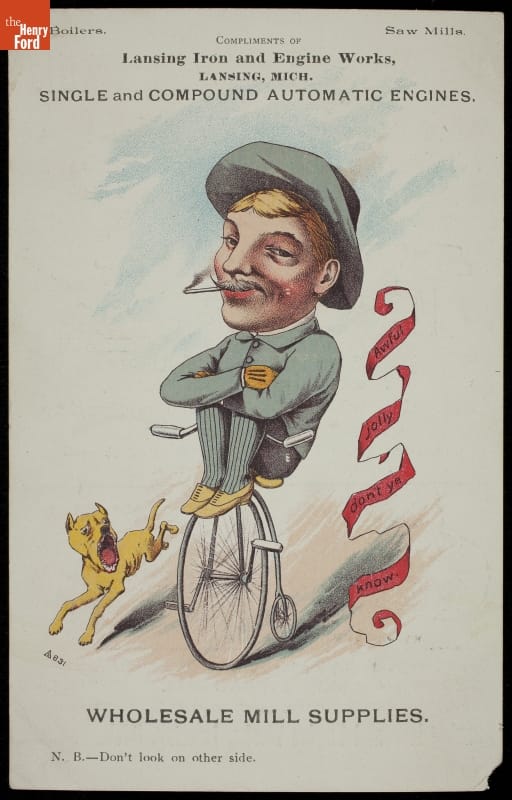
- Trade Card for Wholesale Mill Supplies, Lansing Iron and Engine Works, 1885-1890 - In the last third of the nineteenth century, an unprecedented variety of consumer goods and services flooded the American market. Advertisers, armed with new methods of color printing, bombarded potential customers with trade cards. Americans enjoyed and often saved the vibrant little advertisements found in product packages or distributed by local merchants. Many survive as historical records of commercialism in the United States.
- 1885-1890
- Collections - Artifact
Trade Card for Wholesale Mill Supplies, Lansing Iron and Engine Works, 1885-1890
In the last third of the nineteenth century, an unprecedented variety of consumer goods and services flooded the American market. Advertisers, armed with new methods of color printing, bombarded potential customers with trade cards. Americans enjoyed and often saved the vibrant little advertisements found in product packages or distributed by local merchants. Many survive as historical records of commercialism in the United States.
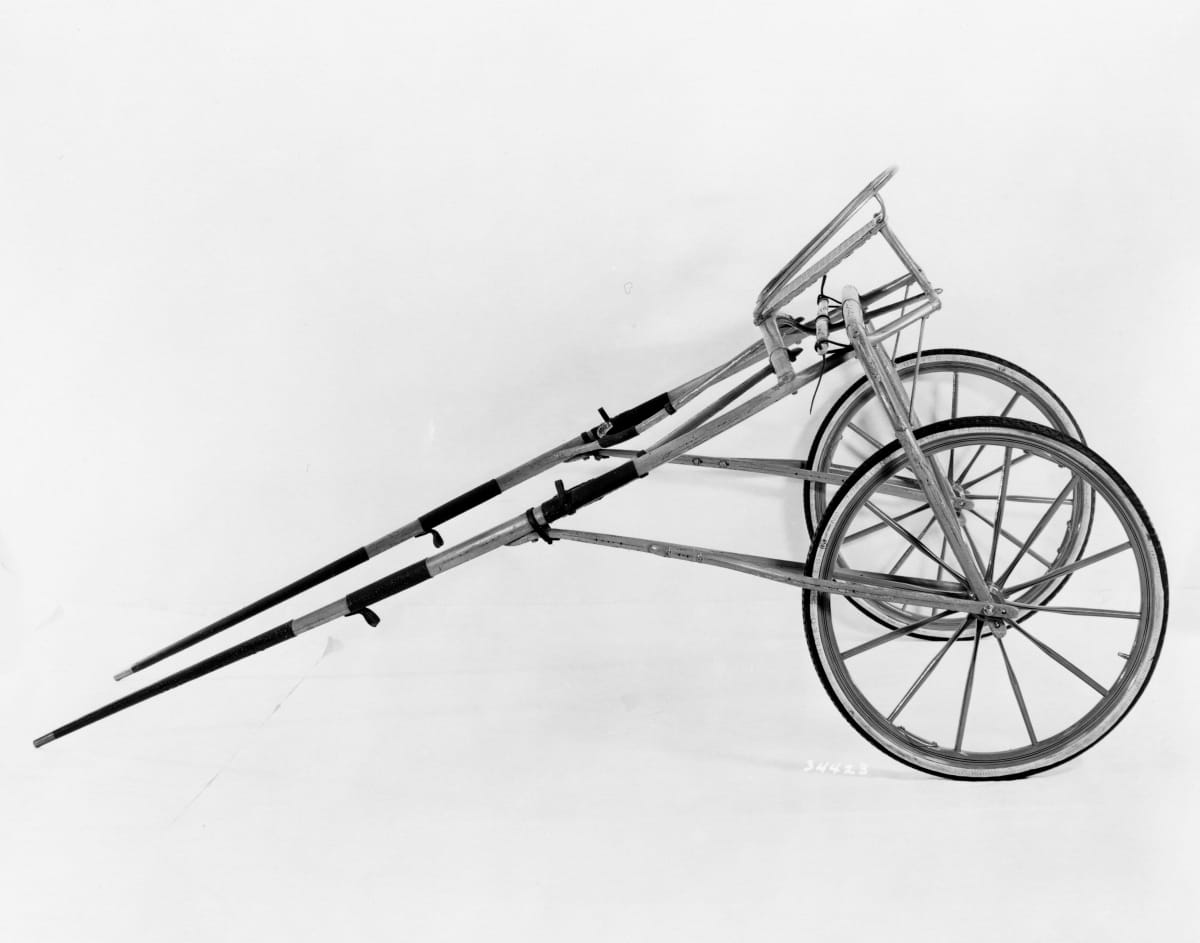
- Sulky, 1892-1893 - Harness racing enjoyed wide popularity in the late 19th century with competitions staged at dirt tracks, at state and county fairs, and sometimes on the streets. The "bicycle" sulky -- named for its bicycle-style wheels -- quickly proved superior over wooden high-wheel sulkies when introduced in 1892. Alma Bedford of Coldwater, Michigan, built this bicycle sulky and later manufactured them commercially.
- 1892-1893
- Collections - Artifact
Sulky, 1892-1893
Harness racing enjoyed wide popularity in the late 19th century with competitions staged at dirt tracks, at state and county fairs, and sometimes on the streets. The "bicycle" sulky -- named for its bicycle-style wheels -- quickly proved superior over wooden high-wheel sulkies when introduced in 1892. Alma Bedford of Coldwater, Michigan, built this bicycle sulky and later manufactured them commercially.
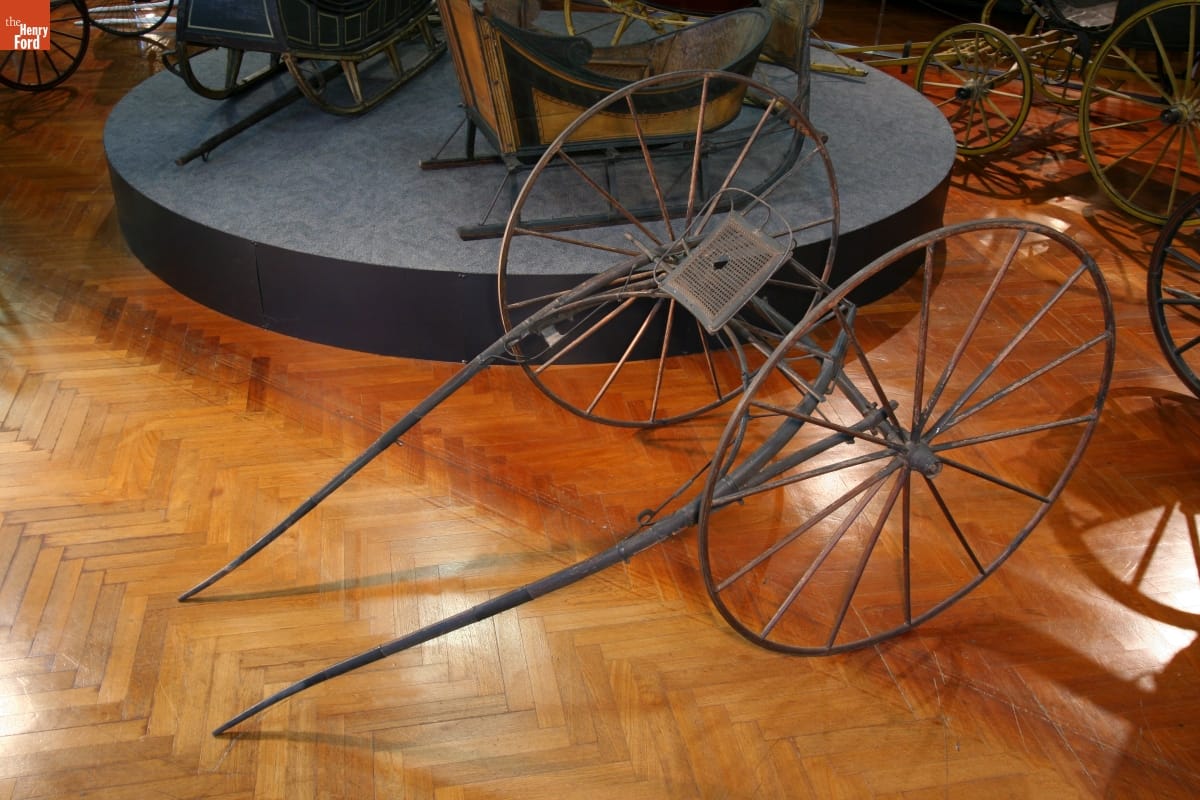
- Sulky, circa 1865 - Mid-19th-century Americans loved harness racing. The minimalistic sulky was essential to the sport. The lightweight little cart consisted only of what was necessary: wheels and axle, driver's seat, and a pair of shafts. When harnessed to a fast trotting horse, this high-wheeled sulky might reach 25 miles per hour or more on a race track.
- circa 1865
- Collections - Artifact
Sulky, circa 1865
Mid-19th-century Americans loved harness racing. The minimalistic sulky was essential to the sport. The lightweight little cart consisted only of what was necessary: wheels and axle, driver's seat, and a pair of shafts. When harnessed to a fast trotting horse, this high-wheeled sulky might reach 25 miles per hour or more on a race track.
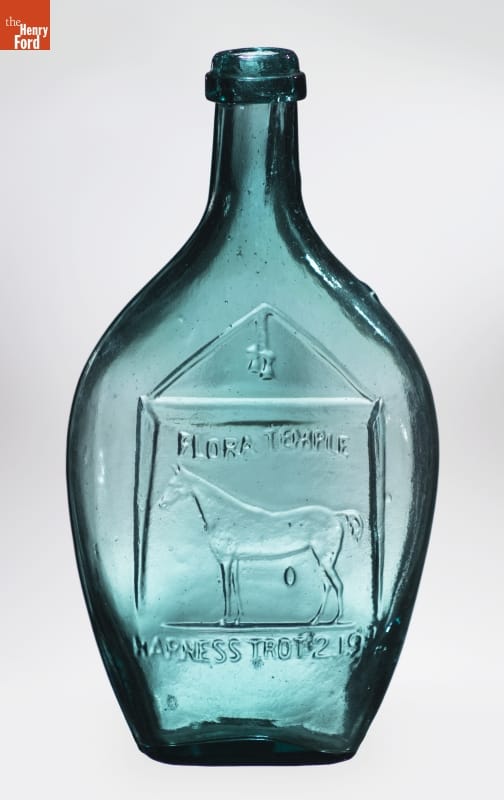
- Flask, 1859-1865 - Glass factories in America began producing inexpensive, mold-formed flasks in the early 1800s. Many figured flasks were decorated with symbols of national pride and images of famous individuals -- or in this case a famous racehorse. Flora Temple won 95 harness races during the 1850s and 1860s. Not only was this "bob-tailed" mare immortalized in glass, but also in the song "Camptown races."
- 1859-1865
- Collections - Artifact
Flask, 1859-1865
Glass factories in America began producing inexpensive, mold-formed flasks in the early 1800s. Many figured flasks were decorated with symbols of national pride and images of famous individuals -- or in this case a famous racehorse. Flora Temple won 95 harness races during the 1850s and 1860s. Not only was this "bob-tailed" mare immortalized in glass, but also in the song "Camptown races."
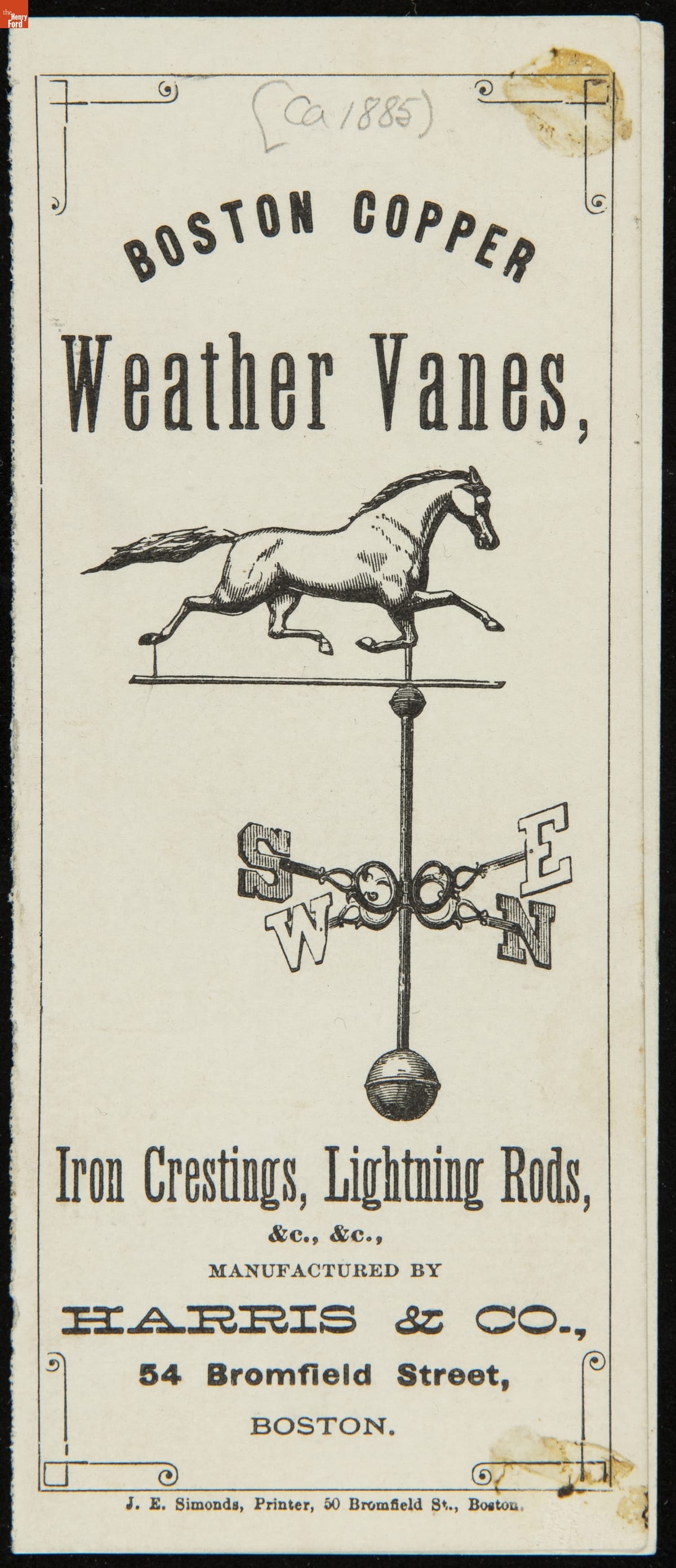
- Harris & Co. Catalog, "Boston Copper Weathervanes, Iron Crestings, and Lightning Rods," circa 1885 - Harris & Company manufactured copper weathervanes. Among this Boston, Massachusetts, firm's offerings were weathervane ornaments representing well-known racehorses. Customers could choose from six champions depicted in this catalog from the mid-1880s.
- circa 1885
- Collections - Artifact
Harris & Co. Catalog, "Boston Copper Weathervanes, Iron Crestings, and Lightning Rods," circa 1885
Harris & Company manufactured copper weathervanes. Among this Boston, Massachusetts, firm's offerings were weathervane ornaments representing well-known racehorses. Customers could choose from six champions depicted in this catalog from the mid-1880s.
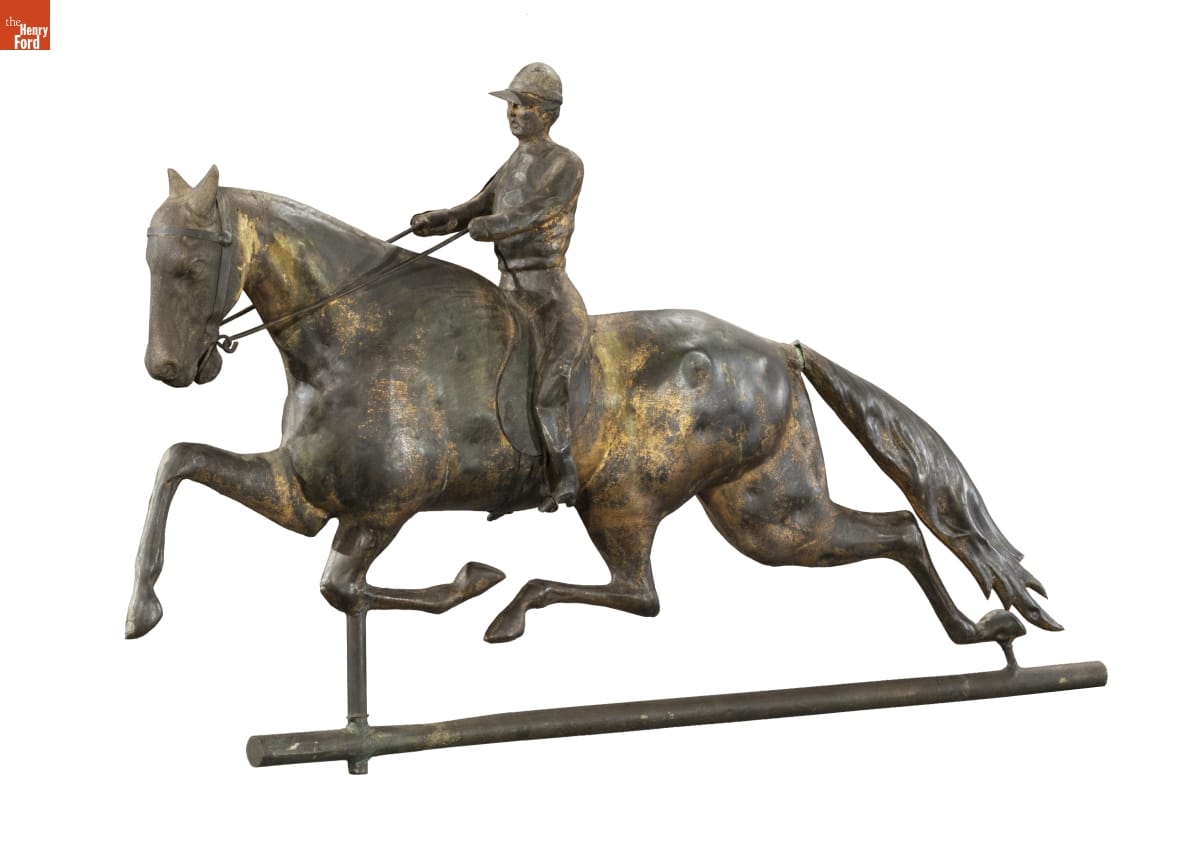
- Dexter with Jockey Weathervane, 1850-1875 - Weathervanes point into the direction of the wind. This helped viewers anticipate weather changes before local forecasts became common after 1920. Functional weathervanes required a basic pointing device and directional arms, but manufacturers added decorative elements, or ornaments, to appeal to consumer interests. They most often featured horses. This one depicts Dexter, a famous racehorse, immortalized with a jockey.
- 1850-1875
- Collections - Artifact
Dexter with Jockey Weathervane, 1850-1875
Weathervanes point into the direction of the wind. This helped viewers anticipate weather changes before local forecasts became common after 1920. Functional weathervanes required a basic pointing device and directional arms, but manufacturers added decorative elements, or ornaments, to appeal to consumer interests. They most often featured horses. This one depicts Dexter, a famous racehorse, immortalized with a jockey.
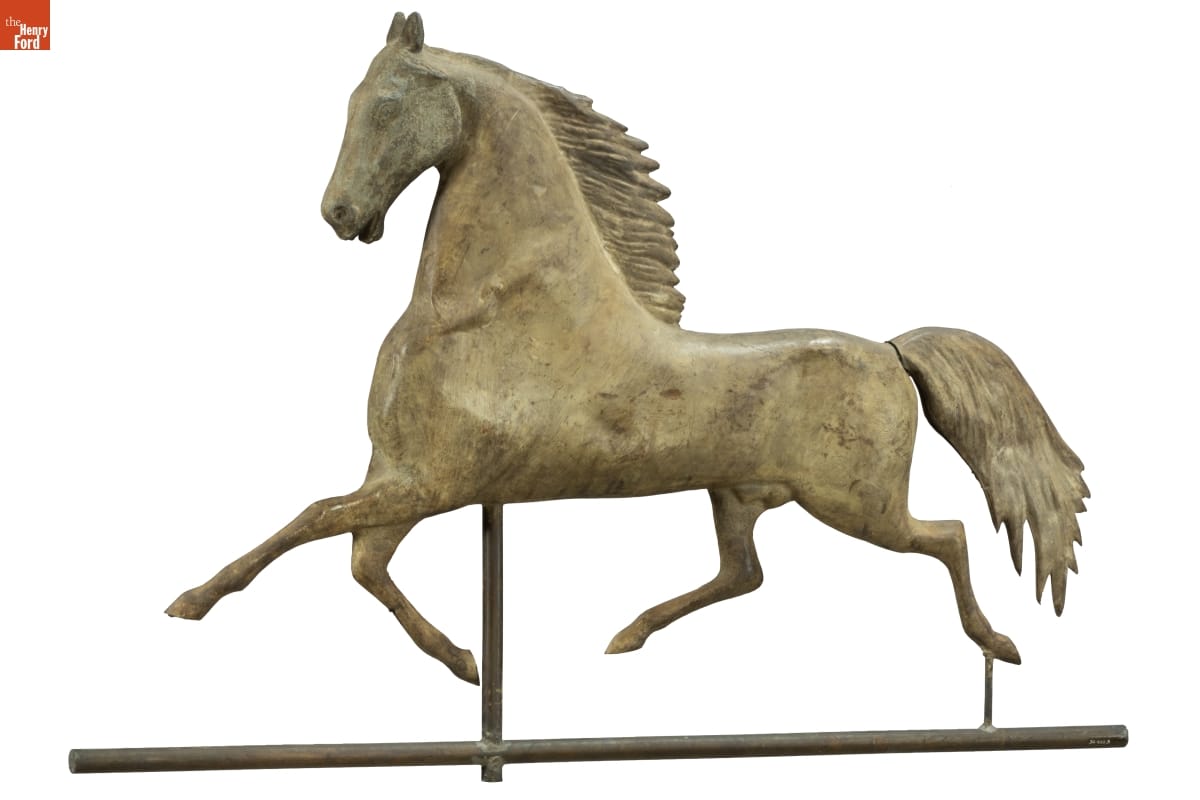
- Horse "Black Hawk" Weathervane, 1868-1872 - Weathervanes point into the direction of the wind. This helped viewers anticipate weather changes before local forecasts became common after 1920. Functional weathervanes required a basic pointing device and directional arms, but manufacturers added decorative elements, or ornaments, to appeal to consumer interests. They most often featured horses. This one depicts Black Hawk, a famous racehorse.
- 1868-1872
- Collections - Artifact
Horse "Black Hawk" Weathervane, 1868-1872
Weathervanes point into the direction of the wind. This helped viewers anticipate weather changes before local forecasts became common after 1920. Functional weathervanes required a basic pointing device and directional arms, but manufacturers added decorative elements, or ornaments, to appeal to consumer interests. They most often featured horses. This one depicts Black Hawk, a famous racehorse.
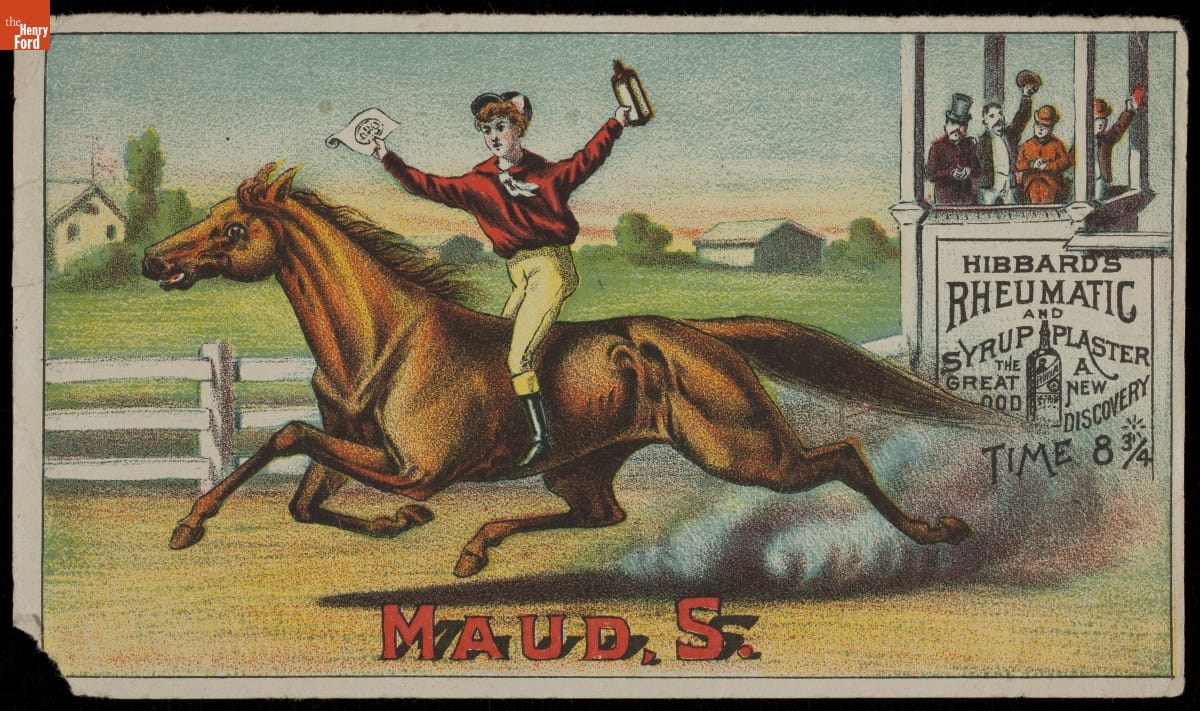
- Trade Card for Hibbard's Rheumatic Syrup, Rheumatic Syrup Company, 1886 - In the last third of the nineteenth century, an unprecedented variety of consumer goods and services flooded the American market. Advertisers, armed with new methods of color printing, bombarded potential customers with trade cards. Americans enjoyed and often saved the vibrant little advertisements found in product packages or distributed by local merchants. Many survive as historical records of commercialism in the United States.
- 1886
- Collections - Artifact
Trade Card for Hibbard's Rheumatic Syrup, Rheumatic Syrup Company, 1886
In the last third of the nineteenth century, an unprecedented variety of consumer goods and services flooded the American market. Advertisers, armed with new methods of color printing, bombarded potential customers with trade cards. Americans enjoyed and often saved the vibrant little advertisements found in product packages or distributed by local merchants. Many survive as historical records of commercialism in the United States.