
Search
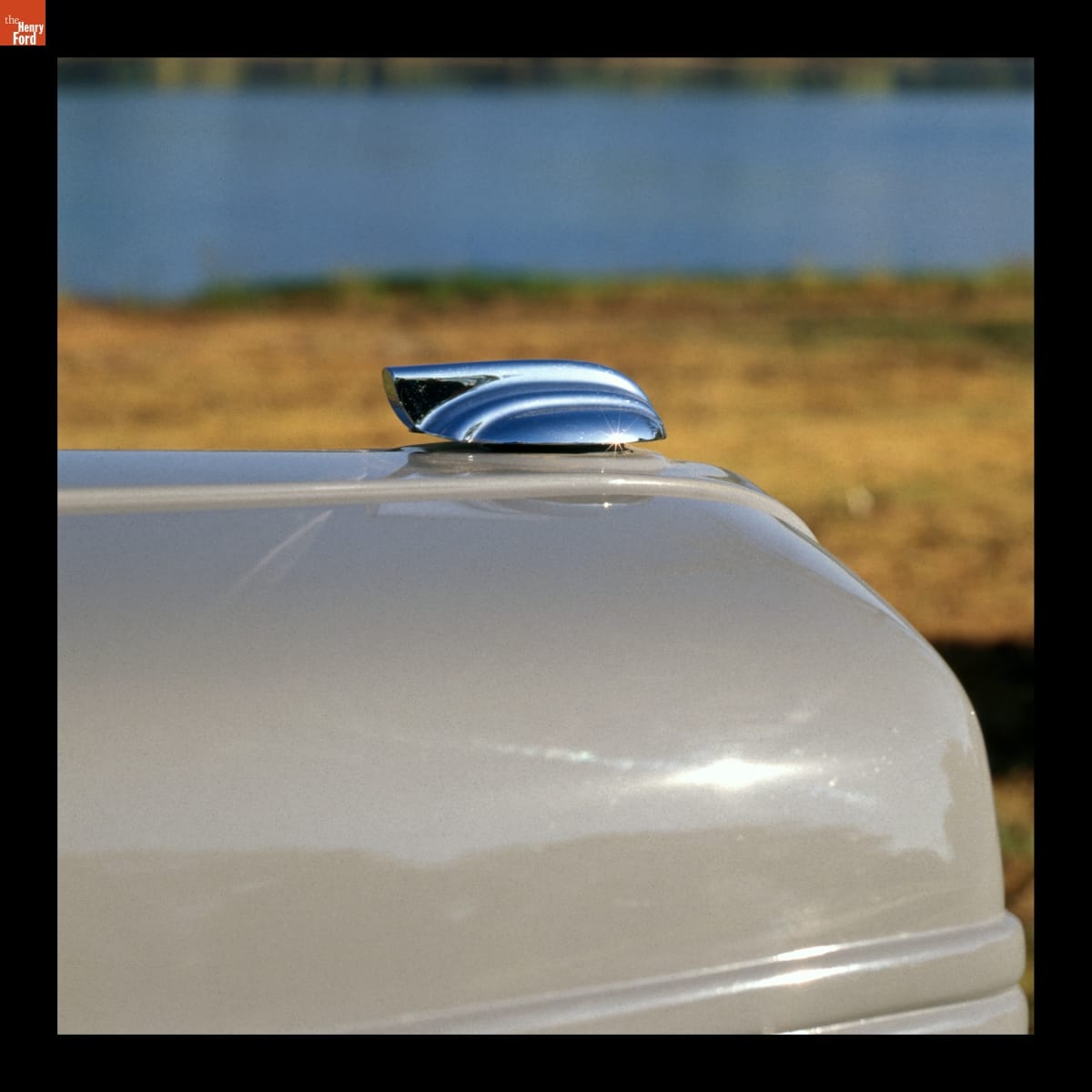
- 1939 Ford-Ferguson Model 9N Tractor Radiator Cap -
- Collections - Artifact
1939 Ford-Ferguson Model 9N Tractor Radiator Cap
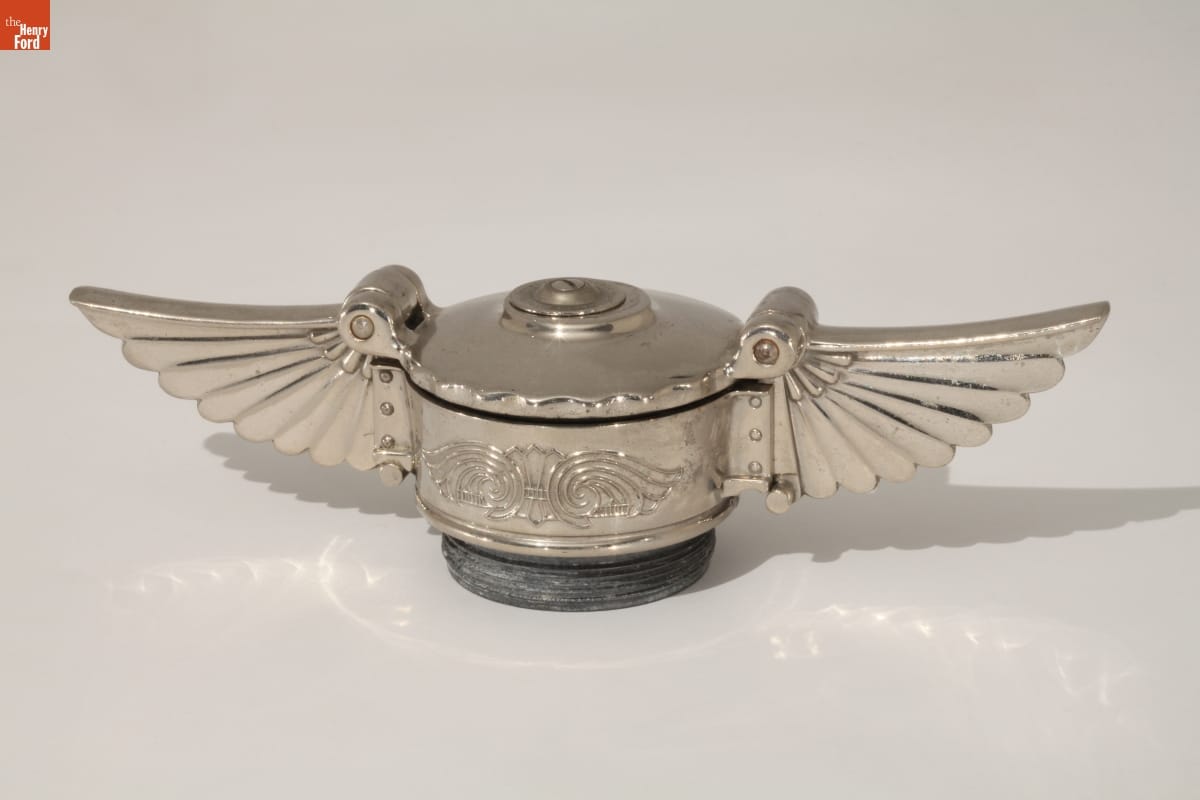
- Radiator Cap, circa 1925 - Early automobile manufacturers took advantage of the prominent location of radiators and affixed branded emblems to them. As cars evolved and radiators were hidden within vehicle bodies, manufacturers retained this practice by branding hoods or grilles. Emblems remained important branding tools, but also became meaningful to consumers as statements about their cars and themselves.
- circa 1925
- Collections - Artifact
Radiator Cap, circa 1925
Early automobile manufacturers took advantage of the prominent location of radiators and affixed branded emblems to them. As cars evolved and radiators were hidden within vehicle bodies, manufacturers retained this practice by branding hoods or grilles. Emblems remained important branding tools, but also became meaningful to consumers as statements about their cars and themselves.
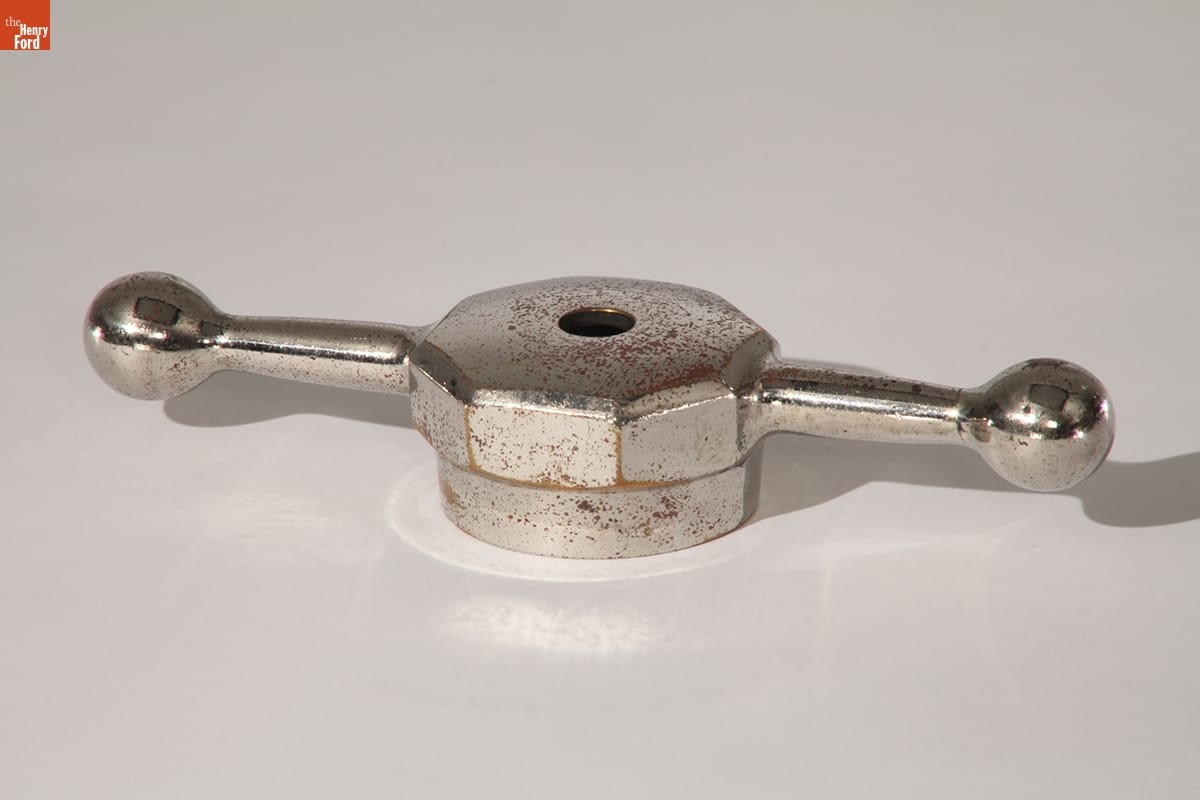
- Radiator Cap, circa 1925 -
- circa 1925
- Collections - Artifact
Radiator Cap, circa 1925
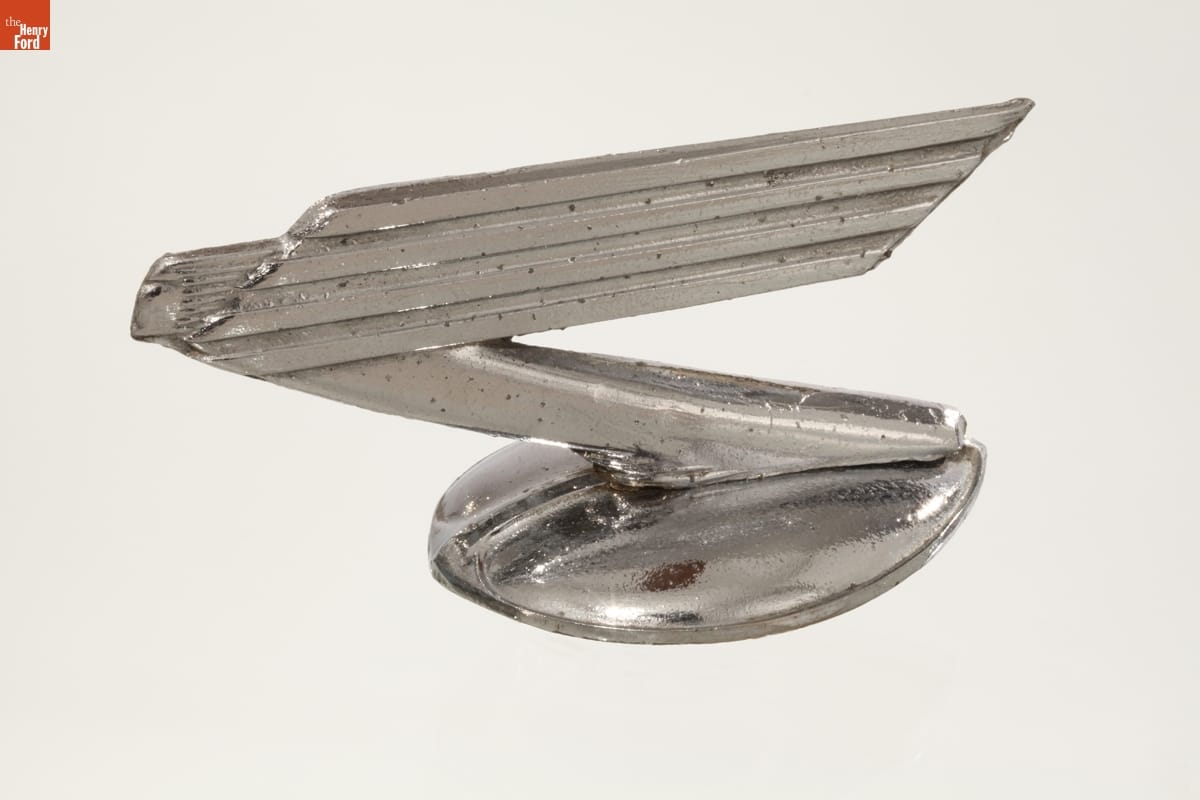
- Pontiac Radiator Cap, circa 1934 - Early automobile manufacturers took advantage of the prominent location of radiators and affixed branded emblems to them. As cars evolved and radiators were hidden within vehicle bodies, manufacturers retained this practice by branding hoods or grilles. Emblems remained important branding tools, but also became meaningful to consumers as statements about their cars and themselves.
- circa 1934
- Collections - Artifact
Pontiac Radiator Cap, circa 1934
Early automobile manufacturers took advantage of the prominent location of radiators and affixed branded emblems to them. As cars evolved and radiators were hidden within vehicle bodies, manufacturers retained this practice by branding hoods or grilles. Emblems remained important branding tools, but also became meaningful to consumers as statements about their cars and themselves.
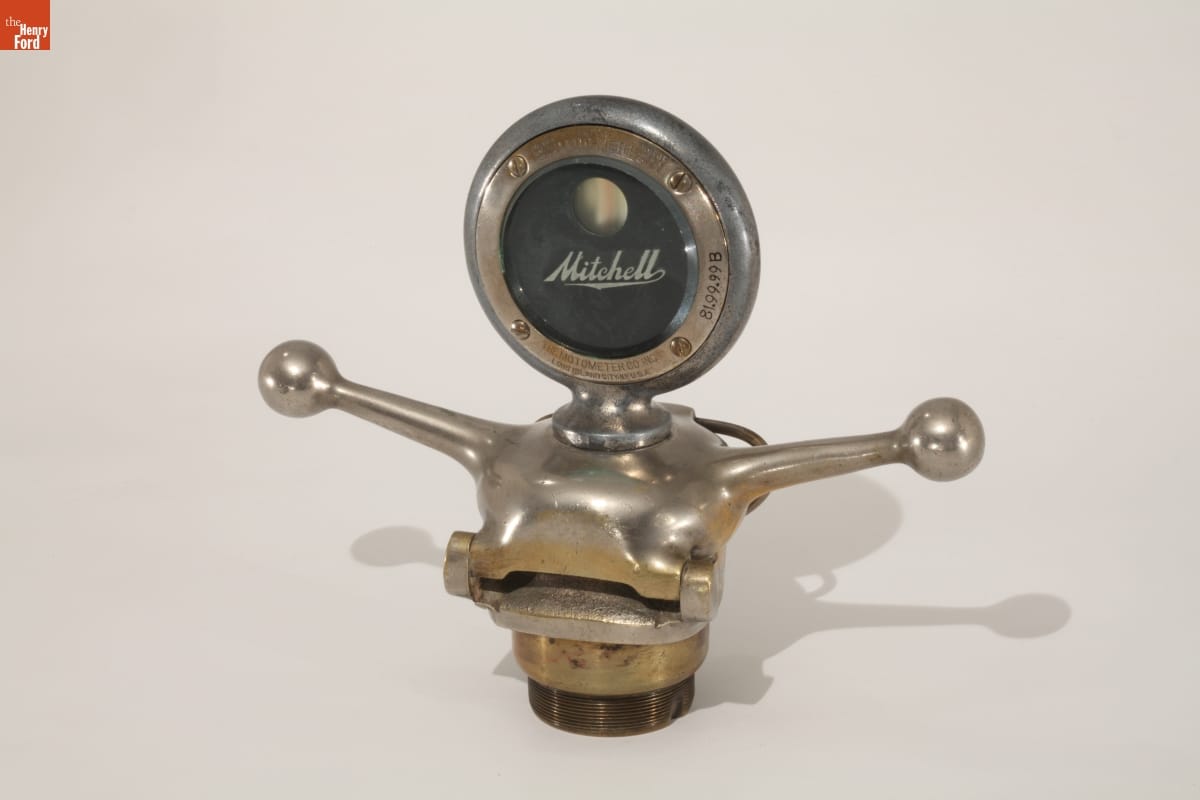
- Mitchell Motor Car Company Motometer with Radiator Cap, circa 1925 - Mitchell Motor Car Company of Racine, Wisconsin, had roots in wagon and motorcycle manufacturing. The firm produced its first automobiles in 1903. Mitchell made most of its vehicles' components in-house, and by 1912 it was Wisconsin's leading carmaker. But growing competition and the post-World War I recession hurt sales. Mitchell filed for bankruptcy in 1923.
- circa 1925
- Collections - Artifact
Mitchell Motor Car Company Motometer with Radiator Cap, circa 1925
Mitchell Motor Car Company of Racine, Wisconsin, had roots in wagon and motorcycle manufacturing. The firm produced its first automobiles in 1903. Mitchell made most of its vehicles' components in-house, and by 1912 it was Wisconsin's leading carmaker. But growing competition and the post-World War I recession hurt sales. Mitchell filed for bankruptcy in 1923.
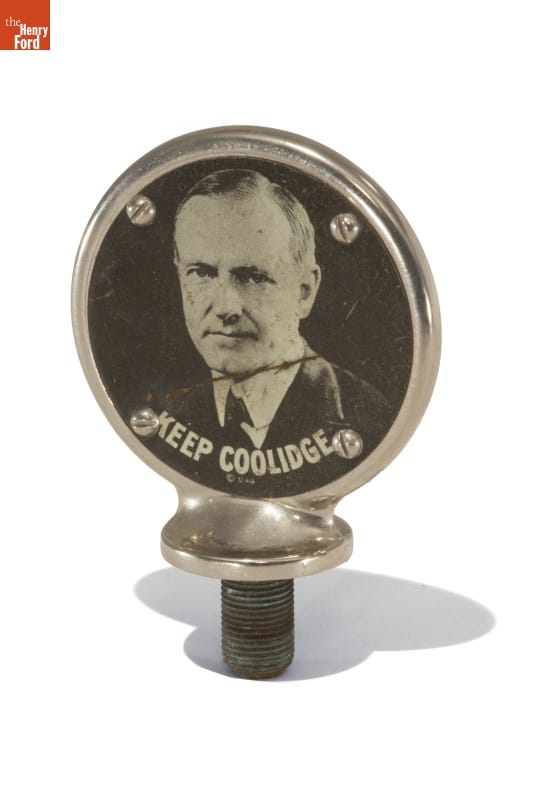
- "Keep Coolidge" Hood Ornament, 1924 - Decorative aftermarket hood ornaments or mascots came in a wide variety of styles and prices in the early 20th century. The "Keep Cool-idge" slogan connected with Calvin Coolidge's 1924 campaign promise of maintaining the status quo during the country's booming economy. It also related to keeping the car's temperature cool, as this hood ornament doubled as a radiator cap.
- 1924
- Collections - Artifact
"Keep Coolidge" Hood Ornament, 1924
Decorative aftermarket hood ornaments or mascots came in a wide variety of styles and prices in the early 20th century. The "Keep Cool-idge" slogan connected with Calvin Coolidge's 1924 campaign promise of maintaining the status quo during the country's booming economy. It also related to keeping the car's temperature cool, as this hood ornament doubled as a radiator cap.
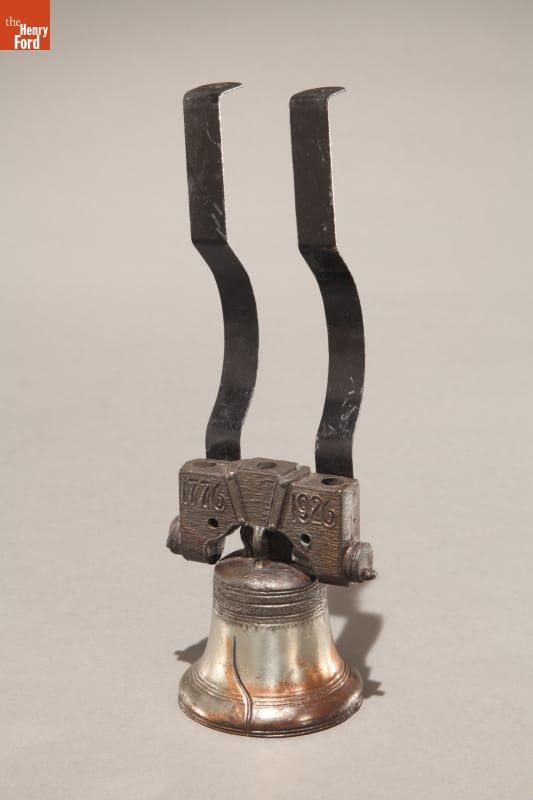
- Sesquicentennial Radiator Cap, 1926 - The Sesquicentennial International Exposition celebrated the 150th anniversary of the signing of the Declaration of Independence. Though more than six million attendees visited Philadelphia in 1926, the fair was not profitable and disappointed organizers following the city's successful Centennial Exhibition of 1876. Still, many fairgoers commemorated the experience, returning home with souvenirs like this radiator cap depicting Philadelphia's Liberty Bell.
- 1926
- Collections - Artifact
Sesquicentennial Radiator Cap, 1926
The Sesquicentennial International Exposition celebrated the 150th anniversary of the signing of the Declaration of Independence. Though more than six million attendees visited Philadelphia in 1926, the fair was not profitable and disappointed organizers following the city's successful Centennial Exhibition of 1876. Still, many fairgoers commemorated the experience, returning home with souvenirs like this radiator cap depicting Philadelphia's Liberty Bell.
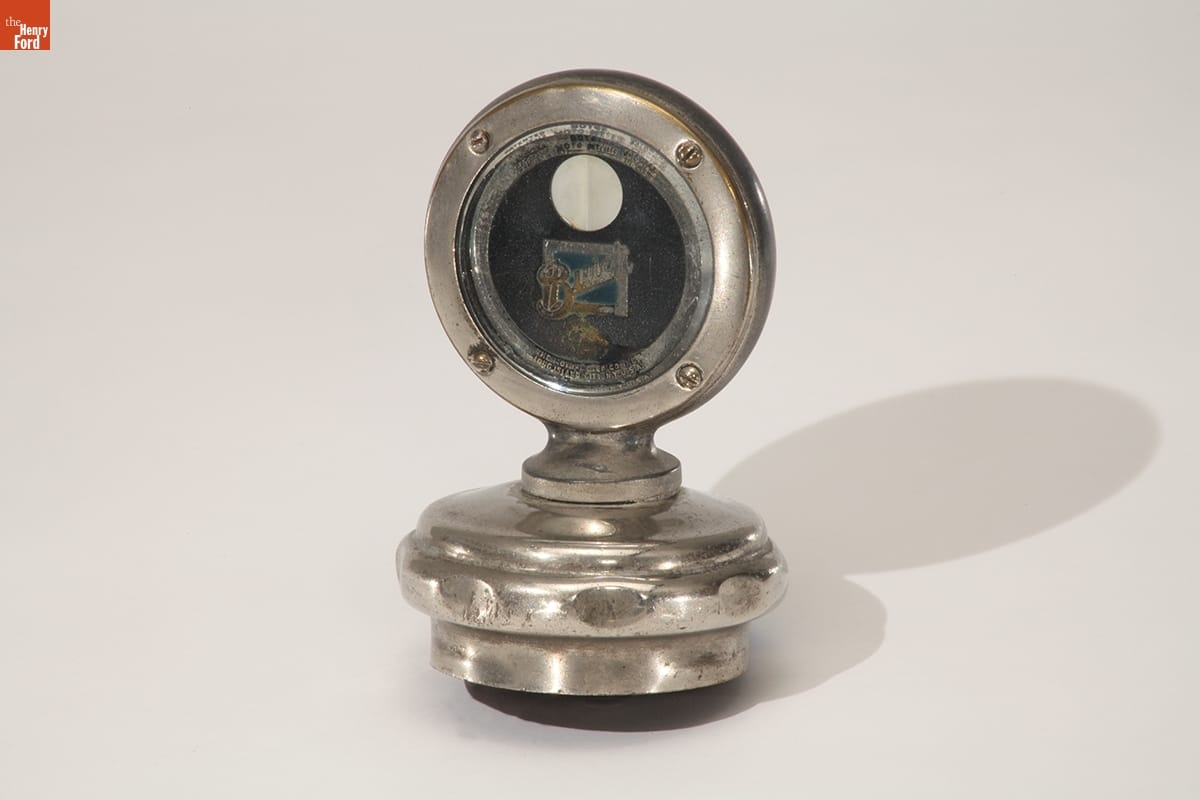
- Buick Motometer and Radiator Cap, circa 1925 - Automobiles often came without temperature gauges before the early 1930s, so enterprising manufacturers sold aftermarket motometers. Mounted on a car's radiator, these devices measured and displayed coolant water vapor temperature, notifying drivers if their automobiles were in danger of overheating. Moto-Meter Co. Inc. dominated the American market, producing the popular Boyce motometer and others featuring an automotive manufacturer's name or logo.
- circa 1925
- Collections - Artifact
Buick Motometer and Radiator Cap, circa 1925
Automobiles often came without temperature gauges before the early 1930s, so enterprising manufacturers sold aftermarket motometers. Mounted on a car's radiator, these devices measured and displayed coolant water vapor temperature, notifying drivers if their automobiles were in danger of overheating. Moto-Meter Co. Inc. dominated the American market, producing the popular Boyce motometer and others featuring an automotive manufacturer's name or logo.
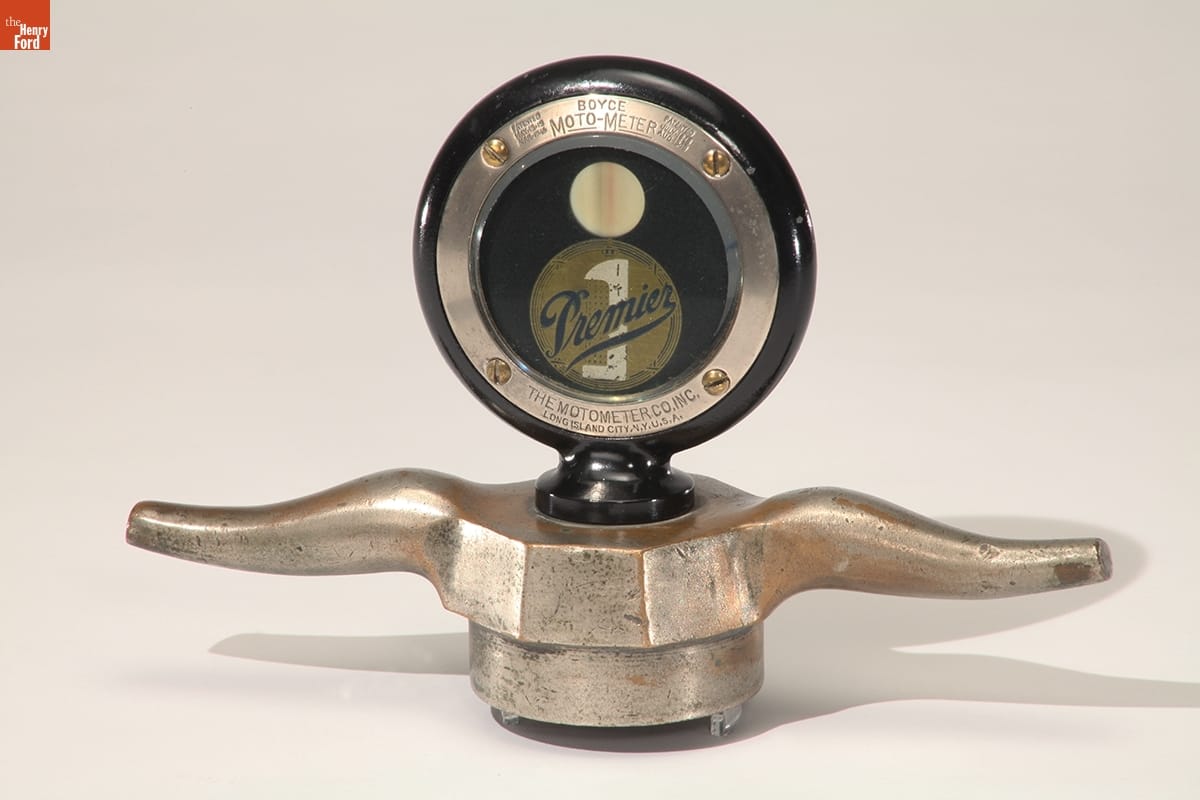
- Premier Motometer and Radiator Cap, circa 1920 - Automobiles often came without temperature gauges before the early 1930s, so enterprising manufacturers sold aftermarket motometers. Mounted on a car's radiator, these devices measured and displayed coolant water vapor temperature, notifying drivers if their automobiles were in danger of overheating. Moto-Meter Co. Inc. dominated the American market, producing the popular Boyce motometer and others featuring an automotive manufacturer's name or logo.
- circa 1920
- Collections - Artifact
Premier Motometer and Radiator Cap, circa 1920
Automobiles often came without temperature gauges before the early 1930s, so enterprising manufacturers sold aftermarket motometers. Mounted on a car's radiator, these devices measured and displayed coolant water vapor temperature, notifying drivers if their automobiles were in danger of overheating. Moto-Meter Co. Inc. dominated the American market, producing the popular Boyce motometer and others featuring an automotive manufacturer's name or logo.
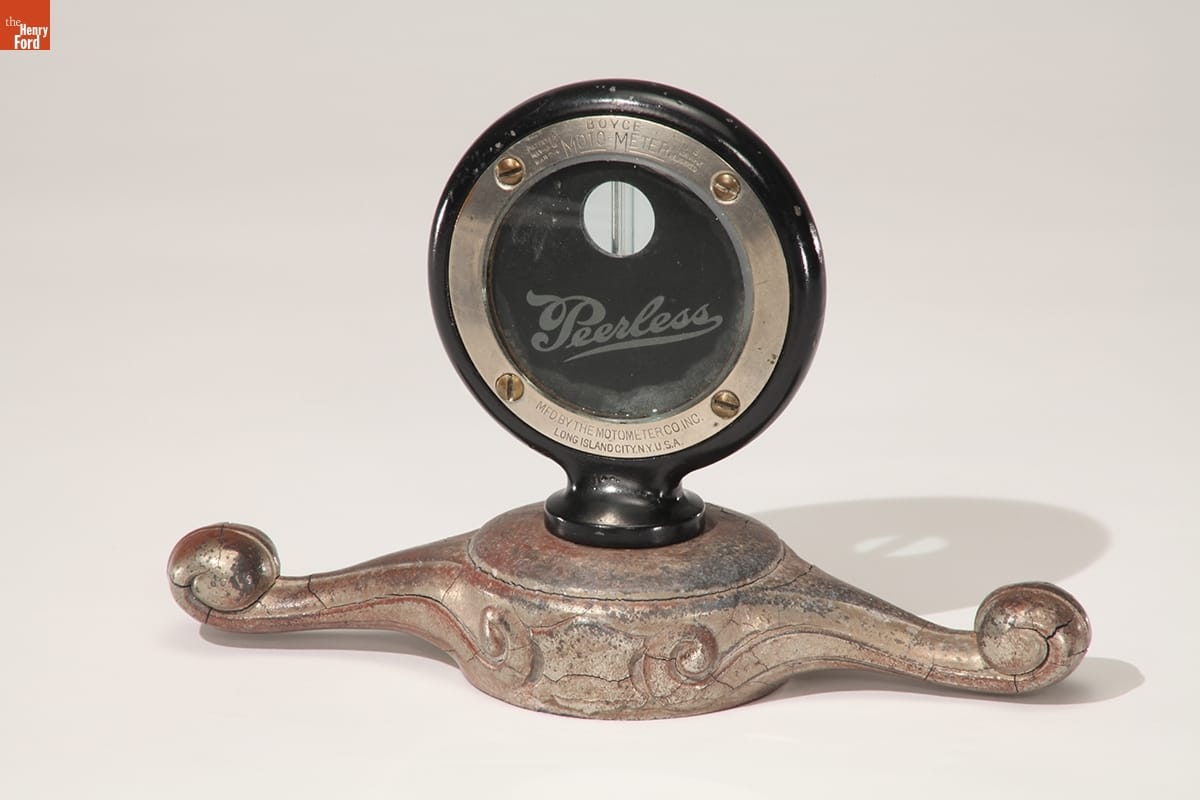
- Peerless Motometer and Radiator Cap, circa 1925 - Automobiles often came without temperature gauges before the early 1930s, so enterprising manufacturers sold aftermarket motometers. Mounted on a car's radiator, these devices measured and displayed coolant water vapor temperature, notifying drivers if their automobiles were in danger of overheating. Moto-Meter Co. Inc. dominated the American market, producing the popular Boyce motometer and others featuring an automotive manufacturer's name or logo.
- circa 1925
- Collections - Artifact
Peerless Motometer and Radiator Cap, circa 1925
Automobiles often came without temperature gauges before the early 1930s, so enterprising manufacturers sold aftermarket motometers. Mounted on a car's radiator, these devices measured and displayed coolant water vapor temperature, notifying drivers if their automobiles were in danger of overheating. Moto-Meter Co. Inc. dominated the American market, producing the popular Boyce motometer and others featuring an automotive manufacturer's name or logo.