
Search
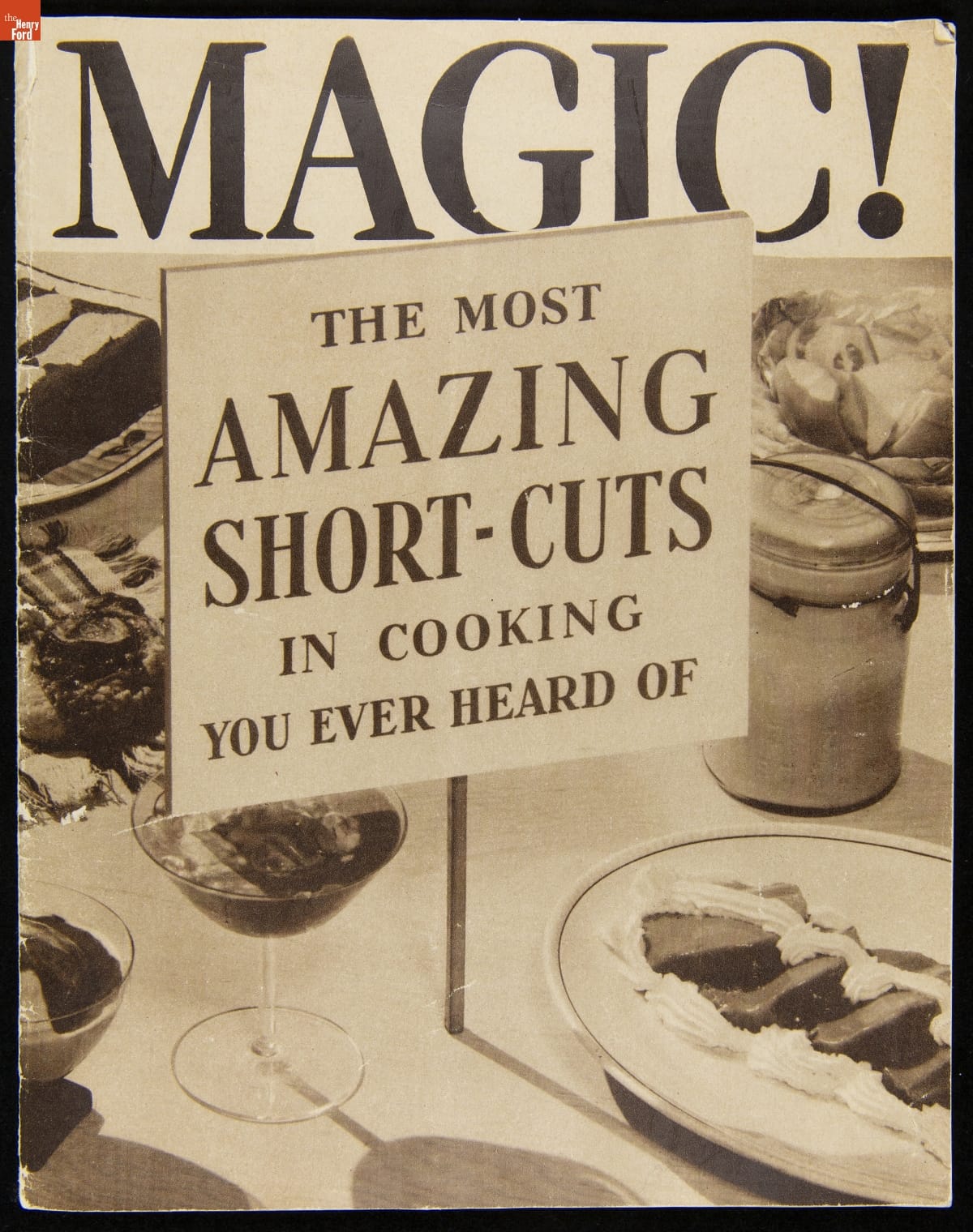
- Recipe Booklet, "MAGIC! The Most Amazing Short-Cuts in Cooking You Ever Heard Of," circa 1930 -
- circa 1930
- Collections - Artifact
Recipe Booklet, "MAGIC! The Most Amazing Short-Cuts in Cooking You Ever Heard Of," circa 1930
- Stenographic Report of Proceedings of Light's Golden Jubilee at Dearborn, Michigan, October 21, 1929 -
- October 21, 1929
- Collections - Artifact
Stenographic Report of Proceedings of Light's Golden Jubilee at Dearborn, Michigan, October 21, 1929
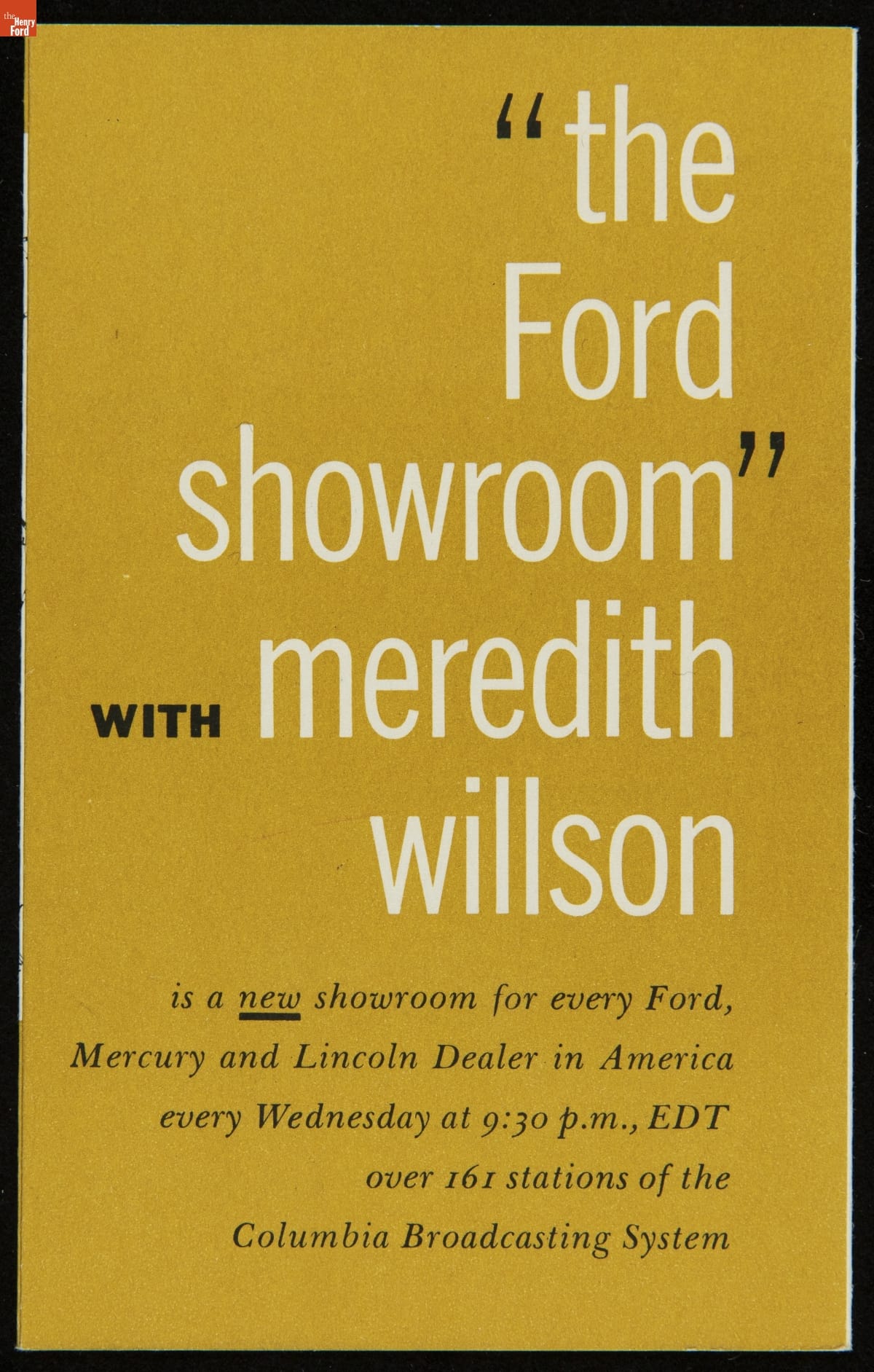
- "The Ford Showroom" with Meredith Willson, 1947 - Ford Motor Company sponsored the CBS radio show <em>The Ford Showroom</em> in 1947. The program featured bandleader Meredith Willson, a radio and film veteran. Willson reached greater heights ten years later, when his musical inspired by his Iowa childhood, <em>The Music Man</em>, opened on Broadway to critical and commercial success.
- 1947
- Collections - Artifact
"The Ford Showroom" with Meredith Willson, 1947
Ford Motor Company sponsored the CBS radio show The Ford Showroom in 1947. The program featured bandleader Meredith Willson, a radio and film veteran. Willson reached greater heights ten years later, when his musical inspired by his Iowa childhood, The Music Man, opened on Broadway to critical and commercial success.
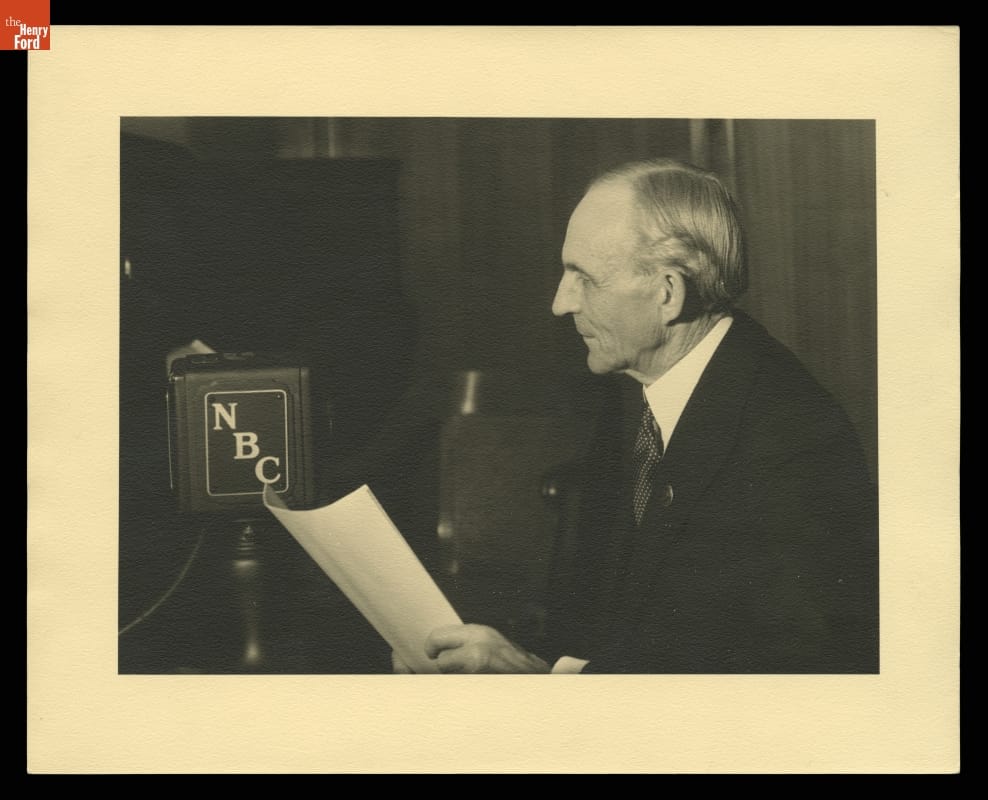
- Henry Ford Making Radio Broadcast Supporting Herbert Hoover's Presidential Campaign, 1932 -
- October 19, 1932
- Collections - Artifact
Henry Ford Making Radio Broadcast Supporting Herbert Hoover's Presidential Campaign, 1932
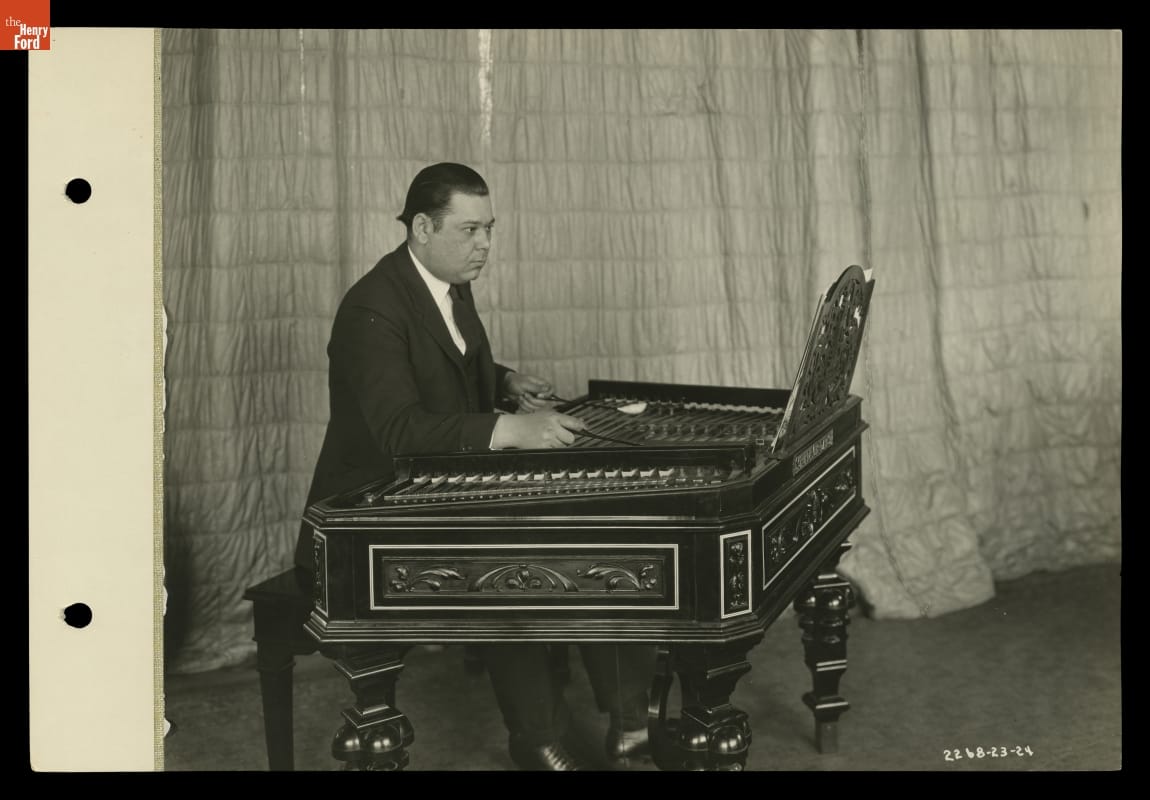
- Edmund Berky Playing the Cimbalom during a Ford Radio Station WWI Broadcast, 1924 - Edmund Berky provided musical entertainment for a Ford Motor Company radio program in May 1924. Berky played several selections -- ranging from classical to folk tunes -- on a cimbalom, which is similar to a dulcimer. Musicians play the cimbalom by striking metal strings with spoon-shaped wooden hammers covered with cotton, felt, or leather.
- May 22, 1924
- Collections - Artifact
Edmund Berky Playing the Cimbalom during a Ford Radio Station WWI Broadcast, 1924
Edmund Berky provided musical entertainment for a Ford Motor Company radio program in May 1924. Berky played several selections -- ranging from classical to folk tunes -- on a cimbalom, which is similar to a dulcimer. Musicians play the cimbalom by striking metal strings with spoon-shaped wooden hammers covered with cotton, felt, or leather.
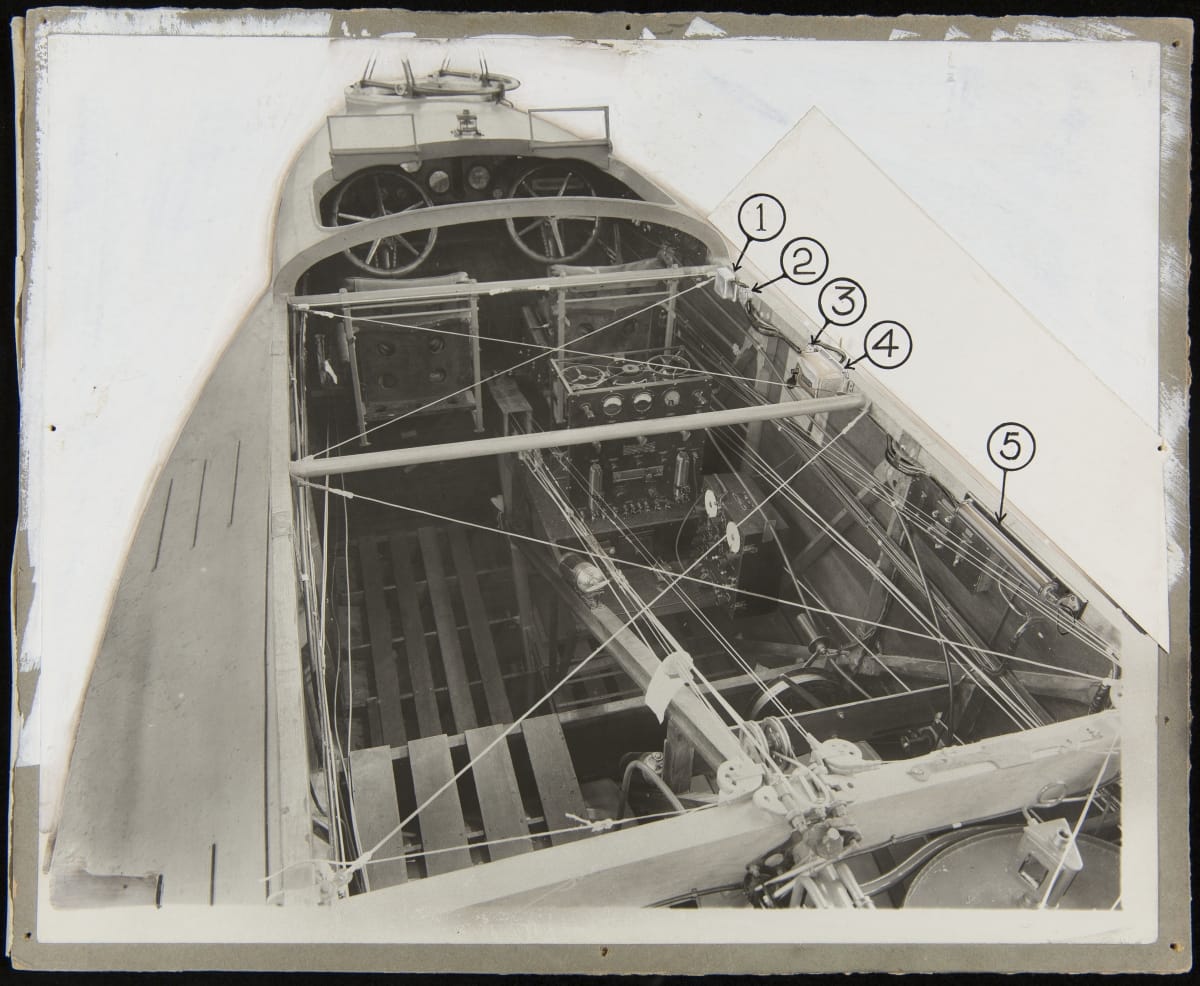
- Radio Installation on Boat, View Looking Toward Bow and Pilot's Cockpit, 1918 -
- October 25, 1918
- Collections - Artifact
Radio Installation on Boat, View Looking Toward Bow and Pilot's Cockpit, 1918
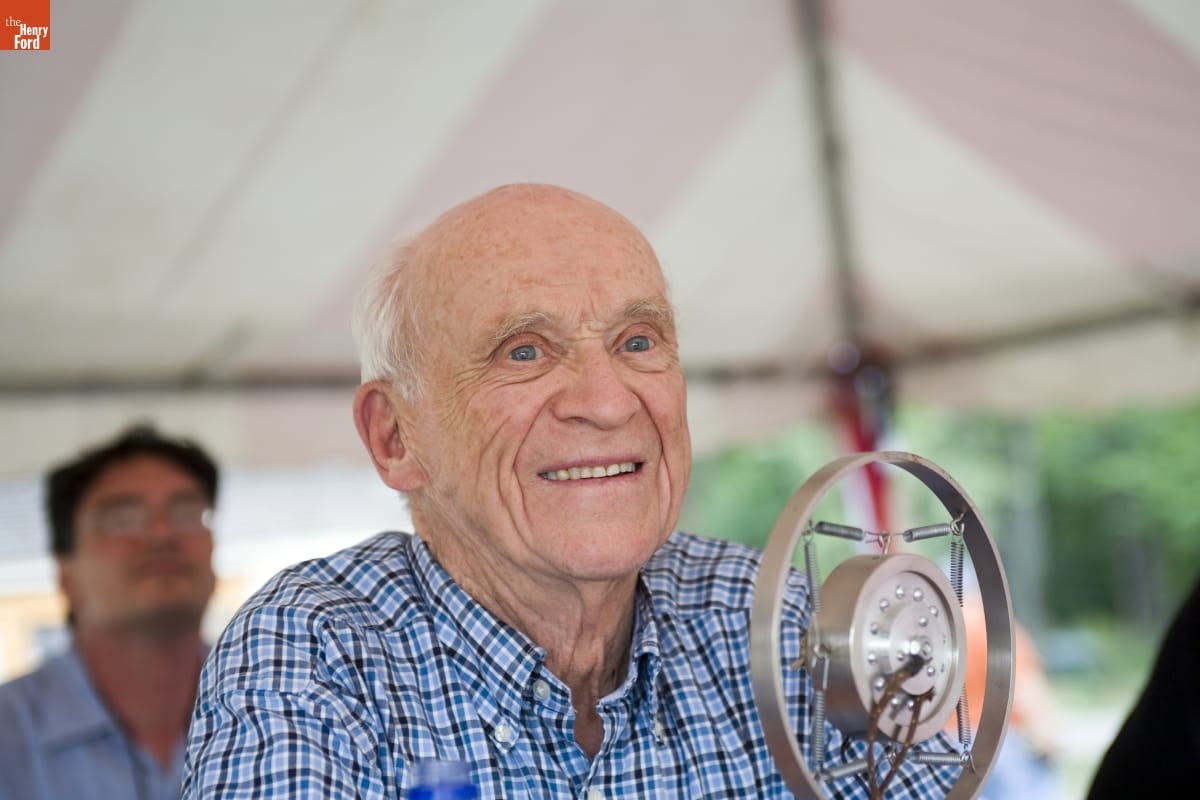
- Ernie Harwell at the World Tournament of Historic Baseball in Greenfield Village, August 2007 - In August, baseball players from throughout the Midwest gather at Greenfield Village to participate in the World Tournament of Historic Base Ball. The games commemorate Detroit's 1867 World Base Ball Tournament, and players and umpires use period-inspired uniforms and equipment and follow the game's rule from the original tournament. Retired Detroit Tigers' sportscaster Ernie Harwell stopped by for a visit at the tournament in 2007.
- August 01, 2007
- Collections - Artifact
Ernie Harwell at the World Tournament of Historic Baseball in Greenfield Village, August 2007
In August, baseball players from throughout the Midwest gather at Greenfield Village to participate in the World Tournament of Historic Base Ball. The games commemorate Detroit's 1867 World Base Ball Tournament, and players and umpires use period-inspired uniforms and equipment and follow the game's rule from the original tournament. Retired Detroit Tigers' sportscaster Ernie Harwell stopped by for a visit at the tournament in 2007.
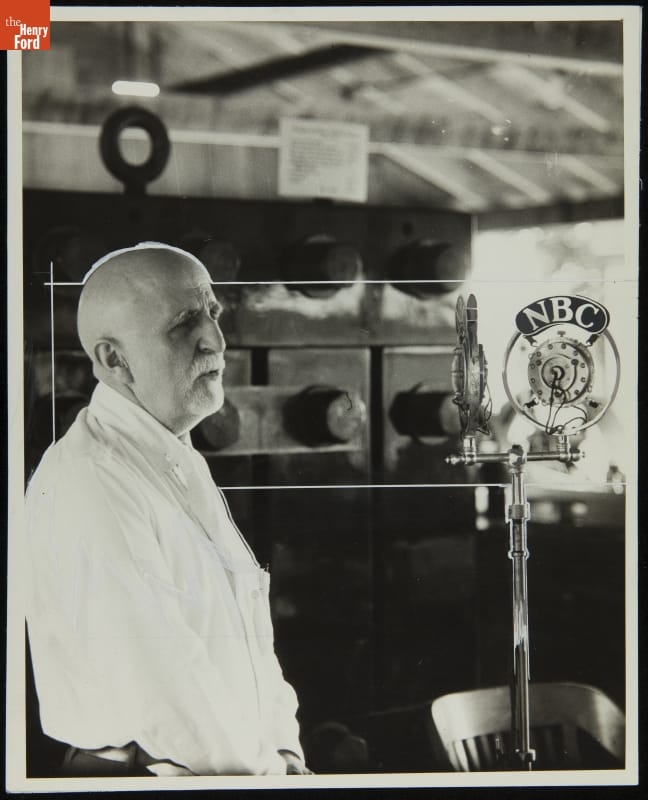
- Alex Dow, President of Detroit Edison, at the 50th Anniversary of the Pearl Street Power Plant, 1932 -
- September 04, 1932
- Collections - Artifact
Alex Dow, President of Detroit Edison, at the 50th Anniversary of the Pearl Street Power Plant, 1932
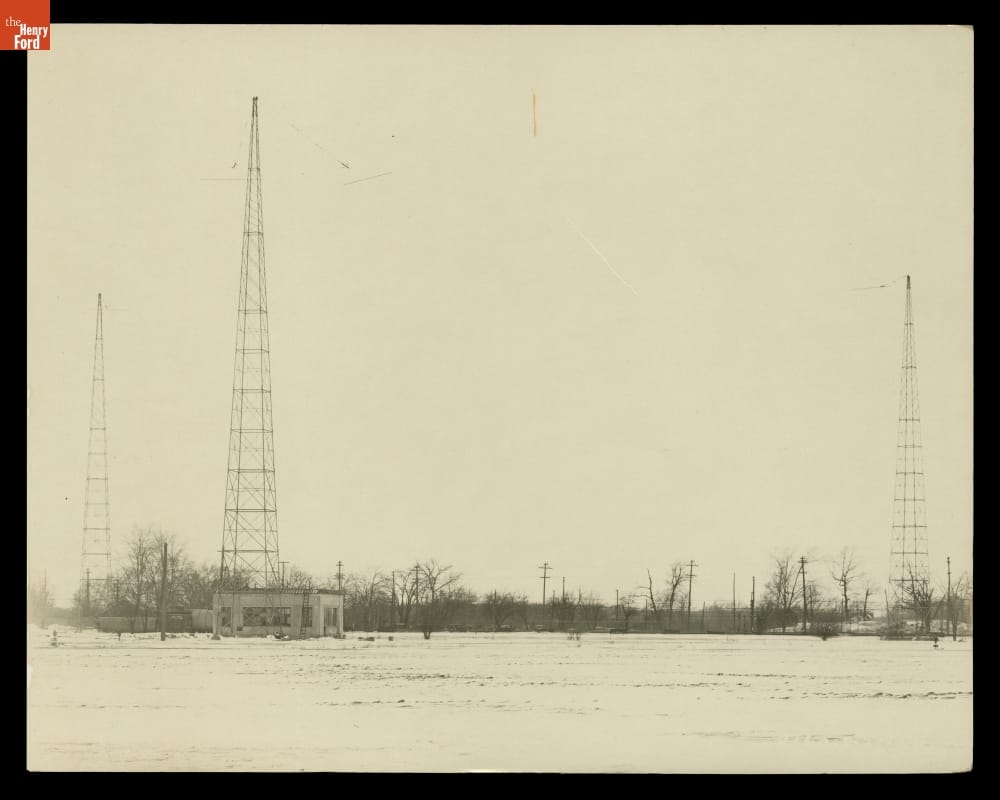
- Ford Motor Company Radio Station WWI, Dearborn, Michigan, February 1924 - Henry Ford experimented with radio in the early 1920s. In March 1922 he received permission to broadcast publicly using call letters WWI. Ford's 250-watt station, based in Dearborn, broadcast only a couple of hours each day with programming limited to talks, dramatic readings, and musical performances. Ford lost interest in the venture, and WWI stopped broadcasting in February 1926.
- February 21, 1924
- Collections - Artifact
Ford Motor Company Radio Station WWI, Dearborn, Michigan, February 1924
Henry Ford experimented with radio in the early 1920s. In March 1922 he received permission to broadcast publicly using call letters WWI. Ford's 250-watt station, based in Dearborn, broadcast only a couple of hours each day with programming limited to talks, dramatic readings, and musical performances. Ford lost interest in the venture, and WWI stopped broadcasting in February 1926.
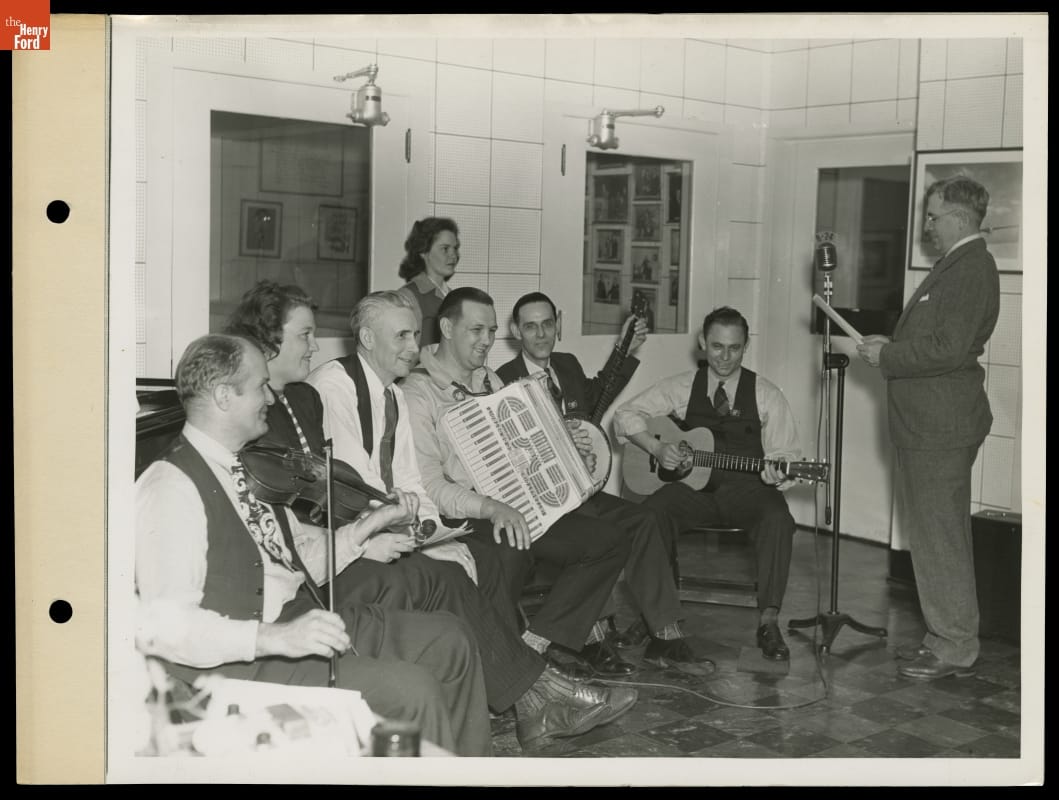
- Old Timer's Band at B-24 Radio Station Broadcast Studio, Willow Run Bomber Plant, 1944 - At its peak, Ford Motor Company's Willow Run bomber plant employed more than 42,000 people. The factory's five million square feet of roofed workspace included everything needed to train and care for its workforce, including classrooms, a hospital, dining rooms, and recreational facilities. An on-site radio station provided news and entertainment programming to employees.
- May 20, 1944
- Collections - Artifact
Old Timer's Band at B-24 Radio Station Broadcast Studio, Willow Run Bomber Plant, 1944
At its peak, Ford Motor Company's Willow Run bomber plant employed more than 42,000 people. The factory's five million square feet of roofed workspace included everything needed to train and care for its workforce, including classrooms, a hospital, dining rooms, and recreational facilities. An on-site radio station provided news and entertainment programming to employees.