
Search
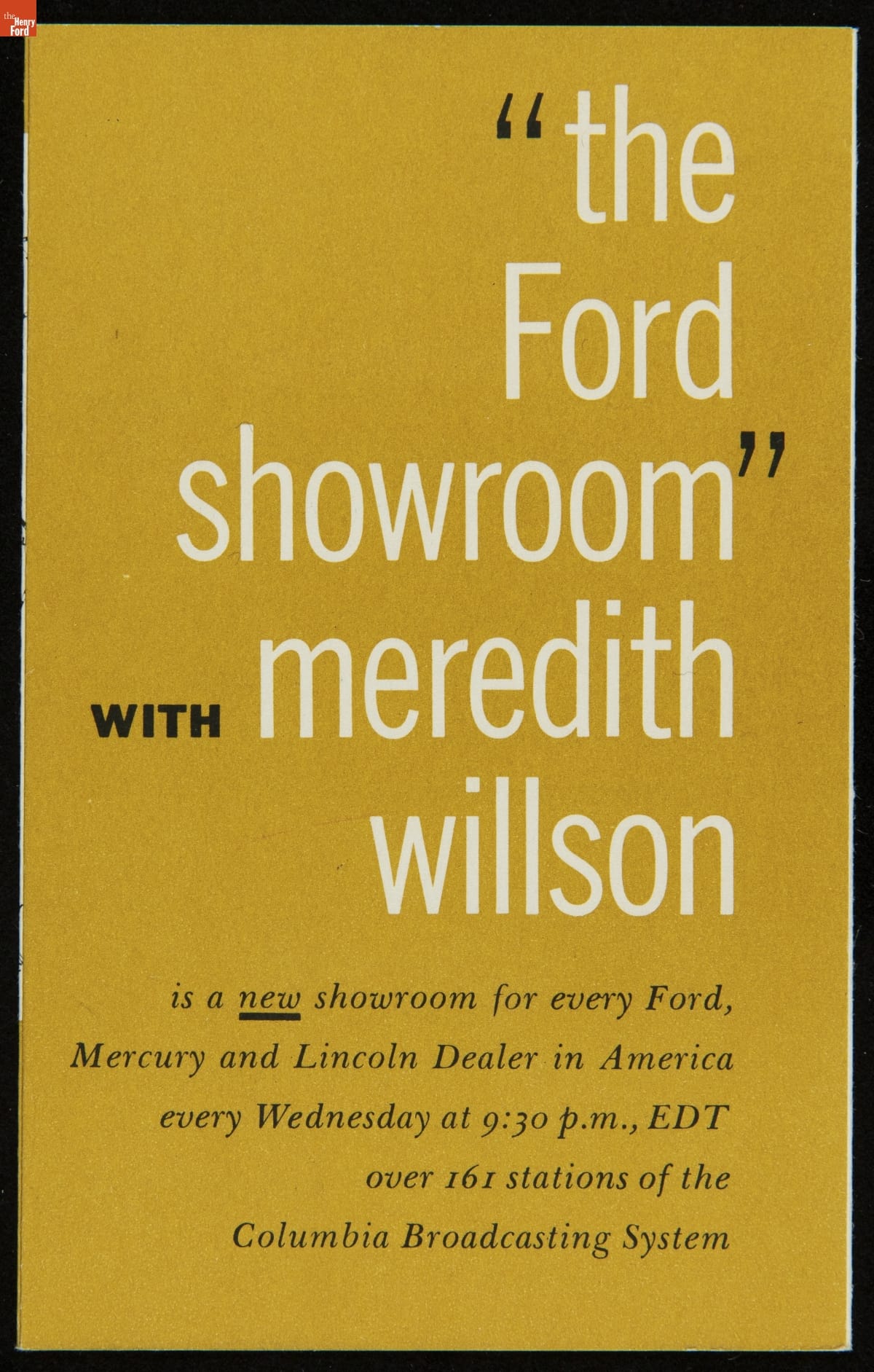
- "The Ford Showroom" with Meredith Willson, 1947 - Ford Motor Company sponsored the CBS radio show <em>The Ford Showroom</em> in 1947. The program featured bandleader Meredith Willson, a radio and film veteran. Willson reached greater heights ten years later, when his musical inspired by his Iowa childhood, <em>The Music Man</em>, opened on Broadway to critical and commercial success.
- 1947
- Collections - Artifact
"The Ford Showroom" with Meredith Willson, 1947
Ford Motor Company sponsored the CBS radio show The Ford Showroom in 1947. The program featured bandleader Meredith Willson, a radio and film veteran. Willson reached greater heights ten years later, when his musical inspired by his Iowa childhood, The Music Man, opened on Broadway to critical and commercial success.
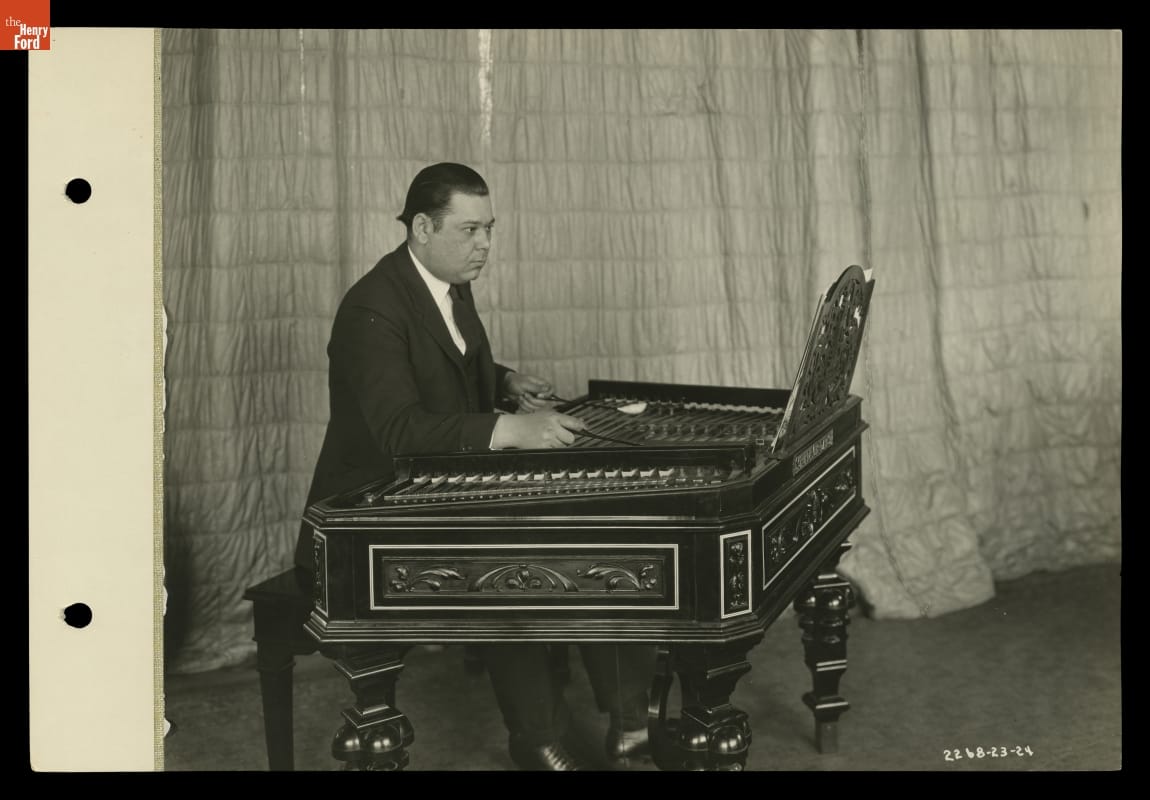
- Edmund Berky Playing the Cimbalom during a Ford Radio Station WWI Broadcast, 1924 - Edmund Berky provided musical entertainment for a Ford Motor Company radio program in May 1924. Berky played several selections -- ranging from classical to folk tunes -- on a cimbalom, which is similar to a dulcimer. Musicians play the cimbalom by striking metal strings with spoon-shaped wooden hammers covered with cotton, felt, or leather.
- May 22, 1924
- Collections - Artifact
Edmund Berky Playing the Cimbalom during a Ford Radio Station WWI Broadcast, 1924
Edmund Berky provided musical entertainment for a Ford Motor Company radio program in May 1924. Berky played several selections -- ranging from classical to folk tunes -- on a cimbalom, which is similar to a dulcimer. Musicians play the cimbalom by striking metal strings with spoon-shaped wooden hammers covered with cotton, felt, or leather.
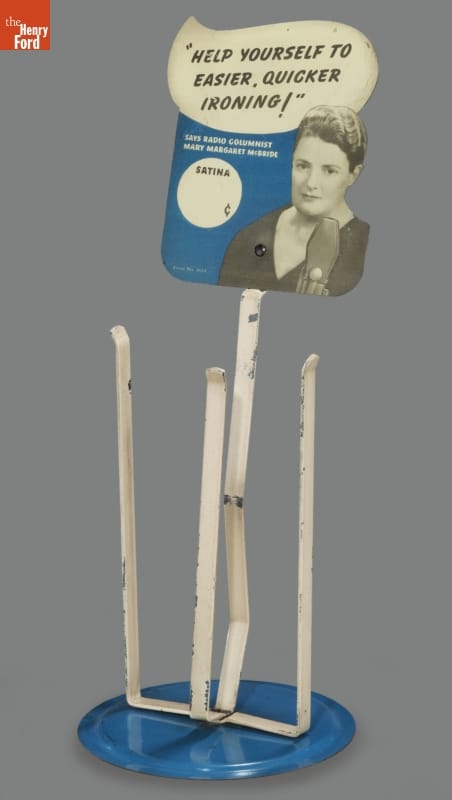
- Satina Starch Display Rack, 1937-1939 -
- 1937-1939
- Collections - Artifact
Satina Starch Display Rack, 1937-1939
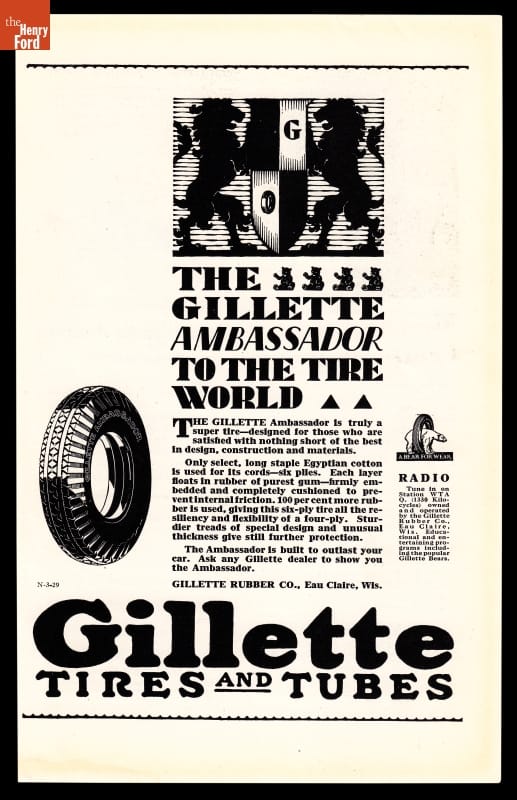
- Gillette Tires Advertisement, "The Gillette Ambassador to the Tire World," July 1929 - Raymond B. Gillette formed the Gillette Safety Tire Company in Eau Claire, Wisconsin, in 1916. U.S. Rubber Company took control of Gillette in 1940 and the Eau Claire plant was expanded and modernized, in part to meet military needs during World War II. After a series of subsequent mergers, the Eau Claire plant was closed in 1992.
- July 01, 1929
- Collections - Artifact
Gillette Tires Advertisement, "The Gillette Ambassador to the Tire World," July 1929
Raymond B. Gillette formed the Gillette Safety Tire Company in Eau Claire, Wisconsin, in 1916. U.S. Rubber Company took control of Gillette in 1940 and the Eau Claire plant was expanded and modernized, in part to meet military needs during World War II. After a series of subsequent mergers, the Eau Claire plant was closed in 1992.
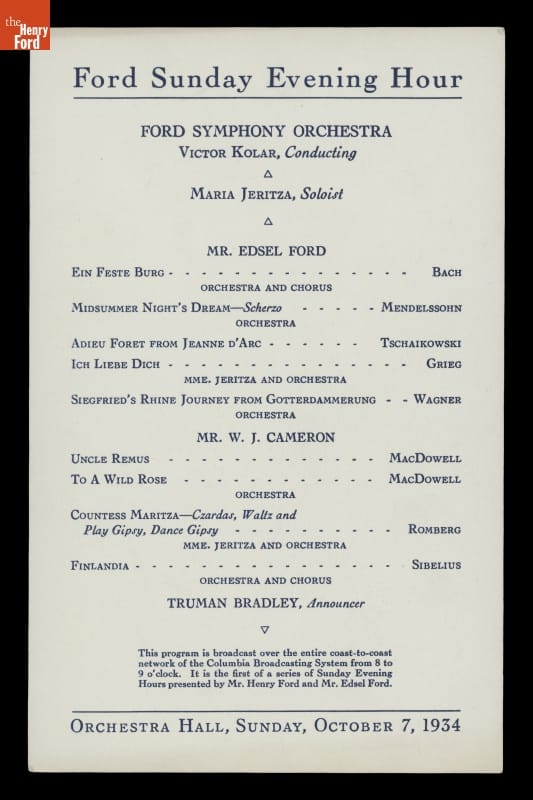
- Program for the First "Ford Sunday Evening Hour" Radio Broadcast, October 7, 1934 -
- October 07, 1934
- Collections - Artifact
Program for the First "Ford Sunday Evening Hour" Radio Broadcast, October 7, 1934
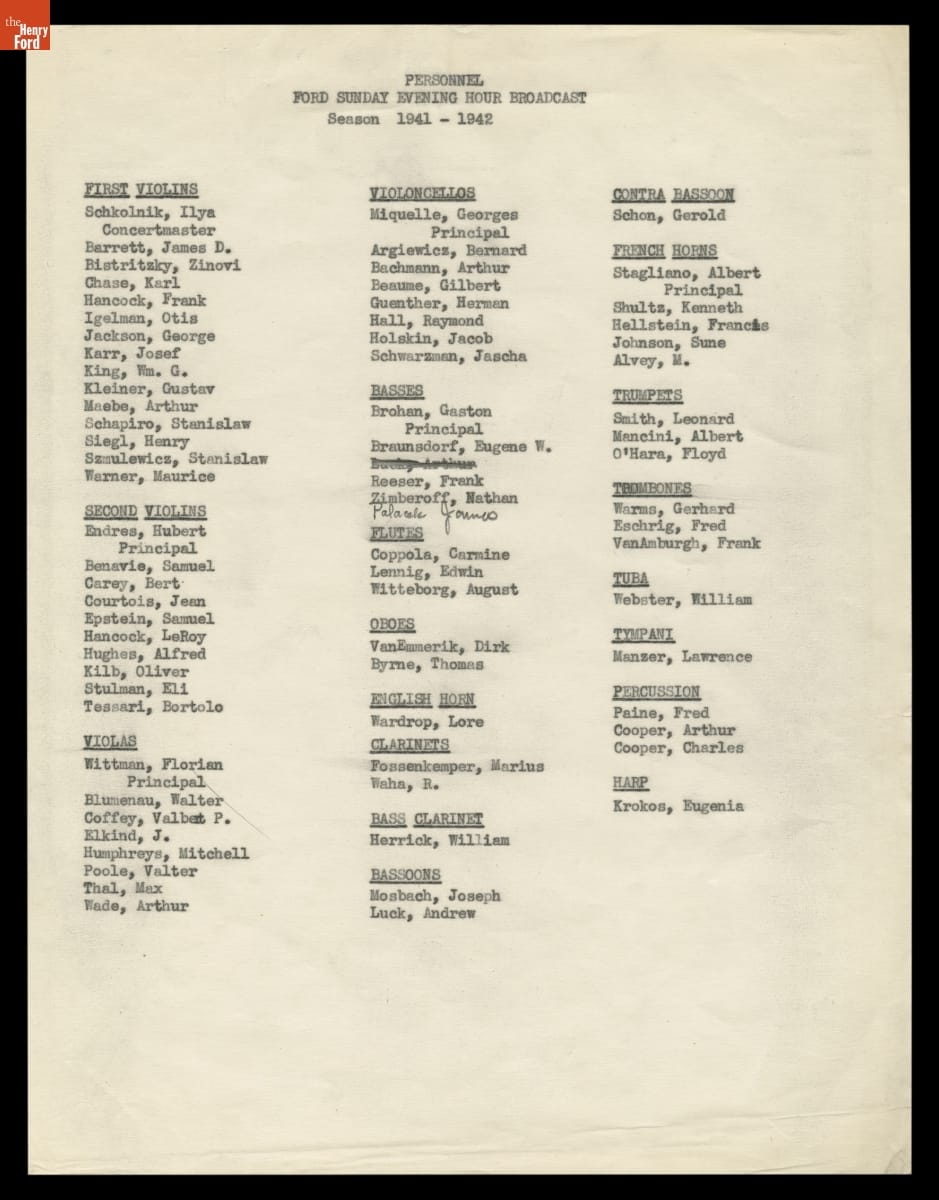
- List of Ford Symphony Orchestra Members for the Ford Sunday Evening Hour Radio Broadcast, 1941-1942 - Launched in 1934, the <em>Ford Sunday Evening Hour</em> radio program featured classical music, guest soloists and conductors, and a weekly talk during intermission. The show was performed live and broadcast over the CBS radio network. Seventy-five members of the Detroit Symphony Orchestra -- under the name Ford Symphony Orchestra -- played musical pieces. This list contains names of musicians for the 1941-42 season.
- 1941-1942
- Collections - Artifact
List of Ford Symphony Orchestra Members for the Ford Sunday Evening Hour Radio Broadcast, 1941-1942
Launched in 1934, the Ford Sunday Evening Hour radio program featured classical music, guest soloists and conductors, and a weekly talk during intermission. The show was performed live and broadcast over the CBS radio network. Seventy-five members of the Detroit Symphony Orchestra -- under the name Ford Symphony Orchestra -- played musical pieces. This list contains names of musicians for the 1941-42 season.
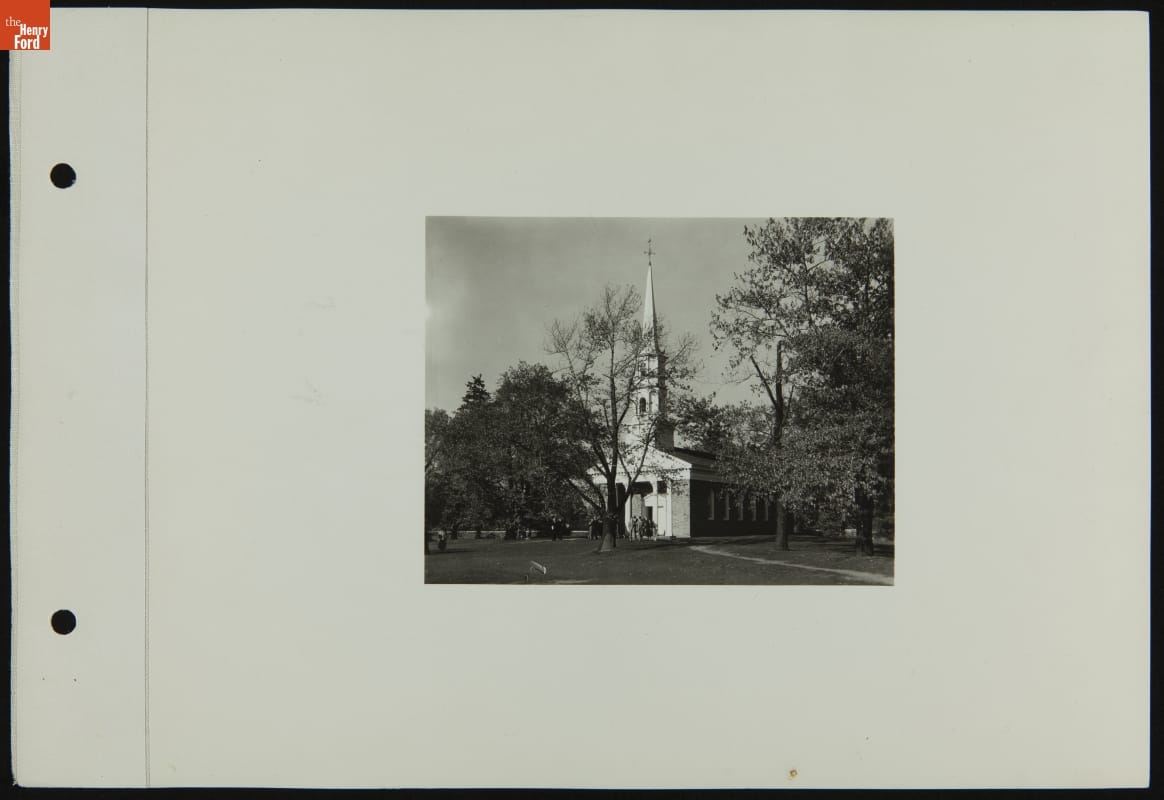
- Martha-Mary Chapel the Day of Thomas Edison's Memorial Service, Greenfield Village, October 21, 1931 - On October 21, 1931, school children from Greenfield Village and members of Henry Ford's staff gathered at the Martha-Mary Chapel for a memorial service remembering Thomas Edison. Edison had passed away three days earlier. The simple service included several of Edison's favorite hymns. An impromptu song service was held afterwards--conducted by radio personality Seth Parker who happened to be visiting at the time.
- October 21, 1931
- Collections - Artifact
Martha-Mary Chapel the Day of Thomas Edison's Memorial Service, Greenfield Village, October 21, 1931
On October 21, 1931, school children from Greenfield Village and members of Henry Ford's staff gathered at the Martha-Mary Chapel for a memorial service remembering Thomas Edison. Edison had passed away three days earlier. The simple service included several of Edison's favorite hymns. An impromptu song service was held afterwards--conducted by radio personality Seth Parker who happened to be visiting at the time.
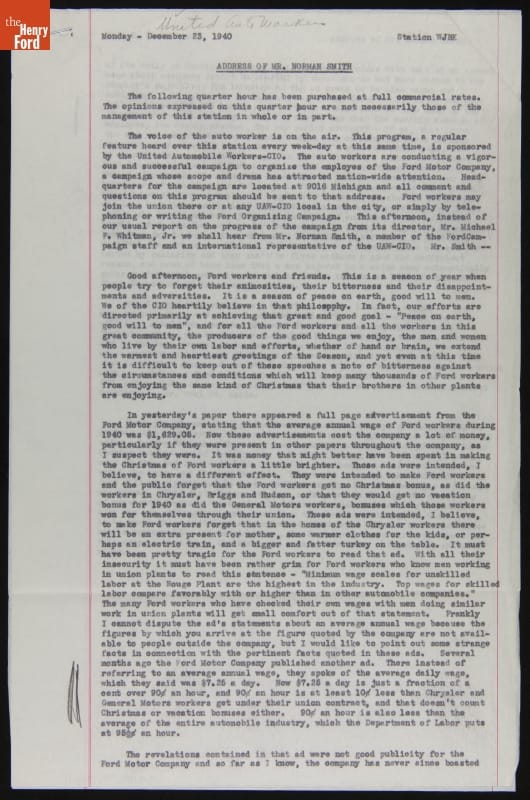
- Address of Mr. Norman Smith on WJBK Radio, Ypsilanti, Michigan, December 23, 1940 -
- December 23, 1940
- Collections - Artifact
Address of Mr. Norman Smith on WJBK Radio, Ypsilanti, Michigan, December 23, 1940
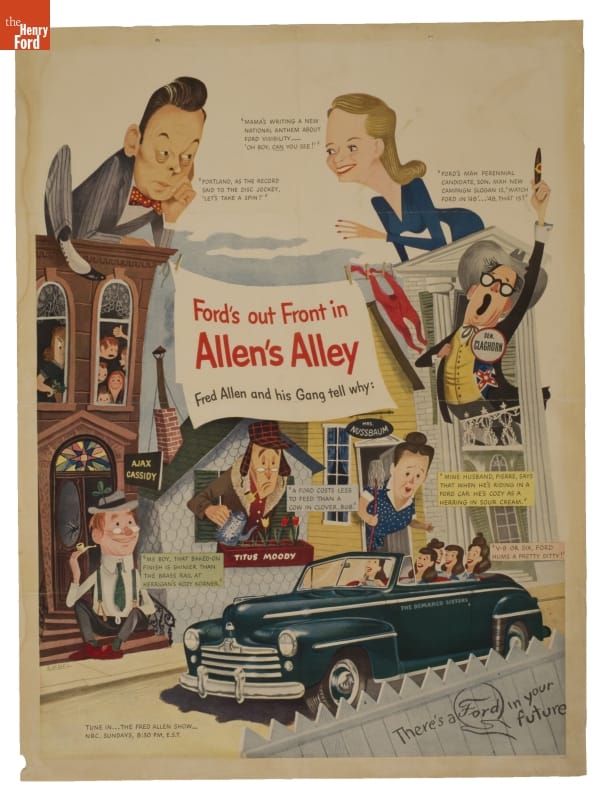
- Advertising Poster, "Ford's Out Front in Allen's Alley," 1945-1949 -
- 1945-1949
- Collections - Artifact
Advertising Poster, "Ford's Out Front in Allen's Alley," 1945-1949
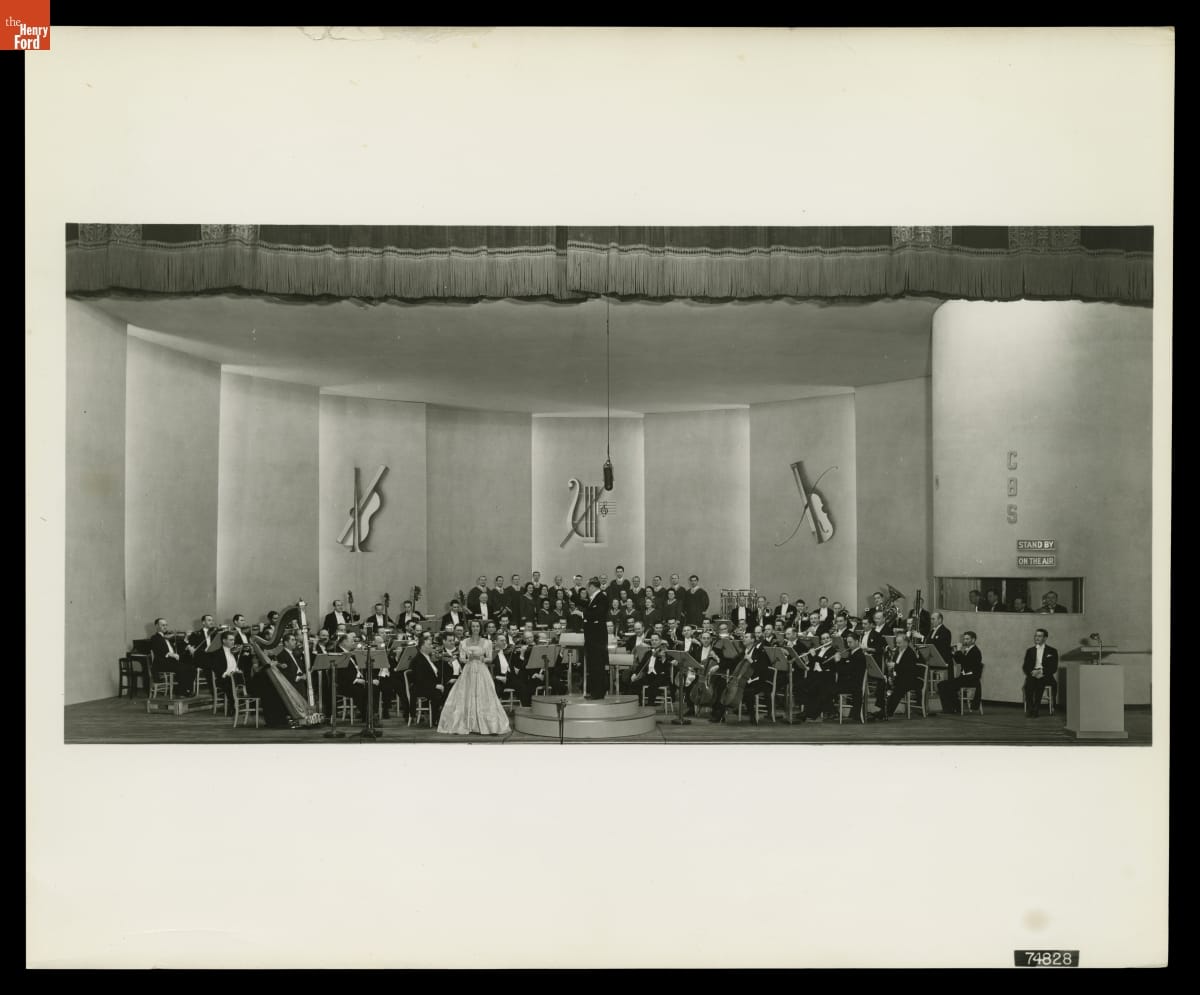
- Ford Sunday Evening Hour Orchestra on Stage at Masonic Temple, January 12, 1941 - Launched in 1934, the Ford Sunday Evening Hour radio program featured classical music, guest soloists and conductors, and a weekly talk during intermission. The show was performed live and broadcast over the CBS radio network. Members of the Detroit Symphony Orchestra -- under the name Ford Symphony Orchestra -- played musical pieces. This image shows the radio production from Detroit's Masonic Temple.
- January 12, 1941
- Collections - Artifact
Ford Sunday Evening Hour Orchestra on Stage at Masonic Temple, January 12, 1941
Launched in 1934, the Ford Sunday Evening Hour radio program featured classical music, guest soloists and conductors, and a weekly talk during intermission. The show was performed live and broadcast over the CBS radio network. Members of the Detroit Symphony Orchestra -- under the name Ford Symphony Orchestra -- played musical pieces. This image shows the radio production from Detroit's Masonic Temple.