
Search
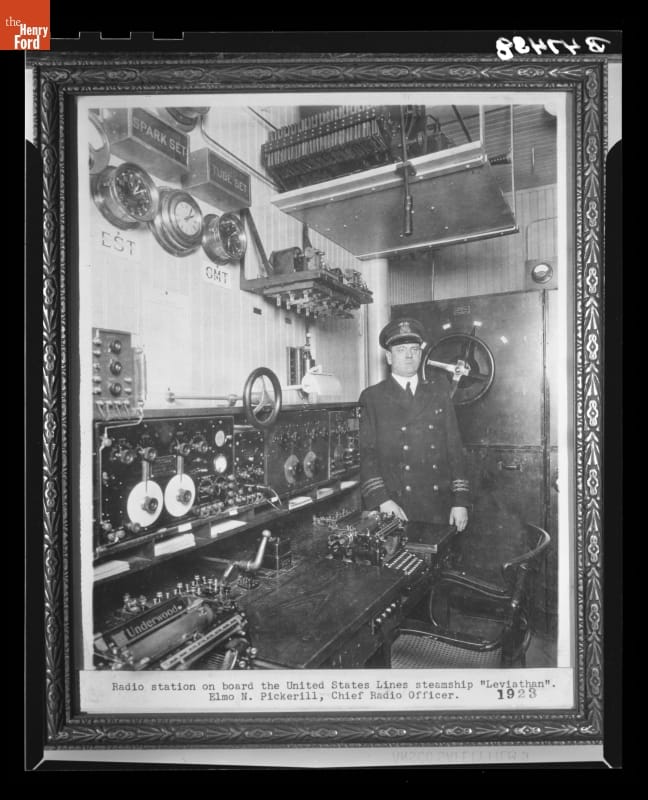
- Chief Radio Officer Elmo Pickerill in the Radio Station on the SS Leviathan, 1923 -
- 1923
- Collections - Artifact
Chief Radio Officer Elmo Pickerill in the Radio Station on the SS Leviathan, 1923
- Stenographic Report of Proceedings of Light's Golden Jubilee at Dearborn, Michigan, October 21, 1929 -

- October 21, 1929
- Collections - Artifact
Stenographic Report of Proceedings of Light's Golden Jubilee at Dearborn, Michigan, October 21, 1929
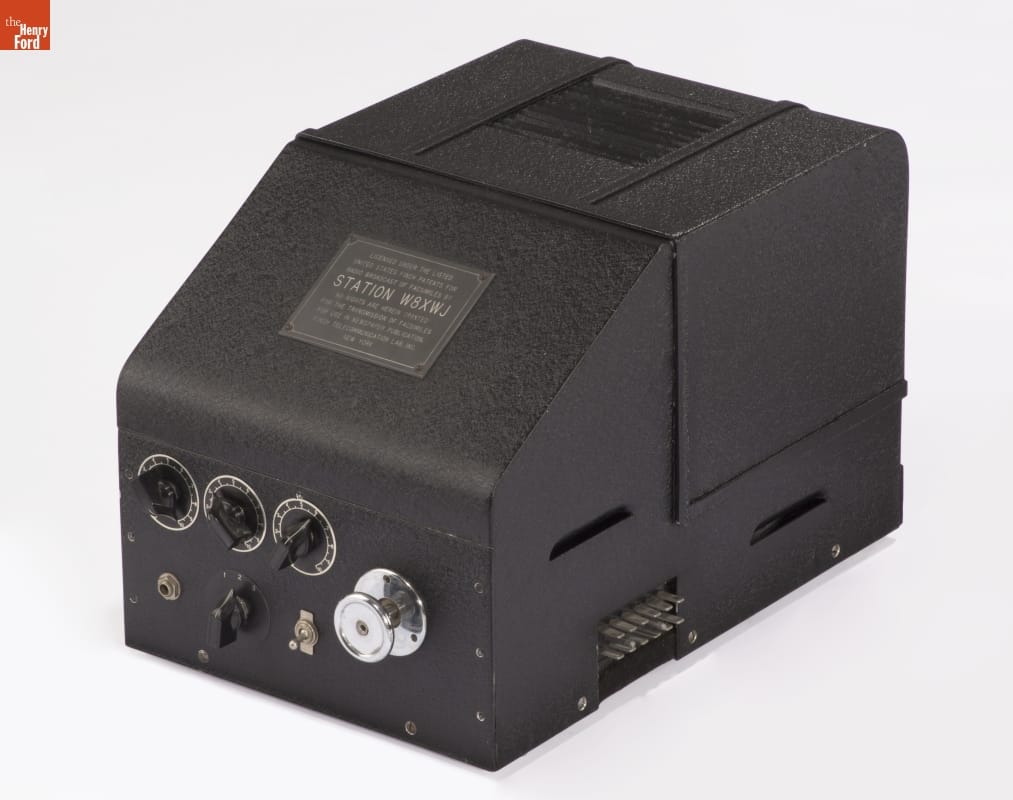
- Finch Facsimile Transmitter, 1938-1940 - From 1938-1940, the <EM>Detroit News</EM> experimented with a domestic radio-facsimile subscription service. This transmitter converted images and text into electrical impulses, sent over the radio waves--reassembled by receivers in the homes of customers. The idea was revolutionary, however, the process was slow and signal reception was unreliable beyond a mile or two of the transmission tower.
- 1938-1940
- Collections - Artifact
Finch Facsimile Transmitter, 1938-1940
From 1938-1940, the Detroit News experimented with a domestic radio-facsimile subscription service. This transmitter converted images and text into electrical impulses, sent over the radio waves--reassembled by receivers in the homes of customers. The idea was revolutionary, however, the process was slow and signal reception was unreliable beyond a mile or two of the transmission tower.
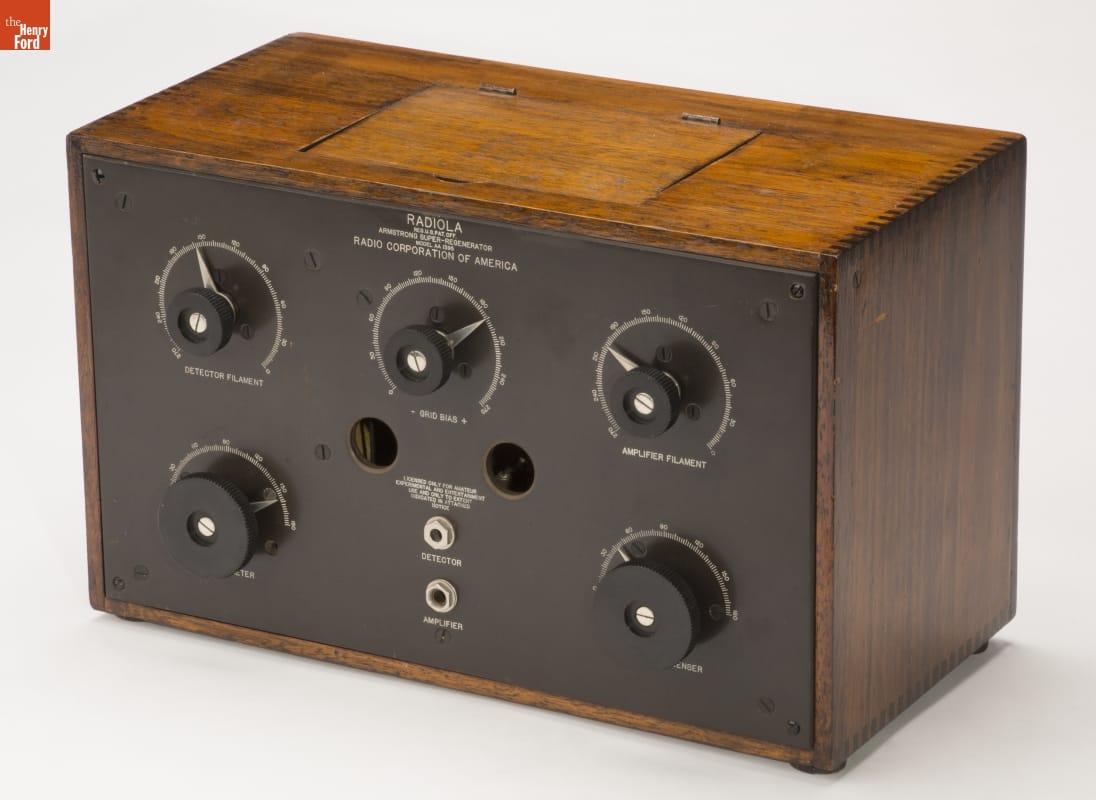
- Radiola Broadcast Receiver, Type 1375, Used at Tuckerton Wireless Station, 1922-1923 - This radio equipment was used at the German-built Tuckerton Wireless Station in New Jersey. A powerful 820-foot antenna communicated with an identical station in Germany. National security concerns during WWI led to the seizure of Tuckerton by the U.S. government in 1917. It is cited to be the origin of information leaks leading to the RMS <em>Lusitania</em> disaster through U-boat attack.
- 1922-1923
- Collections - Artifact
Radiola Broadcast Receiver, Type 1375, Used at Tuckerton Wireless Station, 1922-1923
This radio equipment was used at the German-built Tuckerton Wireless Station in New Jersey. A powerful 820-foot antenna communicated with an identical station in Germany. National security concerns during WWI led to the seizure of Tuckerton by the U.S. government in 1917. It is cited to be the origin of information leaks leading to the RMS Lusitania disaster through U-boat attack.
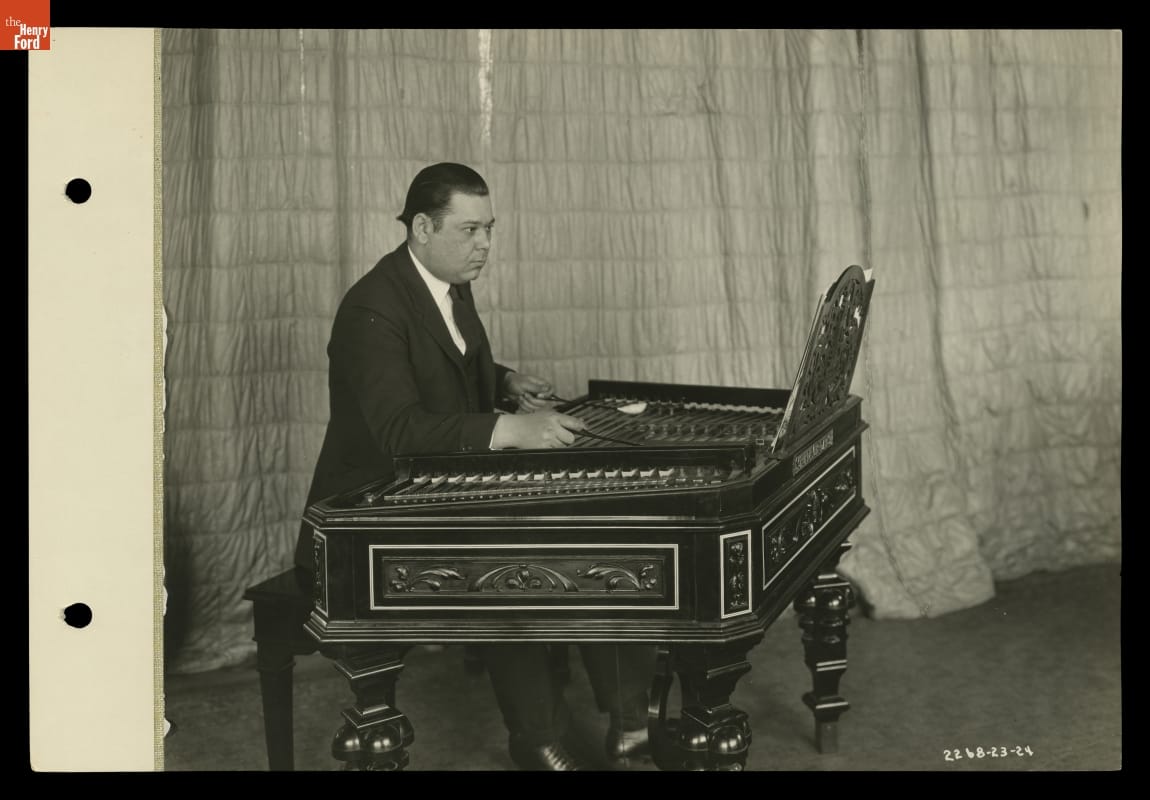
- Edmund Berky Playing the Cimbalom during a Ford Radio Station WWI Broadcast, 1924 - Edmund Berky provided musical entertainment for a Ford Motor Company radio program in May 1924. Berky played several selections -- ranging from classical to folk tunes -- on a cimbalom, which is similar to a dulcimer. Musicians play the cimbalom by striking metal strings with spoon-shaped wooden hammers covered with cotton, felt, or leather.
- May 22, 1924
- Collections - Artifact
Edmund Berky Playing the Cimbalom during a Ford Radio Station WWI Broadcast, 1924
Edmund Berky provided musical entertainment for a Ford Motor Company radio program in May 1924. Berky played several selections -- ranging from classical to folk tunes -- on a cimbalom, which is similar to a dulcimer. Musicians play the cimbalom by striking metal strings with spoon-shaped wooden hammers covered with cotton, felt, or leather.
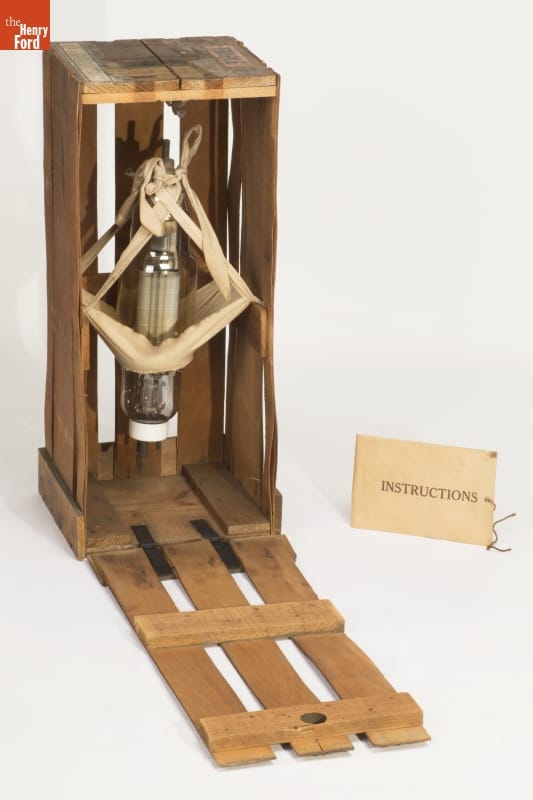
- Western Electric Transmitting Tube, Type 270-A, Used at Radio Station WWJ, Detroit, Michigan, circa 1935 - Vacuum tubes appear in older radios, televisions, amplifiers, computers, and other electronic devices. Their function: to amplify or transmit electronic signals. Typical tubes are sealed glass bulbs evacuated of gas, allowing electron flow to be influenced by an interior cathode, plate and grid. Perfected in 1906, the vacuum tube was the genesis of a communications revolution.
- 1936
- Collections - Artifact
Western Electric Transmitting Tube, Type 270-A, Used at Radio Station WWJ, Detroit, Michigan, circa 1935
Vacuum tubes appear in older radios, televisions, amplifiers, computers, and other electronic devices. Their function: to amplify or transmit electronic signals. Typical tubes are sealed glass bulbs evacuated of gas, allowing electron flow to be influenced by an interior cathode, plate and grid. Perfected in 1906, the vacuum tube was the genesis of a communications revolution.
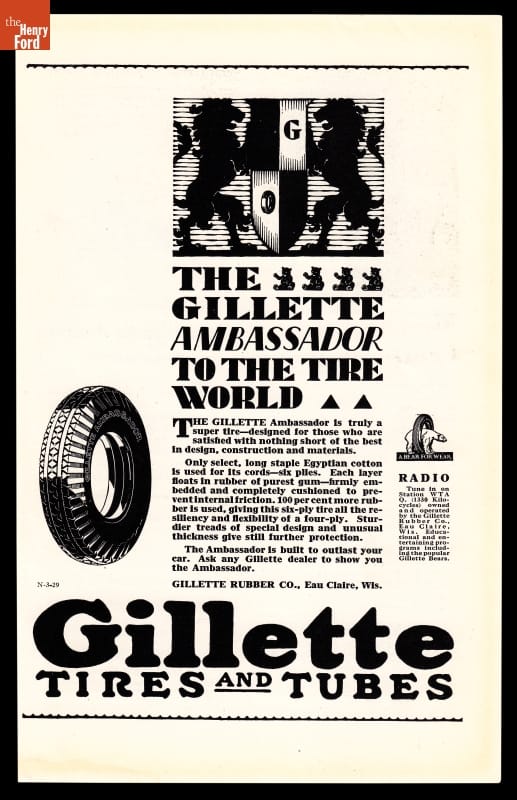
- Gillette Tires Advertisement, "The Gillette Ambassador to the Tire World," July 1929 - Raymond B. Gillette formed the Gillette Safety Tire Company in Eau Claire, Wisconsin, in 1916. U.S. Rubber Company took control of Gillette in 1940 and the Eau Claire plant was expanded and modernized, in part to meet military needs during World War II. After a series of subsequent mergers, the Eau Claire plant was closed in 1992.
- July 01, 1929
- Collections - Artifact
Gillette Tires Advertisement, "The Gillette Ambassador to the Tire World," July 1929
Raymond B. Gillette formed the Gillette Safety Tire Company in Eau Claire, Wisconsin, in 1916. U.S. Rubber Company took control of Gillette in 1940 and the Eau Claire plant was expanded and modernized, in part to meet military needs during World War II. After a series of subsequent mergers, the Eau Claire plant was closed in 1992.
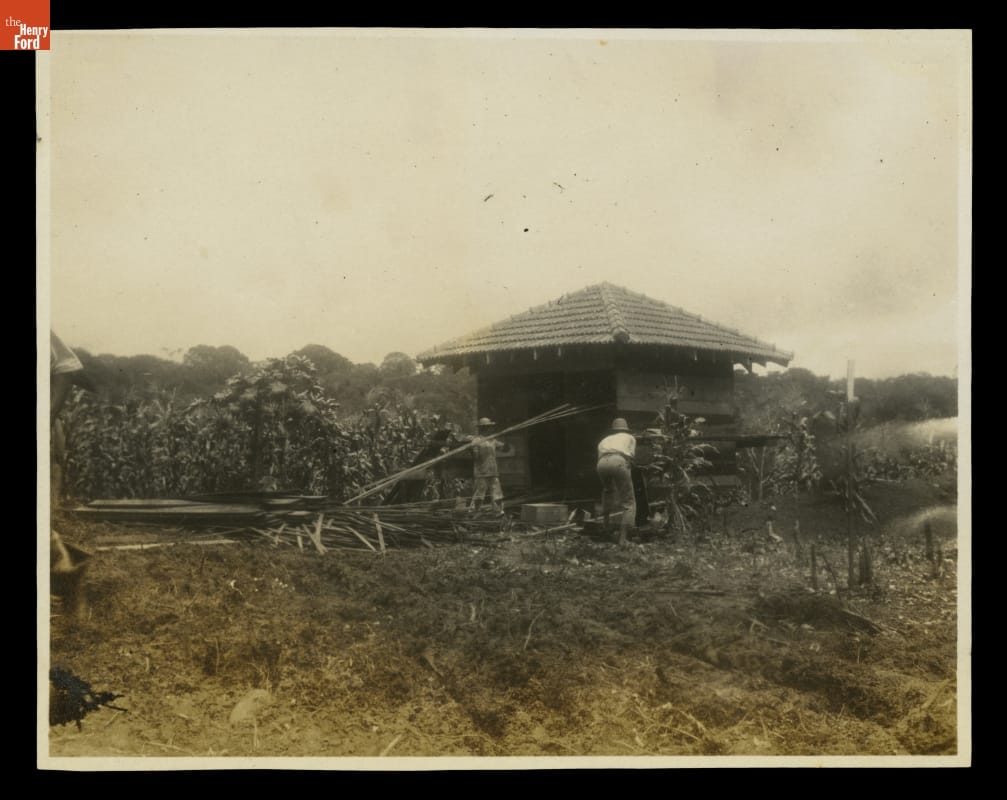
- Radio Transmitter House, Fordlandia, Brazil, 1929 -
- March 23, 1929
- Collections - Artifact
Radio Transmitter House, Fordlandia, Brazil, 1929
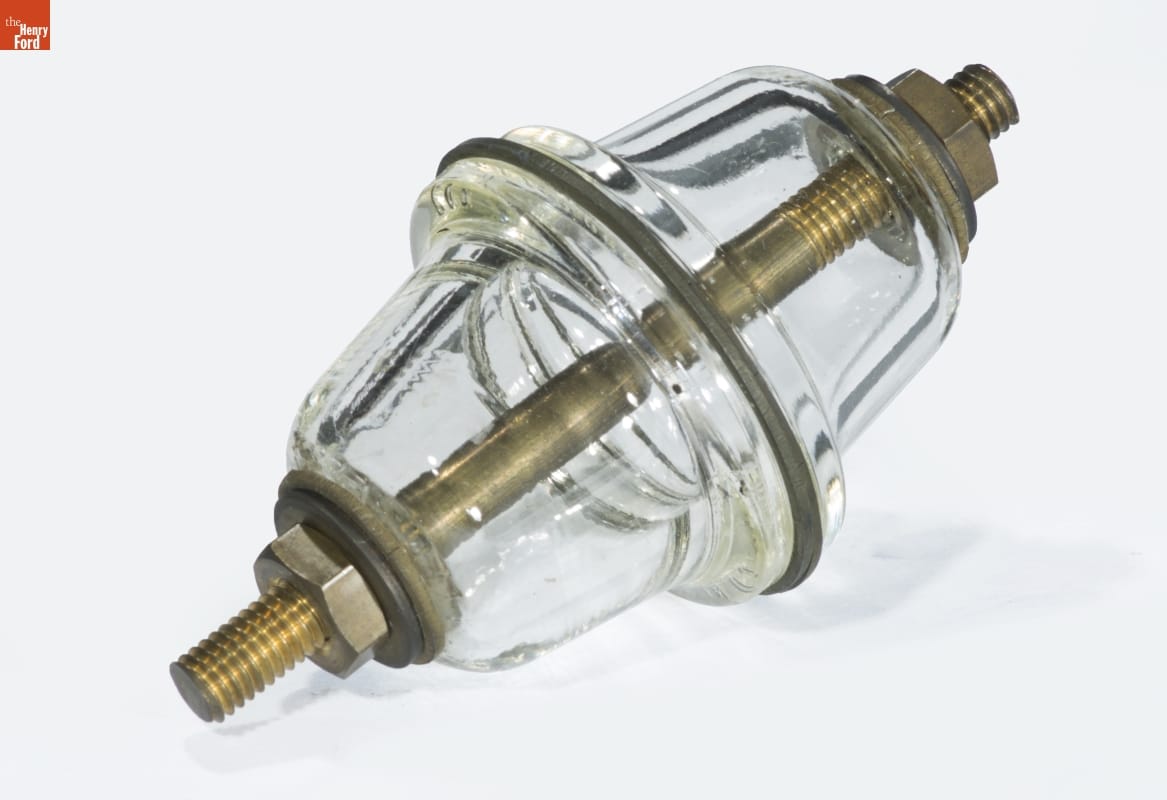
- Antenna Insulator, 1920 - Insulators--made of poor electrical conductors such as glass, ceramic, plastic, or composite materials--help make electric power and communication transmission lines safe. They isolate wires from utility poles, transmission towers, and buildings--structures that are made of conductive materials that could cause signal degradation, power loss, fire, or pose a shock hazard if the lines touched them.
- 1920
- Collections - Artifact
Antenna Insulator, 1920
Insulators--made of poor electrical conductors such as glass, ceramic, plastic, or composite materials--help make electric power and communication transmission lines safe. They isolate wires from utility poles, transmission towers, and buildings--structures that are made of conductive materials that could cause signal degradation, power loss, fire, or pose a shock hazard if the lines touched them.
- Western Electric Volume Control Box, Used at Radio Station WKBN, Youngstown, Ohio, 1931-1937 -
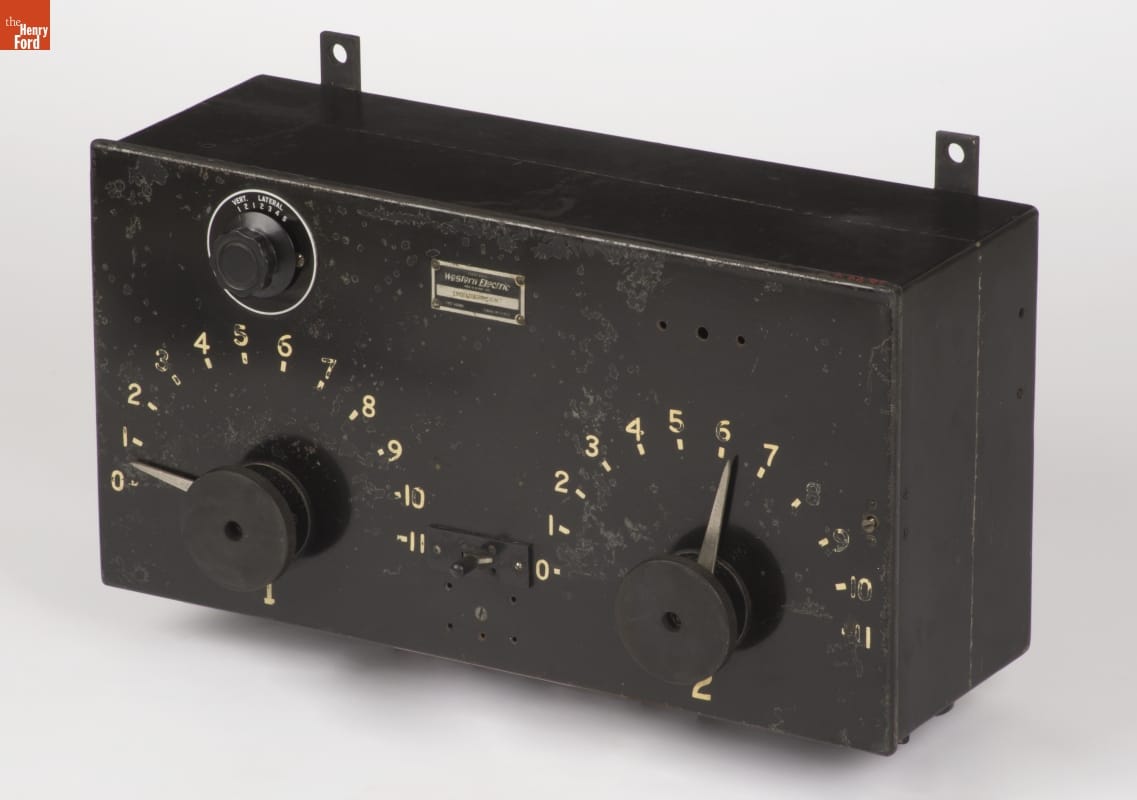
- 1931-1935
- Collections - Artifact
Western Electric Volume Control Box, Used at Radio Station WKBN, Youngstown, Ohio, 1931-1937