
Search
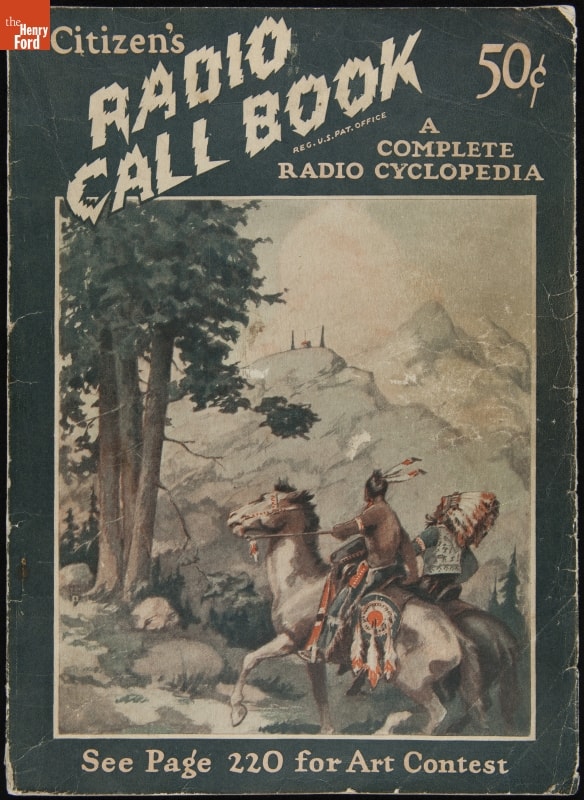
- "Citizen's Radio Call Book" Magazine for March 1927 - This book doubles as a trade publication and hobbyist manual. A mixture of advertisements, tuning information, and articles capture the rise of radio celebrity culture, international expansion, the new structures and themes of radio programming. Radio's impact is romanticized in the cover illustration, depicting Native Americans on horseback staring towards transmission towers perched on a distant hilltop.
- March 01, 1927
- Collections - Artifact
"Citizen's Radio Call Book" Magazine for March 1927
This book doubles as a trade publication and hobbyist manual. A mixture of advertisements, tuning information, and articles capture the rise of radio celebrity culture, international expansion, the new structures and themes of radio programming. Radio's impact is romanticized in the cover illustration, depicting Native Americans on horseback staring towards transmission towers perched on a distant hilltop.
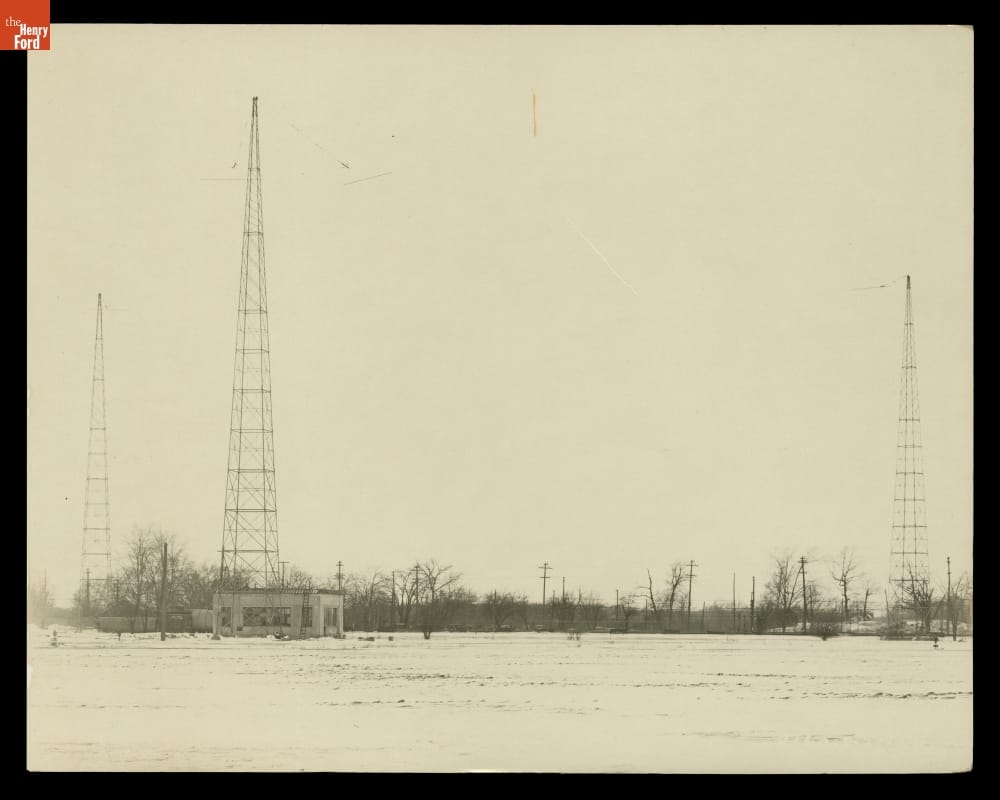
- Ford Motor Company Radio Station WWI, Dearborn, Michigan, February 1924 - Henry Ford experimented with radio in the early 1920s. In March 1922 he received permission to broadcast publicly using call letters WWI. Ford's 250-watt station, based in Dearborn, broadcast only a couple of hours each day with programming limited to talks, dramatic readings, and musical performances. Ford lost interest in the venture, and WWI stopped broadcasting in February 1926.
- February 21, 1924
- Collections - Artifact
Ford Motor Company Radio Station WWI, Dearborn, Michigan, February 1924
Henry Ford experimented with radio in the early 1920s. In March 1922 he received permission to broadcast publicly using call letters WWI. Ford's 250-watt station, based in Dearborn, broadcast only a couple of hours each day with programming limited to talks, dramatic readings, and musical performances. Ford lost interest in the venture, and WWI stopped broadcasting in February 1926.
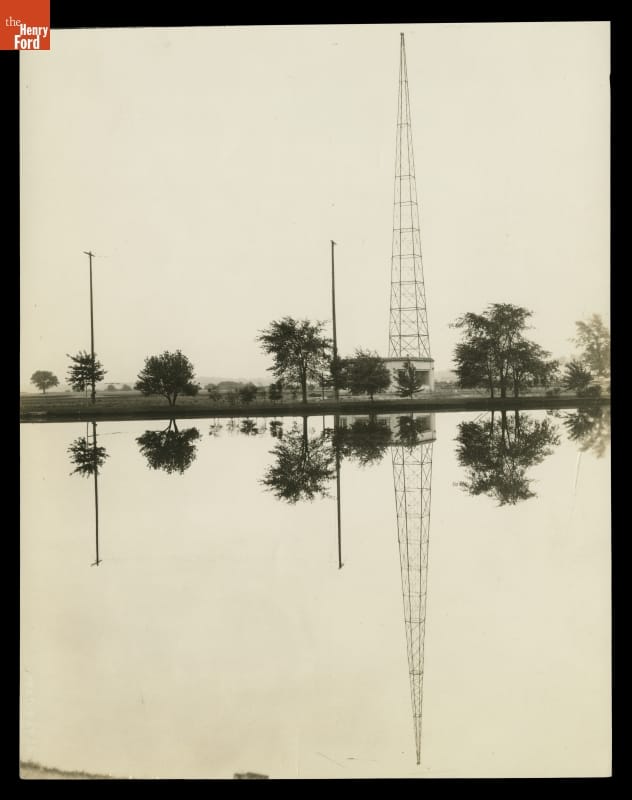
- Ford Motor Company Radio Station WWI, Dearborn, Michigan, September 1926 - Henry Ford experimented with radio in the early 1920s. In March 1922 he received permission to broadcast publicly using call letters WWI. Ford's 250-watt station, based in Dearborn, broadcast only a couple of hours each day with programming limited to talks, dramatic readings, and musical performances. Ford lost interest in the venture, and WWI stopped broadcasting in February 1926.
- September 29, 1926
- Collections - Artifact
Ford Motor Company Radio Station WWI, Dearborn, Michigan, September 1926
Henry Ford experimented with radio in the early 1920s. In March 1922 he received permission to broadcast publicly using call letters WWI. Ford's 250-watt station, based in Dearborn, broadcast only a couple of hours each day with programming limited to talks, dramatic readings, and musical performances. Ford lost interest in the venture, and WWI stopped broadcasting in February 1926.
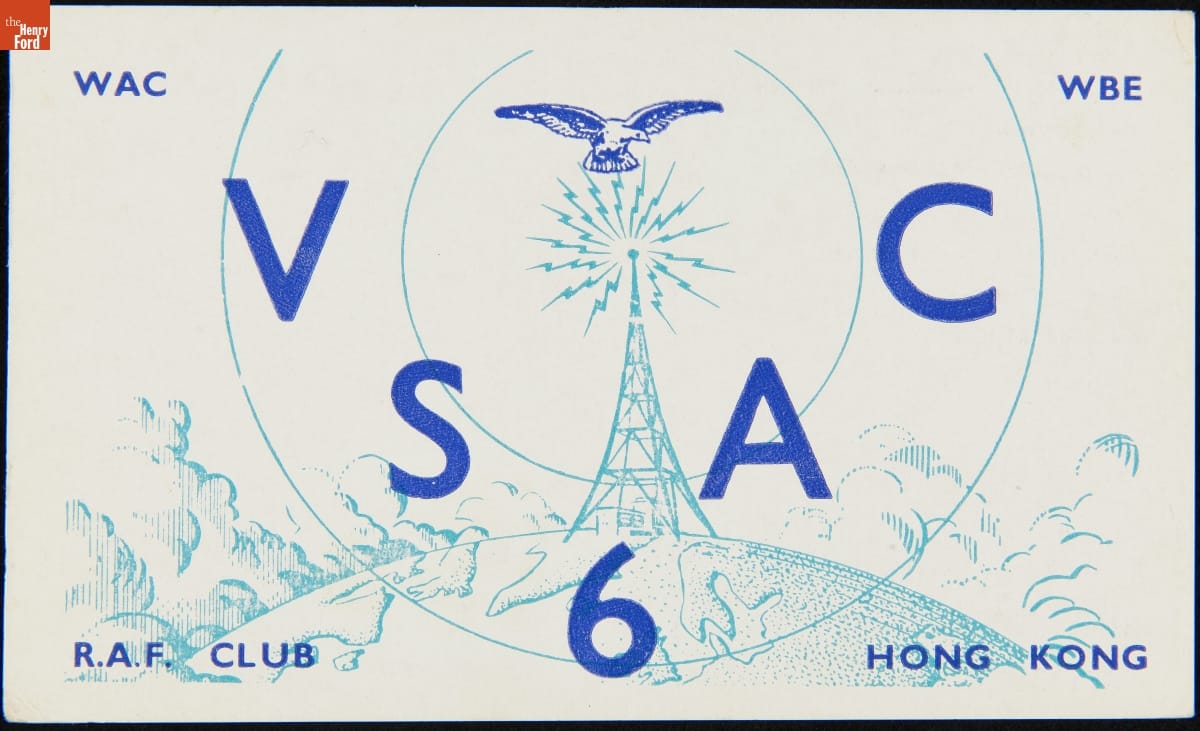
- QSL Card from VS6AC (Hong Kong, China) to W6DQZ (Hamid Durmisevich, Los Angeles, California), October 3, 1957 - It was customary for ham radio operators (hams) to exchange these "QSL cards" with one another through the mail after their first conversation. Long-time hams amassed collections of thousands of cards, some from far-flung places. There is a story embedded in each example: the ham's call sign dominates the design, with additional details about location, reception reports, and weather conditions.
- October 03, 1957
- Collections - Artifact
QSL Card from VS6AC (Hong Kong, China) to W6DQZ (Hamid Durmisevich, Los Angeles, California), October 3, 1957
It was customary for ham radio operators (hams) to exchange these "QSL cards" with one another through the mail after their first conversation. Long-time hams amassed collections of thousands of cards, some from far-flung places. There is a story embedded in each example: the ham's call sign dominates the design, with additional details about location, reception reports, and weather conditions.
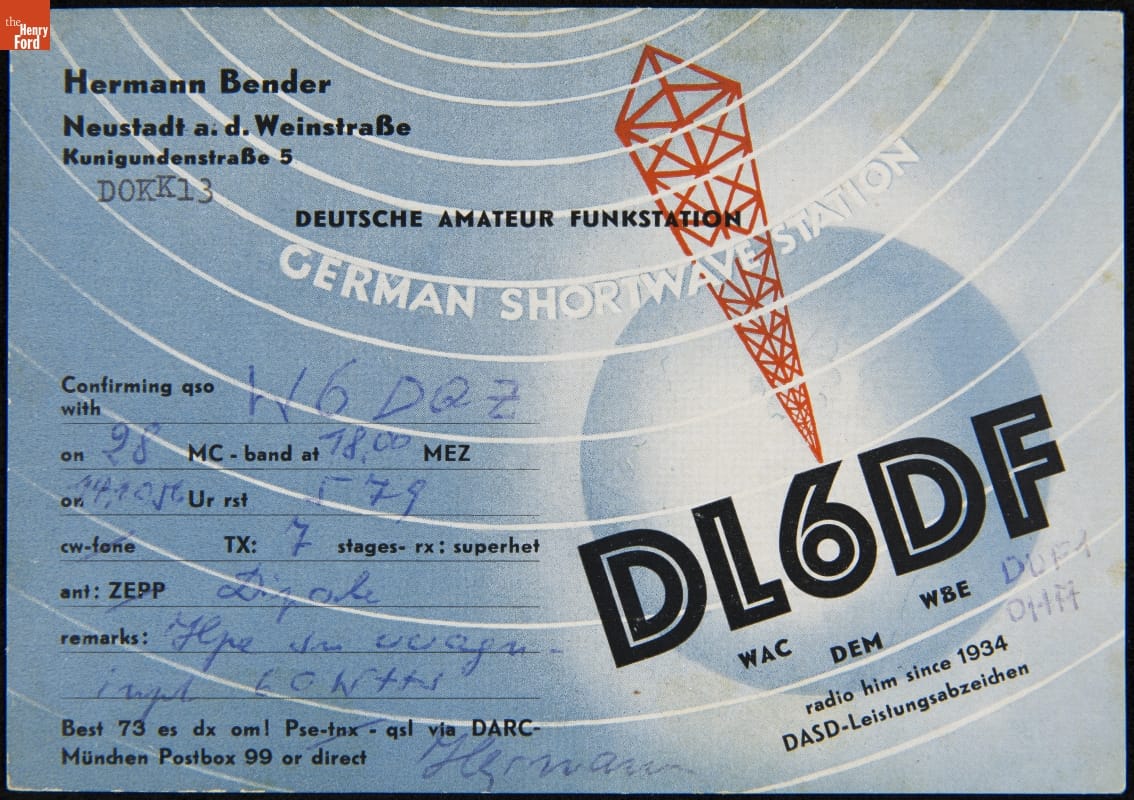
- QSL Card from DL6DF (Munich, Germany) to W6DQZ (Hamid Durmisevich, Los Angeles, California), October 14, 1956 - It was customary for ham radio operators (hams) to exchange these "QSL cards" with one another through the mail after their first conversation. Long-time hams amassed collections of thousands of cards, some from far-flung places. There is a story embedded in each example: the ham's call sign dominates the design, with additional details about location, reception reports, and weather conditions.
- October 14, 1956
- Collections - Artifact
QSL Card from DL6DF (Munich, Germany) to W6DQZ (Hamid Durmisevich, Los Angeles, California), October 14, 1956
It was customary for ham radio operators (hams) to exchange these "QSL cards" with one another through the mail after their first conversation. Long-time hams amassed collections of thousands of cards, some from far-flung places. There is a story embedded in each example: the ham's call sign dominates the design, with additional details about location, reception reports, and weather conditions.
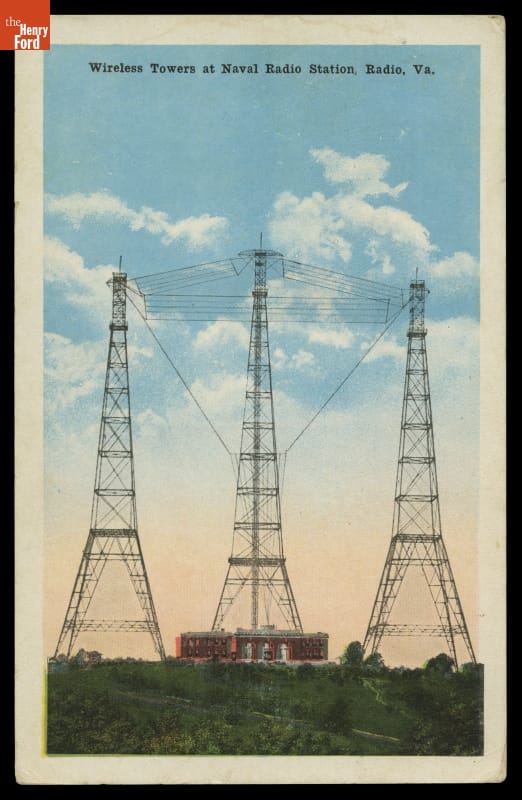
- Wireless Towers at Naval Radio Station, Radio, Virginia, circa 1930 -
- circa 1930
- Collections - Artifact
Wireless Towers at Naval Radio Station, Radio, Virginia, circa 1930
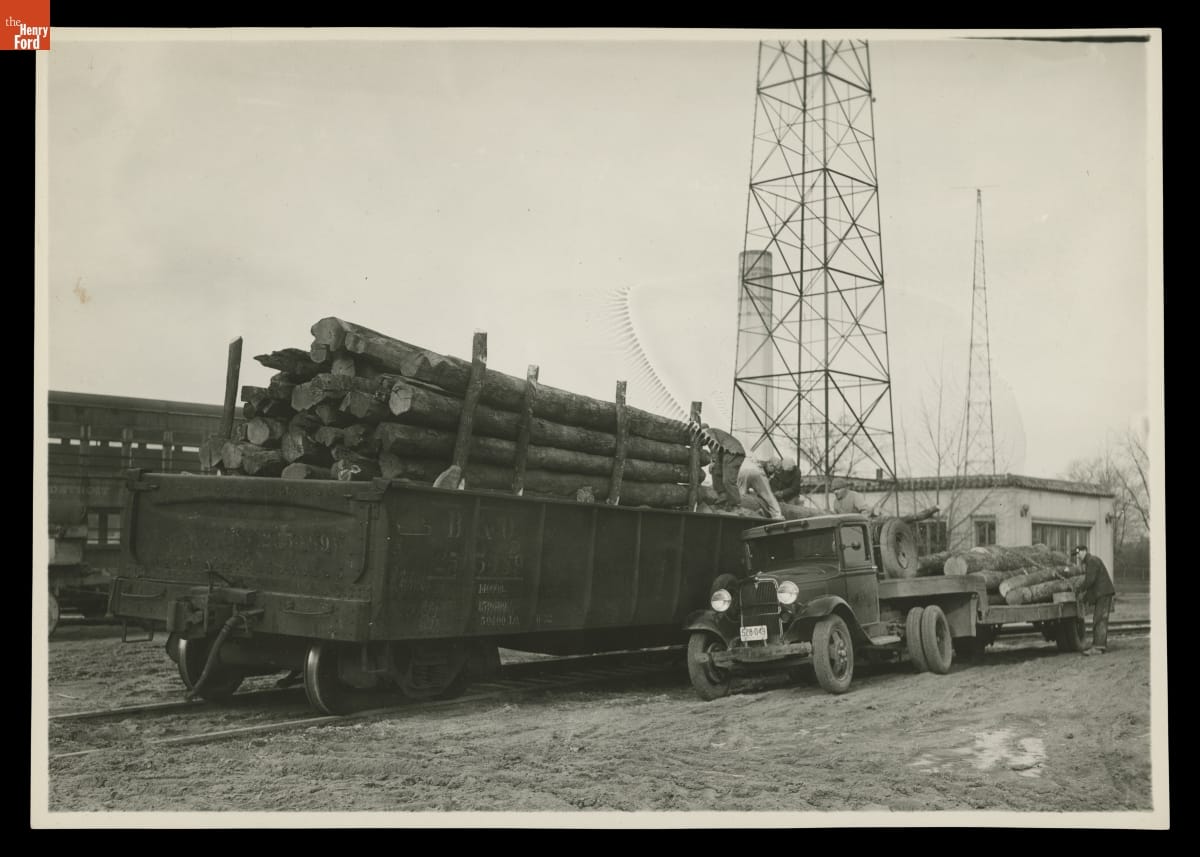
- Logs Used to Build the William Holmes McGuffey School, January 1934 -
- January 24, 1934
- Collections - Artifact
Logs Used to Build the William Holmes McGuffey School, January 1934
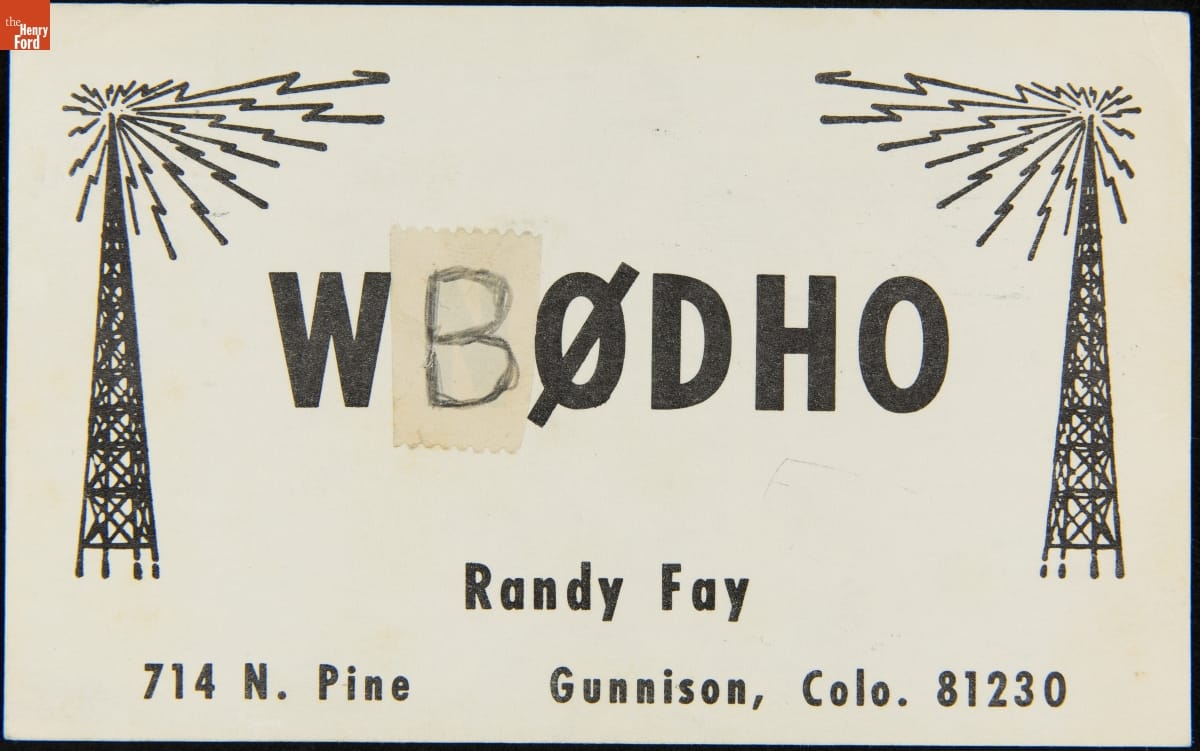
- QSL Card from WB0DHO (Randy Fay, Gunnison, Colorado) to W6DQZ (Hamid Durmisevich, Los Angeles, California), August 5, 1971 - It was customary for ham radio operators (hams) to exchange these "QSL cards" with one another through the mail after their first conversation. Long-time hams amassed collections of thousands of cards, some from far-flung places. There is a story embedded in each example: the ham's call sign dominates the design, with additional details about location, reception reports, and weather conditions.
- August 05, 1971
- Collections - Artifact
QSL Card from WB0DHO (Randy Fay, Gunnison, Colorado) to W6DQZ (Hamid Durmisevich, Los Angeles, California), August 5, 1971
It was customary for ham radio operators (hams) to exchange these "QSL cards" with one another through the mail after their first conversation. Long-time hams amassed collections of thousands of cards, some from far-flung places. There is a story embedded in each example: the ham's call sign dominates the design, with additional details about location, reception reports, and weather conditions.
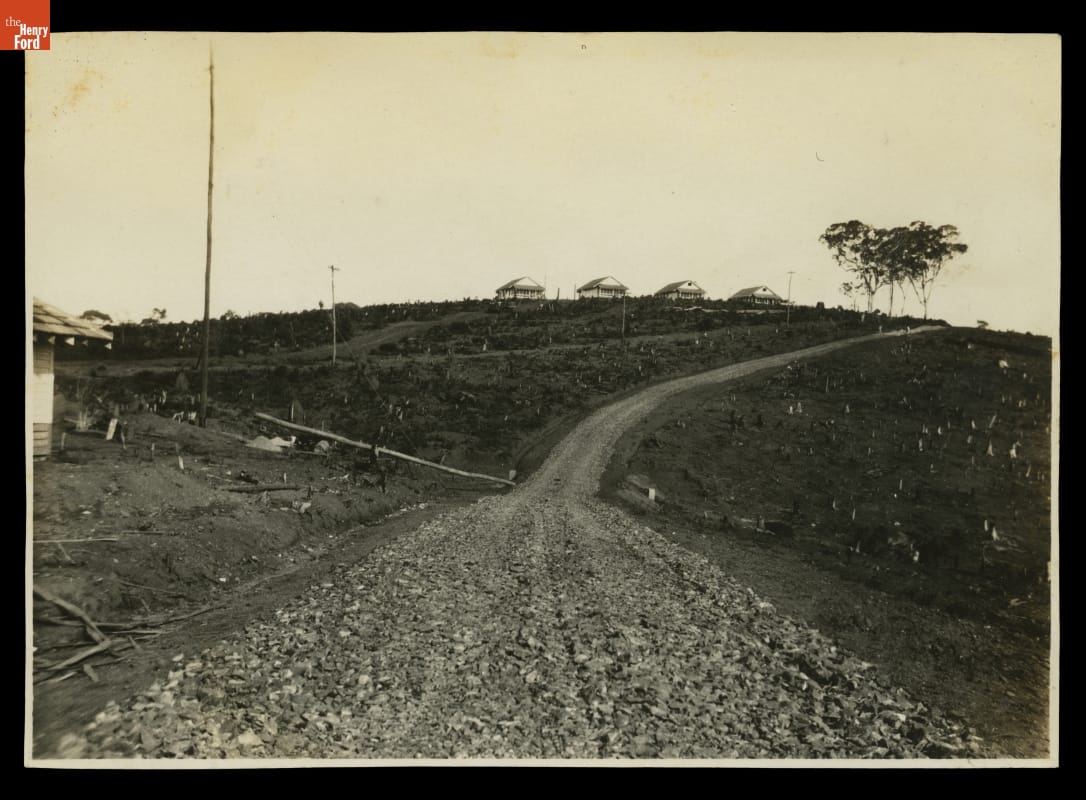
- Stone Road Leading to Hospital, Fordlandia, Brazil, 1929 - Henry Ford established Fordlandia and Belterra in the Brazilian rainforest to supply rubber for automobile production. He began shipping machinery and supplies to the Amazon in 1928. Ford paid the indigenous workers good wages and supplied various amenities -- he also imposed foreign work traditions and behavioral restrictions which the workers resented. The plantations failed and Ford Motor Company disposed of the project in 1945.
- May 10, 1929
- Collections - Artifact
Stone Road Leading to Hospital, Fordlandia, Brazil, 1929
Henry Ford established Fordlandia and Belterra in the Brazilian rainforest to supply rubber for automobile production. He began shipping machinery and supplies to the Amazon in 1928. Ford paid the indigenous workers good wages and supplied various amenities -- he also imposed foreign work traditions and behavioral restrictions which the workers resented. The plantations failed and Ford Motor Company disposed of the project in 1945.
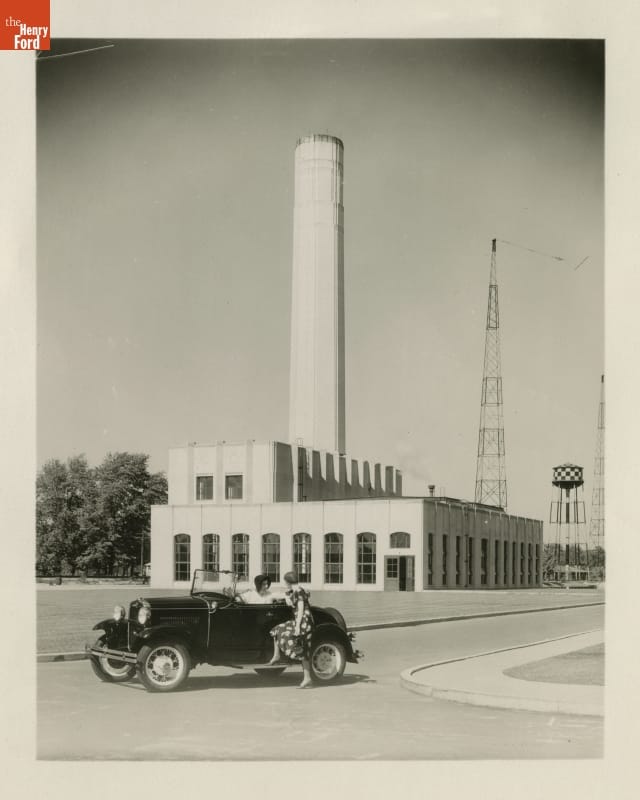
- Women with a Ford Model A outside the Ford Power House in Dearborn, Michigan, June 1931 - Two women posed with a 1931 Ford Model A Roadster for a photograph taken outside the power plant adjacent to Ford Motor Company's Dearborn engineering laboratory. This was the final year for the Model A. Ford produced more than 4.8 million units over the A's four model years. Some 626,000 were built in 1931; nearly 58,500 of them were Roadsters.
- June 01, 1931
- Collections - Artifact
Women with a Ford Model A outside the Ford Power House in Dearborn, Michigan, June 1931
Two women posed with a 1931 Ford Model A Roadster for a photograph taken outside the power plant adjacent to Ford Motor Company's Dearborn engineering laboratory. This was the final year for the Model A. Ford produced more than 4.8 million units over the A's four model years. Some 626,000 were built in 1931; nearly 58,500 of them were Roadsters.