
Search
- Rendering of Morgantown, West Virginia, People Mover Vehicle, circa 1971 - In 1975, West Virginia University opened a personal rapid transit (PRT) system connecting its three campuses in Morgantown, West Virginia. Installed with support from the U.S. Department of Transportation, WVU's automated system was used to test the PRT concept. Michigan-based firm Sundberg-Ferar prepared a series of design proposals for the Morgantown PRT vehicles.
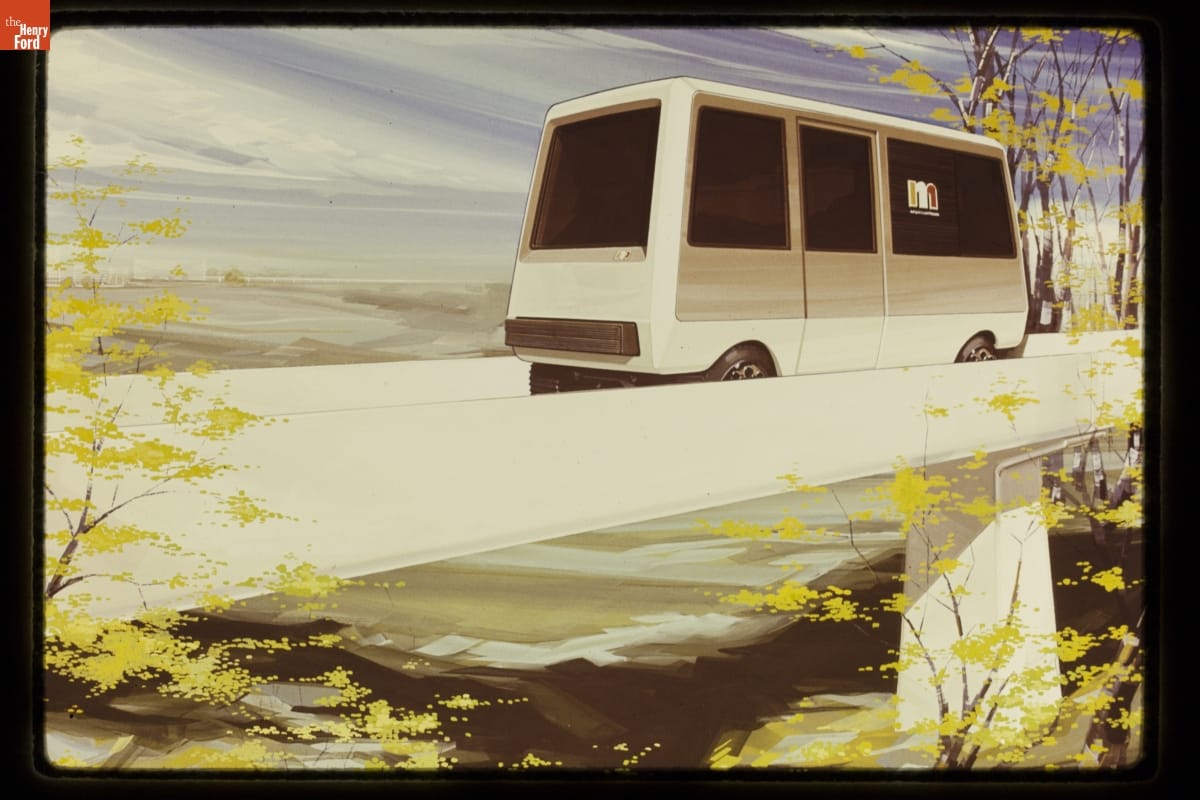
- circa 1971
- Collections - Artifact
Rendering of Morgantown, West Virginia, People Mover Vehicle, circa 1971
In 1975, West Virginia University opened a personal rapid transit (PRT) system connecting its three campuses in Morgantown, West Virginia. Installed with support from the U.S. Department of Transportation, WVU's automated system was used to test the PRT concept. Michigan-based firm Sundberg-Ferar prepared a series of design proposals for the Morgantown PRT vehicles.
- Cleveland Municipal Transit Token, 1908 - Operating and financing a streetcar business was complicated. This token from Cleveland dates from a turbulent period where a privately owned streetcar company was in the process of transferring its operations to the city, further complicated by a transit strike. For riders, the immediate effect of the merger agreement was an affordable 3-cent fare.
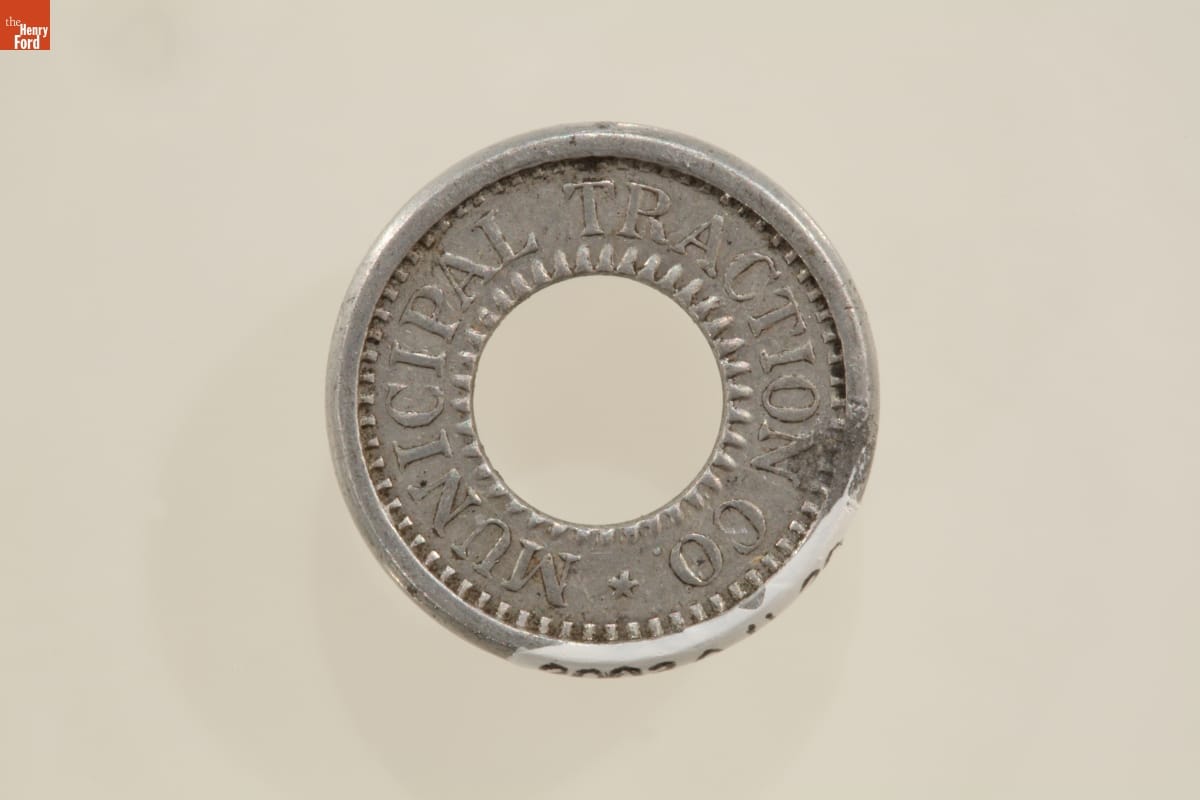
- 1908
- Collections - Artifact
Cleveland Municipal Transit Token, 1908
Operating and financing a streetcar business was complicated. This token from Cleveland dates from a turbulent period where a privately owned streetcar company was in the process of transferring its operations to the city, further complicated by a transit strike. For riders, the immediate effect of the merger agreement was an affordable 3-cent fare.
- Scale Model of Morgantown, West Virginia, People Mover Vehicle, circa 1971 - In 1975, West Virginia University opened a personal rapid transit (PRT) system connecting its three campuses in Morgantown, West Virginia. Installed with support from the U.S. Department of Transportation, WVU's automated system was used to test the PRT concept. Michigan-based firm Sundberg-Ferar prepared a series of design proposals for the Morgantown PRT vehicles.
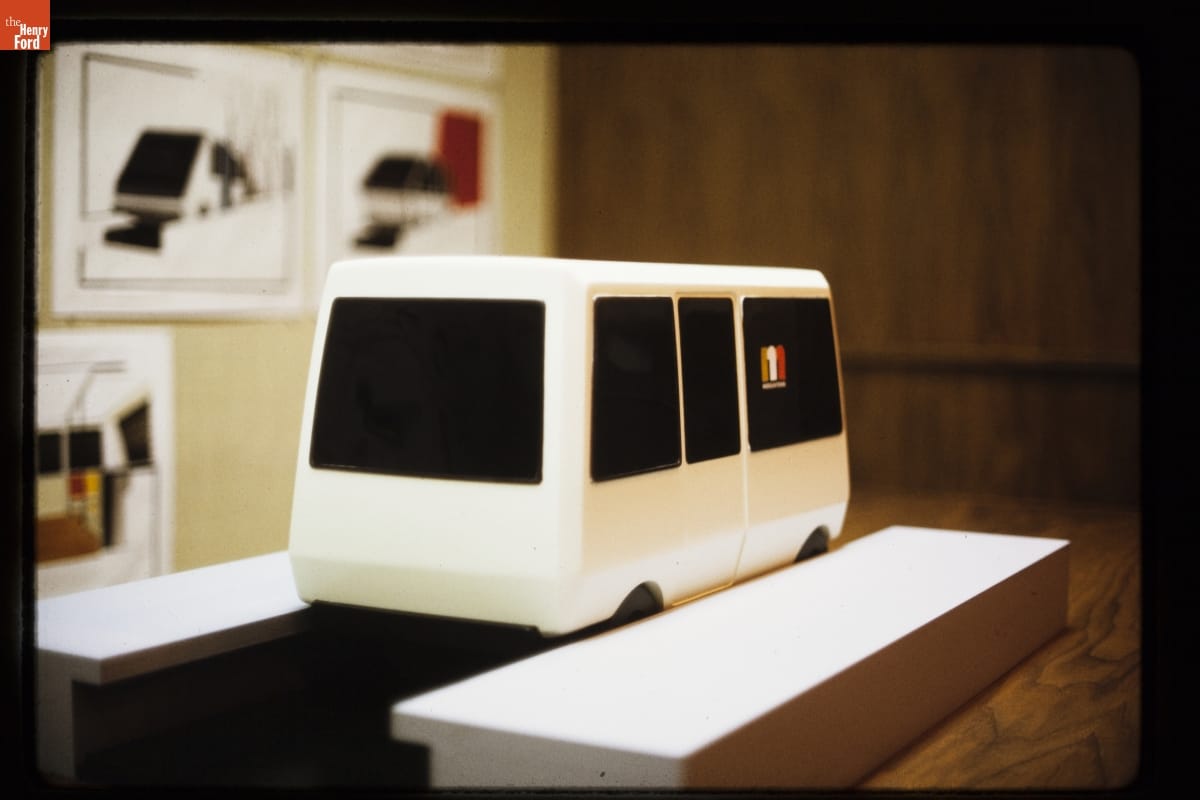
- circa 1971
- Collections - Artifact
Scale Model of Morgantown, West Virginia, People Mover Vehicle, circa 1971
In 1975, West Virginia University opened a personal rapid transit (PRT) system connecting its three campuses in Morgantown, West Virginia. Installed with support from the U.S. Department of Transportation, WVU's automated system was used to test the PRT concept. Michigan-based firm Sundberg-Ferar prepared a series of design proposals for the Morgantown PRT vehicles.
- Rendering of Metropolitan Atlanta Rapid Transit Authority (MARTA) Railcar Interior, circa 1974 - Atlanta joined San Francisco and Washington, D.C., in reviving rail-based rapid transit when it opened the first segment of its Metropolitan Atlanta Rapid Transit Authority system in 1979. MARTA's original fleet included 120 aluminum railcars, each 75 feet long, built by France's Societe Franco-Belge. Most of the 53-mile, 40-station system envisioned by MARTA's planners was completed by 2001.
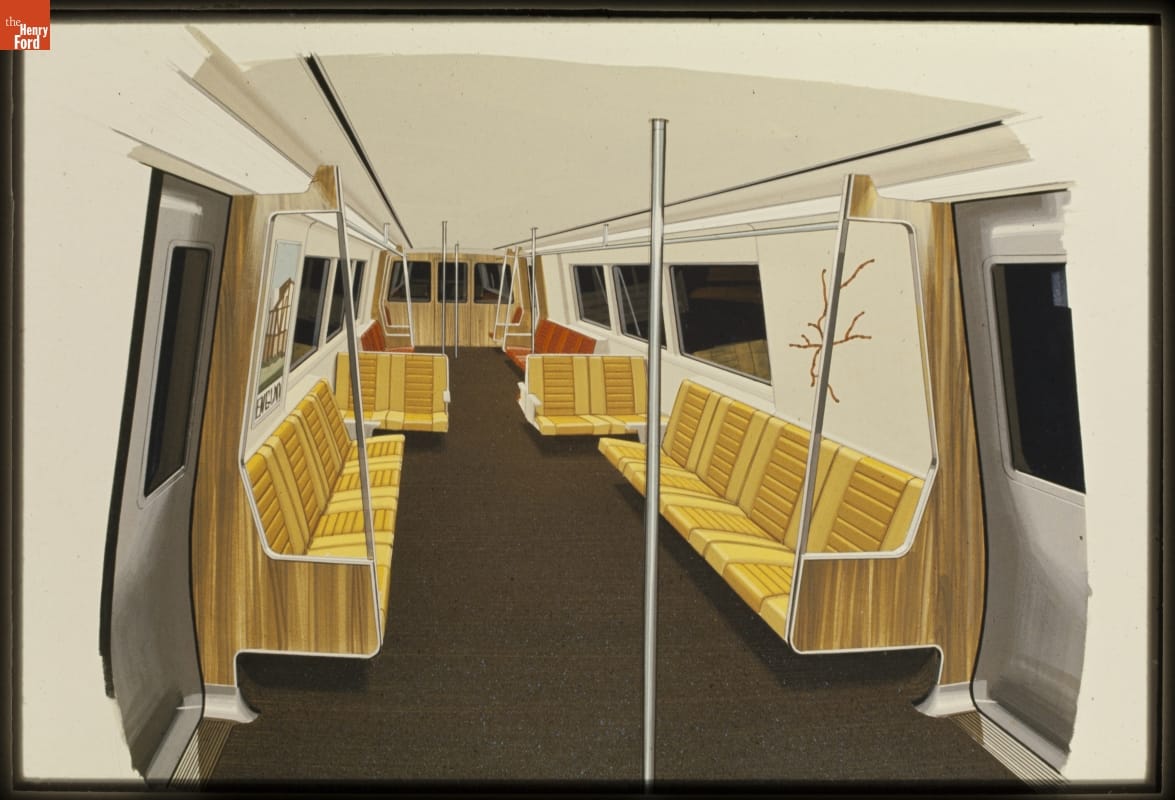
- circa 1974
- Collections - Artifact
Rendering of Metropolitan Atlanta Rapid Transit Authority (MARTA) Railcar Interior, circa 1974
Atlanta joined San Francisco and Washington, D.C., in reviving rail-based rapid transit when it opened the first segment of its Metropolitan Atlanta Rapid Transit Authority system in 1979. MARTA's original fleet included 120 aluminum railcars, each 75 feet long, built by France's Societe Franco-Belge. Most of the 53-mile, 40-station system envisioned by MARTA's planners was completed by 2001.
- Rendering of Metropolitan Atlanta Rapid Transit Authority (MARTA) Railcar, circa 1974 - Atlanta joined San Francisco and Washington, D.C., in reviving rail-based rapid transit when it opened the first segment of its Metropolitan Atlanta Rapid Transit Authority system in 1979. MARTA's original fleet included 120 aluminum railcars, each 75 feet long, built by France's Societe Franco-Belge. Most of the 53-mile, 40-station system envisioned by MARTA's planners was completed by 2001.
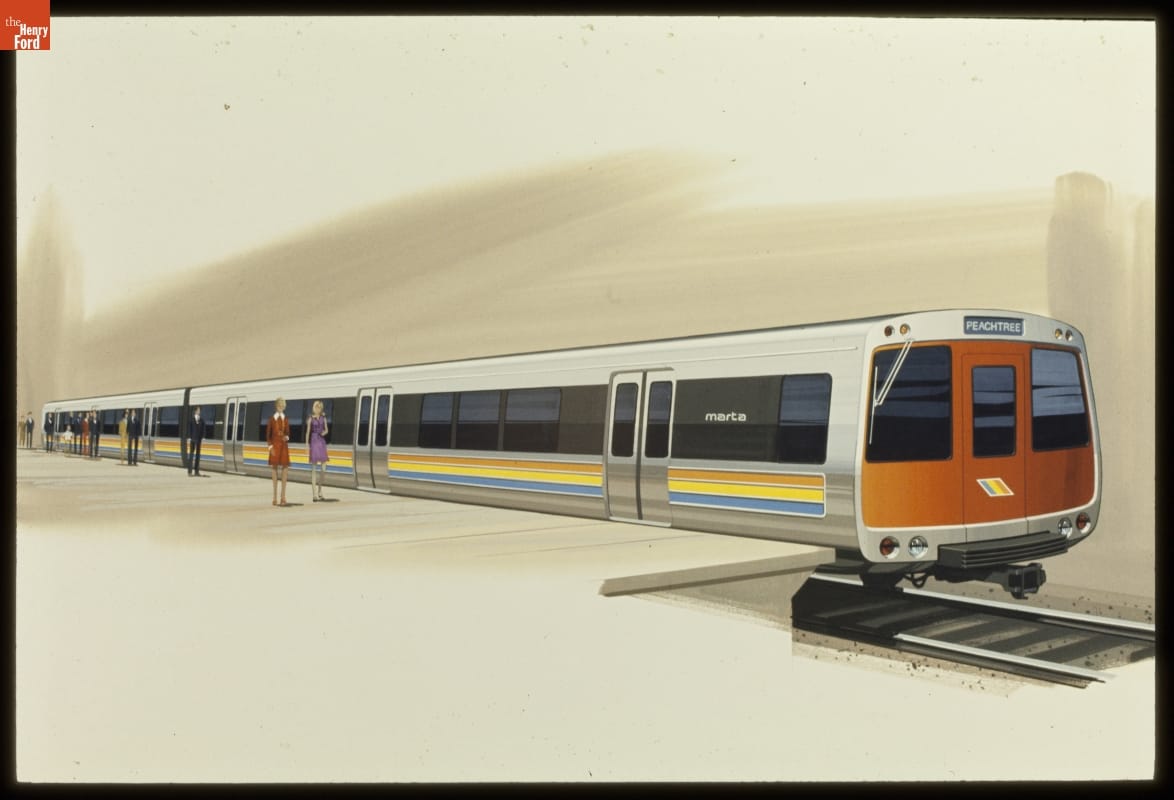
- circa 1974
- Collections - Artifact
Rendering of Metropolitan Atlanta Rapid Transit Authority (MARTA) Railcar, circa 1974
Atlanta joined San Francisco and Washington, D.C., in reviving rail-based rapid transit when it opened the first segment of its Metropolitan Atlanta Rapid Transit Authority system in 1979. MARTA's original fleet included 120 aluminum railcars, each 75 feet long, built by France's Societe Franco-Belge. Most of the 53-mile, 40-station system envisioned by MARTA's planners was completed by 2001.
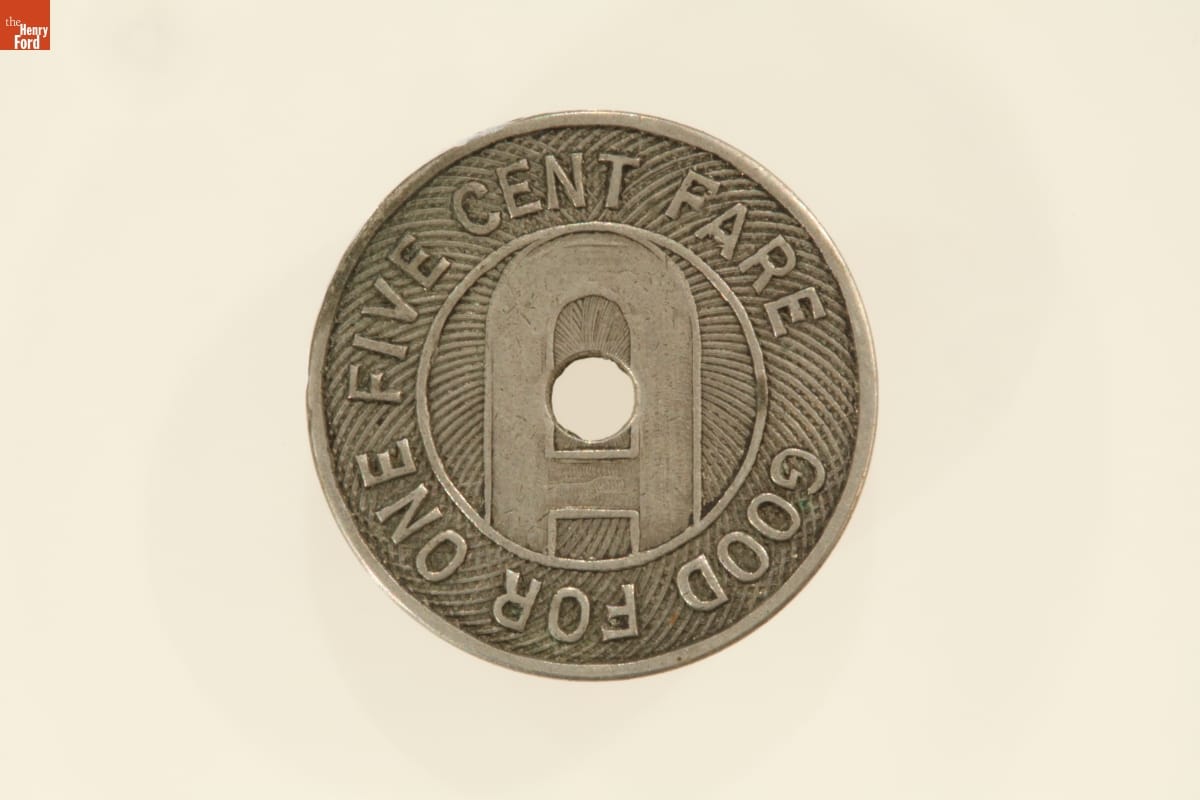
- Detroit Department of Street Railways Token, circa 1925 - Streetcars were a convenient, practical and affordable way to get around cities. A passenger used this 5-cent token to ride streetcars operated by the Detroit Department of Street Railways (DSR). The DSR, formed in 1922 when the city bought the privately owned Detroit United Railways, added bus service in the late 1920s.
- circa 1925
- Collections - Artifact
Detroit Department of Street Railways Token, circa 1925
Streetcars were a convenient, practical and affordable way to get around cities. A passenger used this 5-cent token to ride streetcars operated by the Detroit Department of Street Railways (DSR). The DSR, formed in 1922 when the city bought the privately owned Detroit United Railways, added bus service in the late 1920s.
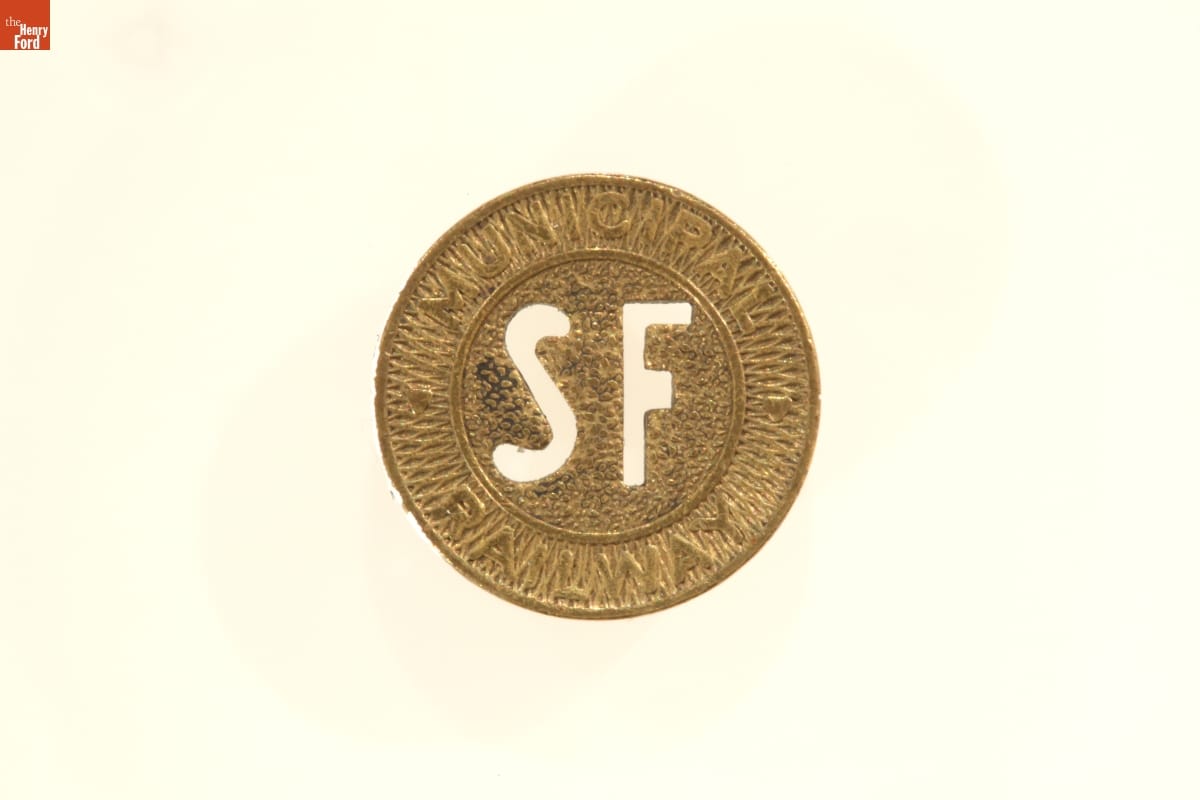
- San Francisco Municipal Railway "MUNI" Token, circa 1995 - This token is good for one fare on the buses, streetcars, and trolleys run by "Muni," San Francisco's public transit agency.
- circa 1995
- Collections - Artifact
San Francisco Municipal Railway "MUNI" Token, circa 1995
This token is good for one fare on the buses, streetcars, and trolleys run by "Muni," San Francisco's public transit agency.
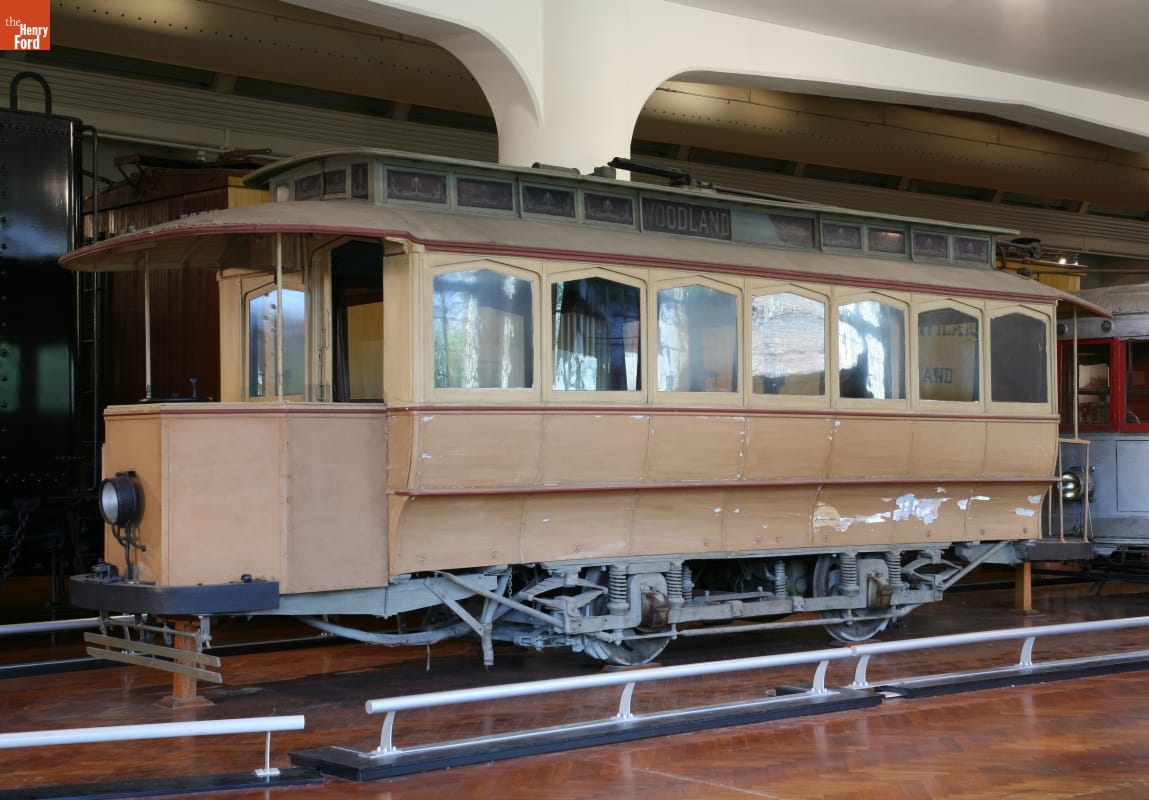
- J.G. Brill Company Streetcar, 1892 - Powering early streetcars was challenging. Horses needed care and feeding, and left messes in the street. Cable systems were complex and costly. Electric streetcars, introduced in 1888, solved these problems and expanded the industry. Soon streetcars connected city centers, neighborhoods, and increasingly distant suburbs. This trolley, built by the J.G. Brill Company of Philadelphia, carried riders in Cleveland from 1892-1903.
- 1892
- Collections - Artifact
J.G. Brill Company Streetcar, 1892
Powering early streetcars was challenging. Horses needed care and feeding, and left messes in the street. Cable systems were complex and costly. Electric streetcars, introduced in 1888, solved these problems and expanded the industry. Soon streetcars connected city centers, neighborhoods, and increasingly distant suburbs. This trolley, built by the J.G. Brill Company of Philadelphia, carried riders in Cleveland from 1892-1903.
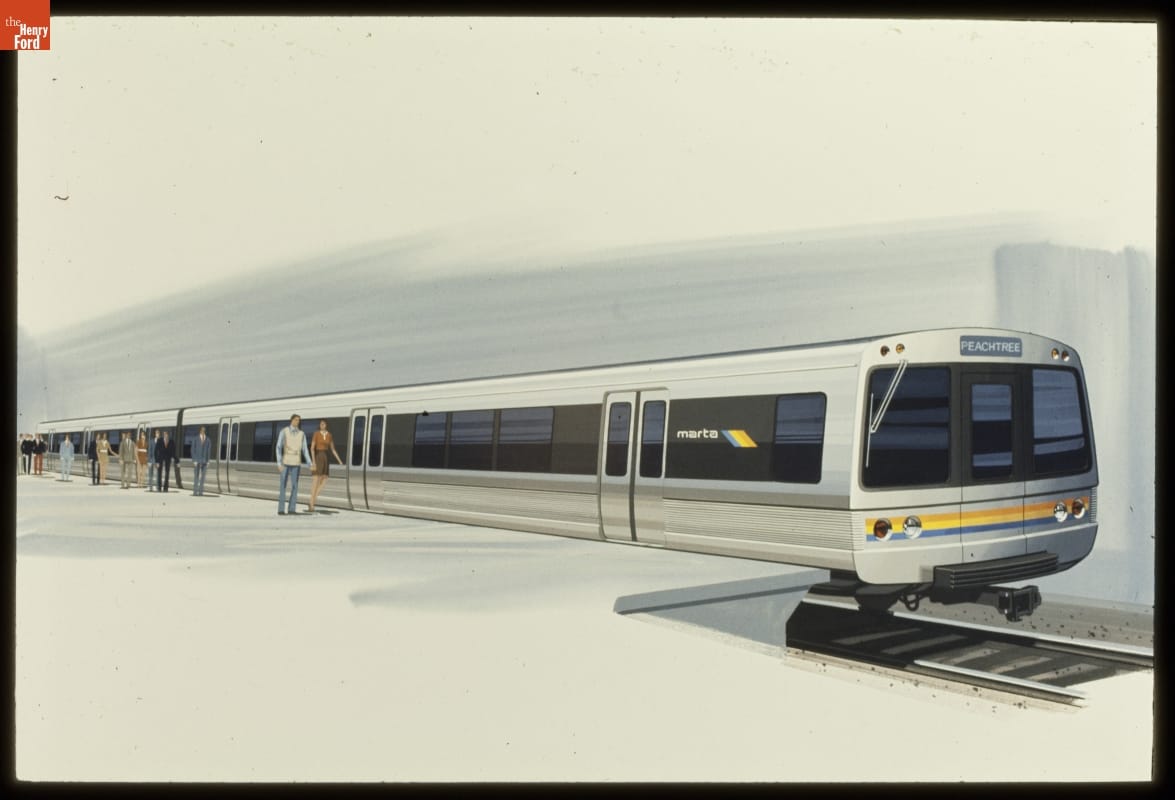
- Rendering of Metropolitan Atlanta Rapid Transit Authority (MARTA) Railcar, circa 1974 - Atlanta joined San Francisco and Washington, D.C., in reviving rail-based rapid transit when it opened the first segment of its Metropolitan Atlanta Rapid Transit Authority system in 1979. MARTA's original fleet included 120 aluminum railcars, each 75 feet long, built by France's Societe Franco-Belge. Most of the 53-mile, 40-station system envisioned by MARTA's planners was completed by 2001.
- circa 1974
- Collections - Artifact
Rendering of Metropolitan Atlanta Rapid Transit Authority (MARTA) Railcar, circa 1974
Atlanta joined San Francisco and Washington, D.C., in reviving rail-based rapid transit when it opened the first segment of its Metropolitan Atlanta Rapid Transit Authority system in 1979. MARTA's original fleet included 120 aluminum railcars, each 75 feet long, built by France's Societe Franco-Belge. Most of the 53-mile, 40-station system envisioned by MARTA's planners was completed by 2001.
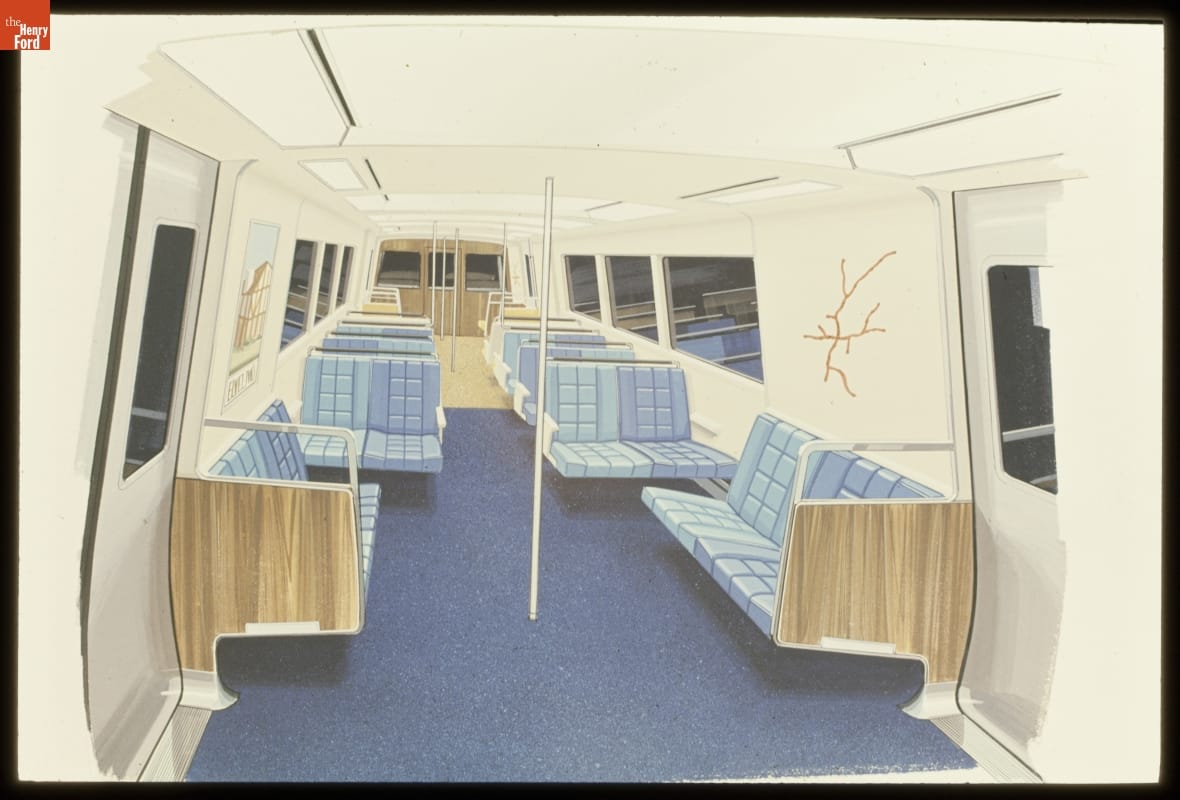
- Rendering of Metropolitan Atlanta Rapid Transit Authority (MARTA) Railcar Interior, circa 1974 - Atlanta joined San Francisco and Washington, D.C., in reviving rail-based rapid transit when it opened the first segment of its Metropolitan Atlanta Rapid Transit Authority system in 1979. MARTA's original fleet included 120 aluminum railcars, each 75 feet long, built by France's Societe Franco-Belge. Most of the 53-mile, 40-station system envisioned by MARTA's planners was completed by 2001.
- circa 1974
- Collections - Artifact
Rendering of Metropolitan Atlanta Rapid Transit Authority (MARTA) Railcar Interior, circa 1974
Atlanta joined San Francisco and Washington, D.C., in reviving rail-based rapid transit when it opened the first segment of its Metropolitan Atlanta Rapid Transit Authority system in 1979. MARTA's original fleet included 120 aluminum railcars, each 75 feet long, built by France's Societe Franco-Belge. Most of the 53-mile, 40-station system envisioned by MARTA's planners was completed by 2001.