
Search
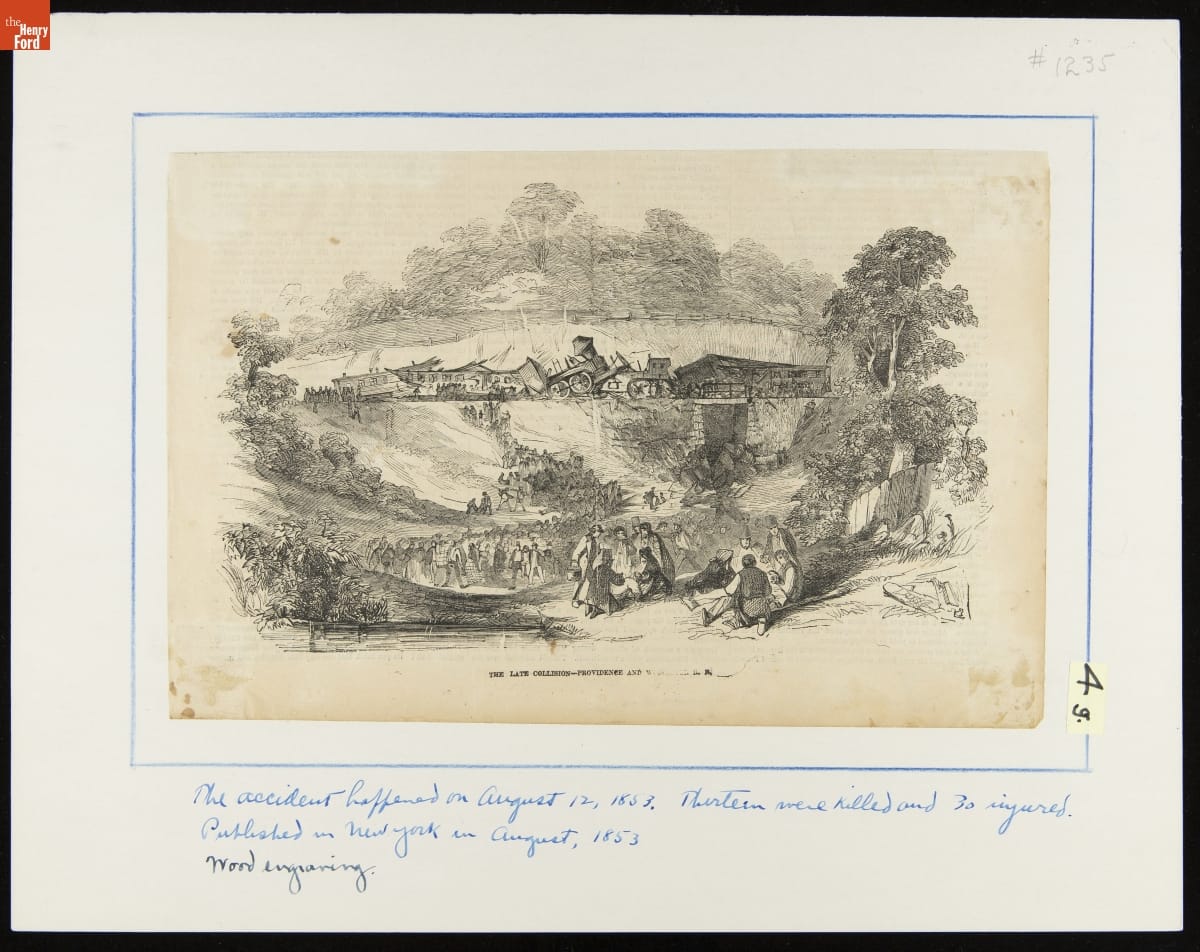
- The Late Collision - Providence & Worcester R.R., August 12, 1853 - Accidents were frightfully common on American railroads in the mid-19th century. Cheap construction, crude equipment, poor signaling, and uncoordinated timekeeping all contributed to the problem. This illustration shows a wreck on the Providence & Worcester Railroad in 1853. Two passenger trains failed to meet at a passing siding as scheduled. They collided head-on, killing 13 and seriously injuring 30 more.
- August 12, 1853
- Collections - Artifact
The Late Collision - Providence & Worcester R.R., August 12, 1853
Accidents were frightfully common on American railroads in the mid-19th century. Cheap construction, crude equipment, poor signaling, and uncoordinated timekeeping all contributed to the problem. This illustration shows a wreck on the Providence & Worcester Railroad in 1853. Two passenger trains failed to meet at a passing siding as scheduled. They collided head-on, killing 13 and seriously injuring 30 more.
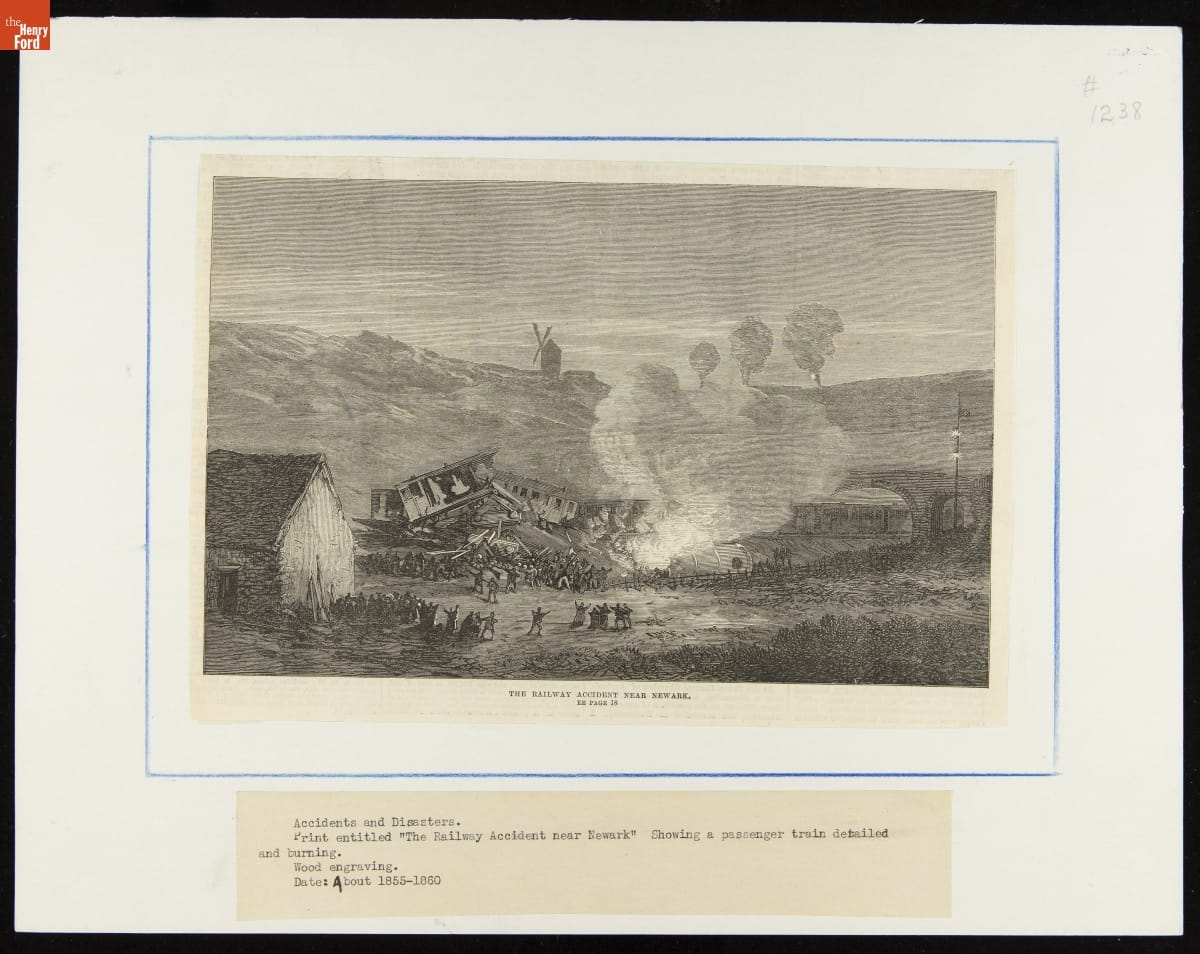
- The Railway Accident near Newark, 1870 - Accidents were frightfully common on 19th-century railroads. Crude equipment, poor signaling and uncoordinated timekeeping all contributed to the problem. Heavily varnished wooden coaches, lit by kerosene lamps and heated by coal stoves, added serious risk of fire to a collision. This illustration shows a fire ignited by a train wreck in 1870 near Newark, England, in the United Kingdom.
- June 21, 1870
- Collections - Artifact
The Railway Accident near Newark, 1870
Accidents were frightfully common on 19th-century railroads. Crude equipment, poor signaling and uncoordinated timekeeping all contributed to the problem. Heavily varnished wooden coaches, lit by kerosene lamps and heated by coal stoves, added serious risk of fire to a collision. This illustration shows a fire ignited by a train wreck in 1870 near Newark, England, in the United Kingdom.
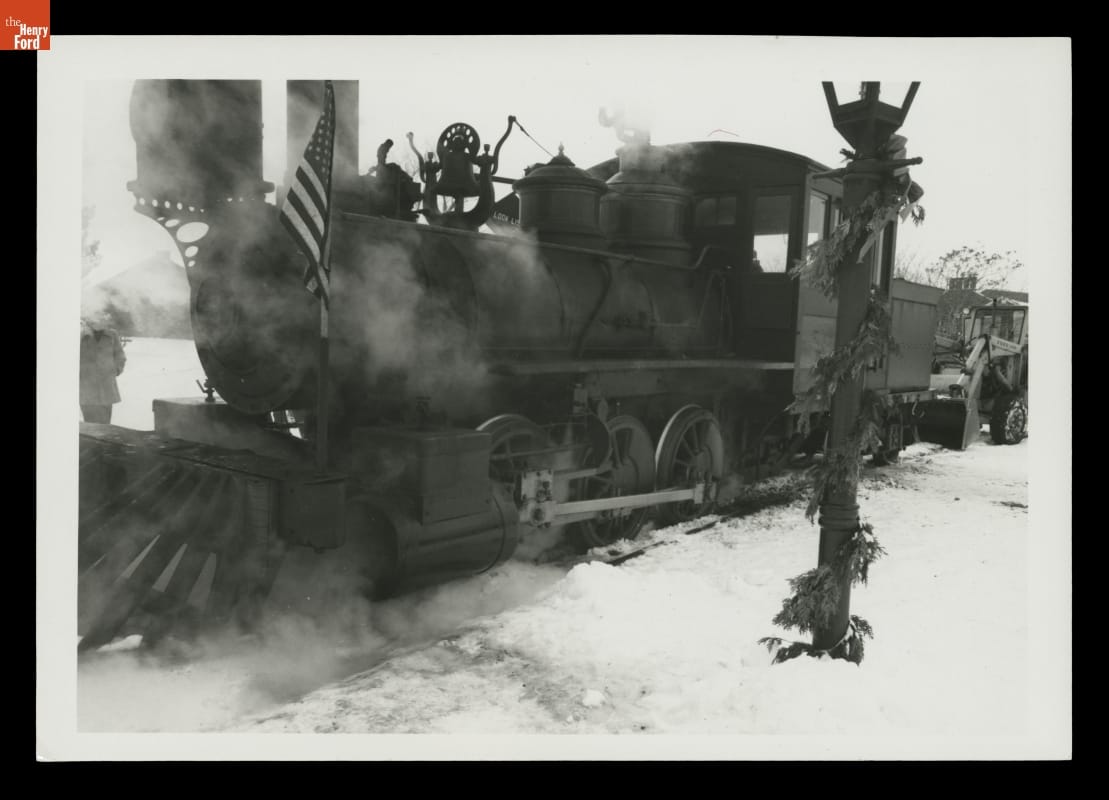
- Torch Lake Steam Locomotive Derailed in Greenfield Village, December 1981 - Derailments were a frequent irritation in the mid-19th century when locomotives and cars were comparatively light. Ice and snow could be enough to force a train from the track. Fortunately, because speeds were slow, damage was usually slight. Here a crew works to put the 1873 locomotive <EM>Torch Lake</EM> back on track after a derailment in December 1981.
- December 28, 1981
- Collections - Artifact
Torch Lake Steam Locomotive Derailed in Greenfield Village, December 1981
Derailments were a frequent irritation in the mid-19th century when locomotives and cars were comparatively light. Ice and snow could be enough to force a train from the track. Fortunately, because speeds were slow, damage was usually slight. Here a crew works to put the 1873 locomotive Torch Lake back on track after a derailment in December 1981.
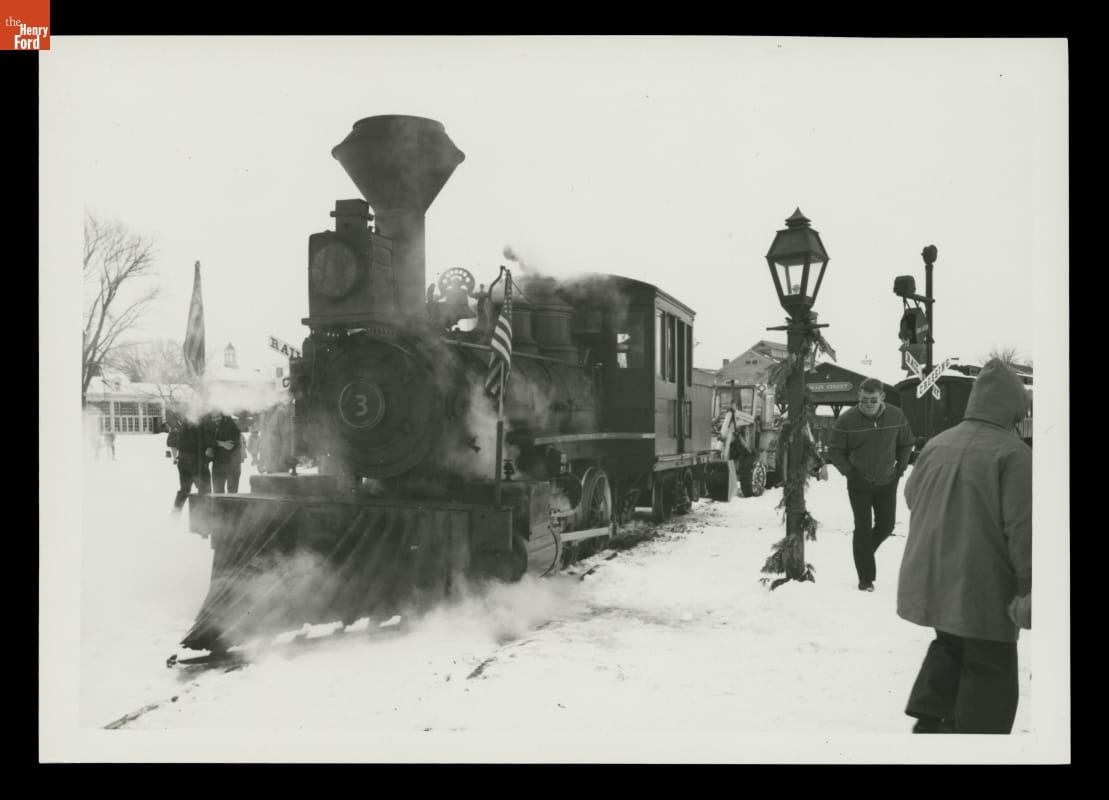
- Torch Lake Steam Locomotive Derailed in Greenfield Village, December 1981 - Derailments were a frequent irritation in the mid-19th century when locomotives and cars were comparatively light. Ice and snow could be enough to force a train from the track. Fortunately, because speeds were slow, damage was usually slight. Here a crew works to put the 1873 locomotive <EM>Torch Lake</EM> back on track after a derailment in December 1981.
- December 28, 1981
- Collections - Artifact
Torch Lake Steam Locomotive Derailed in Greenfield Village, December 1981
Derailments were a frequent irritation in the mid-19th century when locomotives and cars were comparatively light. Ice and snow could be enough to force a train from the track. Fortunately, because speeds were slow, damage was usually slight. Here a crew works to put the 1873 locomotive Torch Lake back on track after a derailment in December 1981.
- Torch Lake Steam Locomotive Derailed in Greenfield Village, December 1981 - Derailments were a frequent irritation in the mid-19th century when locomotives and cars were comparatively light. Ice and snow could be enough to force a train from the track. Fortunately, because speeds were slow, damage was usually slight. Here a crew works to put the 1873 locomotive <EM>Torch Lake</EM> back on track after a derailment in December 1981.
- December 28, 1981
- Collections - Artifact
Torch Lake Steam Locomotive Derailed in Greenfield Village, December 1981
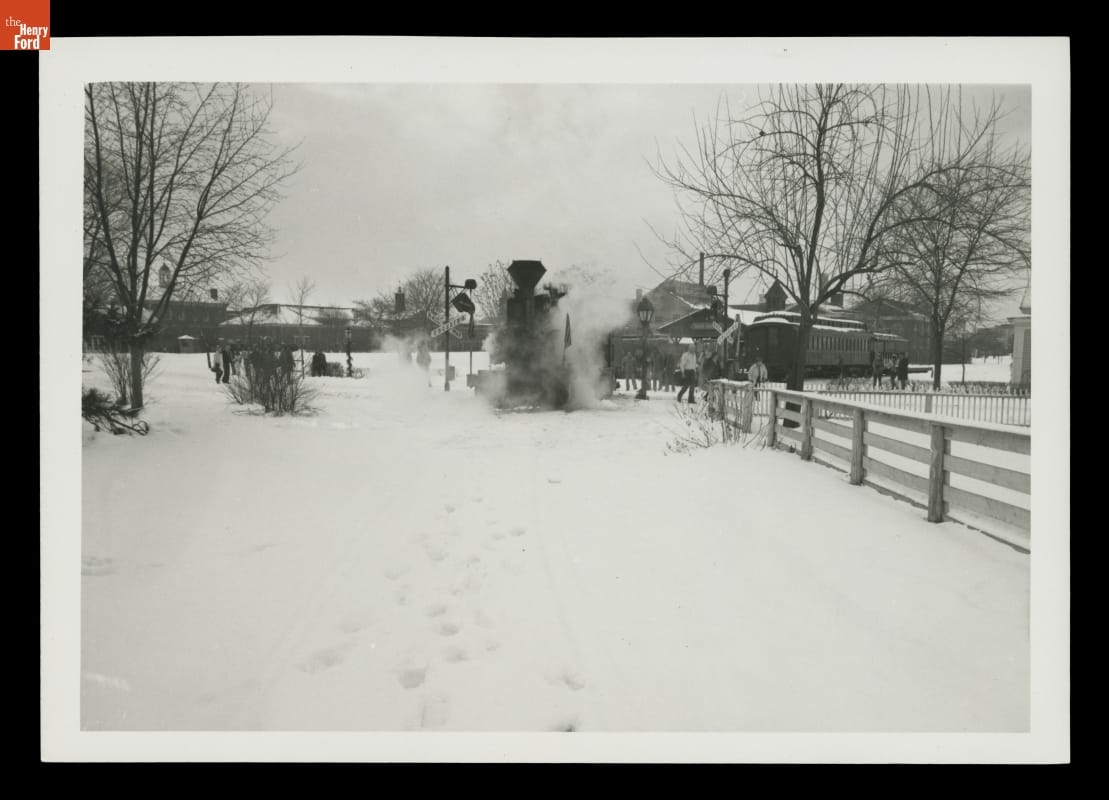
Derailments were a frequent irritation in the mid-19th century when locomotives and cars were comparatively light. Ice and snow could be enough to force a train from the track. Fortunately, because speeds were slow, damage was usually slight. Here a crew works to put the 1873 locomotive Torch Lake back on track after a derailment in December 1981.
- Collision on the Western Extension R.R., N.B., 1872 - Accidents were frightfully common on 19th-century railroads. Crude equipment, poor signaling, and uncoordinated timekeeping all contributed to the problem. This illustration shows the aftermath of a head-on collision between two trains in the Canadian province of New Brunswick in 1872.
- 1872
- Collections - Artifact
Collision on the Western Extension R.R., N.B., 1872
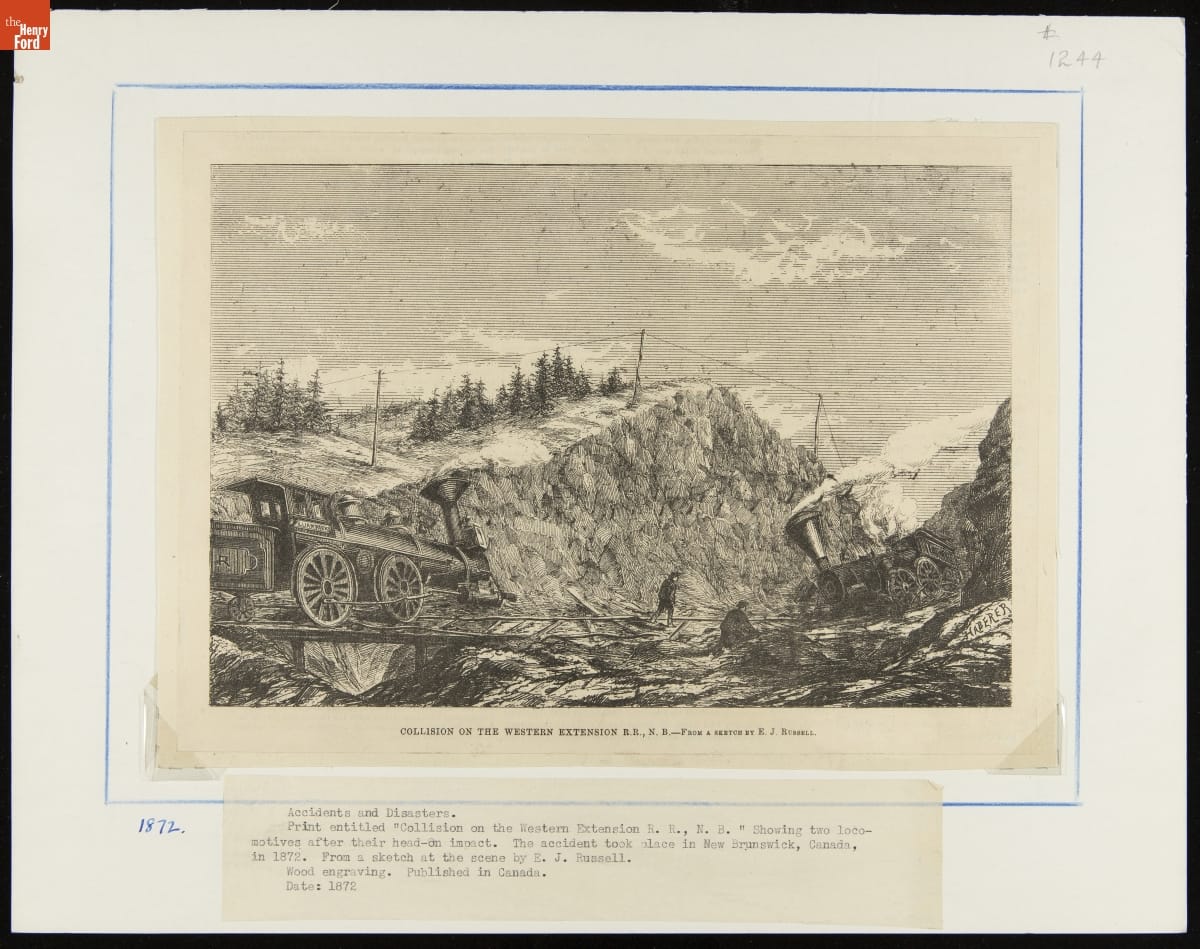
Accidents were frightfully common on 19th-century railroads. Crude equipment, poor signaling, and uncoordinated timekeeping all contributed to the problem. This illustration shows the aftermath of a head-on collision between two trains in the Canadian province of New Brunswick in 1872.
- Late Accident on the Pennsylvania Railroad, March 4, 1853 - Accidents were frightfully common on American railroads in the mid-19th century. Cheap construction, crude equipment, poor signaling, and uncoordinated timekeeping all contributed to the problem. This illustration shows a wreck on the Pennsylvania Railroad on March 4, 1853. A passenger train, halted by mechanical problems, was rear-ended by a mail train, killing seven people.
- March 04, 1853
- Collections - Artifact
Late Accident on the Pennsylvania Railroad, March 4, 1853
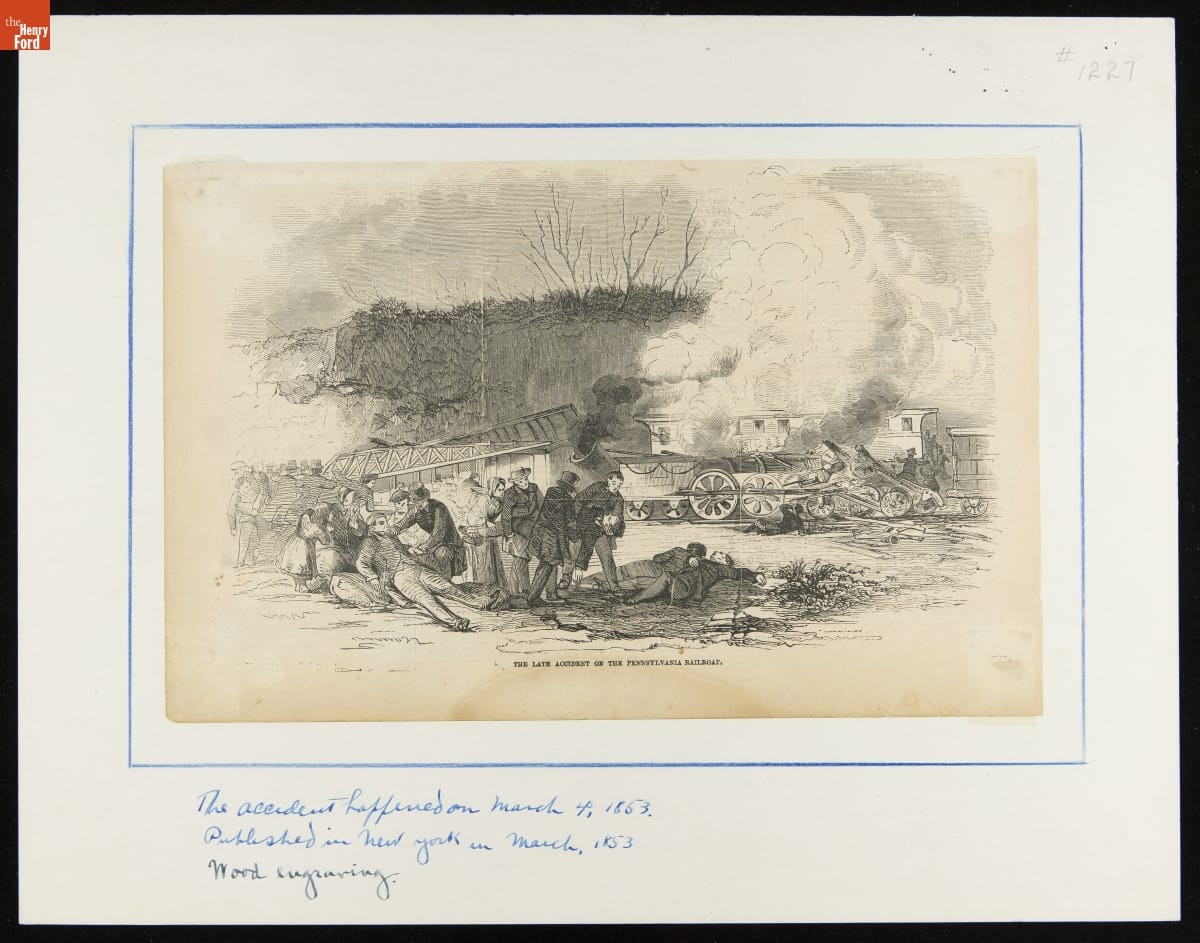
Accidents were frightfully common on American railroads in the mid-19th century. Cheap construction, crude equipment, poor signaling, and uncoordinated timekeeping all contributed to the problem. This illustration shows a wreck on the Pennsylvania Railroad on March 4, 1853. A passenger train, halted by mechanical problems, was rear-ended by a mail train, killing seven people.