
Search
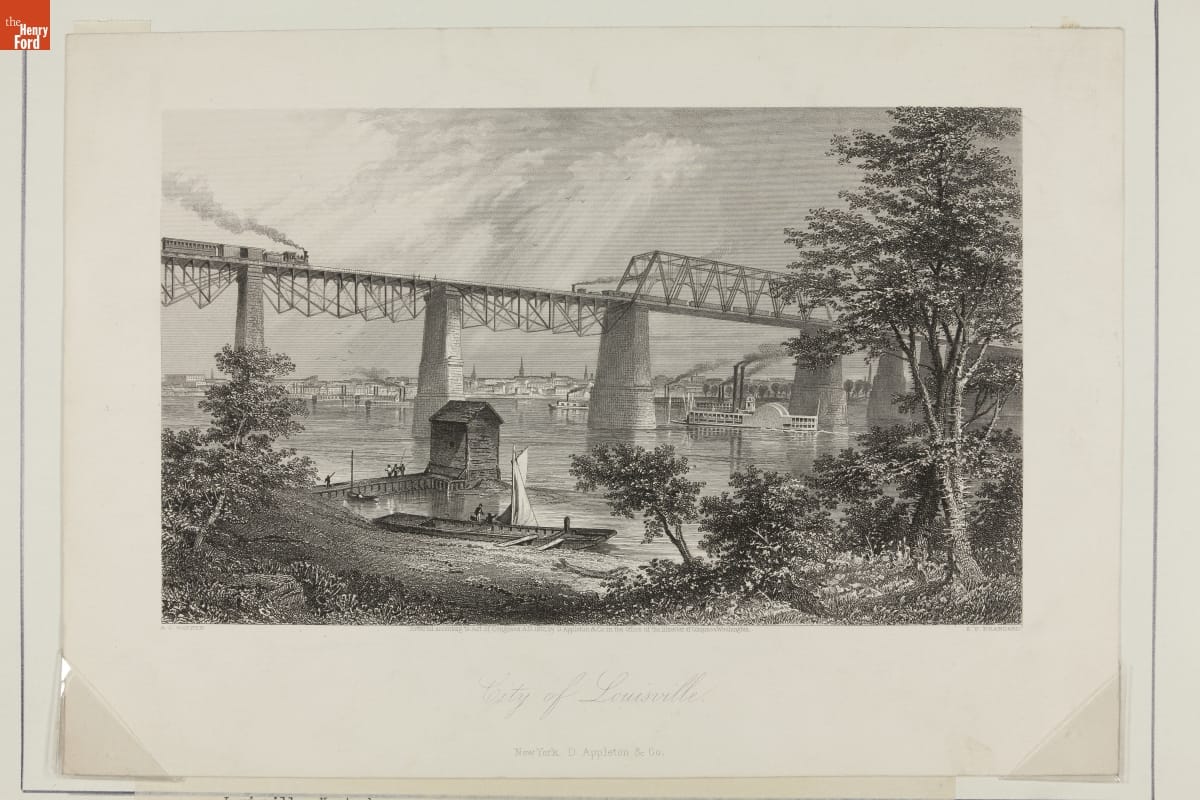
- Steel Engraving, "City of Louisville," circa 1870 - This circa 1870 steel engraving shows the city of Louisville, Kentucky, from a point across the Ohio River. Founded in 1780, Louisville grew rapidly into a major shipping port along the river, and this steel railroad bridge was the first to span the Ohio River in Louisville.
- circa 1872
- Collections - Artifact
Steel Engraving, "City of Louisville," circa 1870
This circa 1870 steel engraving shows the city of Louisville, Kentucky, from a point across the Ohio River. Founded in 1780, Louisville grew rapidly into a major shipping port along the river, and this steel railroad bridge was the first to span the Ohio River in Louisville.
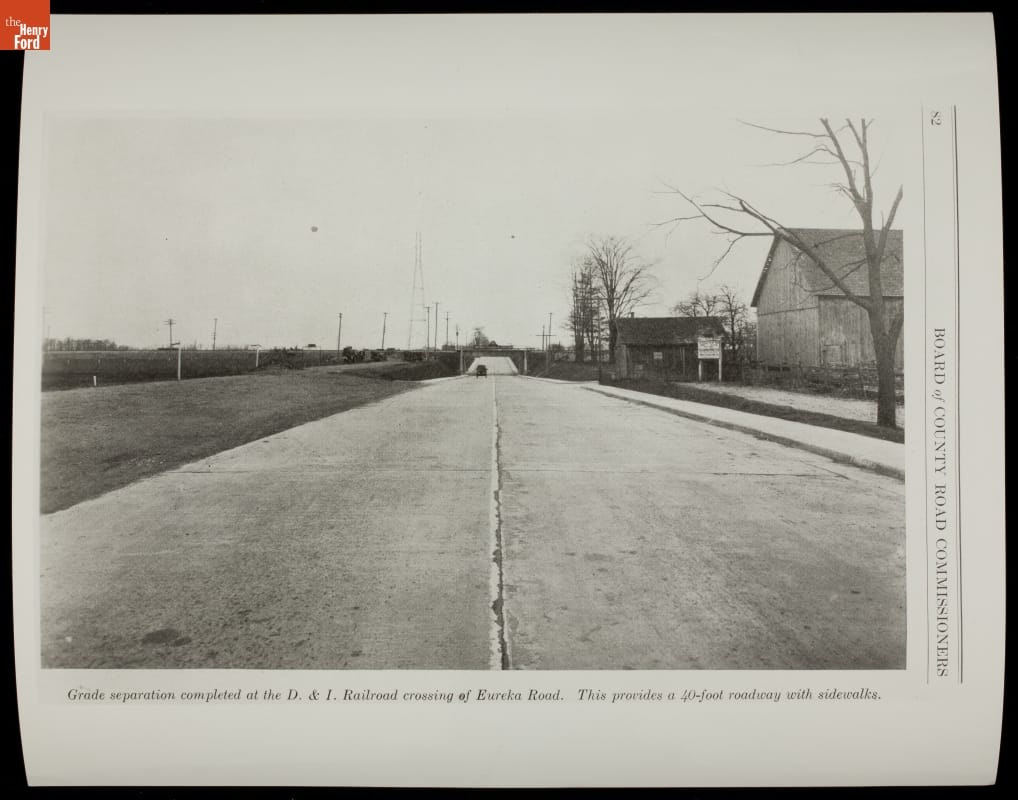
- DT& I Railroad Crossing at Eureka Road, Wayne County, Michigan, 1924-1925 - One way to make a railroad crossing safer was to eliminate it altogether. Overpasses separated trains from automobiles, but they were expensive to build and required extensive regrading of either the railroad or the roadway -- and sometimes both. As a result, overpasses tended to be built only at the busiest crossings.
- 1924-1925
- Collections - Artifact
DT& I Railroad Crossing at Eureka Road, Wayne County, Michigan, 1924-1925
One way to make a railroad crossing safer was to eliminate it altogether. Overpasses separated trains from automobiles, but they were expensive to build and required extensive regrading of either the railroad or the roadway -- and sometimes both. As a result, overpasses tended to be built only at the busiest crossings.
- Devil's Gate Bridge in Georgetown Loop, Colorado, circa 1900 - When gold, then silver, was discovered around Georgetown, Colorado (45 miles west of Denver), railroads attempted to gain access there. But the grade was too steep until a railroad engineer designed a route with twisting hairpin turns, horseshoe curves, and bridges -- including the dramatic Devil's Gate High Bridge. As mining waned by 1900, the route became popular with tourists.

- circa 1900
- Collections - Artifact
Devil's Gate Bridge in Georgetown Loop, Colorado, circa 1900
When gold, then silver, was discovered around Georgetown, Colorado (45 miles west of Denver), railroads attempted to gain access there. But the grade was too steep until a railroad engineer designed a route with twisting hairpin turns, horseshoe curves, and bridges -- including the dramatic Devil's Gate High Bridge. As mining waned by 1900, the route became popular with tourists.
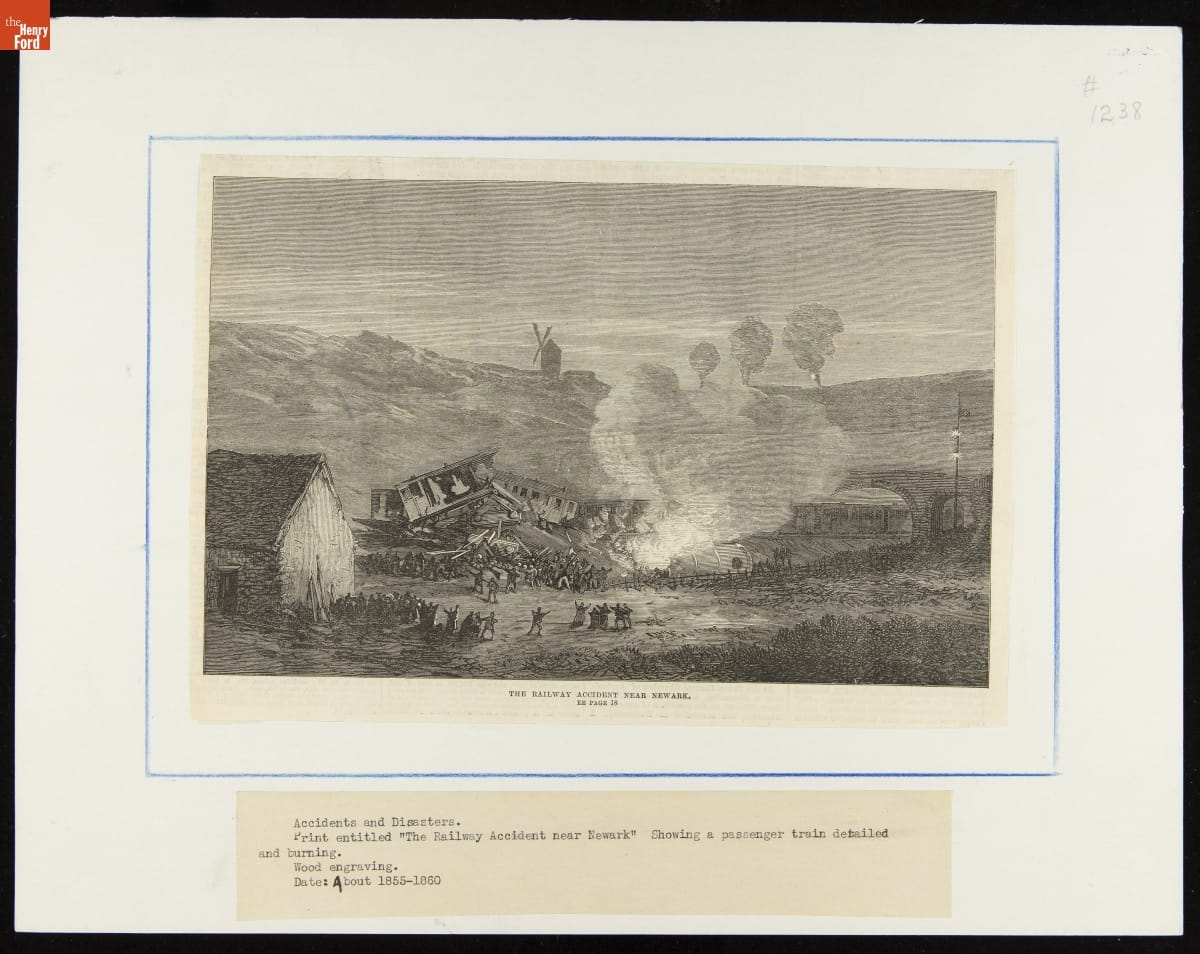
- The Railway Accident near Newark, 1870 - Accidents were frightfully common on 19th-century railroads. Crude equipment, poor signaling and uncoordinated timekeeping all contributed to the problem. Heavily varnished wooden coaches, lit by kerosene lamps and heated by coal stoves, added serious risk of fire to a collision. This illustration shows a fire ignited by a train wreck in 1870 near Newark, England, in the United Kingdom.
- June 21, 1870
- Collections - Artifact
The Railway Accident near Newark, 1870
Accidents were frightfully common on 19th-century railroads. Crude equipment, poor signaling and uncoordinated timekeeping all contributed to the problem. Heavily varnished wooden coaches, lit by kerosene lamps and heated by coal stoves, added serious risk of fire to a collision. This illustration shows a fire ignited by a train wreck in 1870 near Newark, England, in the United Kingdom.
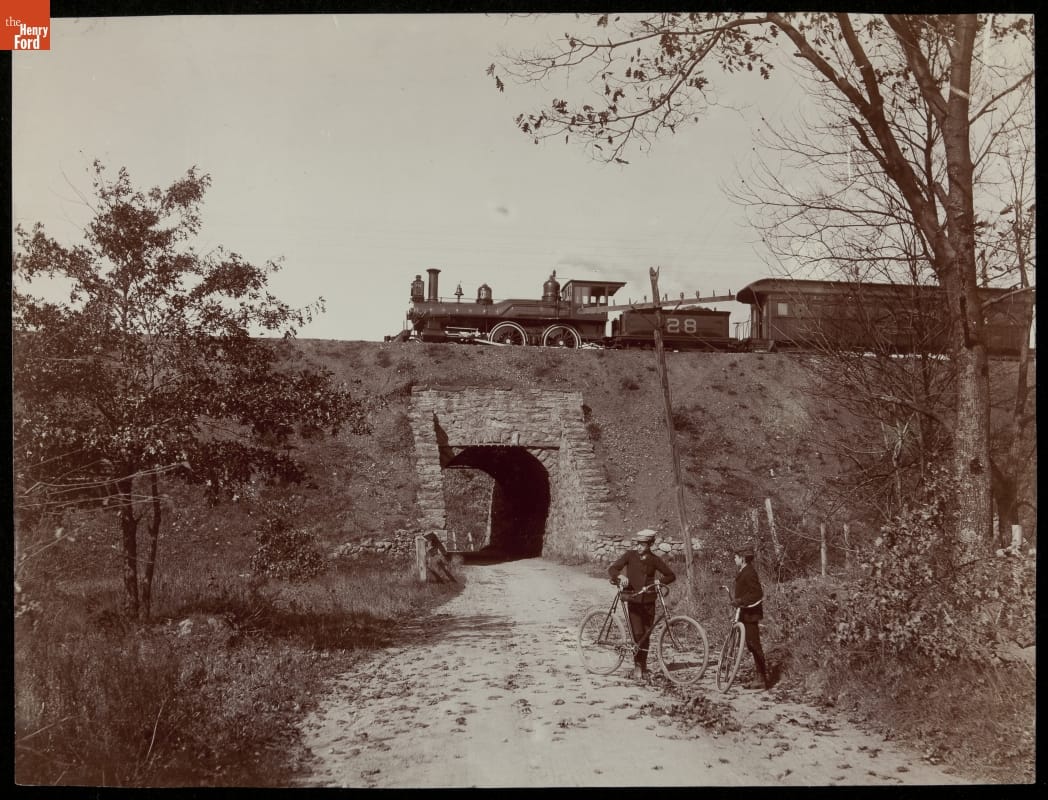
- Detroit Photographic Co. Railroad Car on Overpass near Arlington, New Jersey, circa 1900 - This photograph shows two popular modes of transportation available around 1900. A person could travel long distances by train or take a short leisurely ride on a bicycle.
- circa 1900
- Collections - Artifact
Detroit Photographic Co. Railroad Car on Overpass near Arlington, New Jersey, circa 1900
This photograph shows two popular modes of transportation available around 1900. A person could travel long distances by train or take a short leisurely ride on a bicycle.
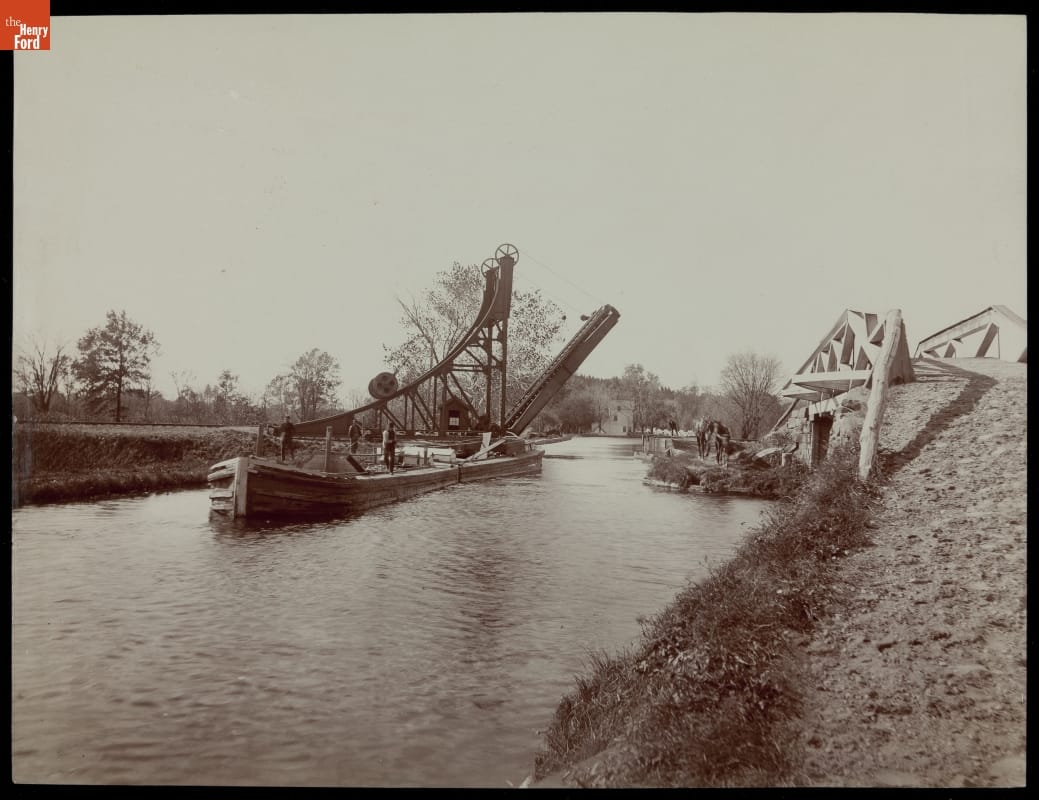
- Railroad Drawbridge, Morris and Essex Canal, near Mountain View, New Jersey, 1890-1901 - For nearly thirty years, 1895 to 1924, the Detroit Publishing Company was one of the major image publishers in the world. The company had a wide-ranging stock of original photographs, including this image of a section of the Morris Canal. The canal used a series of water-driven inclined planes to move anthracite, a type of coal, across northern New Jersey.
- 1890-1901
- Collections - Artifact
Railroad Drawbridge, Morris and Essex Canal, near Mountain View, New Jersey, 1890-1901
For nearly thirty years, 1895 to 1924, the Detroit Publishing Company was one of the major image publishers in the world. The company had a wide-ranging stock of original photographs, including this image of a section of the Morris Canal. The canal used a series of water-driven inclined planes to move anthracite, a type of coal, across northern New Jersey.
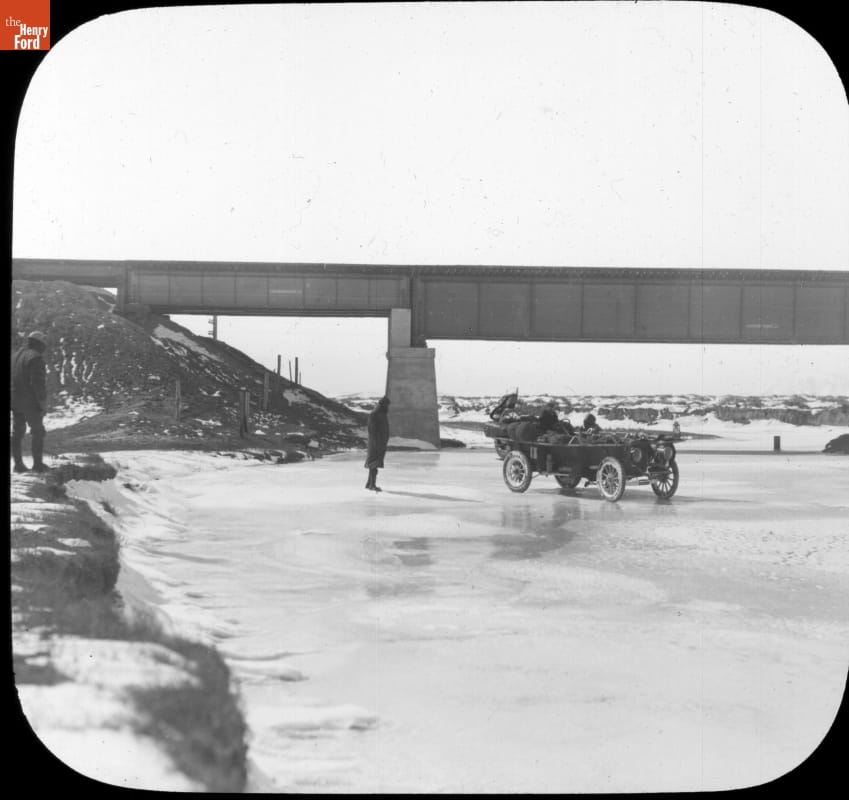
- Thomas Flyer Crossing the Frozen Medicine Bow River near Fort Steele, Wyoming, New York to Paris Race, 1908 - In 1908, six automobiles raced around the globe from New York City to Paris, France. The contest took 169 days, covered 22,000 miles and spanned three continents. The cars and their racing teams had to endure cold, snow, mud, poor roads and other hardships. This lantern slide shows the American team attempting to cross the frozen Medicine Bow River in Wyoming.
- 1908
- Collections - Artifact
Thomas Flyer Crossing the Frozen Medicine Bow River near Fort Steele, Wyoming, New York to Paris Race, 1908
In 1908, six automobiles raced around the globe from New York City to Paris, France. The contest took 169 days, covered 22,000 miles and spanned three continents. The cars and their racing teams had to endure cold, snow, mud, poor roads and other hardships. This lantern slide shows the American team attempting to cross the frozen Medicine Bow River in Wyoming.
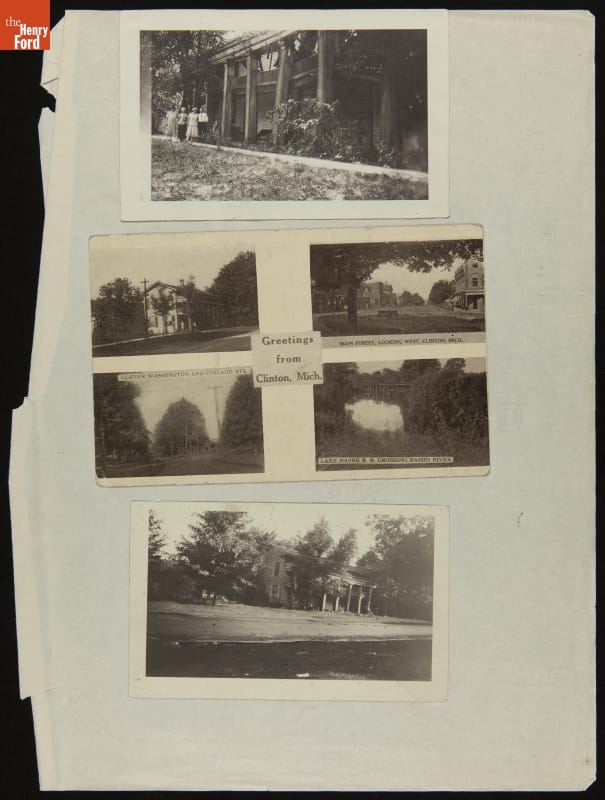
- Views of Clinton, Michigan, Including Eagle Tavern, circa 1925 - These scenes from Clinton, Michigan, include the tavern (top, bottom and upper left in postcard) that was moved, restored, and renamed Clinton Inn in Greenfield Village. Built 1831-2, it was originally a stagecoach stop on the Detroit-to-Chicago road. In 1927, Henry Ford purchased the building from resident Ella Smith -- daughter of Walter Smith, who had run the hostelry as Smith's Hotel between 1868 and 1896.
- circa 1925
- Collections - Artifact
Views of Clinton, Michigan, Including Eagle Tavern, circa 1925
These scenes from Clinton, Michigan, include the tavern (top, bottom and upper left in postcard) that was moved, restored, and renamed Clinton Inn in Greenfield Village. Built 1831-2, it was originally a stagecoach stop on the Detroit-to-Chicago road. In 1927, Henry Ford purchased the building from resident Ella Smith -- daughter of Walter Smith, who had run the hostelry as Smith's Hotel between 1868 and 1896.
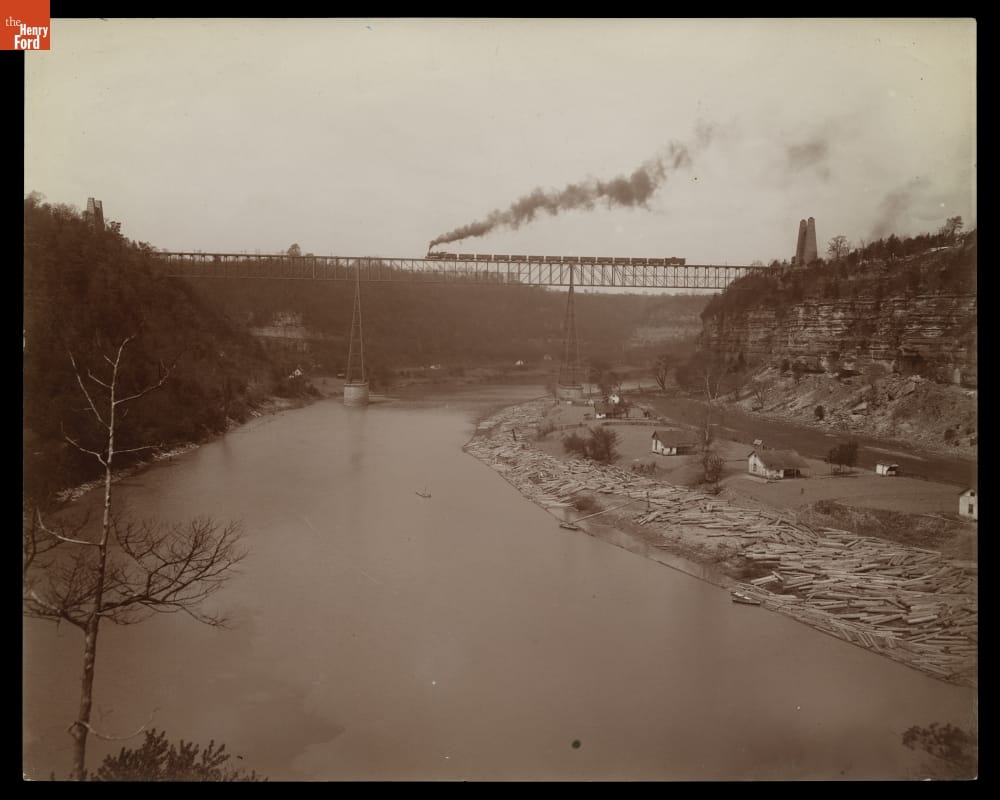
- "Train on High Bridge over the Kentucky River," High Bridge, Kentucky, 1907 - A train passes over the Kentucky River at High Bridge, Kentucky, in this photograph taken about 1907. The cantilever-designed bridge stands nearly 300 feet over the river.
- 1907
- Collections - Artifact
"Train on High Bridge over the Kentucky River," High Bridge, Kentucky, 1907
A train passes over the Kentucky River at High Bridge, Kentucky, in this photograph taken about 1907. The cantilever-designed bridge stands nearly 300 feet over the river.
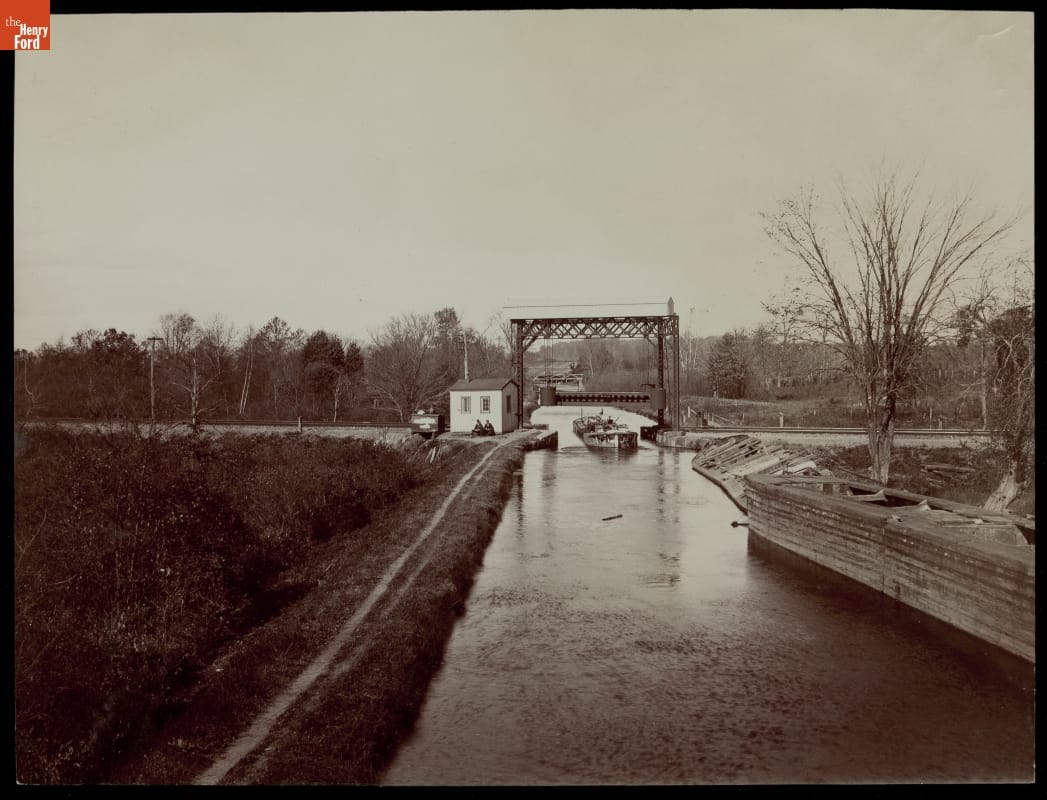
- Vertical Lift Railroad Bridge, Morris and Essex Canal near Mountain View, New Jersey, 1890-1901 - For nearly thirty years, 1895 to 1924, the Detroit Publishing Company was one of the major image publishers in the world. The company had a wide-ranging stock of original photographs, including this image of a section of the Morris Canal. The canal used a series of water-driven inclined planes to move anthracite, a type of coal, across northern New Jersey.
- 1890-1901
- Collections - Artifact
Vertical Lift Railroad Bridge, Morris and Essex Canal near Mountain View, New Jersey, 1890-1901
For nearly thirty years, 1895 to 1924, the Detroit Publishing Company was one of the major image publishers in the world. The company had a wide-ranging stock of original photographs, including this image of a section of the Morris Canal. The canal used a series of water-driven inclined planes to move anthracite, a type of coal, across northern New Jersey.