
Search
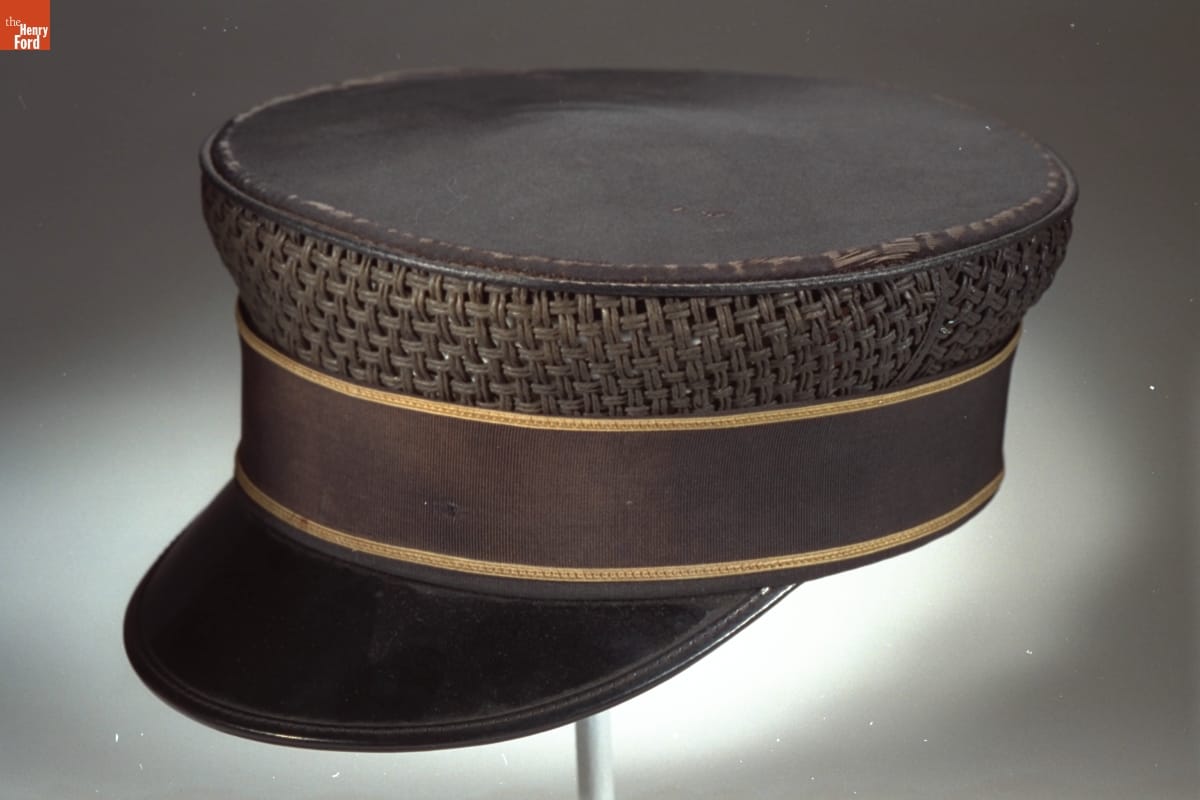
- Conductor's Cap, 1885-1920 - Standard uniforms and caps made railroad staff easily recognizable to passengers. This hat, by Marshall Field & Company of Chicago, projects authority while also providing practical benefits to the wearer. The patent leather visor shades the eyes while the ventilated crown prevents overheating. Marshall Field's supplied uniforms, linens and upholstery to the nearby Pullman Company, builder of railroad passenger cars.
- 1885-1920
- Collections - Artifact
Conductor's Cap, 1885-1920
Standard uniforms and caps made railroad staff easily recognizable to passengers. This hat, by Marshall Field & Company of Chicago, projects authority while also providing practical benefits to the wearer. The patent leather visor shades the eyes while the ventilated crown prevents overheating. Marshall Field's supplied uniforms, linens and upholstery to the nearby Pullman Company, builder of railroad passenger cars.
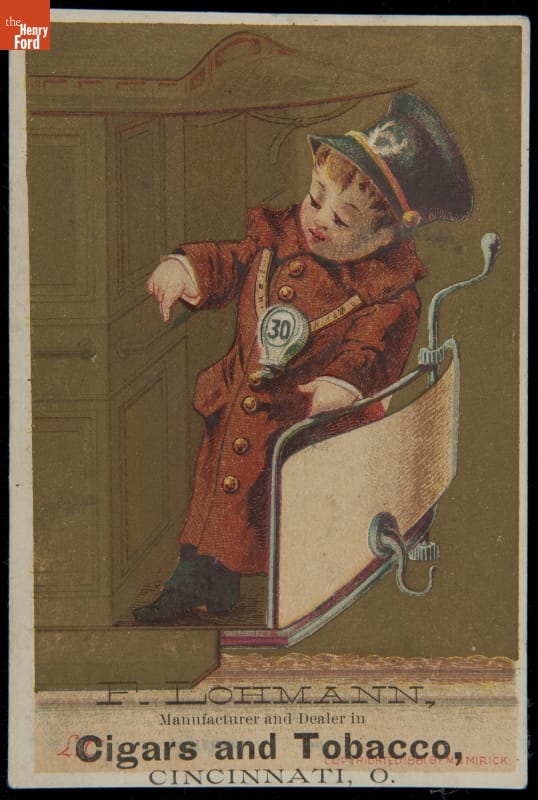
- Trade Card for F. Lohmann, Cigars and Tobacco, 1881 - In the last third of the nineteenth century, an unprecedented variety of consumer goods and services flooded the American market. Advertisers, armed with new methods of color printing, bombarded potential customers with trade cards. Americans enjoyed and often saved the vibrant little advertisements found in product packages or distributed by local merchants. Many survive as historical records of commercialism in the United States.
- 1881
- Collections - Artifact
Trade Card for F. Lohmann, Cigars and Tobacco, 1881
In the last third of the nineteenth century, an unprecedented variety of consumer goods and services flooded the American market. Advertisers, armed with new methods of color printing, bombarded potential customers with trade cards. Americans enjoyed and often saved the vibrant little advertisements found in product packages or distributed by local merchants. Many survive as historical records of commercialism in the United States.
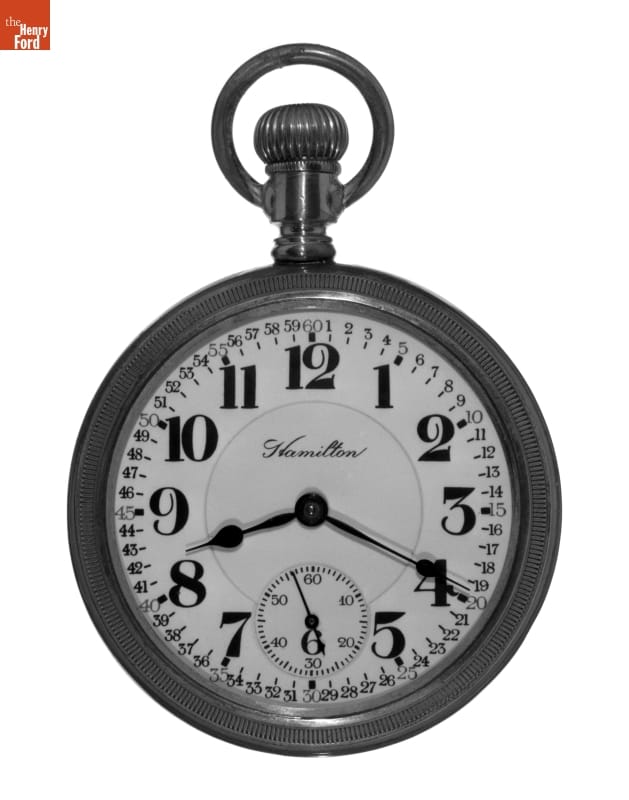
- Railroad Pocket Watch, 1910-1915 - After decades of disastrous railroad collisions due to the lack of coordination between different lines, railroad companies realized that accurate timekeeping was crucial to helping ensure the safe and efficient operation of the nation's railroad networks. As early as the 1860s, railroad companies collaborated with American watch manufacturers to produce precision watches for conductors and other railroad employees.
- 1910-1915
- Collections - Artifact
Railroad Pocket Watch, 1910-1915
After decades of disastrous railroad collisions due to the lack of coordination between different lines, railroad companies realized that accurate timekeeping was crucial to helping ensure the safe and efficient operation of the nation's railroad networks. As early as the 1860s, railroad companies collaborated with American watch manufacturers to produce precision watches for conductors and other railroad employees.
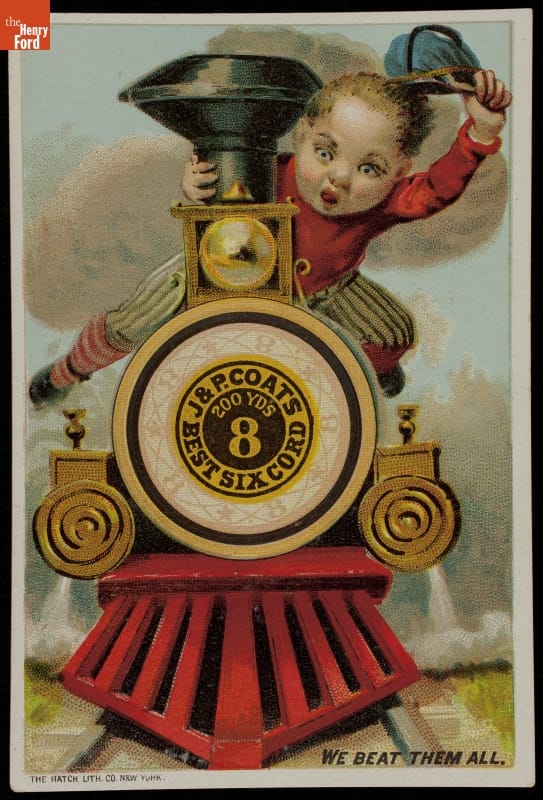
- Trade Card for Six Cord Sewing Thread, J. & P. Coats, 1881 - As color printing gained momentum in the late 19th century, trade cards became a major means of advertising goods and services. Americans enjoyed and often saved the little advertisements found in product packages or distributed by local merchants. This trade card advertises Six Cord Thread from J. & P. Coats Company.
- 1881
- Collections - Artifact
Trade Card for Six Cord Sewing Thread, J. & P. Coats, 1881
As color printing gained momentum in the late 19th century, trade cards became a major means of advertising goods and services. Americans enjoyed and often saved the little advertisements found in product packages or distributed by local merchants. This trade card advertises Six Cord Thread from J. & P. Coats Company.
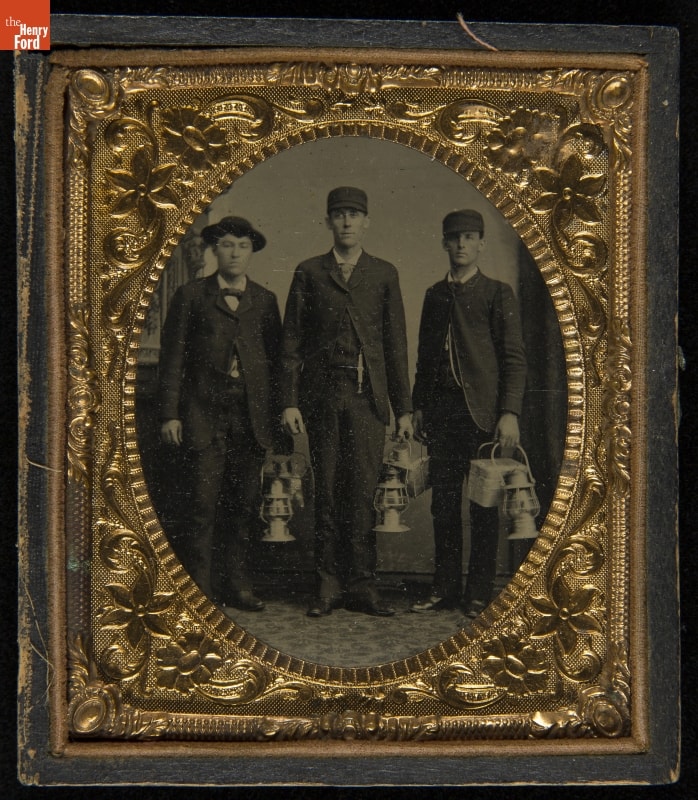
- Three Railroad Workers Holding Lanterns and Lunch Pails, circa 1883 - Tintypes, the popular "instant photographs" of the 19th century, could be produced in a matter of minutes at a price most people could afford. Tintypes democratized photography. Beginning in the mid-1850s, they gave more people than ever before the chance to have a real likeness of themselves--capturing unique glimpses of how everyday Americans looked and lived.
- circa 1883
- Collections - Artifact
Three Railroad Workers Holding Lanterns and Lunch Pails, circa 1883
Tintypes, the popular "instant photographs" of the 19th century, could be produced in a matter of minutes at a price most people could afford. Tintypes democratized photography. Beginning in the mid-1850s, they gave more people than ever before the chance to have a real likeness of themselves--capturing unique glimpses of how everyday Americans looked and lived.
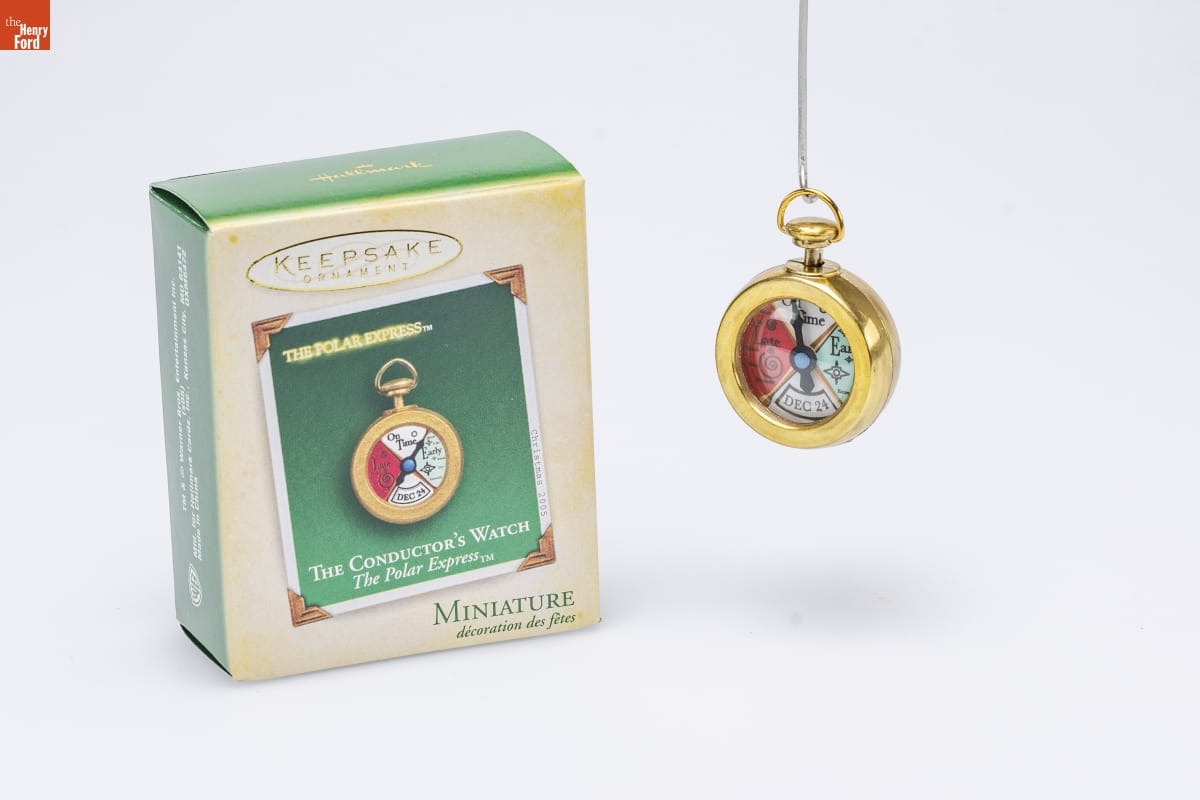
- Hallmark "The Polar Express: The Conductor's Watch" Miniature Christmas Ornament, 2005 - Already known for greeting cards, Hallmark introduced a line of Christmas ornaments in 1973. The company's annual release of an increasing array of ornaments revolutionized Christmas decorating, appealing to customers' interest in marking memories and milestones as well as expressing one's personality and unique tastes.
- 2005
- Collections - Artifact
Hallmark "The Polar Express: The Conductor's Watch" Miniature Christmas Ornament, 2005
Already known for greeting cards, Hallmark introduced a line of Christmas ornaments in 1973. The company's annual release of an increasing array of ornaments revolutionized Christmas decorating, appealing to customers' interest in marking memories and milestones as well as expressing one's personality and unique tastes.