
Search
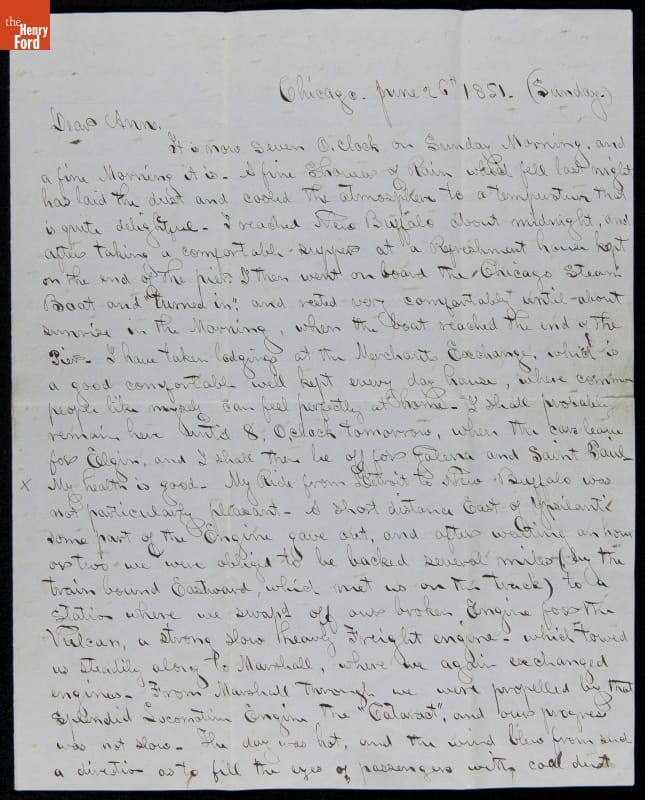
- Letter from E.P. Goodrich to Ann Goodrich, 1851 - This 1851 letter describes a trip on the Michigan Central Railroad from Detroit to Chicago. Author E.P. Goodrich colorfully relates the trials of mid-19th-century rail travel. Equipment breakdowns, smoke, and cinders were common, and average speeds were low. Because the Michigan Central wasn't completed into Chicago until 1852, Goodrich finished his journey by steamboat from New Buffalo across Lake Michigan.
- June 26, 1851
- Collections - Artifact
Letter from E.P. Goodrich to Ann Goodrich, 1851
This 1851 letter describes a trip on the Michigan Central Railroad from Detroit to Chicago. Author E.P. Goodrich colorfully relates the trials of mid-19th-century rail travel. Equipment breakdowns, smoke, and cinders were common, and average speeds were low. Because the Michigan Central wasn't completed into Chicago until 1852, Goodrich finished his journey by steamboat from New Buffalo across Lake Michigan.
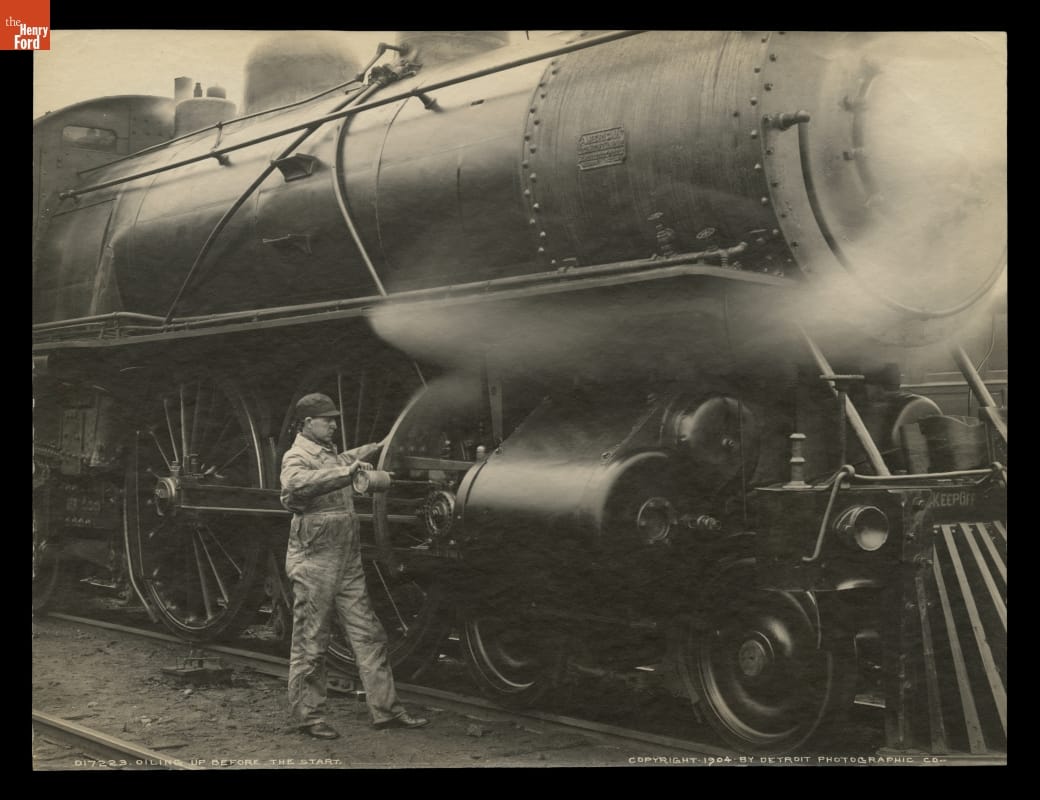
- "Oiling Up Before the Start," Engineer Working on Michigan Central Railroad K-Class Locomotive, 1904 - An engineman is seen oiling the side rods on a Michigan Central Railroad locomotive about 1905. The 4-4-2 Atlantic-type locomotive, with its tall driving wheels, was built to pull fast passenger trains on the Michigan Central's Detroit-Chicago mainline. But speed was relative. Even the fastest regularly scheduled trains might have averaged only 40 miles per hour in 1905.
- 1904
- Collections - Artifact
"Oiling Up Before the Start," Engineer Working on Michigan Central Railroad K-Class Locomotive, 1904
An engineman is seen oiling the side rods on a Michigan Central Railroad locomotive about 1905. The 4-4-2 Atlantic-type locomotive, with its tall driving wheels, was built to pull fast passenger trains on the Michigan Central's Detroit-Chicago mainline. But speed was relative. Even the fastest regularly scheduled trains might have averaged only 40 miles per hour in 1905.
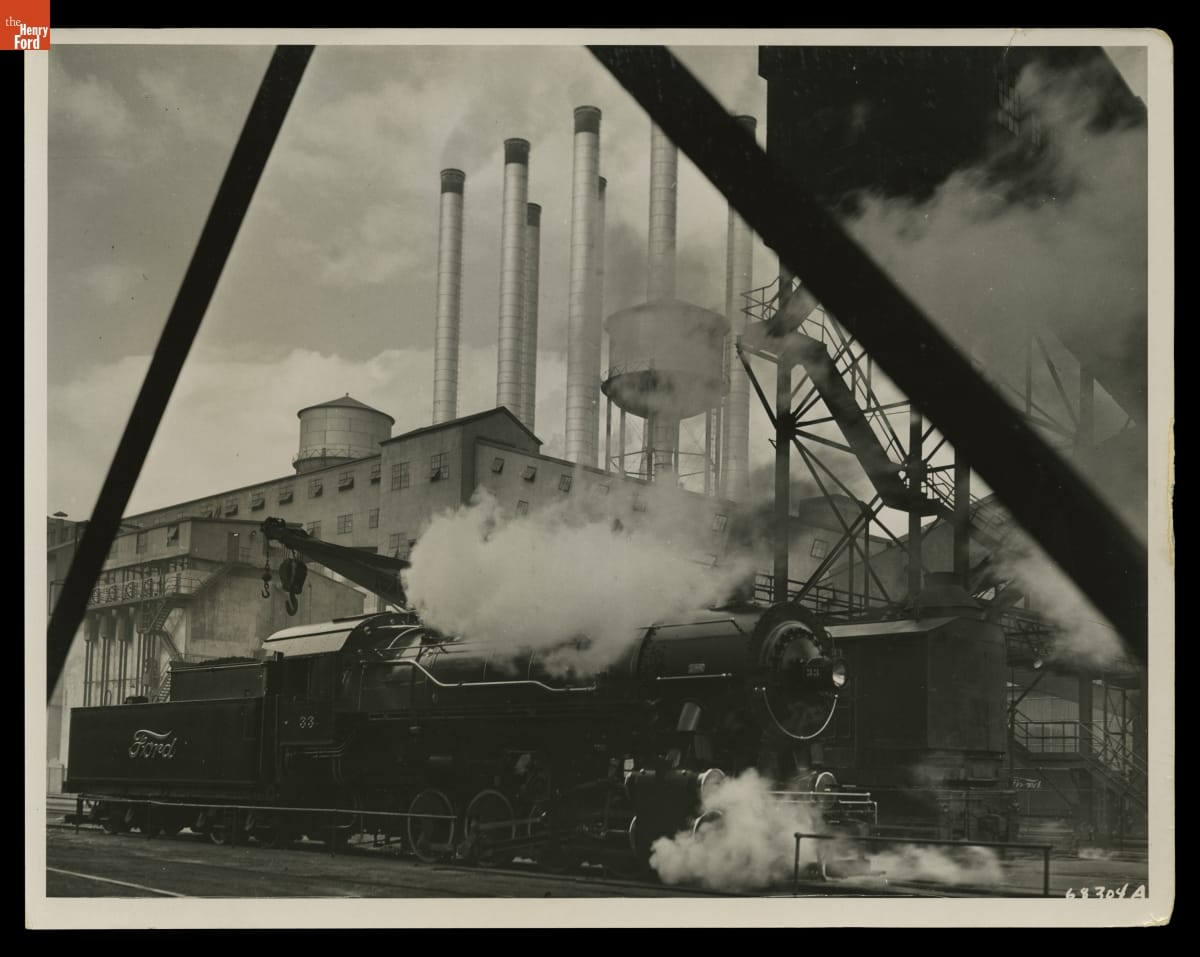
- Locomotive at Ford Motor Company Rouge Plant, Dearborn, Michigan, May 1937 - Some 100 miles of railroad track covered the grounds of Ford Motor Company's Rouge plant. The automaker maintained its own fleet of locomotives to move incoming railcars loaded with raw materials, and outgoing railcars filled with finished parts and automobiles, around the complex. Additionally, specialized tank cars ferried molten iron from the factory's blast furnaces to its foundry.
- May 16, 1937
- Collections - Artifact
Locomotive at Ford Motor Company Rouge Plant, Dearborn, Michigan, May 1937
Some 100 miles of railroad track covered the grounds of Ford Motor Company's Rouge plant. The automaker maintained its own fleet of locomotives to move incoming railcars loaded with raw materials, and outgoing railcars filled with finished parts and automobiles, around the complex. Additionally, specialized tank cars ferried molten iron from the factory's blast furnaces to its foundry.
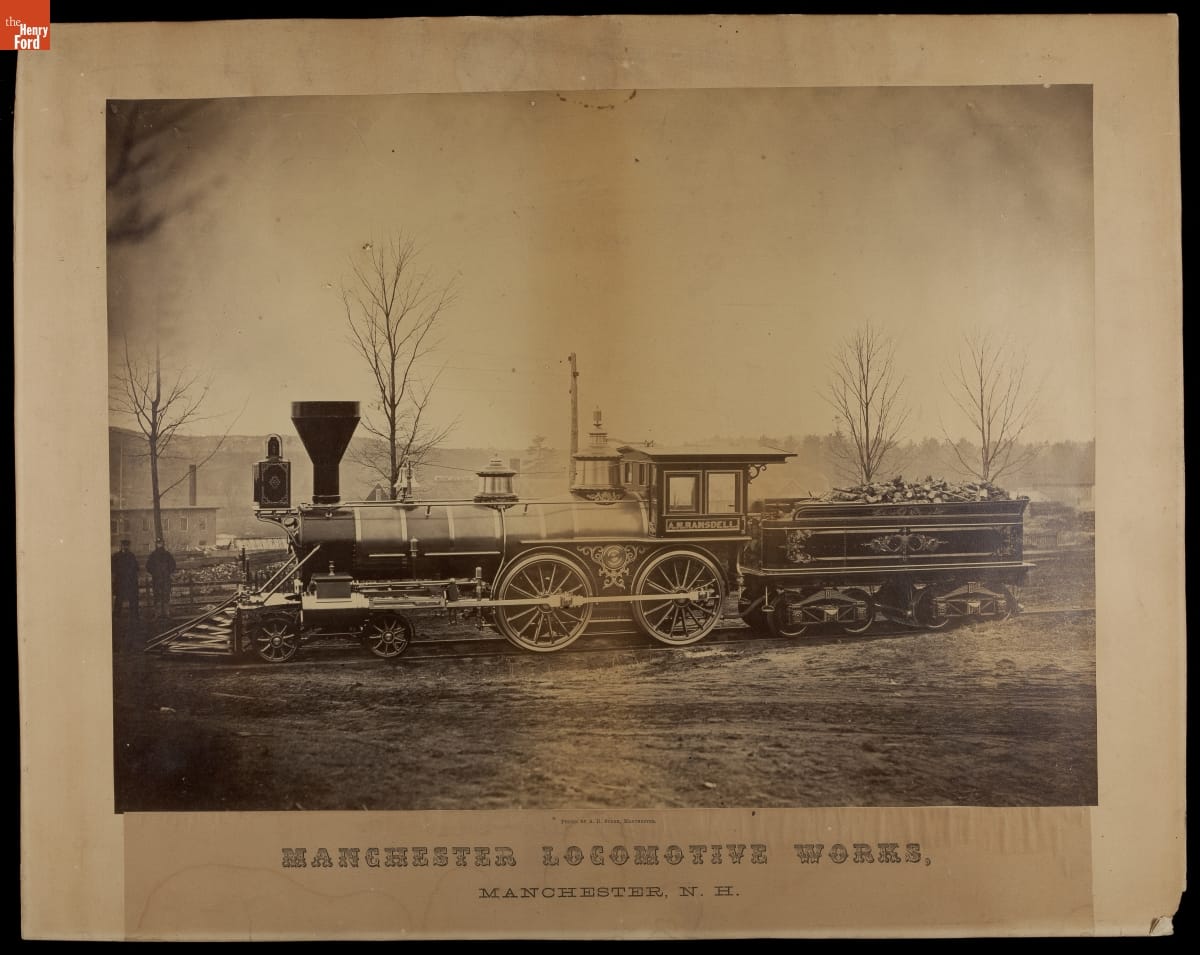
- Manchester Locomotive Works, Manchester, New Hampshire, circa 1860 - The 4-4-0 American-type locomotive <EM>A.M. Ramsdell</EM> was photographed fresh from the shops of the Manchester Locomotive Works. Lavish decorations were typical on mid-1800s locomotives. Manufacturers and operators took pride in their engines as symbols of industry and progress. The Manchester Locomotive Works merged into the American Locomotive Company in 1901.
- circa 1860
- Collections - Artifact
Manchester Locomotive Works, Manchester, New Hampshire, circa 1860
The 4-4-0 American-type locomotive A.M. Ramsdell was photographed fresh from the shops of the Manchester Locomotive Works. Lavish decorations were typical on mid-1800s locomotives. Manufacturers and operators took pride in their engines as symbols of industry and progress. The Manchester Locomotive Works merged into the American Locomotive Company in 1901.
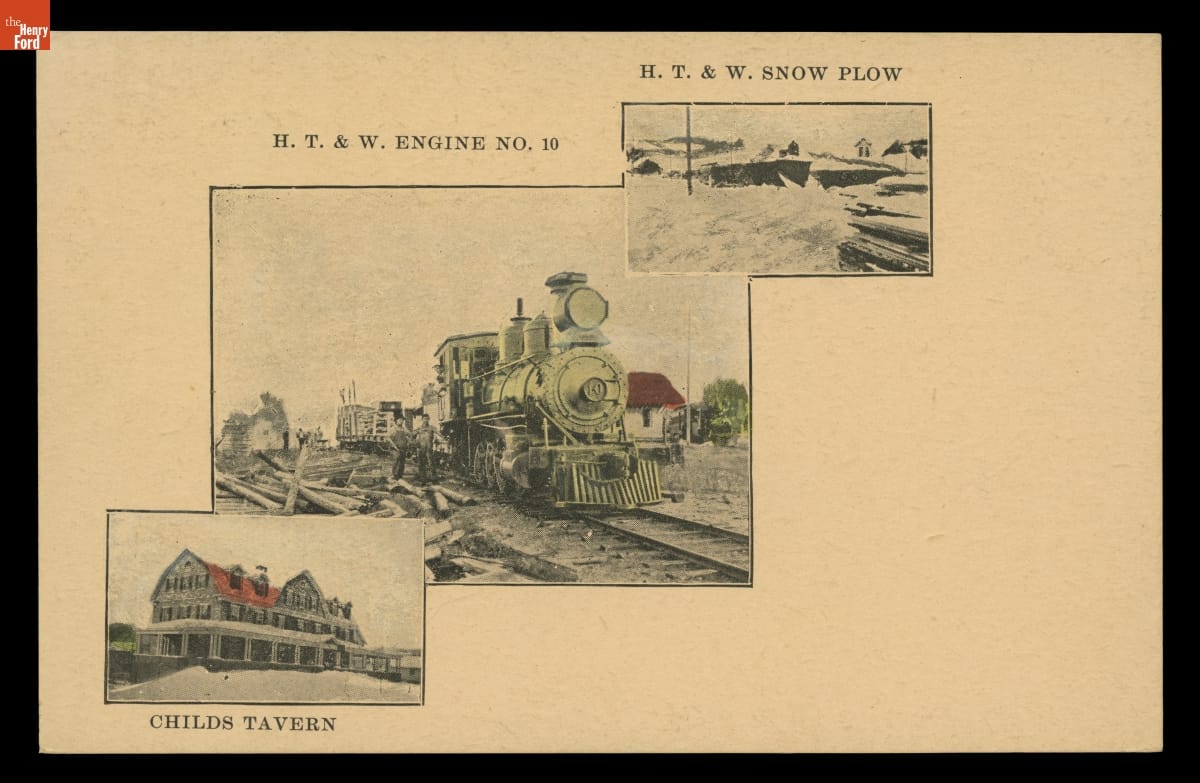
- Hoosac Tunnel & Wilmington Railroad Snowplow, Locomotive and Childs Tavern Postcard, 1898-1901 - The 25-mile Hoosac Tunnel & Wilmington Railroad connected Wilmington, in southwest Vermont, with the Hoosac Tunnel, in northwest Massachusetts. The 4.75-mile Hoosac Tunnel, completed in 1875, linked New England with New York and the Midwest beyond. The HT&W operated from 1886 until its abandonment in 1971. Childs Tavern, a popular Wilmington resort hotel, opened in 1903.
- 1898-1901
- Collections - Artifact
Hoosac Tunnel & Wilmington Railroad Snowplow, Locomotive and Childs Tavern Postcard, 1898-1901
The 25-mile Hoosac Tunnel & Wilmington Railroad connected Wilmington, in southwest Vermont, with the Hoosac Tunnel, in northwest Massachusetts. The 4.75-mile Hoosac Tunnel, completed in 1875, linked New England with New York and the Midwest beyond. The HT&W operated from 1886 until its abandonment in 1971. Childs Tavern, a popular Wilmington resort hotel, opened in 1903.
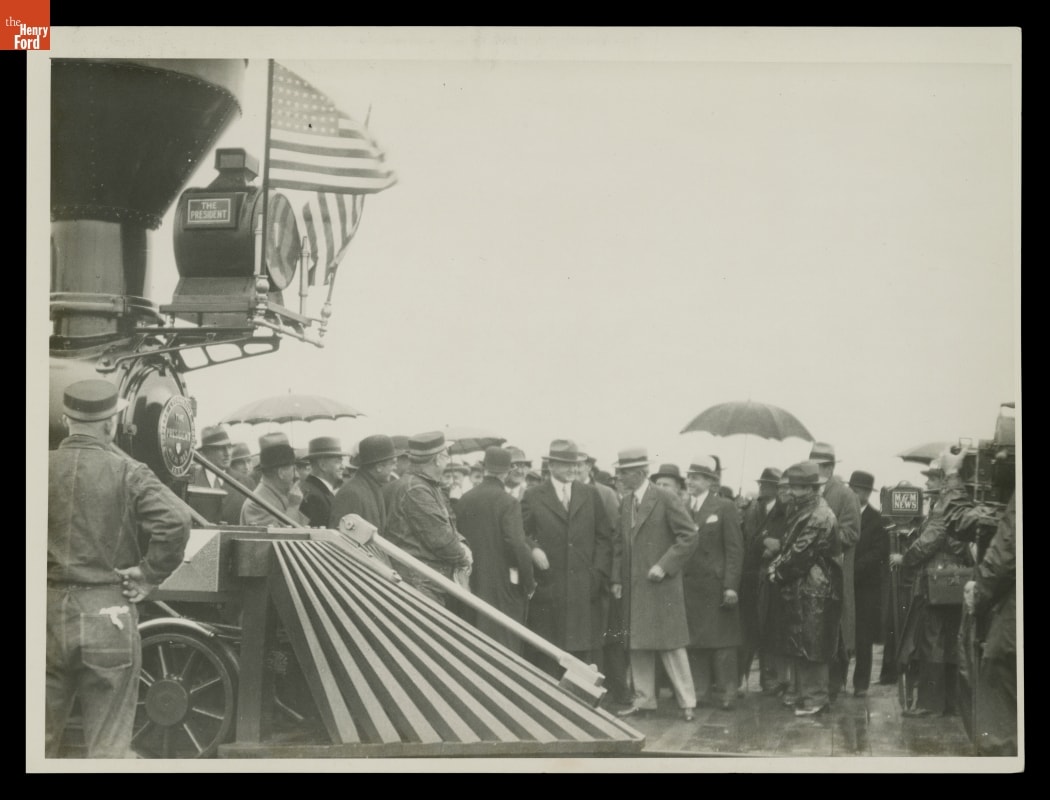
- Thomas Edison, President Herbert Hoover and Henry Ford at Smiths Creek Depot during Lights Golden Jubilee, October 21, 1929 - On October 21, 1929, Henry Ford hosted an elaborate celebration in Dearborn, Michigan, to honor his friend Thomas A. Edison. Known as Light's Golden Jubilee, the date marked the 50th anniversary of Edison's invention of a practical incandescent lamp. The day's festivities began with Edison's arrival -- escorted by Ford and President Hoover -- at Smiths Creek Station in Ford's Greenfield Village.
- October 21, 1929
- Collections - Artifact
Thomas Edison, President Herbert Hoover and Henry Ford at Smiths Creek Depot during Lights Golden Jubilee, October 21, 1929
On October 21, 1929, Henry Ford hosted an elaborate celebration in Dearborn, Michigan, to honor his friend Thomas A. Edison. Known as Light's Golden Jubilee, the date marked the 50th anniversary of Edison's invention of a practical incandescent lamp. The day's festivities began with Edison's arrival -- escorted by Ford and President Hoover -- at Smiths Creek Station in Ford's Greenfield Village.
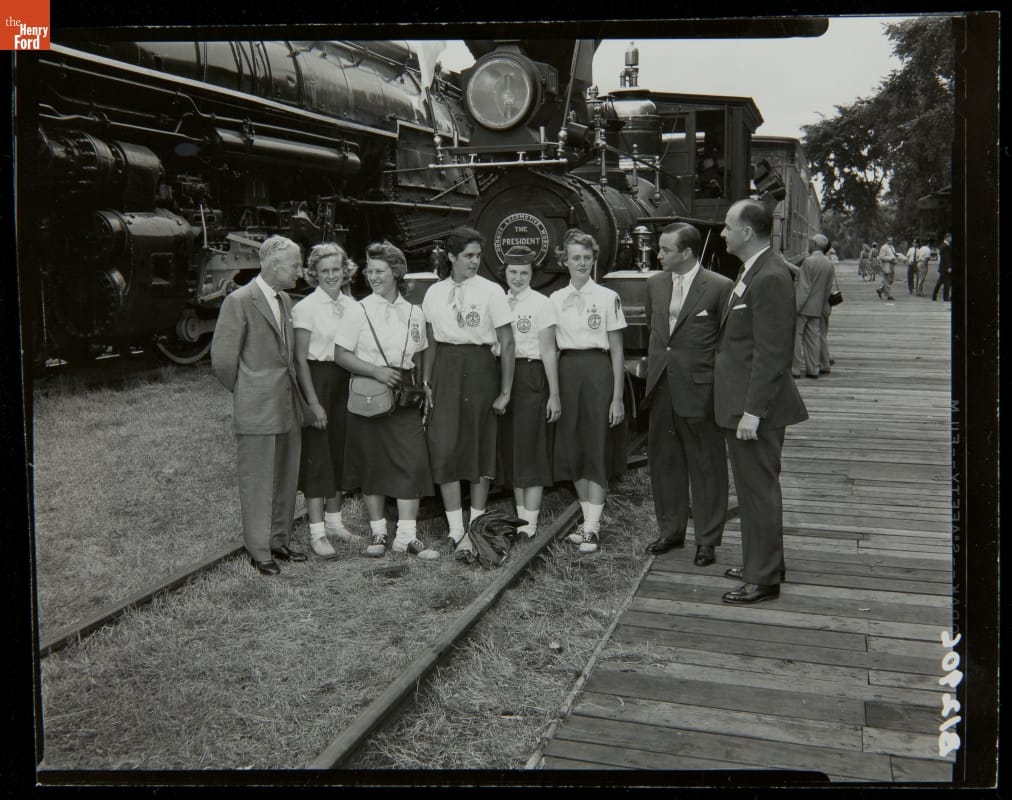
- Walter Tuohy, William Clay Ford and Donald Shelley with Girl Scouts at the Allegheny Locomotive Presentation, Greenfield Village, July 1956 - On July 9, 1956, the Chesapeake and Ohio Railway (C&O) officially presented Henry Ford Museum with a gift--the Allegheny, a 1,200,000-pound steam locomotive. It towers at right behind Walter Tuohy, president of C&O, a group of visiting Senior Girl Scouts, and Donald Shelley and William Clay Ford, executive director and president of Henry Ford Museum.
- July 09, 1956
- Collections - Artifact
Walter Tuohy, William Clay Ford and Donald Shelley with Girl Scouts at the Allegheny Locomotive Presentation, Greenfield Village, July 1956
On July 9, 1956, the Chesapeake and Ohio Railway (C&O) officially presented Henry Ford Museum with a gift--the Allegheny, a 1,200,000-pound steam locomotive. It towers at right behind Walter Tuohy, president of C&O, a group of visiting Senior Girl Scouts, and Donald Shelley and William Clay Ford, executive director and president of Henry Ford Museum.
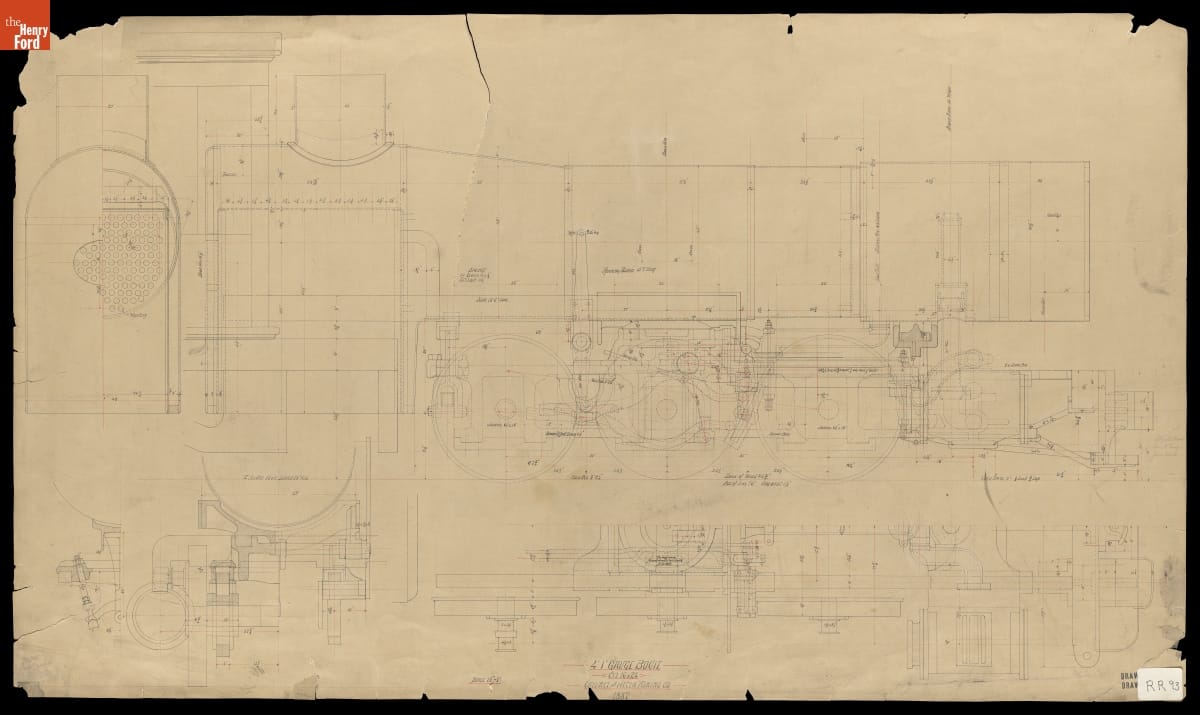
- Drawing, 4'1" Gauge Bogie, CYL 16 x 24, Calumet & Hecla Mining Co., 1887 - Born in Mystic, Connecticut, in 1808, William Mason designed and built machines for New England's thriving textile industry before joining the locomotive business in 1852. His Mason Machine Works factory in Taunton, Massachusetts, turned out quality locomotives in a variety of gauges for both mainline and industrial railroads. The company ended locomotive production after Mason's death in 1883.
- 1887
- Collections - Artifact
Drawing, 4'1" Gauge Bogie, CYL 16 x 24, Calumet & Hecla Mining Co., 1887
Born in Mystic, Connecticut, in 1808, William Mason designed and built machines for New England's thriving textile industry before joining the locomotive business in 1852. His Mason Machine Works factory in Taunton, Massachusetts, turned out quality locomotives in a variety of gauges for both mainline and industrial railroads. The company ended locomotive production after Mason's death in 1883.
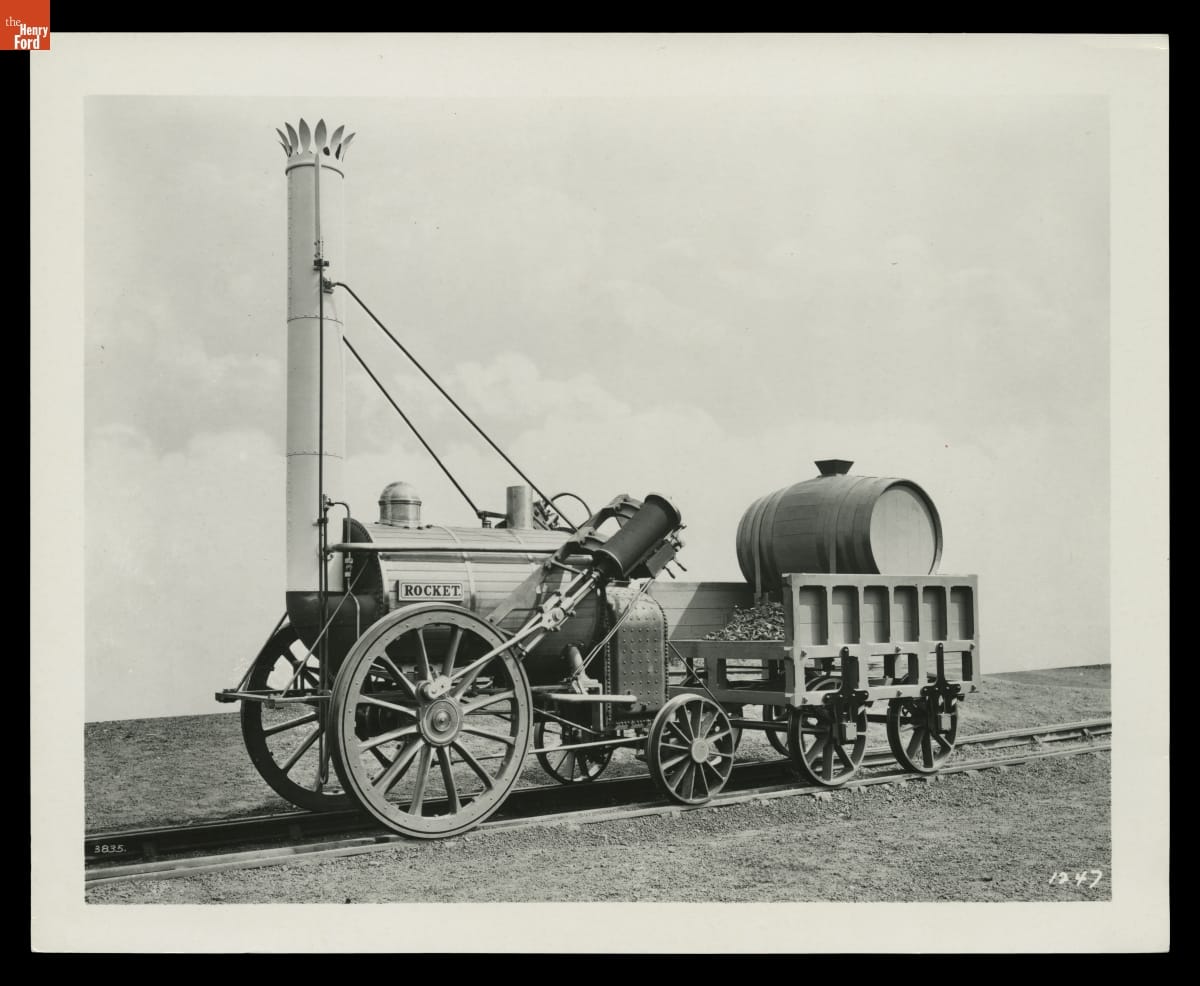
- Replica of Stephenson's 1829 "Rocket" Locomotive - When England's Liverpool and Manchester Railway held a contest in 1829 to find the best locomotive design for its line, George Stephenson's <EM>Rocket</EM> took the prize. The <EM>Rocket</EM>'s horizontal boiler, with cylinders directly connected to its driving wheels, set the standard pattern for all subsequent locomotives. This photo shows the replica Henry Ford commissioned from the original builders in 1928.
- October 14, 1929
- Collections - Artifact
Replica of Stephenson's 1829 "Rocket" Locomotive
When England's Liverpool and Manchester Railway held a contest in 1829 to find the best locomotive design for its line, George Stephenson's Rocket took the prize. The Rocket's horizontal boiler, with cylinders directly connected to its driving wheels, set the standard pattern for all subsequent locomotives. This photo shows the replica Henry Ford commissioned from the original builders in 1928.
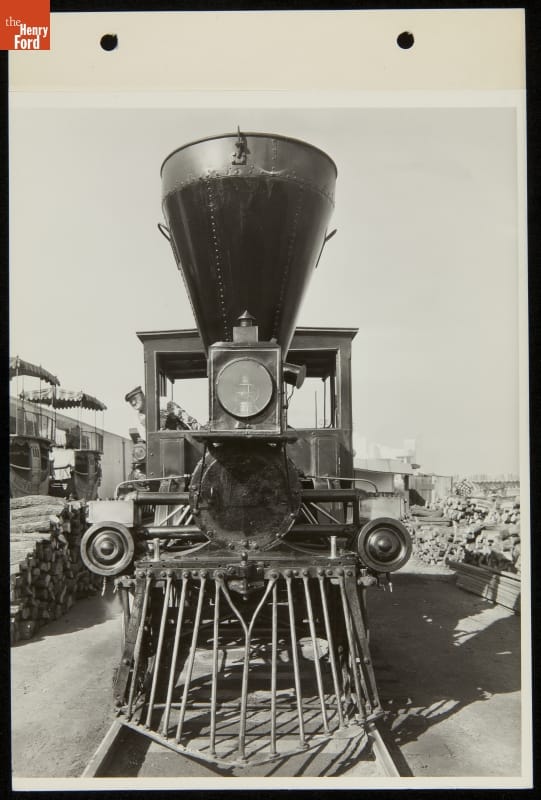
- Engineer inside Cab of the Pioneer 2-2-2 Locomotive at the Century of Progress International Exposition, Chicago, Illinois, 1934 - Chicago's 1933-34 Century of Progress Exposition used the theme of progress to encourage optimism during the Depression. The 11-acre Ford Motor Company exposition became the most talked-about exhibit of 1934, featuring a variety of industrial demonstrations and informative displays. Visitors to Ford's exhibit could observe this historic steam locomotive, which operated on the Cumberland Valley Railroad in the mid-1800s.
- 1934
- Collections - Artifact
Engineer inside Cab of the Pioneer 2-2-2 Locomotive at the Century of Progress International Exposition, Chicago, Illinois, 1934
Chicago's 1933-34 Century of Progress Exposition used the theme of progress to encourage optimism during the Depression. The 11-acre Ford Motor Company exposition became the most talked-about exhibit of 1934, featuring a variety of industrial demonstrations and informative displays. Visitors to Ford's exhibit could observe this historic steam locomotive, which operated on the Cumberland Valley Railroad in the mid-1800s.