
Search
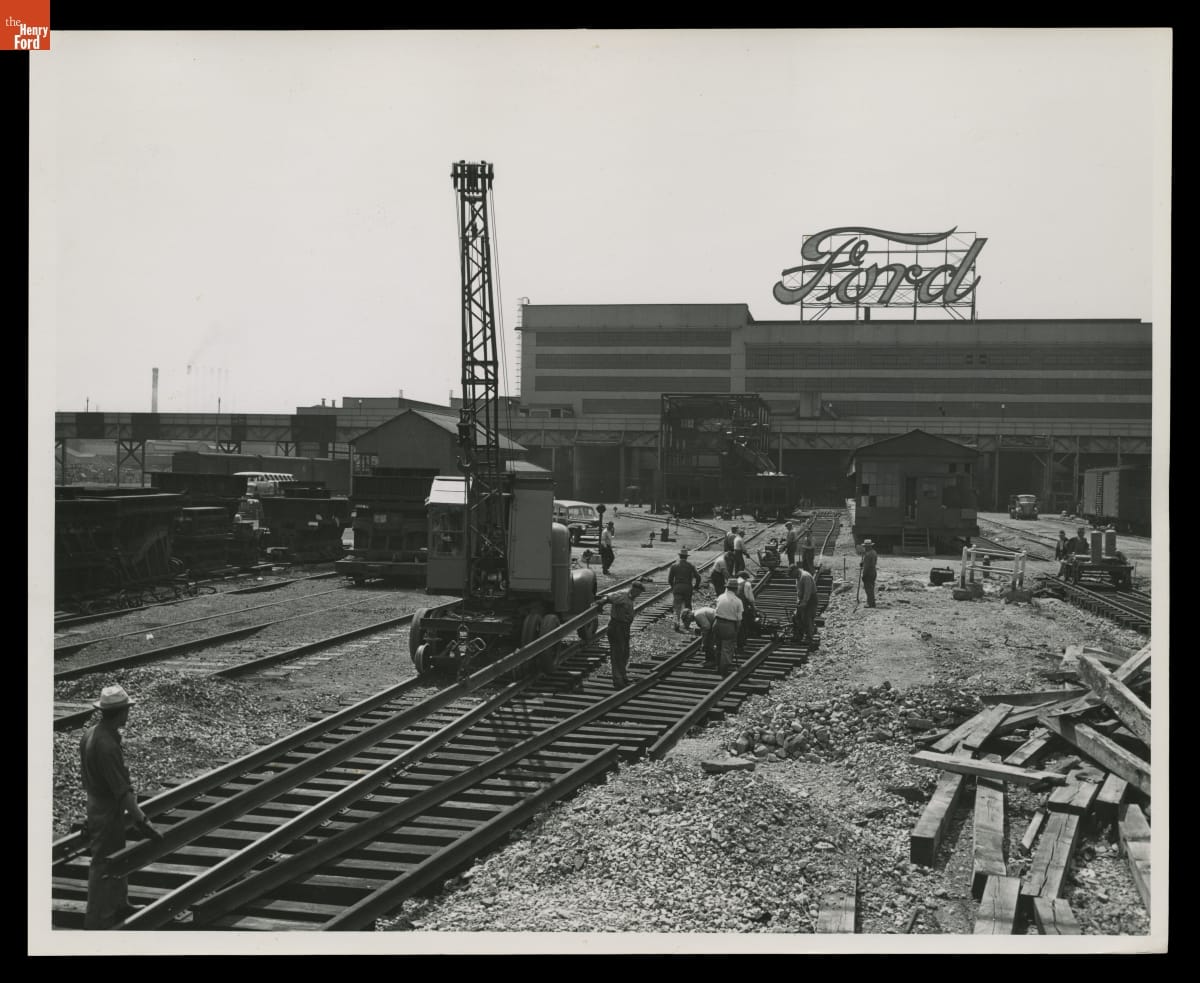
- Construction of Railroad Tracks at the Ford Rouge Plant, 1947 - Some 100 miles of railroad track covered the grounds of Ford Motor Company's Rouge plant. The automaker maintained its own fleet of locomotives to move incoming railcars loaded with raw materials, and outgoing railcars filled with finished parts and automobiles, around the complex. Additionally, specialized tank cars ferried molten iron from the factory's blast furnaces to its foundry.
- June 20, 1947
- Collections - Artifact
Construction of Railroad Tracks at the Ford Rouge Plant, 1947
Some 100 miles of railroad track covered the grounds of Ford Motor Company's Rouge plant. The automaker maintained its own fleet of locomotives to move incoming railcars loaded with raw materials, and outgoing railcars filled with finished parts and automobiles, around the complex. Additionally, specialized tank cars ferried molten iron from the factory's blast furnaces to its foundry.
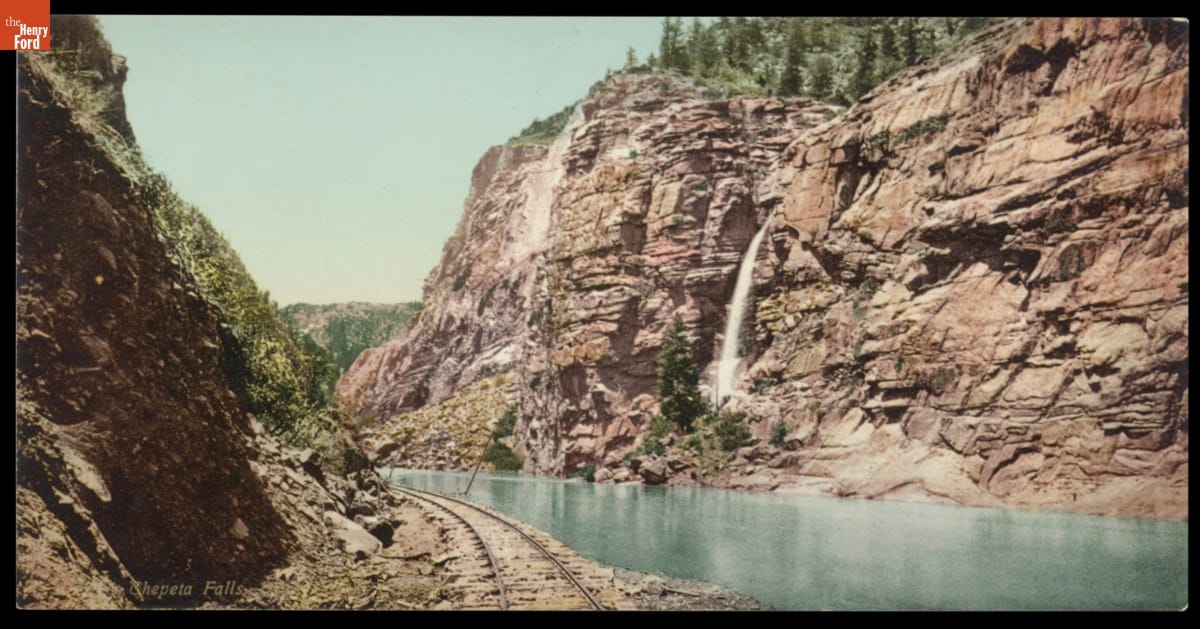
- "Chipeta Falls," Colorado, 1883 - From 1895 to 1924, the Detroit Publishing Company was one of the major image publishers in the world. The company had a wide-ranging stock of original photographs, including many scenes from around the world. These colorful prints were reproduced for ads, purchased to decorate homes and offices, bought as souvenirs, and used as teaching tools in schools and libraries.
- 1883
- Collections - Artifact
"Chipeta Falls," Colorado, 1883
From 1895 to 1924, the Detroit Publishing Company was one of the major image publishers in the world. The company had a wide-ranging stock of original photographs, including many scenes from around the world. These colorful prints were reproduced for ads, purchased to decorate homes and offices, bought as souvenirs, and used as teaching tools in schools and libraries.
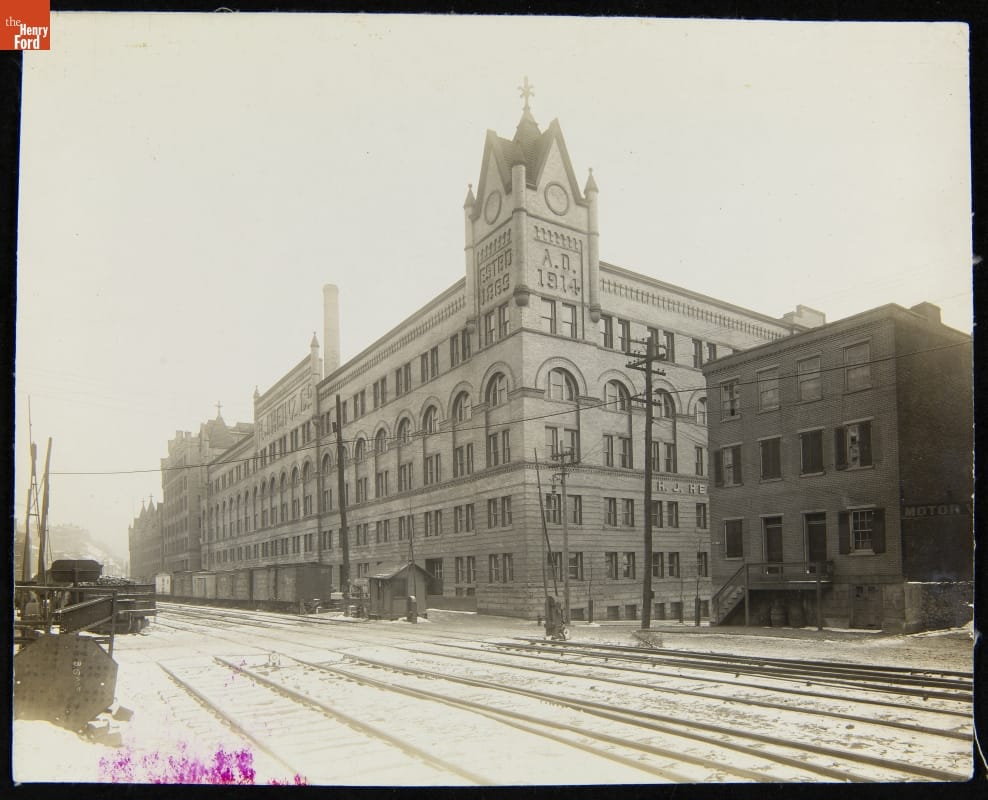
- Rear View of H. J. Heinz Company Main Plant, Pittsburgh, Pennsylvania, circa 1916 - The H.J. Heinz Company's main plant was located in Pittsburgh, Pennsylvania. Beginning in 1890, the company would build over 20 buildings by 1930 to create the massive complex that would become known as "The House of Heinz." This photograph was taken of a building on the Heinz grounds around 1916.
- circa 1916
- Collections - Artifact
Rear View of H. J. Heinz Company Main Plant, Pittsburgh, Pennsylvania, circa 1916
The H.J. Heinz Company's main plant was located in Pittsburgh, Pennsylvania. Beginning in 1890, the company would build over 20 buildings by 1930 to create the massive complex that would become known as "The House of Heinz." This photograph was taken of a building on the Heinz grounds around 1916.
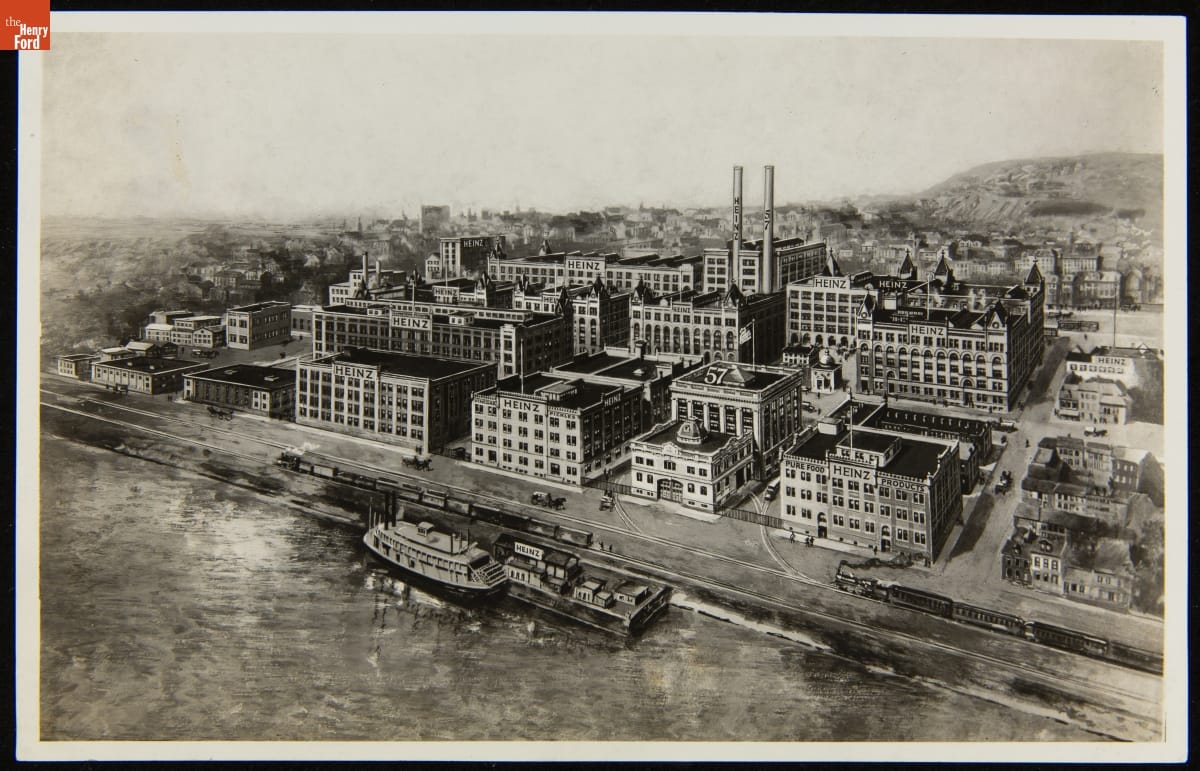
- H. J. Heinz Company Main Plant, Pittsburgh, Pennsylvania, circa 1910 - The H.J. Heinz Company had humble beginnings in 1869 when its founder began selling horseradish out his parents' home in Sharpsburg, Pennsylvania. With a rapidly expanding product line and extensive marketing, the Heinz brand became a household name by the turn of the century. Its main plant in Pittsburgh, Pennsylvania (seen here), was known as the "Home of the 57" and offered tours for visitors.
- circa 1910
- Collections - Artifact
H. J. Heinz Company Main Plant, Pittsburgh, Pennsylvania, circa 1910
The H.J. Heinz Company had humble beginnings in 1869 when its founder began selling horseradish out his parents' home in Sharpsburg, Pennsylvania. With a rapidly expanding product line and extensive marketing, the Heinz brand became a household name by the turn of the century. Its main plant in Pittsburgh, Pennsylvania (seen here), was known as the "Home of the 57" and offered tours for visitors.
- Railroad Signal Light near the Diann Tower, Detroit, Toledo & Ironton Railroad, February 1927 - Traffic on many railroads is controlled by an automatic block signaling system. A railroad line is sectioned into blocks, and an electrical circuit in the track detects whether a train is in a given block. The circuit then operates differently colored signal lights, like these, that instruct an engineer how to proceed -- similar to an automobile traffic light.
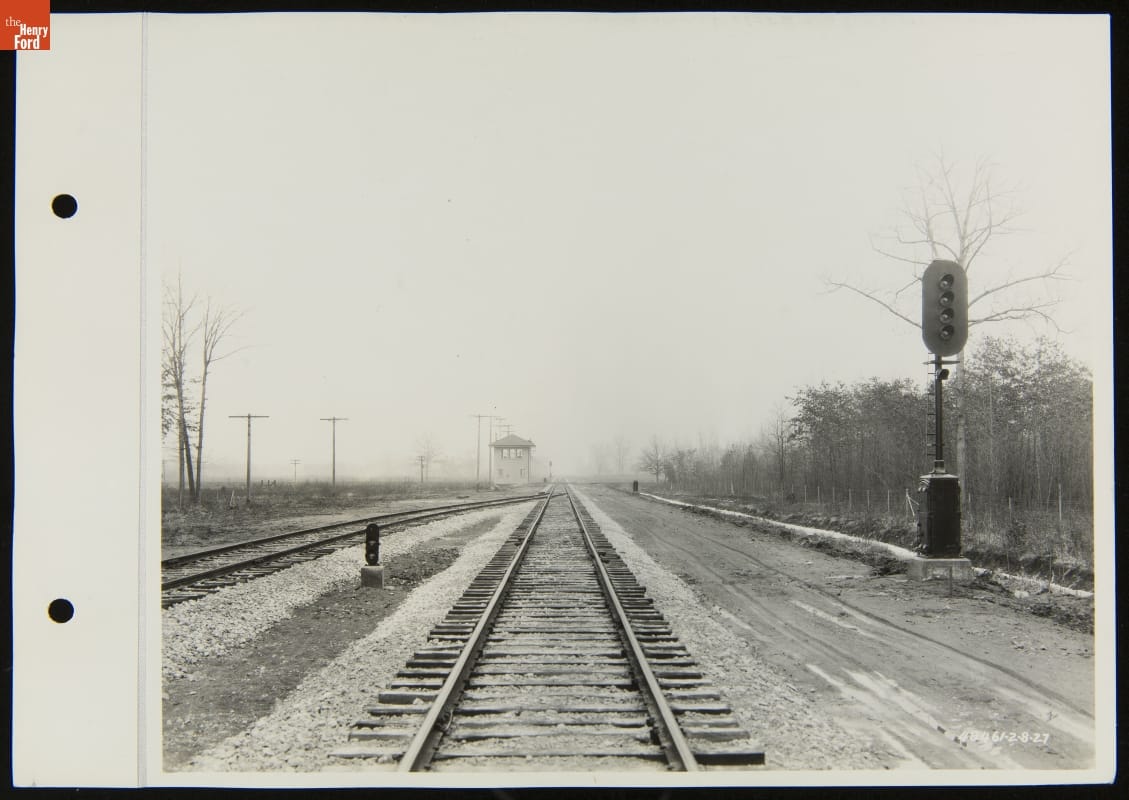
- February 08, 1927
- Collections - Artifact
Railroad Signal Light near the Diann Tower, Detroit, Toledo & Ironton Railroad, February 1927
Traffic on many railroads is controlled by an automatic block signaling system. A railroad line is sectioned into blocks, and an electrical circuit in the track detects whether a train is in a given block. The circuit then operates differently colored signal lights, like these, that instruct an engineer how to proceed -- similar to an automobile traffic light.
- Thomas Flyer on a Railroad Trestle near Goshen, Indiana during the New York to Paris Race, 1908 - In 1908, six automobiles raced around the globe from New York City to Paris, France. The contest took 169 days, covered 22,000 miles and spanned three continents. The cars and their racing teams had to endure cold, snow, mud, poor roads and other hardships. Drivers found ways around poor road conditions by using established rail lines -- usually with the railway company's approval.
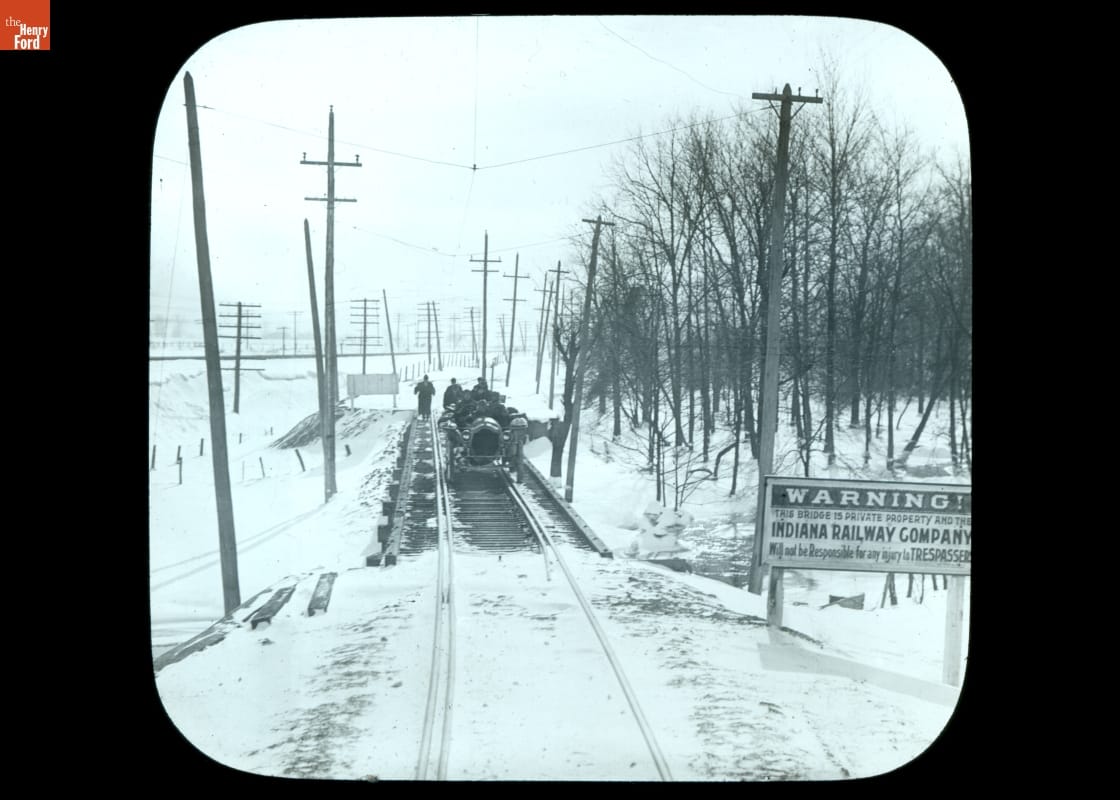
- 1908
- Collections - Artifact
Thomas Flyer on a Railroad Trestle near Goshen, Indiana during the New York to Paris Race, 1908
In 1908, six automobiles raced around the globe from New York City to Paris, France. The contest took 169 days, covered 22,000 miles and spanned three continents. The cars and their racing teams had to endure cold, snow, mud, poor roads and other hardships. Drivers found ways around poor road conditions by using established rail lines -- usually with the railway company's approval.
- Railroad Crossing, Wyandotte, Michigan, Detroit, Toledo & Ironton Railroad, October 1925 - Multiple-track railroad crossings, where a roadway crosses more than one railroad track, are particularly dangerous. A train on or near the crossing on one track can block motorists' view of another train approaching the crossing on a different track. Crossings like this were some of the first to be protected with automated warning devices and gates.
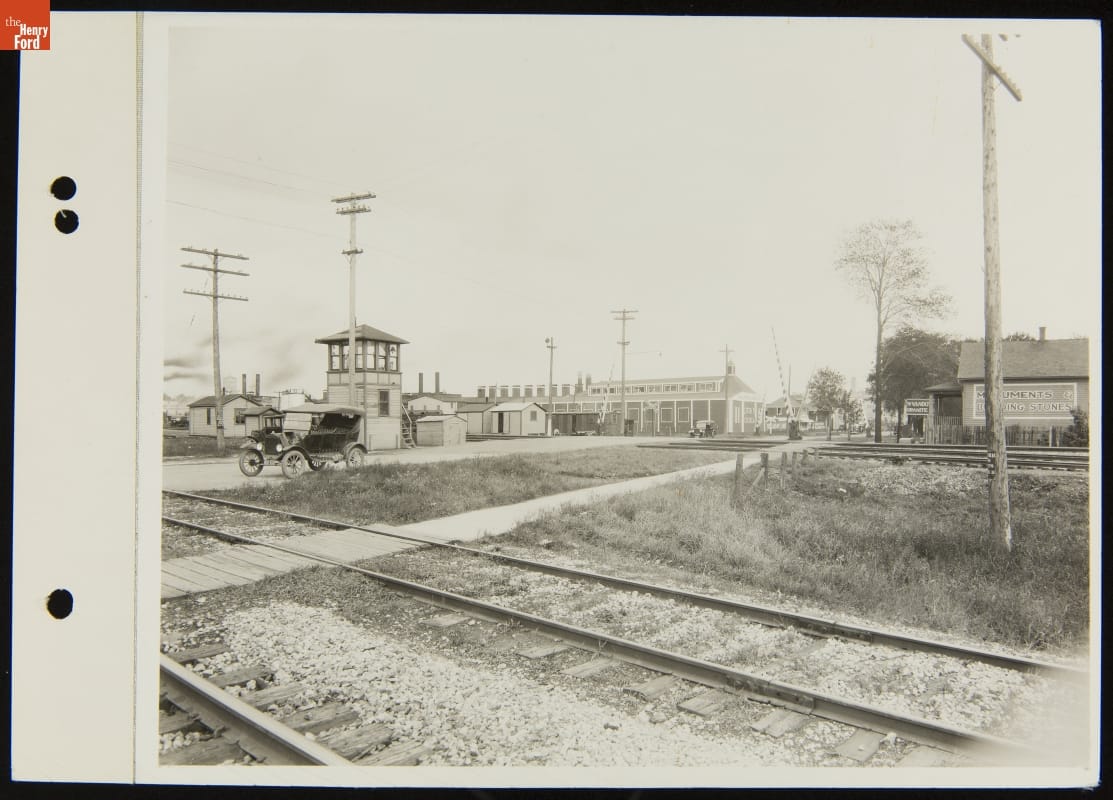
- October 01, 1925
- Collections - Artifact
Railroad Crossing, Wyandotte, Michigan, Detroit, Toledo & Ironton Railroad, October 1925
Multiple-track railroad crossings, where a roadway crosses more than one railroad track, are particularly dangerous. A train on or near the crossing on one track can block motorists' view of another train approaching the crossing on a different track. Crossings like this were some of the first to be protected with automated warning devices and gates.
- Railroad Signal Lights, Detroit, Toledo & Ironton Railroad, February 1927 - The DT&I controlled train movements with an automatic block signaling system. The railroad line was sectioned into blocks. An electrical circuit in the track detected if a train was in a given block, or if the track was clear. The circuit then operated semaphore signals, like this one, that instructed an engineer how to proceed depending on the blade's position.
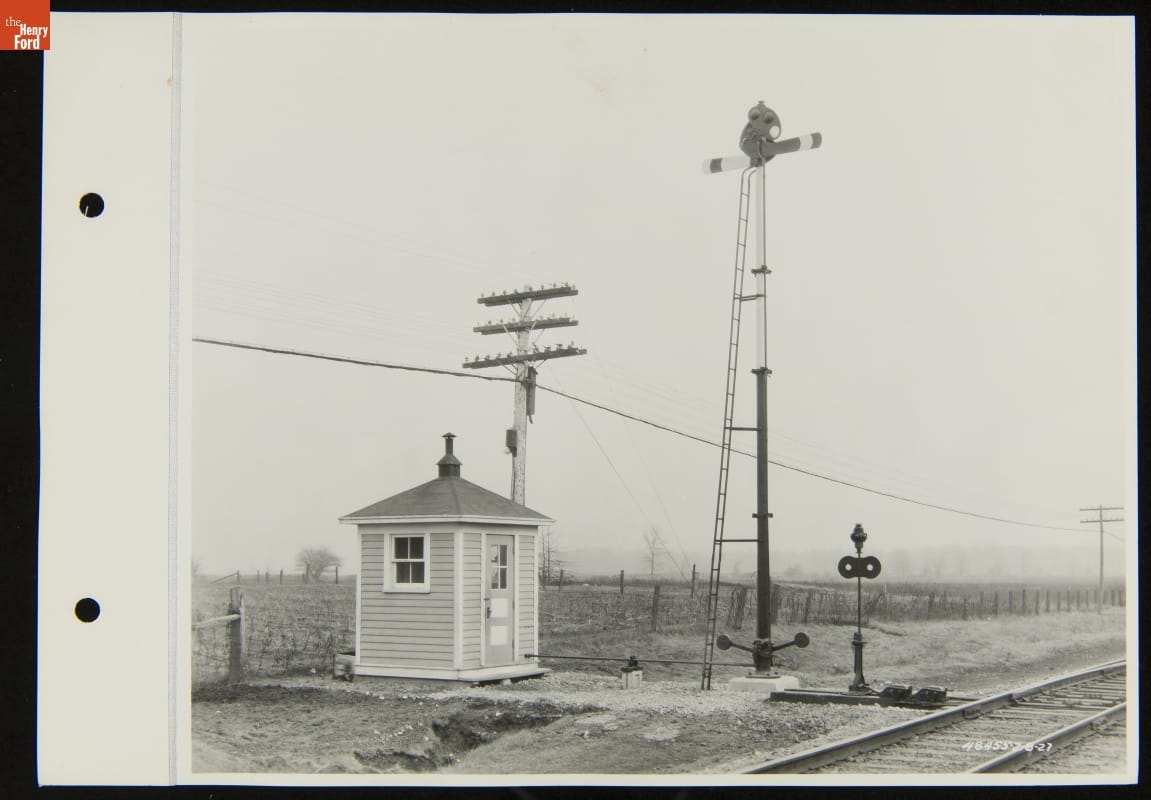
- February 08, 1927
- Collections - Artifact
Railroad Signal Lights, Detroit, Toledo & Ironton Railroad, February 1927
The DT&I controlled train movements with an automatic block signaling system. The railroad line was sectioned into blocks. An electrical circuit in the track detected if a train was in a given block, or if the track was clear. The circuit then operated semaphore signals, like this one, that instructed an engineer how to proceed depending on the blade's position.
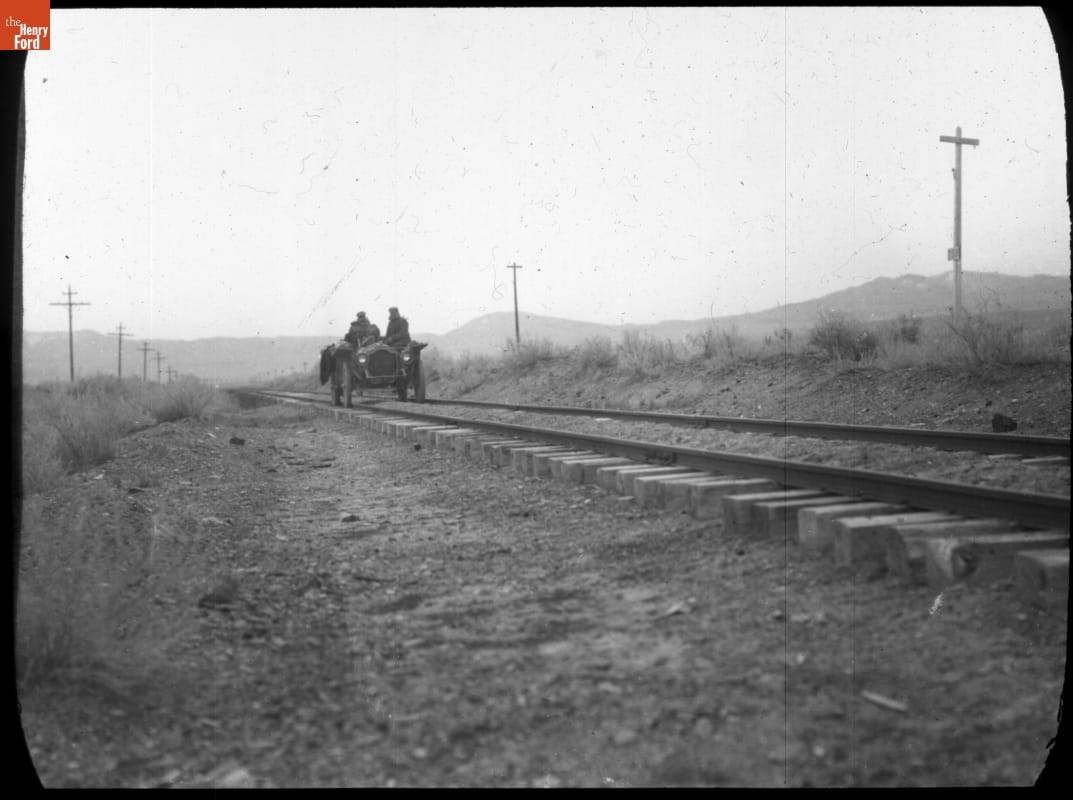
- Thomas Flyer on Railroad Tracks near Lake Station, Utah, New York to Paris Race, 1908 - In 1908, six automobiles raced around the globe from New York City to Paris, France. The contest took 169 days, covered 22,000 miles and spanned three continents. By mid-March, the American team in a Thomas Flyer was leading the now four remaining cars. Racing through Utah and Nevada, the Americans would be the first to reach San Francisco.
- 1908
- Collections - Artifact
Thomas Flyer on Railroad Tracks near Lake Station, Utah, New York to Paris Race, 1908
In 1908, six automobiles raced around the globe from New York City to Paris, France. The contest took 169 days, covered 22,000 miles and spanned three continents. By mid-March, the American team in a Thomas Flyer was leading the now four remaining cars. Racing through Utah and Nevada, the Americans would be the first to reach San Francisco.
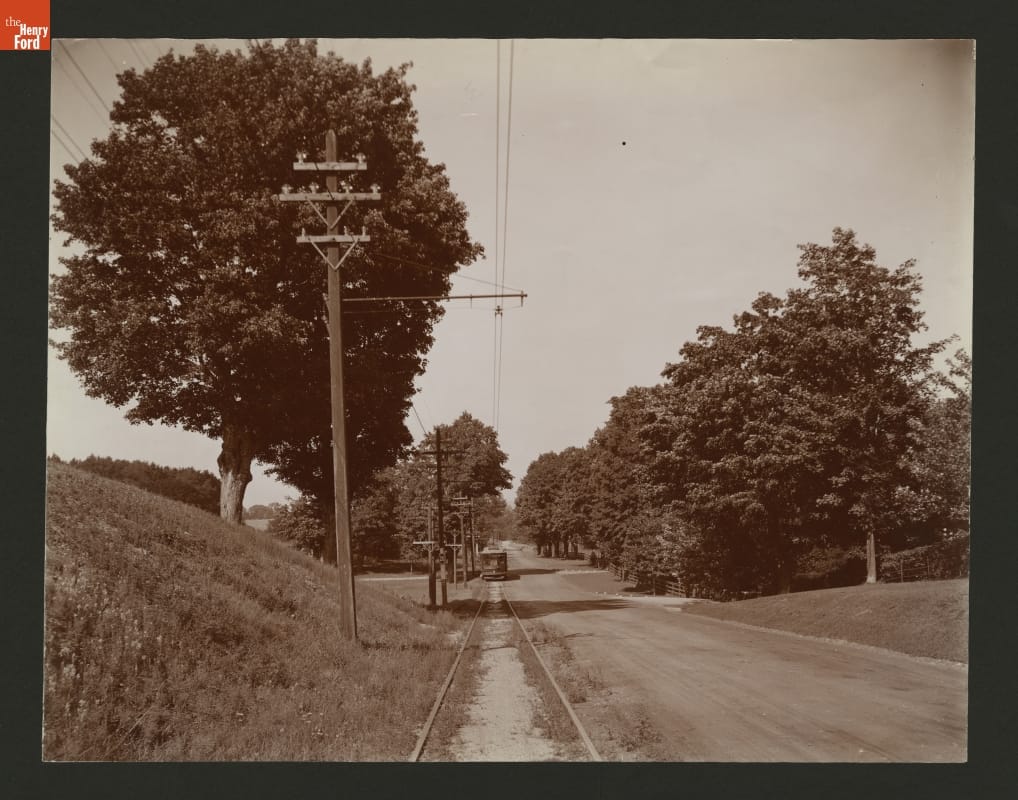
- Electric Street Railroad Car on Holmes Road, Pittsfield, Massachusetts, circa 1910 - Interurban railways were electric trains with features of both streetcars and passenger trains. They were lifelines between small towns and cities starting in the 1880s. This interurban ran through Western Massachusetts in the 1910s.
- circa 1910
- Collections - Artifact
Electric Street Railroad Car on Holmes Road, Pittsfield, Massachusetts, circa 1910
Interurban railways were electric trains with features of both streetcars and passenger trains. They were lifelines between small towns and cities starting in the 1880s. This interurban ran through Western Massachusetts in the 1910s.