
Search
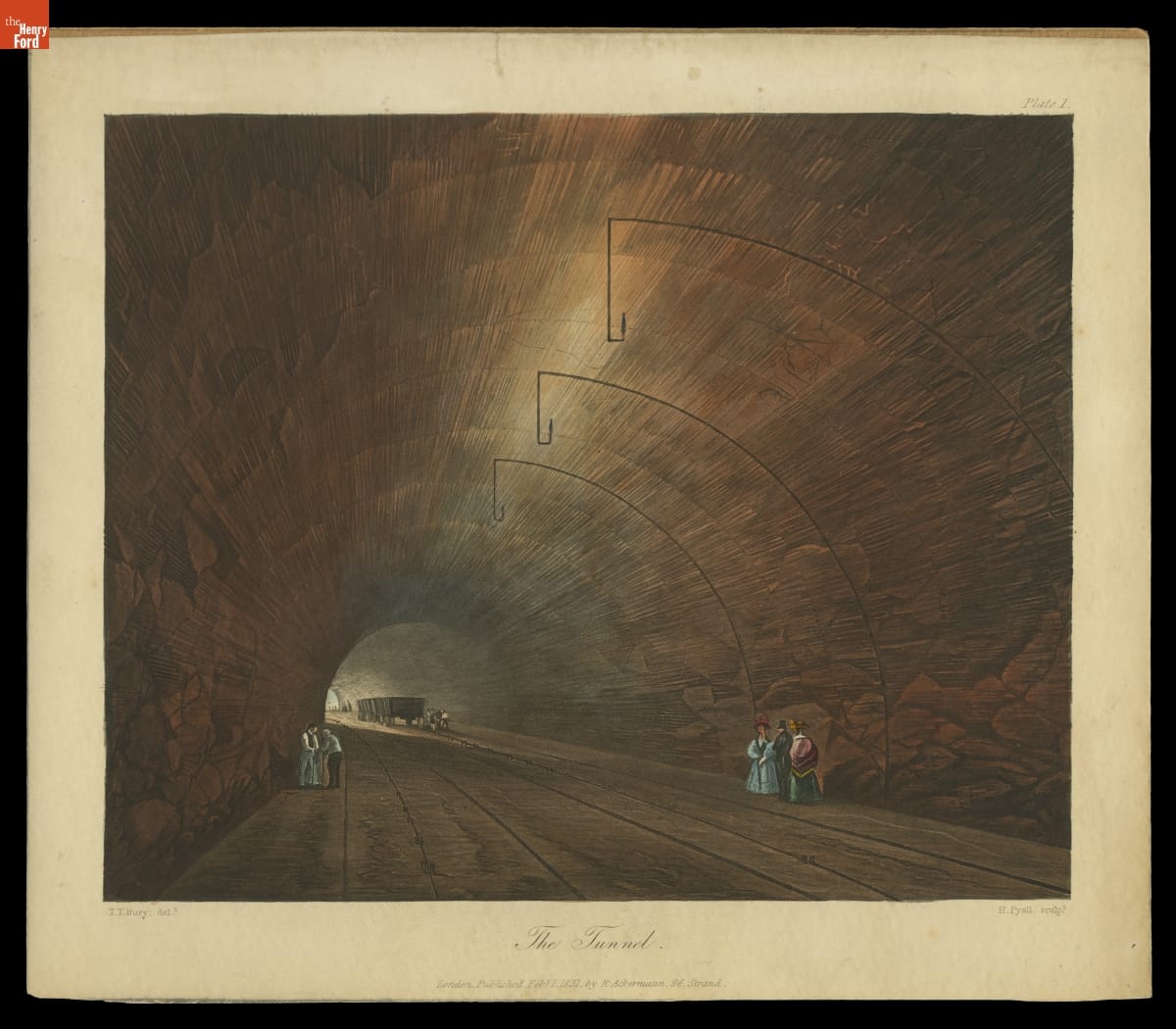
- Aquatint, "The Tunnel," 1831 - The Liverpool and Manchester Railway, connecting its namesake cities in the United Kingdom, opened in 1830. It was the world's first inter-city railroad, and the first to operate exclusively with steam locomotives. The 31-mile, double-track line was built to a high standard. Engineering highlights included Wapping Tunnel under Liverpool and the 600-foot-long Sankey Viaduct across the Sankey Valley.
- February 01, 1831
- Collections - Artifact
Aquatint, "The Tunnel," 1831
The Liverpool and Manchester Railway, connecting its namesake cities in the United Kingdom, opened in 1830. It was the world's first inter-city railroad, and the first to operate exclusively with steam locomotives. The 31-mile, double-track line was built to a high standard. Engineering highlights included Wapping Tunnel under Liverpool and the 600-foot-long Sankey Viaduct across the Sankey Valley.
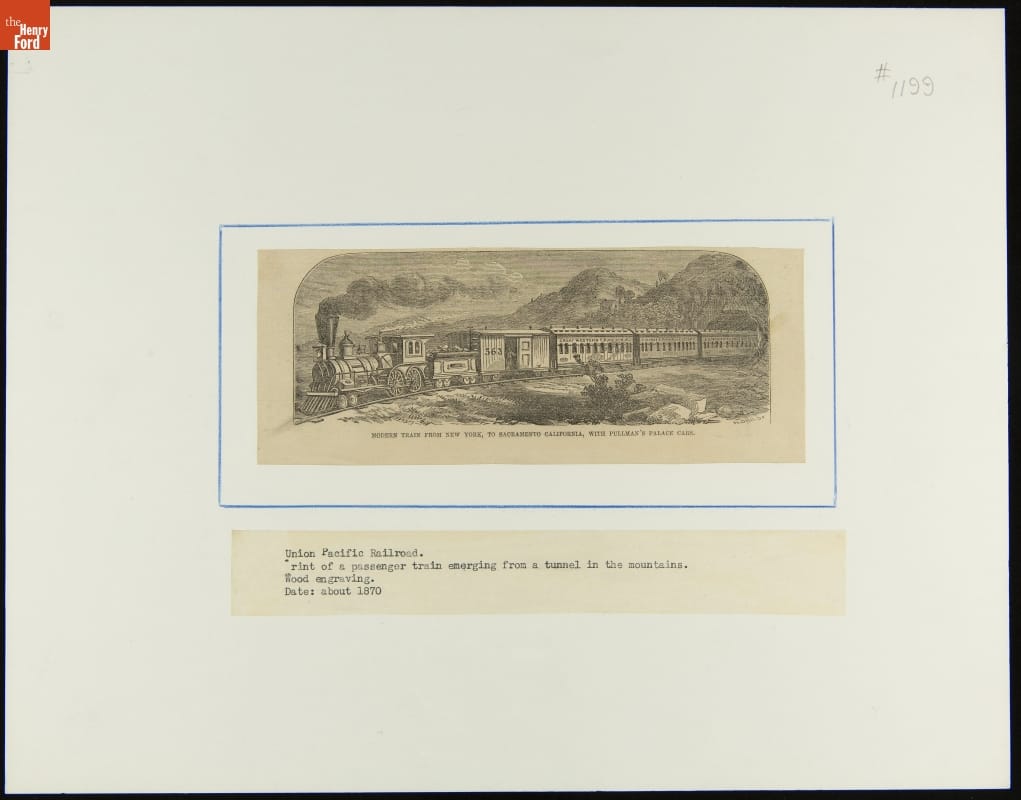
- Modern Train from New York, to Sacramento, California, with Pullman's Palace Cars, circa 1870 - The completion of the First Transcontinental Railroad in 1869 dramatically improved travel between the eastern United States and California. Pullman soon began operating first-class sleeping cars on Union Pacific trains between Omaha, Nebraska, and the connection with the Central Pacific in Utah. A journey that had taken months by wagon was reduced to about a week by railroad.
- circa 1870
- Collections - Artifact
Modern Train from New York, to Sacramento, California, with Pullman's Palace Cars, circa 1870
The completion of the First Transcontinental Railroad in 1869 dramatically improved travel between the eastern United States and California. Pullman soon began operating first-class sleeping cars on Union Pacific trains between Omaha, Nebraska, and the connection with the Central Pacific in Utah. A journey that had taken months by wagon was reduced to about a week by railroad.
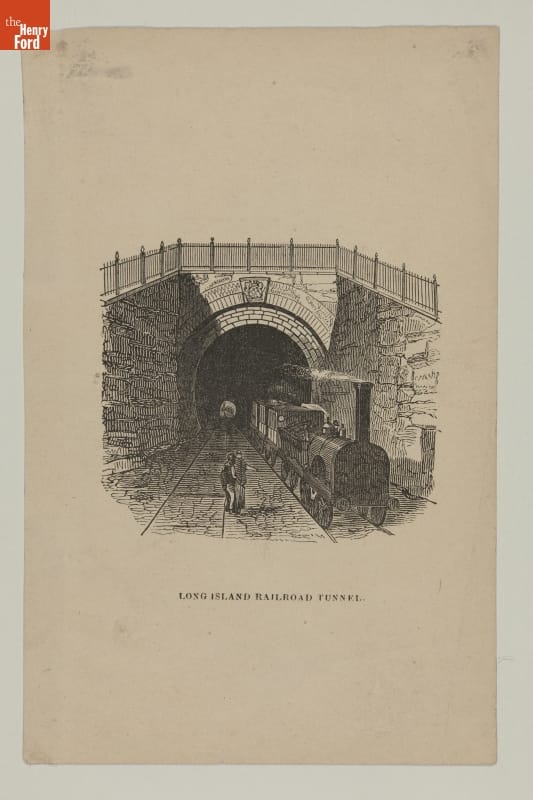
- "Long Island Railroad Tunnel," circa 1852 - Safety concerns in cities sometimes led to the construction of grade separations. Bridges and tunnels kept trains, pedestrians and street vehicles out of each other's way. Long Island Rail Road trains traveled along Brooklyn's busy Atlantic Avenue until this tunnel, running under the street, was built in 1844.
- circa 1852
- Collections - Artifact
"Long Island Railroad Tunnel," circa 1852
Safety concerns in cities sometimes led to the construction of grade separations. Bridges and tunnels kept trains, pedestrians and street vehicles out of each other's way. Long Island Rail Road trains traveled along Brooklyn's busy Atlantic Avenue until this tunnel, running under the street, was built in 1844.
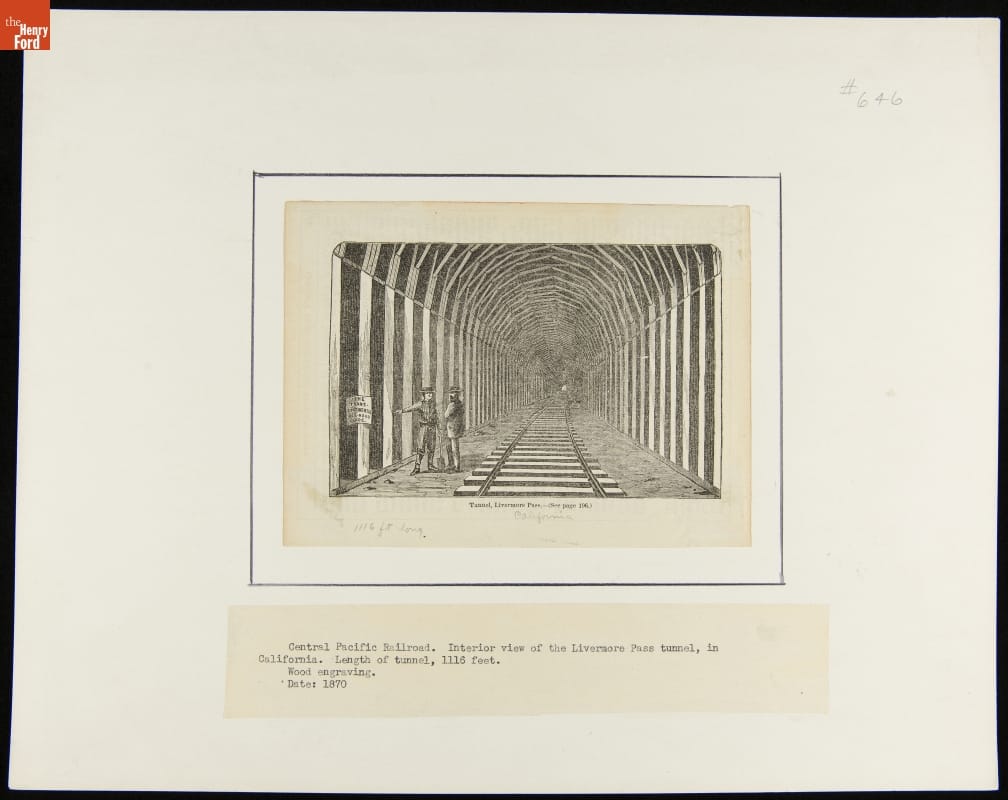
- Tunnel, Livermore Pass, 1870 - Livermore Pass, now called Altamont Pass, provided a route for the Central Pacific Railroad to reach San Francisco Bay from its original terminus at Sacramento, California. The railroad summited the Altamont Hills via a tunnel opened in 1869. It served as CP's mainline to the bay area for ten years before the company moved to a shorter route in 1879.
- 1870
- Collections - Artifact
Tunnel, Livermore Pass, 1870
Livermore Pass, now called Altamont Pass, provided a route for the Central Pacific Railroad to reach San Francisco Bay from its original terminus at Sacramento, California. The railroad summited the Altamont Hills via a tunnel opened in 1869. It served as CP's mainline to the bay area for ten years before the company moved to a shorter route in 1879.
- Detroit River Tunnel, Detroit, Michigan - Ferrying railroad cars across the Detroit River was time-consuming and expensive -- and sometimes impossible through winter ice. The Michigan Central Railroad opened a tunnel between Detroit and Windsor in 1910. The tunnel's sections were built on land and then towed and sunk into position. This innovative construction technique saved the railroad some $2 million versus more conventional methods.
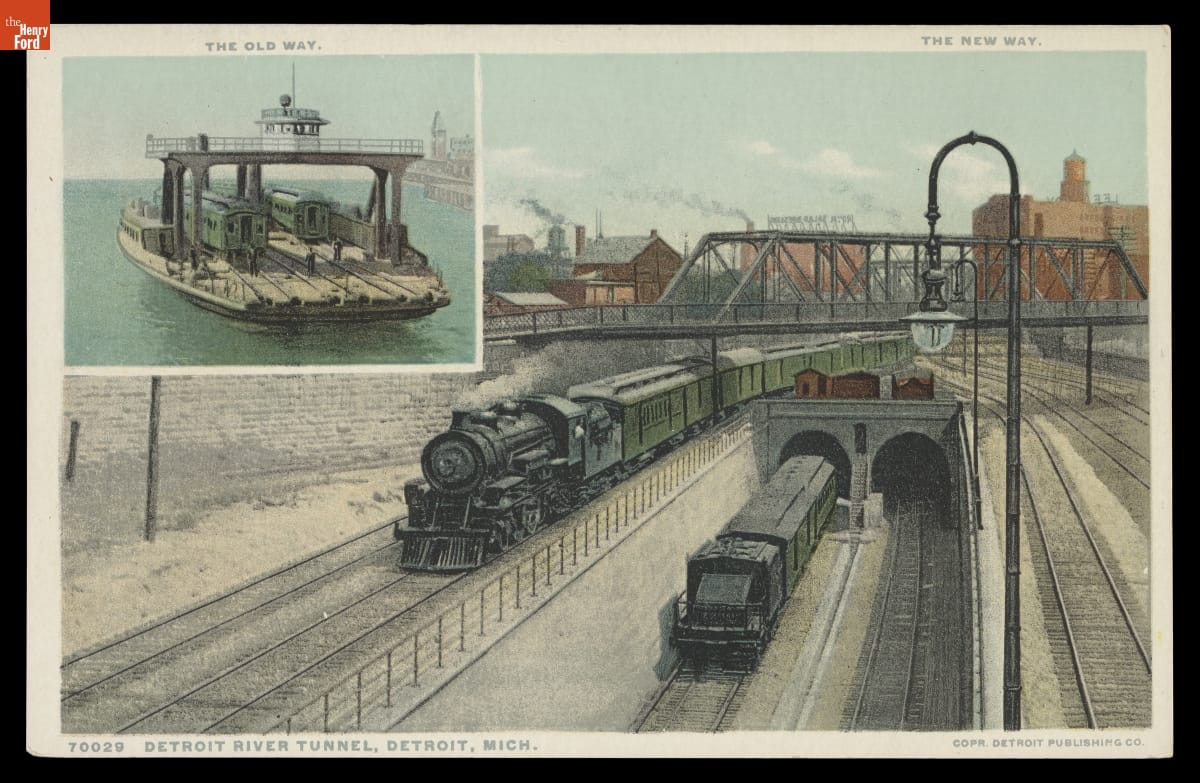
- 1910-1920
- Collections - Artifact
Detroit River Tunnel, Detroit, Michigan
Ferrying railroad cars across the Detroit River was time-consuming and expensive -- and sometimes impossible through winter ice. The Michigan Central Railroad opened a tunnel between Detroit and Windsor in 1910. The tunnel's sections were built on land and then towed and sunk into position. This innovative construction technique saved the railroad some $2 million versus more conventional methods.
- Detroit River Tunnel, Detroit, Michigan - Ferrying railroad cars across the Detroit River was time-consuming and expensive -- and sometimes impossible through winter ice. The Michigan Central Railroad opened a tunnel between Detroit and Windsor in 1910. The tunnel's sections were built on land and then towed and sunk into position. This innovative construction technique saved the railroad some $2 million versus more conventional methods.
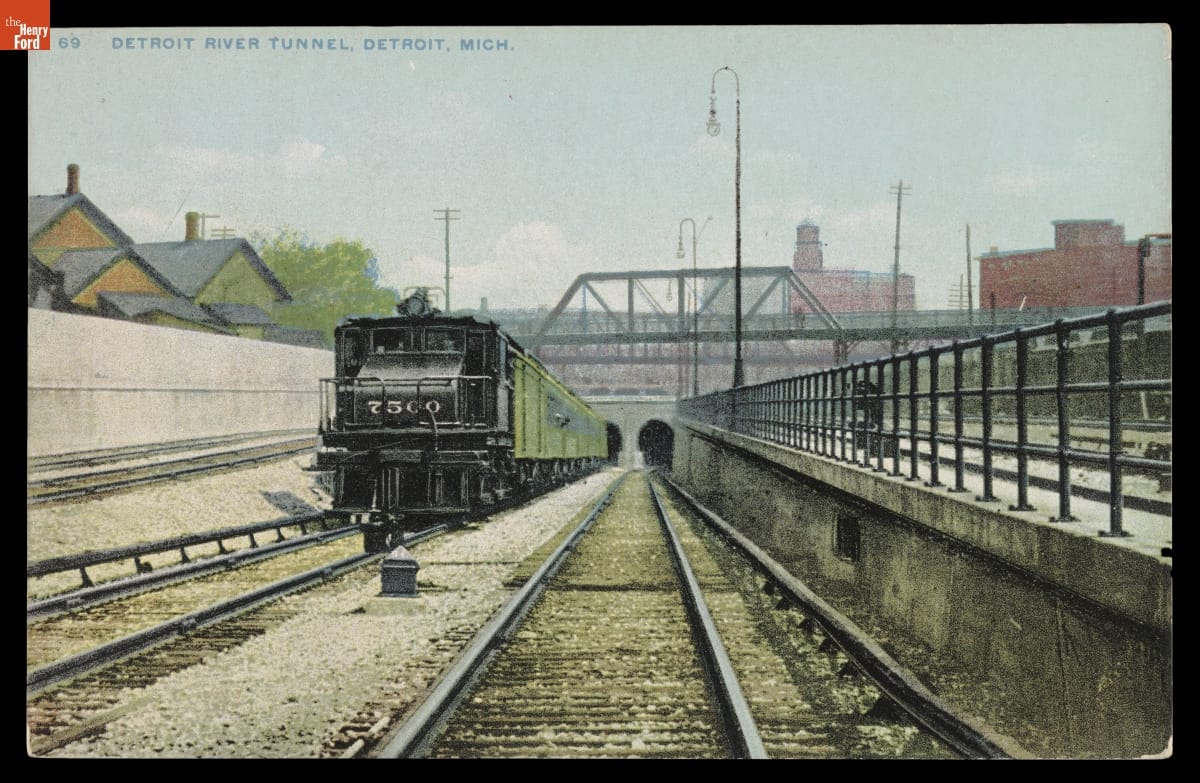
- 1910-1915
- Collections - Artifact
Detroit River Tunnel, Detroit, Michigan
Ferrying railroad cars across the Detroit River was time-consuming and expensive -- and sometimes impossible through winter ice. The Michigan Central Railroad opened a tunnel between Detroit and Windsor in 1910. The tunnel's sections were built on land and then towed and sunk into position. This innovative construction technique saved the railroad some $2 million versus more conventional methods.
- Michigan Central Railroad Tunnels under the Detroit River, circa 1915 - Ferrying railroad cars across the Detroit River was time-consuming and expensive -- and sometimes impossible through winter ice. The Michigan Central Railroad opened a tunnel between Detroit and Windsor in 1910. The tunnel's sections were built on land and then towed and sunk into position. This innovative construction technique saved the railroad some $2 million versus more conventional methods.
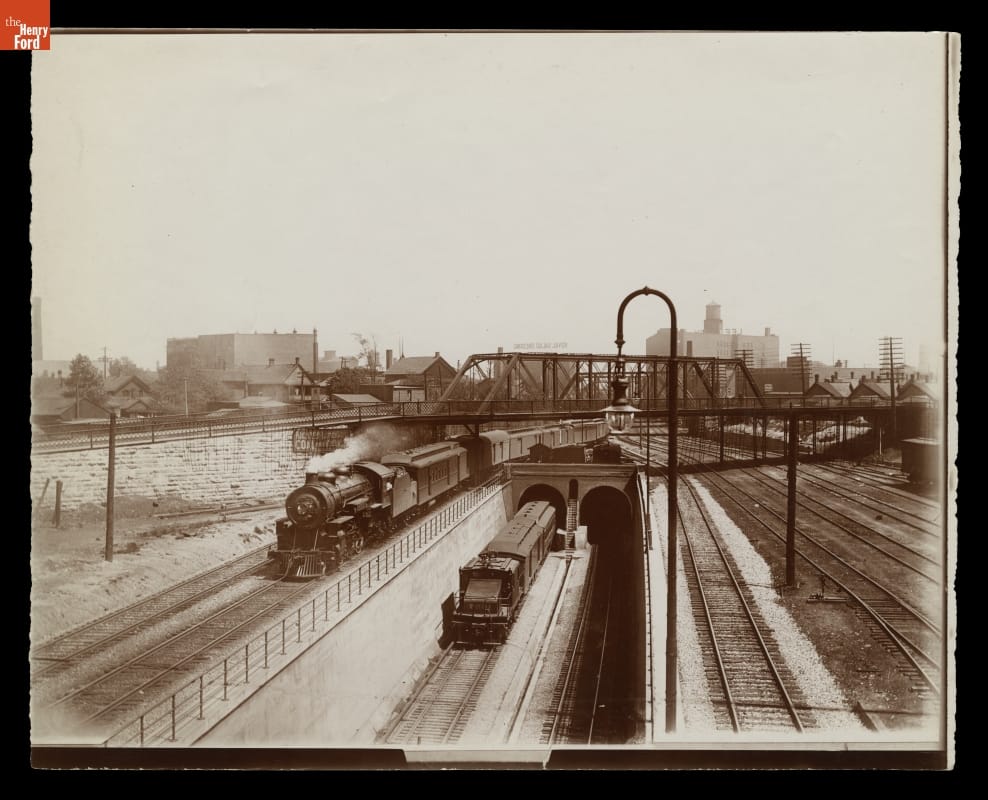
- circa 1915
- Collections - Artifact
Michigan Central Railroad Tunnels under the Detroit River, circa 1915
Ferrying railroad cars across the Detroit River was time-consuming and expensive -- and sometimes impossible through winter ice. The Michigan Central Railroad opened a tunnel between Detroit and Windsor in 1910. The tunnel's sections were built on land and then towed and sunk into position. This innovative construction technique saved the railroad some $2 million versus more conventional methods.