
Search
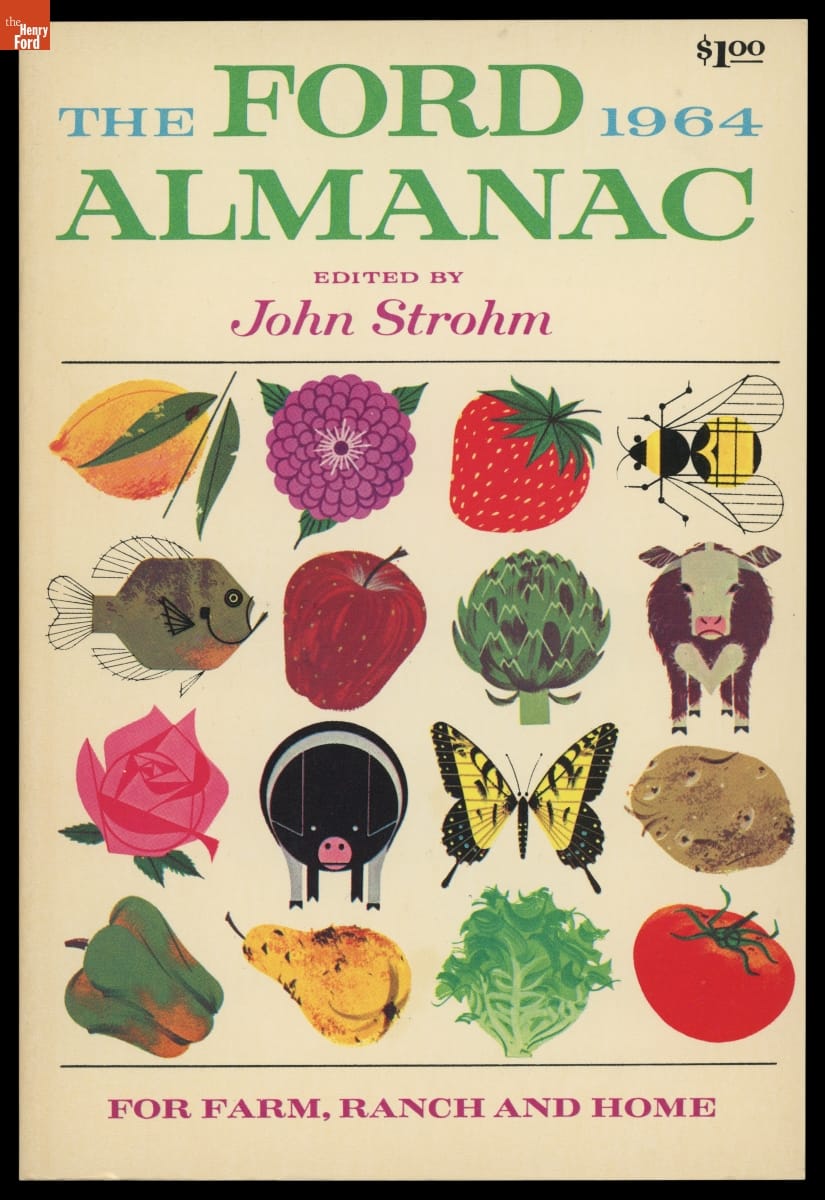
- The Ford Almanac for Farm, Ranch and Home, 1964 - Ford Motor Company published a series of almanacs from the 1950s until at least 1980. Issues covered a range of topics and included weather predictions, gardening and "country living" tips, and suggestions for agricultural mechanization and efficiency. Text and images throughout advertised the ways Ford automobiles, tractors, and agricultural implements might increase farmers' profits and enhance rural customers' lives.
- 1964
- Collections - Artifact
The Ford Almanac for Farm, Ranch and Home, 1964
Ford Motor Company published a series of almanacs from the 1950s until at least 1980. Issues covered a range of topics and included weather predictions, gardening and "country living" tips, and suggestions for agricultural mechanization and efficiency. Text and images throughout advertised the ways Ford automobiles, tractors, and agricultural implements might increase farmers' profits and enhance rural customers' lives.
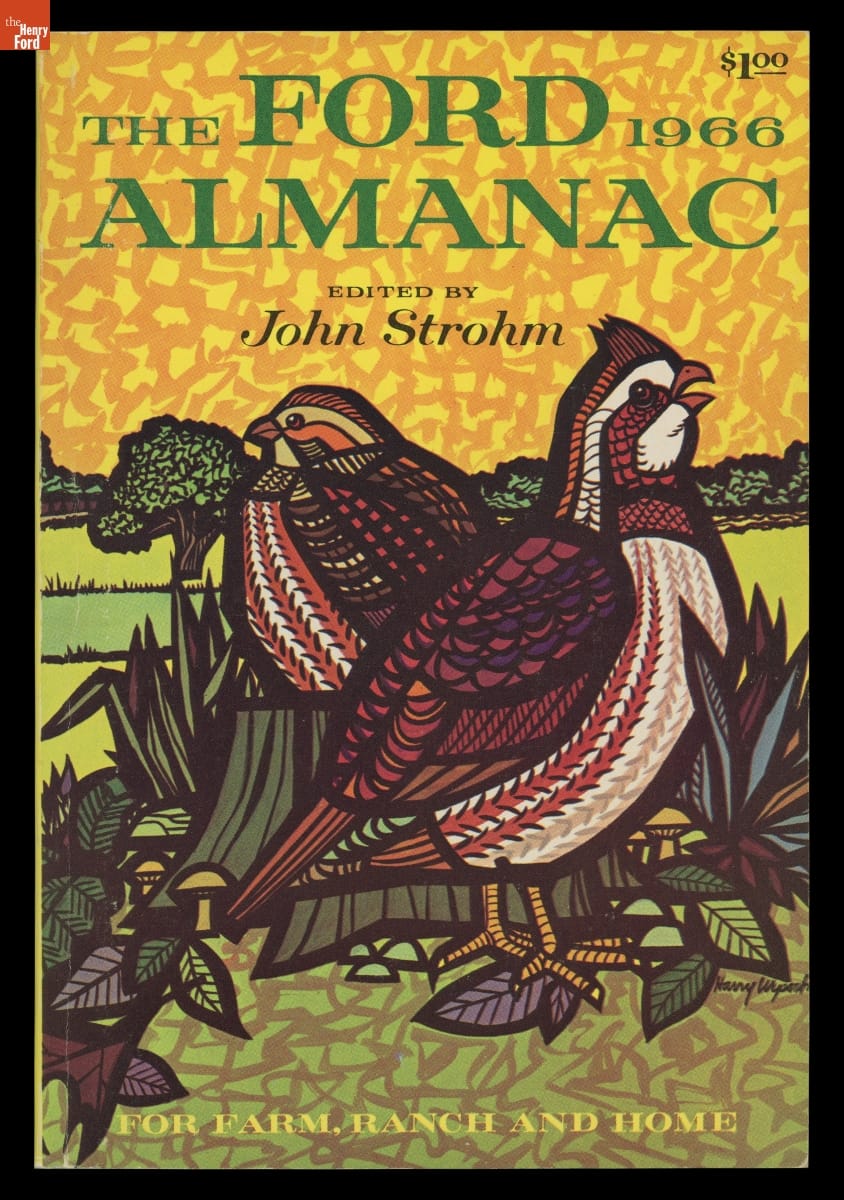
- The Ford Almanac for Farm, Ranch and Home, 1966 - Ford Motor Company published a series of almanacs from the 1950s until at least 1980. Issues covered a range of topics and included weather predictions, gardening and "country living" tips, and suggestions for agricultural mechanization and efficiency. Text and images throughout advertised the ways Ford automobiles, tractors, and agricultural implements might increase farmers' profits and enhance rural customers' lives.
- 1966
- Collections - Artifact
The Ford Almanac for Farm, Ranch and Home, 1966
Ford Motor Company published a series of almanacs from the 1950s until at least 1980. Issues covered a range of topics and included weather predictions, gardening and "country living" tips, and suggestions for agricultural mechanization and efficiency. Text and images throughout advertised the ways Ford automobiles, tractors, and agricultural implements might increase farmers' profits and enhance rural customers' lives.
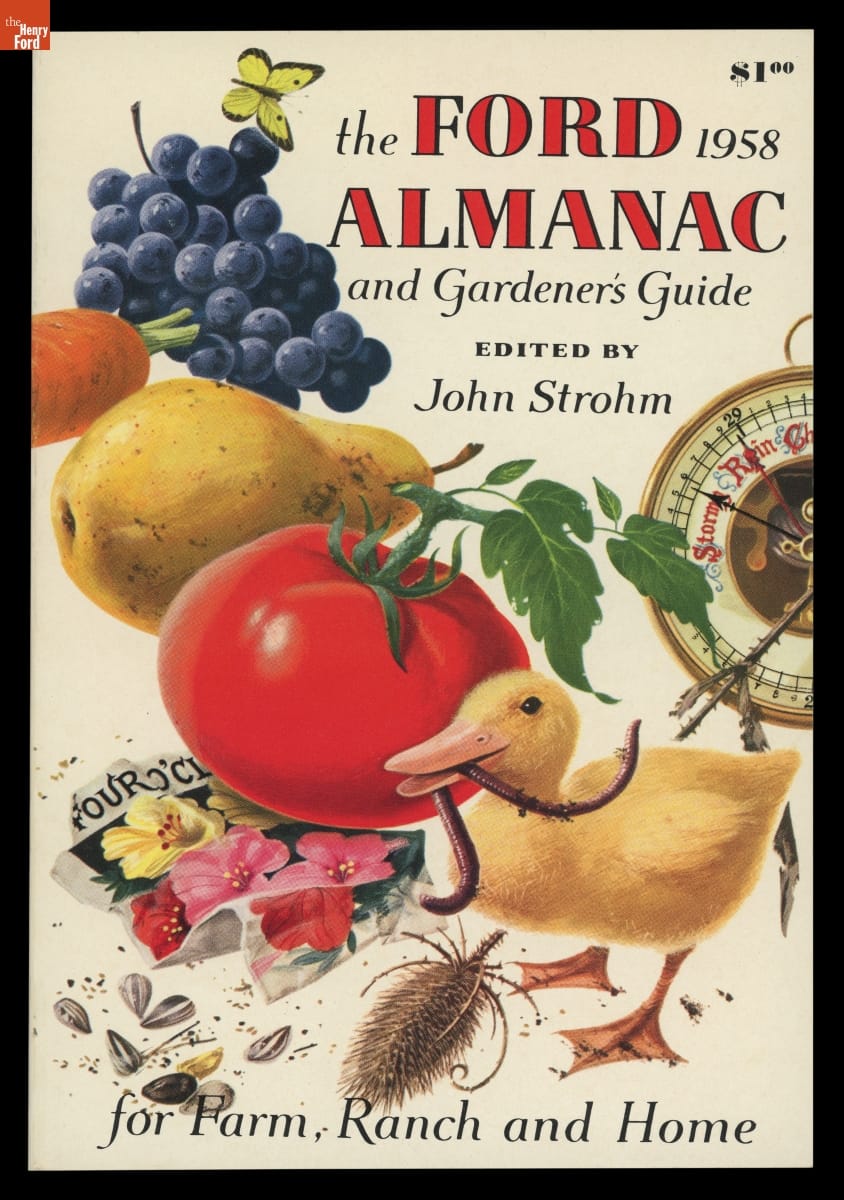
- The Ford Almanac and Gardener's Guide for Farm, Ranch and Home, 1958 - Ford Motor Company published a series of almanacs from the 1950s until at least 1980. Issues covered a range of topics and included weather predictions, gardening and "country living" tips, and suggestions for agricultural mechanization and efficiency. Text and images throughout advertised the ways Ford automobiles, tractors, and agricultural implements might increase farmers' profits and enhance rural customers' lives.
- 1958
- Collections - Artifact
The Ford Almanac and Gardener's Guide for Farm, Ranch and Home, 1958
Ford Motor Company published a series of almanacs from the 1950s until at least 1980. Issues covered a range of topics and included weather predictions, gardening and "country living" tips, and suggestions for agricultural mechanization and efficiency. Text and images throughout advertised the ways Ford automobiles, tractors, and agricultural implements might increase farmers' profits and enhance rural customers' lives.
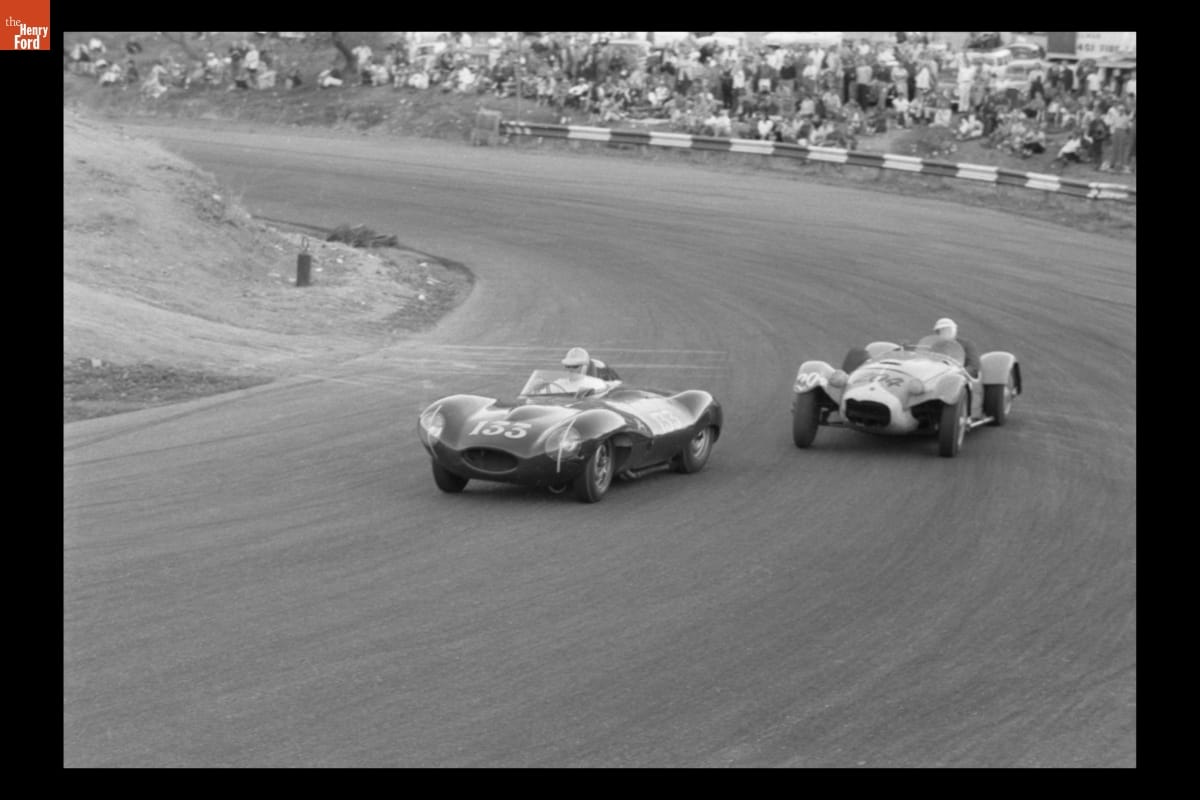
- Paramount Ranch Sports Car Road Races, December 1957 - Dave Friedman captured and preserved auto racing history through his photography. His work -- and his collection of works by other photographers -- documents key races, drivers, cars, and teams. Road races were held in 1956 and 1957 on a course at Paramount Ranch near Agoura Hills, California, where Paramount Studios shot many films. The track was closed after several driver fatalities and injuries.
- 07 December 1957-08 December 1957
- Collections - Artifact
Paramount Ranch Sports Car Road Races, December 1957
Dave Friedman captured and preserved auto racing history through his photography. His work -- and his collection of works by other photographers -- documents key races, drivers, cars, and teams. Road races were held in 1956 and 1957 on a course at Paramount Ranch near Agoura Hills, California, where Paramount Studios shot many films. The track was closed after several driver fatalities and injuries.
- A Mountain Ranch, Ojai Valley, California, 1900-1910 -
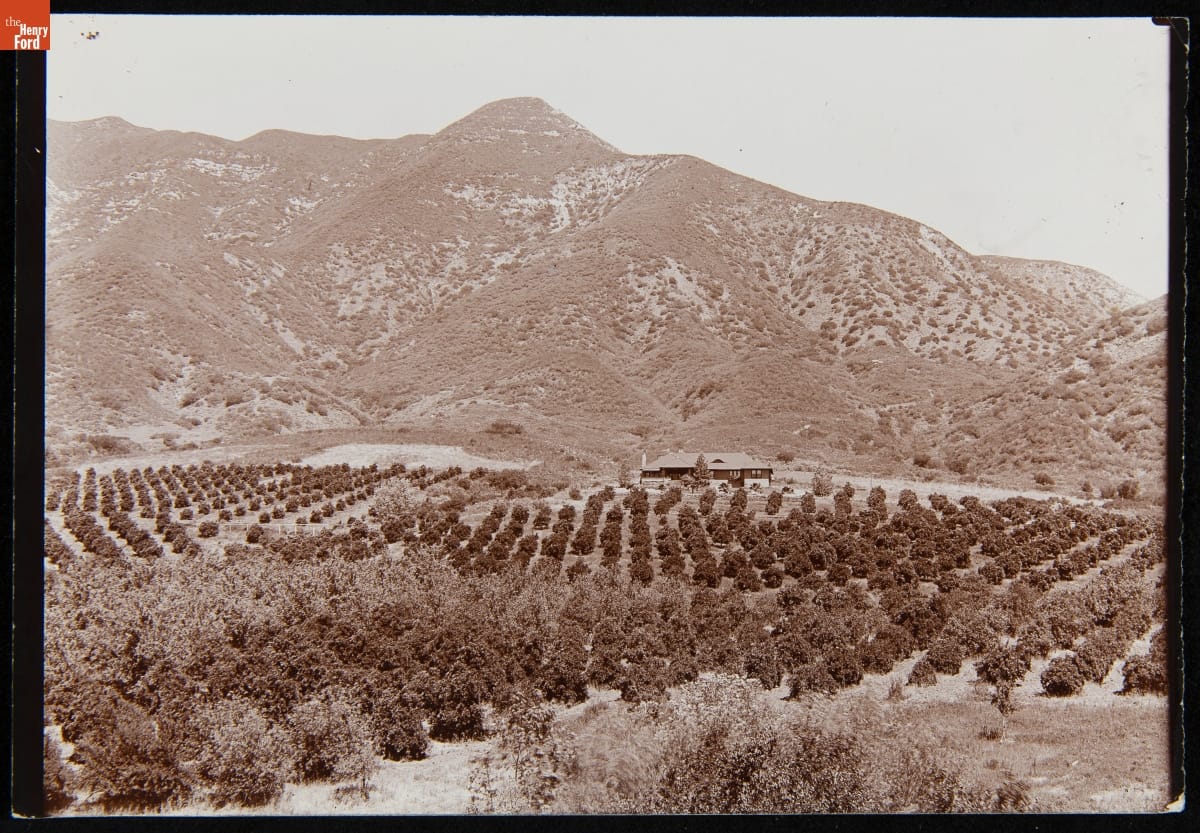
- 1900-1910
- Collections - Artifact
A Mountain Ranch, Ojai Valley, California, 1900-1910
- Photograph Album, California Packing Corporation Ranches and Orchards, 1919-1927 -

- 1919-1927
- Collections - Artifact
Photograph Album, California Packing Corporation Ranches and Orchards, 1919-1927
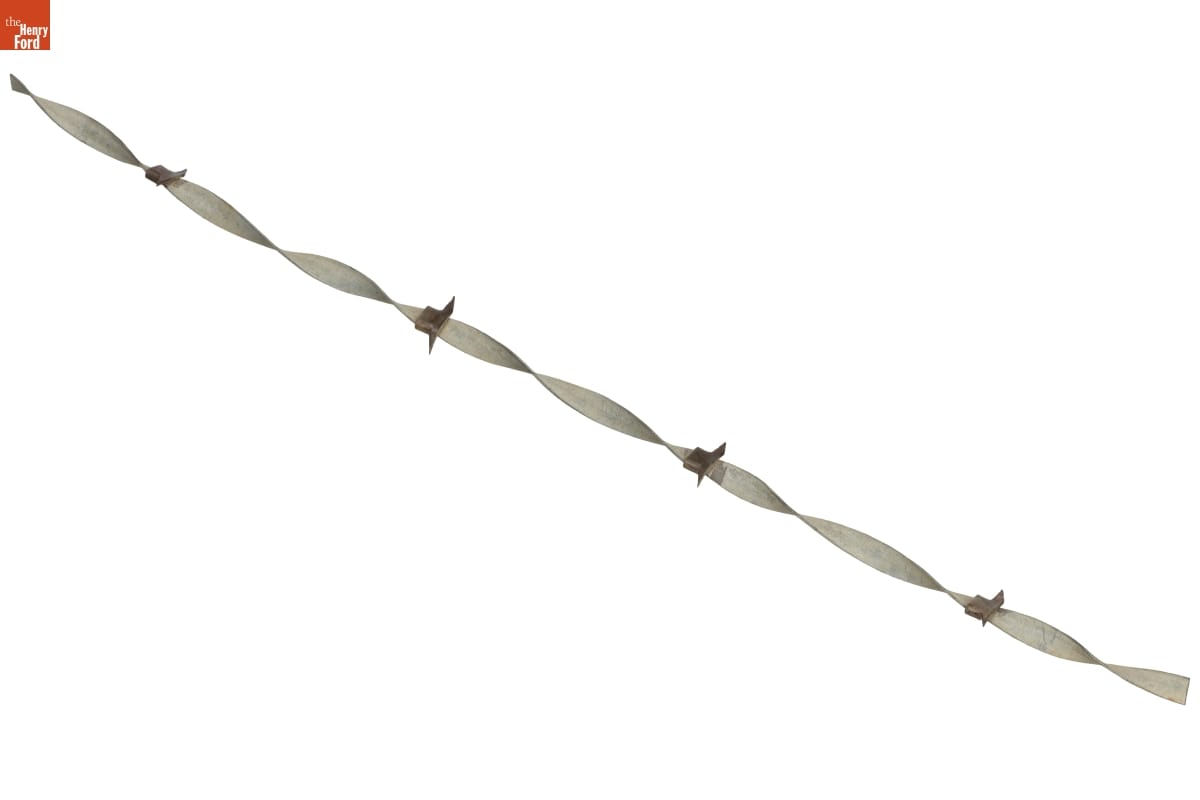
- Brinkerhoff Twist Barbed Wire, Patented 1879 - Inventors received hundreds of patents for barbed wire during the late 1800s. Some innovators created strands of fencing with sharp metal points cut into the wire; others incorporated small wire spurs twisted and attached to the wire to create a painful barrier. Each inventor believed their variation made the best fencing to keep livestock out of crop fields or confine them to pastures.
- 1879
- Collections - Artifact
Brinkerhoff Twist Barbed Wire, Patented 1879
Inventors received hundreds of patents for barbed wire during the late 1800s. Some innovators created strands of fencing with sharp metal points cut into the wire; others incorporated small wire spurs twisted and attached to the wire to create a painful barrier. Each inventor believed their variation made the best fencing to keep livestock out of crop fields or confine them to pastures.
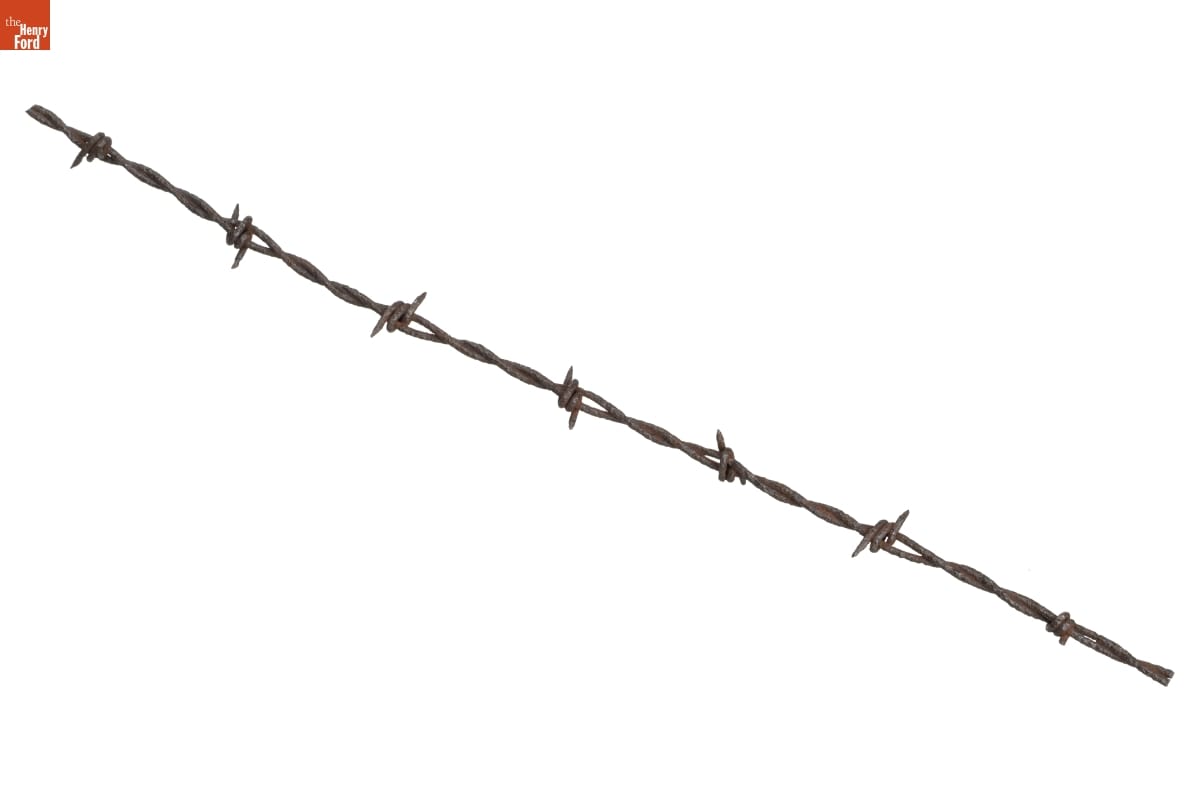
- Brotherton Barb, "Hog Wire" Variation Barbed Wire, Patented 1878 - Inventors received hundreds of patents for barbed wire during the late 1800s. Some innovators created strands of fencing with sharp metal points cut into the wire; others incorporated small wire spurs twisted and attached to the wire to create a painful barrier. Each inventor believed their variation made the best fencing to keep livestock out of crop fields or confine them to pastures.
- 1878
- Collections - Artifact
Brotherton Barb, "Hog Wire" Variation Barbed Wire, Patented 1878
Inventors received hundreds of patents for barbed wire during the late 1800s. Some innovators created strands of fencing with sharp metal points cut into the wire; others incorporated small wire spurs twisted and attached to the wire to create a painful barrier. Each inventor believed their variation made the best fencing to keep livestock out of crop fields or confine them to pastures.
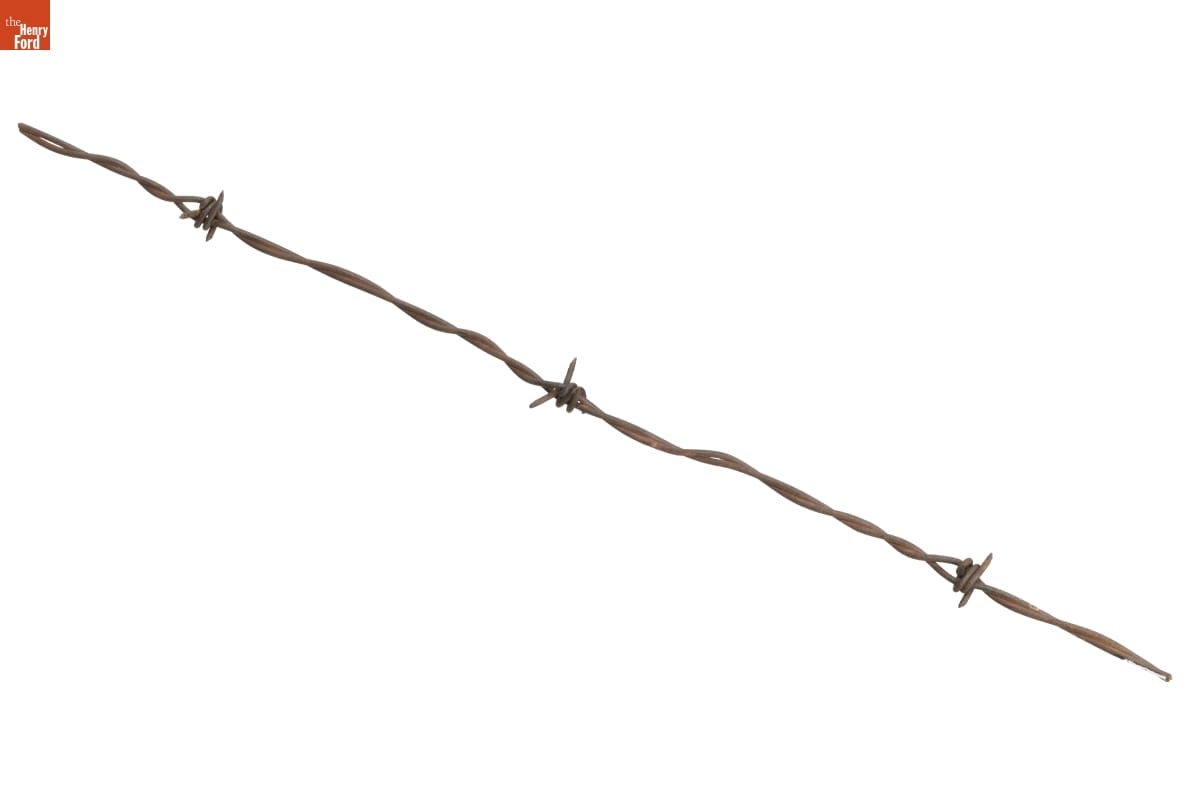
- Burnell's Four-Point Barb Barbed Wire, Patented 1877 - Inventors received hundreds of patents for barbed wire during the late 1800s. Some innovators created strands of fencing with sharp metal points cut into the wire; others incorporated small wire spurs twisted and attached to the wire to create a painful barrier. Each inventor believed their variation made the best fencing to keep livestock out of crop fields or confine them to pastures.
- 1877
- Collections - Artifact
Burnell's Four-Point Barb Barbed Wire, Patented 1877
Inventors received hundreds of patents for barbed wire during the late 1800s. Some innovators created strands of fencing with sharp metal points cut into the wire; others incorporated small wire spurs twisted and attached to the wire to create a painful barrier. Each inventor believed their variation made the best fencing to keep livestock out of crop fields or confine them to pastures.
- Burnell's Hooked Four-Point Barb Barbed Wire, Patented 1877 - Inventors received hundreds of patents for barbed wire during the late 1800s. Some innovators created strands of fencing with sharp metal points cut into the wire; others incorporated small wire spurs twisted and attached to the wire to create a painful barrier. Each inventor believed their variation made the best fencing to keep livestock out of crop fields or confine them to pastures.
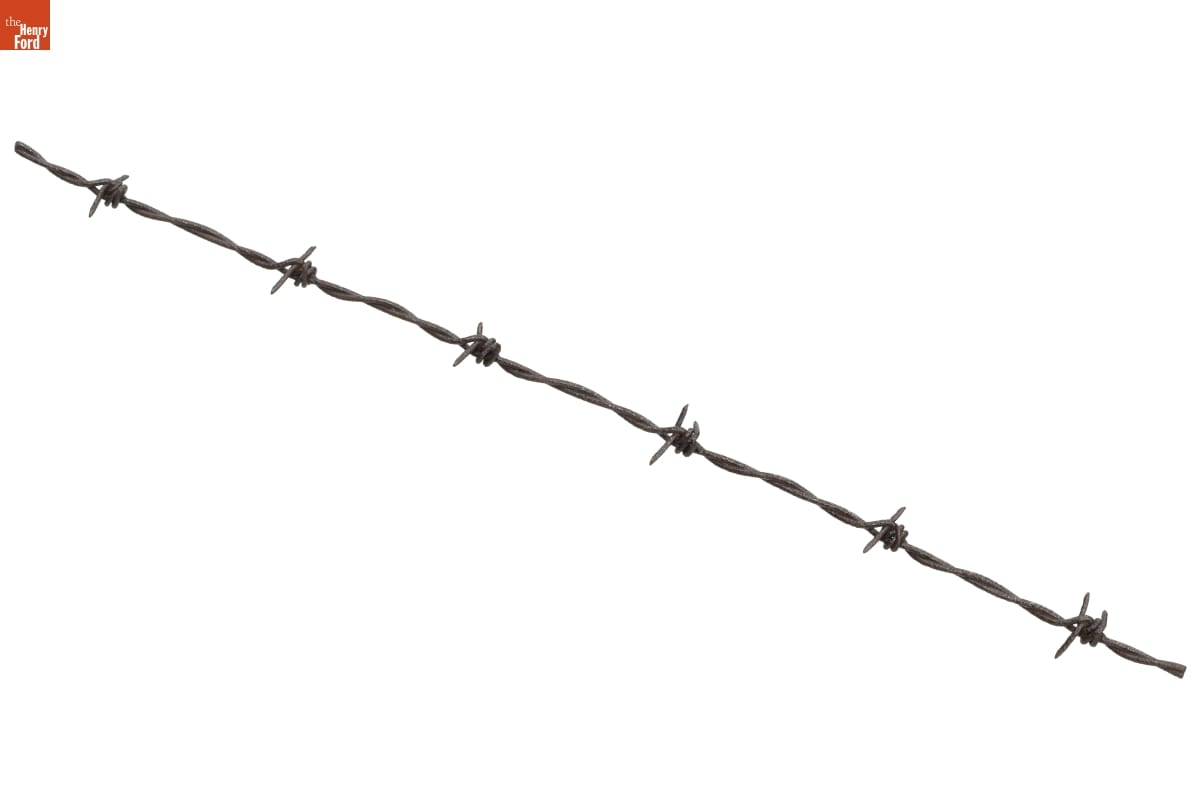
- 1877
- Collections - Artifact
Burnell's Hooked Four-Point Barb Barbed Wire, Patented 1877
Inventors received hundreds of patents for barbed wire during the late 1800s. Some innovators created strands of fencing with sharp metal points cut into the wire; others incorporated small wire spurs twisted and attached to the wire to create a painful barrier. Each inventor believed their variation made the best fencing to keep livestock out of crop fields or confine them to pastures.