
Search
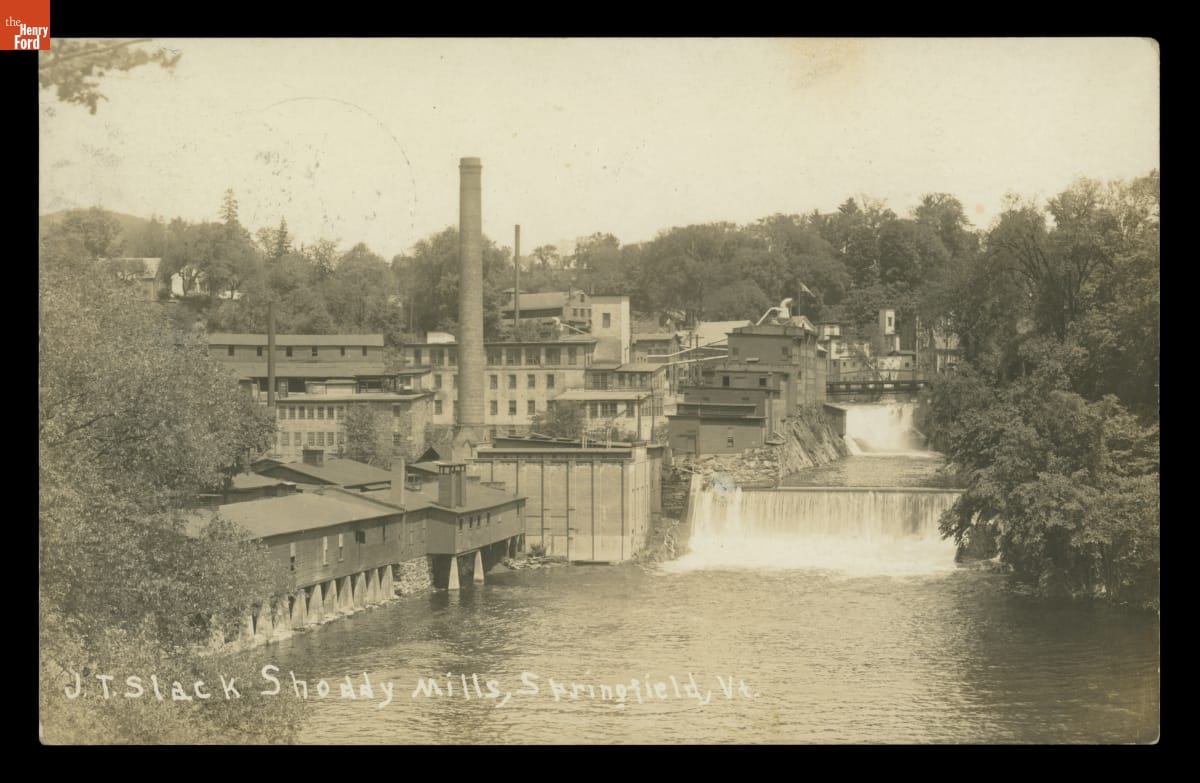
- "J.T. Slack Shoddy Mills, Springfield, Vt.," circa 1910 -
- circa 1910
- Collections - Artifact
"J.T. Slack Shoddy Mills, Springfield, Vt.," circa 1910
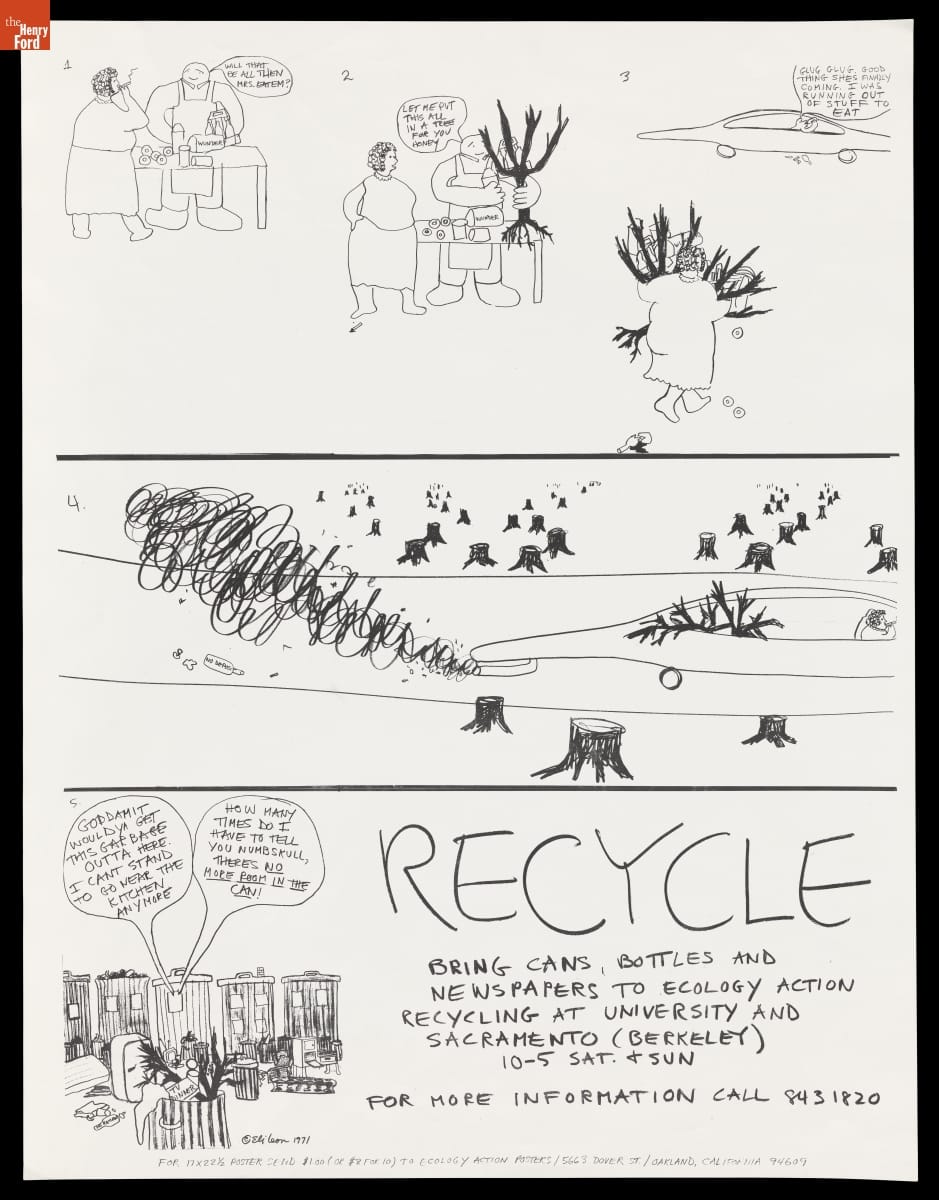
- Poster by Eli Leon for Ecology Action, "Recycle," 1971 - Recycling emerged as a natural outgrowth of Earth Day activities, but mobilizing recycling programs required proactive measures. Environmentalists used various print media to encourage action. In this poster, Eli Leon alerted Berkeley, California, residents to the profound positive effect recycling used bottles and cans at pre-determined locations could have on the environment.
- 1971
- Collections - Artifact
Poster by Eli Leon for Ecology Action, "Recycle," 1971
Recycling emerged as a natural outgrowth of Earth Day activities, but mobilizing recycling programs required proactive measures. Environmentalists used various print media to encourage action. In this poster, Eli Leon alerted Berkeley, California, residents to the profound positive effect recycling used bottles and cans at pre-determined locations could have on the environment.
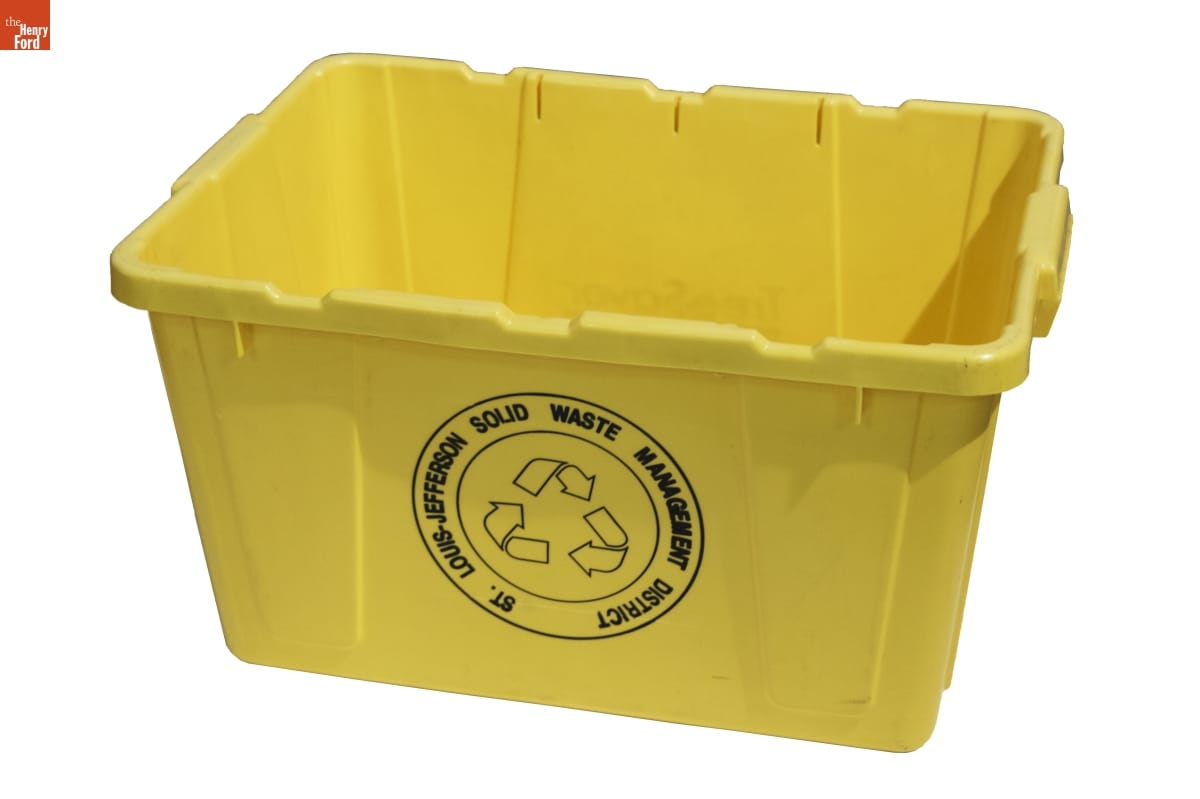
- Recycling Bin, Designed for Use in University City, Missouri, 1988-1989 - University City, a suburb of St. Louis, Missouri, became one of the first cites in the nation to adopt a curbside recycling program in March 1973. City officials expanded the program in the 1980s, making it a dual-stream system with two 18-gallon containers: one (yellow) for paper and another (blue) for household items such as glass, metal, and plastics.
- 1988-1989
- Collections - Artifact
Recycling Bin, Designed for Use in University City, Missouri, 1988-1989
University City, a suburb of St. Louis, Missouri, became one of the first cites in the nation to adopt a curbside recycling program in March 1973. City officials expanded the program in the 1980s, making it a dual-stream system with two 18-gallon containers: one (yellow) for paper and another (blue) for household items such as glass, metal, and plastics.
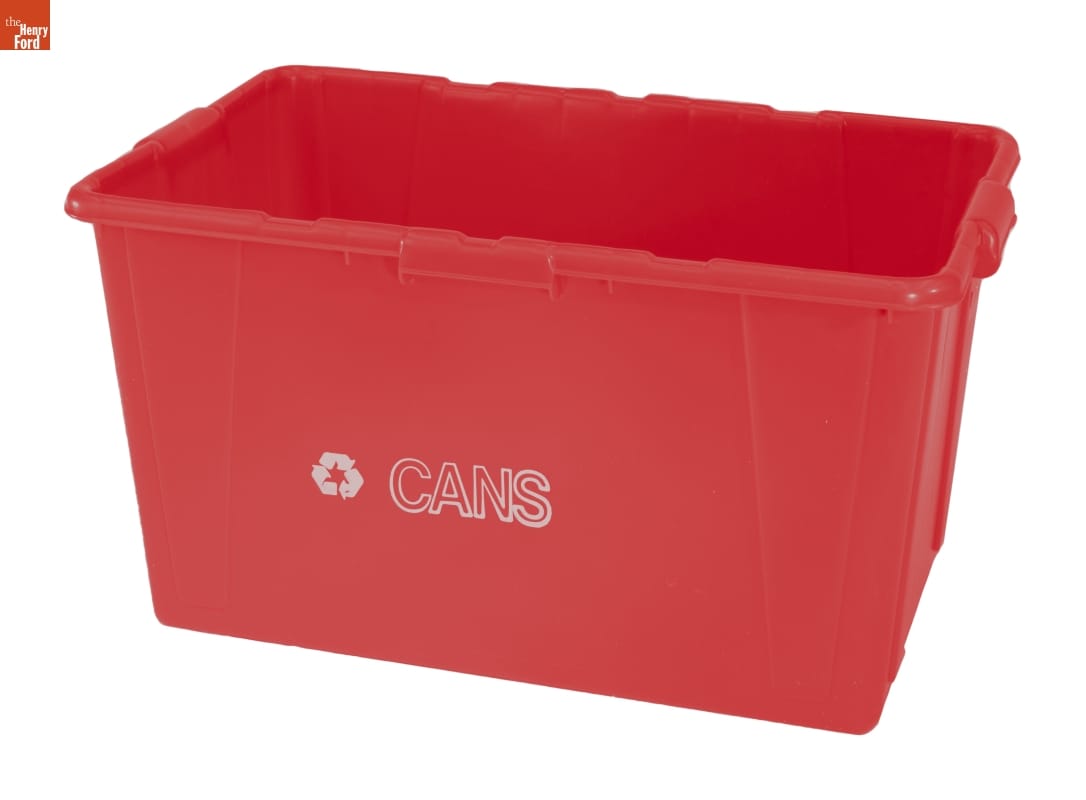
- Recycling Bin, 1991 -
- 1991
- Collections - Artifact
Recycling Bin, 1991
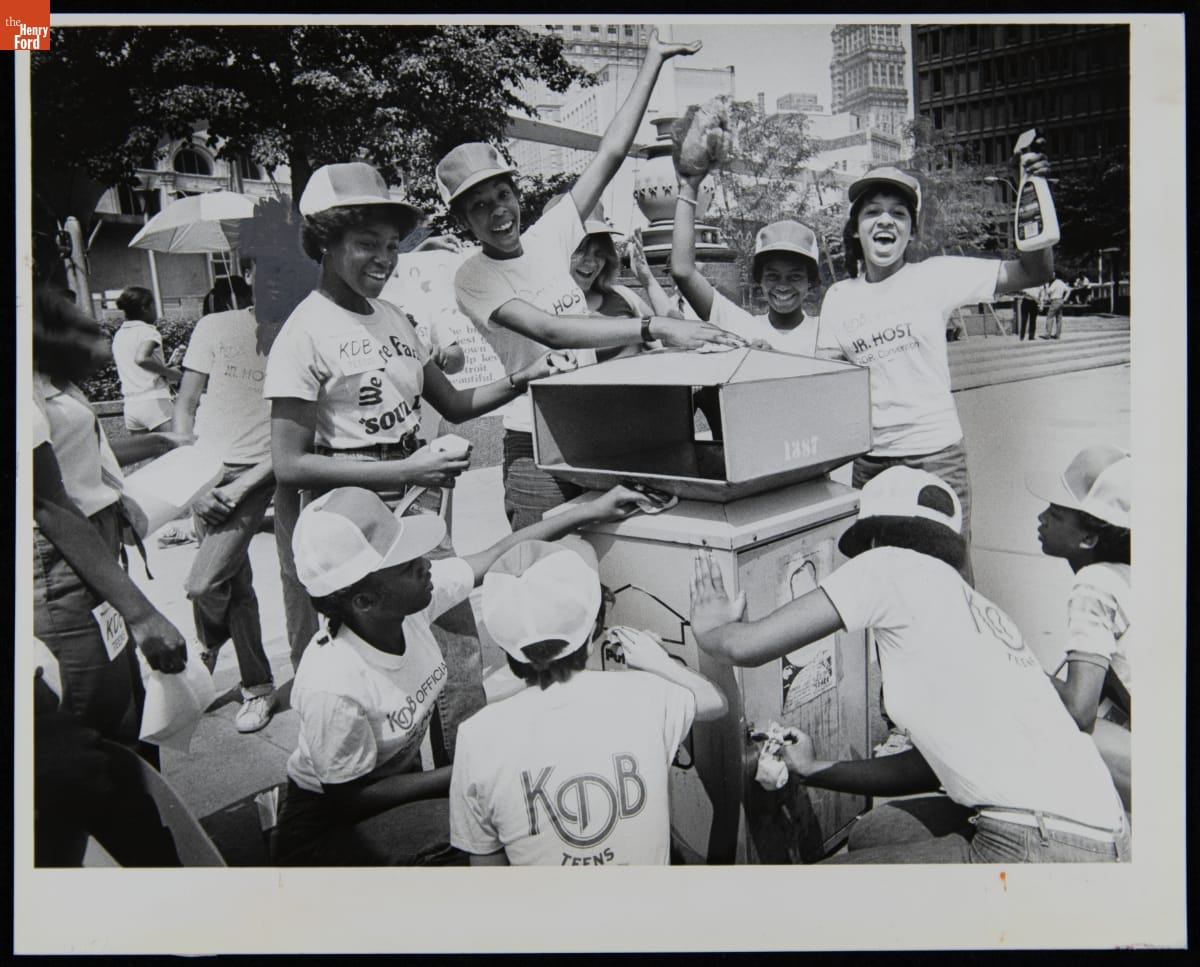
- "Keep Detroit Beautiful" Teens Cleaning Up the City, June 1980 -
- June 01, 1980
- Collections - Artifact
"Keep Detroit Beautiful" Teens Cleaning Up the City, June 1980
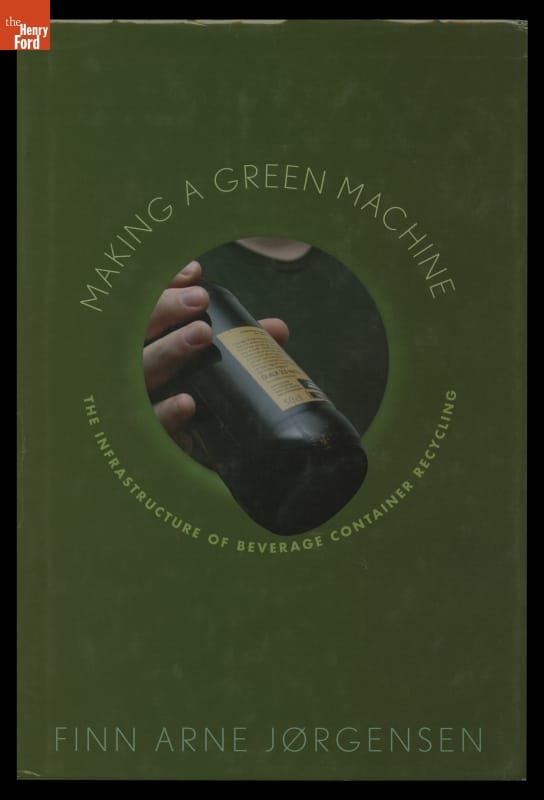
- "Making a Green Machine: The Infrastructure of Beverage Container Recycling," 2011 -
- 2011
- Collections - Artifact
"Making a Green Machine: The Infrastructure of Beverage Container Recycling," 2011
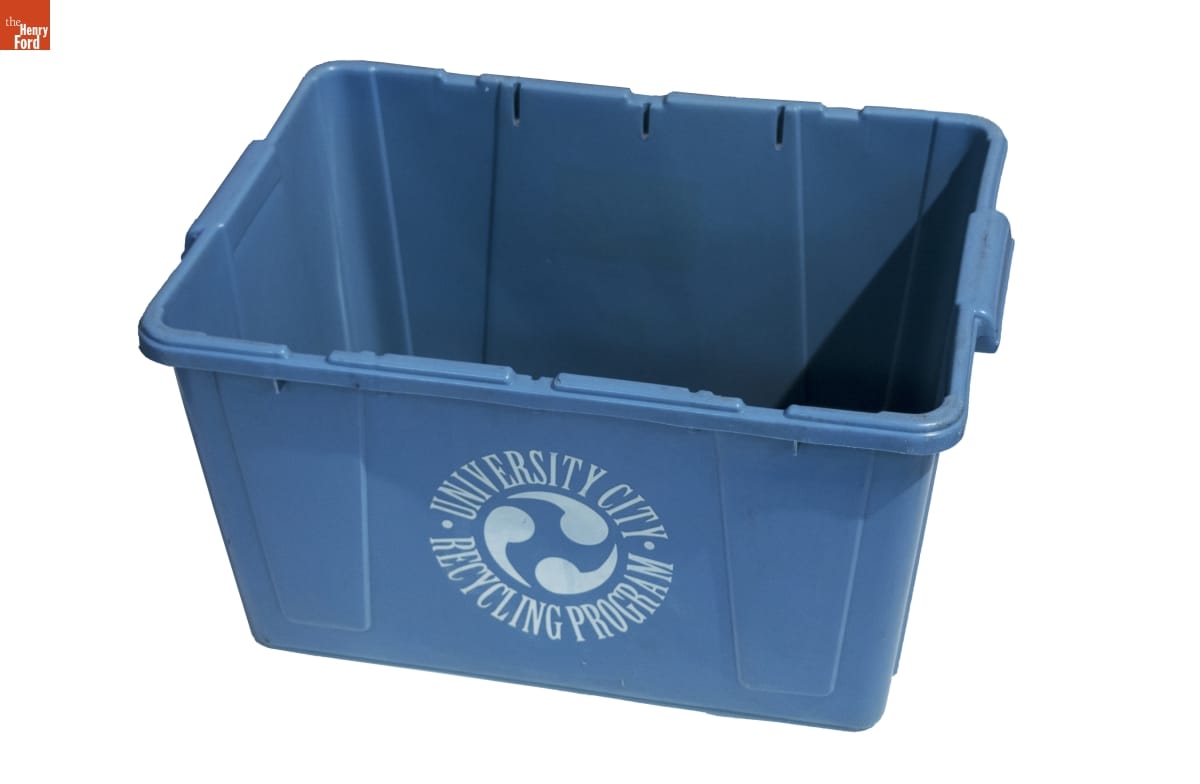
- Recycling Bin, Designed for Use in University City, Missouri, 1988-1989 - University City, a suburb of St. Louis, Missouri, became one of the first cites in the nation to adopt a curbside recycling program in March 1973. City officials expanded the program in the 1980s, making it a dual-stream system with two 18-gallon containers: one (yellow) for paper and another (blue) for household items such as glass, metal, and plastics.
- 1988-1989
- Collections - Artifact
Recycling Bin, Designed for Use in University City, Missouri, 1988-1989
University City, a suburb of St. Louis, Missouri, became one of the first cites in the nation to adopt a curbside recycling program in March 1973. City officials expanded the program in the 1980s, making it a dual-stream system with two 18-gallon containers: one (yellow) for paper and another (blue) for household items such as glass, metal, and plastics.
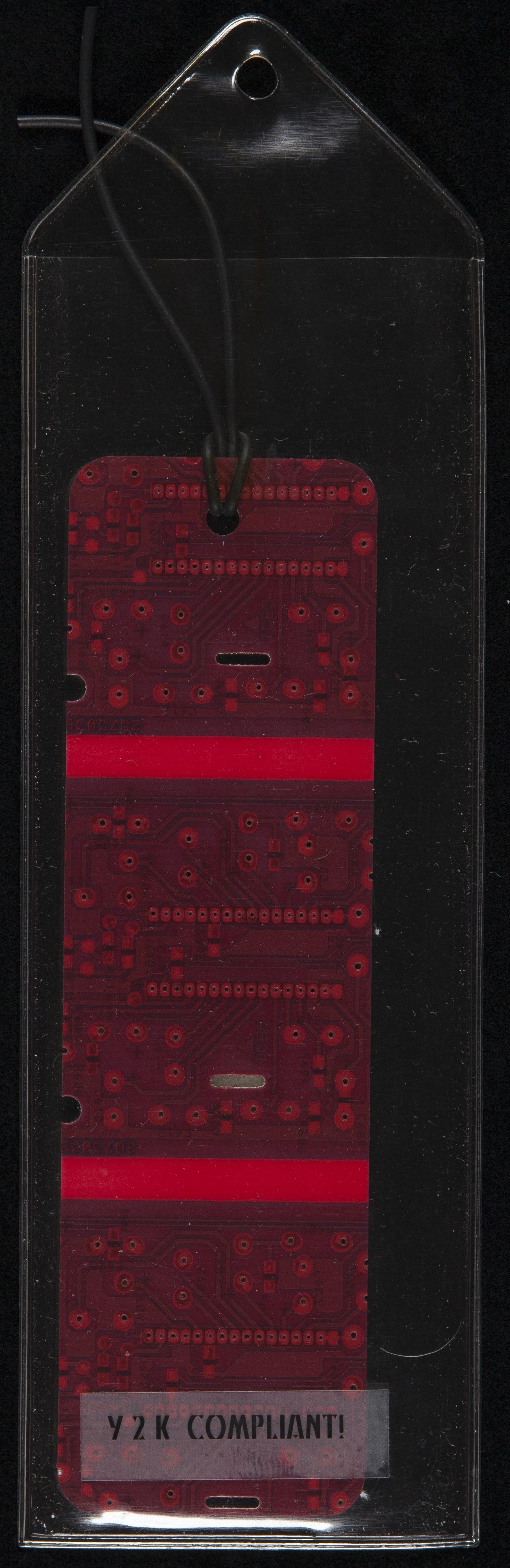
- Motherboard Bookmark, circa 1999 -
- circa 1999
- Collections - Artifact
Motherboard Bookmark, circa 1999
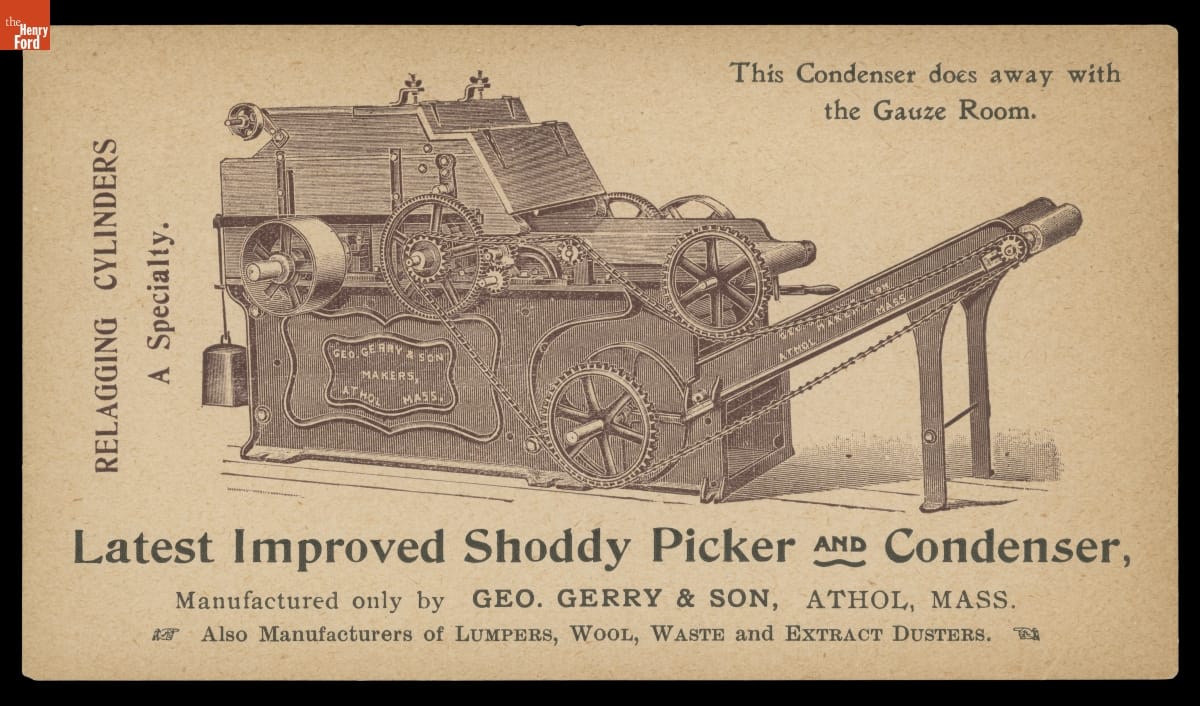
- "Latest Improved Shoddy Picker and Condenser," 1870-1890 -
- 1870-1890
- Collections - Artifact
"Latest Improved Shoddy Picker and Condenser," 1870-1890
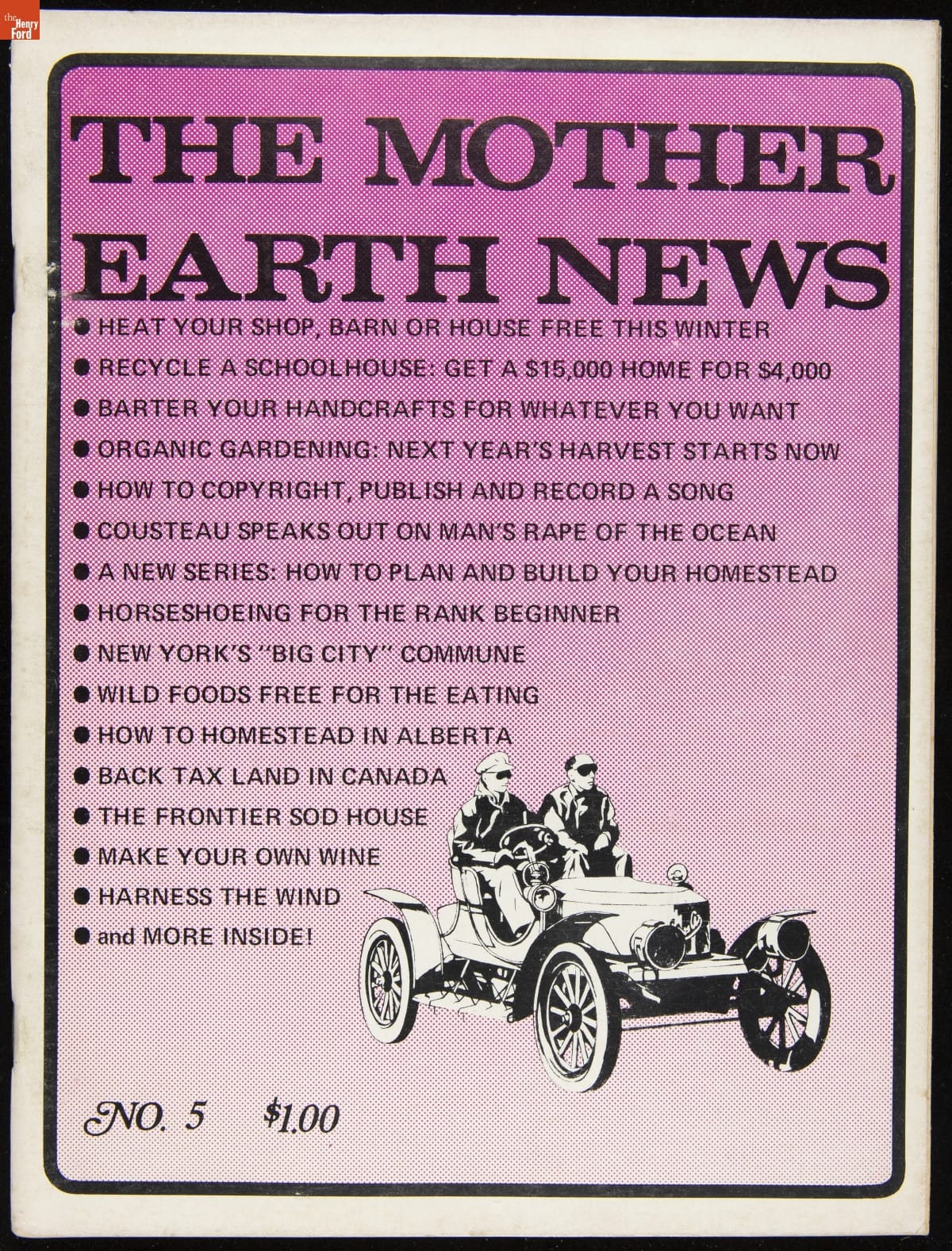
- The Mother Earth News, Vol. 1, No. 5, 1970 - <em>The Mother Earth News</em> appealed to young, "hip" readers who invested in back-to-the-land philosophies and do-it-yourself approaches. Launched in January 1970, it remains in publication as the longest-running magazine devoted to readers who want to live in a more sustainable way.
- 1970
- Collections - Artifact
The Mother Earth News, Vol. 1, No. 5, 1970
The Mother Earth News appealed to young, "hip" readers who invested in back-to-the-land philosophies and do-it-yourself approaches. Launched in January 1970, it remains in publication as the longest-running magazine devoted to readers who want to live in a more sustainable way.