
Search
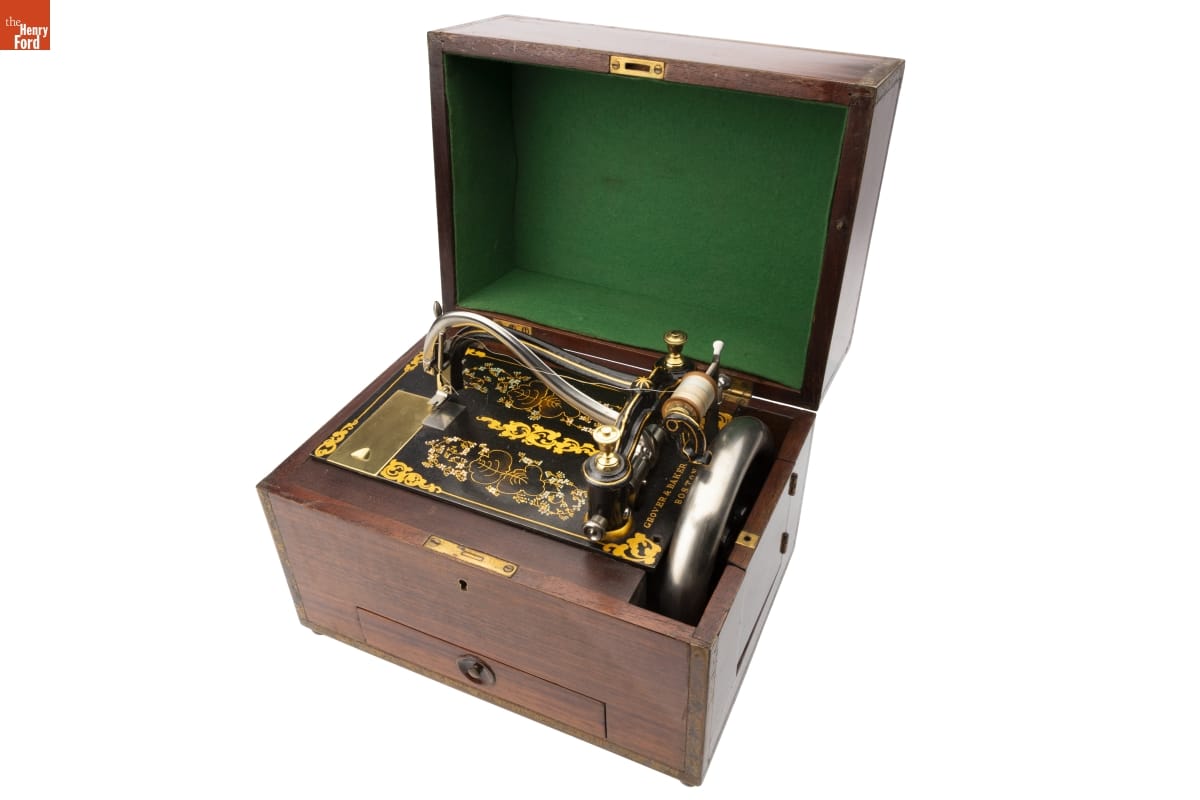
- Grover & Baker Portable Sewing Machine, Purchased by Rufus Reed of Newark, New York, 1857 - Seamstresses used this sewing machine to sew cotton cloth (a Southern agricultural commodity woven in Northern factories). The cast-iron mechanism in a rosewood case confirms connections between Amazonian forests and New England factories. Patented in 1856, this portable machine hit the American market while the fate of slavery divided the nation. Advertising in the American Farmer (1860) described it “for farm and plantation use,” implying that enslaved and free seamstresses may have used it.
- 1857
- Collections - Artifact
Grover & Baker Portable Sewing Machine, Purchased by Rufus Reed of Newark, New York, 1857
Seamstresses used this sewing machine to sew cotton cloth (a Southern agricultural commodity woven in Northern factories). The cast-iron mechanism in a rosewood case confirms connections between Amazonian forests and New England factories. Patented in 1856, this portable machine hit the American market while the fate of slavery divided the nation. Advertising in the American Farmer (1860) described it “for farm and plantation use,” implying that enslaved and free seamstresses may have used it.
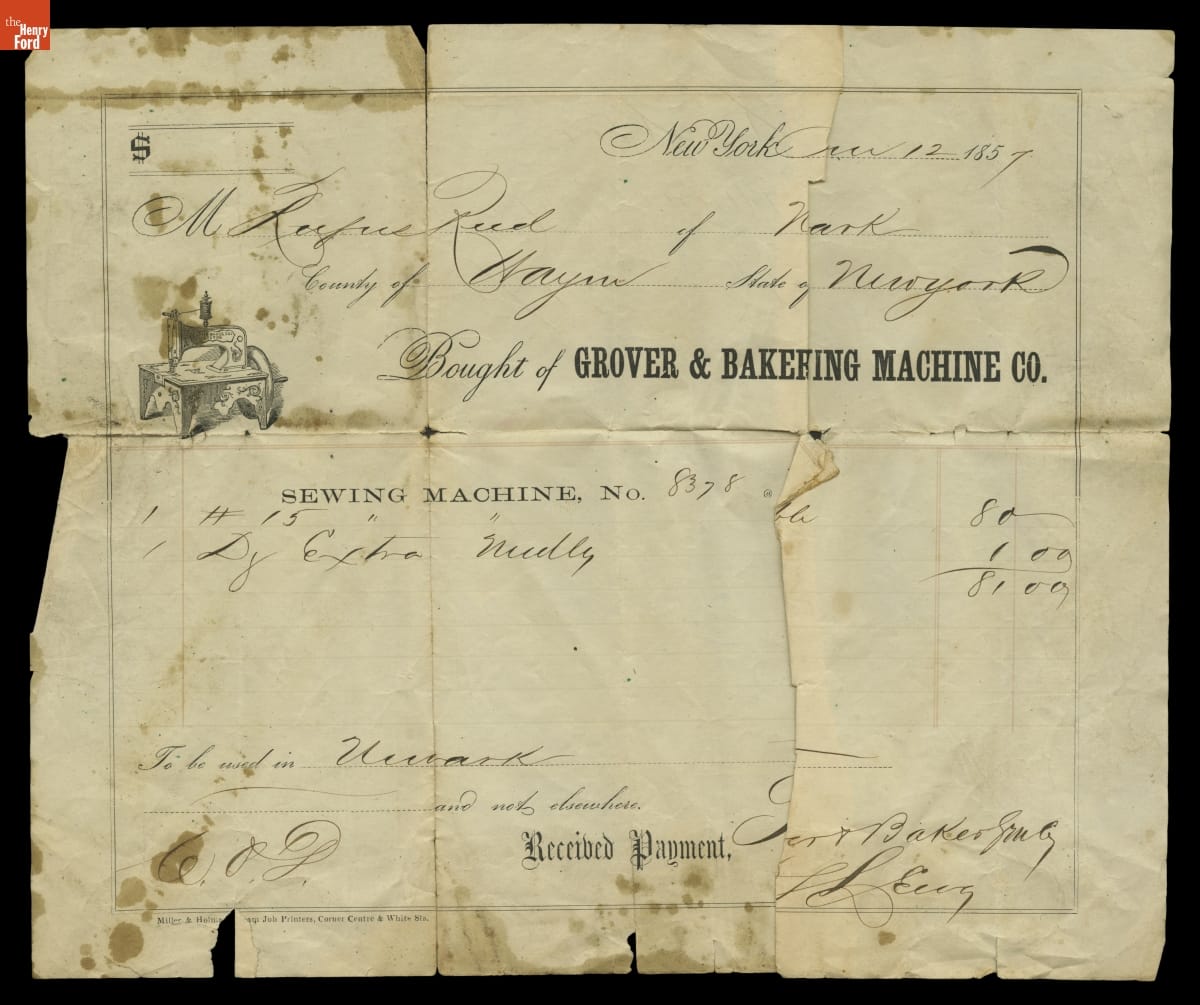
- Receipt for Grover & Baker Portable Sewing Machine and Needles Purchased by Rufus Reed, June 12, 1857 -
- June 12, 1857
- Collections - Artifact
Receipt for Grover & Baker Portable Sewing Machine and Needles Purchased by Rufus Reed, June 12, 1857