
Search
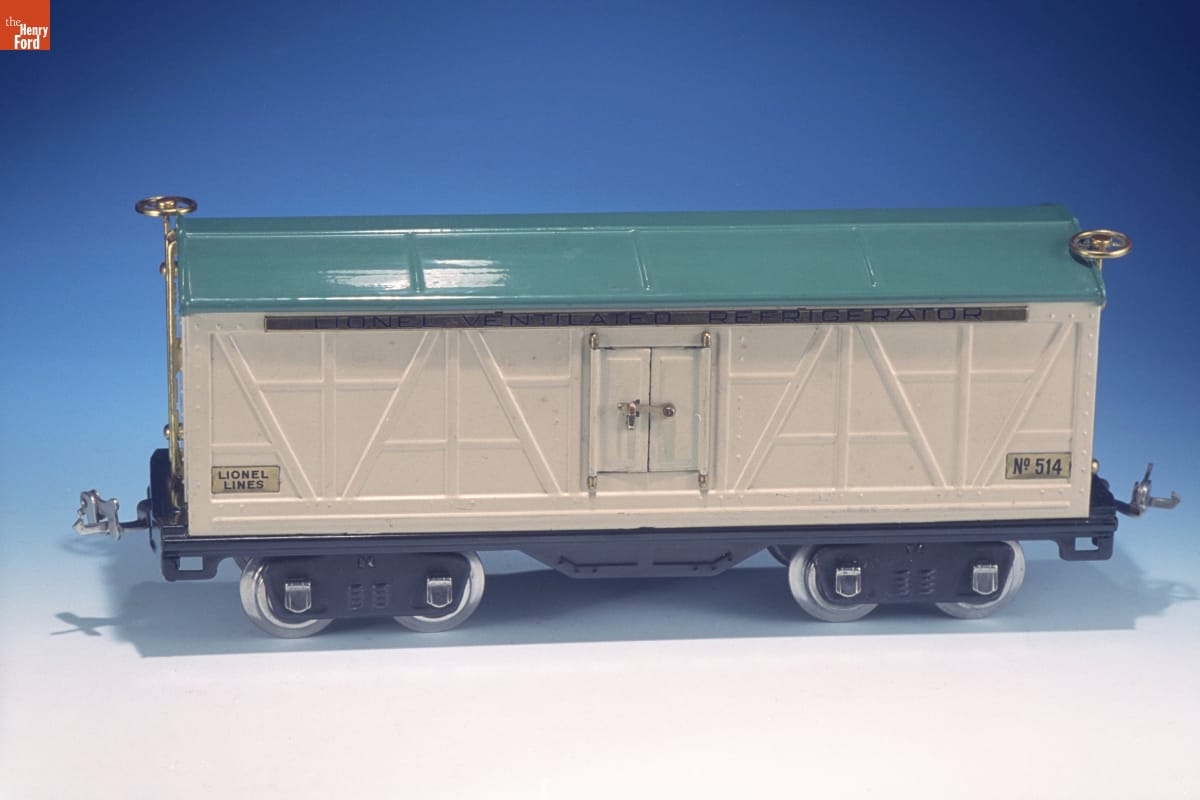
- Toy Railroad Refrigerator Car, 1927 - Lionel Corporation produced this model of a railroad refrigerator car. It's a good representation of an outside-braced refrigerated railcar of the era -- right down to the special hardware on the center doors. However, the model's roof is missing the hatches at each end where fresh blocks of ice would be loaded into the car while in use.
- 1927
- Collections - Artifact
Toy Railroad Refrigerator Car, 1927
Lionel Corporation produced this model of a railroad refrigerator car. It's a good representation of an outside-braced refrigerated railcar of the era -- right down to the special hardware on the center doors. However, the model's roof is missing the hatches at each end where fresh blocks of ice would be loaded into the car while in use.
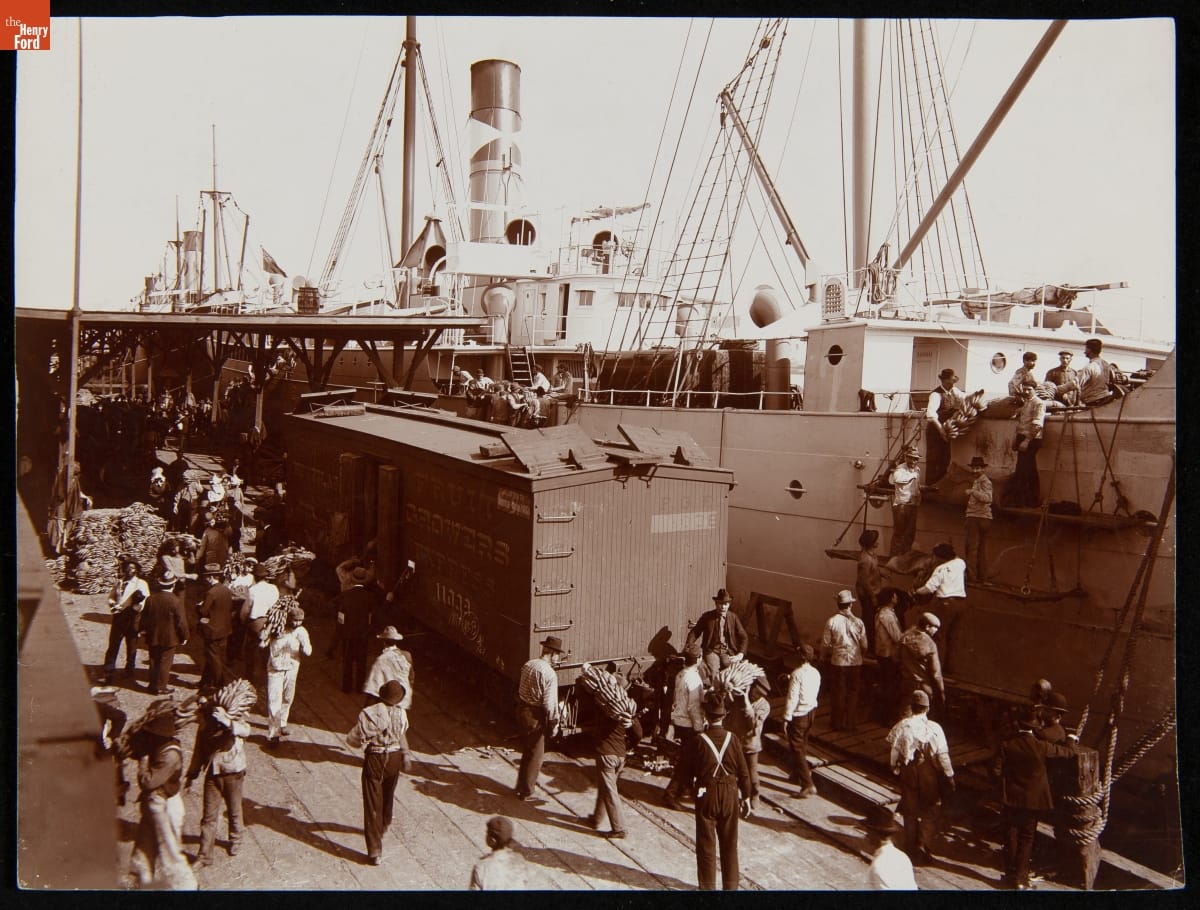
- Unloading Bananas from Steamer, New Orleans, Louisiana, 1900-1910 - Bananas arrived on grocery store shelves via a transportation system controlled by competing fruit companies and their government allies. Refrigerated railcars moved the crop from Central American plantations to ships bound for U.S. ports in the Gulf of Mexico. This photograph shows dockworkers in New Orleans, Louisiana, transferring bunches of bananas -- each weighing around 86 pounds -- to a refrigerated railcar for transport to market.
- 1900-1910
- Collections - Artifact
Unloading Bananas from Steamer, New Orleans, Louisiana, 1900-1910
Bananas arrived on grocery store shelves via a transportation system controlled by competing fruit companies and their government allies. Refrigerated railcars moved the crop from Central American plantations to ships bound for U.S. ports in the Gulf of Mexico. This photograph shows dockworkers in New Orleans, Louisiana, transferring bunches of bananas -- each weighing around 86 pounds -- to a refrigerated railcar for transport to market.
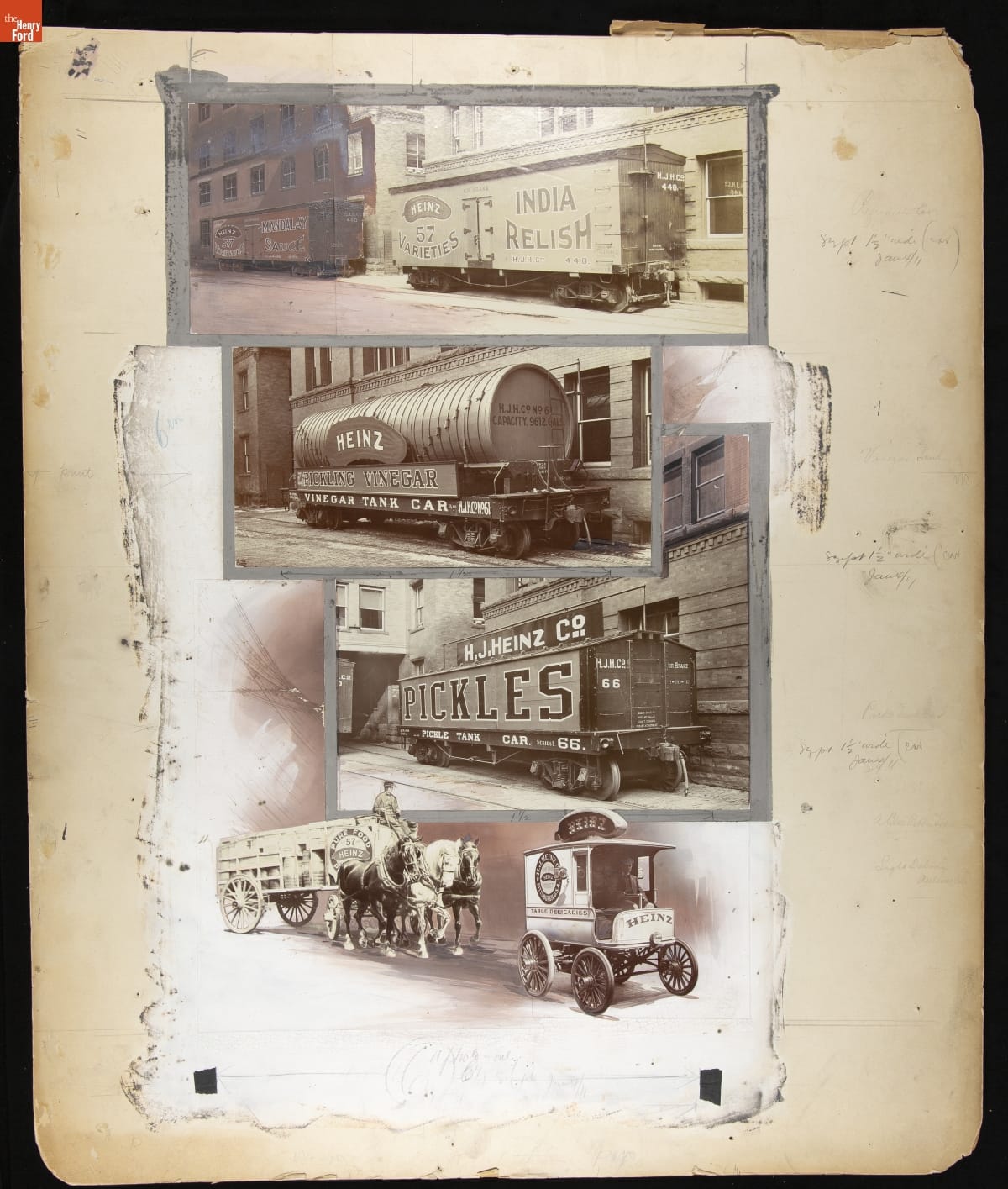
- Photomontage Showing Different Means of Transport for Heinz Company Products, April 12, 1909 - Photographs of the H.J. Heinz factory -- including buildings, employees, and the manufacturing process -- were often taken and then modified for advertising and publications. This advertising layout features several modified photographs of various shipping methods for Heinz products. The arrangement of these photos, which was featured in the catalog, "Home of the 57 Varieties," is a visual representation of the shipping process.
- April 12, 1909
- Collections - Artifact
Photomontage Showing Different Means of Transport for Heinz Company Products, April 12, 1909
Photographs of the H.J. Heinz factory -- including buildings, employees, and the manufacturing process -- were often taken and then modified for advertising and publications. This advertising layout features several modified photographs of various shipping methods for Heinz products. The arrangement of these photos, which was featured in the catalog, "Home of the 57 Varieties," is a visual representation of the shipping process.
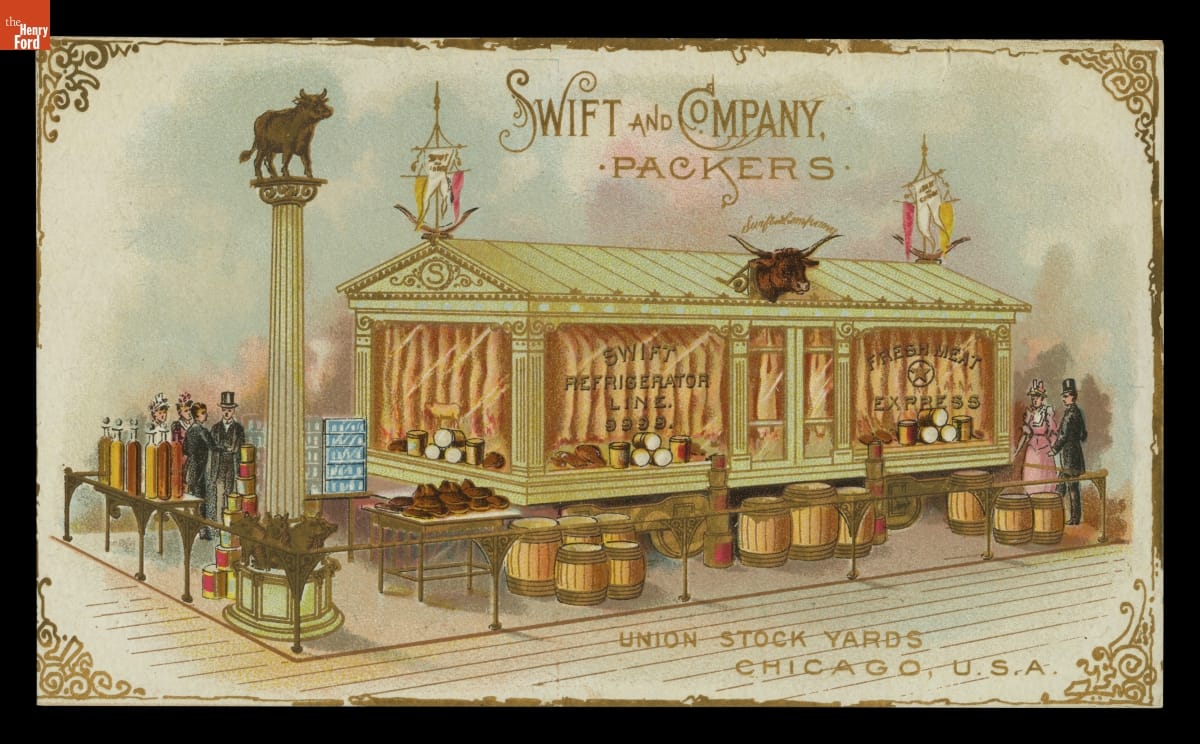
- Trade Card for Swift and Company, Packers, at the World's Columbian Exposition, 1893 - In the last third of the nineteenth century, an unprecedented variety of consumer goods and services flooded the American market. Advertisers, armed with new methods of color printing, bombarded potential customers with trade cards. Americans enjoyed and often saved the vibrant little advertisements found in product packages or distributed by local merchants. Many survive as historical records of commercialism in the United States.
- 1893
- Collections - Artifact
Trade Card for Swift and Company, Packers, at the World's Columbian Exposition, 1893
In the last third of the nineteenth century, an unprecedented variety of consumer goods and services flooded the American market. Advertisers, armed with new methods of color printing, bombarded potential customers with trade cards. Americans enjoyed and often saved the vibrant little advertisements found in product packages or distributed by local merchants. Many survive as historical records of commercialism in the United States.
- Unloading Bananas from Steamer, New Orleans, Louisiana, 1900-1910 - Bananas arrived on grocery store shelves via a transportation system controlled by competing fruit companies and their government allies. Refrigerated railcars moved the crop from Central American plantations to ships bound for U.S. ports in the Gulf of Mexico. This photograph shows dockworkers in New Orleans, Louisiana, transferring bunches of bananas -- each weighing around 86 pounds -- to a refrigerated railcar for transport to market.
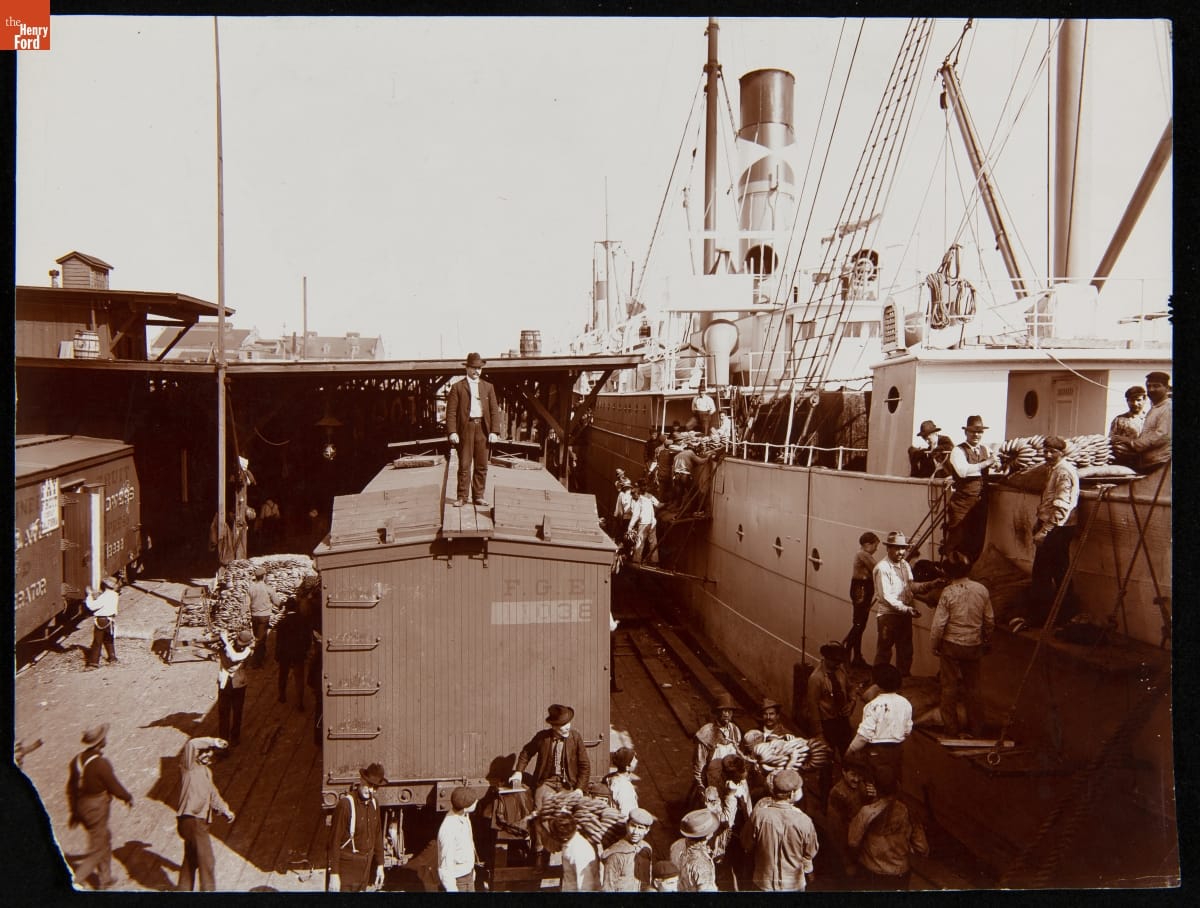
- 1900-1910
- Collections - Artifact
Unloading Bananas from Steamer, New Orleans, Louisiana, 1900-1910
Bananas arrived on grocery store shelves via a transportation system controlled by competing fruit companies and their government allies. Refrigerated railcars moved the crop from Central American plantations to ships bound for U.S. ports in the Gulf of Mexico. This photograph shows dockworkers in New Orleans, Louisiana, transferring bunches of bananas -- each weighing around 86 pounds -- to a refrigerated railcar for transport to market.
- Ford V-8 Truck with Air Conditioning Unit near Refrigerated Railcar, 1936 - Ford Motor Company promoted the versatility of its trucks with this 1936 photograph. It shows a Ford truck chassis fitted with a mobile air conditioning unit. The unit is being used to keep produce cool inside a refrigerated railcar. Most railcars in this era still relied on ice to cool their contents. Mechanically refrigerated railcars weren't common until the 1950s.
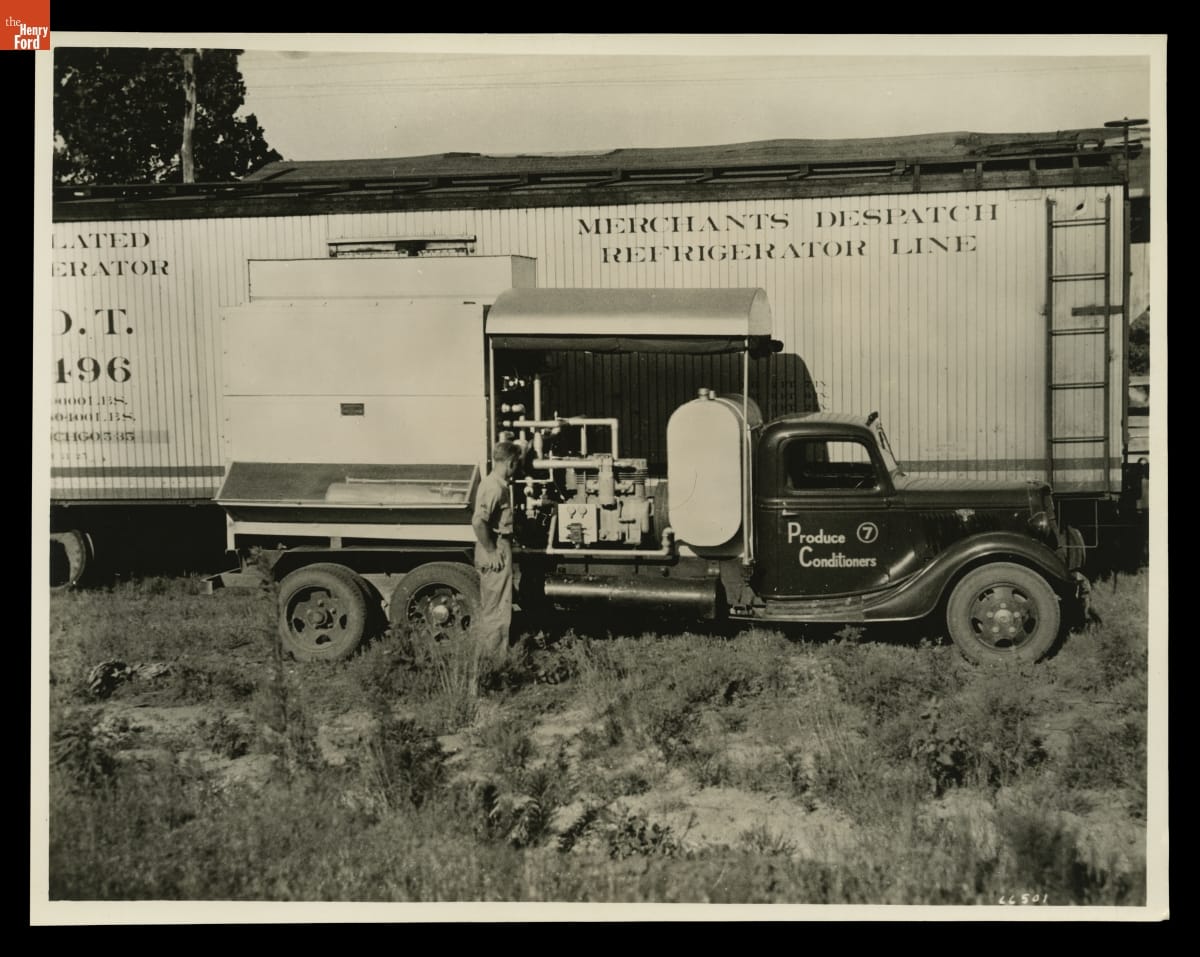
- July 23, 1936
- Collections - Artifact
Ford V-8 Truck with Air Conditioning Unit near Refrigerated Railcar, 1936
Ford Motor Company promoted the versatility of its trucks with this 1936 photograph. It shows a Ford truck chassis fitted with a mobile air conditioning unit. The unit is being used to keep produce cool inside a refrigerated railcar. Most railcars in this era still relied on ice to cool their contents. Mechanically refrigerated railcars weren't common until the 1950s.
- Toy Railroad Refrigerator Car, 1950 - Lionel Corporation produced this model of a railroad refrigerator car. The toy car reflects the change in real car construction materials from wood to steel. But, as evidenced by the ice hatches on the roof, the model represents an ice-cooled car. It was during the 1950s that railcar operators began to phase out ice in favor of mechanical refrigeration.
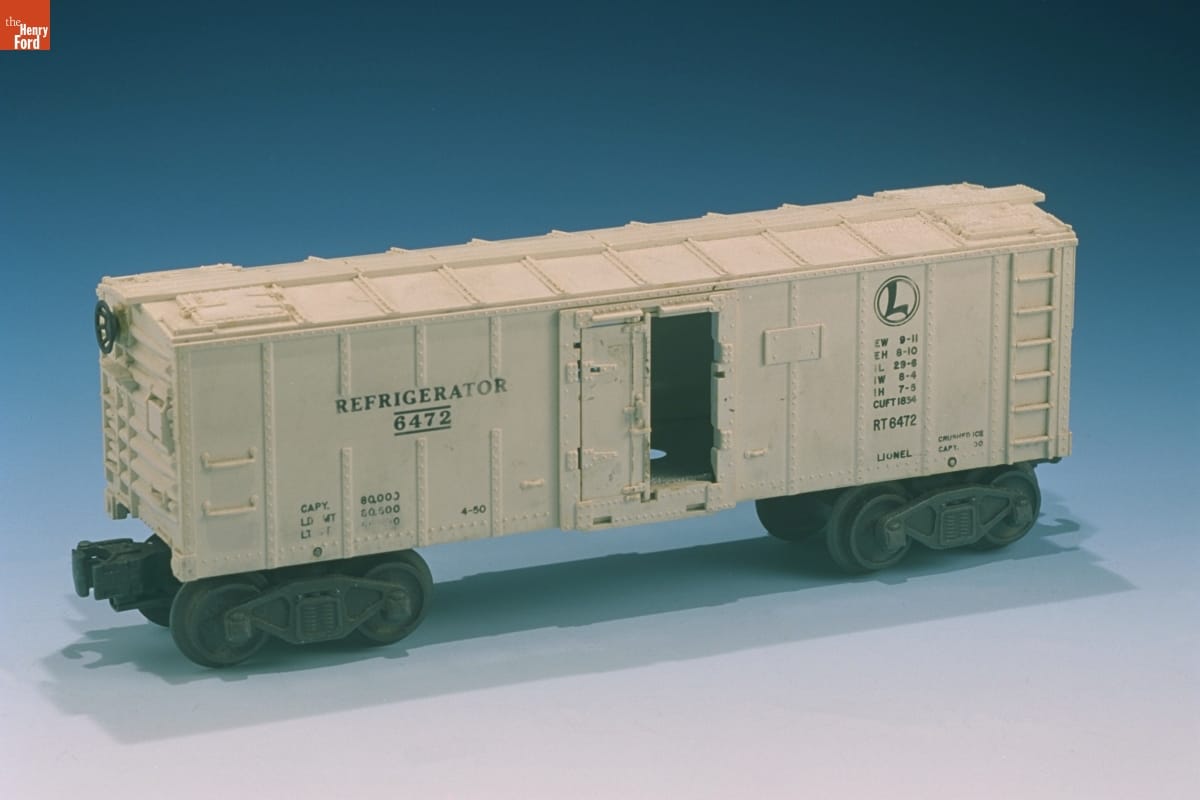
- 1950
- Collections - Artifact
Toy Railroad Refrigerator Car, 1950
Lionel Corporation produced this model of a railroad refrigerator car. The toy car reflects the change in real car construction materials from wood to steel. But, as evidenced by the ice hatches on the roof, the model represents an ice-cooled car. It was during the 1950s that railcar operators began to phase out ice in favor of mechanical refrigeration.
- Railroad Car Shop, Merchants Despatch Transportation Company, New York, circa 1905 - From 1895 to 1924, the Detroit Publishing Company was one of the major image publishers in the world. The company's wide-ranging stock of original photographs documented life and landscapes from across the nation and around the globe. From the tens of thousands of negatives, the company created prints, postcards, lantern slides, panoramas, and other merchandise for sale to educators, businessmen, advertisers, homeowners and travelers.
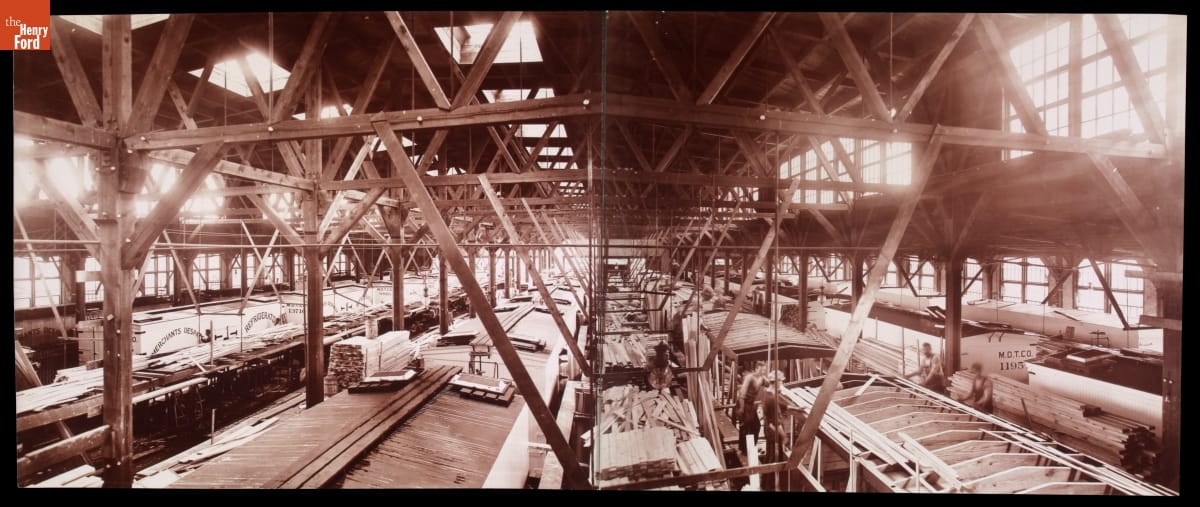
- circa 1905
- Collections - Artifact
Railroad Car Shop, Merchants Despatch Transportation Company, New York, circa 1905
From 1895 to 1924, the Detroit Publishing Company was one of the major image publishers in the world. The company's wide-ranging stock of original photographs documented life and landscapes from across the nation and around the globe. From the tens of thousands of negatives, the company created prints, postcards, lantern slides, panoramas, and other merchandise for sale to educators, businessmen, advertisers, homeowners and travelers.
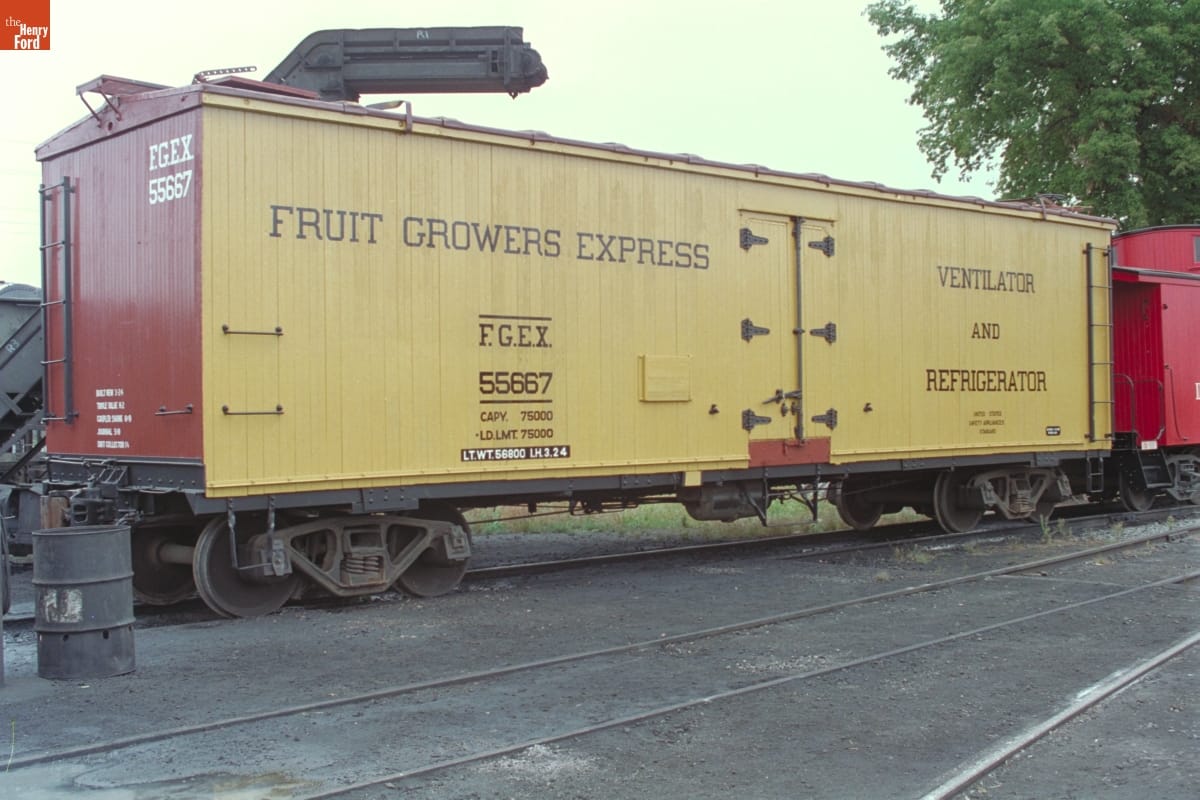
- 1924 Railroad Refrigerator Car, Used by Fruit Growers Express - Modern refrigerated rail cars have mechanical cooling units, but well into the 20th century, ice cooled refrigerator cars like this one. Since 45-55 pounds of ice melted each hour, icing stations had to be located at regular intervals along the route, and adherence to strict schedules was necessary to prevent spoilage. The ability to ship meats and produce in refrigerator cars, far from their points of origin, greatly expanded both farmers' markets, and consumers' food choices.
- March 01, 1924
- Collections - Artifact
1924 Railroad Refrigerator Car, Used by Fruit Growers Express
Modern refrigerated rail cars have mechanical cooling units, but well into the 20th century, ice cooled refrigerator cars like this one. Since 45-55 pounds of ice melted each hour, icing stations had to be located at regular intervals along the route, and adherence to strict schedules was necessary to prevent spoilage. The ability to ship meats and produce in refrigerator cars, far from their points of origin, greatly expanded both farmers' markets, and consumers' food choices.
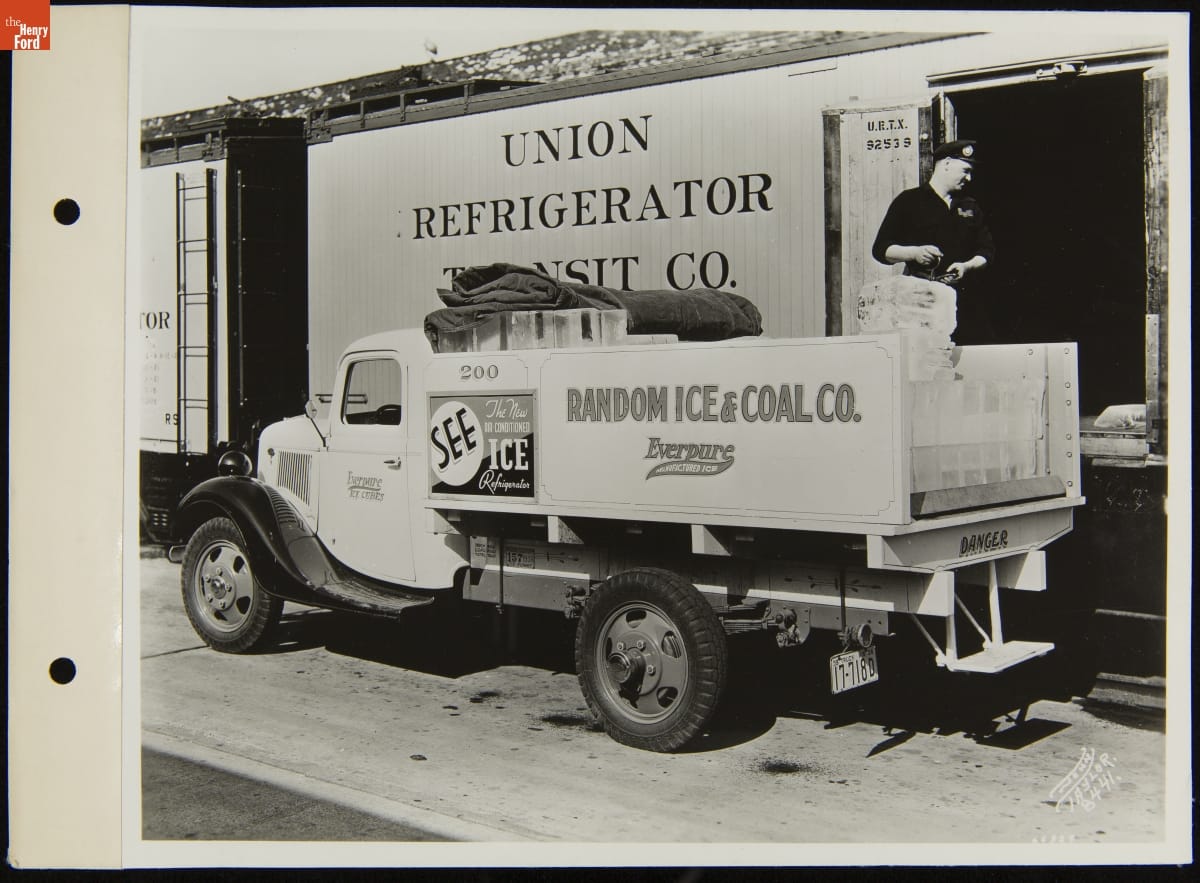
- Ford V-8 Ice Truck Loading Ice in Refrigerated Railroad Car, June 1936 - Ford trucks received small styling changes to their radiator shells and wheels for 1936. This photo, staged for advertising purposes, shows a Ford truck delivering ice blocks to a refrigerated railcar. In truth, railcar owners like Union Refrigerator Transit Company maintained their own icing stations. Fresh ice was loaded through hatches on the railcar's roof -- the side doors were for cargo.
- June 23, 1936
- Collections - Artifact
Ford V-8 Ice Truck Loading Ice in Refrigerated Railroad Car, June 1936
Ford trucks received small styling changes to their radiator shells and wheels for 1936. This photo, staged for advertising purposes, shows a Ford truck delivering ice blocks to a refrigerated railcar. In truth, railcar owners like Union Refrigerator Transit Company maintained their own icing stations. Fresh ice was loaded through hatches on the railcar's roof -- the side doors were for cargo.