
Search
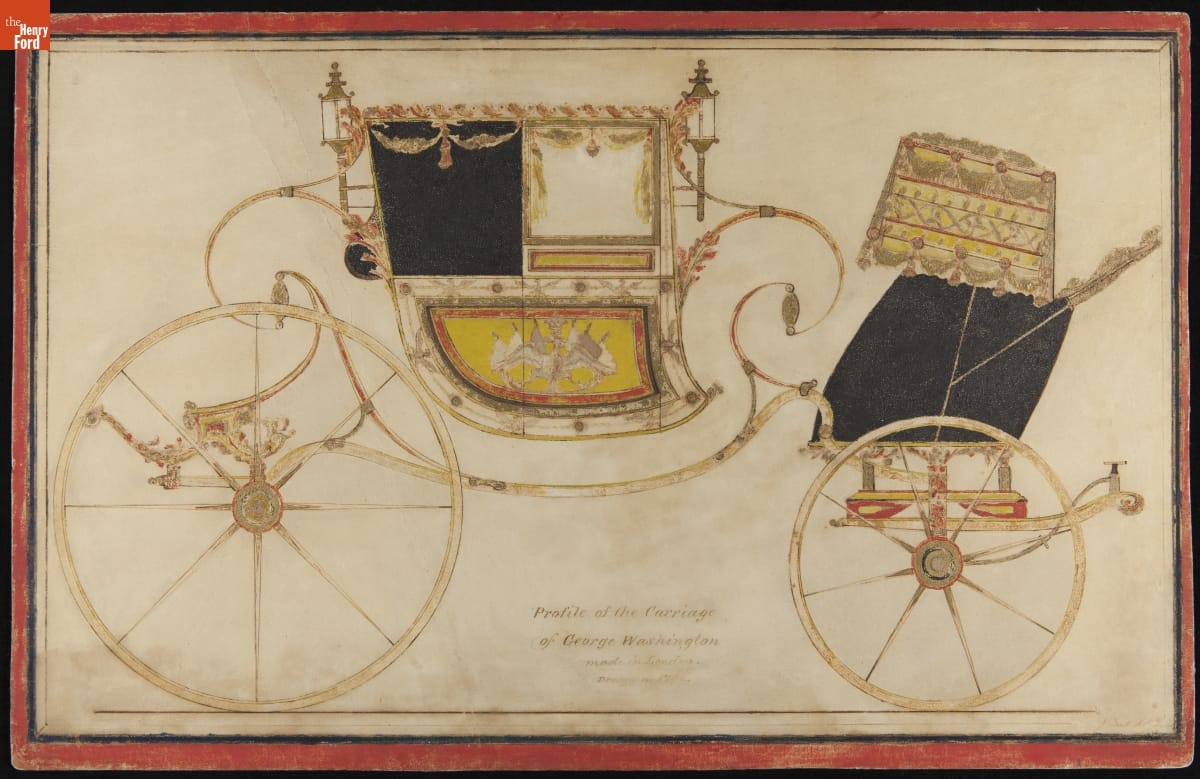
- "Profile of the Carriage of George Washington," 1792 - This elegant carriage, used by George Washington at one of his two presidential inaugurations, is quite different from the armored limousines used by the White House now. But, with its formal lines and stately appointments, the carriage appropriately reflects the power and the dignity of the American presidency -- something still required of presidential vehicles today.
- 1792
- Collections - Artifact
"Profile of the Carriage of George Washington," 1792
This elegant carriage, used by George Washington at one of his two presidential inaugurations, is quite different from the armored limousines used by the White House now. But, with its formal lines and stately appointments, the carriage appropriately reflects the power and the dignity of the American presidency -- something still required of presidential vehicles today.
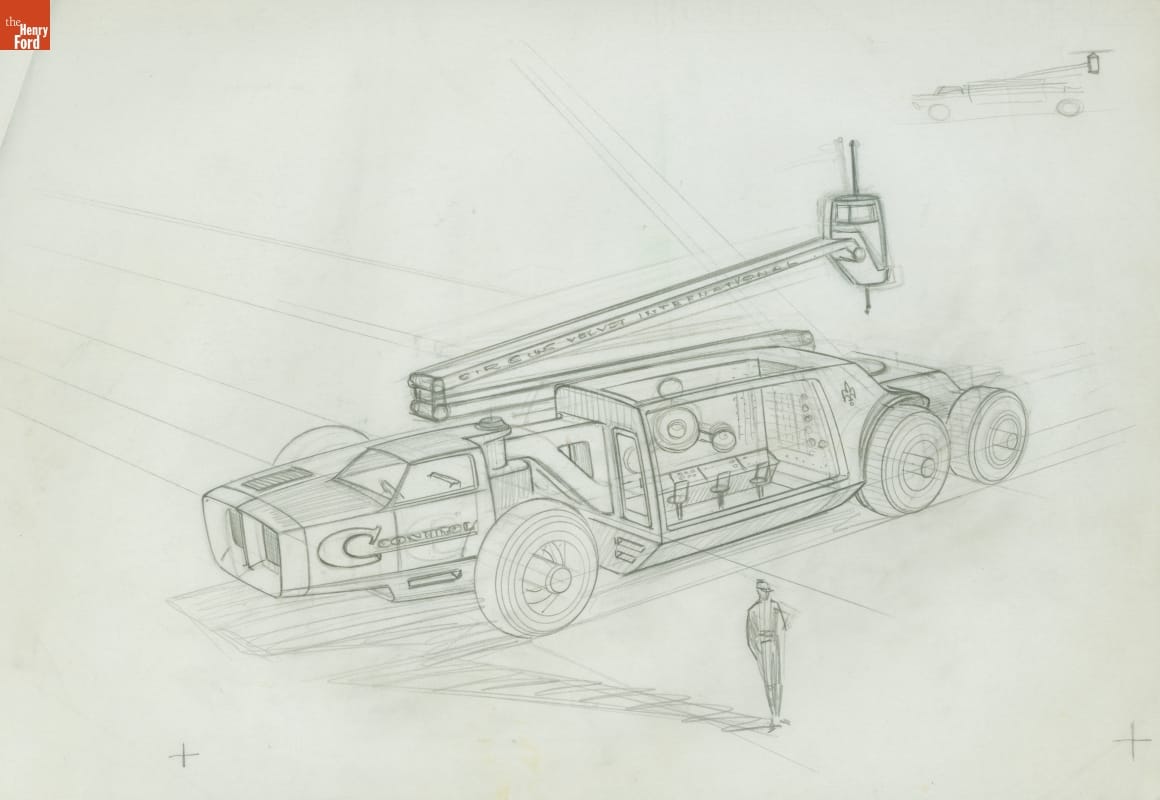
- Circus Performance Control Vehicle, 1967 - In 1966, automobile designer Virgil Exner was approached by a wealthy man with an unusual dream: to build a motorized circus with vehicles for transporting performers and constructing the big top. Exner was eager to begin the novel - though soon abandoned - project and created several concepts, including this control vehicle designed to erect the big top.
- 1967
- Collections - Artifact
Circus Performance Control Vehicle, 1967
In 1966, automobile designer Virgil Exner was approached by a wealthy man with an unusual dream: to build a motorized circus with vehicles for transporting performers and constructing the big top. Exner was eager to begin the novel - though soon abandoned - project and created several concepts, including this control vehicle designed to erect the big top.
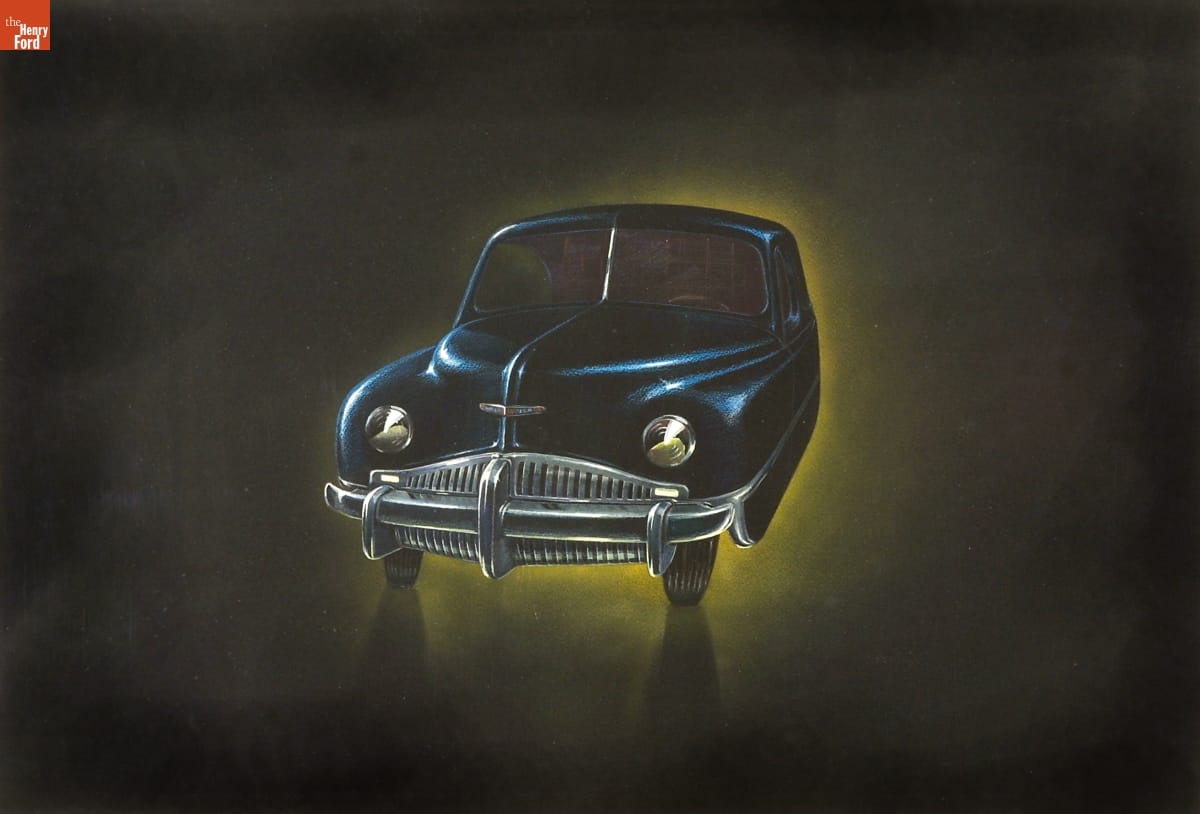
- Willys Automobile Concept, Front View, November 13, 1944 - A pioneer of industrial design, Walter Dorwin Teague is best remembered for his work for the Eastman Kodak Company and the 1933 Chicago and 1939 New York World's Fairs. At both fairs, he designed buildings for Ford Motor Company. Teague's studio produced this automobile concept drawing for a Ford rival: Willys-Overland of Toledo, Ohio.
- November 13, 1944
- Collections - Artifact
Willys Automobile Concept, Front View, November 13, 1944
A pioneer of industrial design, Walter Dorwin Teague is best remembered for his work for the Eastman Kodak Company and the 1933 Chicago and 1939 New York World's Fairs. At both fairs, he designed buildings for Ford Motor Company. Teague's studio produced this automobile concept drawing for a Ford rival: Willys-Overland of Toledo, Ohio.
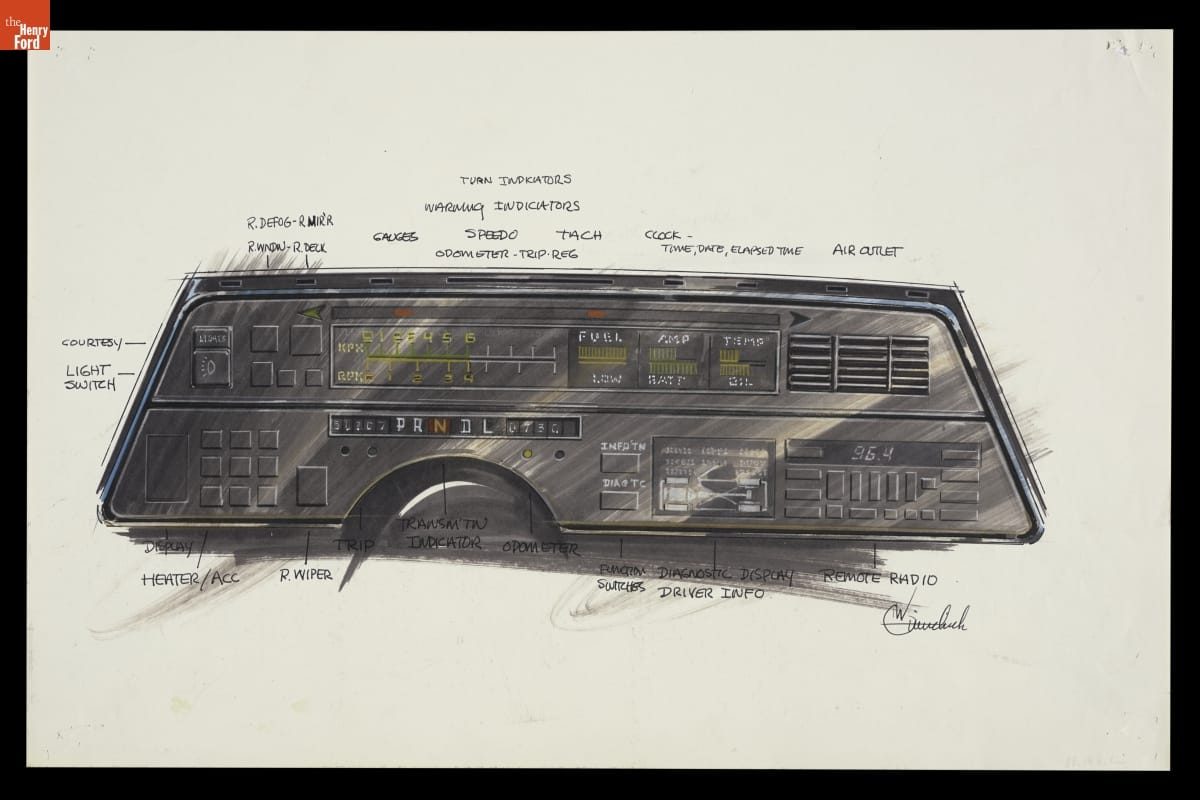
- Rendering of Automobile Dashboard Design Concept - Designer Walter K. Gierschick graduated from Pratt Institute in Brooklyn, New York. He worked for Sundberg-Ferar and Chrysler at various points, but Gierschick spent the bulk of his career at General Motors. He was Assistant Chief Designer for GM from 1961 to 1985. Gierschick retired from GM after 25 years of service to the company.
- 1961-1985
- Collections - Artifact
Rendering of Automobile Dashboard Design Concept
Designer Walter K. Gierschick graduated from Pratt Institute in Brooklyn, New York. He worked for Sundberg-Ferar and Chrysler at various points, but Gierschick spent the bulk of his career at General Motors. He was Assistant Chief Designer for GM from 1961 to 1985. Gierschick retired from GM after 25 years of service to the company.
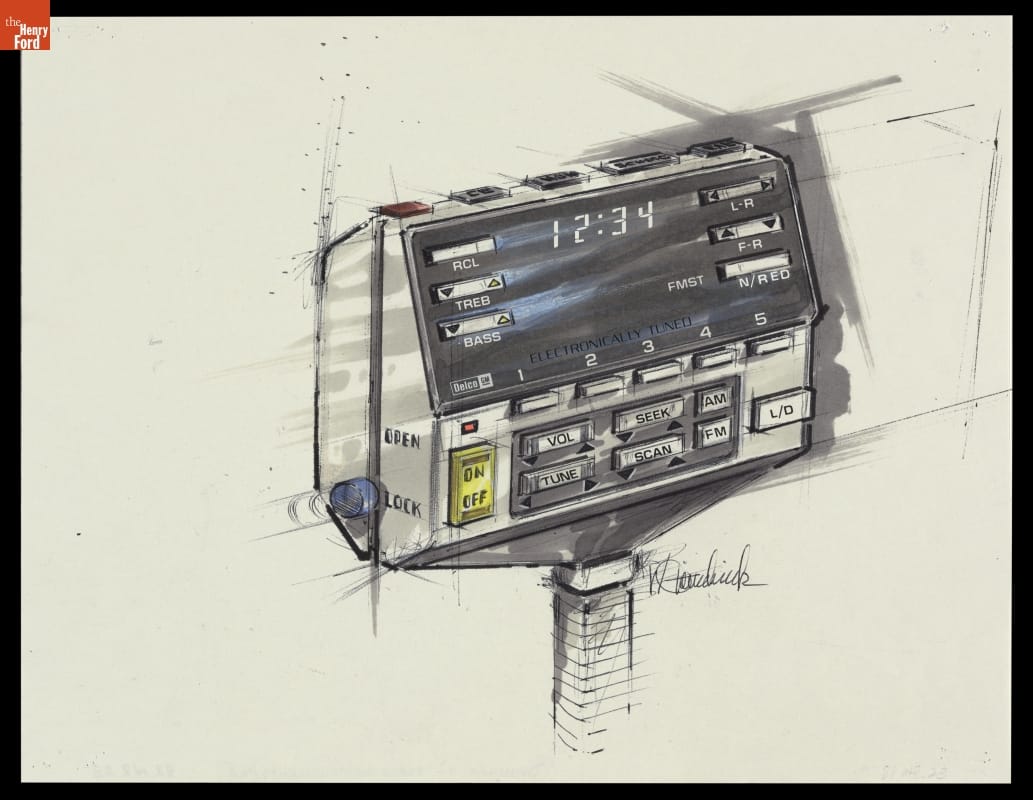
- Rendering of Automobile Radio Design Concept - Designer Walter K. Gierschick graduated from Pratt Institute in Brooklyn, New York. He worked for Sundberg-Ferar and Chrysler at various points, but Gierschick spent the bulk of his career at General Motors. He was Assistant Chief Designer for GM from 1961 to 1985. Gierschick retired from GM after 25 years of service to the company.
- 1961-1985
- Collections - Artifact
Rendering of Automobile Radio Design Concept
Designer Walter K. Gierschick graduated from Pratt Institute in Brooklyn, New York. He worked for Sundberg-Ferar and Chrysler at various points, but Gierschick spent the bulk of his career at General Motors. He was Assistant Chief Designer for GM from 1961 to 1985. Gierschick retired from GM after 25 years of service to the company.
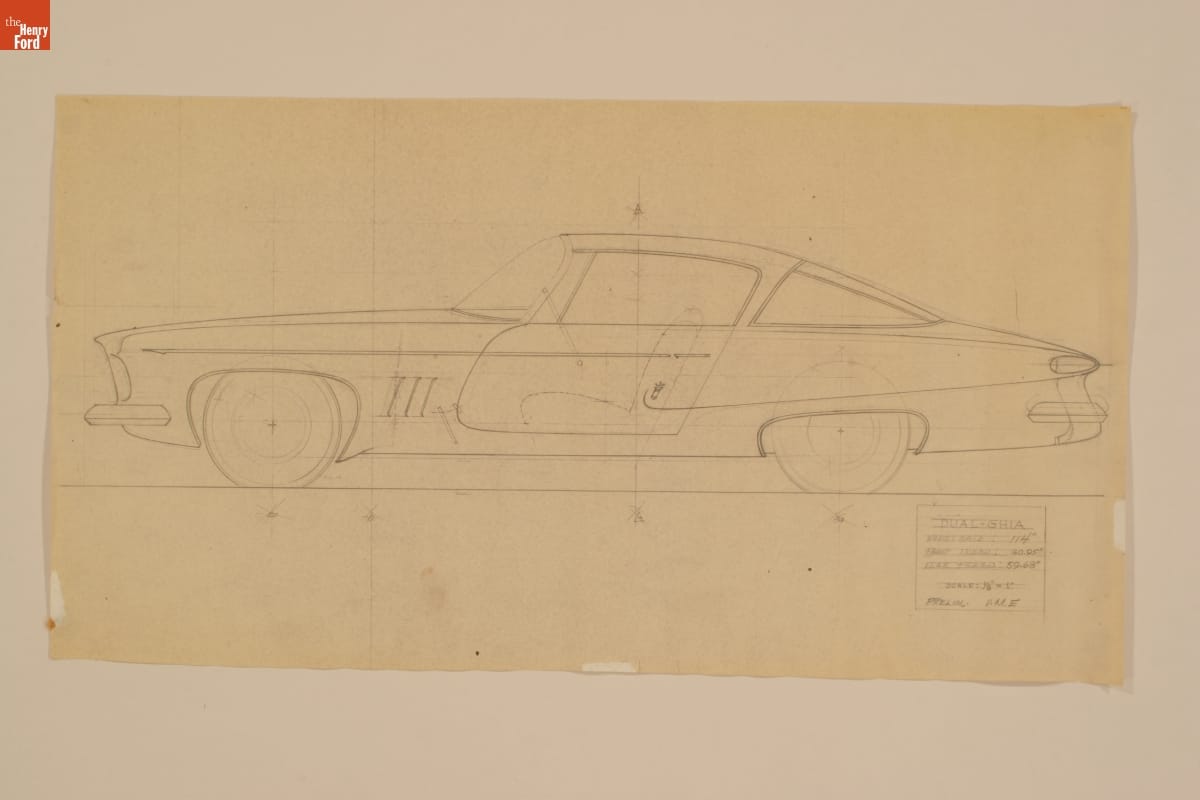
- Design Sketch, Dual-Ghia, circa 1956 - The Dual-Ghia had its origins in the Dodge Firearrow concept cars of the mid-1950s. When Dodge chose not to put Firearrows into production, businessman Gene Casaroll bought the rights and contracted Ghia of Italy to build bodies. Priced at more than $7,500, the Dual-Ghia was aimed at wealthy customers. Casaroll built fewer than 120 cars before production ended in 1958.
- circa 1956
- Collections - Artifact
Design Sketch, Dual-Ghia, circa 1956
The Dual-Ghia had its origins in the Dodge Firearrow concept cars of the mid-1950s. When Dodge chose not to put Firearrows into production, businessman Gene Casaroll bought the rights and contracted Ghia of Italy to build bodies. Priced at more than $7,500, the Dual-Ghia was aimed at wealthy customers. Casaroll built fewer than 120 cars before production ended in 1958.
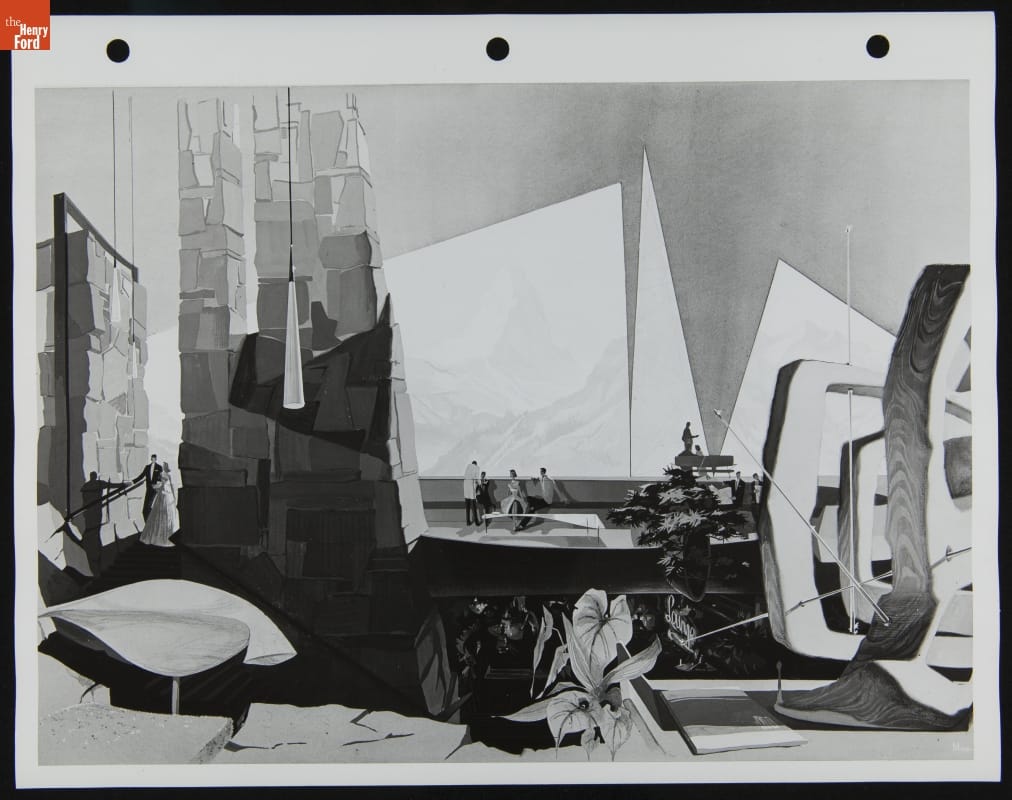
- Artistic Rendering of Lobby and Lounge, 1959 - Syd Mead combined his interests in automobiles and science fiction into an influential career in industrial design. He graduated from the Art Center College of Design in 1959 and spent 20 months in Ford Motor Company's advanced studio. He later designed the company's pavilion at the 1964 New York World's Fair. Mead's futuristic work appeared in films like <em>Blade Runner</em>.
- 1959
- Collections - Artifact
Artistic Rendering of Lobby and Lounge, 1959
Syd Mead combined his interests in automobiles and science fiction into an influential career in industrial design. He graduated from the Art Center College of Design in 1959 and spent 20 months in Ford Motor Company's advanced studio. He later designed the company's pavilion at the 1964 New York World's Fair. Mead's futuristic work appeared in films like Blade Runner.
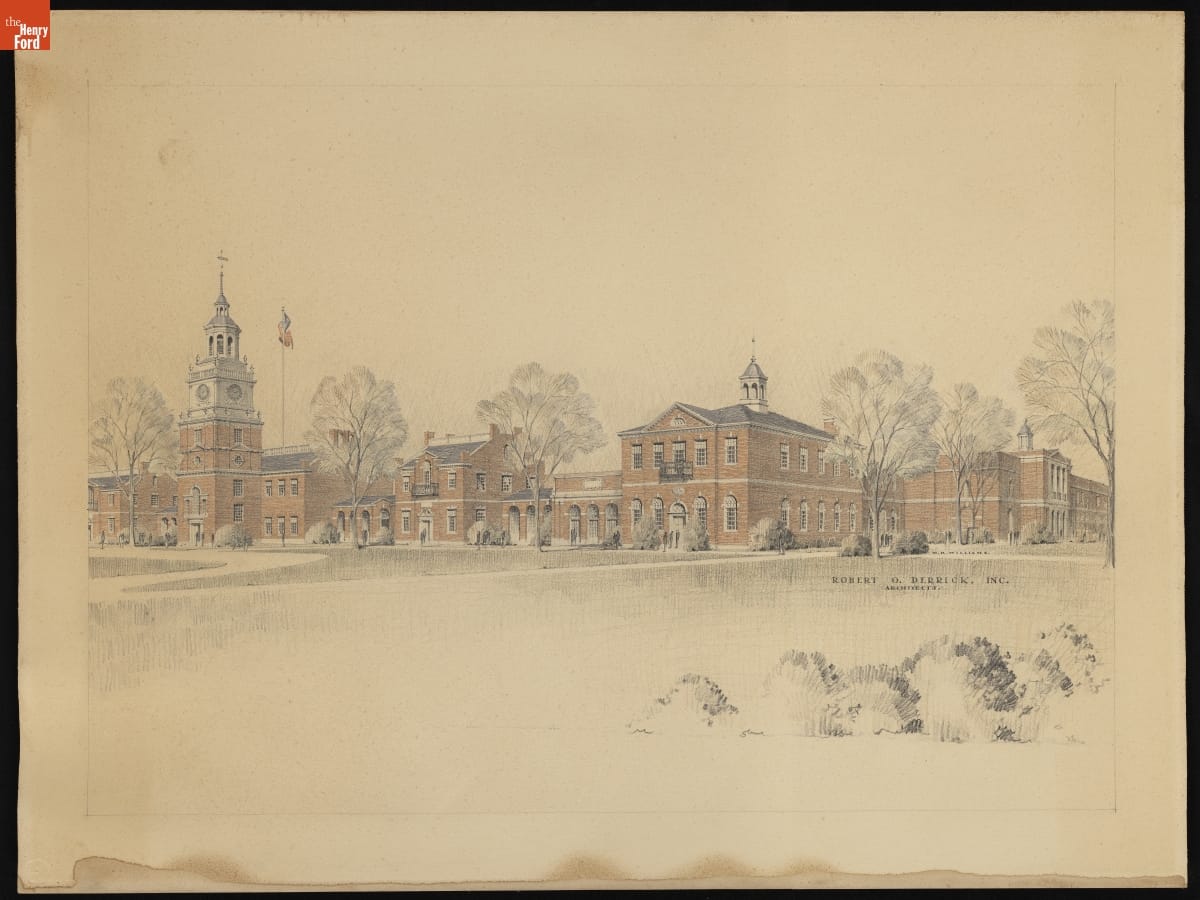
- Architectural Concept Drawing of Henry Ford Museum, Southeast Facade, circa 1927 - This is one of three color perspective renderings of the proposed Museum building presented to Henry Ford by architect Robert O. Derrick. This worm's eye view shows the front façade from the southeast perspective. The focal point is a full-scale replica of Independence Hall in Philadelphia, which appears on the left side. Although altered, much of this design was completed.
- circa 1927
- Collections - Artifact
Architectural Concept Drawing of Henry Ford Museum, Southeast Facade, circa 1927
This is one of three color perspective renderings of the proposed Museum building presented to Henry Ford by architect Robert O. Derrick. This worm's eye view shows the front façade from the southeast perspective. The focal point is a full-scale replica of Independence Hall in Philadelphia, which appears on the left side. Although altered, much of this design was completed.
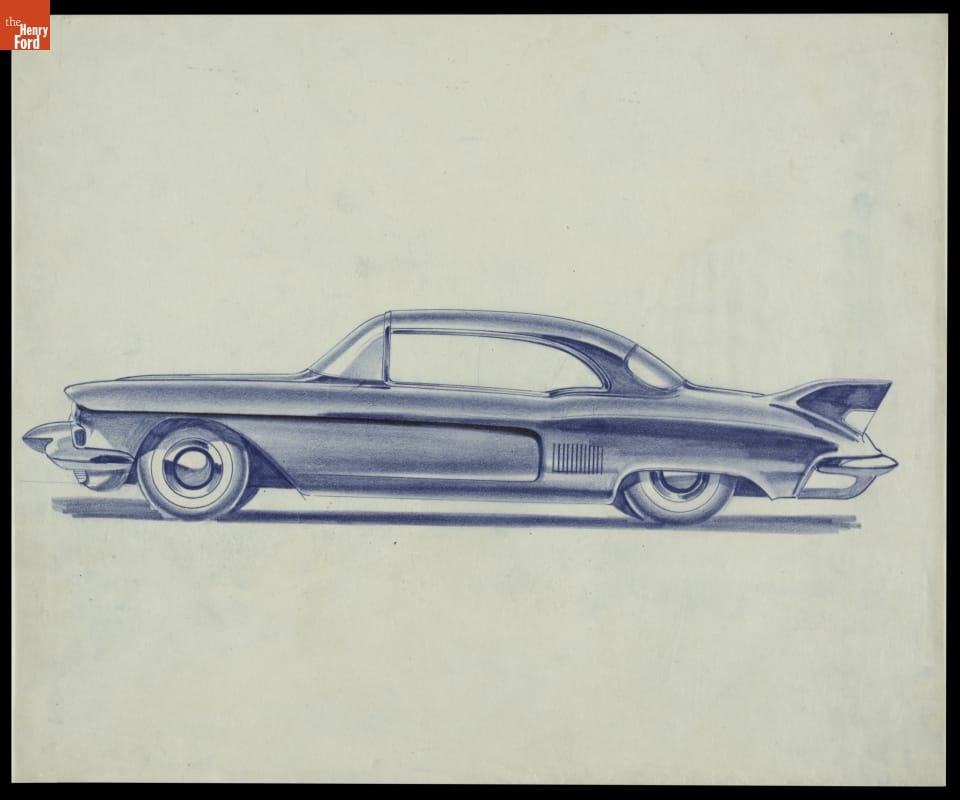
- Cadillac Design Drawing by Robert J. Scheelk, 1953-1956 - Designer Bob Scheelk played a key role in establishing Cadillac's look in the late 1950s. His credits include contributions to the exterior styling of the company's top-of-the-line 1957 Eldorado Brougham, and interior design work on Cadillac's decade-defining 1959 Eldorados. These drawings, made by Scheelk, show several of his styling cues that were adopted -- and some that weren't.
- 1953-1956
- Collections - Artifact
Cadillac Design Drawing by Robert J. Scheelk, 1953-1956
Designer Bob Scheelk played a key role in establishing Cadillac's look in the late 1950s. His credits include contributions to the exterior styling of the company's top-of-the-line 1957 Eldorado Brougham, and interior design work on Cadillac's decade-defining 1959 Eldorados. These drawings, made by Scheelk, show several of his styling cues that were adopted -- and some that weren't.
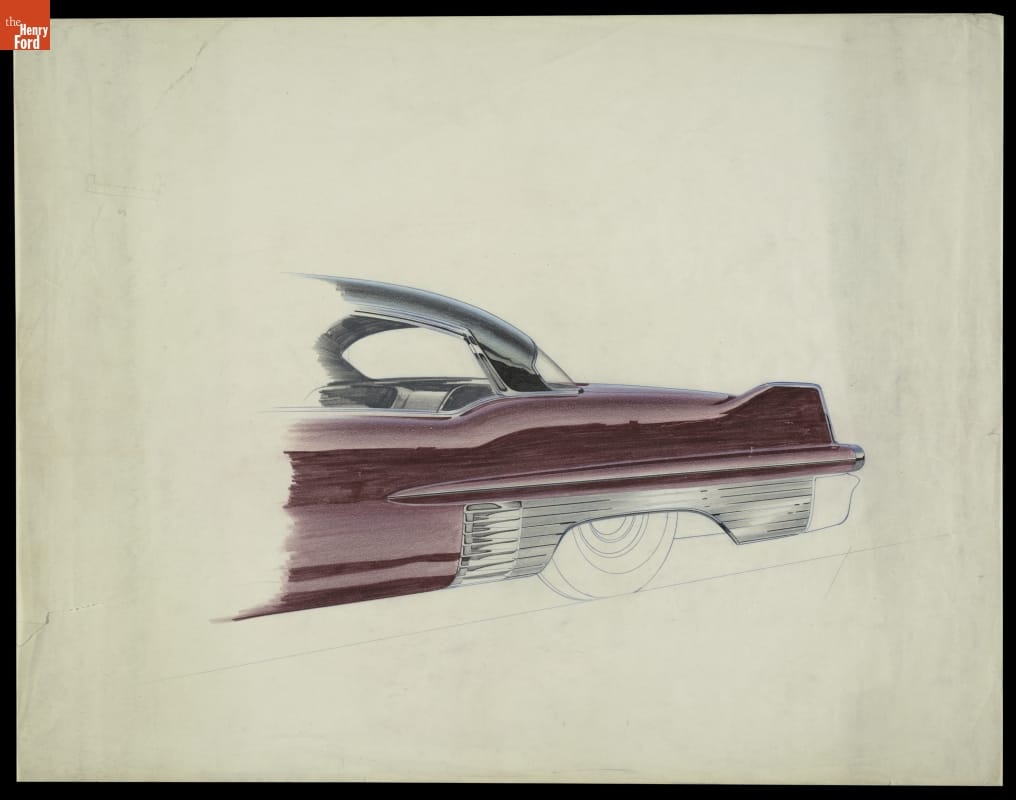
- Cadillac Design Drawing by Robert J. Scheelk, 1953-1956 - Designer Bob Scheelk played a key role in establishing Cadillac's look in the late 1950s. His credits include contributions to the exterior styling of the company's top-of-the-line 1957 Eldorado Brougham, and interior design work on Cadillac's decade-defining 1959 Eldorados. These drawings, made by Scheelk, show several of his styling cues that were adopted -- and some that weren't.
- 1953-1956
- Collections - Artifact
Cadillac Design Drawing by Robert J. Scheelk, 1953-1956
Designer Bob Scheelk played a key role in establishing Cadillac's look in the late 1950s. His credits include contributions to the exterior styling of the company's top-of-the-line 1957 Eldorado Brougham, and interior design work on Cadillac's decade-defining 1959 Eldorados. These drawings, made by Scheelk, show several of his styling cues that were adopted -- and some that weren't.