
Search
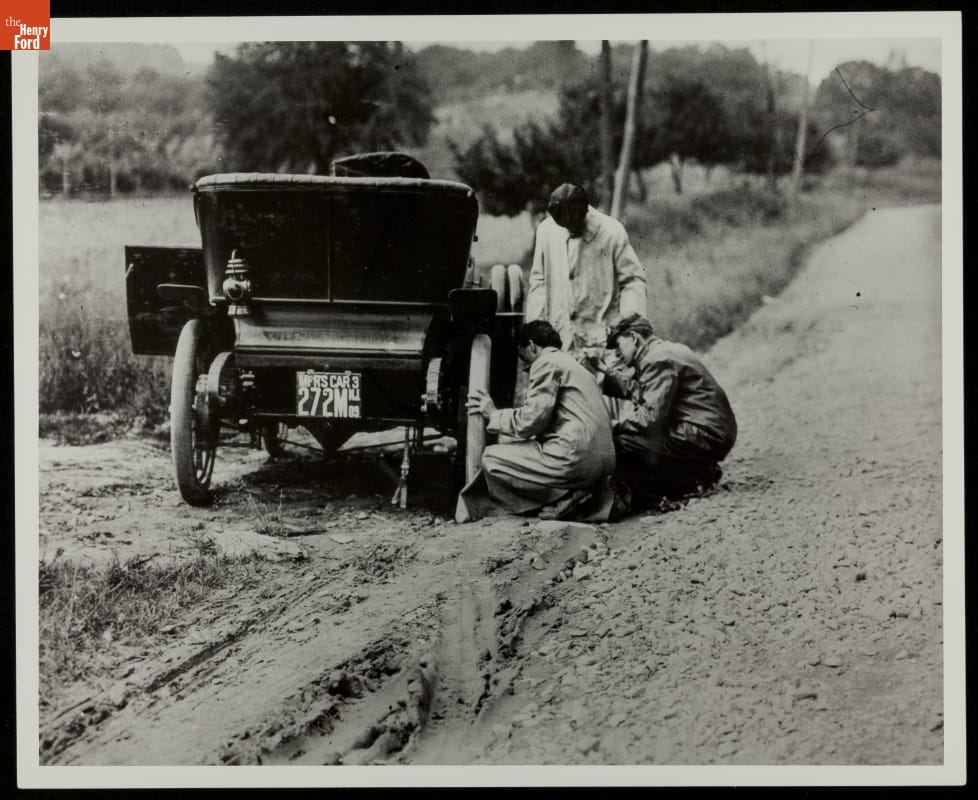
- Three Men Examining Tire on Ford Model T Car, 1909 - Early automobiles required a lot of maintenance. Drivers like these, dressed for motoring and examining their Model T by the side of the road, had to be ready to perform mobile repairs.
- 1909
- Collections - Artifact
Three Men Examining Tire on Ford Model T Car, 1909
Early automobiles required a lot of maintenance. Drivers like these, dressed for motoring and examining their Model T by the side of the road, had to be ready to perform mobile repairs.
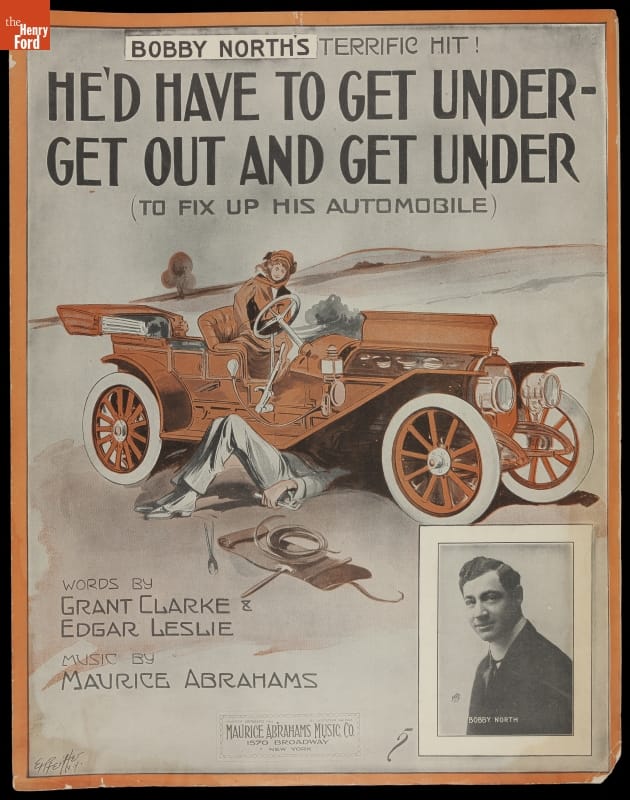
- Music Sheet, "He'd Have to Get Under--Get Out and Get Under, to Fix up His Automobile," 1913 - Early automobiles were often unreliable and needed frequent maintenance. Some motorists were able to make roadside repairs--preparing themselves for inevitable breakdowns by carrying tools and supplies. In this song a faulty engine interrupts a young couple's romantic intentions.
- 1913
- Collections - Artifact
Music Sheet, "He'd Have to Get Under--Get Out and Get Under, to Fix up His Automobile," 1913
Early automobiles were often unreliable and needed frequent maintenance. Some motorists were able to make roadside repairs--preparing themselves for inevitable breakdowns by carrying tools and supplies. In this song a faulty engine interrupts a young couple's romantic intentions.
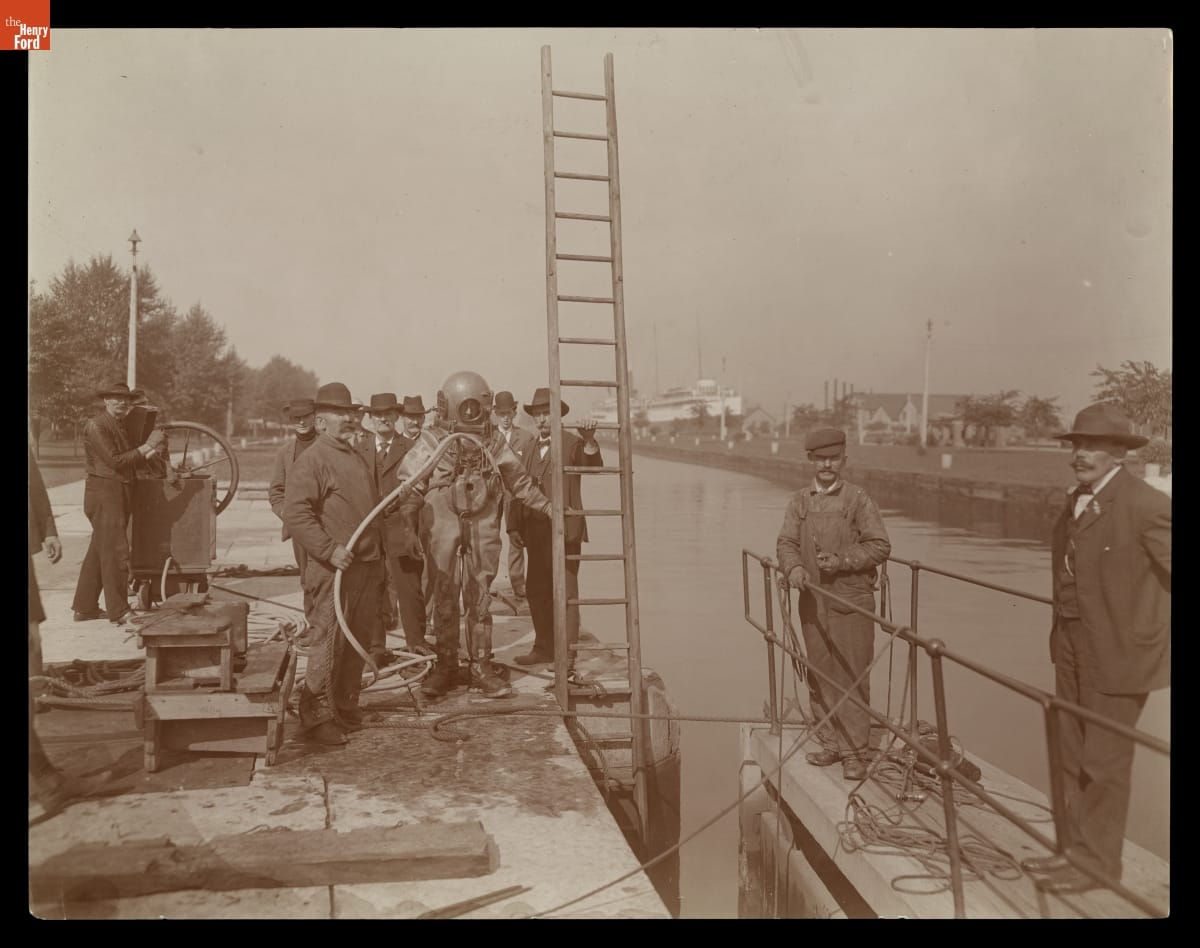
- Diver Repairing a Lock Gate at Sault Sainte Marie, Michigan, 1908 - The first lock at Sault Ste. Marie, Michigan, opened in 1855. It allowed boats to navigate the 21-foot climb from Lake Huron to Lake Superior along the St. Marys River. Over time, additional locks were built on the American and Canadian sides of the river. The Soo Locks became one of the world's busiest waterways -- despite being closed in winter.
- 1908
- Collections - Artifact
Diver Repairing a Lock Gate at Sault Sainte Marie, Michigan, 1908
The first lock at Sault Ste. Marie, Michigan, opened in 1855. It allowed boats to navigate the 21-foot climb from Lake Huron to Lake Superior along the St. Marys River. Over time, additional locks were built on the American and Canadian sides of the river. The Soo Locks became one of the world's busiest waterways -- despite being closed in winter.
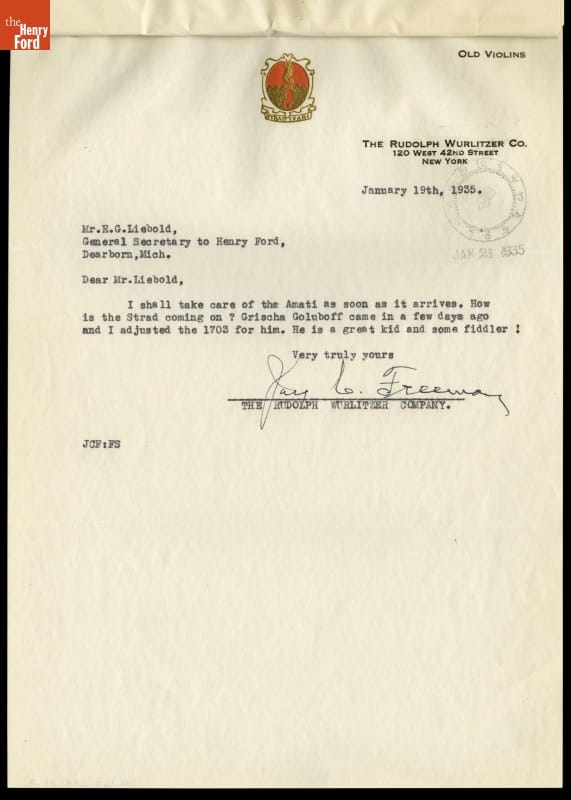
- Letter from J. C. Freeman to E. G. Liebold Concerning Repair of Henry Ford's Amati Violin, January 19, 1935 - Rudolph Wurlitzer, a violin dealer and musical instrument manufacturer, had helped Ford acquire his Italian-made classical violins during the 1920s and kept them in good repair for the industrialist. Jay C. Freeman was the Wurlitzer Company's violin expert who handled the repairs. In this letter, Freeman mentions Grisha Goluboff, a young violinist to whom Ford had lent his 1703 Stradivari violin.
- January 19, 1935
- Collections - Artifact
Letter from J. C. Freeman to E. G. Liebold Concerning Repair of Henry Ford's Amati Violin, January 19, 1935
Rudolph Wurlitzer, a violin dealer and musical instrument manufacturer, had helped Ford acquire his Italian-made classical violins during the 1920s and kept them in good repair for the industrialist. Jay C. Freeman was the Wurlitzer Company's violin expert who handled the repairs. In this letter, Freeman mentions Grisha Goluboff, a young violinist to whom Ford had lent his 1703 Stradivari violin.
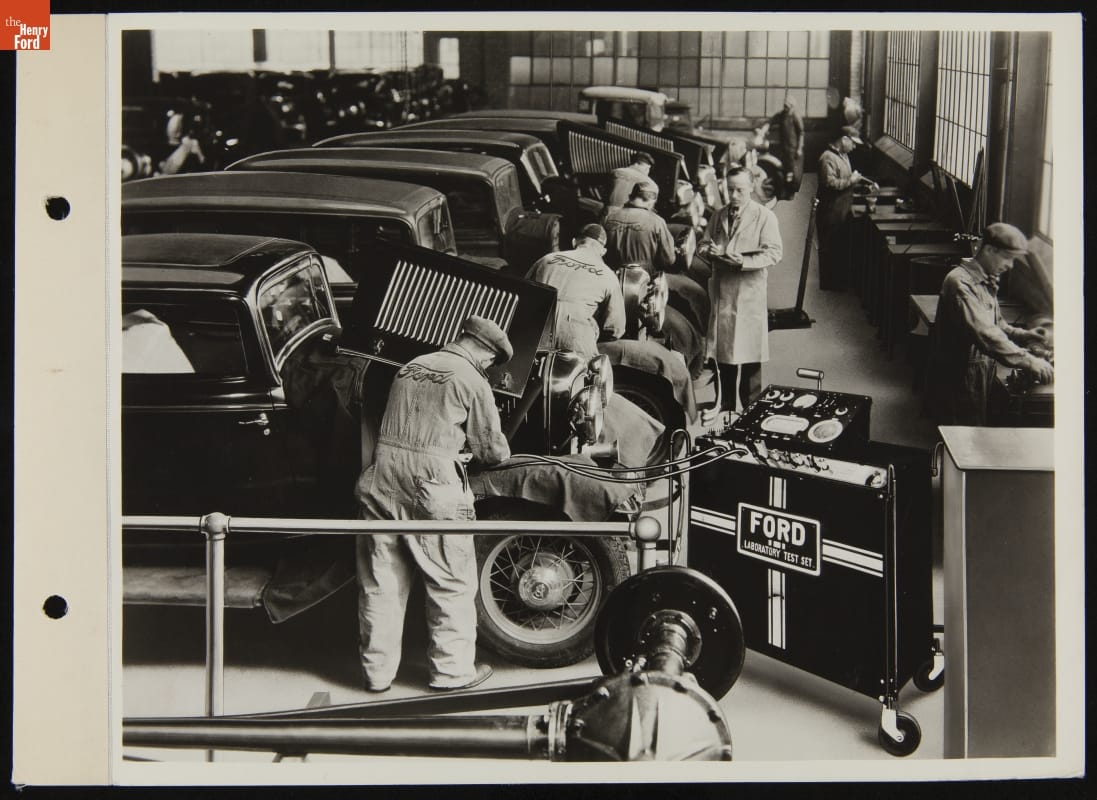
- Attendants Using Laboratory Test Sets at Southwestern Motor Sales, Lincoln Park, Michigan, September 1934 - In the mid-1930s, Ford Motor Company produced the affordable Ford Laboratory Test Set. Automobile mechanics rolled this portable diagnostic equipment to the vehicle, hooked up the unit, and checked the condition of the vehicle's engine or electrical performance. The unit detected problems quickly and eliminated guesswork -- saving time and money for both the customer and dealership.
- September 24, 1934
- Collections - Artifact
Attendants Using Laboratory Test Sets at Southwestern Motor Sales, Lincoln Park, Michigan, September 1934
In the mid-1930s, Ford Motor Company produced the affordable Ford Laboratory Test Set. Automobile mechanics rolled this portable diagnostic equipment to the vehicle, hooked up the unit, and checked the condition of the vehicle's engine or electrical performance. The unit detected problems quickly and eliminated guesswork -- saving time and money for both the customer and dealership.
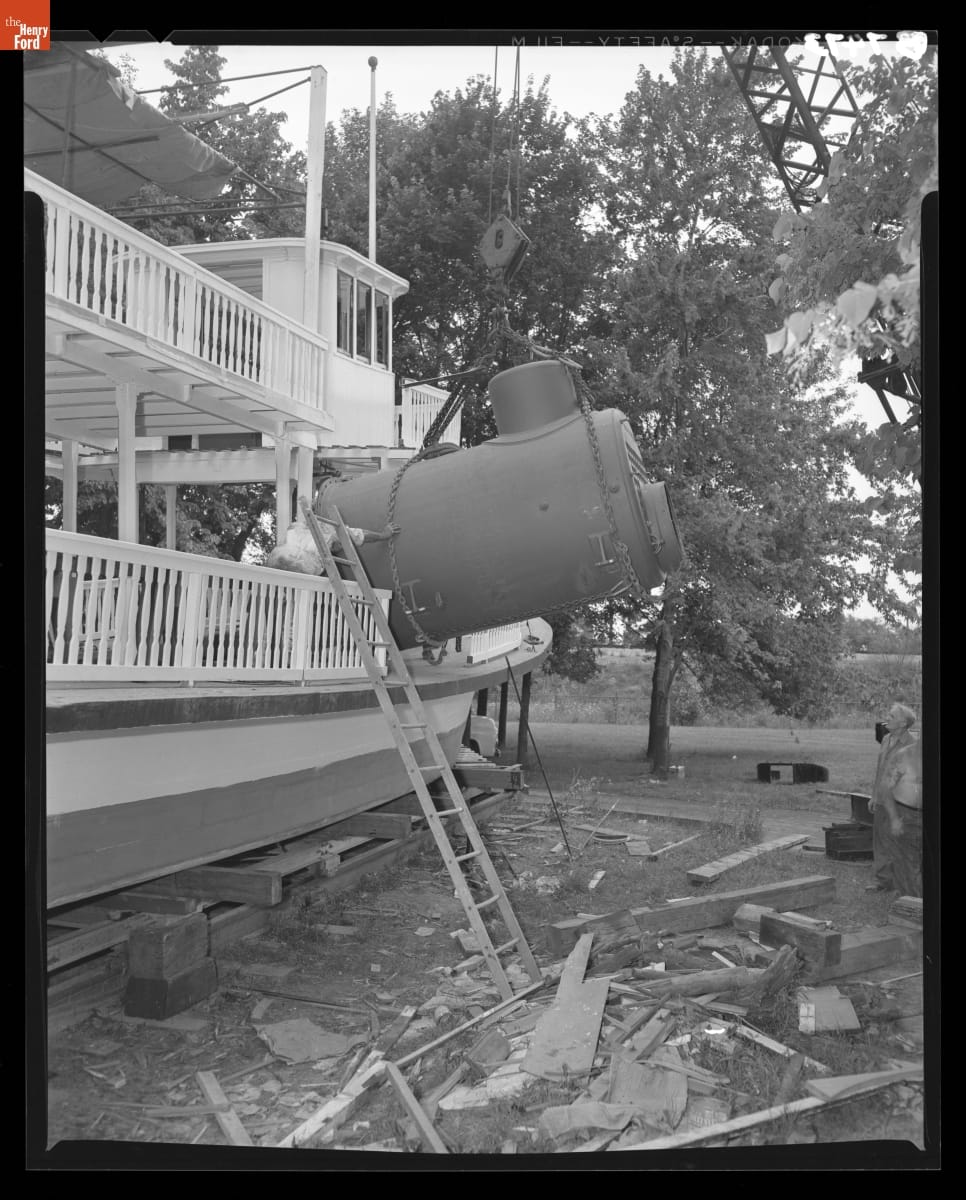
- Installing New Boiler in "Suwanee" Steamboat, July 1954 - The <em>Suwanee</em>, a replica of a circa 1880 flat-bottomed steamboat, was constructed in Greenfield Village in 1929. Careful maintenance of the boat and its steam engine required that parts be inspected, repaired, and sometimes even replaced on a regular basis. <em>Suwanee</em> underwent thorough rebuilds in 1935, 1969, and 1989.
- July 28, 1954
- Collections - Artifact
Installing New Boiler in "Suwanee" Steamboat, July 1954
The Suwanee, a replica of a circa 1880 flat-bottomed steamboat, was constructed in Greenfield Village in 1929. Careful maintenance of the boat and its steam engine required that parts be inspected, repaired, and sometimes even replaced on a regular basis. Suwanee underwent thorough rebuilds in 1935, 1969, and 1989.
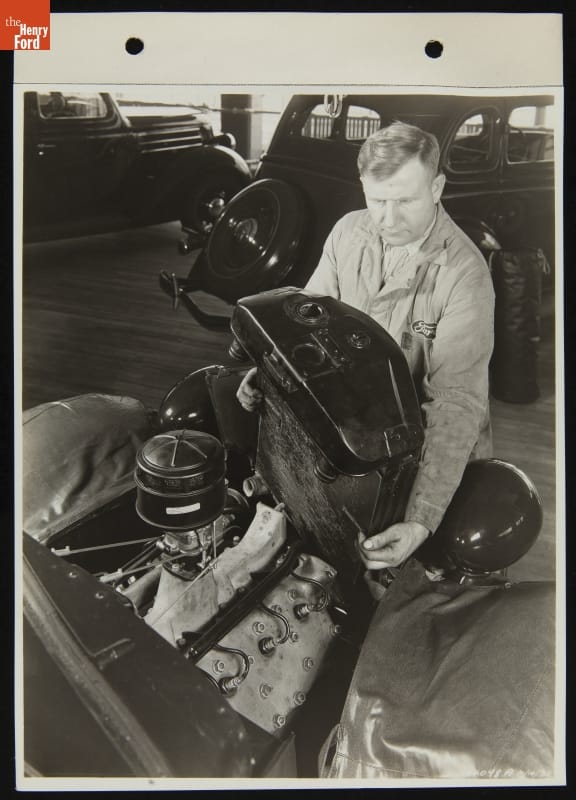
- Mechanic Working on Car at Service Garage, October 1935 -
- October 10, 1935
- Collections - Artifact
Mechanic Working on Car at Service Garage, October 1935
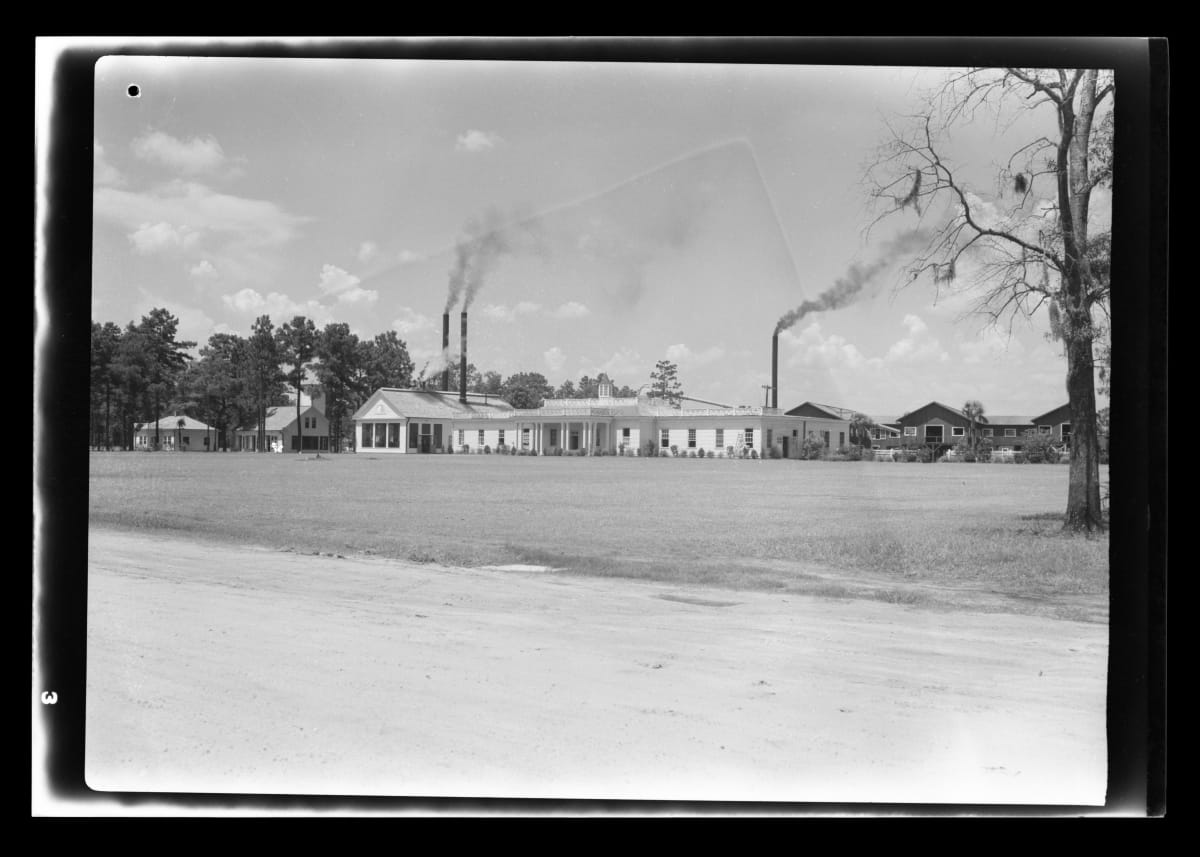
- Power House, Farm Repair Shop, and Sawmill, Richmond Hill, Georgia, July 1940 - Henry Ford purchased vast amounts of land around present-day Richmond Hill, Georgia, beginning in the 1920s. Here, Ford dabbled in agricultural experimentation and in the late 1930s he built a winter residence. Ford also built a number of buildings to support his farming operations and the surrounding community. The sawmill supplied lumber from many of the buildings erected around Richmond Hill.
- July 31, 1940
- Collections - Artifact
Power House, Farm Repair Shop, and Sawmill, Richmond Hill, Georgia, July 1940
Henry Ford purchased vast amounts of land around present-day Richmond Hill, Georgia, beginning in the 1920s. Here, Ford dabbled in agricultural experimentation and in the late 1930s he built a winter residence. Ford also built a number of buildings to support his farming operations and the surrounding community. The sawmill supplied lumber from many of the buildings erected around Richmond Hill.
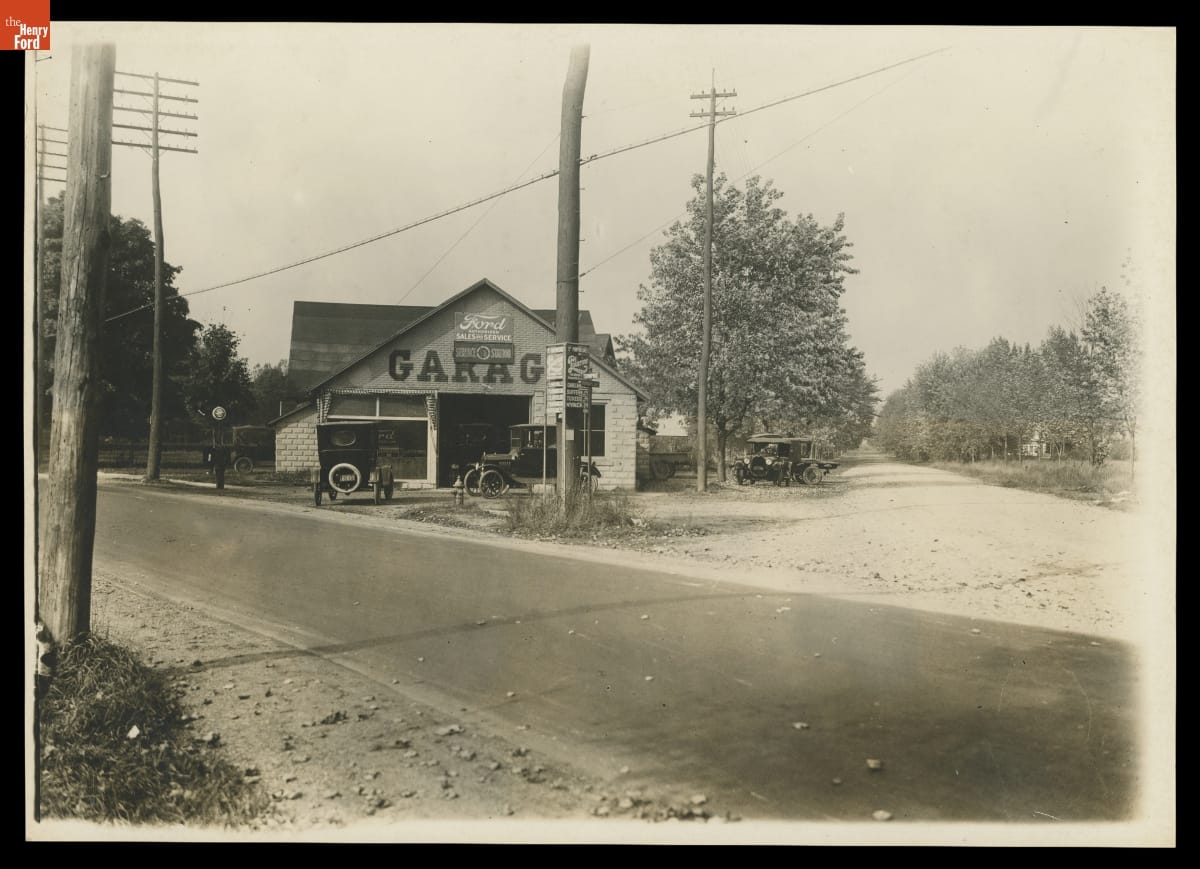
- Harry S. Gould Company Ford Dealership, Pompton Lakes, New Jersey, circa 1920 -
- August 02, 1920
- Collections - Artifact
Harry S. Gould Company Ford Dealership, Pompton Lakes, New Jersey, circa 1920
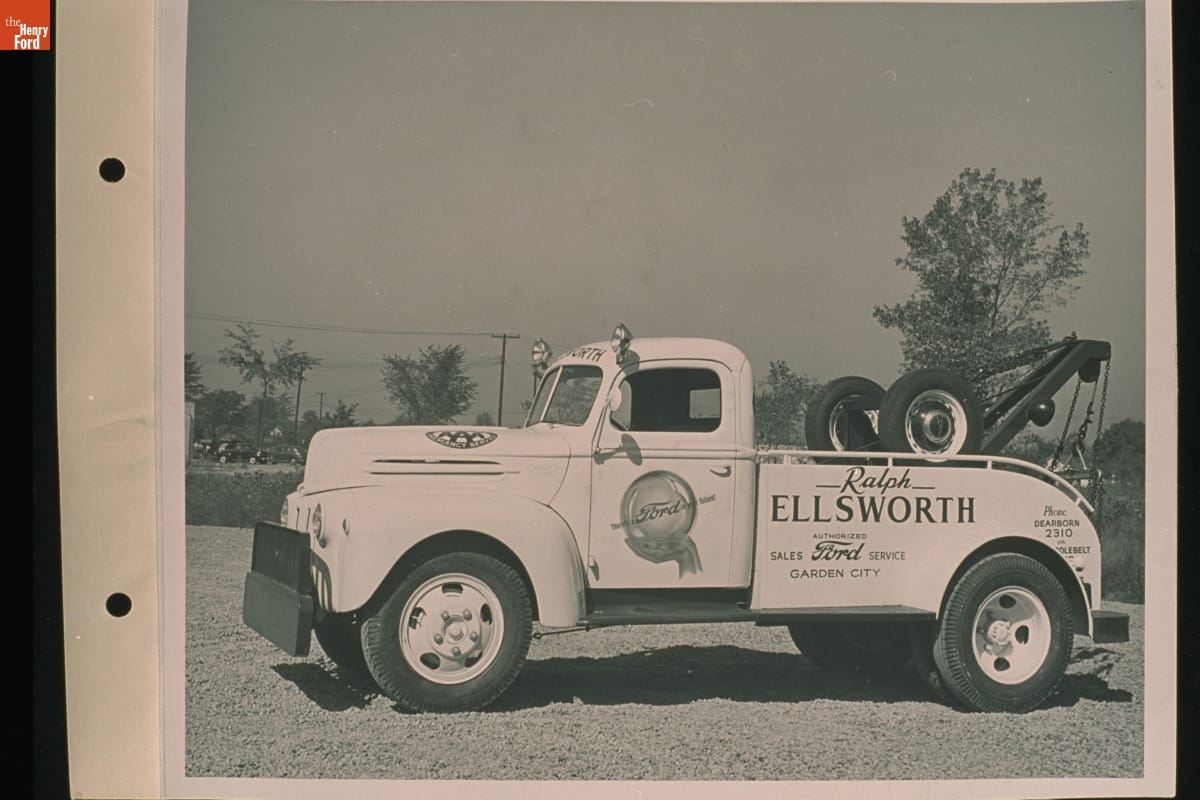
- 1947 Ford Repair Truck at the Ralph Ellsworth Dealership, Garden City, Michigan, October 1946 - In 1915, the Automobile Club of Missouri offered the first emergency road service for its members. This idea caught on quickly, and it soon became a service offered by all AAA affiliates to its members. This 1947 Ford tow truck proudly sports an American Automobile Association Emergency Service logo on its hood.
- October 04, 1946
- Collections - Artifact
1947 Ford Repair Truck at the Ralph Ellsworth Dealership, Garden City, Michigan, October 1946
In 1915, the Automobile Club of Missouri offered the first emergency road service for its members. This idea caught on quickly, and it soon became a service offered by all AAA affiliates to its members. This 1947 Ford tow truck proudly sports an American Automobile Association Emergency Service logo on its hood.