
Search
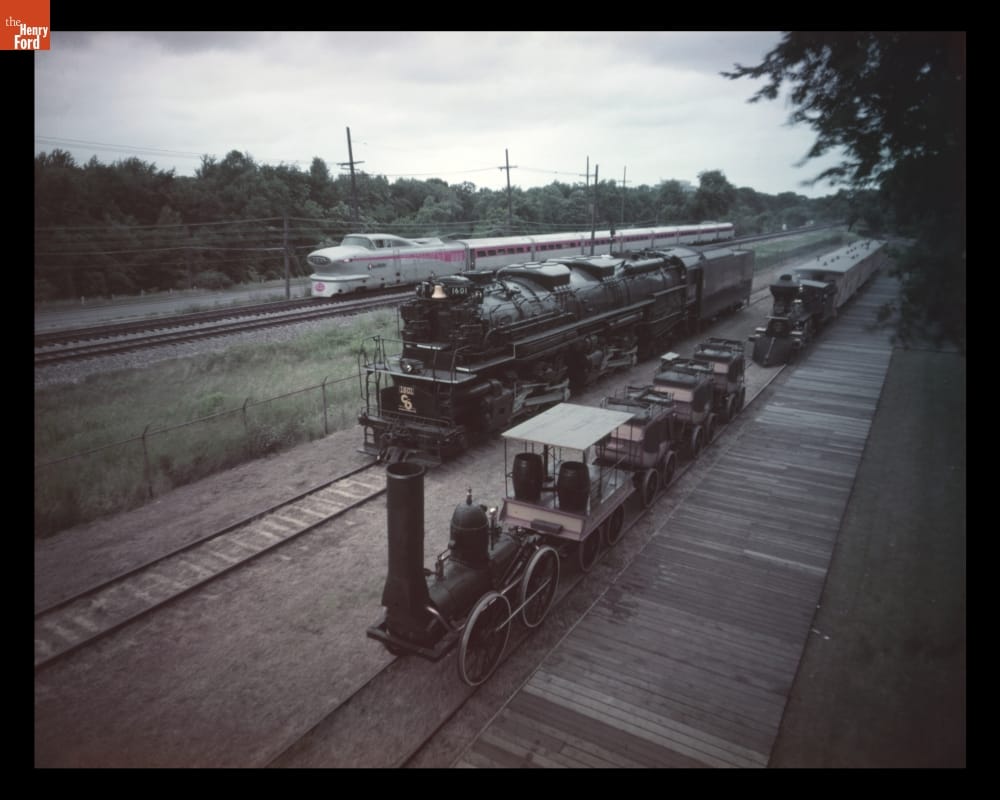
- "Allegheny," "DeWitt Clinton," and "Sam Hill" Locomotives alongside New York Central Diesel Aerotrain, circa 1956 - Three historic locomotives from The Henry Ford -- the <EM>DeWitt Clinton</EM> (replica of the 1831 original), <EM>Sam Hill</EM> (1858) and Allegheny (1941) -- pose alongside the Aerotrain in 1956. Railroads hoped that the streamlined Aerotrain, designed by General Motors, might lure travelers back onto trains. But its lightweight coaches gave a rough ride and Aerotrain failed to catch on with passengers.
- circa 1956
- Collections - Artifact
"Allegheny," "DeWitt Clinton," and "Sam Hill" Locomotives alongside New York Central Diesel Aerotrain, circa 1956
Three historic locomotives from The Henry Ford -- the DeWitt Clinton (replica of the 1831 original), Sam Hill (1858) and Allegheny (1941) -- pose alongside the Aerotrain in 1956. Railroads hoped that the streamlined Aerotrain, designed by General Motors, might lure travelers back onto trains. But its lightweight coaches gave a rough ride and Aerotrain failed to catch on with passengers.
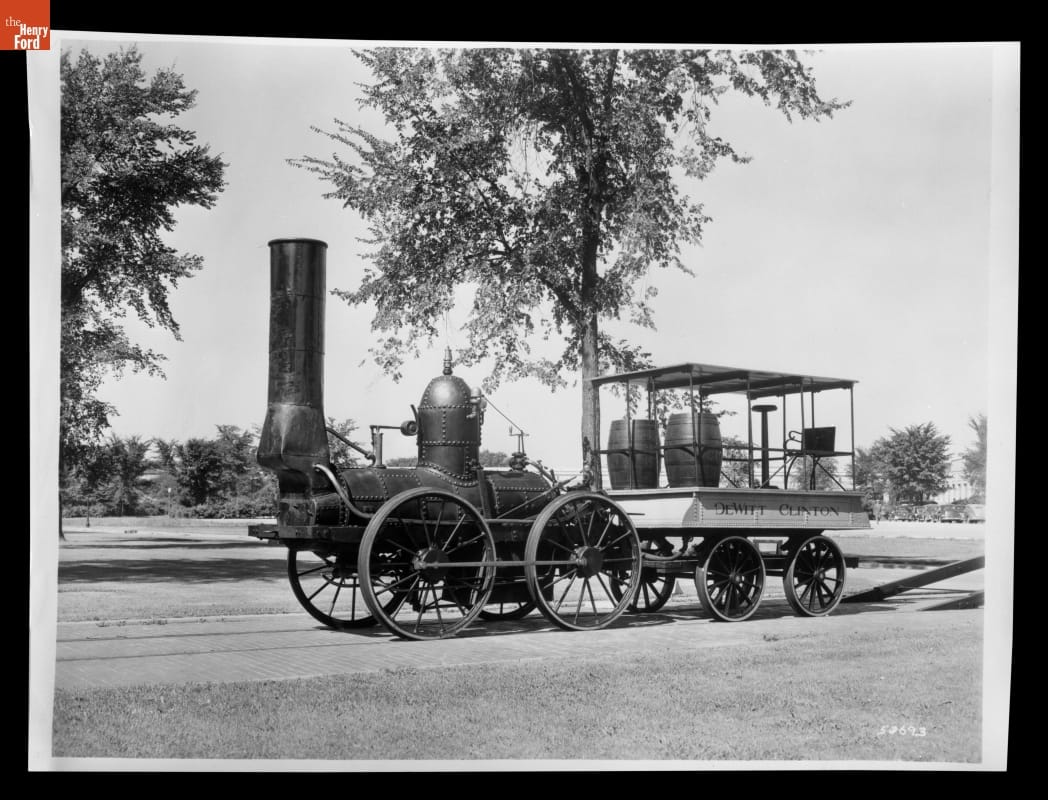
- Replica of 1831 "DeWitt Clinton" Steam Locomotive in Greenfield Village, 1941 - This replica of the <em>DeWitt Clinton</em> steam locomotive was built by the New York Central Railroad for the 1893 World's Columbian Exposition in Chicago. The original locomotive was built in 1831 and operated on the Mohawk & Hudson Railroad, an NYC predecessor.
- July 01, 1941
- Collections - Artifact
Replica of 1831 "DeWitt Clinton" Steam Locomotive in Greenfield Village, 1941
This replica of the DeWitt Clinton steam locomotive was built by the New York Central Railroad for the 1893 World's Columbian Exposition in Chicago. The original locomotive was built in 1831 and operated on the Mohawk & Hudson Railroad, an NYC predecessor.
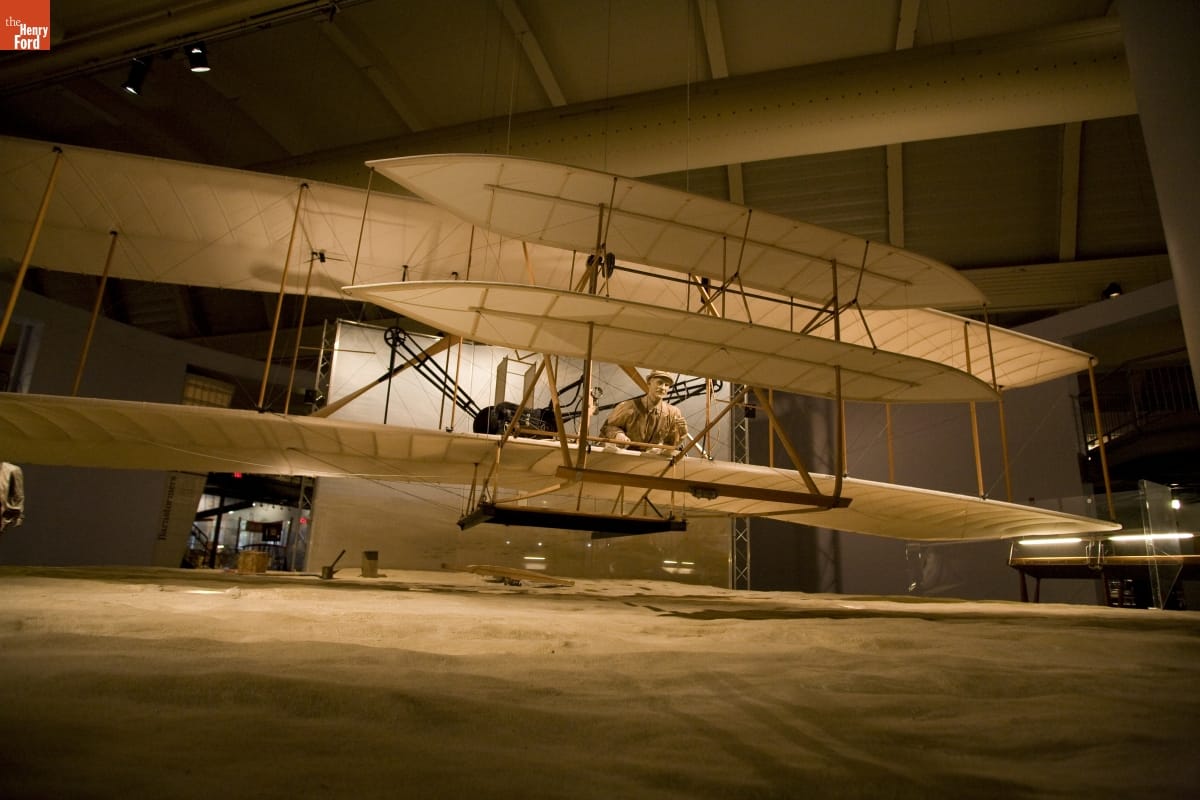
- Replica of the 1903 Wright Flyer - This copy of the 1903 Wright Flyer faithfully replicates the original aircraft. On December 17, 2003, the replica attempted to duplicate the Wright brothers' first flight at Kill Devil Hills, North Carolina, exactly one hundred years after that historic feat. The attempt was foiled by bad weather, though the replica flew successfully in earlier tests.
- 1903
- Collections - Artifact
Replica of the 1903 Wright Flyer
This copy of the 1903 Wright Flyer faithfully replicates the original aircraft. On December 17, 2003, the replica attempted to duplicate the Wright brothers' first flight at Kill Devil Hills, North Carolina, exactly one hundred years after that historic feat. The attempt was foiled by bad weather, though the replica flew successfully in earlier tests.
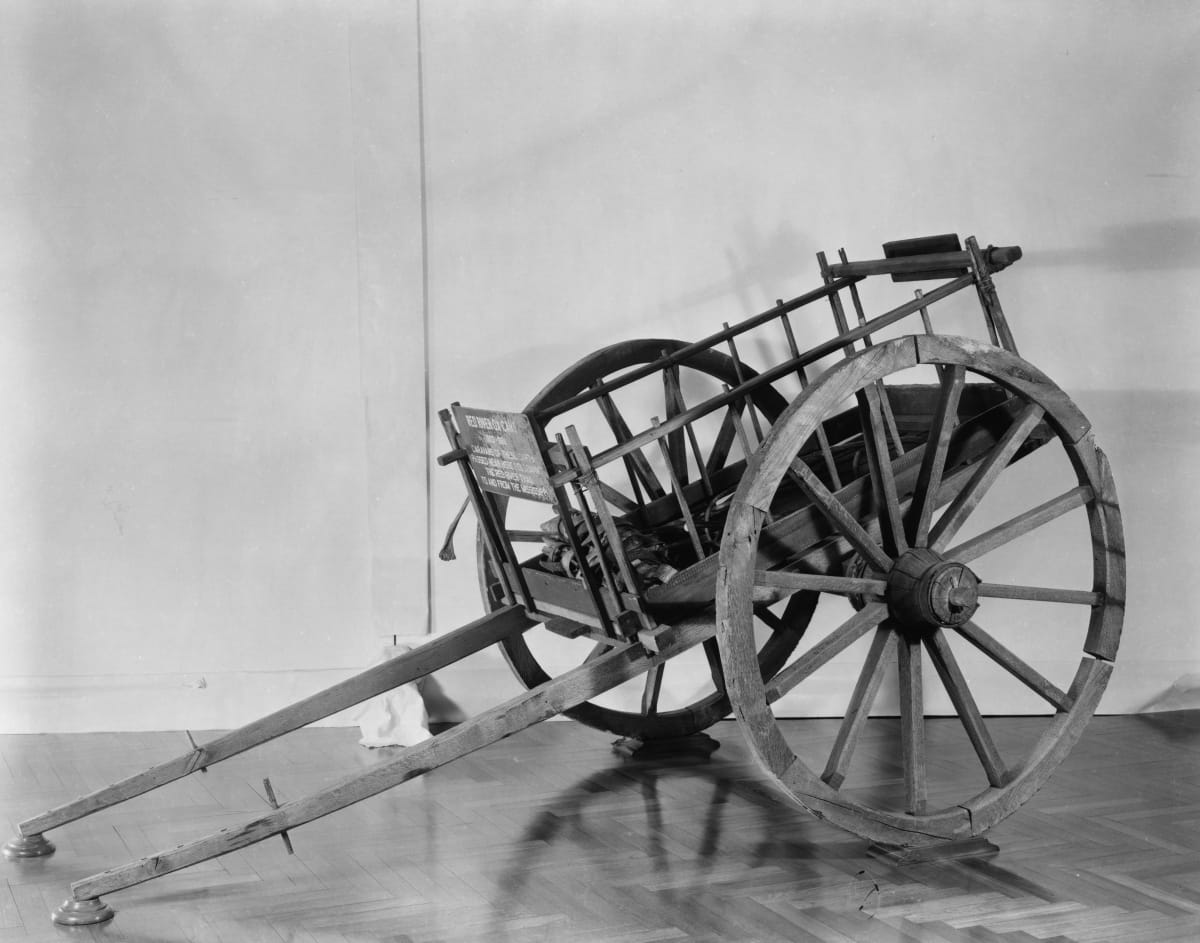
- Red River Cart Replica, circa 1925 - From the 1820s to the 1850s, hundreds of these simple, rugged carts transported annual supplies to the Red River Valley settlements of Minnesota and Manitoba, Canada. On return trips, the carts -- each drawn by a single ox -- carried meat, furs, and skins to St. Paul. This replica was probably built for exhibition by the Great Northern Railway.
- circa 1925
- Collections - Artifact
Red River Cart Replica, circa 1925
From the 1820s to the 1850s, hundreds of these simple, rugged carts transported annual supplies to the Red River Valley settlements of Minnesota and Manitoba, Canada. On return trips, the carts -- each drawn by a single ox -- carried meat, furs, and skins to St. Paul. This replica was probably built for exhibition by the Great Northern Railway.
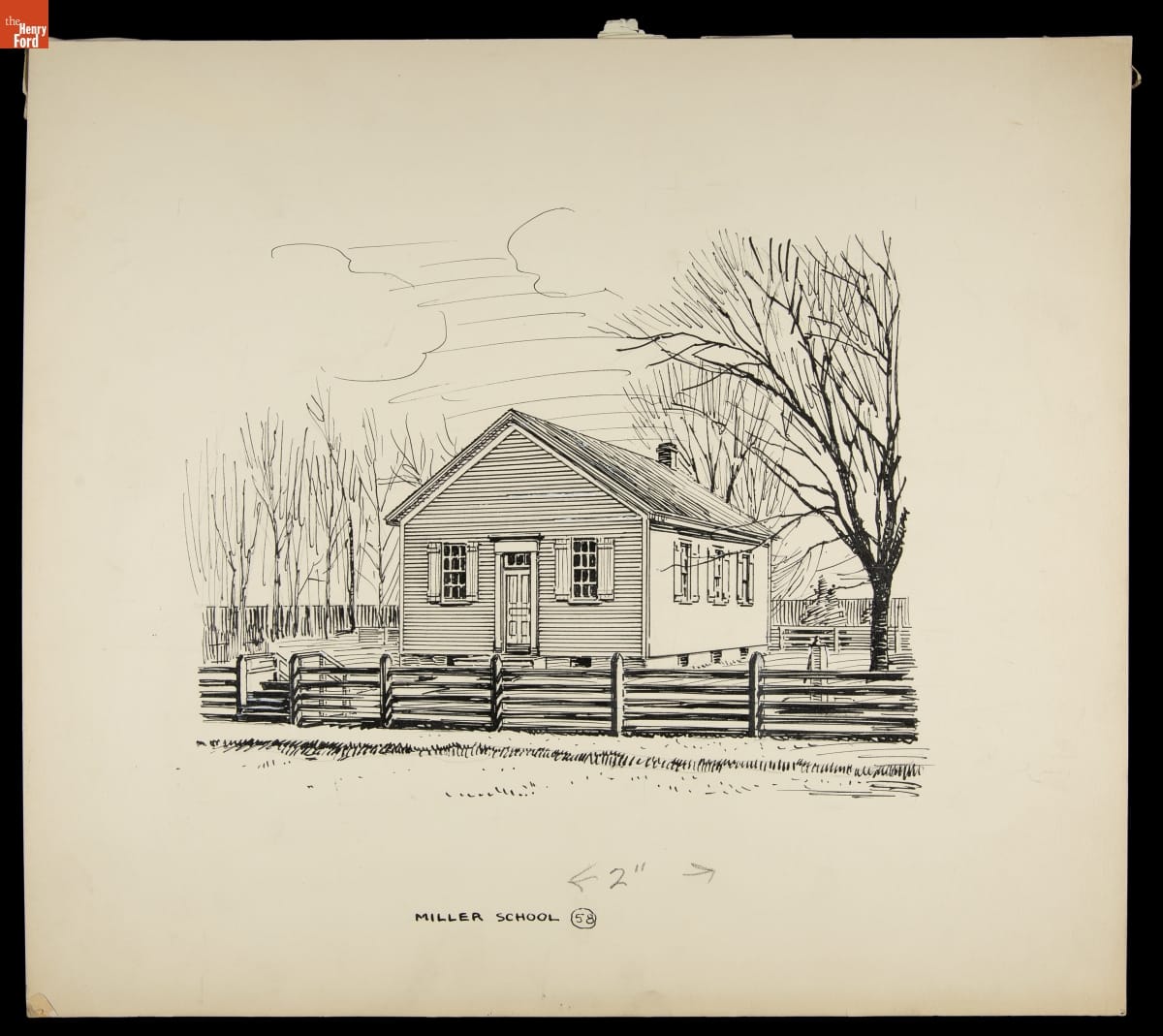
- Miller School in Greenfield Village, circa 1945 - Irving Bacon, a Ford Motor Company employee and Henry Ford's personal artist, created pen-and-ink drawings to illustrate guidebooks for the Edison Institute Museum and Greenfield Village (now The Henry Ford) when they officially opened to the public in 1933. An illustrated souvenir guidebook helped visitors navigate the exhibits and grounds. Ford also used these drawings in other company publications.
- circa 1945
- Collections - Artifact
Miller School in Greenfield Village, circa 1945
Irving Bacon, a Ford Motor Company employee and Henry Ford's personal artist, created pen-and-ink drawings to illustrate guidebooks for the Edison Institute Museum and Greenfield Village (now The Henry Ford) when they officially opened to the public in 1933. An illustrated souvenir guidebook helped visitors navigate the exhibits and grounds. Ford also used these drawings in other company publications.
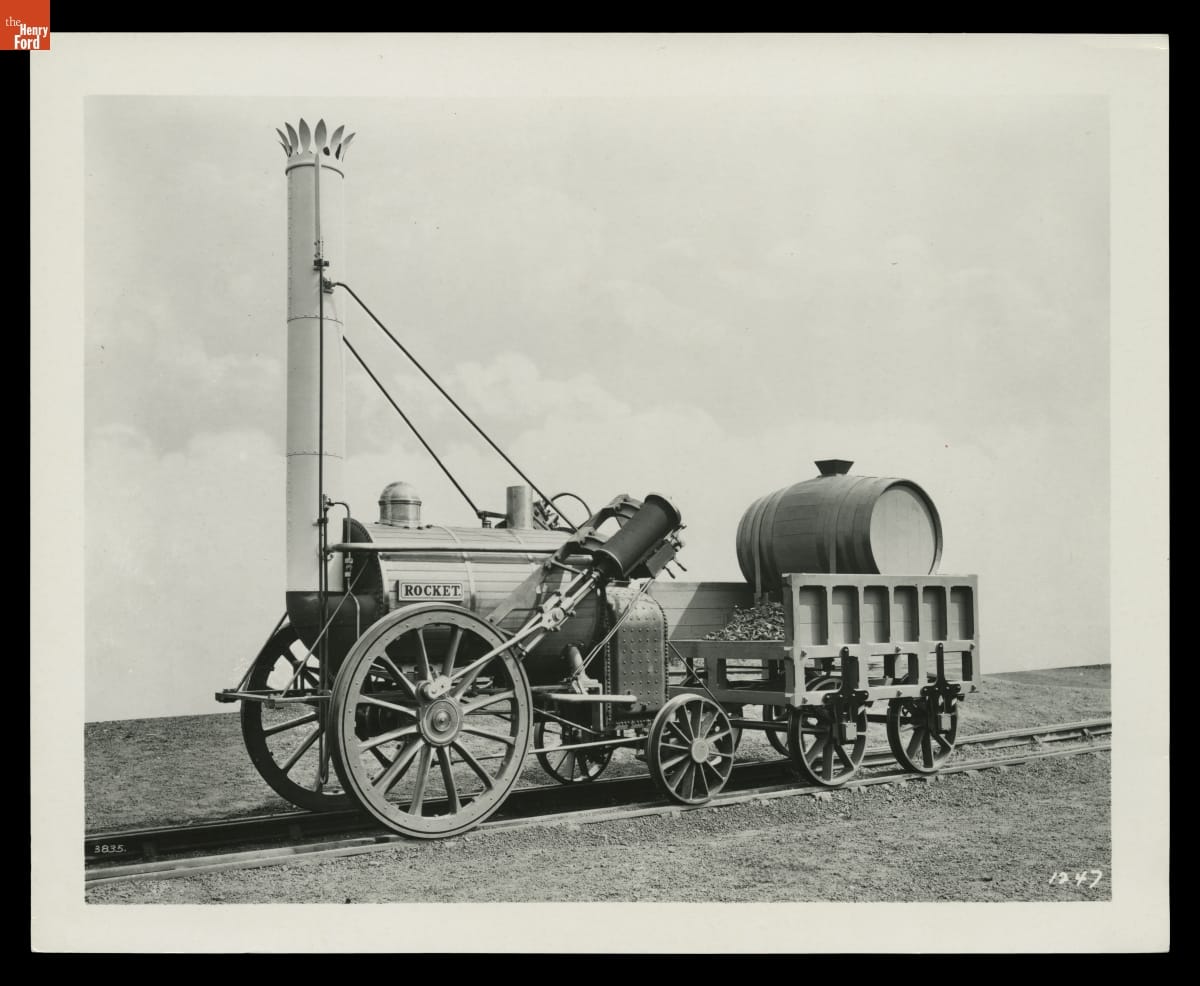
- Replica of Stephenson's 1829 "Rocket" Locomotive - When England's Liverpool and Manchester Railway held a contest in 1829 to find the best locomotive design for its line, George Stephenson's <EM>Rocket</EM> took the prize. The <EM>Rocket</EM>'s horizontal boiler, with cylinders directly connected to its driving wheels, set the standard pattern for all subsequent locomotives. This photo shows the replica Henry Ford commissioned from the original builders in 1928.
- October 14, 1929
- Collections - Artifact
Replica of Stephenson's 1829 "Rocket" Locomotive
When England's Liverpool and Manchester Railway held a contest in 1829 to find the best locomotive design for its line, George Stephenson's Rocket took the prize. The Rocket's horizontal boiler, with cylinders directly connected to its driving wheels, set the standard pattern for all subsequent locomotives. This photo shows the replica Henry Ford commissioned from the original builders in 1928.
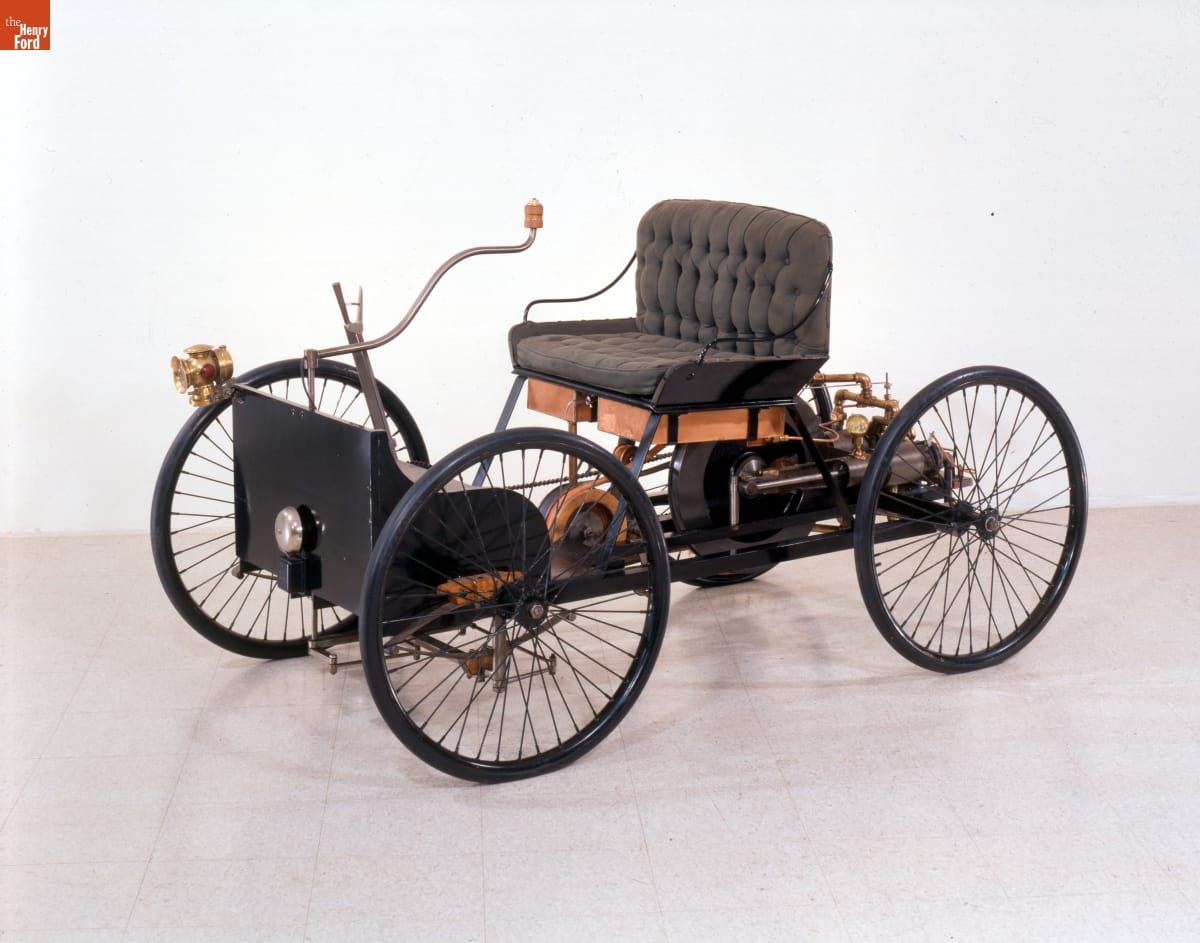
- Replica of 1896 Ford Quadricycle - George DeAngelis built this replica of Henry Ford's first automobile, the 1896 Quadricycle, for the centennial of Ford's birth in 1963. DeAngelis spent three years on the project, working nights and weekends. He built most of the vehicle's parts from scratch. DeAngelis drove the replica through Detroit on June 4, 1963 -- exactly 67 years after Ford first drove the original.
- 1960-1963
- Collections - Artifact
Replica of 1896 Ford Quadricycle
George DeAngelis built this replica of Henry Ford's first automobile, the 1896 Quadricycle, for the centennial of Ford's birth in 1963. DeAngelis spent three years on the project, working nights and weekends. He built most of the vehicle's parts from scratch. DeAngelis drove the replica through Detroit on June 4, 1963 -- exactly 67 years after Ford first drove the original.
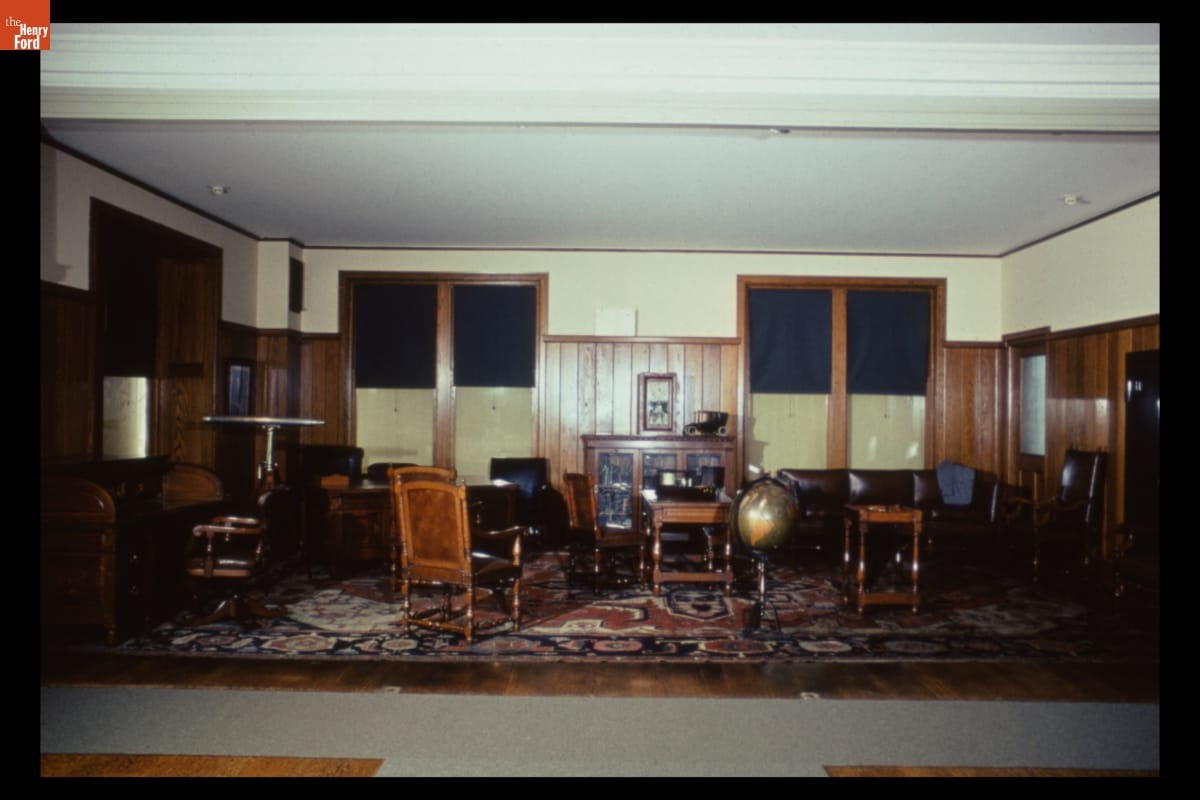
- Replica of Henry Ford's 1914 Office on Exhibit in Henry Ford Museum, 1974 - Henry Ford himself was the focus of <EM>Henry Ford: A Personal History</EM>. Opened in 1953 during Ford Motor Company's 50th anniversary, the exhibit included artifacts like Westinghouse steam engine No. 345, the fifteen millionth Model T, and a re-creation of Ford's Highland Park office using original furnishings. It was among the museum's first major additions after Ford's death in 1947.
- September 11, 1974
- Collections - Artifact
Replica of Henry Ford's 1914 Office on Exhibit in Henry Ford Museum, 1974
Henry Ford himself was the focus of Henry Ford: A Personal History. Opened in 1953 during Ford Motor Company's 50th anniversary, the exhibit included artifacts like Westinghouse steam engine No. 345, the fifteen millionth Model T, and a re-creation of Ford's Highland Park office using original furnishings. It was among the museum's first major additions after Ford's death in 1947.
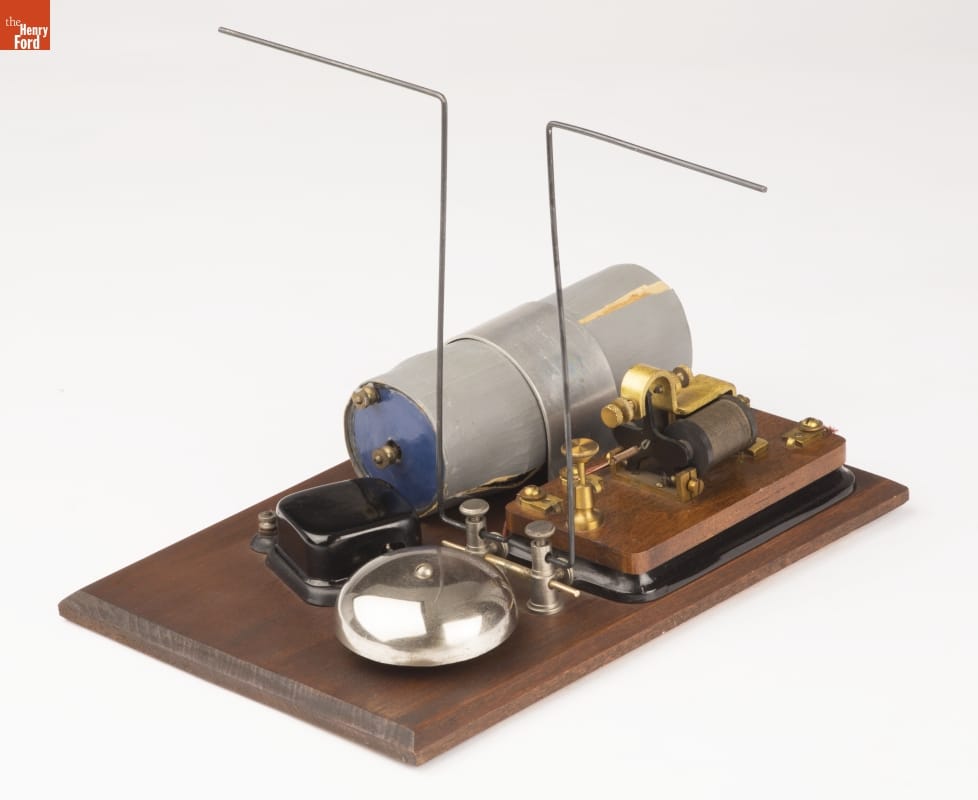
- Telimco Radio Receiver, Model 1086 - The Telimco is believed to be one of the first complete radio sets offered for sale to the general public. Listed in a 1905 issue of Scientific American, this wireless telegraph outfit was "guaranteed to work up to one mile." This artifact was donated by its inventor--Hugo Gernsback--one of the first publishers of the science fiction genre.
- 1905-1906
- Collections - Artifact
Telimco Radio Receiver, Model 1086
The Telimco is believed to be one of the first complete radio sets offered for sale to the general public. Listed in a 1905 issue of Scientific American, this wireless telegraph outfit was "guaranteed to work up to one mile." This artifact was donated by its inventor--Hugo Gernsback--one of the first publishers of the science fiction genre.
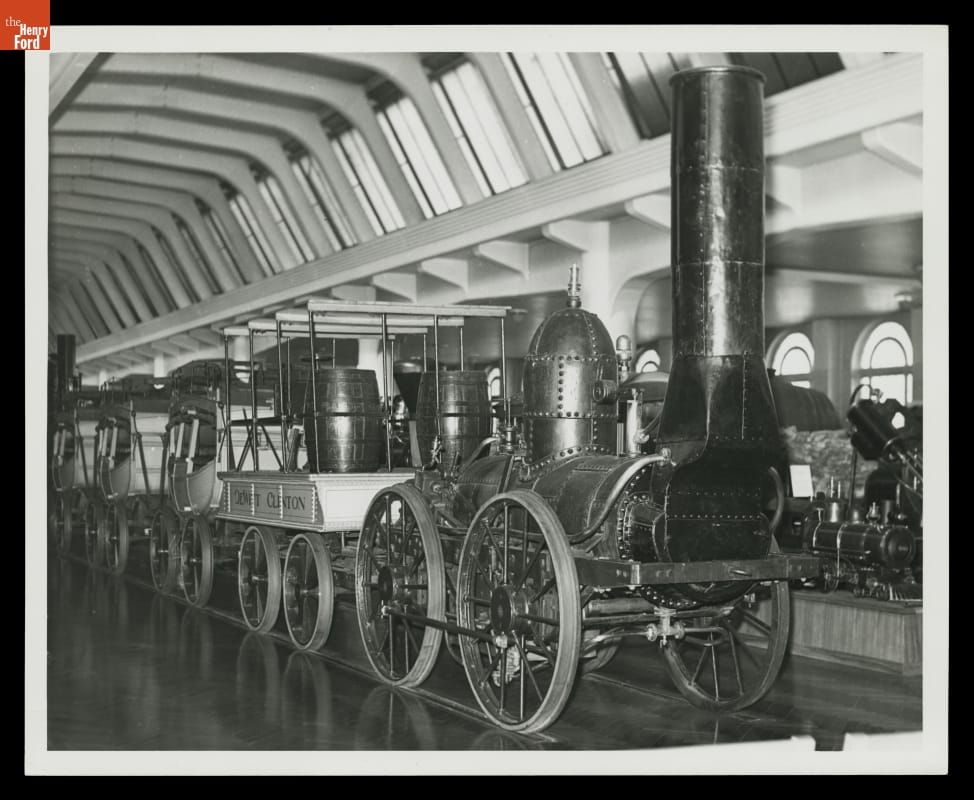
- Replica of 1831 "DeWitt Clinton" Steam Locomotive in Henry Ford Museum, 1945 - Built by the New York Central Railroad for the 1893 World's Columbian Exposition in Chicago, the <EM>DeWitt Clinton</EM> replica locomotive and cars were given to The Henry Ford in 1935. The train's unusual passenger cars -- essentially stagecoaches on flanged wheels -- have made it a visitor favorite in the museum's railroad collection.
- August 23, 1945
- Collections - Artifact
Replica of 1831 "DeWitt Clinton" Steam Locomotive in Henry Ford Museum, 1945
Built by the New York Central Railroad for the 1893 World's Columbian Exposition in Chicago, the DeWitt Clinton replica locomotive and cars were given to The Henry Ford in 1935. The train's unusual passenger cars -- essentially stagecoaches on flanged wheels -- have made it a visitor favorite in the museum's railroad collection.