
Search
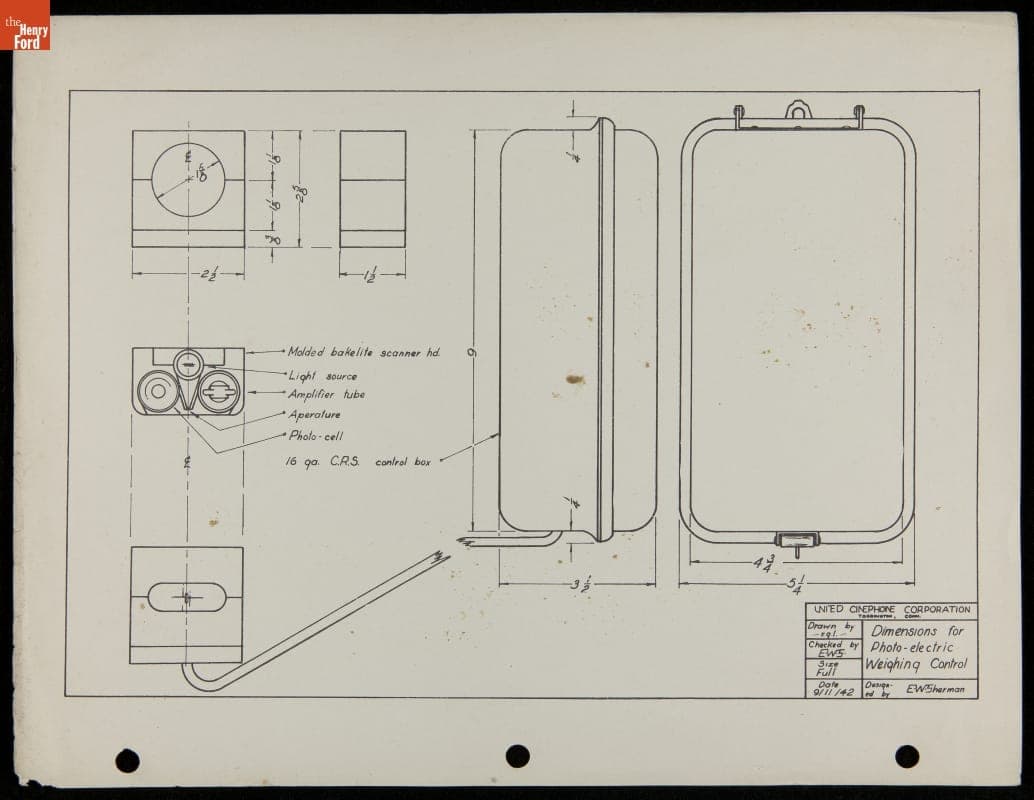
- Dimensions for Photo-Electric Weighing Control, 1942 - George Devol was a problem solver and prolific inventor -- particularly in the area of automation. In the 1930s, he formed United Cinephone Corporation. The company made electric and photoelectric controls, switches and timers used to speed up and improve manufacturing. His most important work led to his patent for the first industrial robot.
- September 11, 1942
- Collections - Artifact
Dimensions for Photo-Electric Weighing Control, 1942
George Devol was a problem solver and prolific inventor -- particularly in the area of automation. In the 1930s, he formed United Cinephone Corporation. The company made electric and photoelectric controls, switches and timers used to speed up and improve manufacturing. His most important work led to his patent for the first industrial robot.
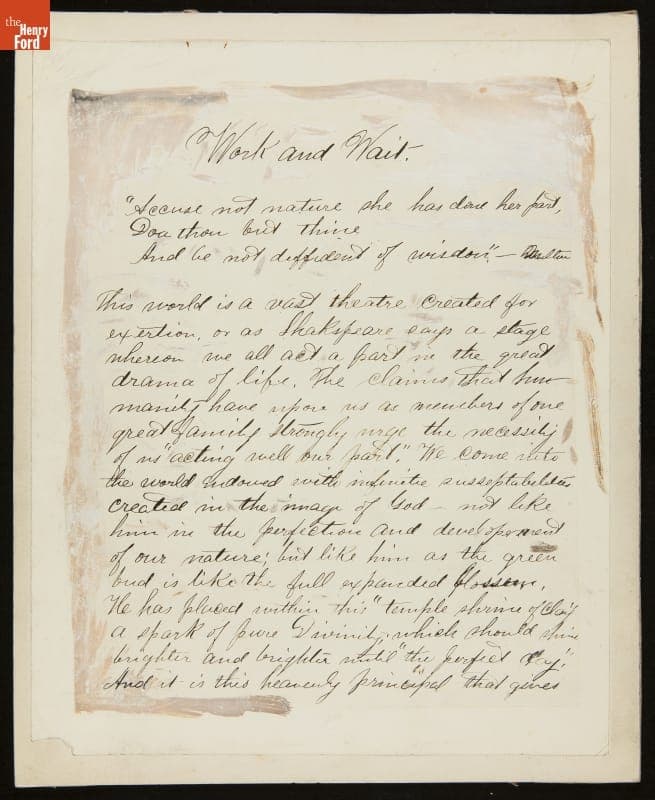
- Reproduction of the 1856 Essay by John Burroughs, "Work and Wait" - Naturalist John Burroughs penned this composition during his college preparatory studies at Cooperstown Seminary. This was an early foray into essay writing in which Burroughs would excel. The photostatic reproduction of this essay, pictured above, was used by Clara Barrus, Burroughs' literary executor and official biographer, for her book <em>The Life and Letters of John Burroughs</em>, published in 1925.
- 1856
- Collections - Artifact
Reproduction of the 1856 Essay by John Burroughs, "Work and Wait"
Naturalist John Burroughs penned this composition during his college preparatory studies at Cooperstown Seminary. This was an early foray into essay writing in which Burroughs would excel. The photostatic reproduction of this essay, pictured above, was used by Clara Barrus, Burroughs' literary executor and official biographer, for her book The Life and Letters of John Burroughs, published in 1925.
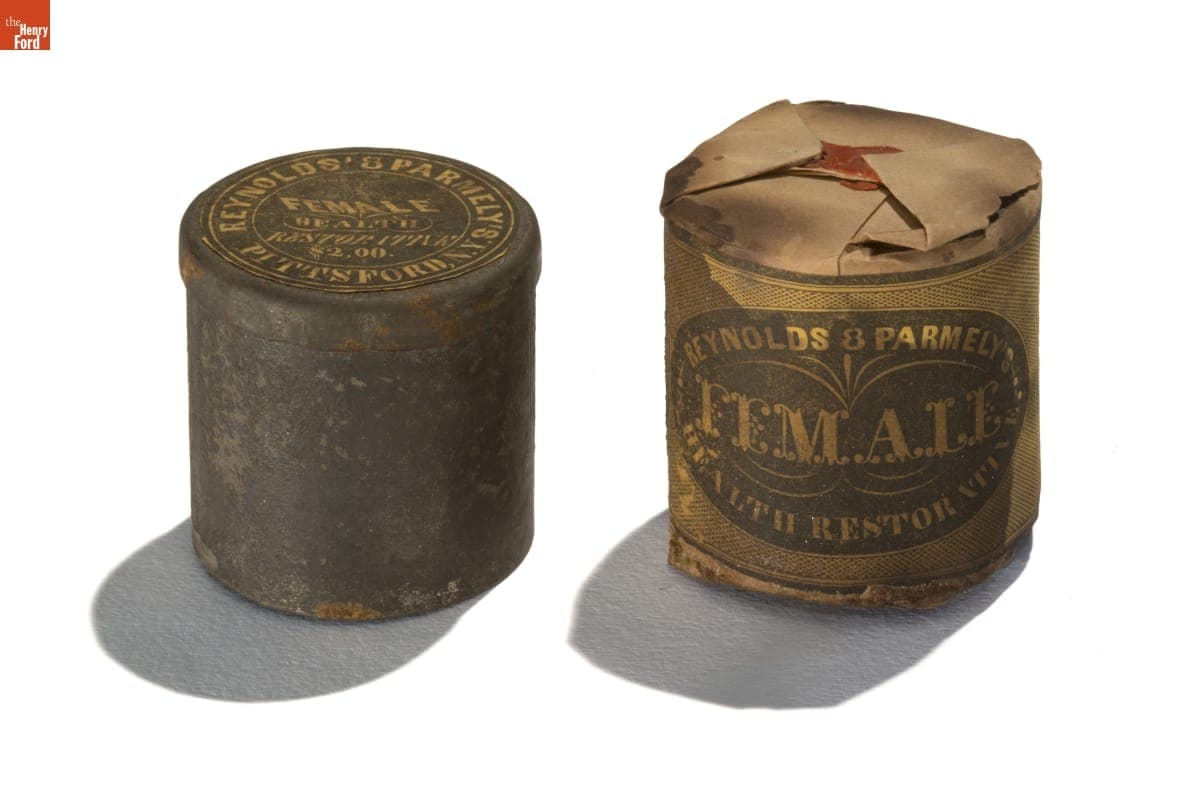
- Reynold's & Parmely's Female Health Restorative, 1839-1870 - Nineteenth-century entrepreneurs promised cures with patent medicines. Some of these concoctions, however, contained harmful ingredients or ingredients used in unsafe quantities -- the industry was unregulated and manufacturers were secretive about their recipes. Beginning with the Pure Food and Drug Act of 1906, national legislation increasingly prohibited misleading health claims and required manufacturers to list their product's contents.
- 1839-1870
- Collections - Artifact
Reynold's & Parmely's Female Health Restorative, 1839-1870
Nineteenth-century entrepreneurs promised cures with patent medicines. Some of these concoctions, however, contained harmful ingredients or ingredients used in unsafe quantities -- the industry was unregulated and manufacturers were secretive about their recipes. Beginning with the Pure Food and Drug Act of 1906, national legislation increasingly prohibited misleading health claims and required manufacturers to list their product's contents.
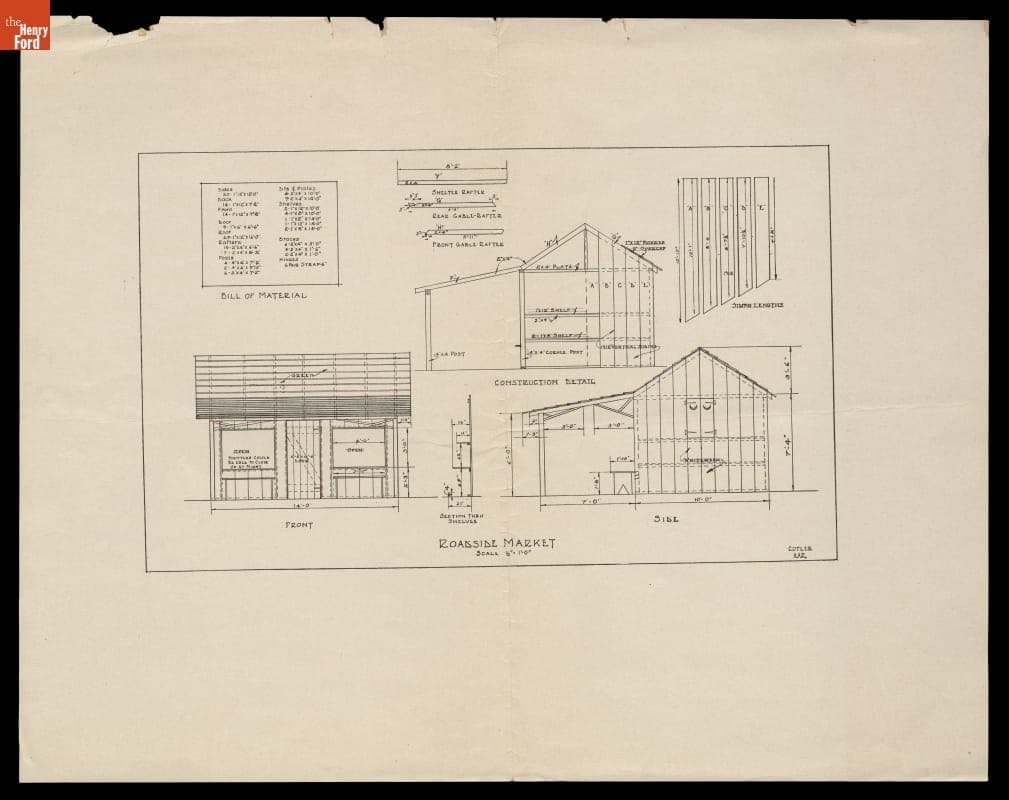
- Building Plans for a Roadside Market, for Selling Produce Grown by Greenfield Village School Students, 1930 - Clara Ford tried to help rural farm women during her presidency of the National Women's Farm & Garden Association. She developed a design for a neat but inexpensive roadside market building that could show off fresh farm produce. She had Edward Cutler, the Historical Architect of Greenfield Village, draw up these plans for the building.
- 1930
- Collections - Artifact
Building Plans for a Roadside Market, for Selling Produce Grown by Greenfield Village School Students, 1930
Clara Ford tried to help rural farm women during her presidency of the National Women's Farm & Garden Association. She developed a design for a neat but inexpensive roadside market building that could show off fresh farm produce. She had Edward Cutler, the Historical Architect of Greenfield Village, draw up these plans for the building.
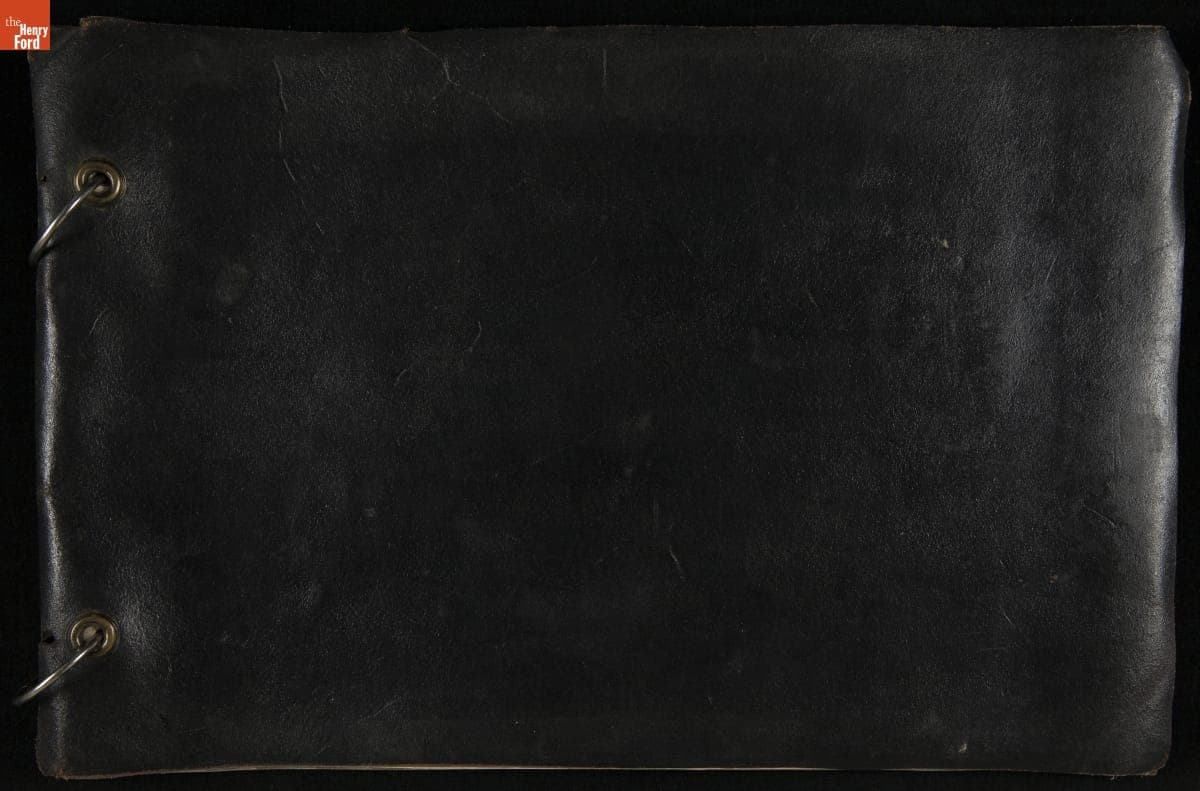
- Tattoo Flash Portfolio, circa 1918 - Tattoos communicate stories. Their content ranges from deeply personal and traditional--to regrettable and frivolous. In the early 1900s, "Professor" Waters apprenticed as a tattoo artist in carnivals and New York's Bowery District. He ran a successful supply shop in Detroit (1918-1939), patenting the standard "two-coil" tattoo machine in 1929. Designs from his flash sheets continue to inspire tattooists today.
- circa 1918
- Collections - Artifact
Tattoo Flash Portfolio, circa 1918
Tattoos communicate stories. Their content ranges from deeply personal and traditional--to regrettable and frivolous. In the early 1900s, "Professor" Waters apprenticed as a tattoo artist in carnivals and New York's Bowery District. He ran a successful supply shop in Detroit (1918-1939), patenting the standard "two-coil" tattoo machine in 1929. Designs from his flash sheets continue to inspire tattooists today.
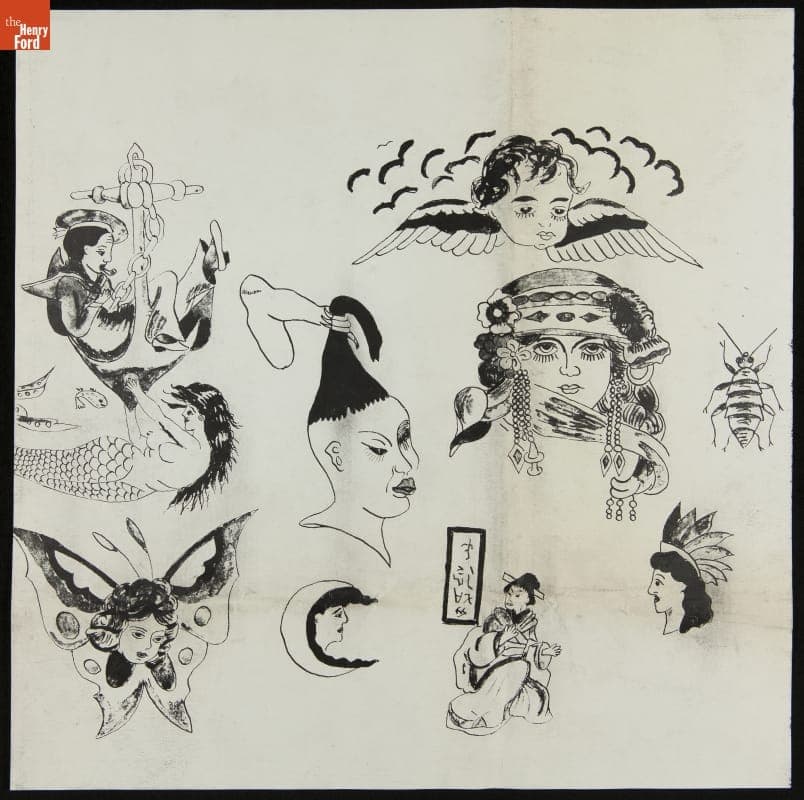
- Tattoo Flash, circa 1925 - Tattoos communicate stories. Their content ranges from deeply personal and traditional--to regrettable and frivolous. In the early 1900s, "Professor" Waters apprenticed as a tattoo artist in carnivals and New York's Bowery District. He ran a successful supply shop in Detroit (1918-1939), patenting the standard "two-coil" tattoo machine in 1929. Designs from his flash sheets continue to inspire tattooists today.
- circa 1925
- Collections - Artifact
Tattoo Flash, circa 1925
Tattoos communicate stories. Their content ranges from deeply personal and traditional--to regrettable and frivolous. In the early 1900s, "Professor" Waters apprenticed as a tattoo artist in carnivals and New York's Bowery District. He ran a successful supply shop in Detroit (1918-1939), patenting the standard "two-coil" tattoo machine in 1929. Designs from his flash sheets continue to inspire tattooists today.
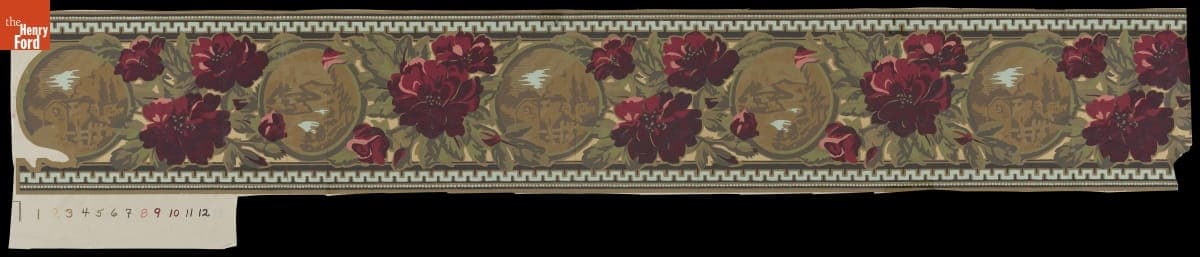
- Wallpaper Used in Firestone Farmhouse Dining Room in Greenfield Village, Reproduced circa 1985 -
- circa 1985
- Collections - Artifact
Wallpaper Used in Firestone Farmhouse Dining Room in Greenfield Village, Reproduced circa 1985
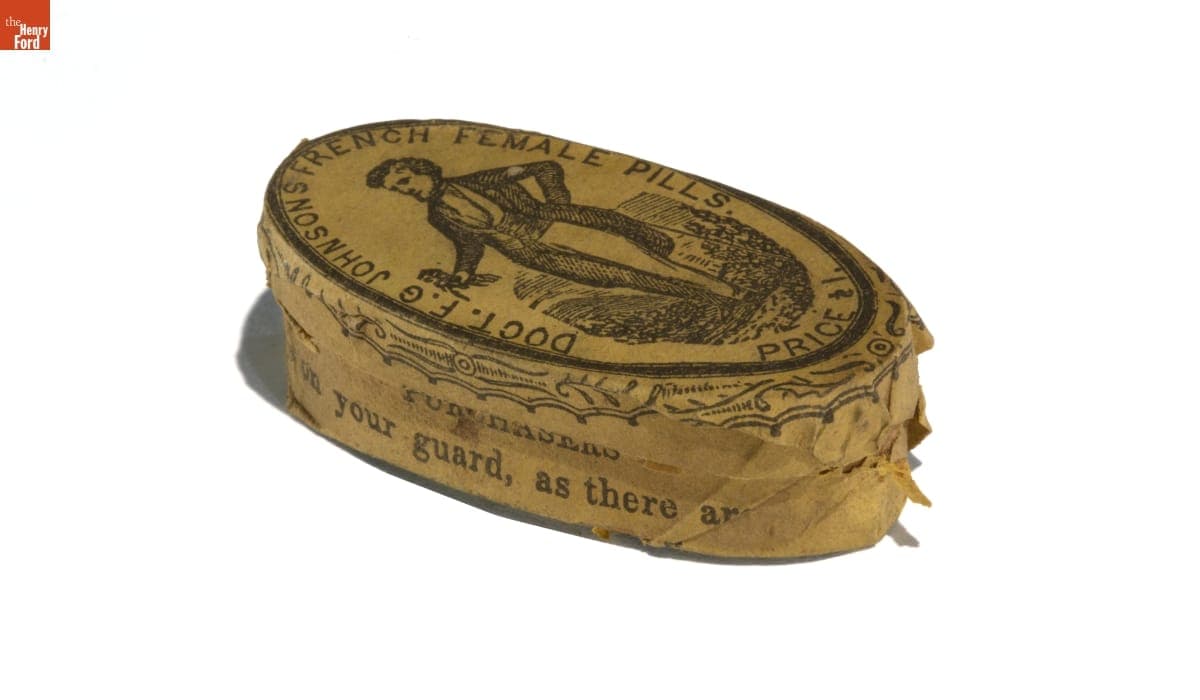
- Dr. F. G. Johnson's French Female Pills, 1840-1860 - Nineteenth-century entrepreneurs promised cures with patent medicines. Some of these concoctions, however, contained harmful ingredients or ingredients used in unsafe quantities -- the industry was unregulated and manufacturers were secretive about their recipes. Beginning with the Pure Food and Drug Act of 1906, national legislation increasingly prohibited misleading health claims and required manufacturers to list their product's contents.
- 1840-1860
- Collections - Artifact
Dr. F. G. Johnson's French Female Pills, 1840-1860
Nineteenth-century entrepreneurs promised cures with patent medicines. Some of these concoctions, however, contained harmful ingredients or ingredients used in unsafe quantities -- the industry was unregulated and manufacturers were secretive about their recipes. Beginning with the Pure Food and Drug Act of 1906, national legislation increasingly prohibited misleading health claims and required manufacturers to list their product's contents.
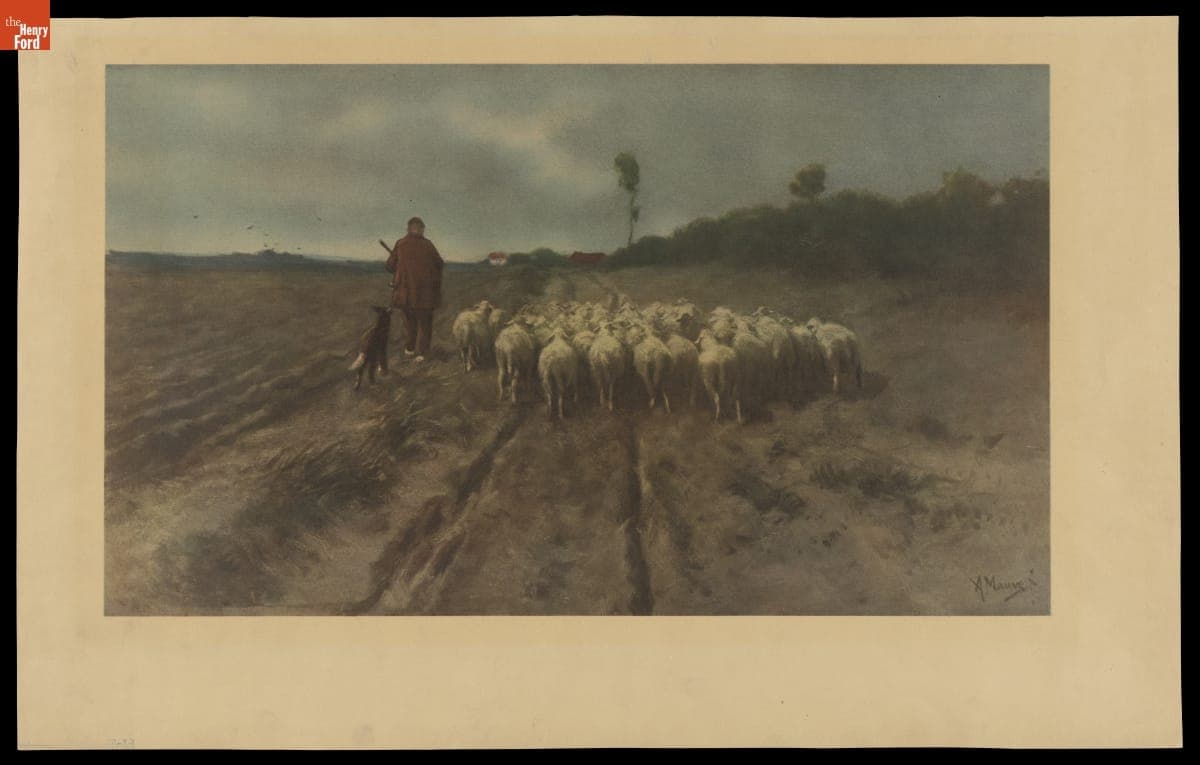
- Print Made circa 1910 from the Anton Mauve Painting "Return to the Fold" -
- circa 1910
- Collections - Artifact
Print Made circa 1910 from the Anton Mauve Painting "Return to the Fold"
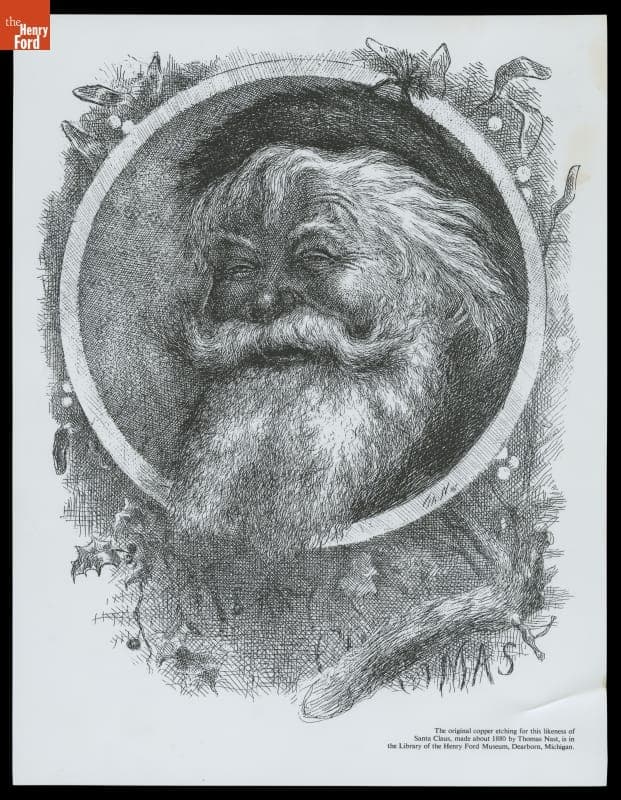
- Thomas Nast's circa 1885 Portrait of Santa Claus, Printed in 1980 - Thomas Nast is best known for the creation of our modern image of Santa Claus. Nast's late 19th-century illustrations popularized the depiction of a rotund, bearded, fur-clad Santa in Americans' imaginations. His drawings not only defined Santa's appearance, but also enhanced other symbols, traditions and events now associated with Christmas and the holiday's jolly old elf.
- circa 1885
- Collections - Artifact
Thomas Nast's circa 1885 Portrait of Santa Claus, Printed in 1980
Thomas Nast is best known for the creation of our modern image of Santa Claus. Nast's late 19th-century illustrations popularized the depiction of a rotund, bearded, fur-clad Santa in Americans' imaginations. His drawings not only defined Santa's appearance, but also enhanced other symbols, traditions and events now associated with Christmas and the holiday's jolly old elf.