
Search
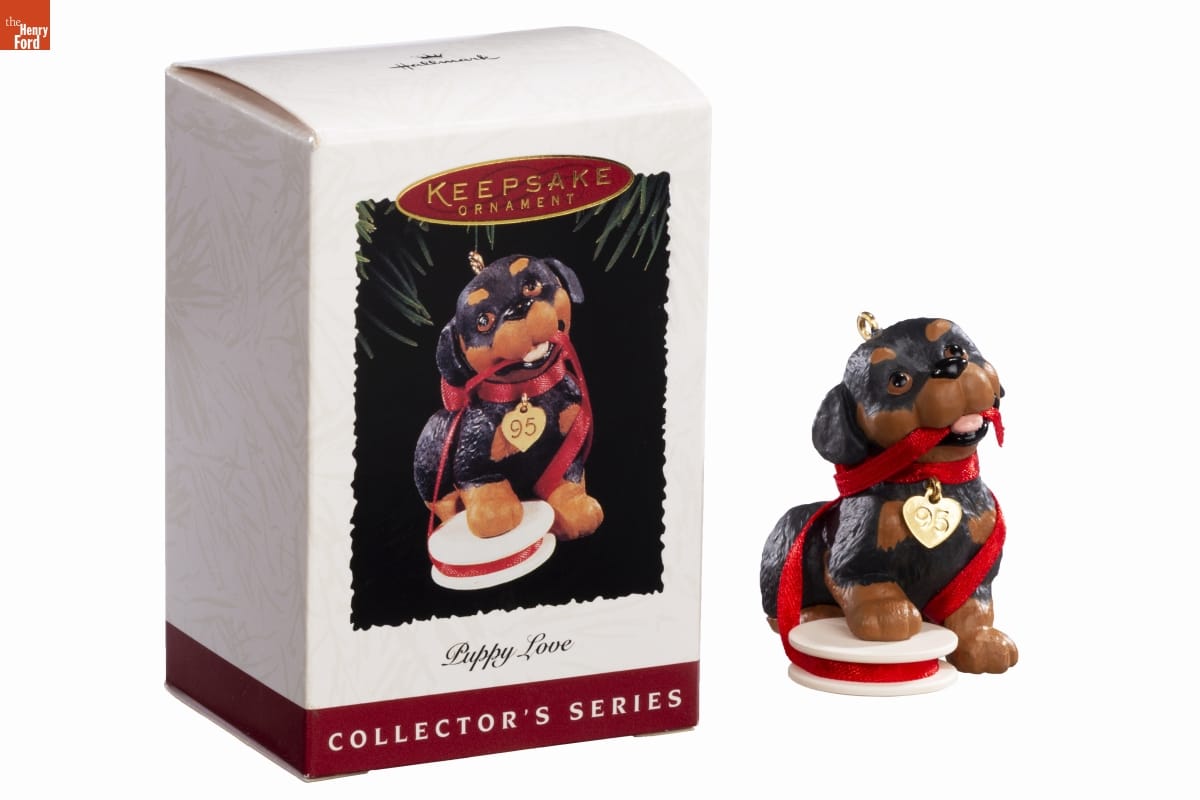
- Hallmark "Puppy Love Series" Christmas Ornament, 1995 - Already known for greeting cards, Hallmark introduced a line of Christmas ornaments in 1973. The company's annual release of an increasing array of ornaments revolutionized Christmas decorating, appealing to customers' interest in marking memories and milestones as well as expressing one's personality and unique tastes.
- 1995
- Collections - Artifact
Hallmark "Puppy Love Series" Christmas Ornament, 1995
Already known for greeting cards, Hallmark introduced a line of Christmas ornaments in 1973. The company's annual release of an increasing array of ornaments revolutionized Christmas decorating, appealing to customers' interest in marking memories and milestones as well as expressing one's personality and unique tastes.
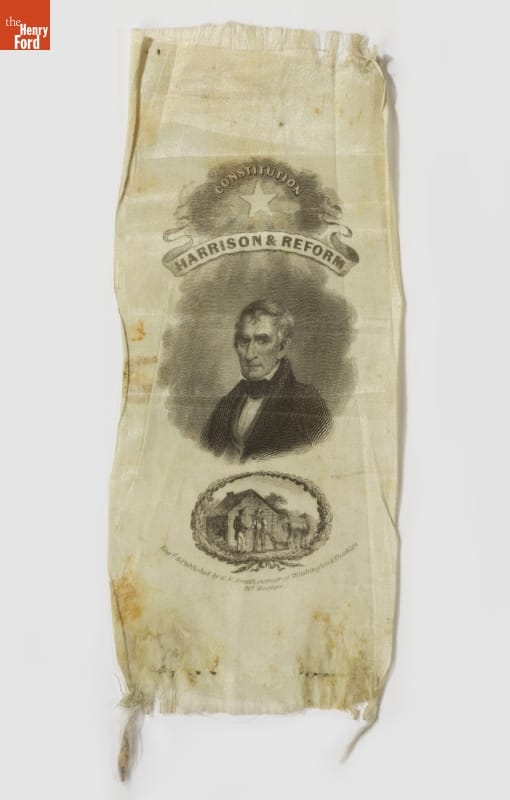
- William Henry Harrison Campaign Ribbon, 1836-1840 - Sixty-seven-year-old retired military general William Henry Harrison took advantage of a wildly popular campaign staged by Whig Party leaders, who capitalized on the false perception that Harrison was a common frontier farmer living in a log cabin. Cheering crowds lined Pennsylvania Avenue for his inauguration on March 4, 1841. He performed nominal duties before falling ill and dying of pneumonia a month into his presidency.
- 1836-1840
- Collections - Artifact
William Henry Harrison Campaign Ribbon, 1836-1840
Sixty-seven-year-old retired military general William Henry Harrison took advantage of a wildly popular campaign staged by Whig Party leaders, who capitalized on the false perception that Harrison was a common frontier farmer living in a log cabin. Cheering crowds lined Pennsylvania Avenue for his inauguration on March 4, 1841. He performed nominal duties before falling ill and dying of pneumonia a month into his presidency.
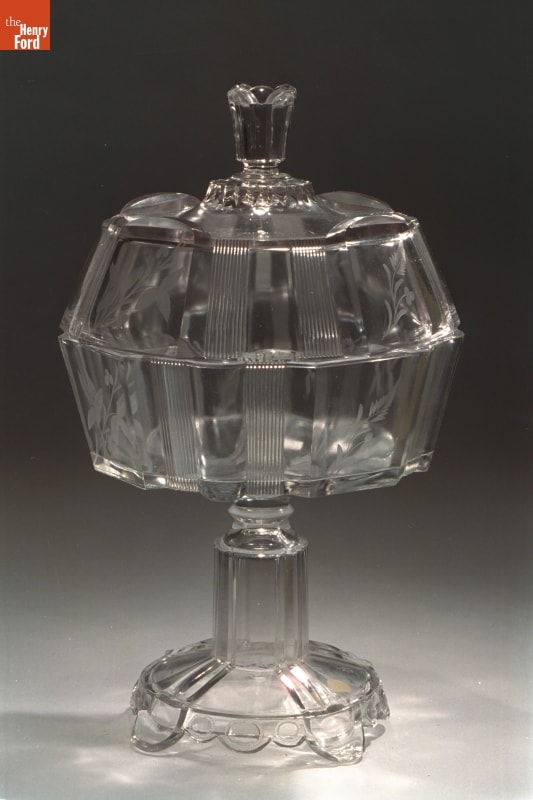
- Covered Compote, 1880-1890 - Compotes are all-purpose serving dishes. These usually footed bowls -- with or without lids or covers -- held special desserts, fruits, candies or sauces, jellies and other foods. Blown or pressed glass compotes provided a culinary presentation method suitable to 19th-century middle-class households.
- 1880-1890
- Collections - Artifact
Covered Compote, 1880-1890
Compotes are all-purpose serving dishes. These usually footed bowls -- with or without lids or covers -- held special desserts, fruits, candies or sauces, jellies and other foods. Blown or pressed glass compotes provided a culinary presentation method suitable to 19th-century middle-class households.
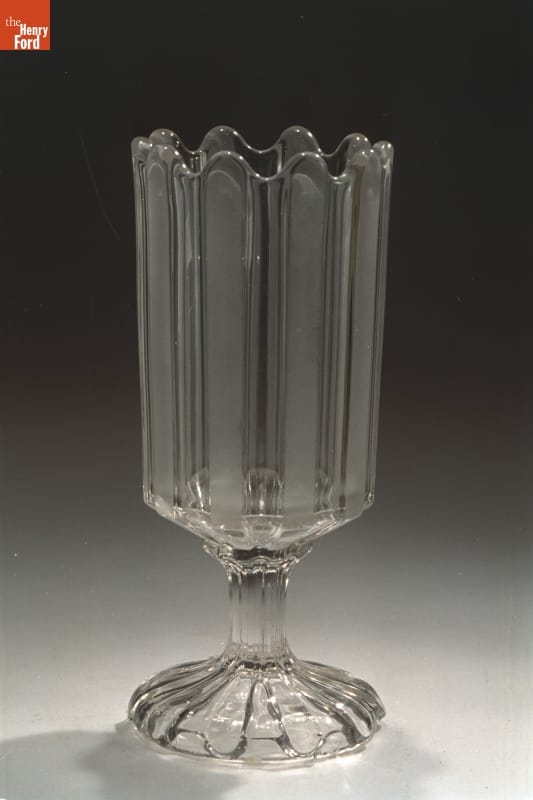
- Celery Vase, 1875-1882 - Class-conscious Americans in the late 19th century displayed their social standing by serving a variety of exotic foods in specialized tableware. Celery vases or glasses held the costly and status-laden vegetable. This tall, pressed glass vase became a middle-class necessity until growing methods made celery common and the dish less socially significant.
- 1875-1882
- Collections - Artifact
Celery Vase, 1875-1882
Class-conscious Americans in the late 19th century displayed their social standing by serving a variety of exotic foods in specialized tableware. Celery vases or glasses held the costly and status-laden vegetable. This tall, pressed glass vase became a middle-class necessity until growing methods made celery common and the dish less socially significant.
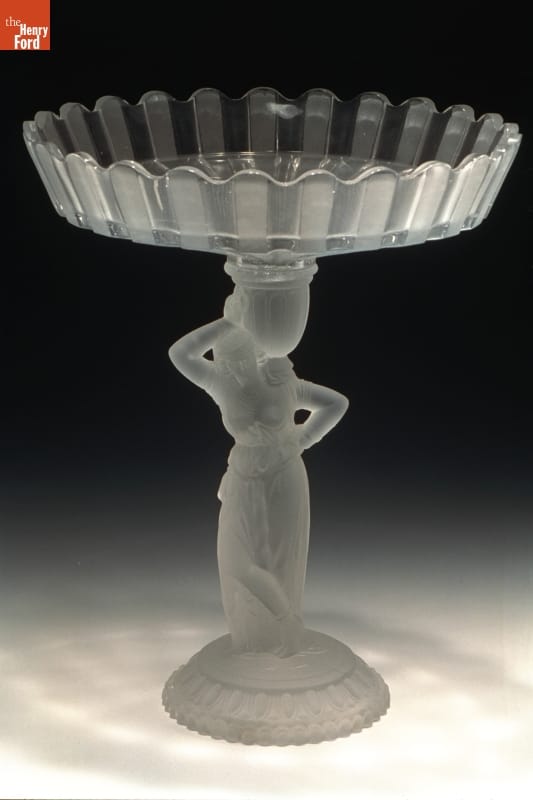
- Compote, 1876-1882 - Compotes are all-purpose serving dishes. These usually footed bowls -- with or without lids or covers -- held special desserts, fruits, candies or sauces, jellies and other foods. Blown or pressed glass compotes provided a culinary presentation method suitable to 19th-century middle-class households.
- 1876-1882
- Collections - Artifact
Compote, 1876-1882
Compotes are all-purpose serving dishes. These usually footed bowls -- with or without lids or covers -- held special desserts, fruits, candies or sauces, jellies and other foods. Blown or pressed glass compotes provided a culinary presentation method suitable to 19th-century middle-class households.
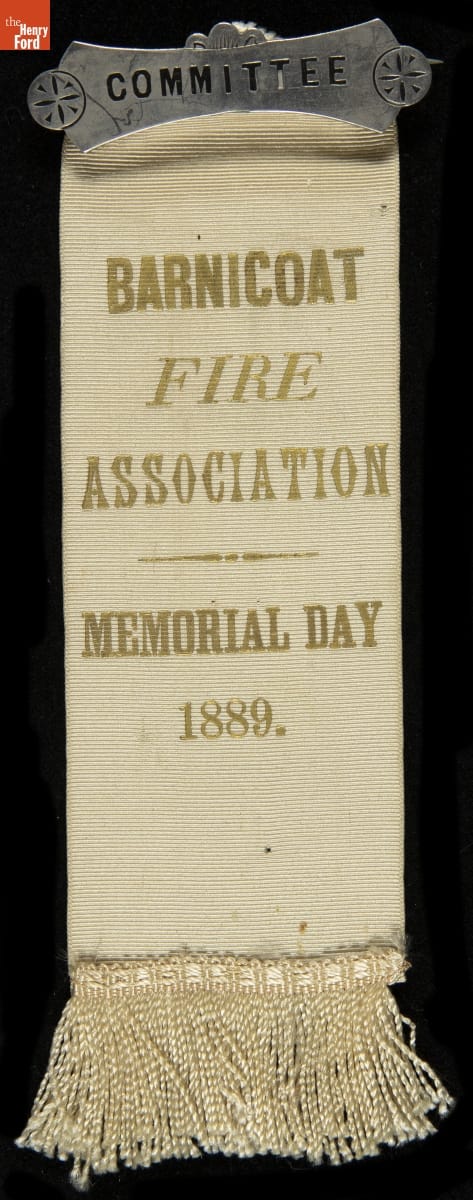
- Barnicoat Fire Association Memorial Day Ribbon, 1889 - Memorial Day began soon after the Civil War as a time to remember U.S. military service members who sacrificed their lives for their country. The idea spread to community service organizations--like local fire associations--who observed memorial days to honor fallen members. Dates for these memorial days were usually set to avoid conflicting with the national observance.
- 1889
- Collections - Artifact
Barnicoat Fire Association Memorial Day Ribbon, 1889
Memorial Day began soon after the Civil War as a time to remember U.S. military service members who sacrificed their lives for their country. The idea spread to community service organizations--like local fire associations--who observed memorial days to honor fallen members. Dates for these memorial days were usually set to avoid conflicting with the national observance.
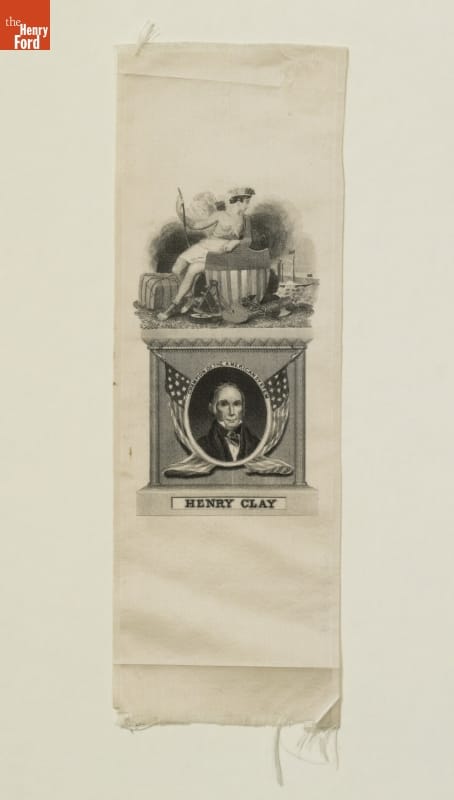
- Henry Clay Campaign Ribbon, 1844 -
- 1844
- Collections - Artifact
Henry Clay Campaign Ribbon, 1844
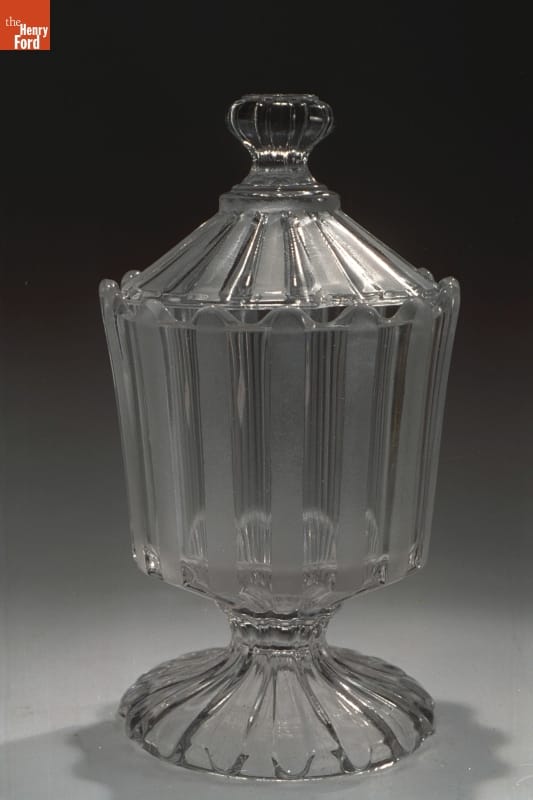
- Sugar Bowl, 1875-1882 - Middle-class Americans in the late 19th century arrayed their dining tables with affordable pressed-glass tableware. These items, usually sold in sets, came in a wide variety of patterns, colors and styles. These decorative pieces -- like this sugar bowl -- communicated a family's status and taste to visitors and guests.
- 1875-1882
- Collections - Artifact
Sugar Bowl, 1875-1882
Middle-class Americans in the late 19th century arrayed their dining tables with affordable pressed-glass tableware. These items, usually sold in sets, came in a wide variety of patterns, colors and styles. These decorative pieces -- like this sugar bowl -- communicated a family's status and taste to visitors and guests.
- "First Men on the Moon" Button and Ribbon, circa 1969 - On July 20, 1969, Apollo XI landed on the Moon. NASA astronauts Neil Armstrong and Edwin "Buzz" Aldrin became the first men to walk on the Moon's surface, while Michael Collins orbited in the command module. The landing and the astronaut's first steps on the lunar surface captivated audiences watching the live telecast. Proud Americans purchased souvenirs to remember this historic event.
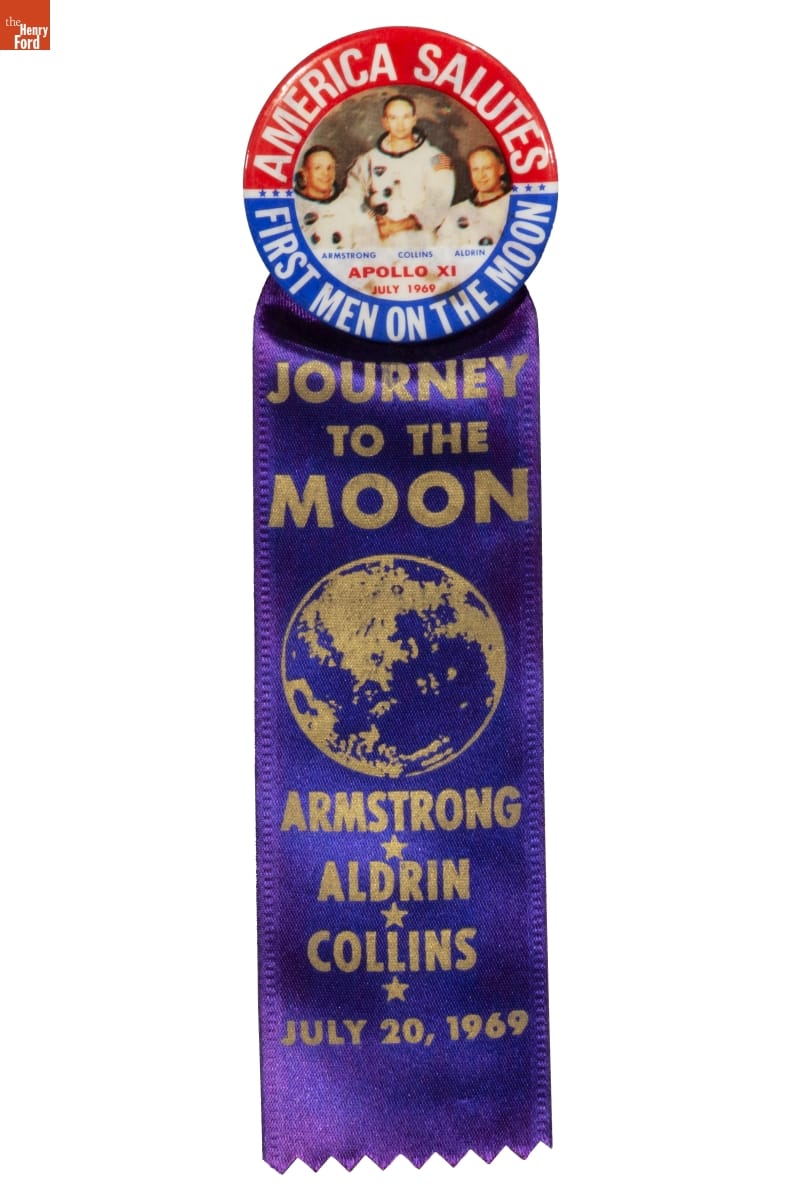
- July 20, 1969
- Collections - Artifact
"First Men on the Moon" Button and Ribbon, circa 1969
On July 20, 1969, Apollo XI landed on the Moon. NASA astronauts Neil Armstrong and Edwin "Buzz" Aldrin became the first men to walk on the Moon's surface, while Michael Collins orbited in the command module. The landing and the astronaut's first steps on the lunar surface captivated audiences watching the live telecast. Proud Americans purchased souvenirs to remember this historic event.
- Grand Army of the Republic (G.A.R.) Forsyth Post at the 1908 Toledo, Ohio National Encampment Badge - The Grand Army of the Republic (G.A.R.), a Union veterans' organization formed in 1866, held state and national conventions or "encampments" where members could reunite with other Civil War veterans. Encampment attendees--sporting badges and other insignia--paraded through town, gathered at receptions, toured local attractions, and reminisced about shared wartime experiences. The G.A.R. sponsored these meetings for more than 80 years.
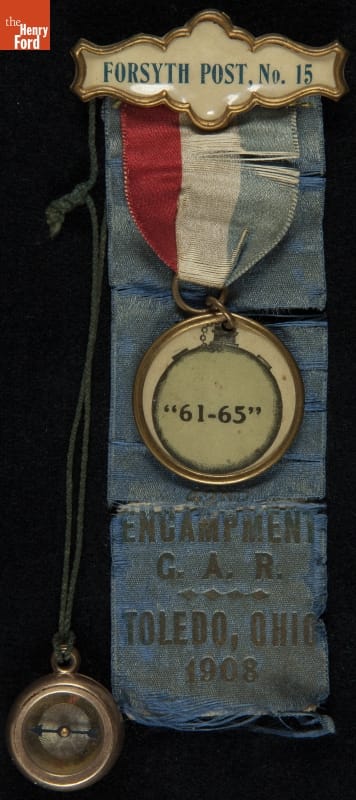
- September 03, 1908
- Collections - Artifact
Grand Army of the Republic (G.A.R.) Forsyth Post at the 1908 Toledo, Ohio National Encampment Badge
The Grand Army of the Republic (G.A.R.), a Union veterans' organization formed in 1866, held state and national conventions or "encampments" where members could reunite with other Civil War veterans. Encampment attendees--sporting badges and other insignia--paraded through town, gathered at receptions, toured local attractions, and reminisced about shared wartime experiences. The G.A.R. sponsored these meetings for more than 80 years.