
Search
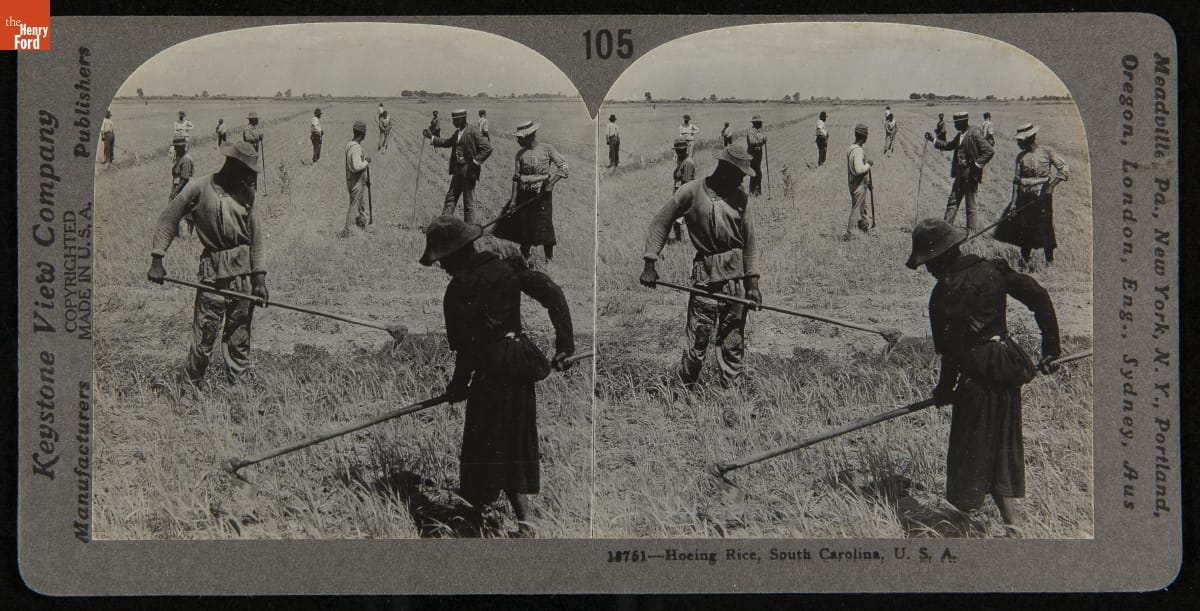
- Hoeing Rice, South Carolina, U.S.A., 1900-1910 - Rice grows best when fields are flooded at planting time and periodically during the growing season. Managing the water levels required an infrastructure as well as regular maintenance. This stereograph shows workers with a broad and heavy hoe, removing weeds and deepening the channel in a rice field.
- 1900-1910
- Collections - Artifact
Hoeing Rice, South Carolina, U.S.A., 1900-1910
Rice grows best when fields are flooded at planting time and periodically during the growing season. Managing the water levels required an infrastructure as well as regular maintenance. This stereograph shows workers with a broad and heavy hoe, removing weeds and deepening the channel in a rice field.
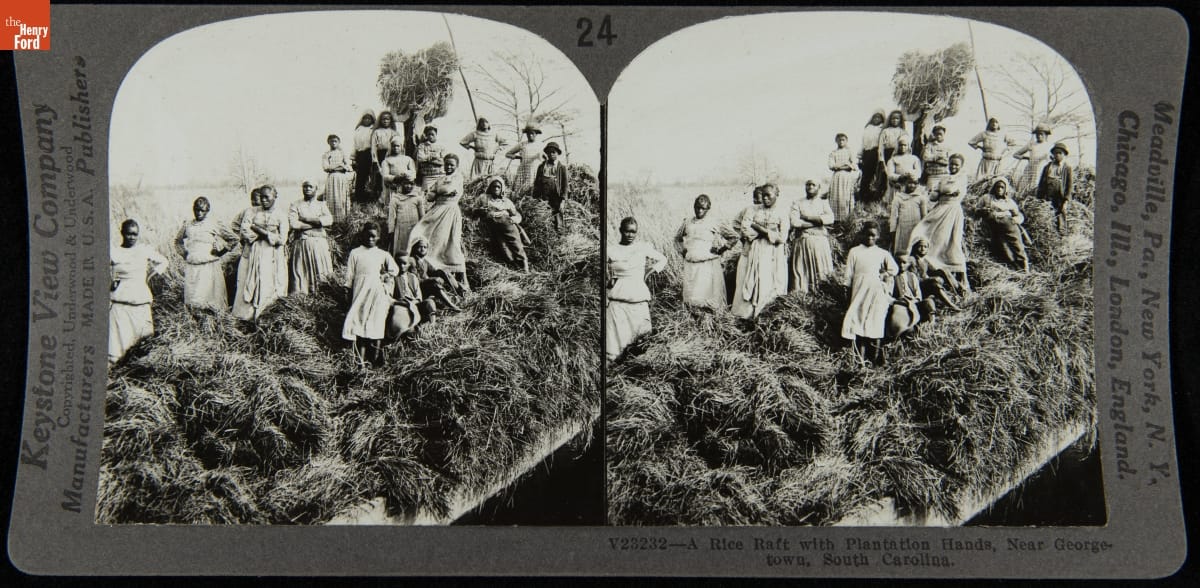
- A Rice Raft with Plantation Hands, Near Georgetown, South Carolina, 1901-1909 - These women and children helped harvest an important food source during the late 1800s and early 1900s -- rice. They cultivated rice as their ancestors had done for 200 years. They worked alongside reaper-binders at harvest time, moving the grain to portable threshing machines. After threshing they gleaned the straw, loaded it on rafts, and floated back to their homes to feed their livestock.
- 1901-1909
- Collections - Artifact
A Rice Raft with Plantation Hands, Near Georgetown, South Carolina, 1901-1909
These women and children helped harvest an important food source during the late 1800s and early 1900s -- rice. They cultivated rice as their ancestors had done for 200 years. They worked alongside reaper-binders at harvest time, moving the grain to portable threshing machines. After threshing they gleaned the straw, loaded it on rafts, and floated back to their homes to feed their livestock.
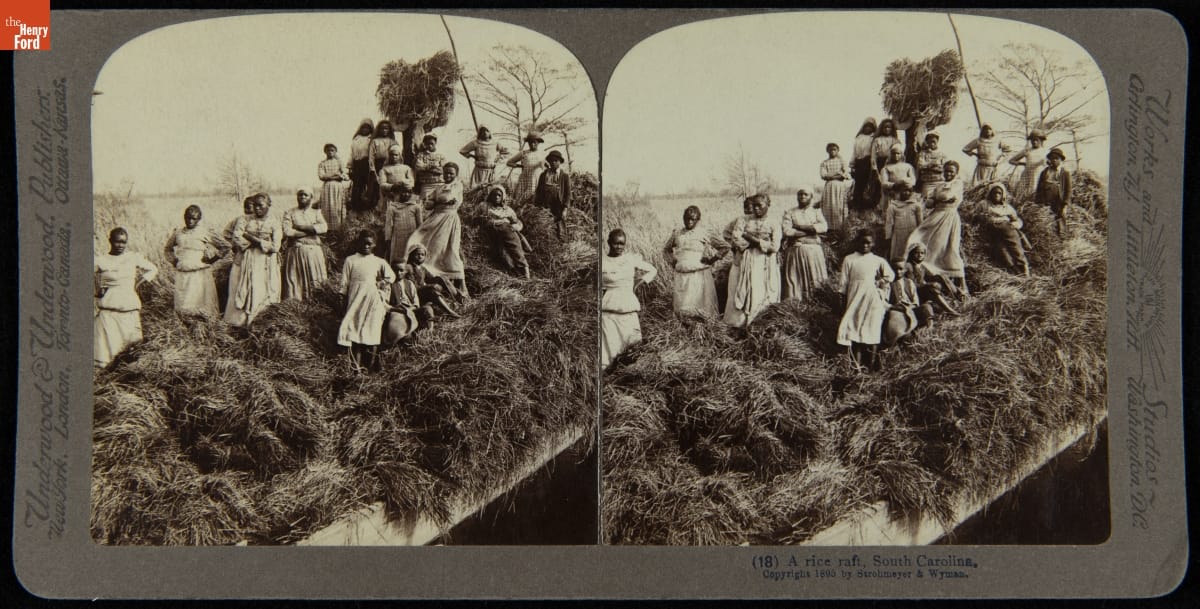
- A Rice Raft, South Carolina, 1895 - African-American women and children worked in rice fields in coastal South Carolina at the turn of the 20th century. This stereograph offers a glimpse of these people, their personalities, and their surroundings. Language on the back, however, conveyed racist stereotypes that devalued African American contributions to agriculture, and prevented viewers from seeing the women and children depicted as equals.
- 1895
- Collections - Artifact
A Rice Raft, South Carolina, 1895
African-American women and children worked in rice fields in coastal South Carolina at the turn of the 20th century. This stereograph offers a glimpse of these people, their personalities, and their surroundings. Language on the back, however, conveyed racist stereotypes that devalued African American contributions to agriculture, and prevented viewers from seeing the women and children depicted as equals.
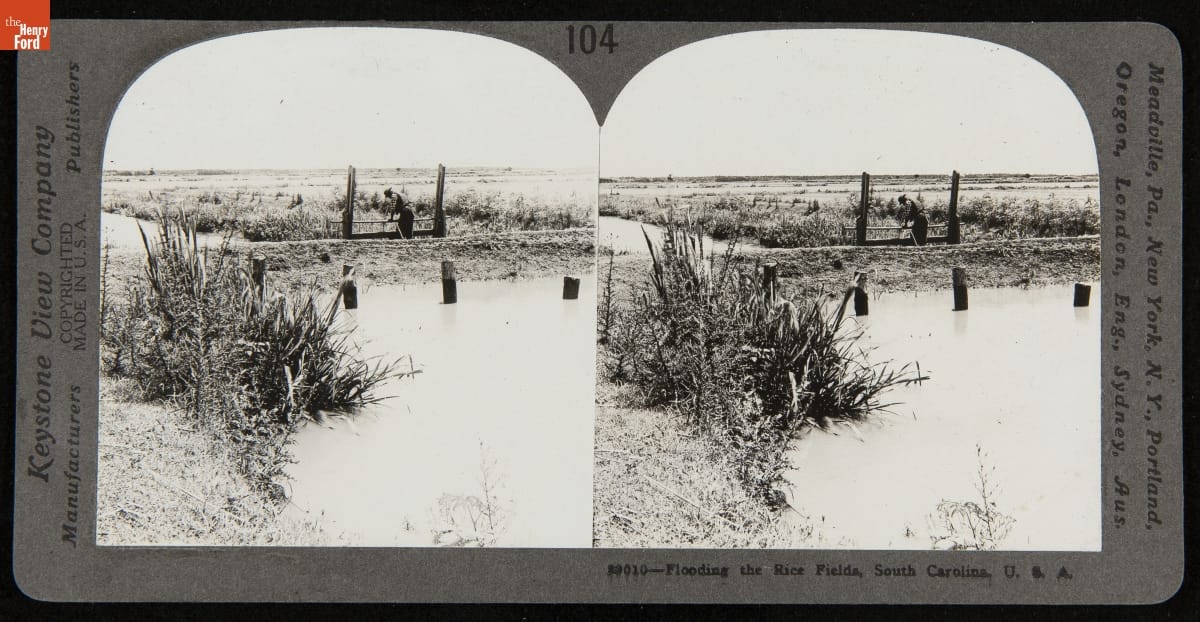
- Flooding the Rice Fields, South Carolina, U.S.A., 1905-1915 - Rice grows best when fields are flooded at planting time and periodically during the growing season. Enslaved people built the infrastructure that rice required before the Civil War. After the war, rice cultivation expanded along the Gulf Coast. This stereograph shows a man operating the gates to flood the crop while language on the reverse educated viewers about U.S. rice cultivation.
- 1905-1915
- Collections - Artifact
Flooding the Rice Fields, South Carolina, U.S.A., 1905-1915
Rice grows best when fields are flooded at planting time and periodically during the growing season. Enslaved people built the infrastructure that rice required before the Civil War. After the war, rice cultivation expanded along the Gulf Coast. This stereograph shows a man operating the gates to flood the crop while language on the reverse educated viewers about U.S. rice cultivation.
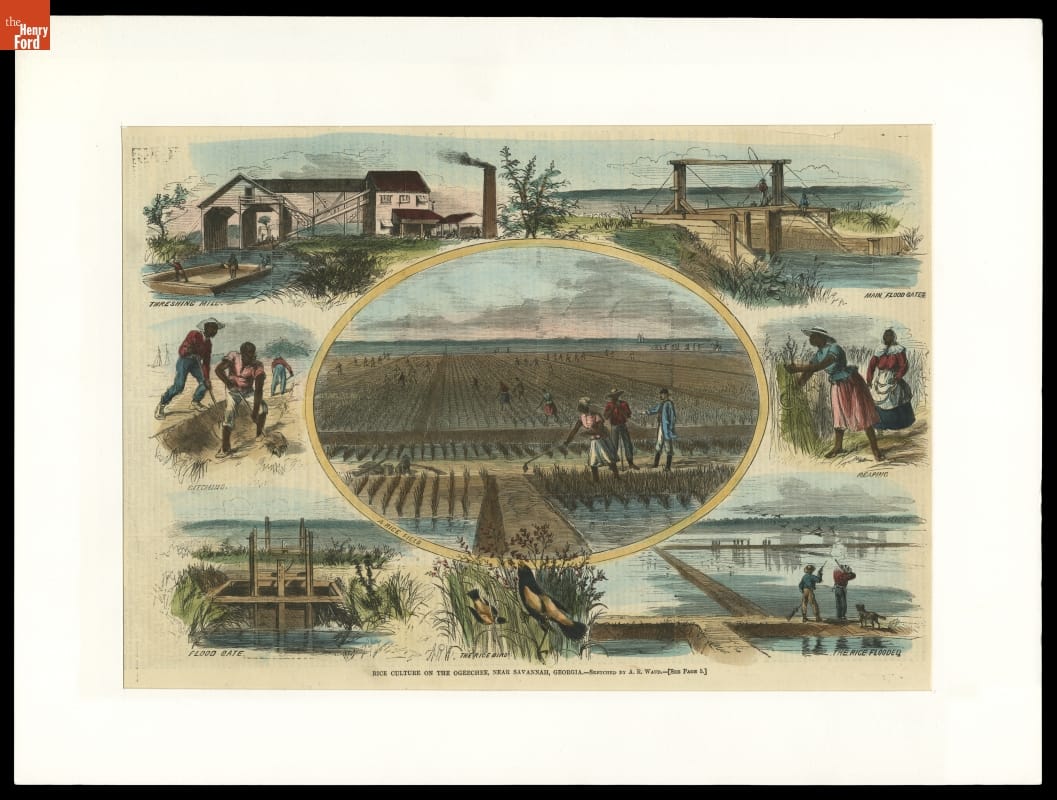
- Wood Engraving, "Rice Culture on the Ogeechee, near Savannah, Georgia," 1867 - Rice grows best when fields are flooded at planting time and periodically during the growing season. Enslaved people built the infrastructure that rice required before the Civil War. This colorized illustration featured rice cultivation after Emancipation, with individuals at work in all stages of rice cultivation in an area of intensive rice cultivation, on the Ogeechee River near Savannah, Georgia.
- January 05, 1867
- Collections - Artifact
Wood Engraving, "Rice Culture on the Ogeechee, near Savannah, Georgia," 1867
Rice grows best when fields are flooded at planting time and periodically during the growing season. Enslaved people built the infrastructure that rice required before the Civil War. This colorized illustration featured rice cultivation after Emancipation, with individuals at work in all stages of rice cultivation in an area of intensive rice cultivation, on the Ogeechee River near Savannah, Georgia.