
Search
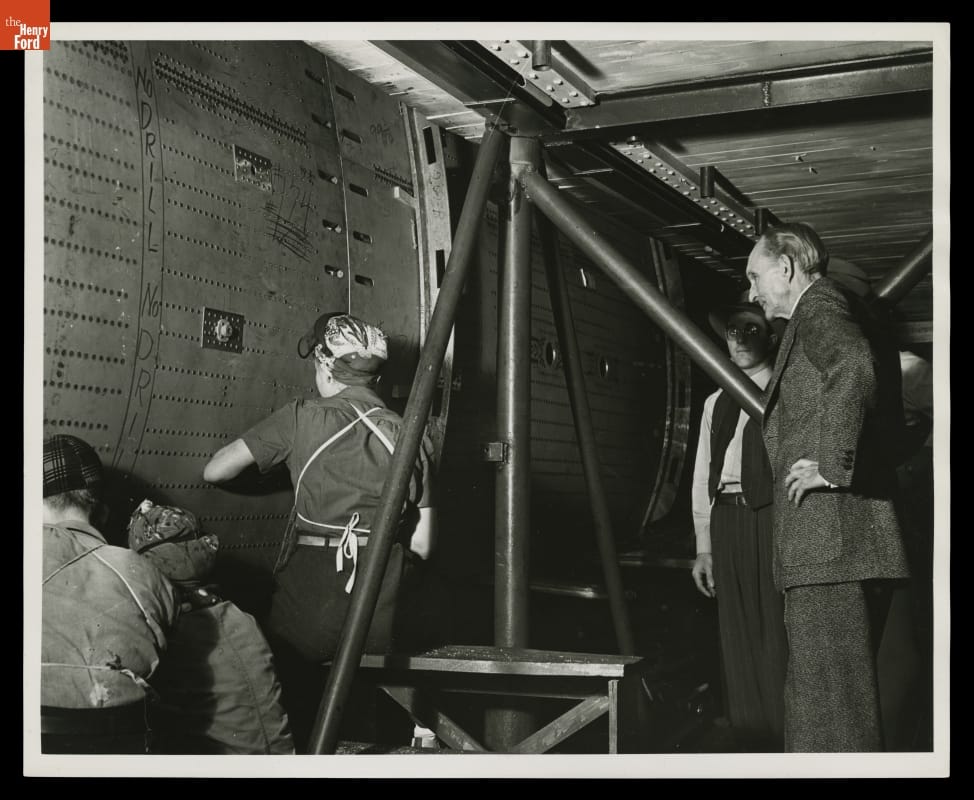
- Henry Ford Watching Workers Riveting Center Wing Section at the Willow Run Bomber Plant, 1942 - At Willow Run, Ford Motor Company built B-24 bomber planes for World War II using automobile mass production techniques. Airplanes were much more complex than cars. They required constant design changes poorly suited to a standardized assembly line. Ford overcame these difficulties and, at the plant's peak, Willow Run crews produced an average of one bomber every 63 minutes.
- December 21, 1942
- Collections - Artifact
Henry Ford Watching Workers Riveting Center Wing Section at the Willow Run Bomber Plant, 1942
At Willow Run, Ford Motor Company built B-24 bomber planes for World War II using automobile mass production techniques. Airplanes were much more complex than cars. They required constant design changes poorly suited to a standardized assembly line. Ford overcame these difficulties and, at the plant's peak, Willow Run crews produced an average of one bomber every 63 minutes.
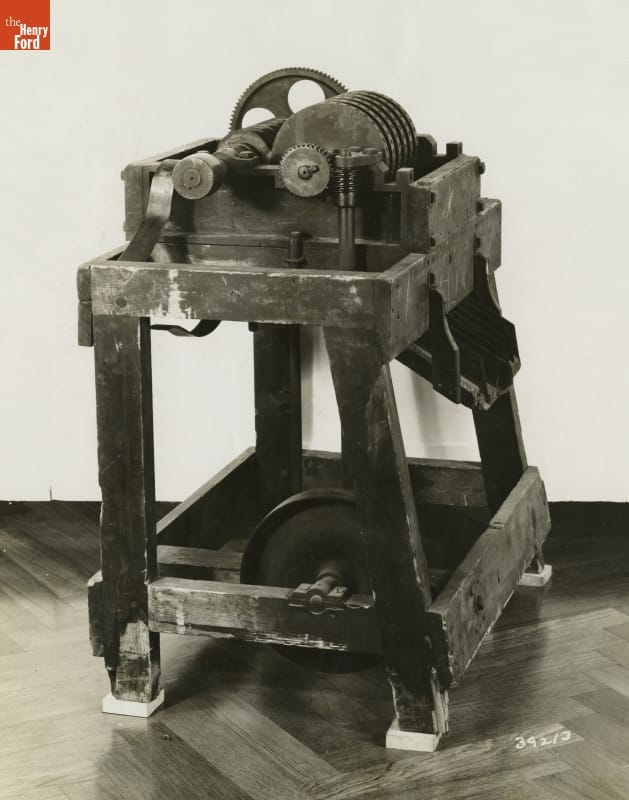
- Screw Slotting Machine, circa 1850 - Rooted in a tension between human dexterity and dictated speed, this modest machine offers insight into both the possibilities and potential drudgery of volume production methods. While operation was simple (screw blanks, inserted by hand into the holes in the rotating drum, passed beneath spinning saw blades; slotted screws fell out into a waiting bin) it was also monotonously repetitive.
- circa 1850
- Collections - Artifact
Screw Slotting Machine, circa 1850
Rooted in a tension between human dexterity and dictated speed, this modest machine offers insight into both the possibilities and potential drudgery of volume production methods. While operation was simple (screw blanks, inserted by hand into the holes in the rotating drum, passed beneath spinning saw blades; slotted screws fell out into a waiting bin) it was also monotonously repetitive.
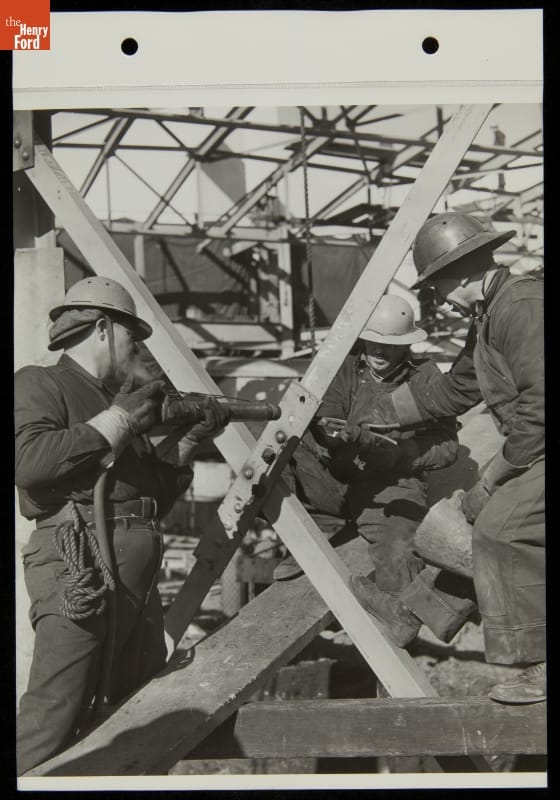
- Close-Up of Men Riveting, Ford Exposition, New York World's Fair, 1940 - Ford Motor Company vigorously publicized its exhibition at the 1939-40 New York World's Fair. A dedicated Press Department photographed fair activities and regularly distributed the images to thousands of national publications. This example publicized wintertime construction on the Ford exhibit building. Workers were preparing for the 1940 fair, when Ford would unveil a new wing featuring a 420-seat theater.
- February 26, 1940
- Collections - Artifact
Close-Up of Men Riveting, Ford Exposition, New York World's Fair, 1940
Ford Motor Company vigorously publicized its exhibition at the 1939-40 New York World's Fair. A dedicated Press Department photographed fair activities and regularly distributed the images to thousands of national publications. This example publicized wintertime construction on the Ford exhibit building. Workers were preparing for the 1940 fair, when Ford would unveil a new wing featuring a 420-seat theater.
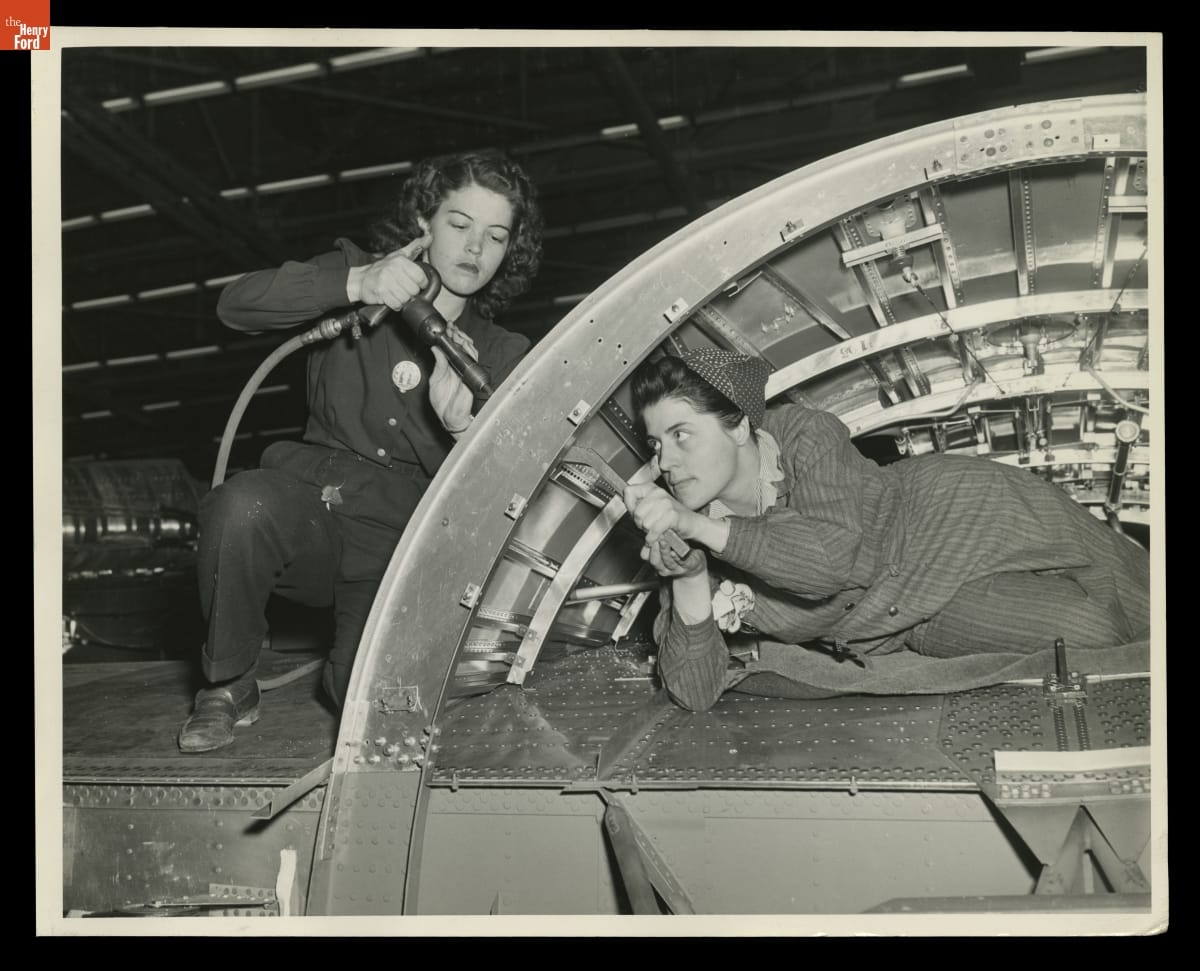
- Women Workers at Ford Motor Company Willow Run Bomber Plant, 1943 - During World War II, women joined the workforce in record numbers to take on essential jobs traditionally held by men who had entered the armed forces. At Ford Motor Company's Willow Run plant, women represented approximately one-third of the workers, doing everything from clerical work in the offices to riveting and welding on the assembly line.
- February 08, 1943
- Collections - Artifact
Women Workers at Ford Motor Company Willow Run Bomber Plant, 1943
During World War II, women joined the workforce in record numbers to take on essential jobs traditionally held by men who had entered the armed forces. At Ford Motor Company's Willow Run plant, women represented approximately one-third of the workers, doing everything from clerical work in the offices to riveting and welding on the assembly line.
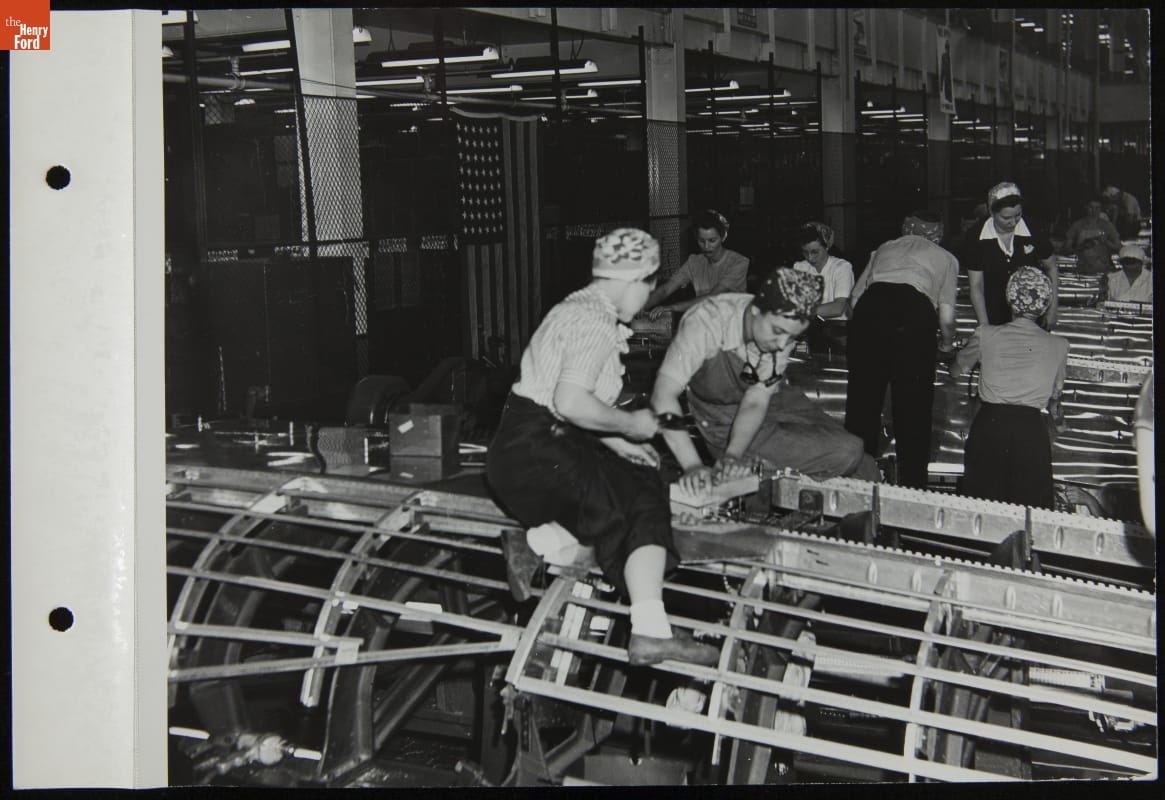
- Women Riveting Bottom Panel of B-24 Bomber, Willow Run Plant, June 1944 - During World War II, women joined the workforce in record numbers to take on essential jobs traditionally held by men who had entered the armed forces. At Ford Motor Company's Willow Run plant, women represented approximately one-third of the workers, doing everything from clerical work in the offices to riveting and welding on the assembly line.
- June 22, 1944
- Collections - Artifact
Women Riveting Bottom Panel of B-24 Bomber, Willow Run Plant, June 1944
During World War II, women joined the workforce in record numbers to take on essential jobs traditionally held by men who had entered the armed forces. At Ford Motor Company's Willow Run plant, women represented approximately one-third of the workers, doing everything from clerical work in the offices to riveting and welding on the assembly line.
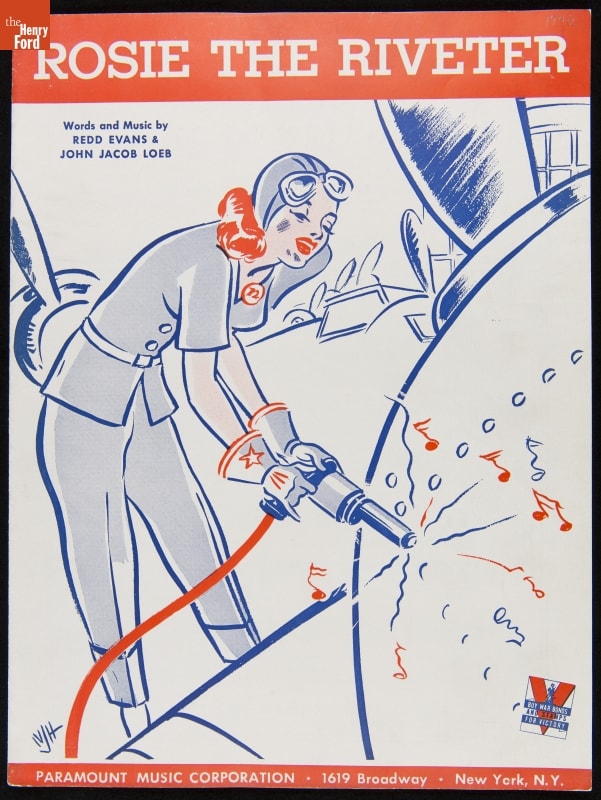
- "Rosie the Riveter," 1942 -
- 1942
- Collections - Artifact
"Rosie the Riveter," 1942
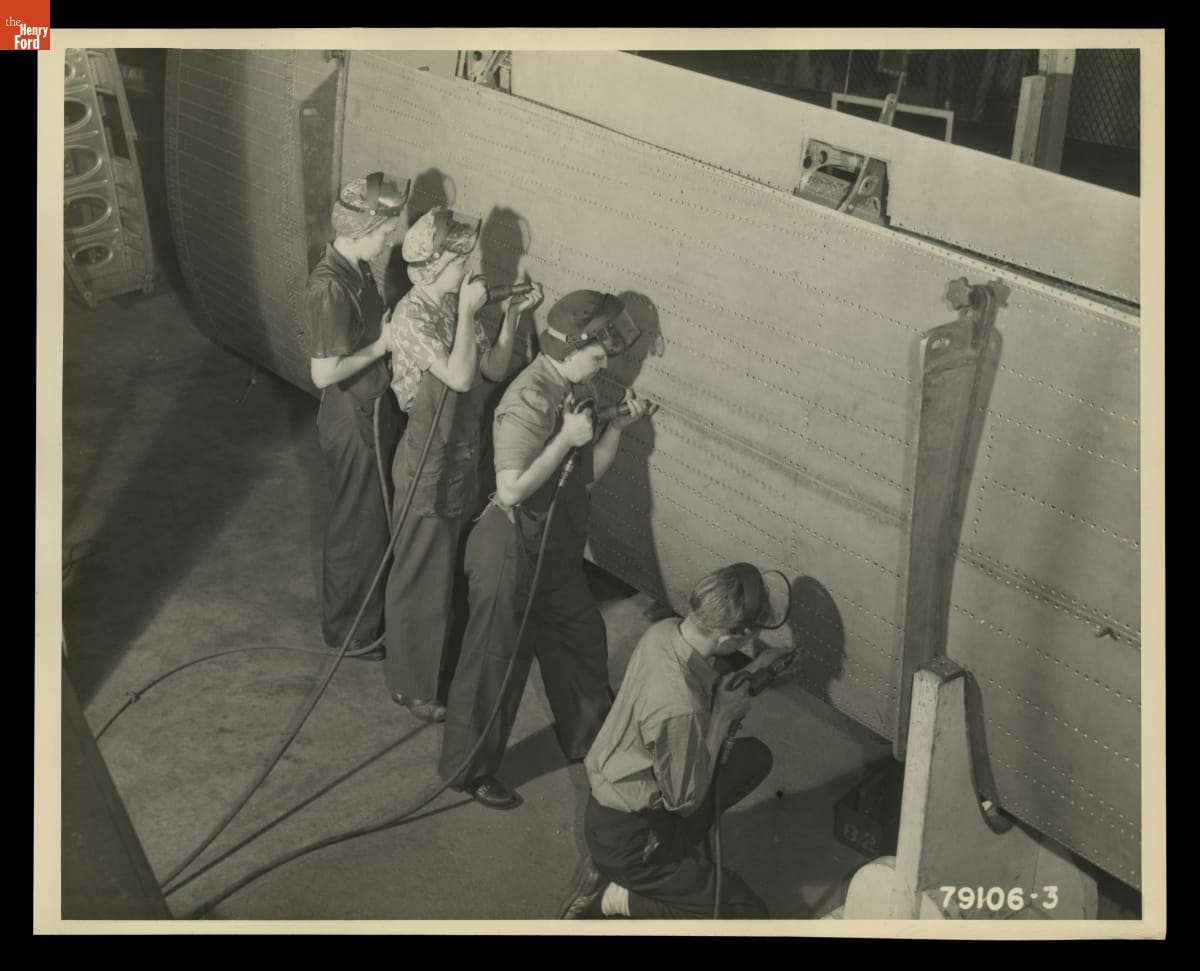
- Women Learning to Rivet at the Highland Park Trade School, Highland Park, Michigan, December 16, 1943 - Henry Ford was an educational pioneer. He believed that practical skills should be taught alongside academics. In 1916, he established a trade school adjacent to the Highland Park Ford Plant. Students alternated between traditional class work and shop practice. During World War II, the school served as a training center where skilled tradesmen prepared military machinists and female factory workers.
- December 16, 1943
- Collections - Artifact
Women Learning to Rivet at the Highland Park Trade School, Highland Park, Michigan, December 16, 1943
Henry Ford was an educational pioneer. He believed that practical skills should be taught alongside academics. In 1916, he established a trade school adjacent to the Highland Park Ford Plant. Students alternated between traditional class work and shop practice. During World War II, the school served as a training center where skilled tradesmen prepared military machinists and female factory workers.
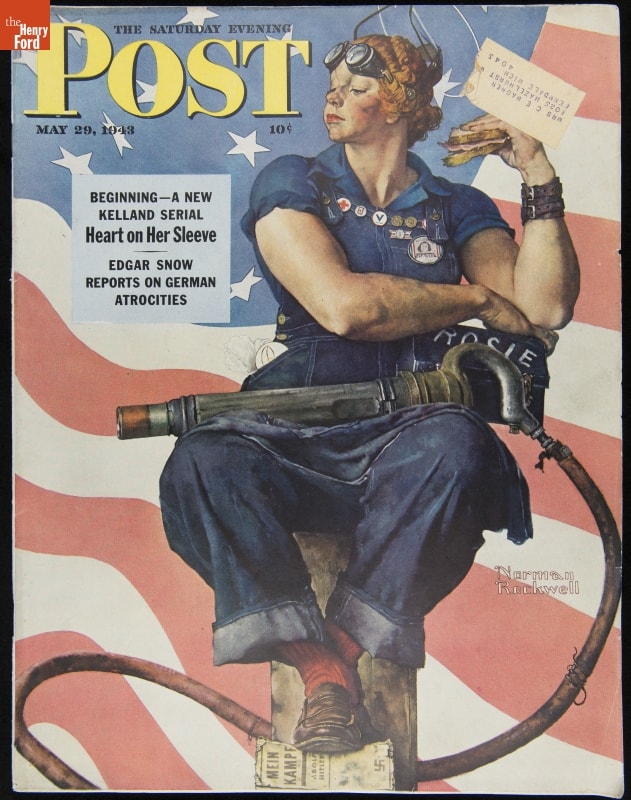
- "The Saturday Evening Post," May 29, 1943 - <em>The Saturday Evening Post</em>, first published in 1821 as a four-page weekly newspaper, became one of America's most popular weekly publications by the mid-1900s. The magazine contained news, commentaries, fiction, and general interest articles. But its most distinctive feature was its front cover illustrations by artists such as George Hughes, John Falter, J.C. Leyendecker, and Norman Rockwell.
- May 29, 1943
- Collections - Artifact
"The Saturday Evening Post," May 29, 1943
The Saturday Evening Post, first published in 1821 as a four-page weekly newspaper, became one of America's most popular weekly publications by the mid-1900s. The magazine contained news, commentaries, fiction, and general interest articles. But its most distinctive feature was its front cover illustrations by artists such as George Hughes, John Falter, J.C. Leyendecker, and Norman Rockwell.
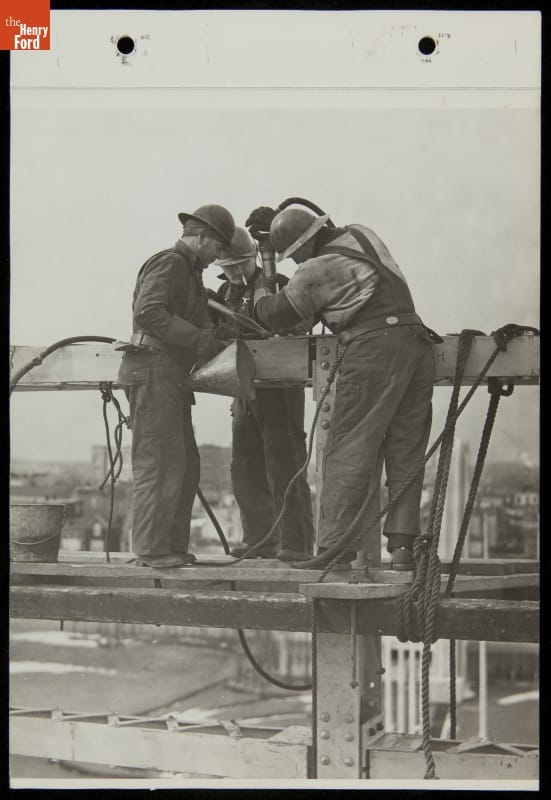
- Close-Up of Men Riveting, Ford Exposition, New York World's Fair, 1940 - Ford Motor Company vigorously publicized its exhibition at the 1939-40 New York World's Fair. A dedicated Press Department photographed fair activities and regularly distributed the images to thousands of national publications. This example publicized wintertime construction on the Ford exhibit building. Workers were preparing for the 1940 fair, when Ford would unveil a new wing featuring a 420-seat theater.
- February 27, 1940
- Collections - Artifact
Close-Up of Men Riveting, Ford Exposition, New York World's Fair, 1940
Ford Motor Company vigorously publicized its exhibition at the 1939-40 New York World's Fair. A dedicated Press Department photographed fair activities and regularly distributed the images to thousands of national publications. This example publicized wintertime construction on the Ford exhibit building. Workers were preparing for the 1940 fair, when Ford would unveil a new wing featuring a 420-seat theater.
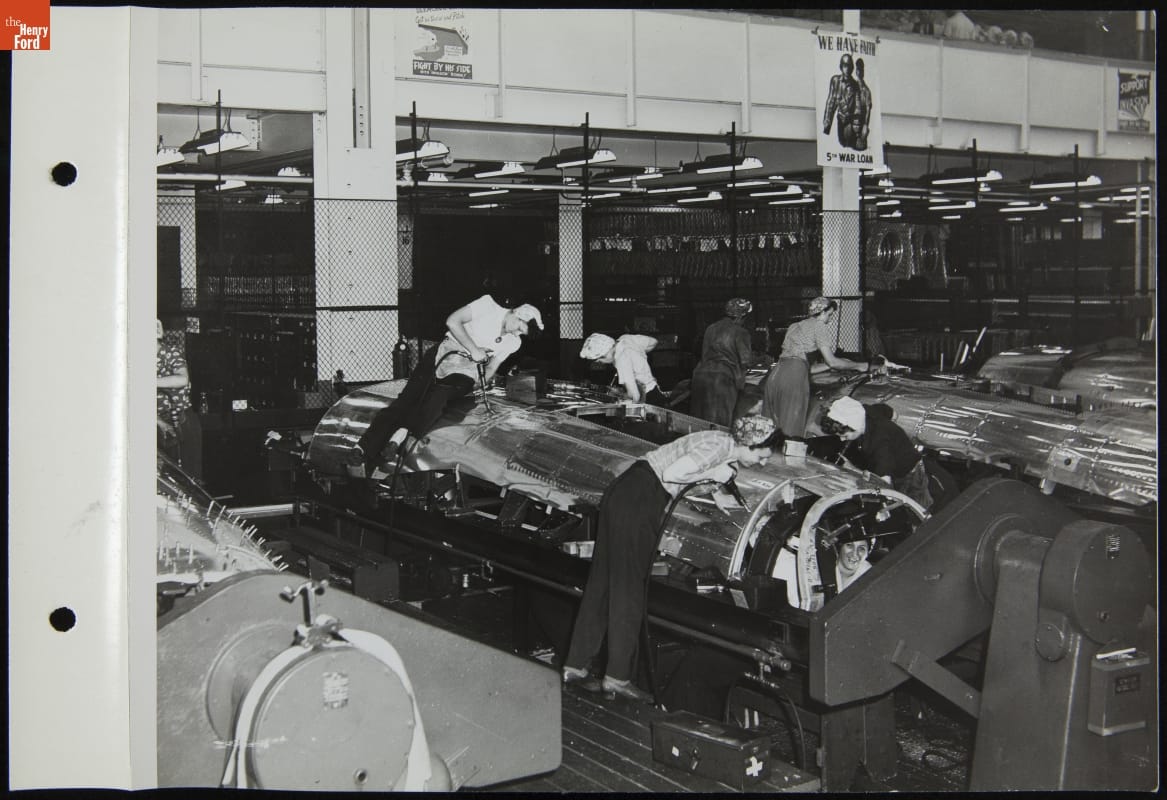
- Women Riveting Bottom Panel of B-24 Bomber, Willow Run Plant, June 1944 - During World War II, women joined the workforce in record numbers to take on essential jobs traditionally held by men who had entered the armed forces. At Ford Motor Company's Willow Run plant, women represented approximately one-third of the workers, doing everything from clerical work in the offices to riveting and welding on the assembly line.
- June 22, 1944
- Collections - Artifact
Women Riveting Bottom Panel of B-24 Bomber, Willow Run Plant, June 1944
During World War II, women joined the workforce in record numbers to take on essential jobs traditionally held by men who had entered the armed forces. At Ford Motor Company's Willow Run plant, women represented approximately one-third of the workers, doing everything from clerical work in the offices to riveting and welding on the assembly line.