
Search
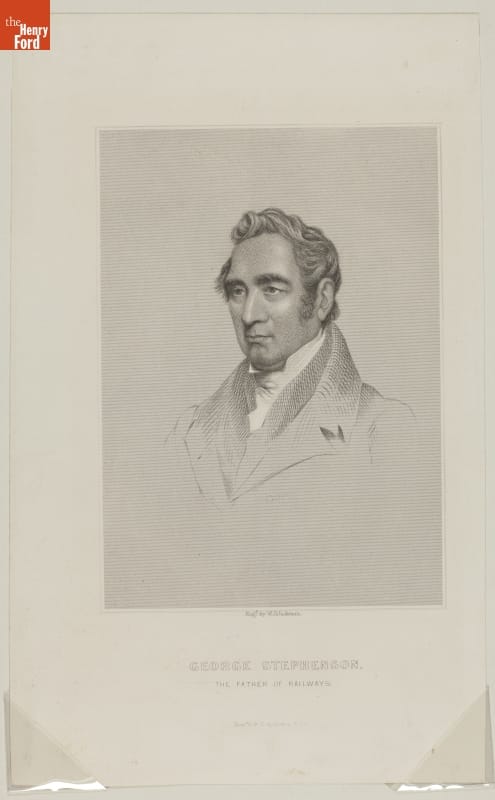
- Steel Engraving, Portrait of George Stephenson, "Father of Railways," circa 1855 - This circa 1855 engraving is a portrait of British engineer George Stephenson, known as the "Father of Railways." He built the first public rail line for steam locomotives, and set the world's standard gauge for rails, also called the "Stephenson gauge."
- circa 1855
- Collections - Artifact
Steel Engraving, Portrait of George Stephenson, "Father of Railways," circa 1855
This circa 1855 engraving is a portrait of British engineer George Stephenson, known as the "Father of Railways." He built the first public rail line for steam locomotives, and set the world's standard gauge for rails, also called the "Stephenson gauge."
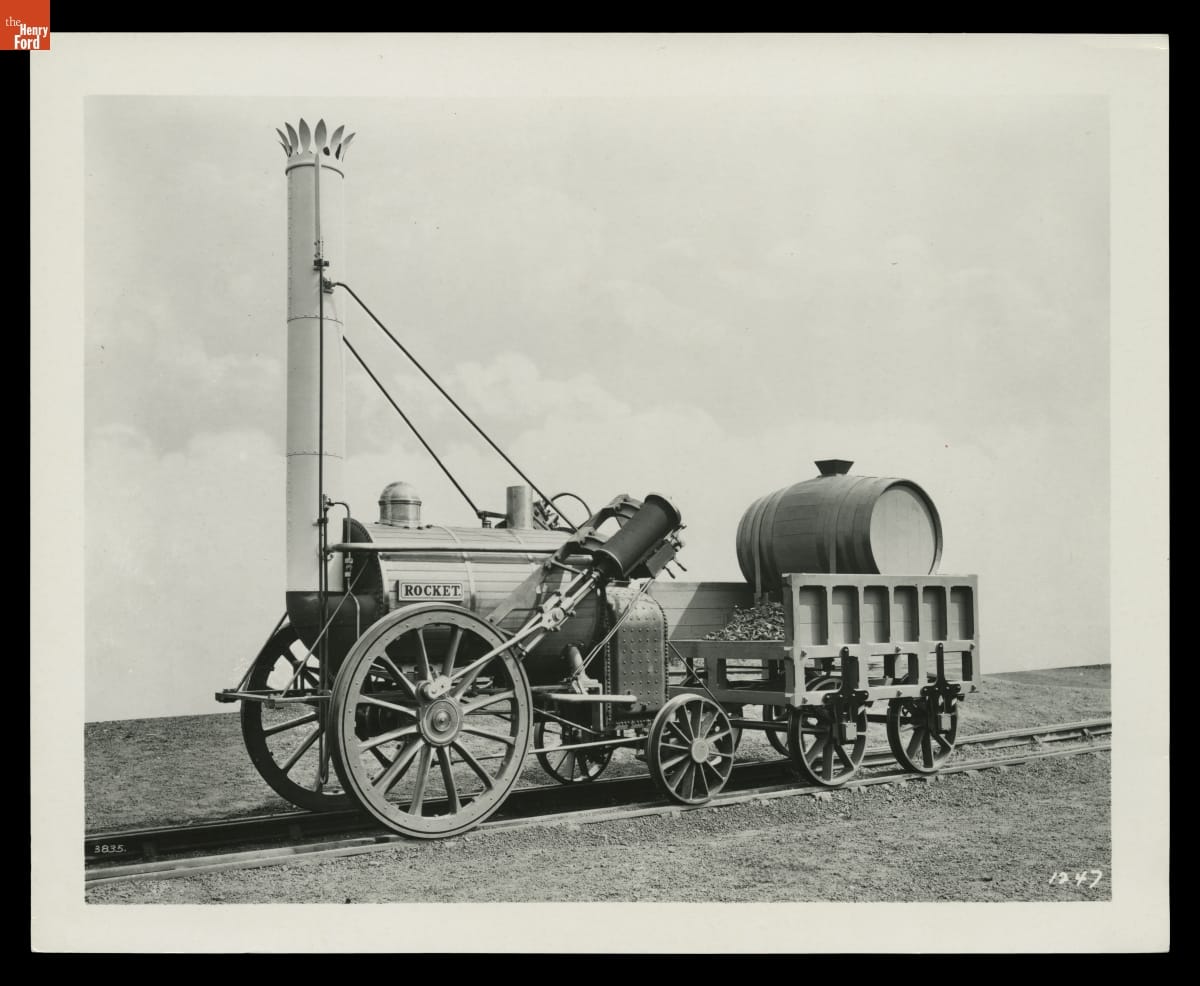
- Replica of Stephenson's 1829 "Rocket" Locomotive - When England's Liverpool and Manchester Railway held a contest in 1829 to find the best locomotive design for its line, George Stephenson's <EM>Rocket</EM> took the prize. The <EM>Rocket</EM>'s horizontal boiler, with cylinders directly connected to its driving wheels, set the standard pattern for all subsequent locomotives. This photo shows the replica Henry Ford commissioned from the original builders in 1928.
- October 14, 1929
- Collections - Artifact
Replica of Stephenson's 1829 "Rocket" Locomotive
When England's Liverpool and Manchester Railway held a contest in 1829 to find the best locomotive design for its line, George Stephenson's Rocket took the prize. The Rocket's horizontal boiler, with cylinders directly connected to its driving wheels, set the standard pattern for all subsequent locomotives. This photo shows the replica Henry Ford commissioned from the original builders in 1928.
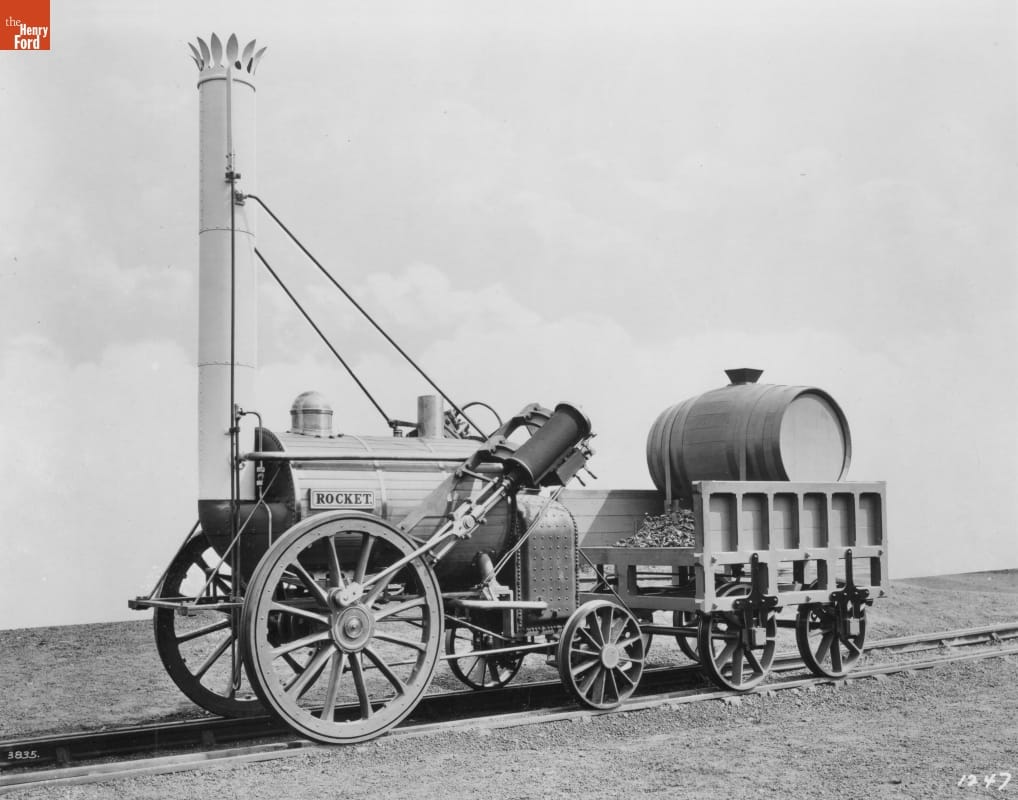
- Replica of Stephenson's 1829 "Rocket" Locomotive - When England's Liverpool and Manchester Railway held a contest in 1829 to find the best locomotive design for its line, George Stephenson's <EM>Rocket</EM> took the prize. The <EM>Rocket</EM>'s horizontal boiler, with cylinders directly connected to its driving wheels, set the standard pattern for all subsequent locomotives. Henry Ford commissioned this replica from the original builders in 1928.
- 1829
- Collections - Artifact
Replica of Stephenson's 1829 "Rocket" Locomotive
When England's Liverpool and Manchester Railway held a contest in 1829 to find the best locomotive design for its line, George Stephenson's Rocket took the prize. The Rocket's horizontal boiler, with cylinders directly connected to its driving wheels, set the standard pattern for all subsequent locomotives. Henry Ford commissioned this replica from the original builders in 1928.
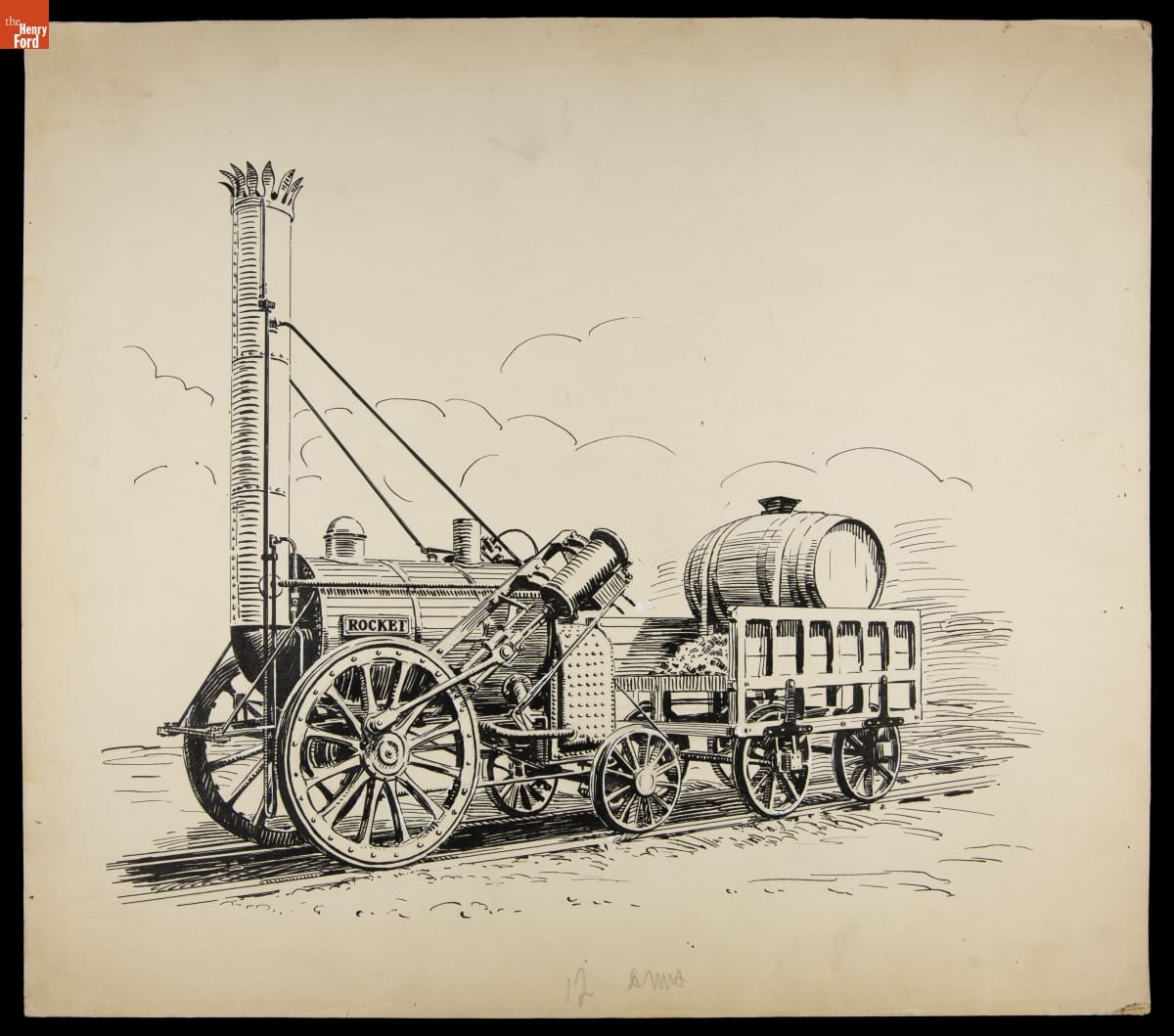
- Replica of Stephenson's 1829 "Rocket" Locomotive. circa 1934 - Irving Bacon, a Ford Motor Company employee and Henry Ford's personal artist, created pen-and-ink drawings to illustrate guidebooks for the Edison Institute Museum and Greenfield Village (now The Henry Ford) when they officially opened to the public in 1933. An illustrated souvenir guidebook helped visitors navigate the exhibits and grounds. Ford also used these drawings in other company publications.
- circa 1934
- Collections - Artifact
Replica of Stephenson's 1829 "Rocket" Locomotive. circa 1934
Irving Bacon, a Ford Motor Company employee and Henry Ford's personal artist, created pen-and-ink drawings to illustrate guidebooks for the Edison Institute Museum and Greenfield Village (now The Henry Ford) when they officially opened to the public in 1933. An illustrated souvenir guidebook helped visitors navigate the exhibits and grounds. Ford also used these drawings in other company publications.
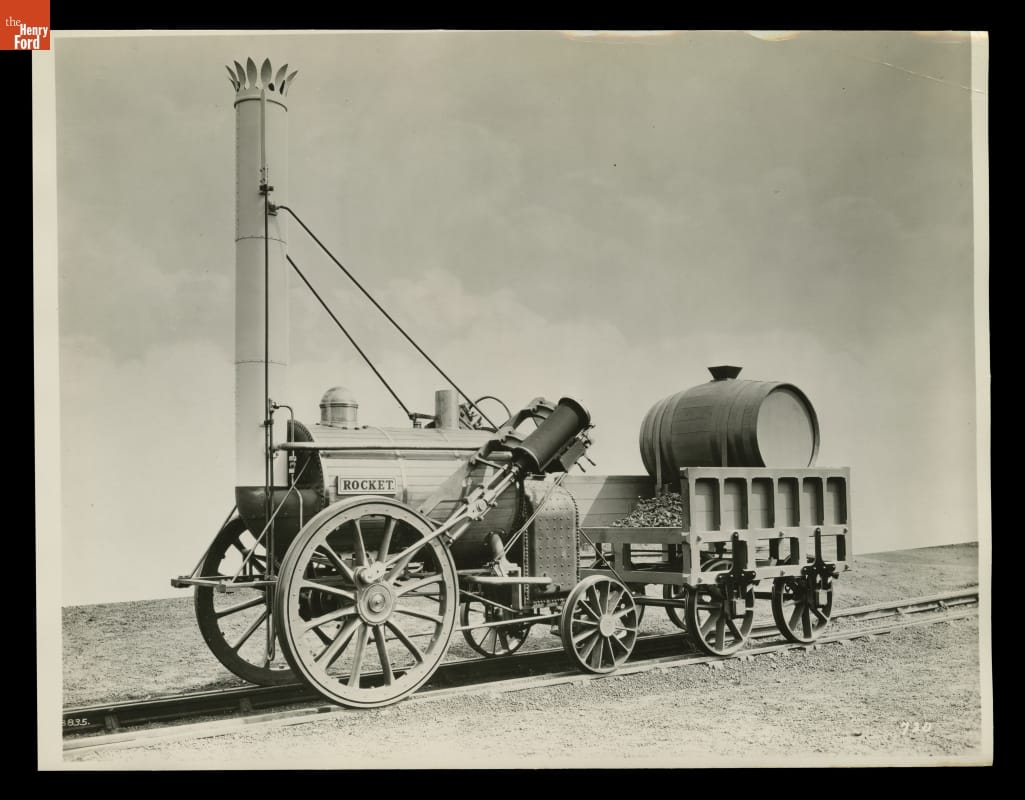
- Replica of Robert Stephenson's 1829 "Rocket" Locomotive, July 1929 - When England's Liverpool and Manchester Railway held a contest in 1829 to find the best locomotive design for its line, George Stephenson's <EM>Rocket</EM> took the prize. The <EM>Rocket</EM>'s horizontal boiler, with cylinders directly connected to its driving wheels, set the standard pattern for all subsequent locomotives. This photo shows the replica Henry Ford commissioned from the original builders in 1928.
- July 10, 1929
- Collections - Artifact
Replica of Robert Stephenson's 1829 "Rocket" Locomotive, July 1929
When England's Liverpool and Manchester Railway held a contest in 1829 to find the best locomotive design for its line, George Stephenson's Rocket took the prize. The Rocket's horizontal boiler, with cylinders directly connected to its driving wheels, set the standard pattern for all subsequent locomotives. This photo shows the replica Henry Ford commissioned from the original builders in 1928.
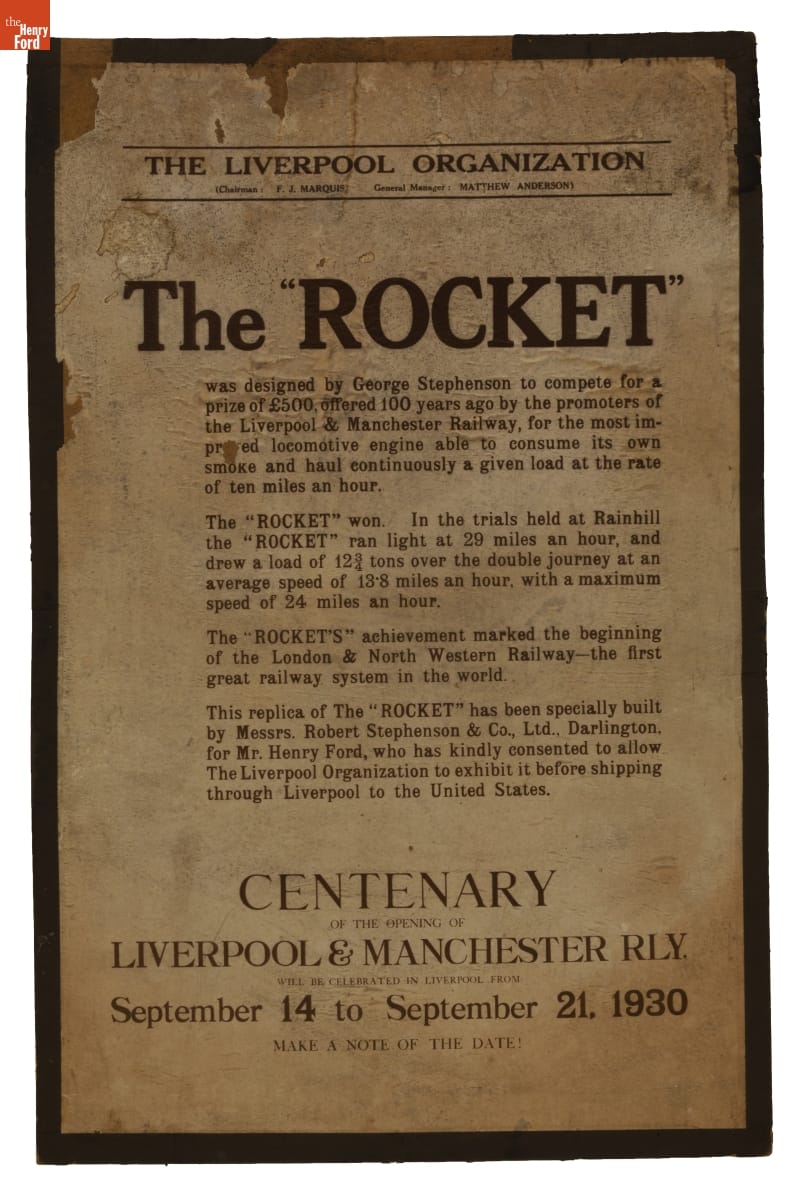
- Poster Advertising "The Rocket Locomotive at the Centenary of the Opening of the Liverpool & Manchester Railway," September 14-21, 1930 - The Liverpool and Manchester Railway, connecting its namesake cities in the United Kingdom, opened in 1830. It was the world's first inter-city railroad, and the first to operate exclusively with steam locomotives. George Stephenson designed and built the original <em>Rocket</em> for the Liverpool and Manchester in 1829. Henry Ford commissioned a replica of Stephenson's influential steam locomotive a century later.
- September 01, 1930
- Collections - Artifact
Poster Advertising "The Rocket Locomotive at the Centenary of the Opening of the Liverpool & Manchester Railway," September 14-21, 1930
The Liverpool and Manchester Railway, connecting its namesake cities in the United Kingdom, opened in 1830. It was the world's first inter-city railroad, and the first to operate exclusively with steam locomotives. George Stephenson designed and built the original Rocket for the Liverpool and Manchester in 1829. Henry Ford commissioned a replica of Stephenson's influential steam locomotive a century later.