
Search
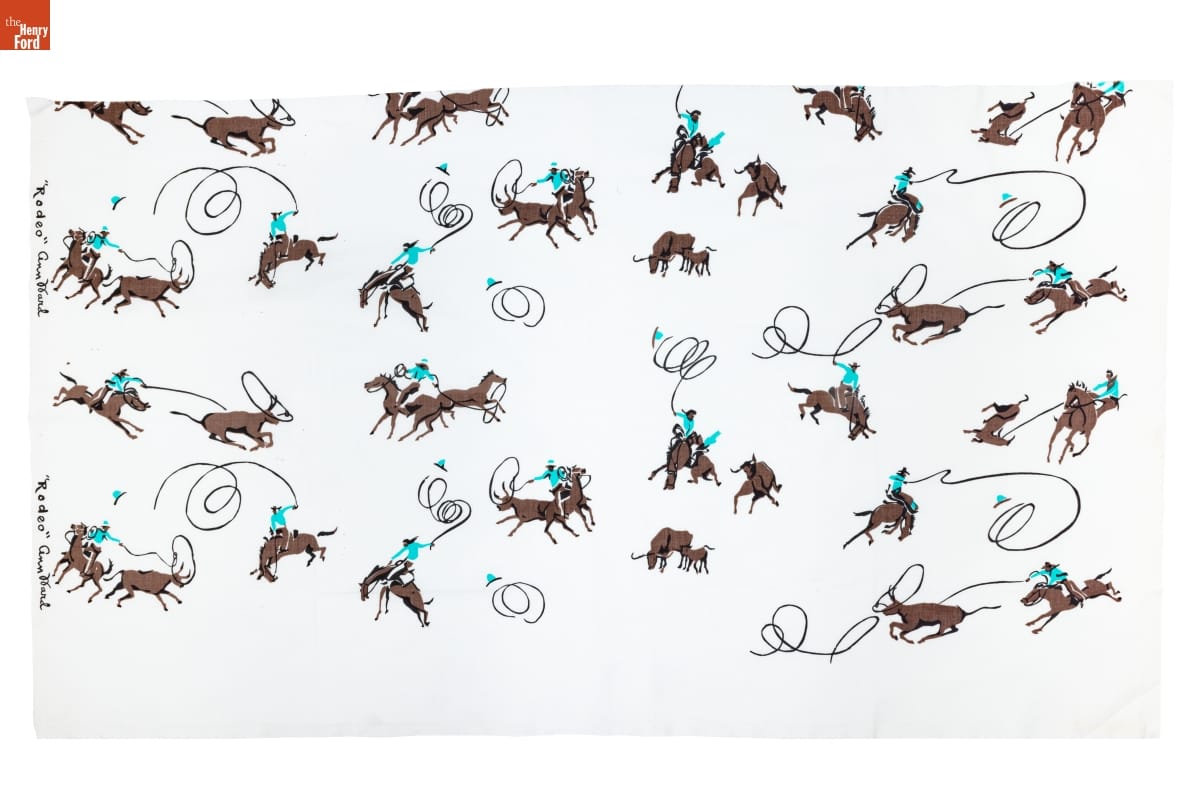
- Fabric, "Rodeo" -
- 1956-2004
- Collections - Artifact
Fabric, "Rodeo"
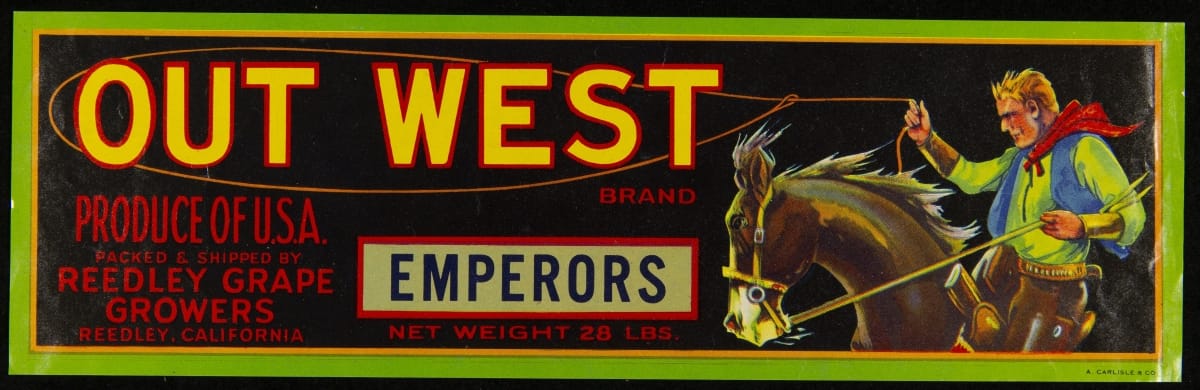
- Crate Label, "Out West Brand Emperor Grapes," circa 1940 - In 1869, the transcontinental railroad opened eastern markets to the West Coast produce industry for the first time. As produce companies shipped crates of fruits and vegetables across the country, they needed a way to distinguish their goods from their competitors'. Colorful, eye-catching labels, like this one for Out West Brand Emperor Grapes, were created to attract grocers purchasing goods from wholesale markets.
- circa 1940
- Collections - Artifact
Crate Label, "Out West Brand Emperor Grapes," circa 1940
In 1869, the transcontinental railroad opened eastern markets to the West Coast produce industry for the first time. As produce companies shipped crates of fruits and vegetables across the country, they needed a way to distinguish their goods from their competitors'. Colorful, eye-catching labels, like this one for Out West Brand Emperor Grapes, were created to attract grocers purchasing goods from wholesale markets.
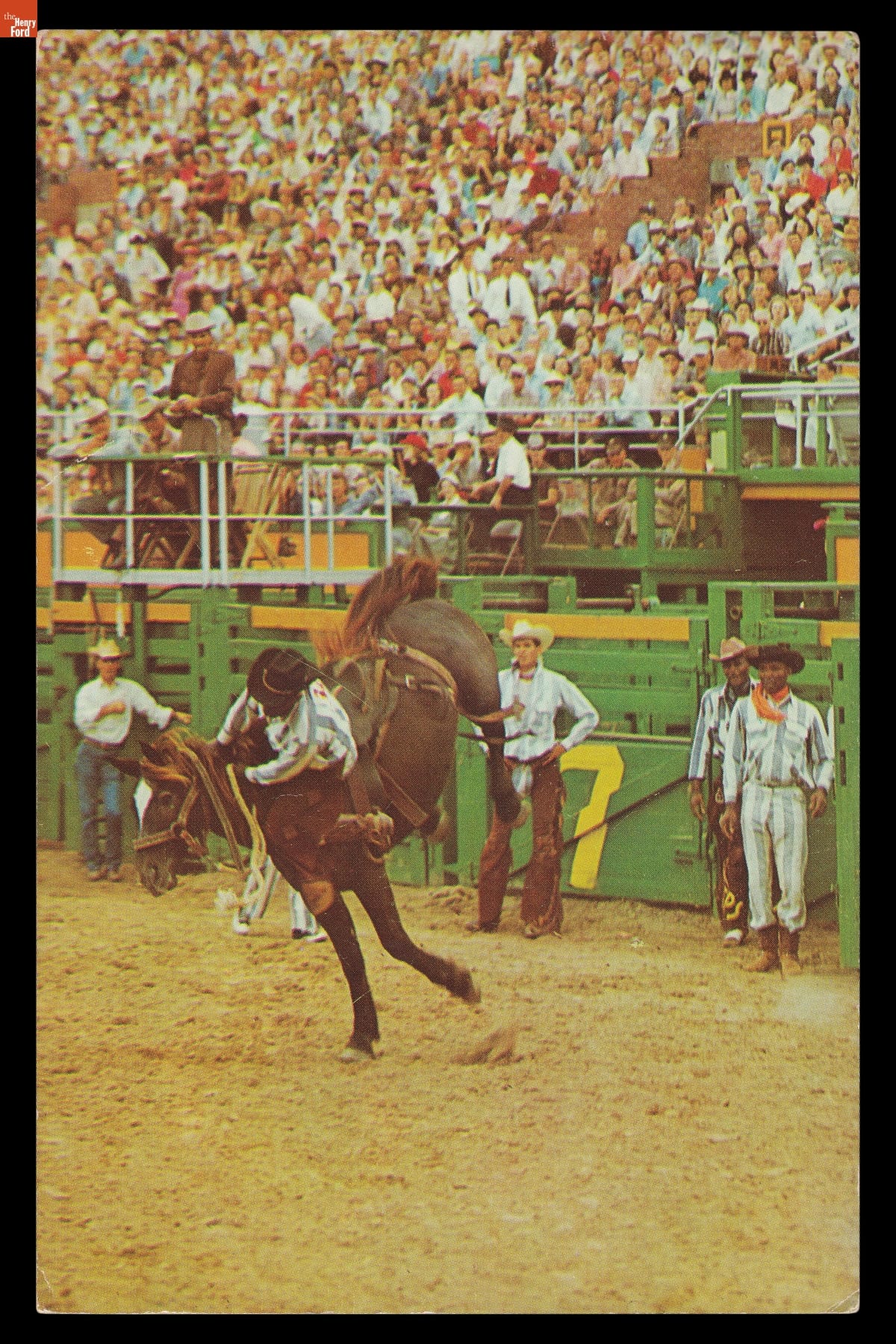
- Thrills at the Rodeo, 1960-1966 -
- July 23, 1966
- Collections - Artifact
Thrills at the Rodeo, 1960-1966
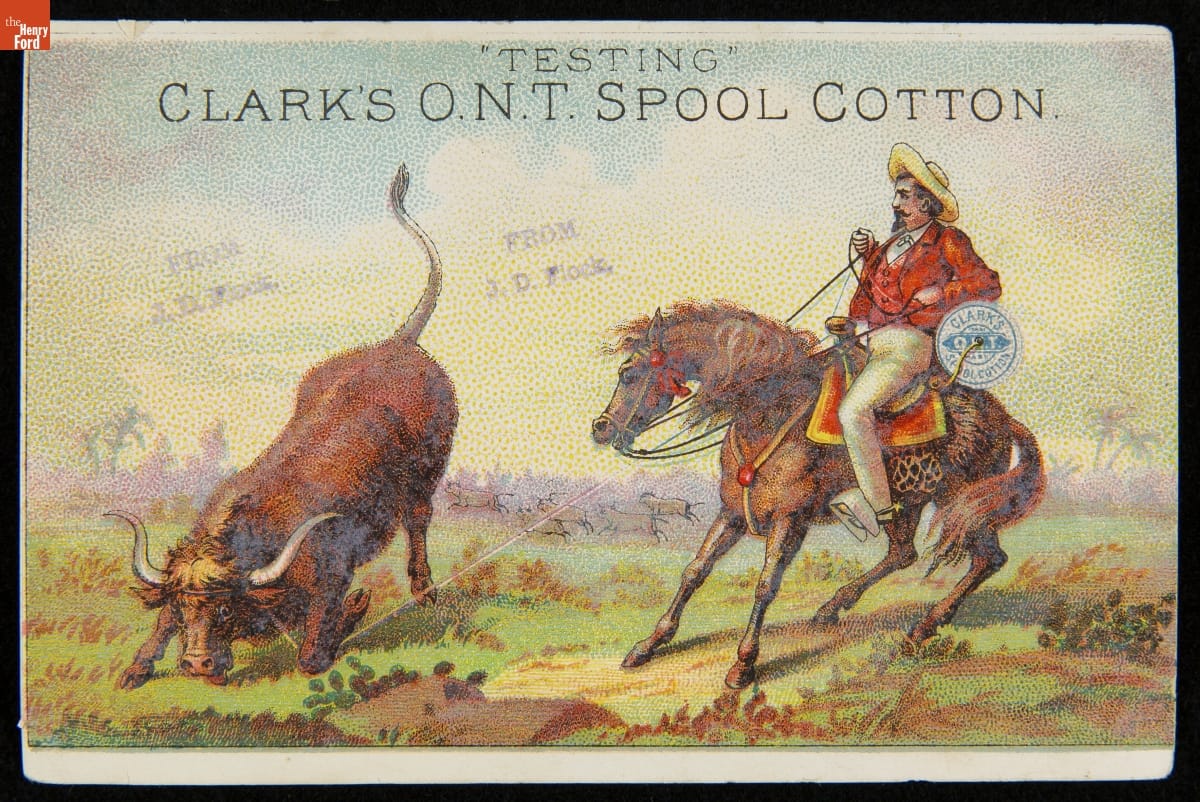
- Trade Card for Clark's Spool Cotton, Clark's O.N.T., 1880-1890 - In the last third of the nineteenth century, an unprecedented variety of consumer goods and services flooded the American market. Advertisers, armed with new methods of color printing, bombarded potential customers with trade cards. Americans enjoyed and often saved the vibrant little advertisements found in product packages or distributed by local merchants. Many survive as historical records of commercialism in the United States.
- 1880-1890
- Collections - Artifact
Trade Card for Clark's Spool Cotton, Clark's O.N.T., 1880-1890
In the last third of the nineteenth century, an unprecedented variety of consumer goods and services flooded the American market. Advertisers, armed with new methods of color printing, bombarded potential customers with trade cards. Americans enjoyed and often saved the vibrant little advertisements found in product packages or distributed by local merchants. Many survive as historical records of commercialism in the United States.