
Search
- Alphabet Blocks, Used by Edsel Ford, 1898-1903 - By 1900, many American toy companies mass-produced colorful wooden alphabet blocks. These blocks belonged to Henry and Clara Ford's son, Edsel. Along with letters, they feature images of animals with their names printed below. Words on the blocks encouraged children to think about letter sounds and spelling while they played.
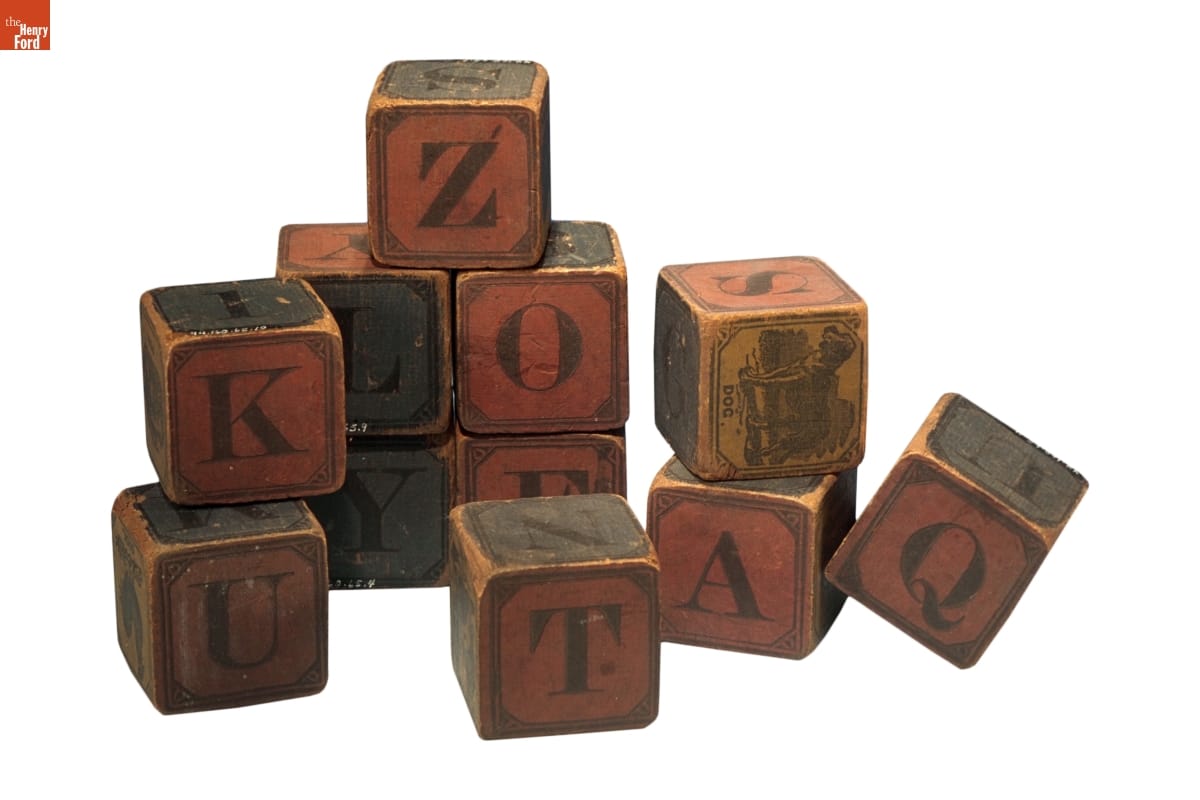
- 1898-1903
- Collections - Artifact
Alphabet Blocks, Used by Edsel Ford, 1898-1903
By 1900, many American toy companies mass-produced colorful wooden alphabet blocks. These blocks belonged to Henry and Clara Ford's son, Edsel. Along with letters, they feature images of animals with their names printed below. Words on the blocks encouraged children to think about letter sounds and spelling while they played.
- Alphabet Blocks, Used by Edsel Ford, 1895-1900 - By 1900, many American toy companies mass-produced wooden alphabet blocks with raised ornamentation and colorful printing. These blocks belonged to Henry and Clara Ford's son, Edsel. Along with letters, they feature images of animals with their names printed below. Words on the blocks encouraged children to think about letter sounds and spelling while they played.
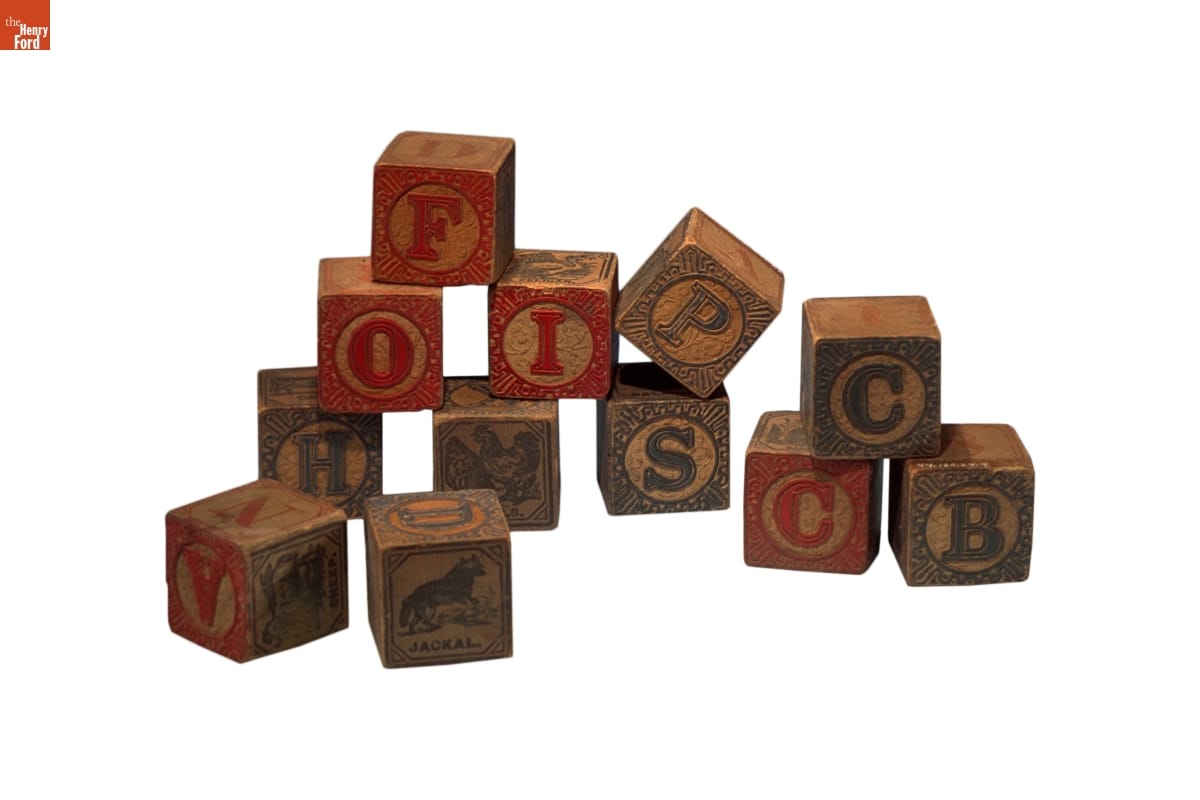
- 1895-1900
- Collections - Artifact
Alphabet Blocks, Used by Edsel Ford, 1895-1900
By 1900, many American toy companies mass-produced wooden alphabet blocks with raised ornamentation and colorful printing. These blocks belonged to Henry and Clara Ford's son, Edsel. Along with letters, they feature images of animals with their names printed below. Words on the blocks encouraged children to think about letter sounds and spelling while they played.
- Hill's Kindergarten Building and Spelling Blocks, 1880-1890 - Educational toys in the late nineteenth century often served multiple purposes. This set of building and alphabet blocks included different shapes and colors for creative stacking. It also offered a variety of learning opportunities. With upper and lowercase letters in print and cursive, images of animals with printed names, and Roman and Arabic numerals, children could practice spelling and counting while they played.
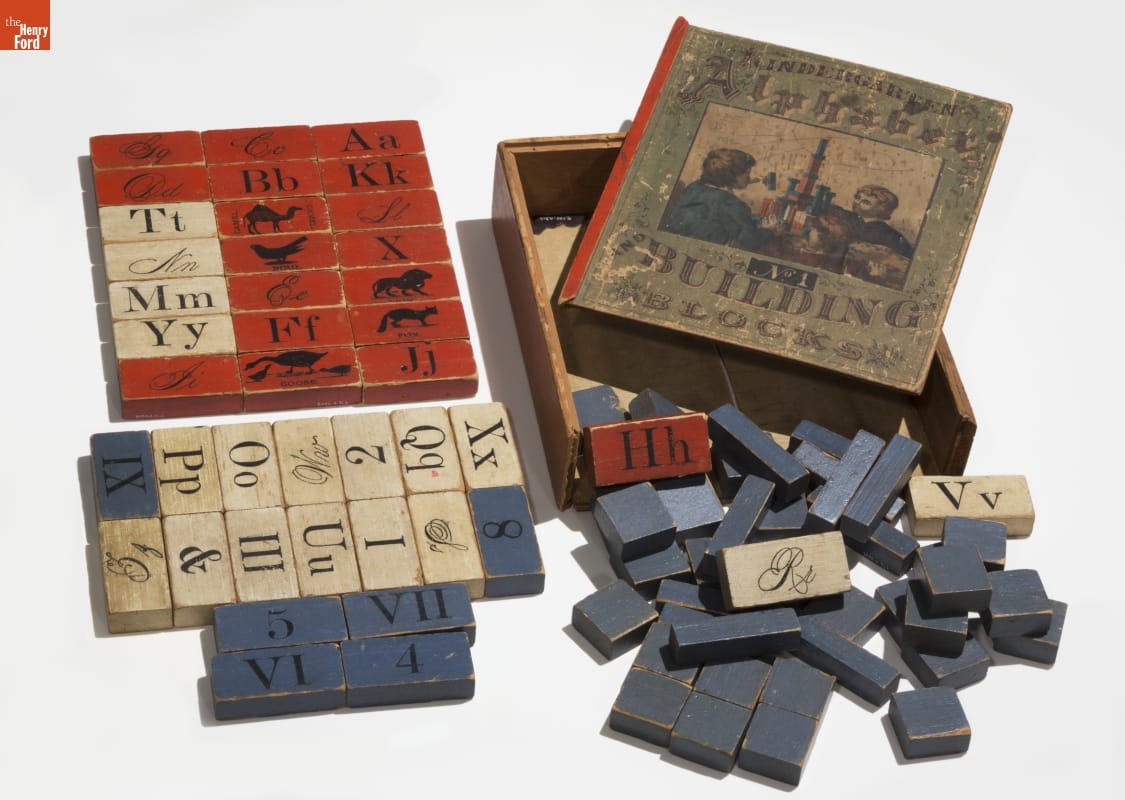
- 1880-1890
- Collections - Artifact
Hill's Kindergarten Building and Spelling Blocks, 1880-1890
Educational toys in the late nineteenth century often served multiple purposes. This set of building and alphabet blocks included different shapes and colors for creative stacking. It also offered a variety of learning opportunities. With upper and lowercase letters in print and cursive, images of animals with printed names, and Roman and Arabic numerals, children could practice spelling and counting while they played.
- ABC Educational Cards, 1944-1950 - Here, the classic alphabet block appears on a set of illustrated flashcards. Lettered cards show something beginning with that letter; numbered cards show that number of birds. Colorful packaging appealed to youngsters, and a seal of approval from <em>Parents'</em> magazine assured grown-ups of the cards' educational value.

- 1944-1950
- Collections - Artifact
ABC Educational Cards, 1944-1950
Here, the classic alphabet block appears on a set of illustrated flashcards. Lettered cards show something beginning with that letter; numbered cards show that number of birds. Colorful packaging appealed to youngsters, and a seal of approval from Parents' magazine assured grown-ups of the cards' educational value.