
Search
- "Rover" the Dog at Cotswold Cottage in Greenfield Village, 1932 - Henry Ford purchased a black Newfoundland puppy in 1930. The dog, named Rover, would help guard sheep at Greenfield Village's Cotswold Cottage. (Ford envisioned the interpretation of the cottage as the home of an English sheepherder.) The dog became a fixture in the Village. Rover was beloved by many: Gus Munchow--his trainer, Ford, and the schoolchildren of the Edison Institute.
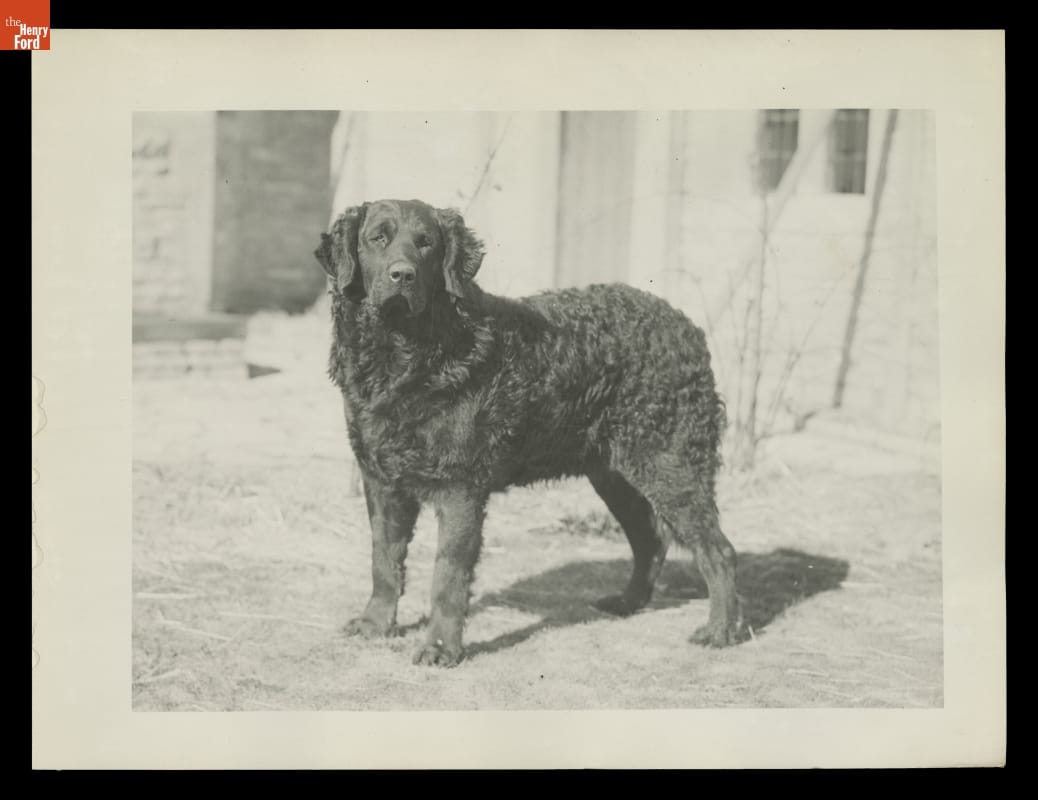
- February 18, 1932
- Collections - Artifact
"Rover" the Dog at Cotswold Cottage in Greenfield Village, 1932
Henry Ford purchased a black Newfoundland puppy in 1930. The dog, named Rover, would help guard sheep at Greenfield Village's Cotswold Cottage. (Ford envisioned the interpretation of the cottage as the home of an English sheepherder.) The dog became a fixture in the Village. Rover was beloved by many: Gus Munchow--his trainer, Ford, and the schoolchildren of the Edison Institute.
- "Rover" the Dog at Cotswold Cottage in Greenfield Village, 1932 - Henry Ford purchased a black Newfoundland puppy in 1930. The dog, named Rover, would help guard sheep at Greenfield Village's Cotswold Cottage. (Ford envisioned the interpretation of the cottage as the home of an English sheepherder.) The dog became a fixture in the Village. Rover was beloved by many: Gus Munchow--his trainer, Ford, and the schoolchildren of the Edison Institute.
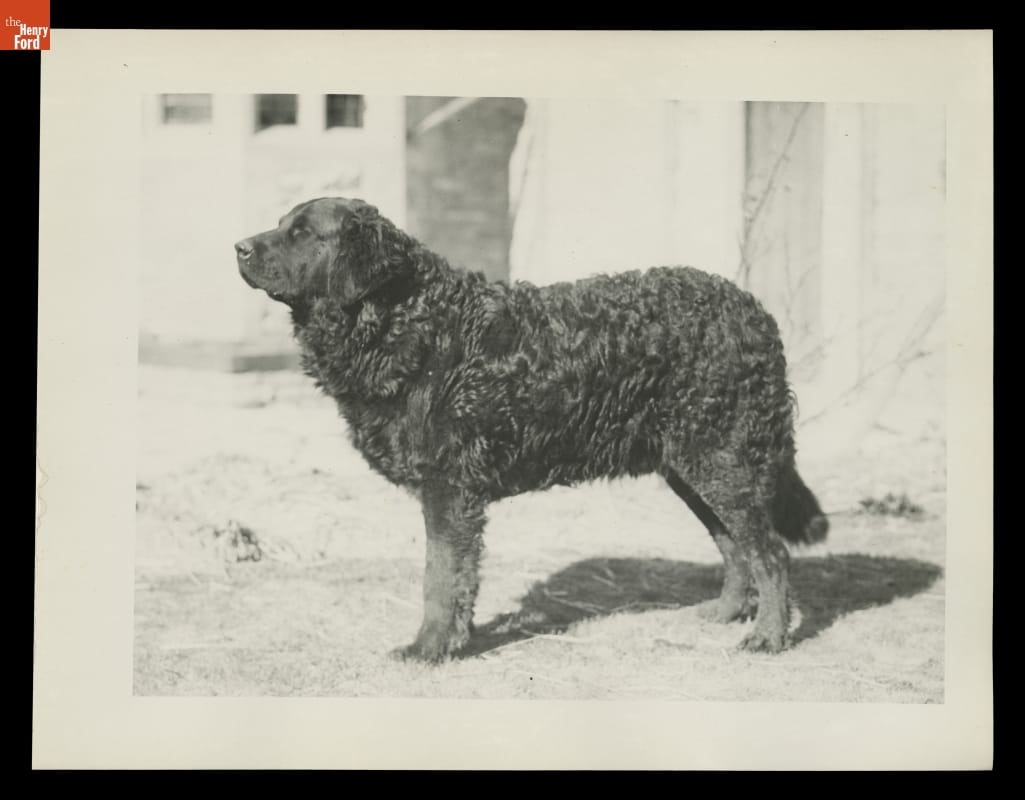
- February 18, 1932
- Collections - Artifact
"Rover" the Dog at Cotswold Cottage in Greenfield Village, 1932
Henry Ford purchased a black Newfoundland puppy in 1930. The dog, named Rover, would help guard sheep at Greenfield Village's Cotswold Cottage. (Ford envisioned the interpretation of the cottage as the home of an English sheepherder.) The dog became a fixture in the Village. Rover was beloved by many: Gus Munchow--his trainer, Ford, and the schoolchildren of the Edison Institute.
- "Rover" the Dog at Cotswold Cottage in Greenfield Village, 1932 - Henry Ford purchased a black Newfoundland puppy in 1930. The dog, named Rover, would help guard sheep at Greenfield Village's Cotswold Cottage. (Ford envisioned the interpretation of the cottage as the home of an English sheepherder.) The dog became a fixture in the Village. Rover was beloved by many: Gus Munchow--his trainer, Ford, and the schoolchildren of the Edison Institute.
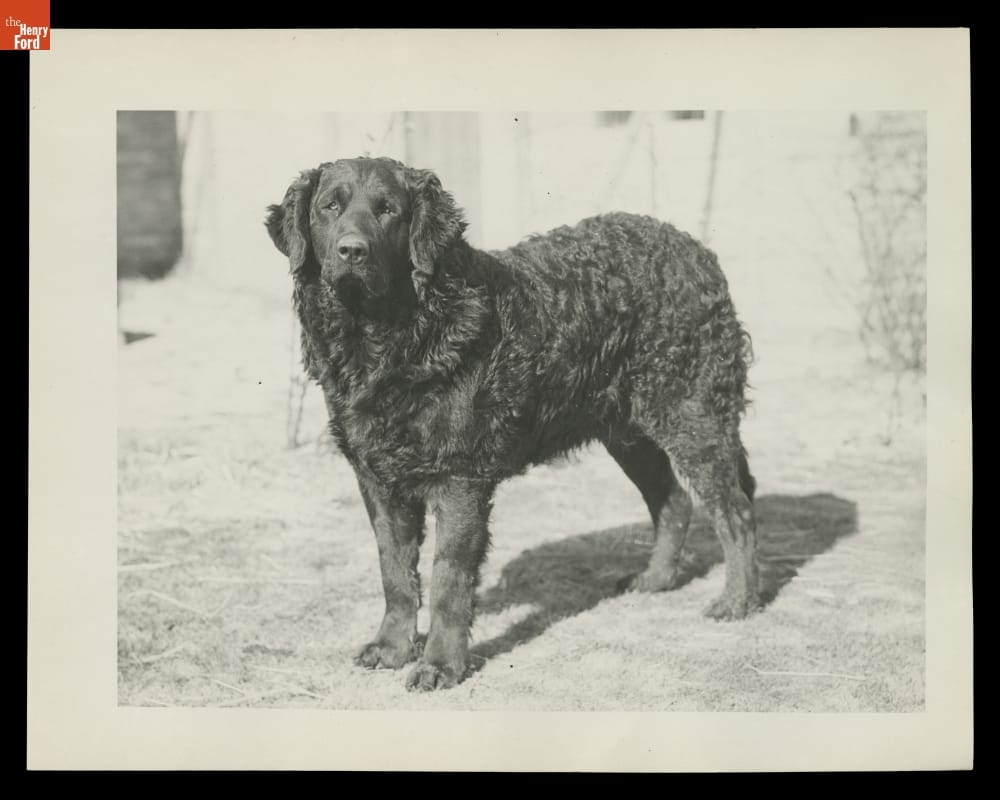
- February 18, 1932
- Collections - Artifact
"Rover" the Dog at Cotswold Cottage in Greenfield Village, 1932
Henry Ford purchased a black Newfoundland puppy in 1930. The dog, named Rover, would help guard sheep at Greenfield Village's Cotswold Cottage. (Ford envisioned the interpretation of the cottage as the home of an English sheepherder.) The dog became a fixture in the Village. Rover was beloved by many: Gus Munchow--his trainer, Ford, and the schoolchildren of the Edison Institute.
- "Rover" the Dog at Cotswold Cottage in Greenfield Village, 1932 - Henry Ford purchased a black Newfoundland puppy in 1930. The dog, named Rover, would help guard sheep at Greenfield Village's Cotswold Cottage. (Ford envisioned the interpretation of the cottage as the home of an English sheepherder.) The dog became a fixture in the Village. Rover was beloved by many: Gus Munchow--his trainer, Ford, and the schoolchildren of the Edison Institute.
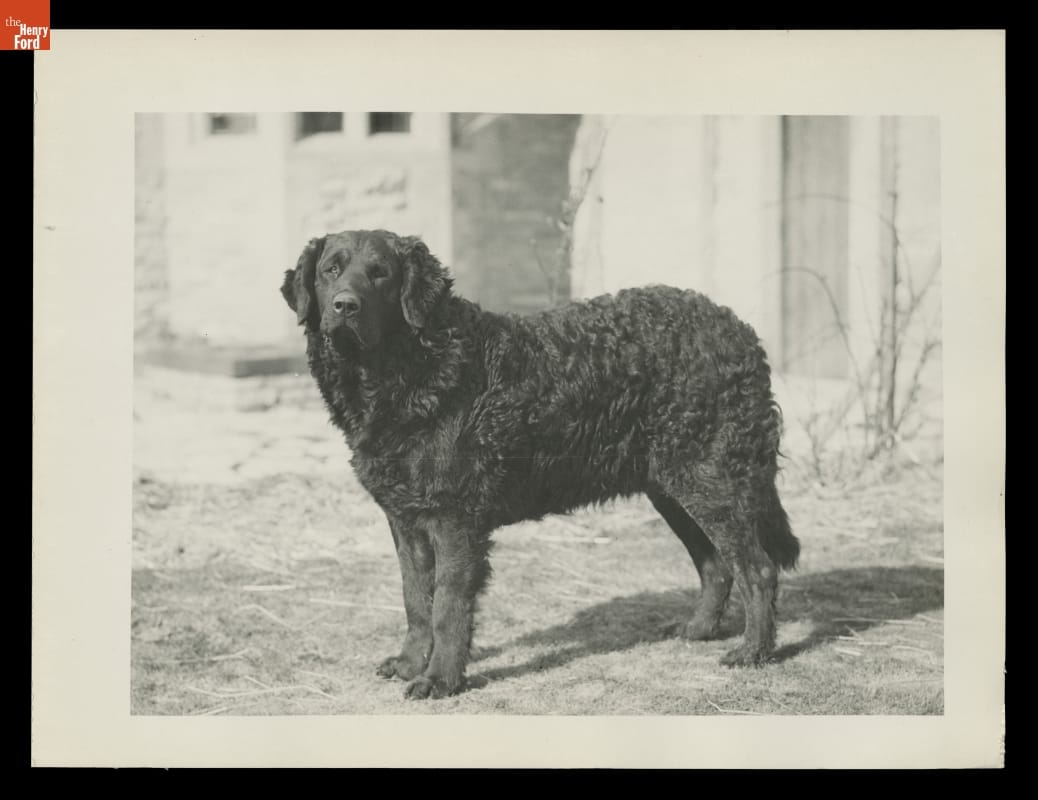
- February 18, 1932
- Collections - Artifact
"Rover" the Dog at Cotswold Cottage in Greenfield Village, 1932
Henry Ford purchased a black Newfoundland puppy in 1930. The dog, named Rover, would help guard sheep at Greenfield Village's Cotswold Cottage. (Ford envisioned the interpretation of the cottage as the home of an English sheepherder.) The dog became a fixture in the Village. Rover was beloved by many: Gus Munchow--his trainer, Ford, and the schoolchildren of the Edison Institute.
- "Rover" the Dog outside Cotswold Barn in the Snow, Greenfield Village, January 1931 - Henry Ford purchased a black Newfoundland puppy in 1930. The dog, named Rover, would help guard sheep at Greenfield Village's Cotswold Cottage. (Ford envisioned the interpretation of the cottage as the home of an English sheepherder.) The dog became a fixture in the Village. Rover was beloved by many: Gus Munchow--his trainer, Ford, and the schoolchildren of the Edison Institute.
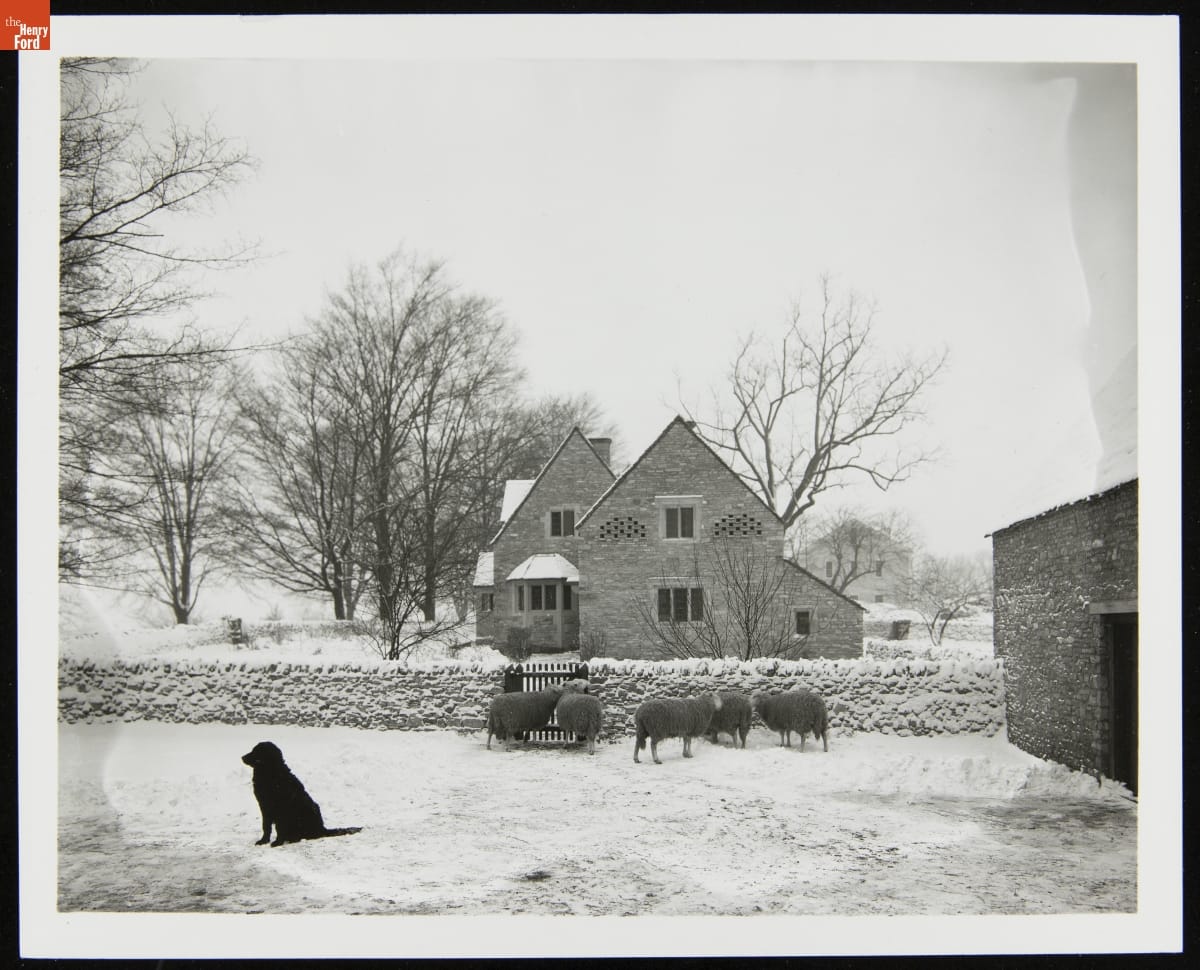
- January 12, 1931
- Collections - Artifact
"Rover" the Dog outside Cotswold Barn in the Snow, Greenfield Village, January 1931
Henry Ford purchased a black Newfoundland puppy in 1930. The dog, named Rover, would help guard sheep at Greenfield Village's Cotswold Cottage. (Ford envisioned the interpretation of the cottage as the home of an English sheepherder.) The dog became a fixture in the Village. Rover was beloved by many: Gus Munchow--his trainer, Ford, and the schoolchildren of the Edison Institute.
- "Rover" the Dog outside Cotswold Barn with Sheep, Greenfield Village, April 1931 - Henry Ford purchased a black Newfoundland puppy in 1930. The dog, named Rover, would help guard sheep at Greenfield Village's Cotswold Cottage. (Ford envisioned the interpretation of the cottage as the home of an English sheepherder.) The dog became a fixture in the Village. Rover was beloved by many: Gus Munchow--his trainer, Ford, and the schoolchildren of the Edison Institute.
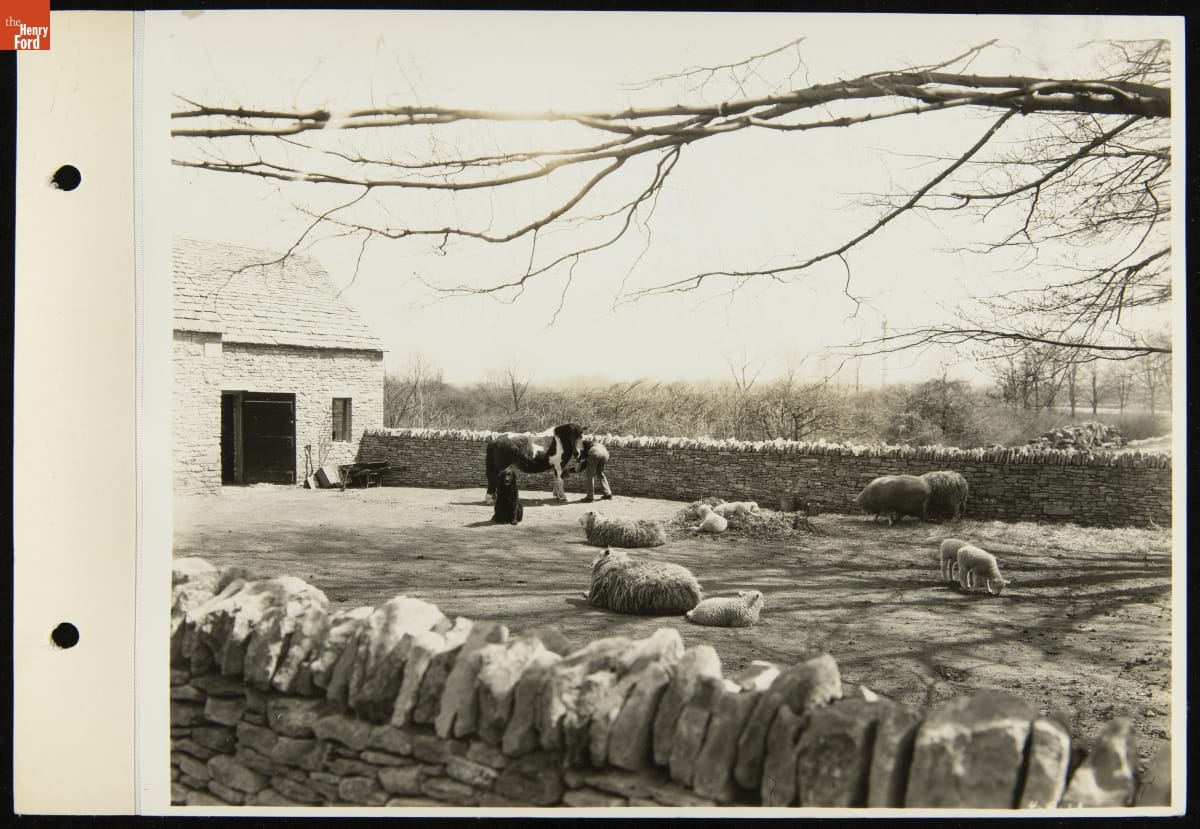
- April 08, 1931
- Collections - Artifact
"Rover" the Dog outside Cotswold Barn with Sheep, Greenfield Village, April 1931
Henry Ford purchased a black Newfoundland puppy in 1930. The dog, named Rover, would help guard sheep at Greenfield Village's Cotswold Cottage. (Ford envisioned the interpretation of the cottage as the home of an English sheepherder.) The dog became a fixture in the Village. Rover was beloved by many: Gus Munchow--his trainer, Ford, and the schoolchildren of the Edison Institute.
- Ford Motor Company Clipping Book, Volume 88, April-November 1934 -
- April 1934-November 1934
- Collections - Artifact
Ford Motor Company Clipping Book, Volume 88, April-November 1934
- Herald, Vol. II, February 11, 1935-January 24, 1936 - The students of the Greenfield Village and Associated Schools of the Edison Institute began publishing the <em>Herald</em> in 1934. They took the name from a weekly newspaper printed and sold by Thomas Alva Edison when he worked for the Grand Trunk Railroad in 1862-63. The students' version included articles on academic, social, and recreational activities. The publication continued until 1952.
- 11 February 1935-24 January 1936
- Collections - Artifact
Herald, Vol. II, February 11, 1935-January 24, 1936
The students of the Greenfield Village and Associated Schools of the Edison Institute began publishing the Herald in 1934. They took the name from a weekly newspaper printed and sold by Thomas Alva Edison when he worked for the Grand Trunk Railroad in 1862-63. The students' version included articles on academic, social, and recreational activities. The publication continued until 1952.