
Search
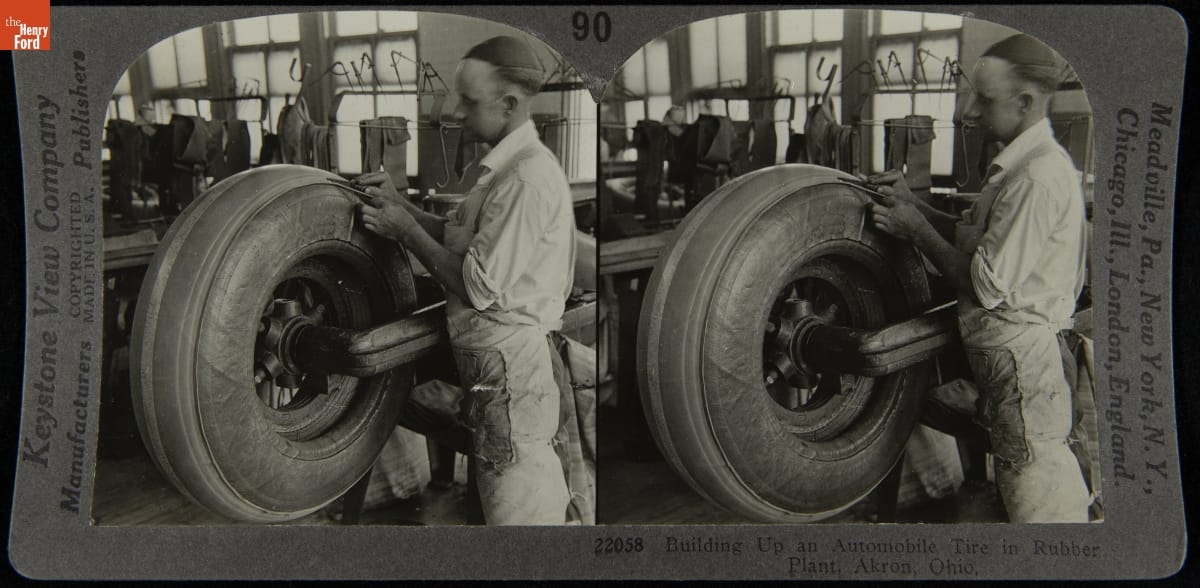
- Building Up an Automobile Tire in Rubber Plant, Akron, Ohio, circa 1900 - Tires were built on cylindrical drums. Plies were layered on the drum one at a time, and beads were added to the sides, to create what was called a carcass. The carcass was then removed from the drum and shaped in a tire mold. This stereograph shows part of the process at a tire factory in Akron, Ohio, about 1900.
- circa 1900
- Collections - Artifact
Building Up an Automobile Tire in Rubber Plant, Akron, Ohio, circa 1900
Tires were built on cylindrical drums. Plies were layered on the drum one at a time, and beads were added to the sides, to create what was called a carcass. The carcass was then removed from the drum and shaped in a tire mold. This stereograph shows part of the process at a tire factory in Akron, Ohio, about 1900.
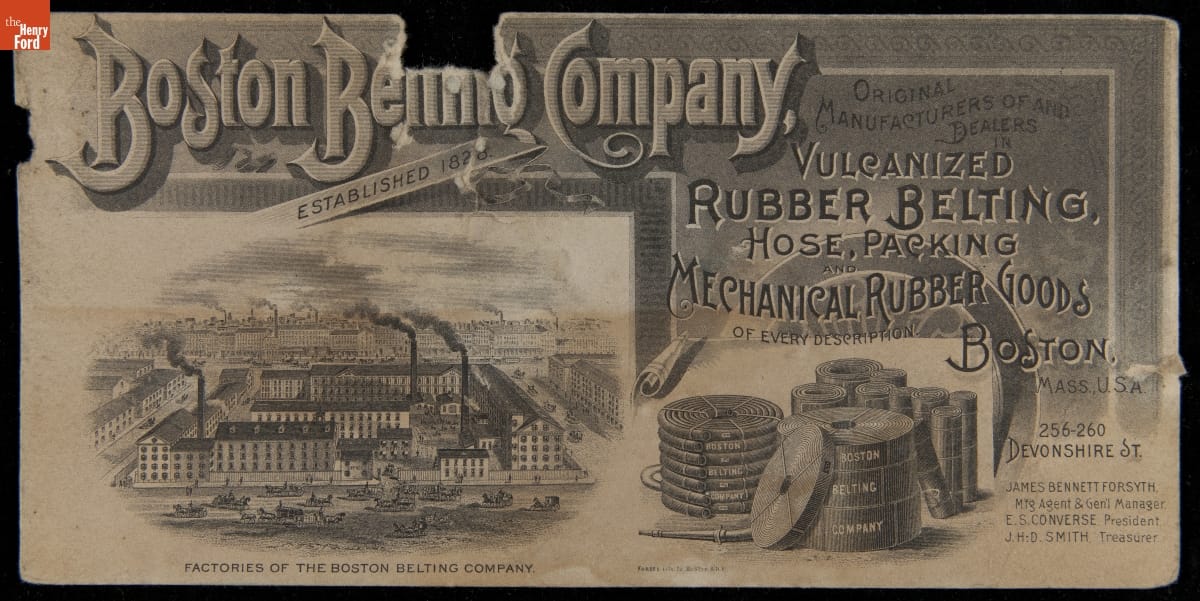
- Trade Card for Vulcanized Rubber Goods, Boston Belting Company, 1875-1895 - In the last third of the nineteenth century, an unprecedented variety of consumer goods and services flooded the American market. Advertisers bombarded potential customers with trade cards. Americans enjoyed and saved the often illustrated little advertisements found in product packages or distributed by local merchants. Many survive as historical records of commercialism in the United States.
- 1875-1895
- Collections - Artifact
Trade Card for Vulcanized Rubber Goods, Boston Belting Company, 1875-1895
In the last third of the nineteenth century, an unprecedented variety of consumer goods and services flooded the American market. Advertisers bombarded potential customers with trade cards. Americans enjoyed and saved the often illustrated little advertisements found in product packages or distributed by local merchants. Many survive as historical records of commercialism in the United States.
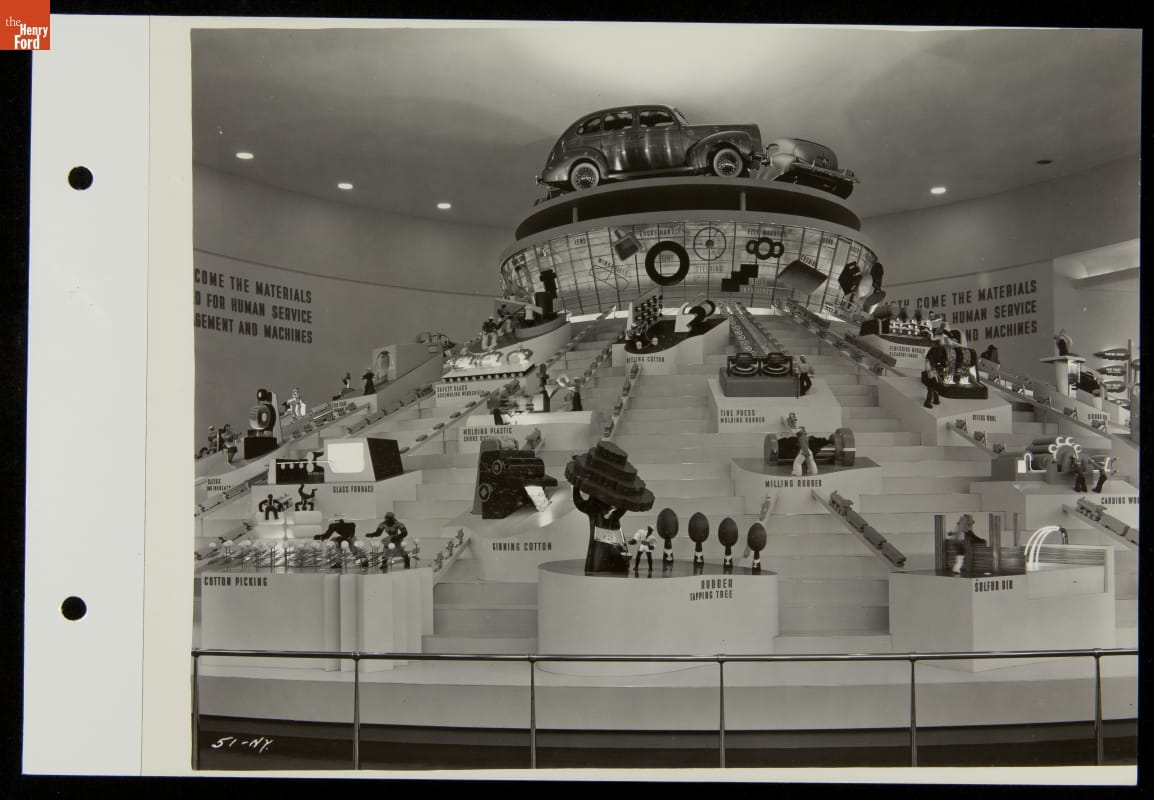
- Rubber and Cotton Displays, Ford Exposition, New York World's Fair, 1939 - Ford Motor Company poured resources into the 1939-40 New York World's Fair, spending more than $5 million to construct and maintain its elaborate and well-attended exposition space. Ford's massive exhibition building attracted fairgoers with industrial demonstrations and informative displays. The huge, revolving "Ford Cycle of Production" - which explained how raw materials became Ford automobile parts - particularly impressed visitors.
- 1939
- Collections - Artifact
Rubber and Cotton Displays, Ford Exposition, New York World's Fair, 1939
Ford Motor Company poured resources into the 1939-40 New York World's Fair, spending more than $5 million to construct and maintain its elaborate and well-attended exposition space. Ford's massive exhibition building attracted fairgoers with industrial demonstrations and informative displays. The huge, revolving "Ford Cycle of Production" - which explained how raw materials became Ford automobile parts - particularly impressed visitors.
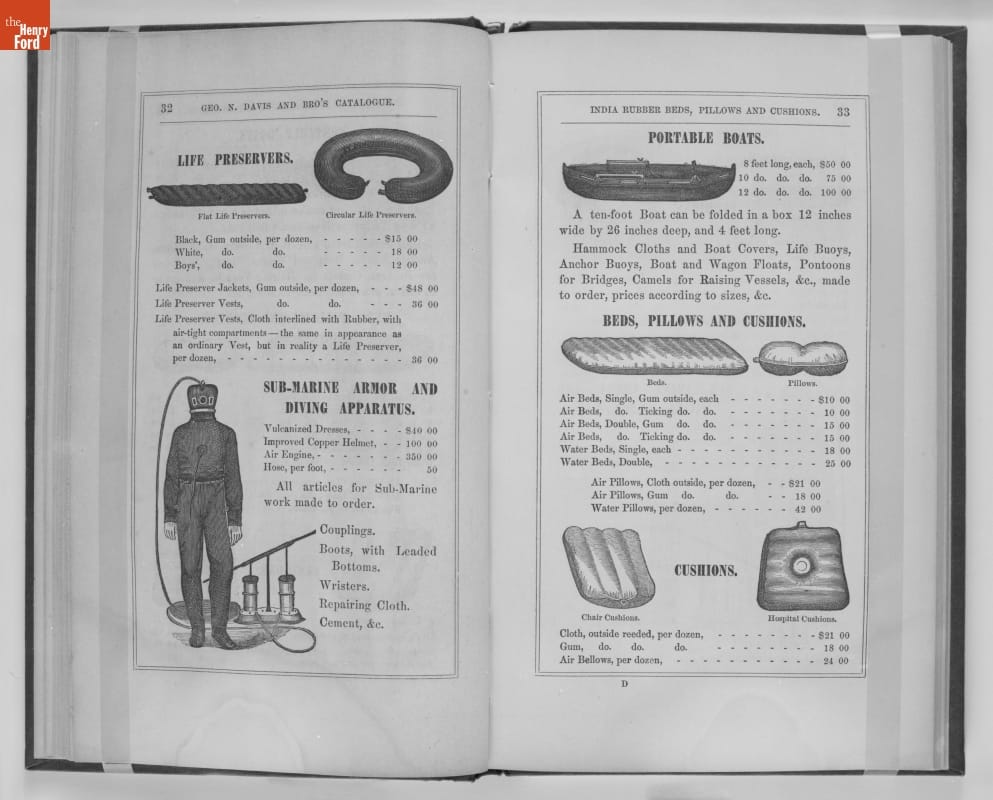
- "Catalogue and Trade-Price List of India Rubber and Gutta Percha Goods," 1856 -
- 1856
- Collections - Artifact
"Catalogue and Trade-Price List of India Rubber and Gutta Percha Goods," 1856