
Search
- Correspondence between W.L. Schurz and the Office of Henry Ford regarding Brazil Expedition, July - August, 1925 -
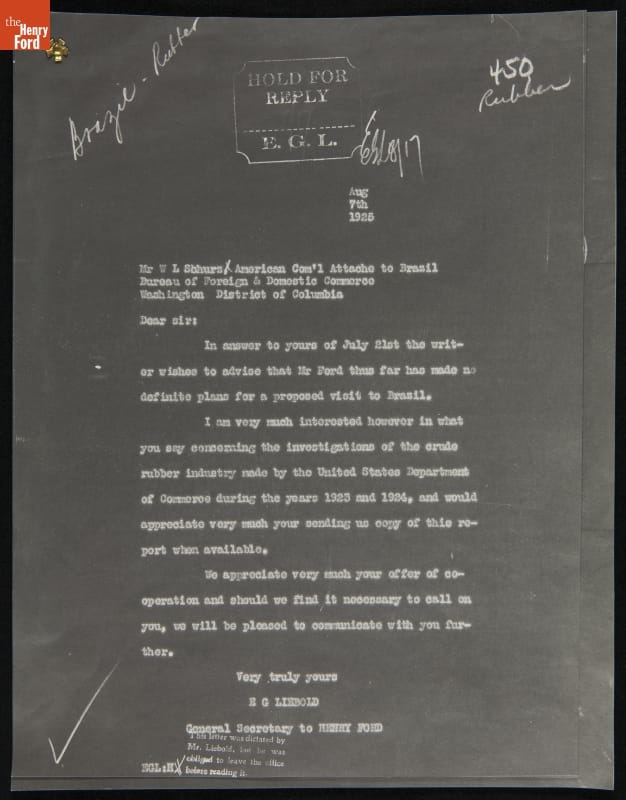
- 21 July 1925-07 August 1925
- Collections - Artifact
Correspondence between W.L. Schurz and the Office of Henry Ford regarding Brazil Expedition, July - August, 1925
- Edsel Ford and Henry Ford with Others on Trial Run of the Lake Ormoc, July 20, 1928 - Henry Ford established Fordlandia and Belterra in the Brazilian rainforest to supply rubber for automobile production. He began shipping machinery and supplies to the Amazon in 1928. Two ships, <EM>Lake Ormoc</EM> and <EM>Lake Farge</EM>, left Dearborn, Michigan, that July. Ford and other executives posed for this photograph on the <EM>Lake Ormoc</EM> to commemorate the start of the project.
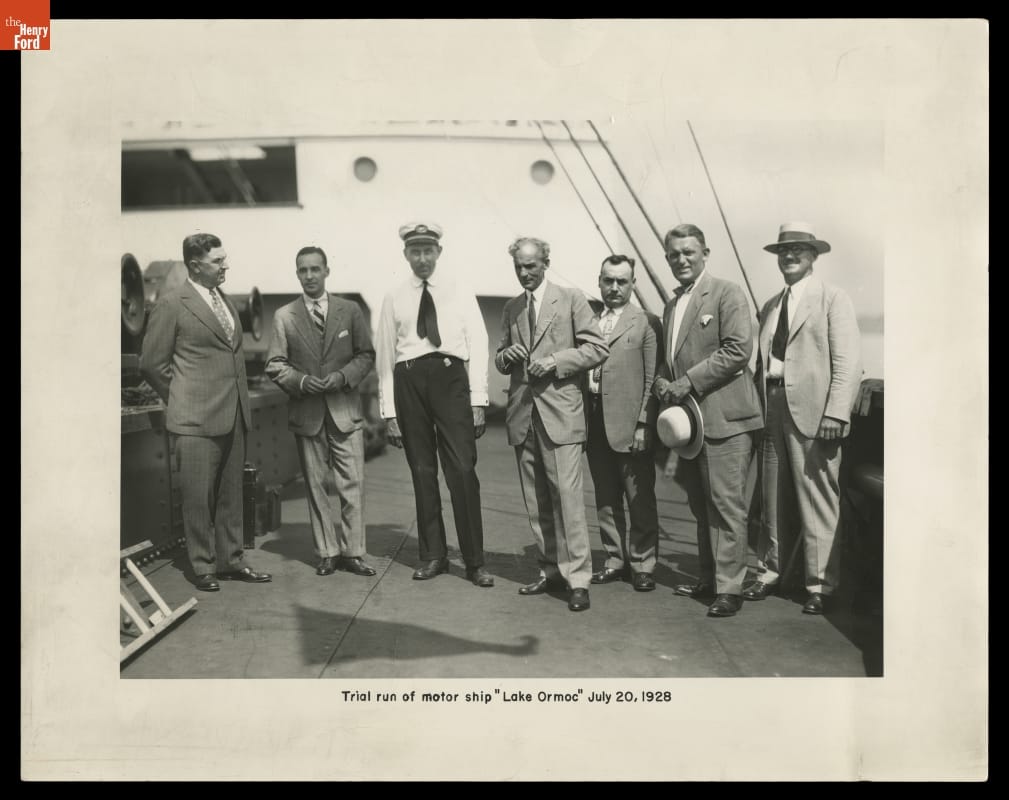
- July 20, 1928
- Collections - Artifact
Edsel Ford and Henry Ford with Others on Trial Run of the Lake Ormoc, July 20, 1928
Henry Ford established Fordlandia and Belterra in the Brazilian rainforest to supply rubber for automobile production. He began shipping machinery and supplies to the Amazon in 1928. Two ships, Lake Ormoc and Lake Farge, left Dearborn, Michigan, that July. Ford and other executives posed for this photograph on the Lake Ormoc to commemorate the start of the project.
- Mrs. Braga, Principal, with Others at School Dedication Ceremony, Belterra, Brazil, July 4, 1942 - Along with Fordlandia, Belterra was established by Henry Ford in the Brazilian rainforest to supply rubber for automobile production. Modeled after small-town America, Belterra had a grid-like street system lined with American-style homes. The city was also equipped with recreational facilities, a hospital, a dentist's office, and a school that provided its students with pencils, books and uniforms.
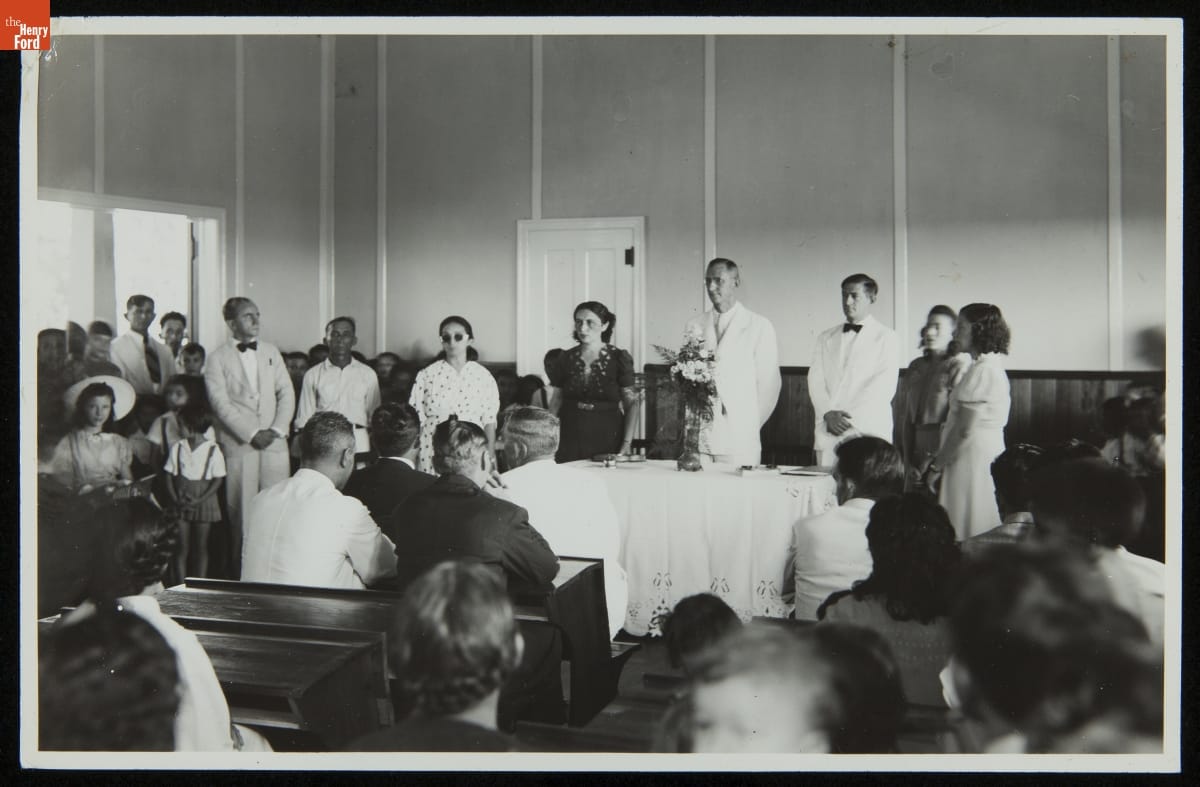
- July 04, 1942
- Collections - Artifact
Mrs. Braga, Principal, with Others at School Dedication Ceremony, Belterra, Brazil, July 4, 1942
Along with Fordlandia, Belterra was established by Henry Ford in the Brazilian rainforest to supply rubber for automobile production. Modeled after small-town America, Belterra had a grid-like street system lined with American-style homes. The city was also equipped with recreational facilities, a hospital, a dentist's office, and a school that provided its students with pencils, books and uniforms.
- Thomas Edison's 81st Birthday at Fort Myers, Florida, Site of Rubber Plant Experimentation, 1928 - In the 1920s, Thomas Edison began his search for a home-grown source of rubber. The U.S. imported rubber from Southeast Asia and the East Indies and Edison wanted a ready source in case America's supply was cut off. Edison experimented with a variety of plants at his Fort Myers, Florida, and West Orange, New Jersey, laboratories. Goldenrod proved most promising.
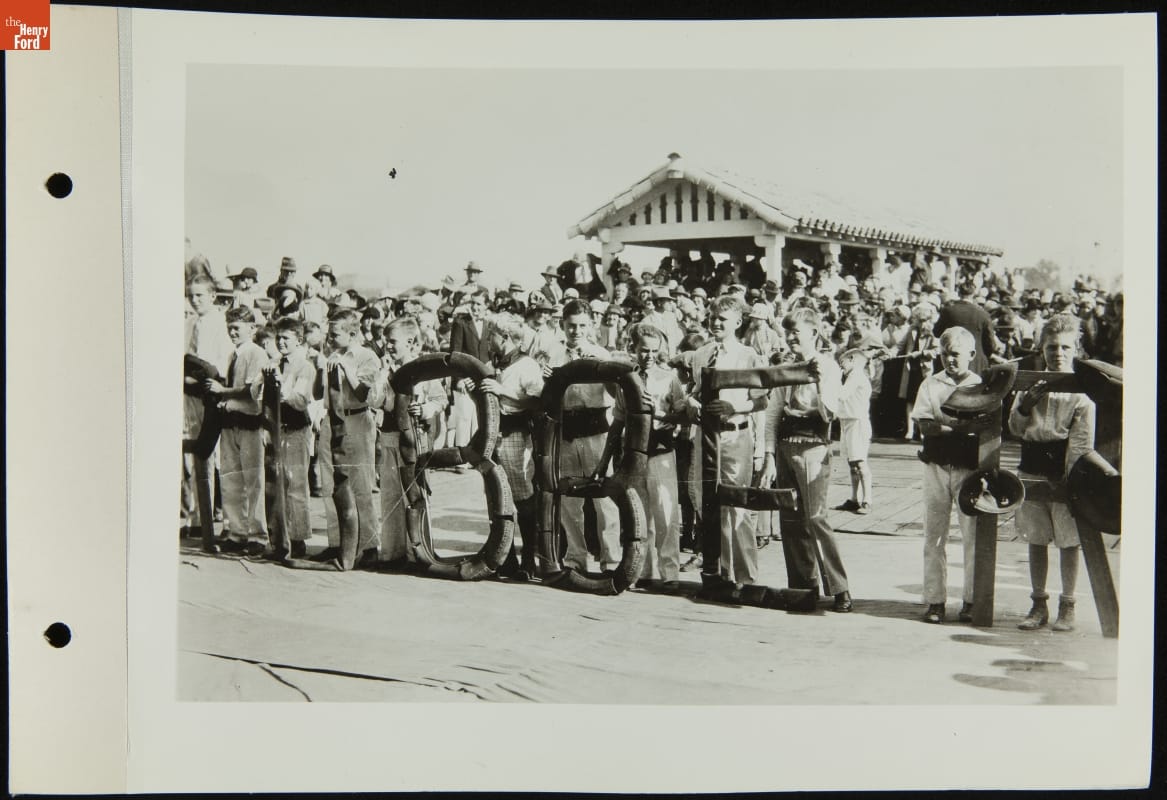
- February 11, 1928
- Collections - Artifact
Thomas Edison's 81st Birthday at Fort Myers, Florida, Site of Rubber Plant Experimentation, 1928
In the 1920s, Thomas Edison began his search for a home-grown source of rubber. The U.S. imported rubber from Southeast Asia and the East Indies and Edison wanted a ready source in case America's supply was cut off. Edison experimented with a variety of plants at his Fort Myers, Florida, and West Orange, New Jersey, laboratories. Goldenrod proved most promising.
- Laborers at Belterra Plantation, Brazil, 1934 -
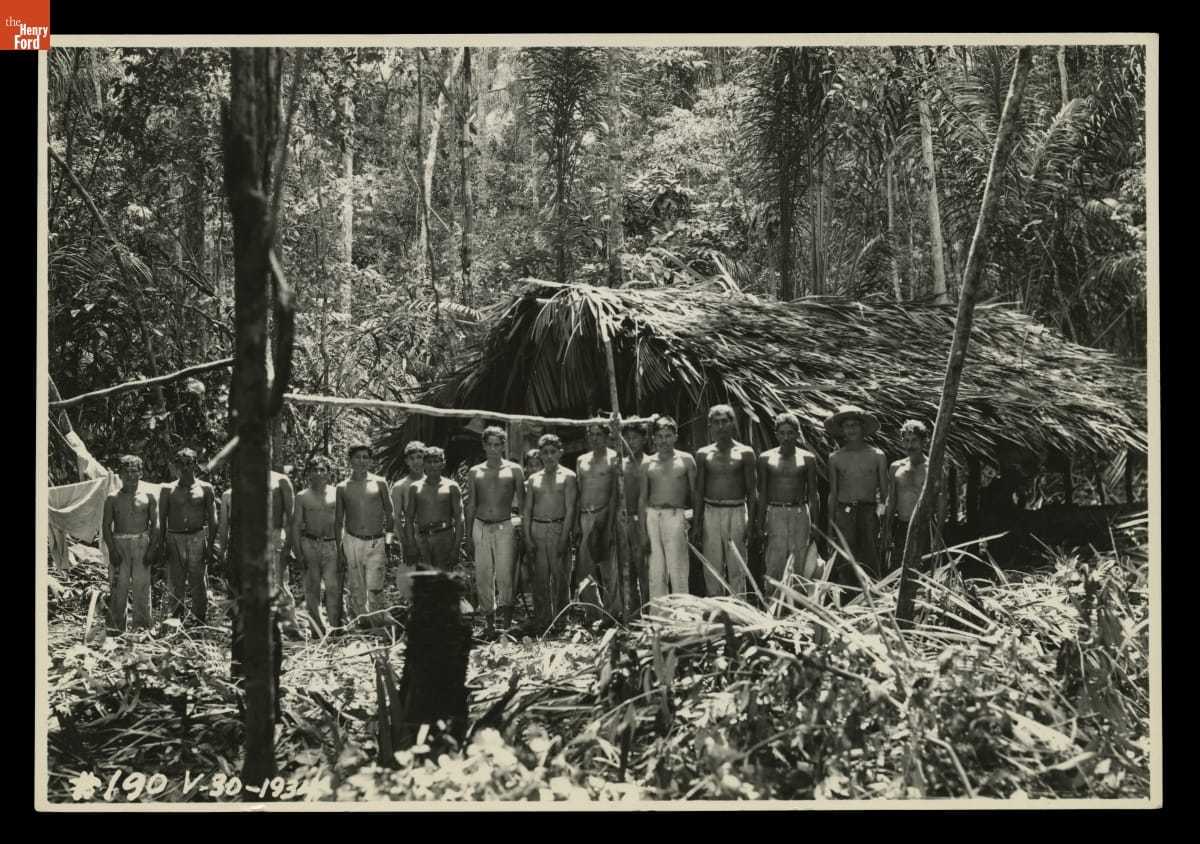
- 1934
- Collections - Artifact
Laborers at Belterra Plantation, Brazil, 1934
- Harvey S. Firestone and His Sons on the 25th Anniversary of Firestone Tire and Rubber Company, August 3, 1925 -
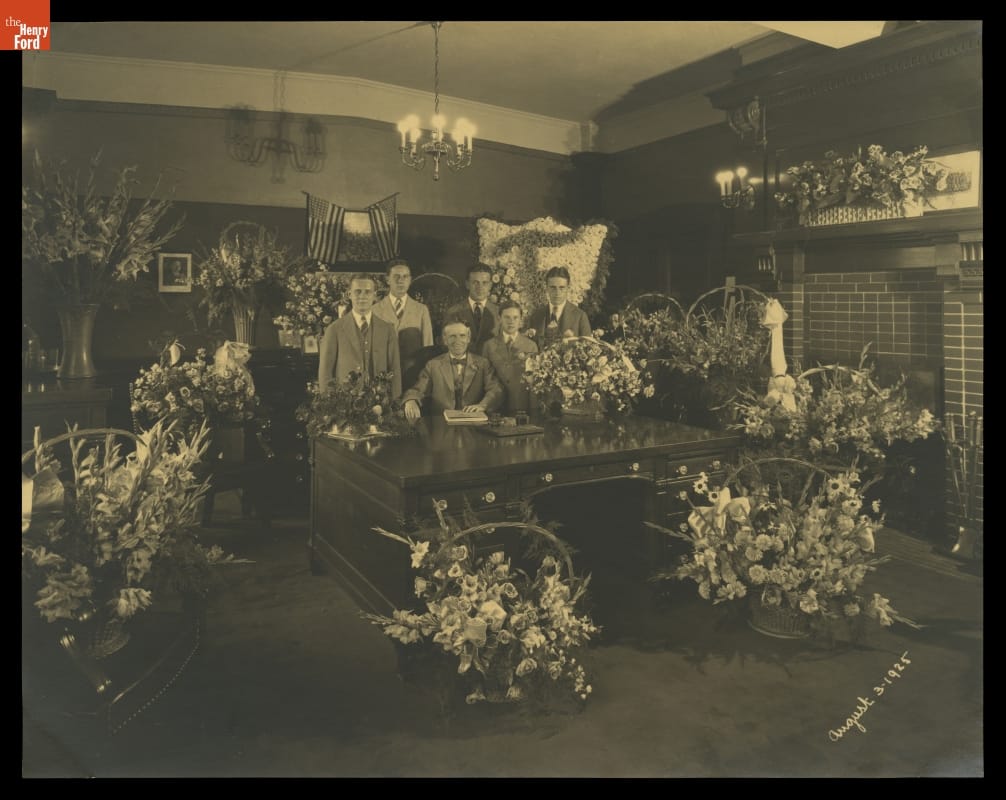
- August 03, 1925
- Collections - Artifact
Harvey S. Firestone and His Sons on the 25th Anniversary of Firestone Tire and Rubber Company, August 3, 1925
- Fordlandia Time Clock, Destroyed in the Riot of December 1930 - In 1928, Henry Ford established Fordlandia in the Brazilian rainforest to supply rubber for automobile production. Ford hired indigenous workers to clear the forest, plant rubber trees and build infrastructure. Though he paid good wages, Ford also imposed foreign work traditions and behavioral restrictions which the workers resented. Workers revolted against Ford's managers on several occasions during the first years of operations.
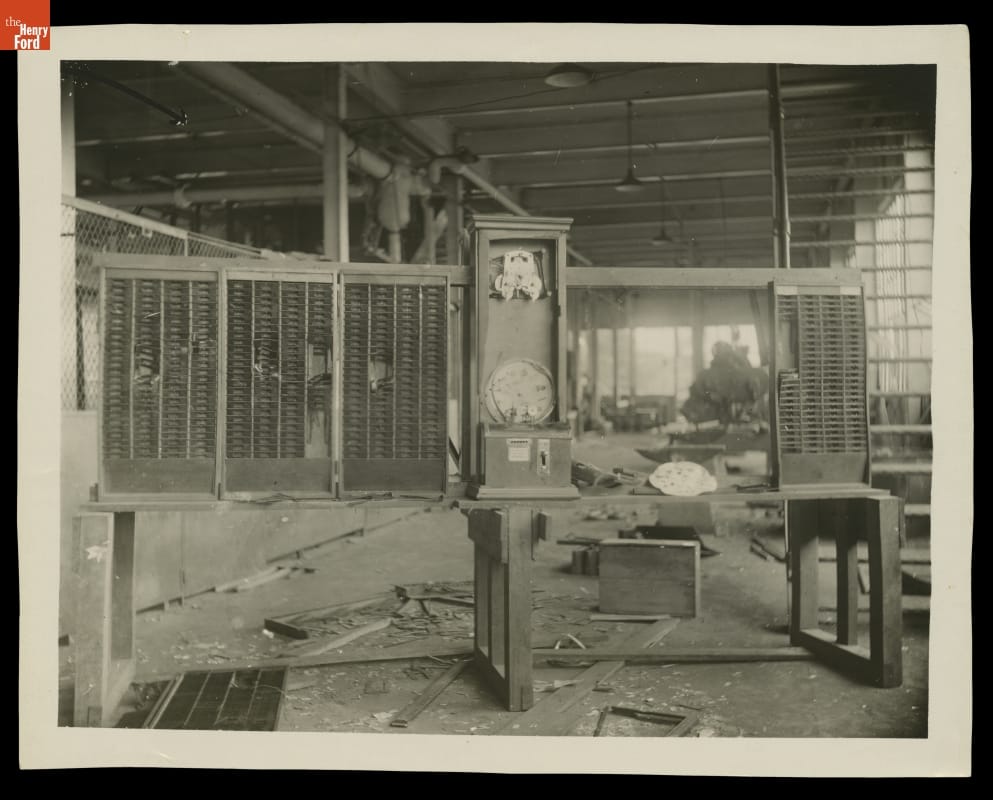
- December 22, 1930
- Collections - Artifact
Fordlandia Time Clock, Destroyed in the Riot of December 1930
In 1928, Henry Ford established Fordlandia in the Brazilian rainforest to supply rubber for automobile production. Ford hired indigenous workers to clear the forest, plant rubber trees and build infrastructure. Though he paid good wages, Ford also imposed foreign work traditions and behavioral restrictions which the workers resented. Workers revolted against Ford's managers on several occasions during the first years of operations.
- Victor Perini Family Before Moving to Brazil from Iron Mountain, Michigan, 1930 - In 1928, Henry Ford established Fordlandia in the Brazilian rainforest to supply rubber for automobile production. After a year of mismanagement by Ford officials, Ford asked a trusted supervisor, Victor Perini, to turn things around. Perini went to the Amazon, but found the heat exhausting. He returned to Michigan with his family in May 1930 -- only a few months after arrival.
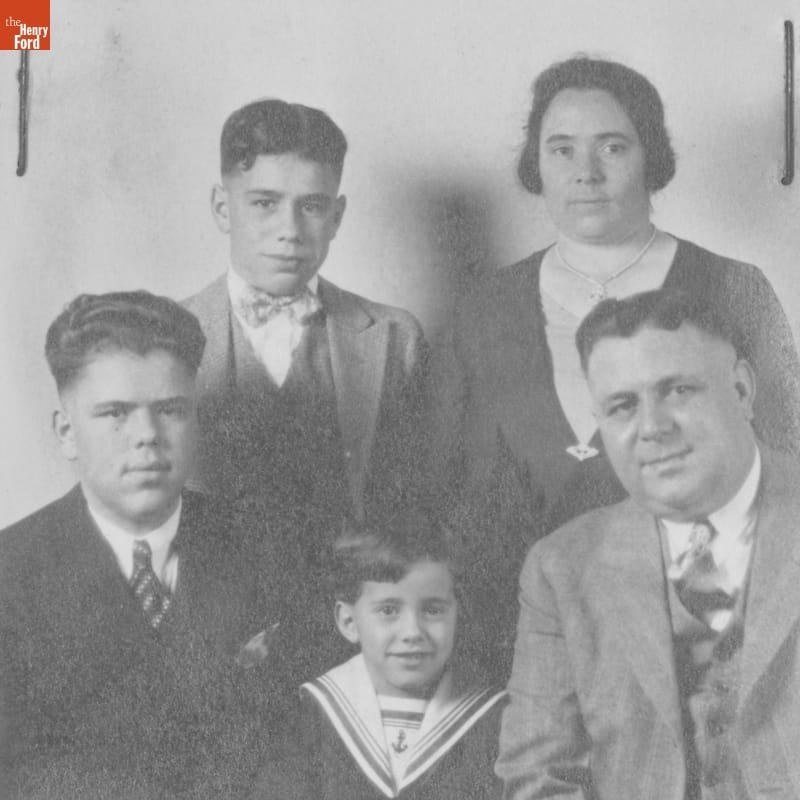
- February 19, 1930
- Collections - Artifact
Victor Perini Family Before Moving to Brazil from Iron Mountain, Michigan, 1930
In 1928, Henry Ford established Fordlandia in the Brazilian rainforest to supply rubber for automobile production. After a year of mismanagement by Ford officials, Ford asked a trusted supervisor, Victor Perini, to turn things around. Perini went to the Amazon, but found the heat exhausting. He returned to Michigan with his family in May 1930 -- only a few months after arrival.
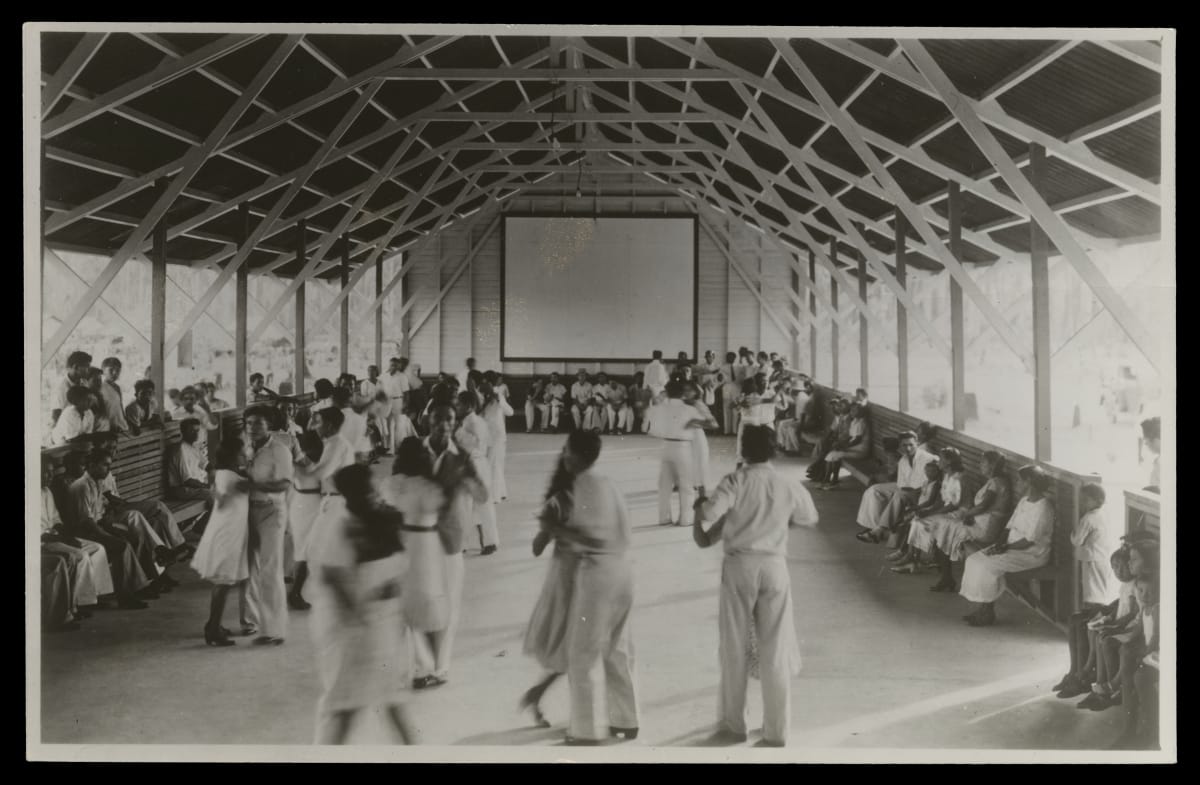
- Fordlandia Dance Hall, Boa Vista, Brazil, circa 1933 - In 1928, Ford Motor Company established a 2.5 million-acre rubber plantation and industrial town - called Fordlandia - at Boa Vista in the Amazon Rainforest. To attract workers, Ford offered double wages, housing, food, medical services, and entertainment -- including an eighteen-hole golf course and dance hall. Fordlandia ultimately failed, and Ford Motor Company disposed of its Brazilian rubber operations in 1945.
- circa 1933
- Collections - Artifact
Fordlandia Dance Hall, Boa Vista, Brazil, circa 1933
In 1928, Ford Motor Company established a 2.5 million-acre rubber plantation and industrial town - called Fordlandia - at Boa Vista in the Amazon Rainforest. To attract workers, Ford offered double wages, housing, food, medical services, and entertainment -- including an eighteen-hole golf course and dance hall. Fordlandia ultimately failed, and Ford Motor Company disposed of its Brazilian rubber operations in 1945.
- From Forest to Foot: The World's Fair Souvenir, 1893 -
- 1893
- Collections - Artifact
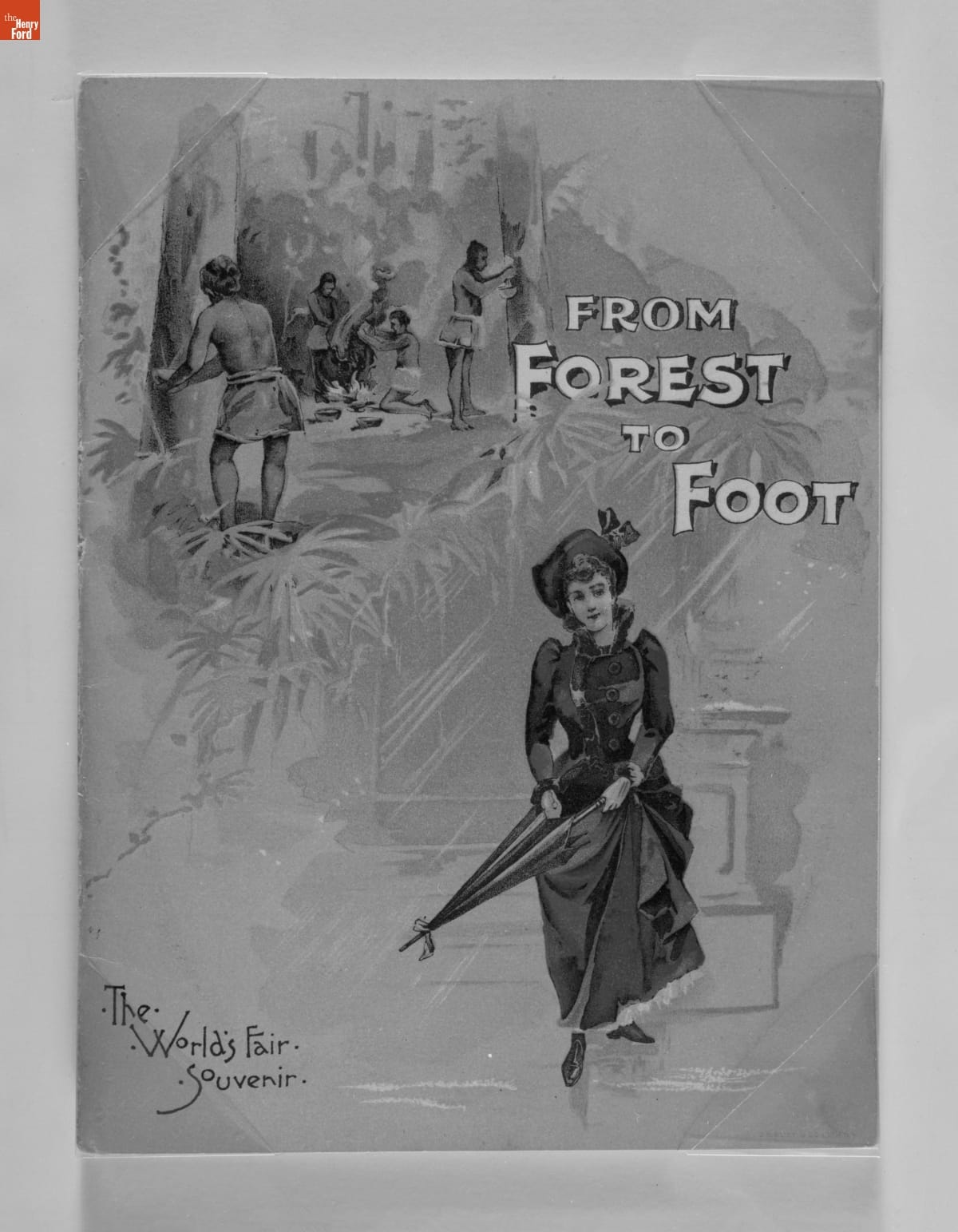
From Forest to Foot: The World's Fair Souvenir, 1893