
Search
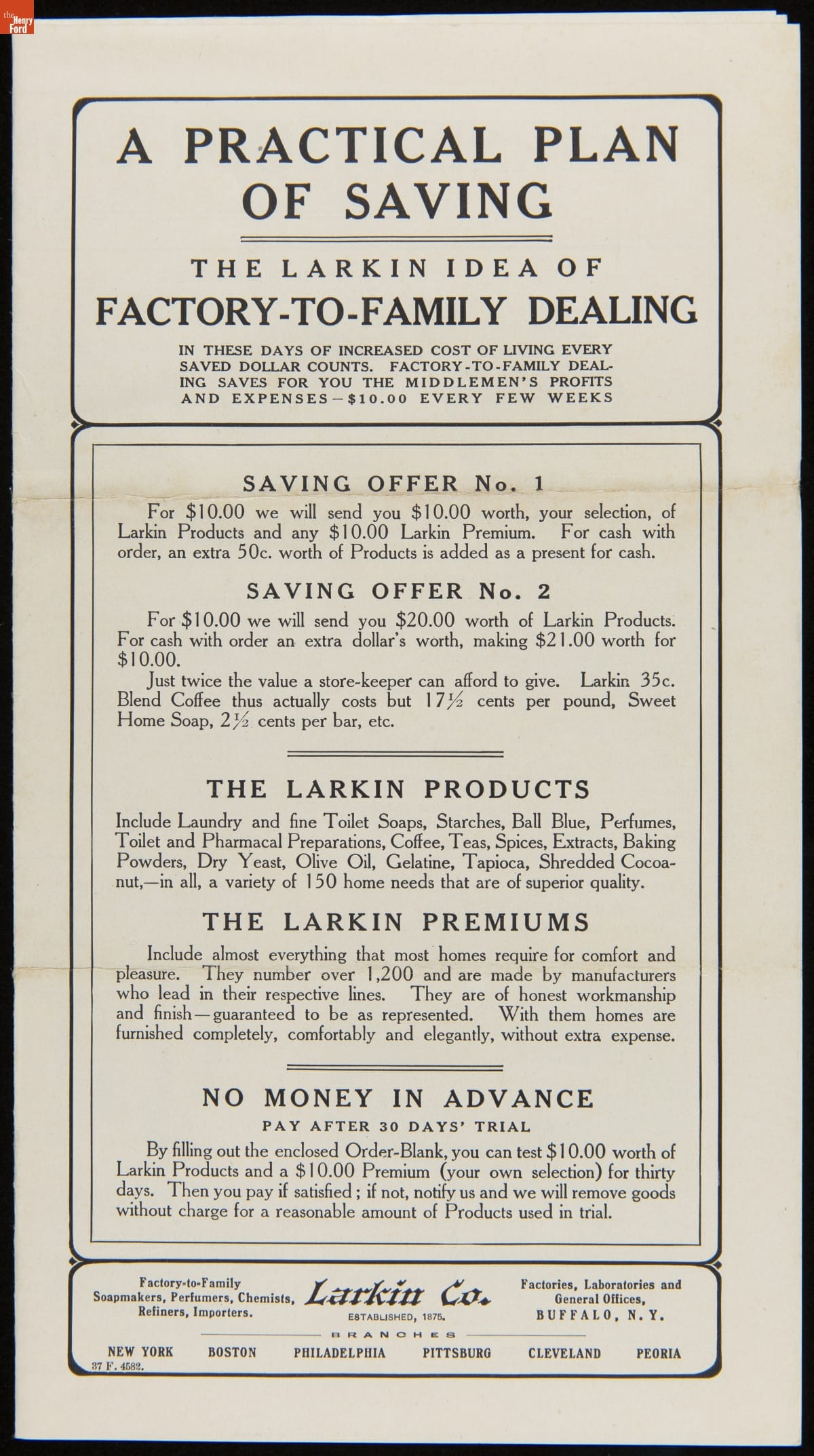
- Larkin Company Trade Catalog, "A Practical Plan of Saving: The Larkin Idea of Factory-To-Family Dealing," circa 1906 - John D. Larkin established a soap manufacturing company in 1875. He hired his brother-in-law, Elbert Hubbard, as a salesman. Hubbard developed "The Larkin Idea," a plan that sold goods directly to consumers through mail-order catalogs and offered incentivizing giveaways. It was a success. By the early 1900s, Larkin's catalogs contained pages of products and even more pages of premiums from which customers could choose.
- circa 1906
- Collections - Artifact
Larkin Company Trade Catalog, "A Practical Plan of Saving: The Larkin Idea of Factory-To-Family Dealing," circa 1906
John D. Larkin established a soap manufacturing company in 1875. He hired his brother-in-law, Elbert Hubbard, as a salesman. Hubbard developed "The Larkin Idea," a plan that sold goods directly to consumers through mail-order catalogs and offered incentivizing giveaways. It was a success. By the early 1900s, Larkin's catalogs contained pages of products and even more pages of premiums from which customers could choose.
- French Wilton Rug, 1920 -
- 1920
- Collections - Artifact
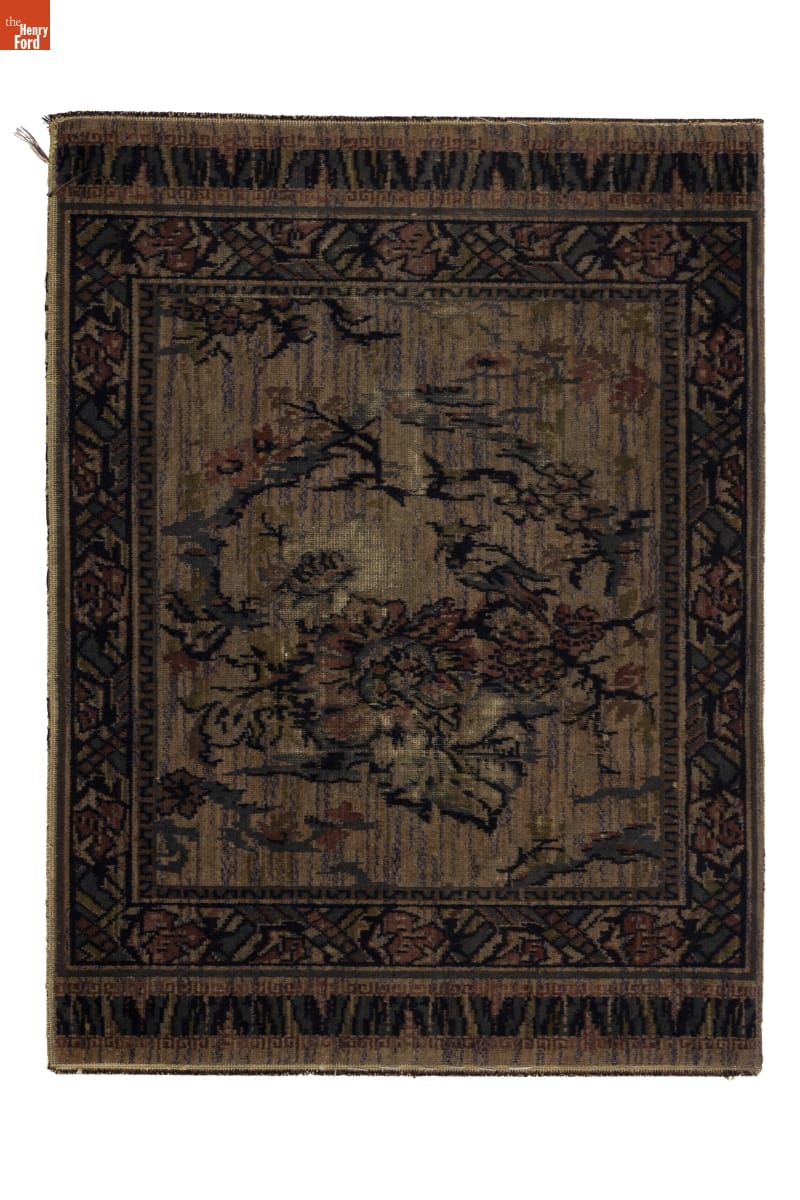
French Wilton Rug, 1920
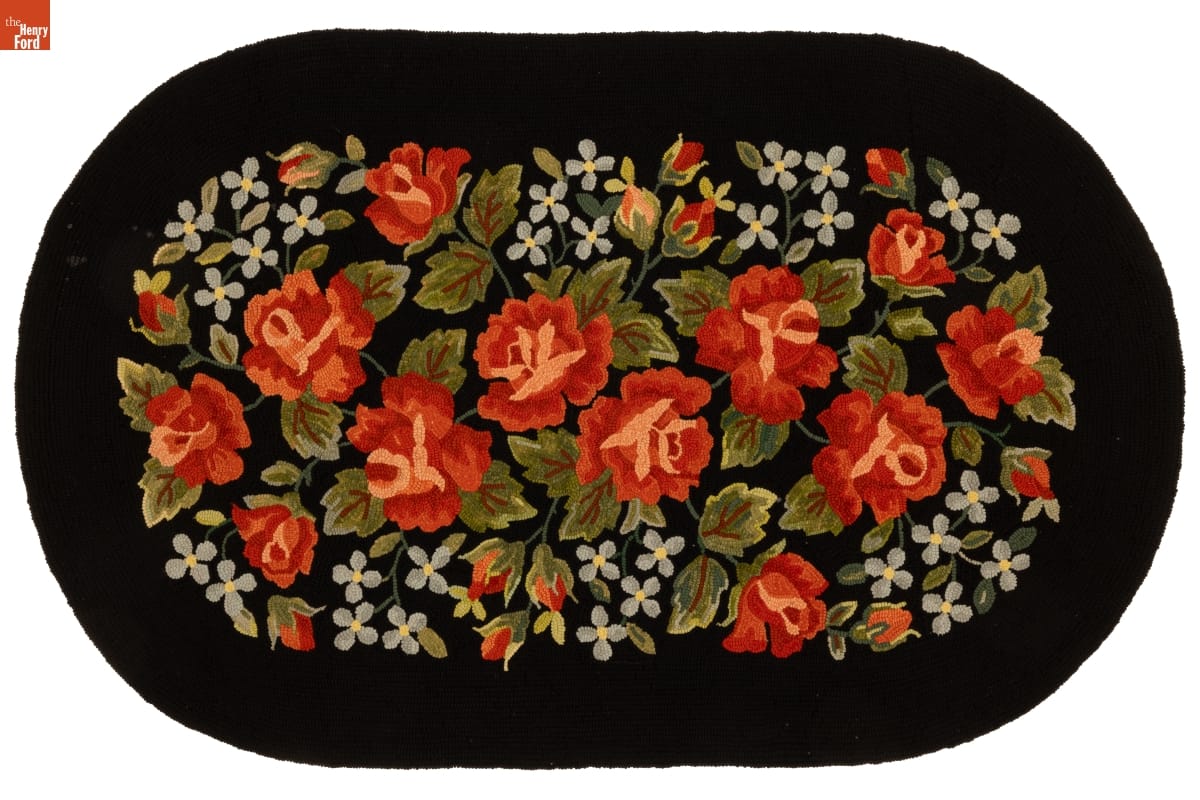
- Hooked Rug, 1946-1954 - Emeline Morrow Miner (1914-1997), a self-taught fiber artist originally from Cedar Rapids, Iowa, made this hooked rug. Miner was a self-taught artist originally from Cedar Rapids, Iowa; she created all of her patterns and even made her materials by thrifting and repurposing old clothes. In addition to rug hooking, Miner also did macrame, quilting, leatherwork, and watercolor.
- 1946-1954
- Collections - Artifact
Hooked Rug, 1946-1954
Emeline Morrow Miner (1914-1997), a self-taught fiber artist originally from Cedar Rapids, Iowa, made this hooked rug. Miner was a self-taught artist originally from Cedar Rapids, Iowa; she created all of her patterns and even made her materials by thrifting and repurposing old clothes. In addition to rug hooking, Miner also did macrame, quilting, leatherwork, and watercolor.
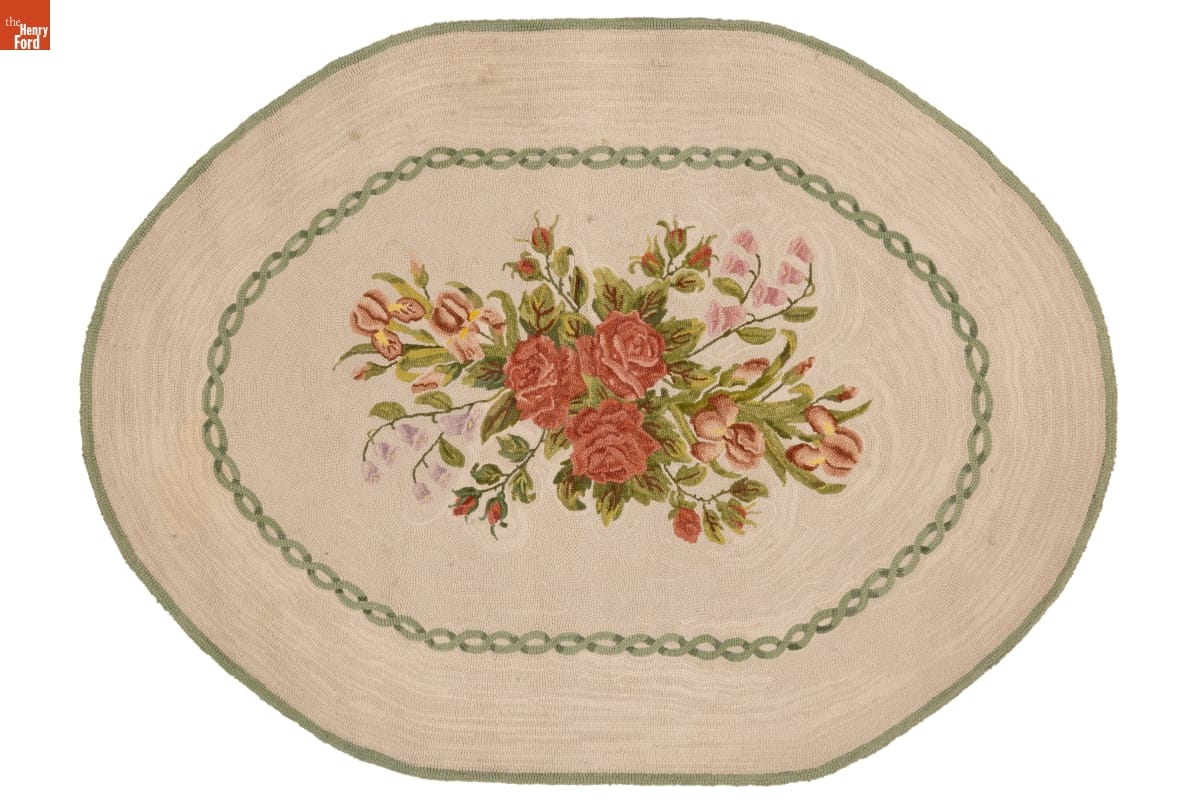
- Hooked Rug, 1946-1954 - Emeline Morrow Miner (1914-1997), a self-taught fiber artist originally from Cedar Rapids, Iowa, made this hooked rug. Miner was a self-taught artist originally from Cedar Rapids, Iowa; she created all of her patterns and even made her materials by thrifting and repurposing old clothes. In addition to rug hooking, Miner also did macrame, quilting, leatherwork, and watercolor.
- 1946-1954
- Collections - Artifact
Hooked Rug, 1946-1954
Emeline Morrow Miner (1914-1997), a self-taught fiber artist originally from Cedar Rapids, Iowa, made this hooked rug. Miner was a self-taught artist originally from Cedar Rapids, Iowa; she created all of her patterns and even made her materials by thrifting and repurposing old clothes. In addition to rug hooking, Miner also did macrame, quilting, leatherwork, and watercolor.
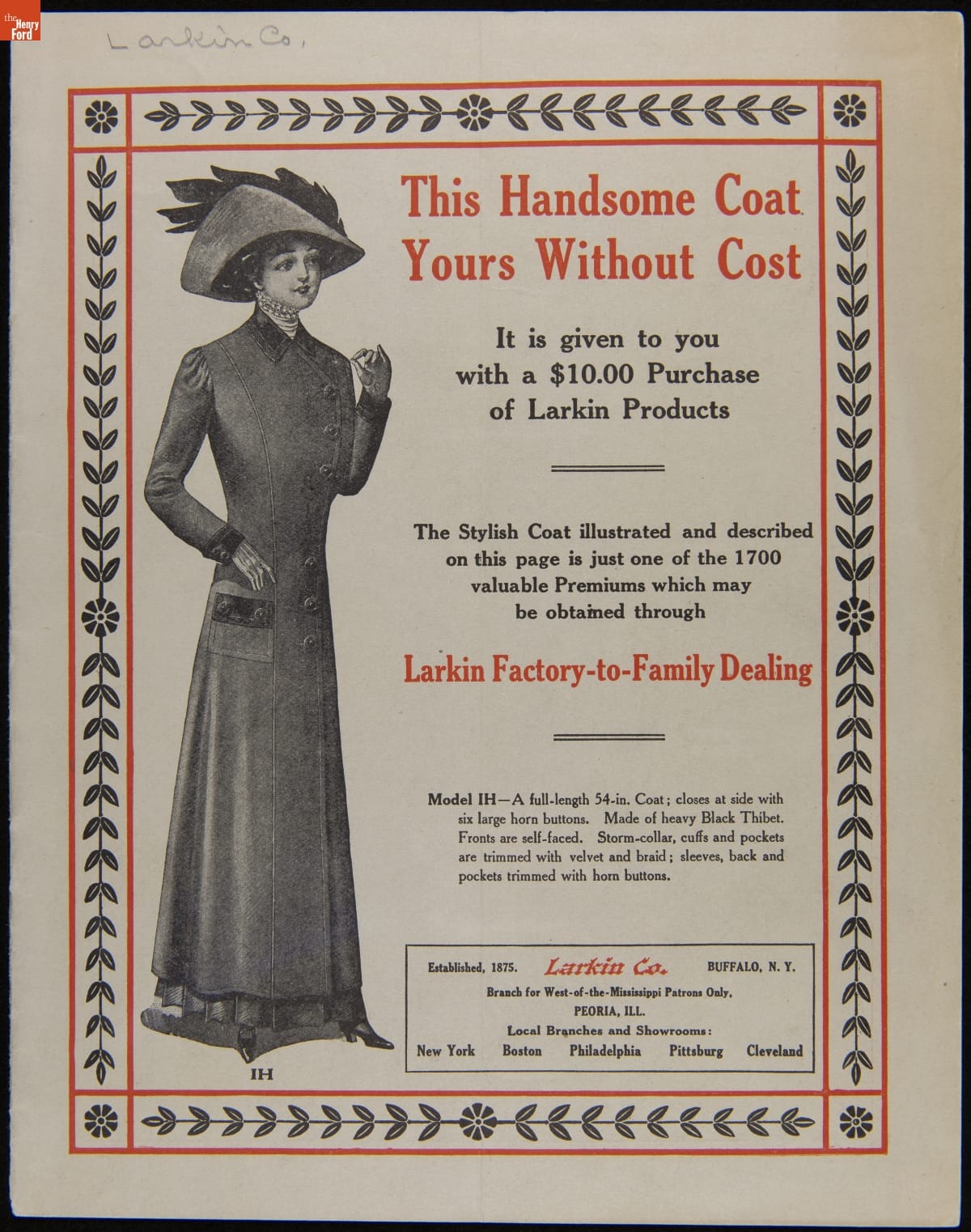
- Larkin Company Trade Catalog, "This Handsome Coat, Yours Without Cost," circa 1910 - John D. Larkin established a soap manufacturing company in 1875. He hired his brother-in-law, Elbert Hubbard, as a salesman. Hubbard developed "The Larkin Idea," a plan that sold goods directly to consumers through mail-order catalogs and offered incentivizing giveaways. It was a success. By the early 1900s, Larkin's catalogs contained pages of products and even more pages of premiums from which customers could choose.
- circa 1910
- Collections - Artifact
Larkin Company Trade Catalog, "This Handsome Coat, Yours Without Cost," circa 1910
John D. Larkin established a soap manufacturing company in 1875. He hired his brother-in-law, Elbert Hubbard, as a salesman. Hubbard developed "The Larkin Idea," a plan that sold goods directly to consumers through mail-order catalogs and offered incentivizing giveaways. It was a success. By the early 1900s, Larkin's catalogs contained pages of products and even more pages of premiums from which customers could choose.
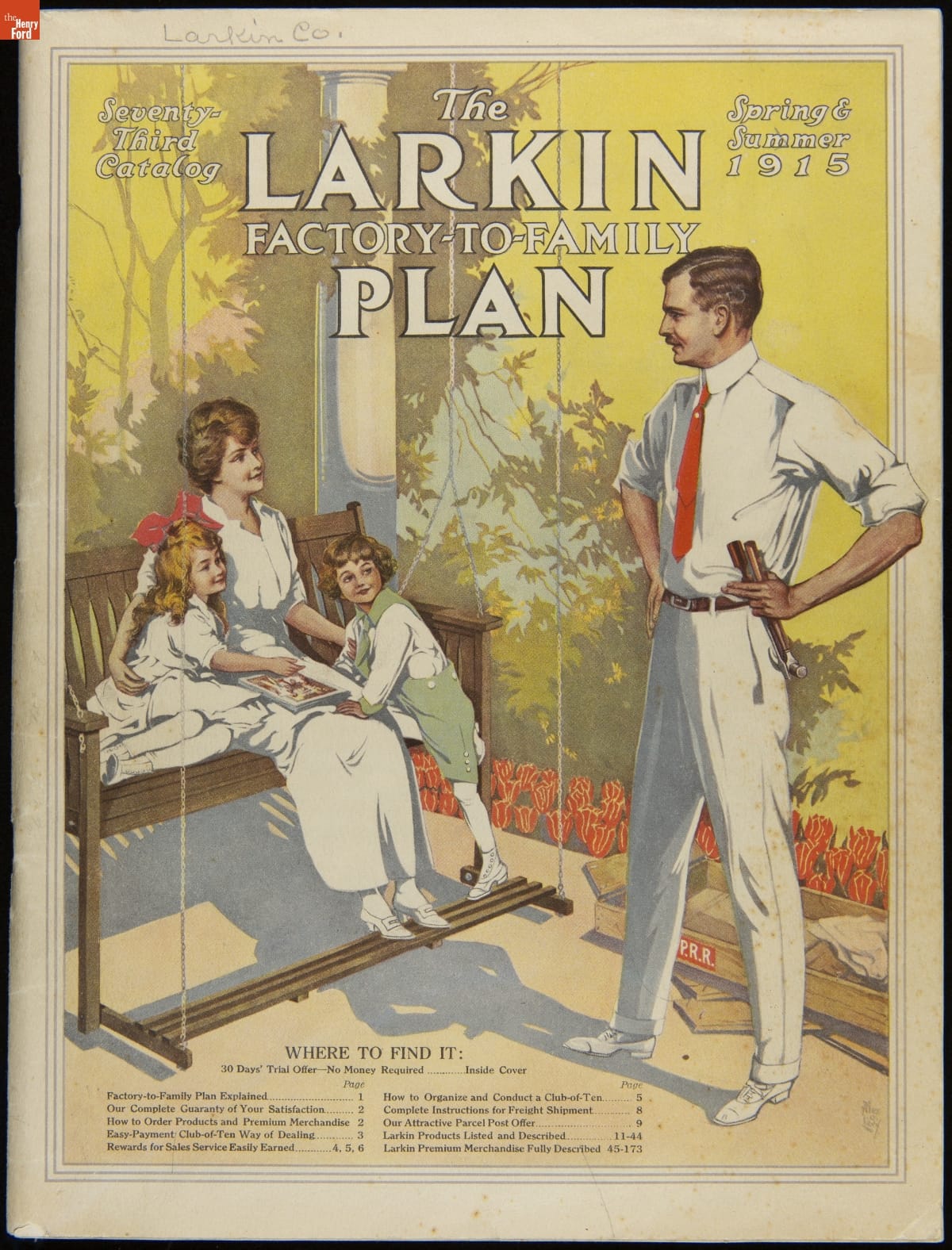
- Larkin Company Trade Catalog, "The Larkin Factory to Family Plan, 73rd Catalog," Spring and Summer 1915 - John D. Larkin established a soap manufacturing company in 1875. He hired his brother-in-law, Elbert Hubbard, as a salesman. Hubbard developed "The Larkin Idea," a plan that sold goods directly to consumers through mail-order catalogs and offered incentivizing giveaways. It was a success. By the early 1900s, Larkin's catalogs contained pages of products and even more pages of premiums from which customers could choose.
- 1915
- Collections - Artifact
Larkin Company Trade Catalog, "The Larkin Factory to Family Plan, 73rd Catalog," Spring and Summer 1915
John D. Larkin established a soap manufacturing company in 1875. He hired his brother-in-law, Elbert Hubbard, as a salesman. Hubbard developed "The Larkin Idea," a plan that sold goods directly to consumers through mail-order catalogs and offered incentivizing giveaways. It was a success. By the early 1900s, Larkin's catalogs contained pages of products and even more pages of premiums from which customers could choose.
- Hooked Rug, 1870-1890 -
- 1870-1890
- Collections - Artifact
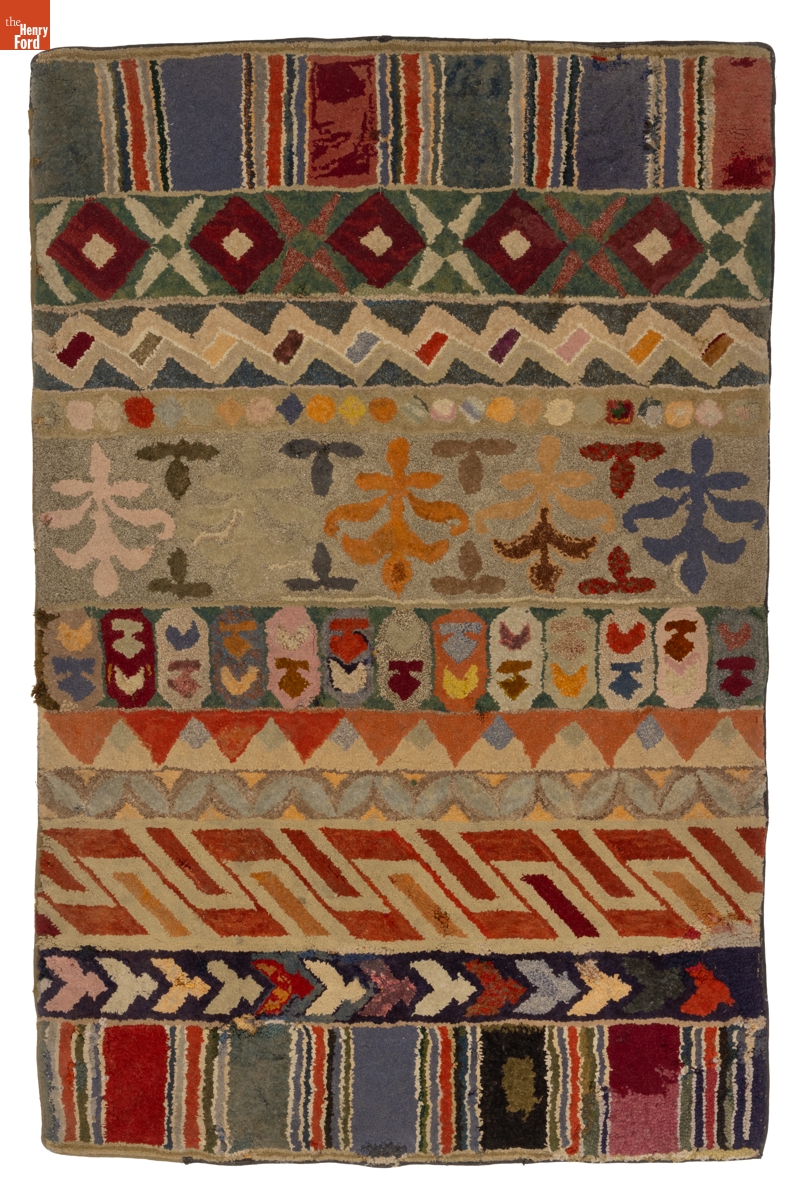
Hooked Rug, 1870-1890
- Braided Rug, Made by Yvonne Smith Hafner, 1960-1970 -
- 1960-1970
- Collections - Artifact
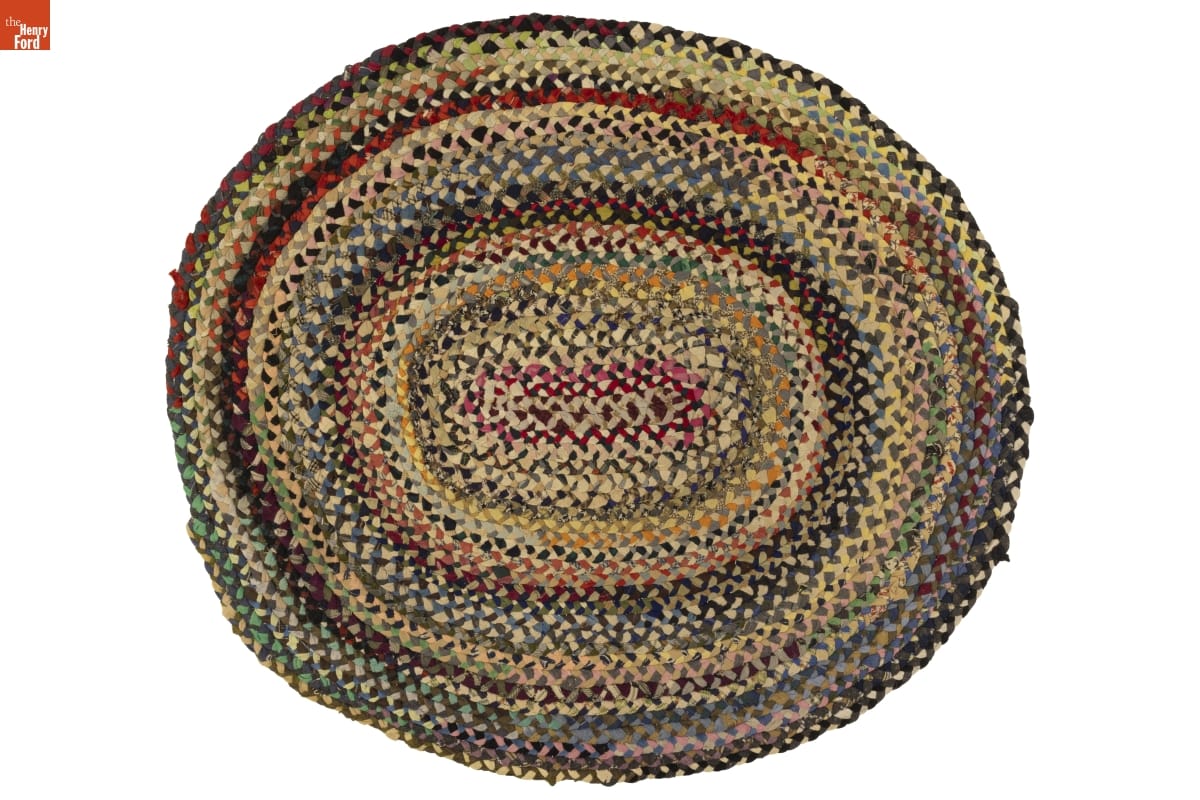
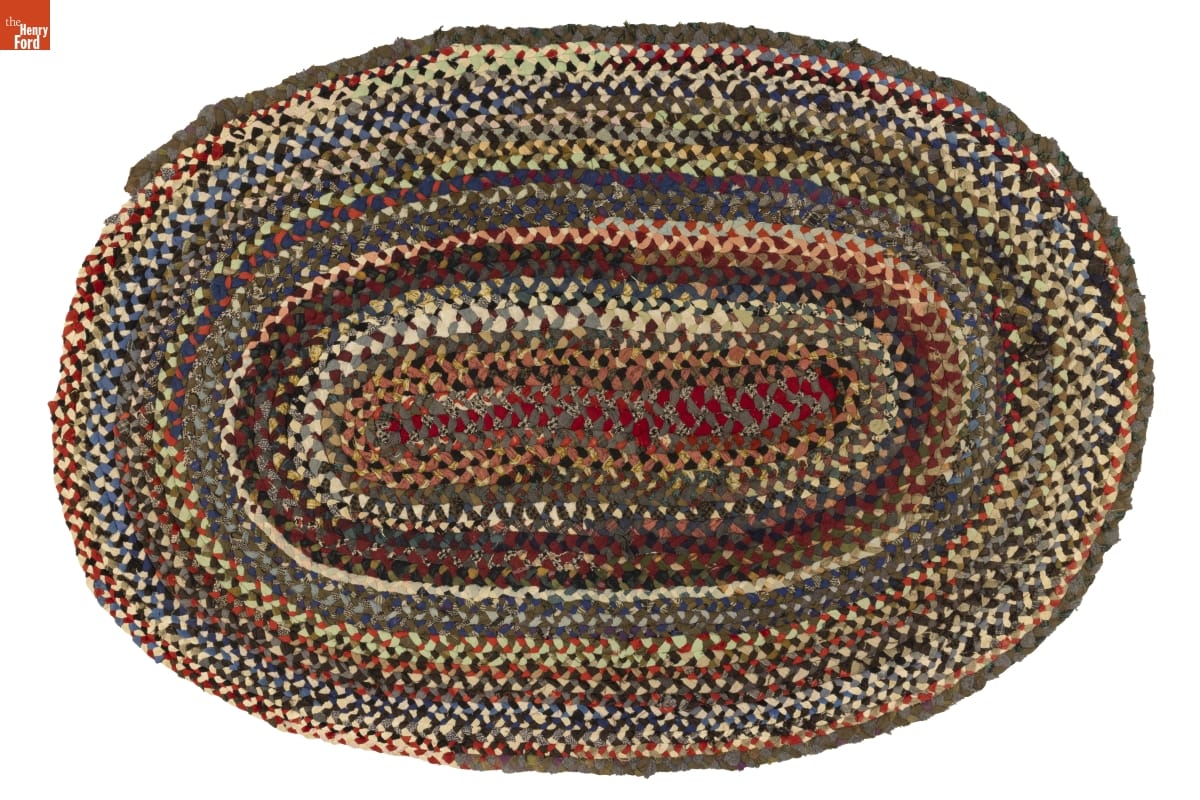
Braided Rug, Made by Yvonne Smith Hafner, 1960-1970
- Braided Rug, Made by Yvonne Smith Hafner, 1960-1970 -
- 1960-1970
- Collections - Artifact
Braided Rug, Made by Yvonne Smith Hafner, 1960-1970
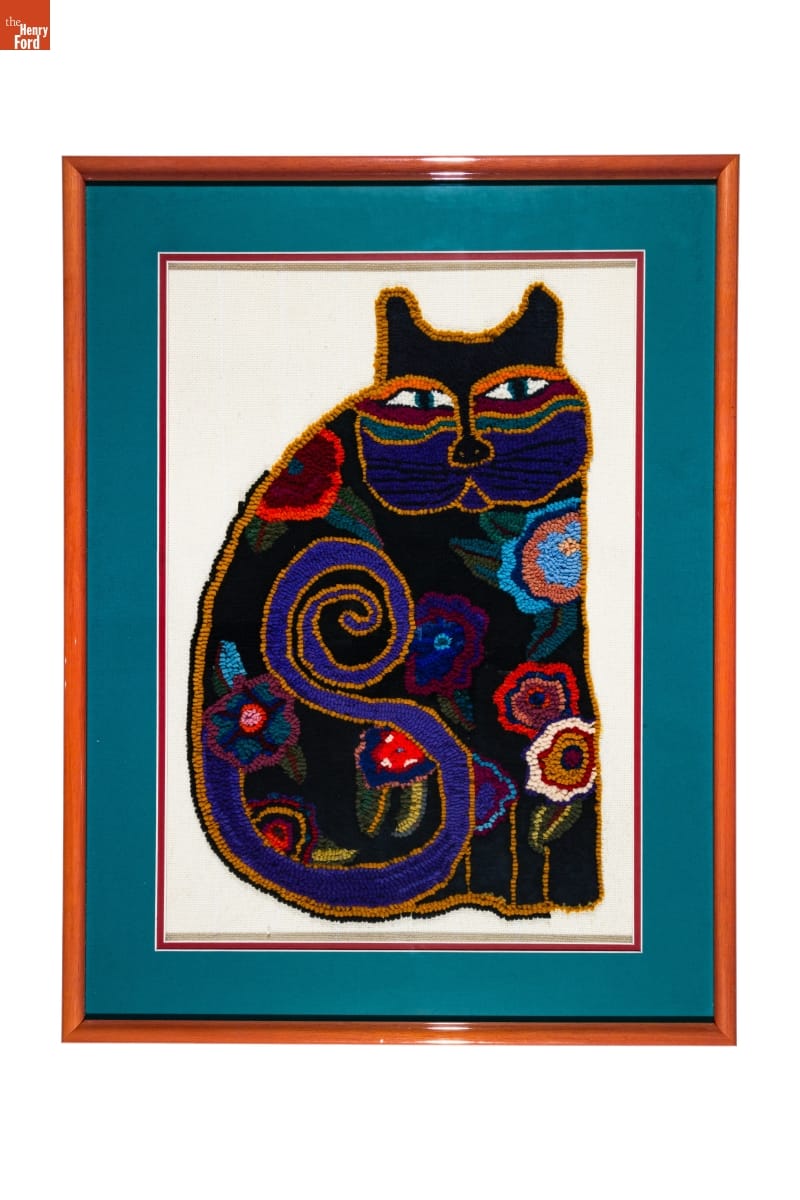
- "Paisley Cat" Framed Hooked Rug, 1996 - Emeline Morrow Miner (1914-1997) started work on this rug in 1996; the rug--created as a gift for her daughter-in-law-- remains unfinished due to Miner's declining health. Miner was a self-taught artist originally from Cedar Rapids, Iowa; she created all of her patterns and even made her materials by thrifting and repurposing old clothes. Miner also did macrame, quilting, leatherwork, and watercolor.
- 1996
- Collections - Artifact
"Paisley Cat" Framed Hooked Rug, 1996
Emeline Morrow Miner (1914-1997) started work on this rug in 1996; the rug--created as a gift for her daughter-in-law-- remains unfinished due to Miner's declining health. Miner was a self-taught artist originally from Cedar Rapids, Iowa; she created all of her patterns and even made her materials by thrifting and repurposing old clothes. Miner also did macrame, quilting, leatherwork, and watercolor.