
Search
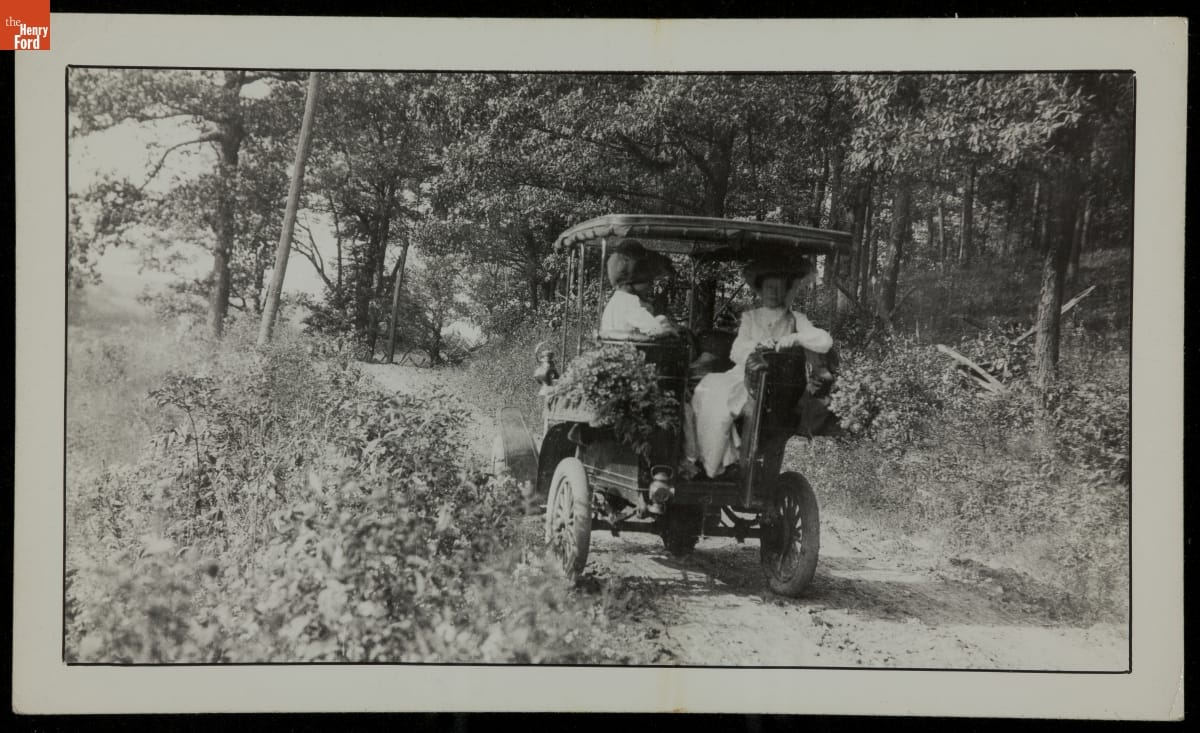
- Two Women Looking Out the Back of 1904 Packard, circa 1905 - This 1904 Packard had a rear center door, which was common on horse-drawn vehicles of the time. Automobiles were in transition. They were playthings for the wealthy, yet to replace buggies for everyday transportation. These well-to-do women use a custom-made wicker hamper to carry flowers they may have gathered during their expensive excursion.
- circa 1905
- Collections - Artifact
Two Women Looking Out the Back of 1904 Packard, circa 1905
This 1904 Packard had a rear center door, which was common on horse-drawn vehicles of the time. Automobiles were in transition. They were playthings for the wealthy, yet to replace buggies for everyday transportation. These well-to-do women use a custom-made wicker hamper to carry flowers they may have gathered during their expensive excursion.
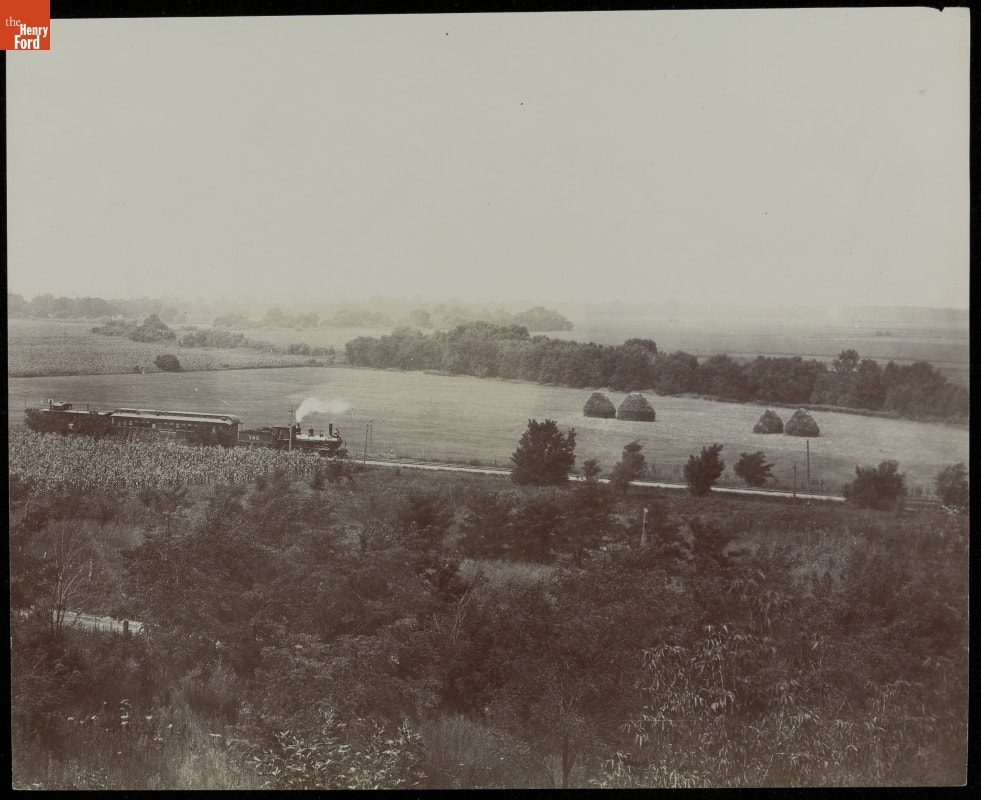
- Steam Train Traveling Through the Countryside, circa 1905 - For nearly thirty years, 1895 to 1924, the Detroit Publishing Company was one of the major image publishers in the world. The company had a wide-ranging stock of original photographs, including this image of a steam locomotive chugging across the North American countryside. It pulls a short load: just one passenger car and a caboose.
- circa 1905
- Collections - Artifact
Steam Train Traveling Through the Countryside, circa 1905
For nearly thirty years, 1895 to 1924, the Detroit Publishing Company was one of the major image publishers in the world. The company had a wide-ranging stock of original photographs, including this image of a steam locomotive chugging across the North American countryside. It pulls a short load: just one passenger car and a caboose.
- Lithograph, "Winter Morning in the Country," 1873 -
- 1873
- Collections - Artifact
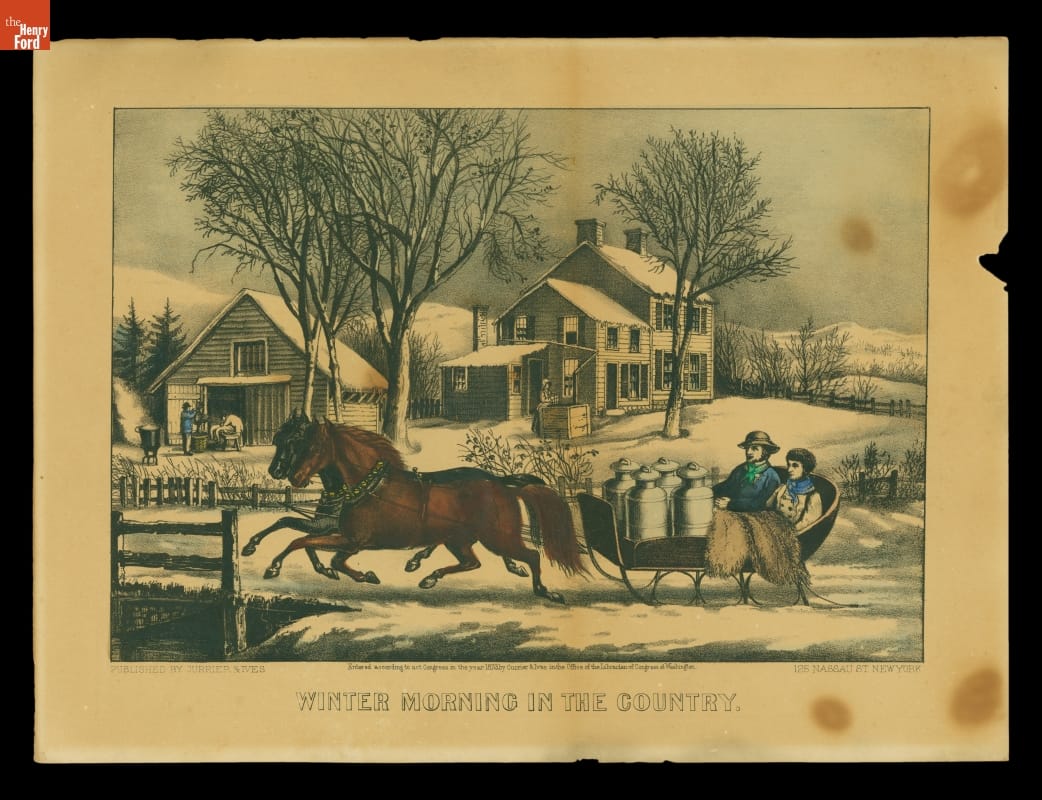
Lithograph, "Winter Morning in the Country," 1873
- Old Wooden Bridge over Rouge River near Coons Mill, Michigan, circa 1925 -
- circa 1925
- Collections - Artifact
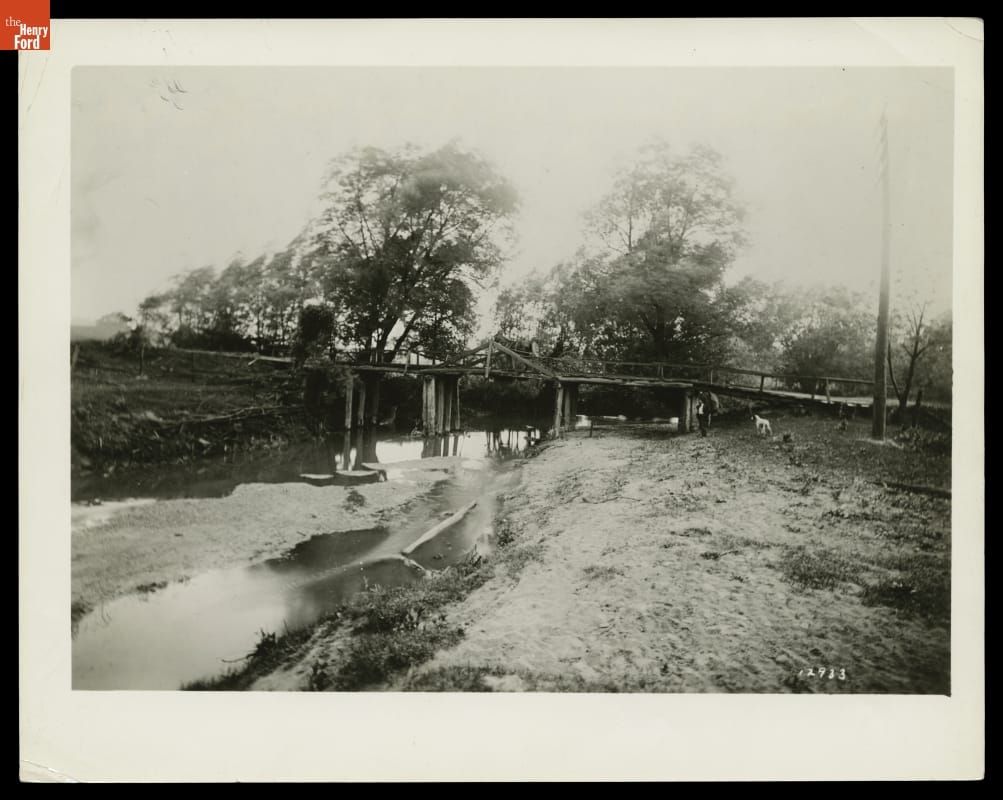
Old Wooden Bridge over Rouge River near Coons Mill, Michigan, circa 1925
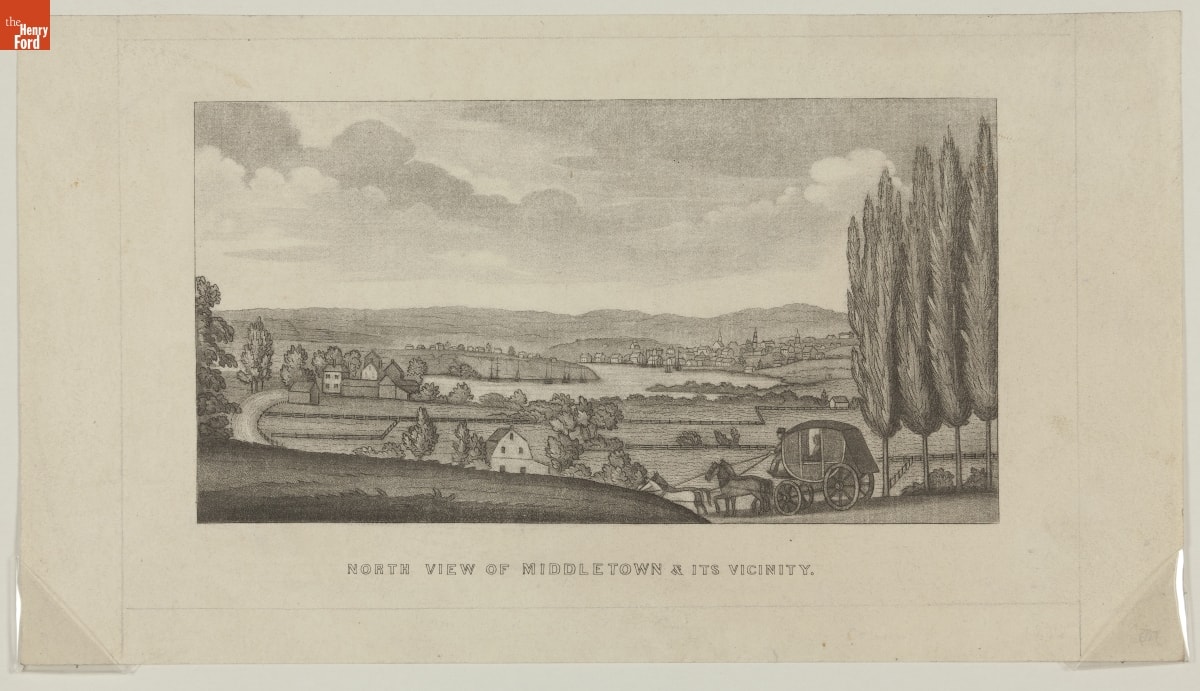
- Mezzotint, "North View of Middletown & Its Vicinity," circa 1830 - Before railroads, long-distance travelers often rode in public coaches. They would jostle along rough country roads with mail, freight, and other passengers "in stages," stopping every few hours to change horses. This engraving depicts a stagecoach journeying toward Middletown, Connecticut.
- circa 1830
- Collections - Artifact
Mezzotint, "North View of Middletown & Its Vicinity," circa 1830
Before railroads, long-distance travelers often rode in public coaches. They would jostle along rough country roads with mail, freight, and other passengers "in stages," stopping every few hours to change horses. This engraving depicts a stagecoach journeying toward Middletown, Connecticut.
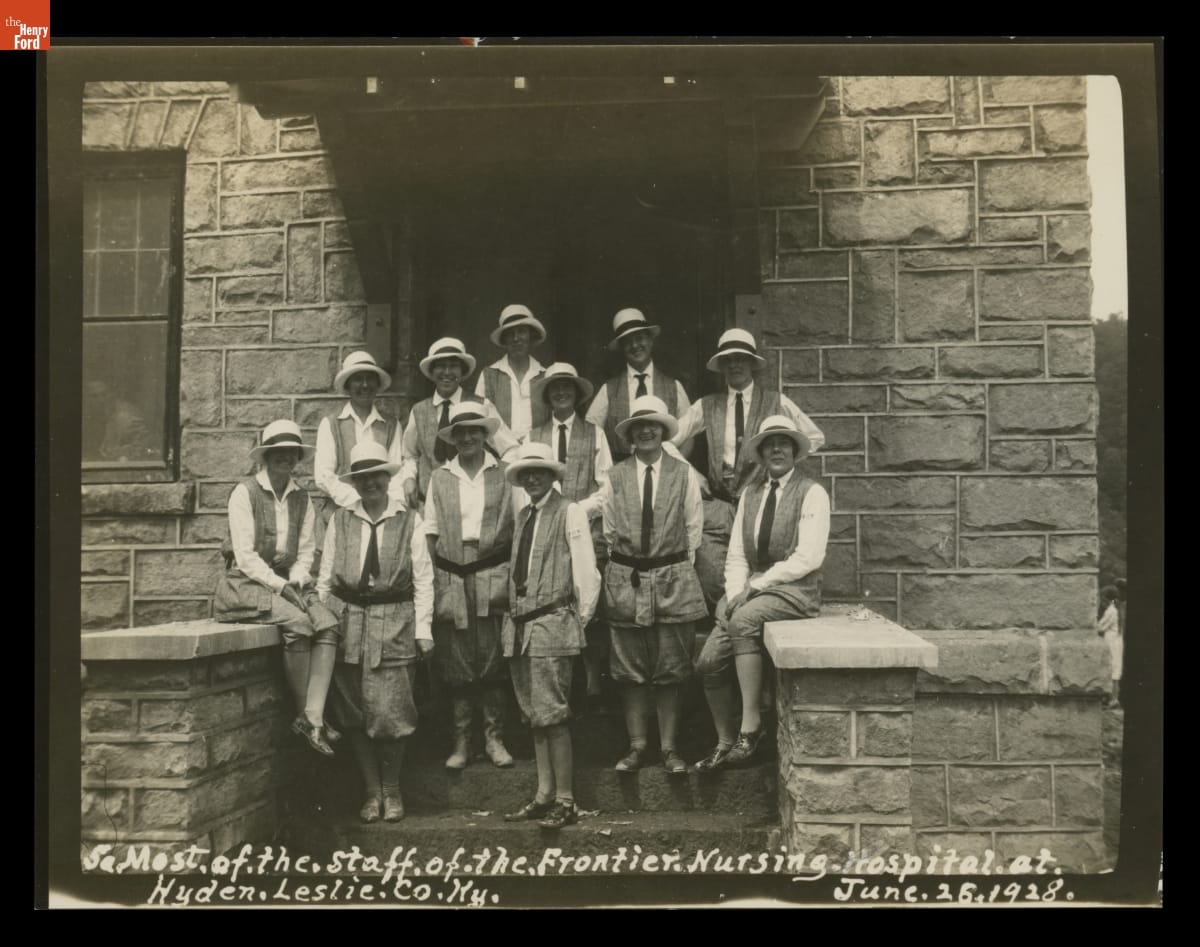
- "Most of the Staff of the Frontier Nursing Hospital at Hyden, Leslie Co., Ky.," June 26, 1928 - Mary Breckinridge, the daughter of a prominent Southern family, established the Frontier Nursing Service (FNS) in 1925. Breckinridge initially backed the enterprise with her own money, but soon cultivated wealthy individuals, including Clara Ford and her son Edsel, to help support the FNS. Through her philanthropic efforts, Breckinridge brought qualified nurse-midwives and modern, life-saving healthcare to many inaccessible areas of eastern Kentucky.
- June 26, 1928
- Collections - Artifact
"Most of the Staff of the Frontier Nursing Hospital at Hyden, Leslie Co., Ky.," June 26, 1928
Mary Breckinridge, the daughter of a prominent Southern family, established the Frontier Nursing Service (FNS) in 1925. Breckinridge initially backed the enterprise with her own money, but soon cultivated wealthy individuals, including Clara Ford and her son Edsel, to help support the FNS. Through her philanthropic efforts, Breckinridge brought qualified nurse-midwives and modern, life-saving healthcare to many inaccessible areas of eastern Kentucky.
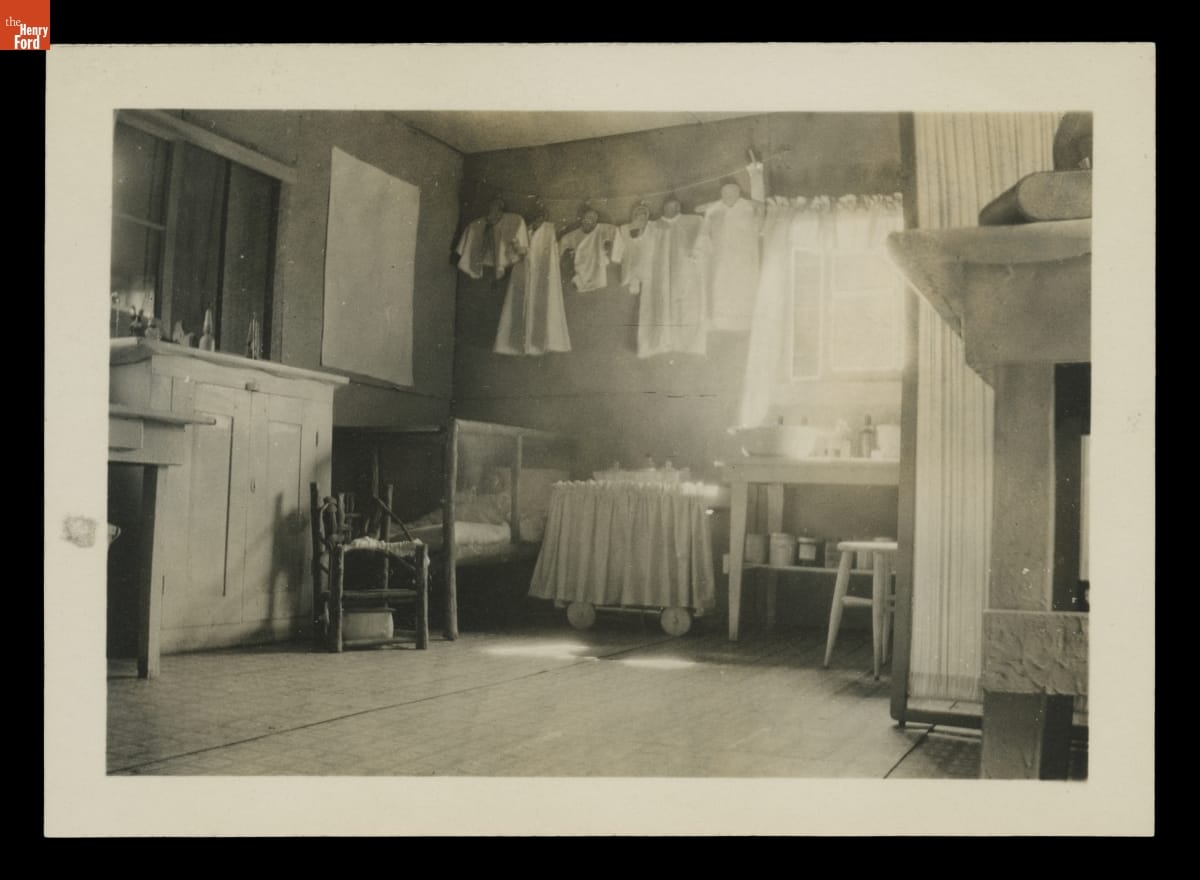
- "Corner of Dispensary in the Temporary Quarters of the Kentucky Committee at Hyden," 1927-1929 - Mary Breckinridge, the daughter of a prominent Southern family, established the Frontier Nursing Service (FNS) in 1925. Breckinridge initially backed the enterprise with her own money, but soon cultivated wealthy individuals, including Clara Ford and her son Edsel, to help support the FNS. Through her philanthropic efforts, Breckinridge brought qualified nurse-midwives and modern, life-saving healthcare to many inaccessible areas of eastern Kentucky.
- 1927-1929
- Collections - Artifact
"Corner of Dispensary in the Temporary Quarters of the Kentucky Committee at Hyden," 1927-1929
Mary Breckinridge, the daughter of a prominent Southern family, established the Frontier Nursing Service (FNS) in 1925. Breckinridge initially backed the enterprise with her own money, but soon cultivated wealthy individuals, including Clara Ford and her son Edsel, to help support the FNS. Through her philanthropic efforts, Breckinridge brought qualified nurse-midwives and modern, life-saving healthcare to many inaccessible areas of eastern Kentucky.
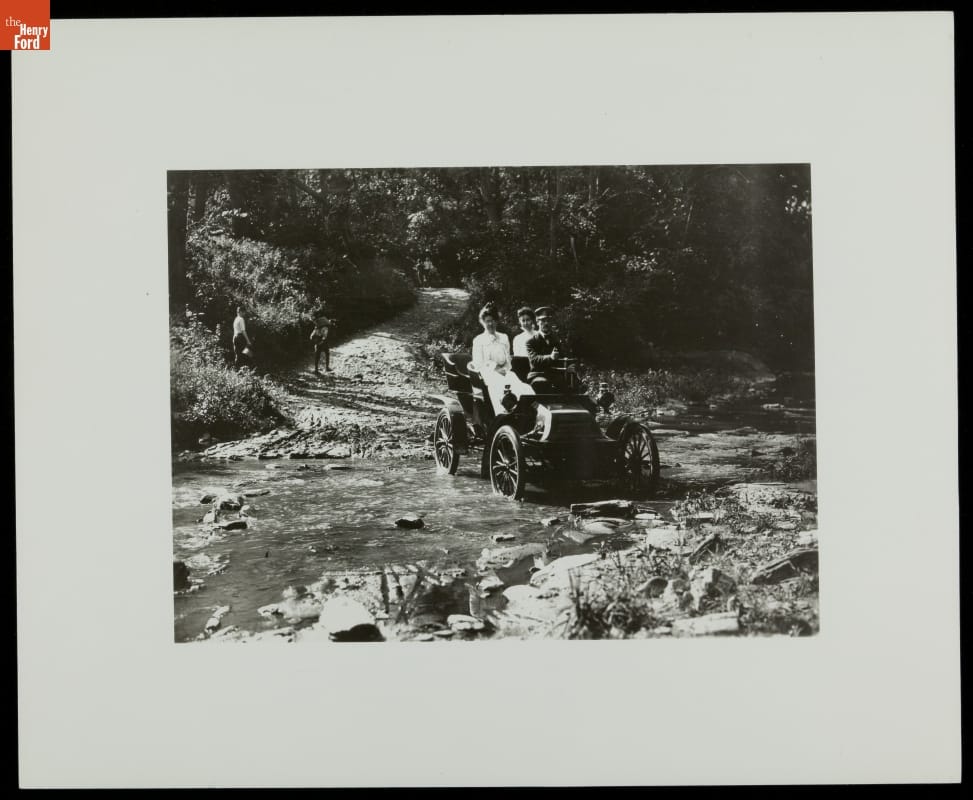
- Autocar Type VIII Tonneau Crossing a Stream, 1903 - In the 1800s, horses carried Americans to places railroads and waterways did not go. The arrival of the automobile in the early 1900s brought a promise for something new -- if not better. Though the earliest cars were only accessible to the wealthy, these well-dressed women crossing a rocky stream with their chauffeur foreshadow an imminent shift in American transportation.
- 1903
- Collections - Artifact
Autocar Type VIII Tonneau Crossing a Stream, 1903
In the 1800s, horses carried Americans to places railroads and waterways did not go. The arrival of the automobile in the early 1900s brought a promise for something new -- if not better. Though the earliest cars were only accessible to the wealthy, these well-dressed women crossing a rocky stream with their chauffeur foreshadow an imminent shift in American transportation.
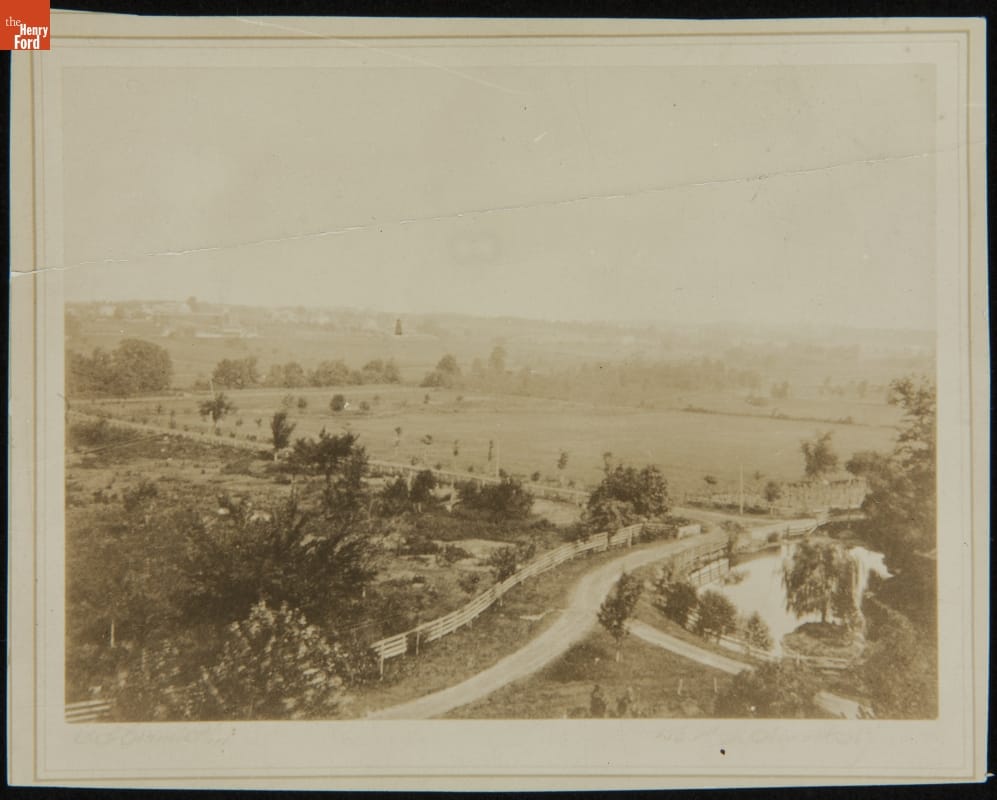
- Illustration of Thomas Edison's Laboratory, Menlo Park, New Jersey, circa 1880 -
- circa 1880
- Collections - Artifact
Illustration of Thomas Edison's Laboratory, Menlo Park, New Jersey, circa 1880
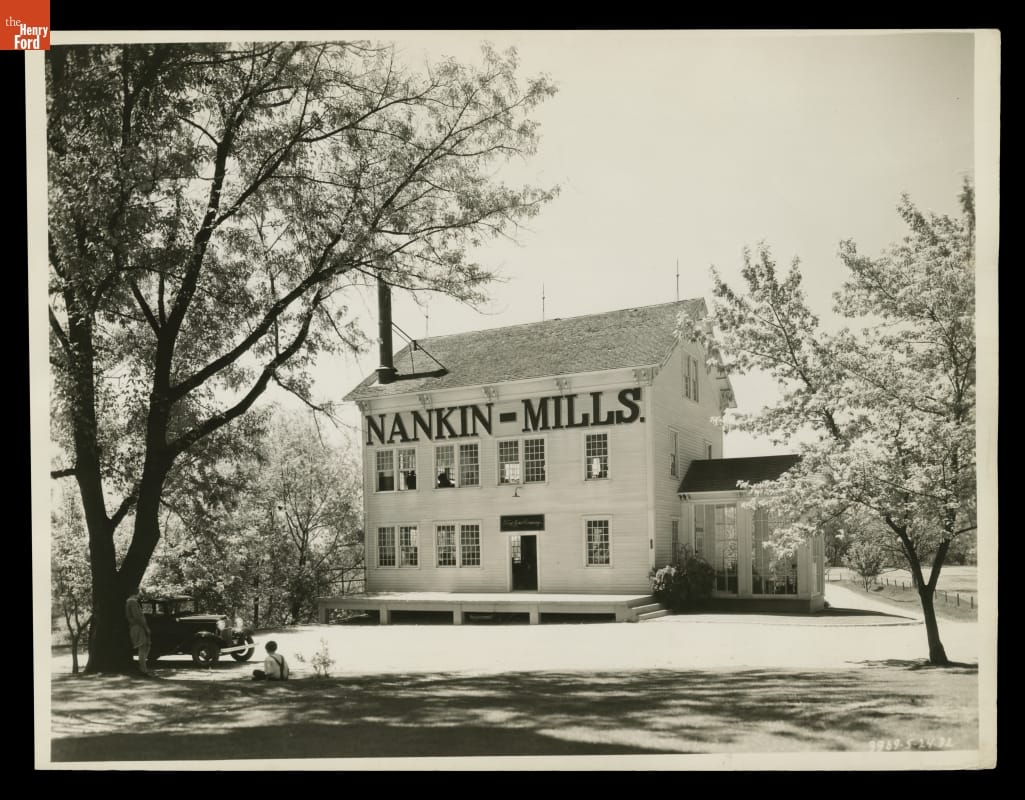
- Ford Village Industries Nankin Mills Plant, 1932 - In the early 1920s, Henry Ford began locating small hydroelectrically powered plants in rural southeast Michigan. These "Village Industries" employed local people who could maintain farms while working at the factory. This Westland-area plant opened in an old flour mill in 1921. Workers here produced tool and die work and performed special engraving and defense experiment work during World War II.
- May 24, 1932
- Collections - Artifact
Ford Village Industries Nankin Mills Plant, 1932
In the early 1920s, Henry Ford began locating small hydroelectrically powered plants in rural southeast Michigan. These "Village Industries" employed local people who could maintain farms while working at the factory. This Westland-area plant opened in an old flour mill in 1921. Workers here produced tool and die work and performed special engraving and defense experiment work during World War II.