
Search
- Tile, 1915-1930 -
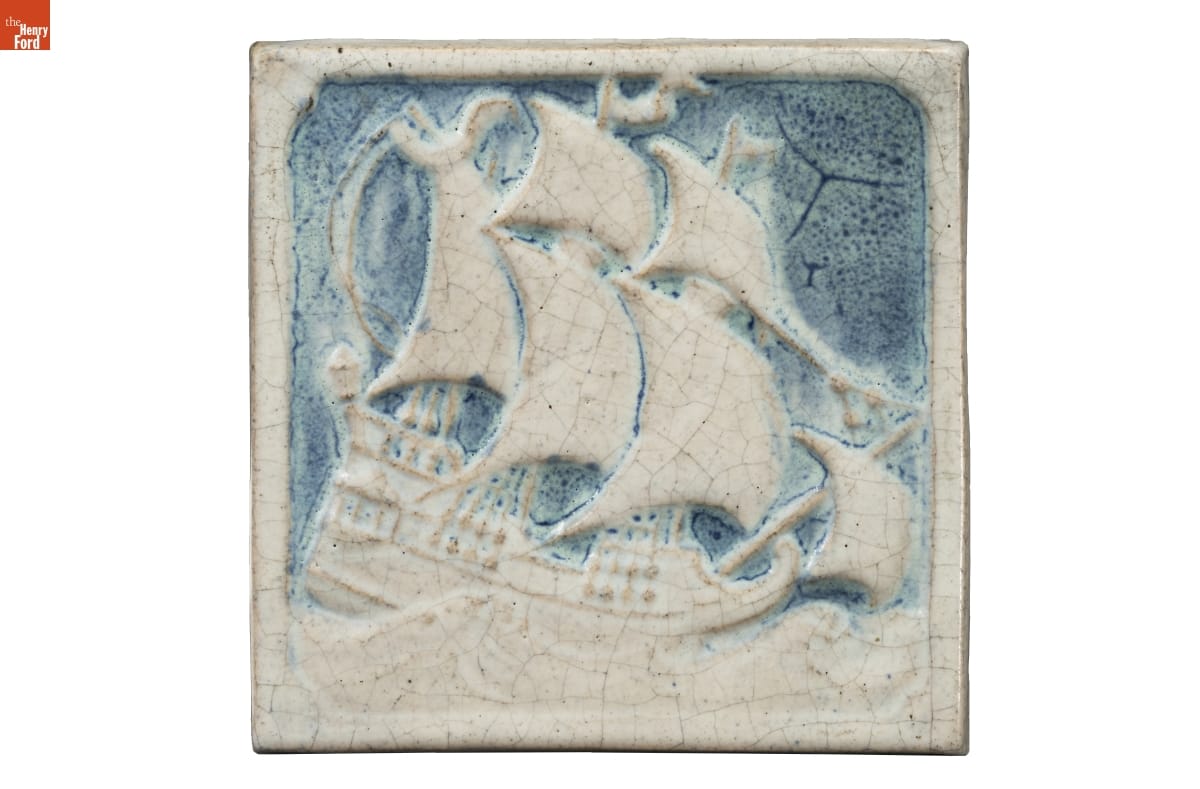
- 1915-1930
- Collections - Artifact
Tile, 1915-1930
- Watercolor Painting, "Sailors Snug Harbor," by Joseph D.L. Van Wagner, 1886 -
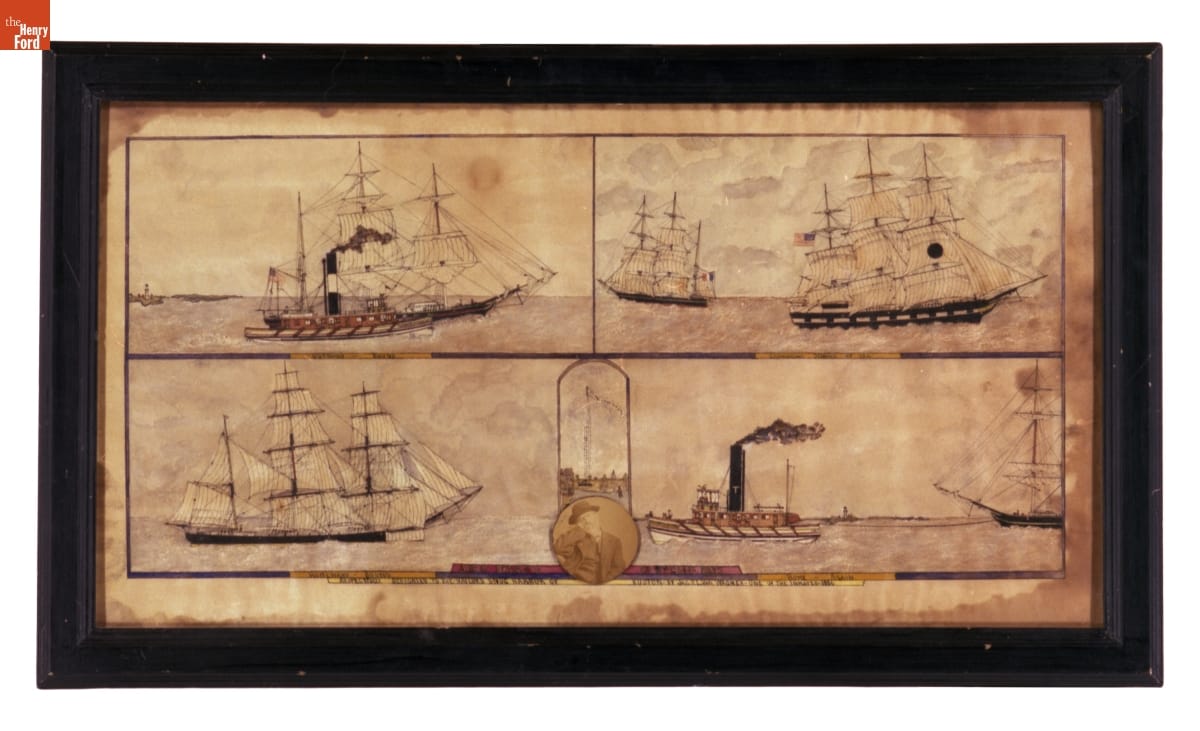
- 1886
- Collections - Artifact
Watercolor Painting, "Sailors Snug Harbor," by Joseph D.L. Van Wagner, 1886
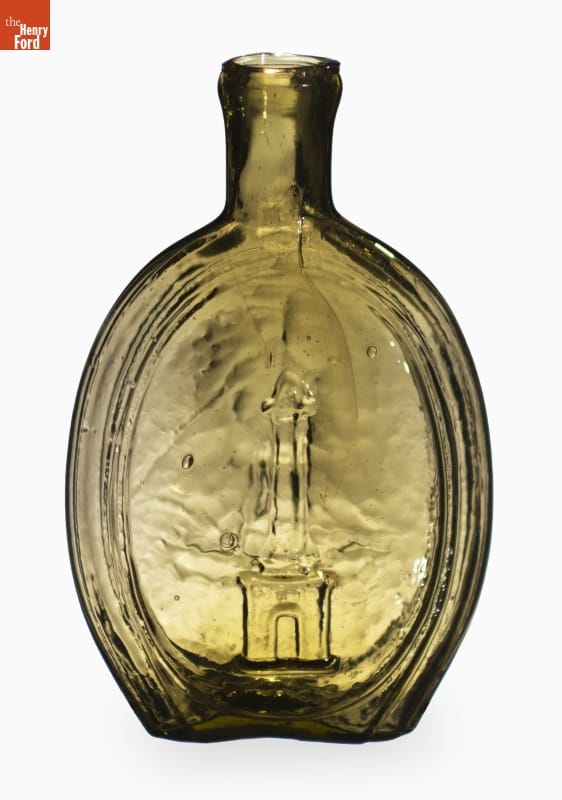
- Flask, 1825-1840 - Glass factories in America began producing inexpensive, mold-formed flasks in the early 1800s. These figured flasks, often decorated with symbols of national or civic pride, appealed to America's common man. Citizens of Baltimore, Maryland, would have recognized the image of the city's Washington Monument on this locally made flask. And the sloop would have been a familiar sight to those living in this port city.
- 1825-1840
- Collections - Artifact
Flask, 1825-1840
Glass factories in America began producing inexpensive, mold-formed flasks in the early 1800s. These figured flasks, often decorated with symbols of national or civic pride, appealed to America's common man. Citizens of Baltimore, Maryland, would have recognized the image of the city's Washington Monument on this locally made flask. And the sloop would have been a familiar sight to those living in this port city.
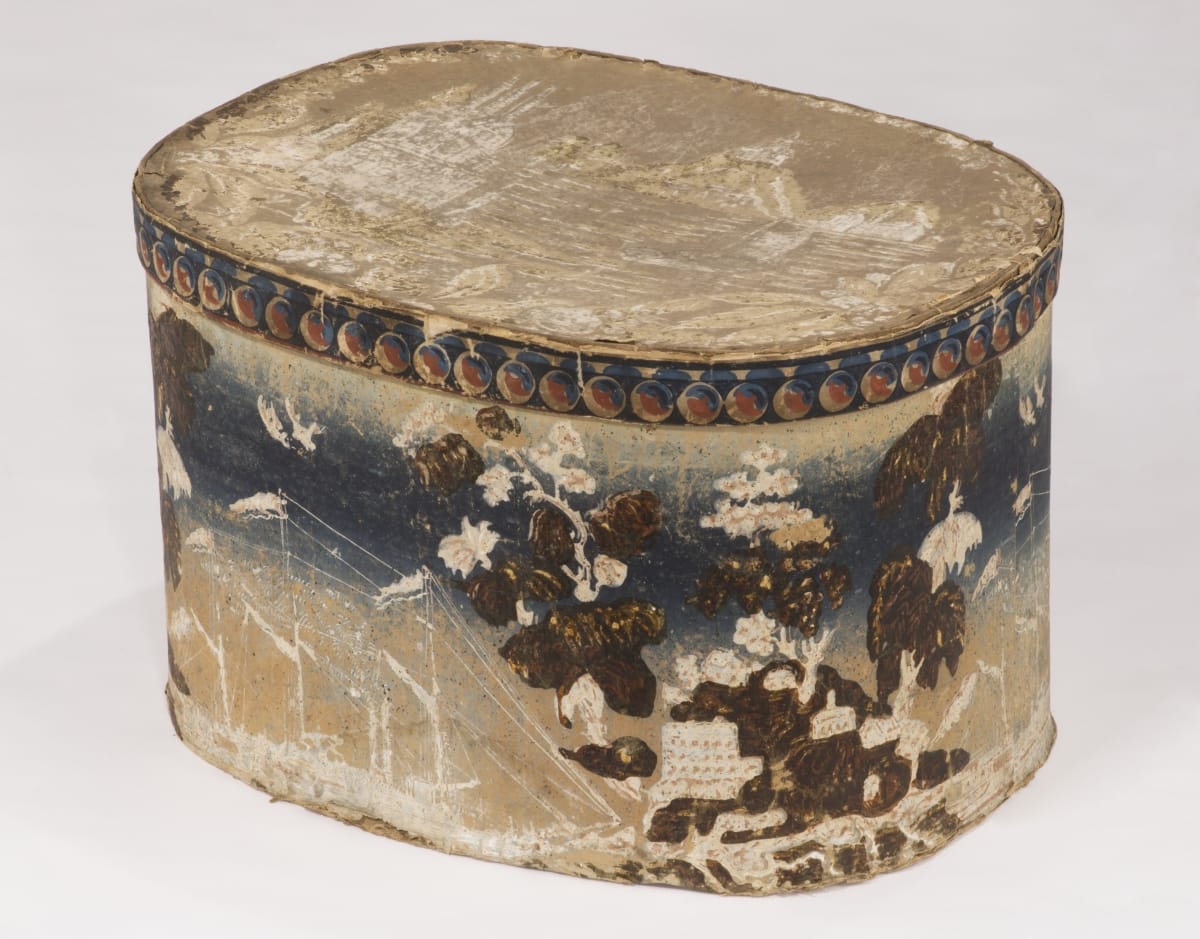
- Bandbox, circa 1840 - In the early 1800s, Americans used bandboxes to store clothing, accessories, and other small items. Bandboxes were handy containers in the home or when traveling by stage, boat, or rail. Manufacturers covered these inexpensive pasteboard or wooden boxes with colorful papers. This bandbox's paper depicts a combination steam-and-sailing ship. This hybrid travel option made oceangoing travel quicker over traditional sailing ships.
- circa 1840
- Collections - Artifact
Bandbox, circa 1840
In the early 1800s, Americans used bandboxes to store clothing, accessories, and other small items. Bandboxes were handy containers in the home or when traveling by stage, boat, or rail. Manufacturers covered these inexpensive pasteboard or wooden boxes with colorful papers. This bandbox's paper depicts a combination steam-and-sailing ship. This hybrid travel option made oceangoing travel quicker over traditional sailing ships.
- Watercolor Painting, Champion Tugboat in Detroit River, by Seth A. Whipple, 1880-1882 -
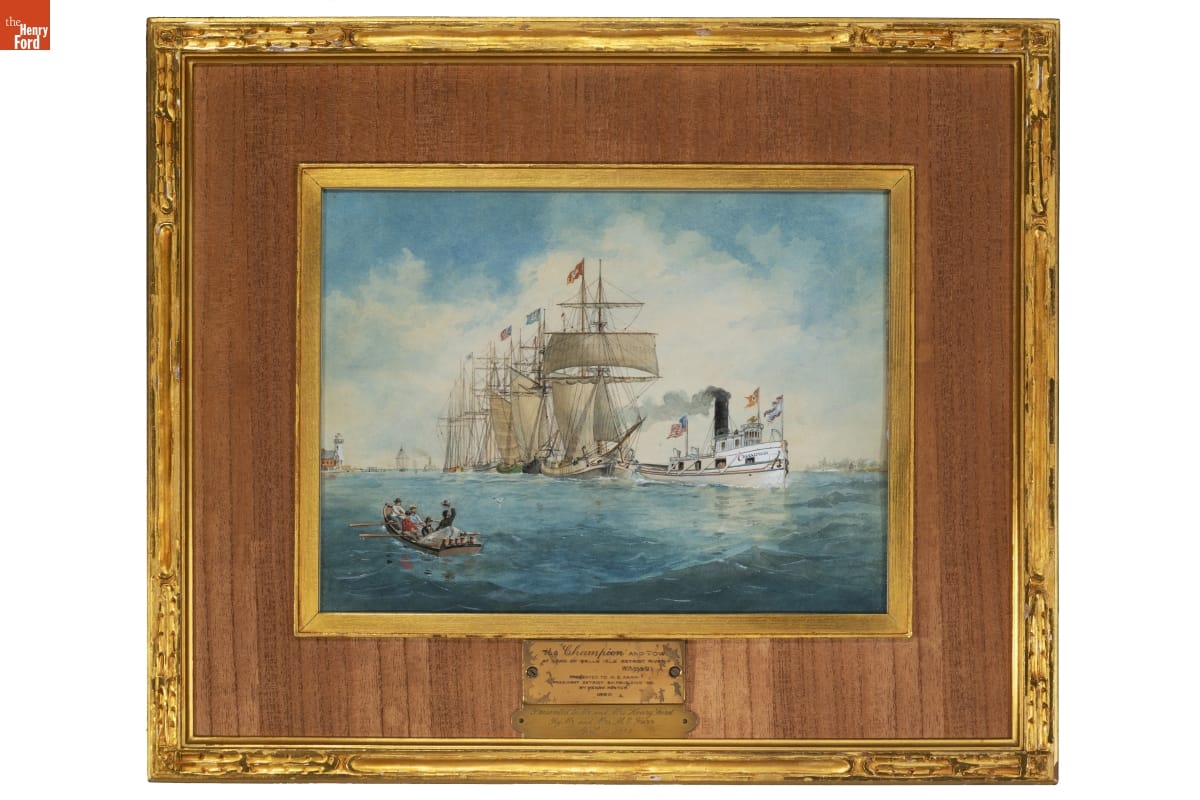
- 1880-1882
- Collections - Artifact
Watercolor Painting, Champion Tugboat in Detroit River, by Seth A. Whipple, 1880-1882
- Bandbox, circa 1835 - In the early 1800s, Americans used bandboxes to store clothing, accessories, and other small items. Bandboxes were handy containers in the home or when traveling by stage, boat, or rail. Manufacturers covered these inexpensive pasteboard or wooden boxes with colorful papers. This bandbox's paper depicts an ocean-going ship and a scene along New York's Erie Canal -- symbols of America's growing commercial and manufacturing prosperity.
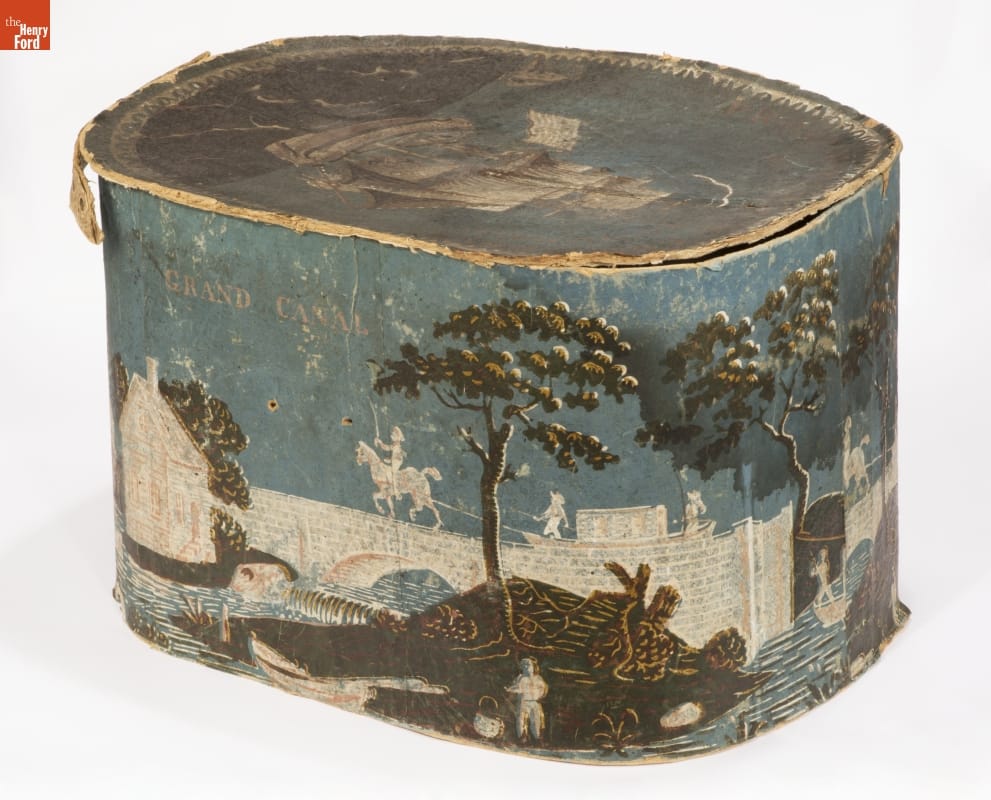
- circa 1835
- Collections - Artifact
Bandbox, circa 1835
In the early 1800s, Americans used bandboxes to store clothing, accessories, and other small items. Bandboxes were handy containers in the home or when traveling by stage, boat, or rail. Manufacturers covered these inexpensive pasteboard or wooden boxes with colorful papers. This bandbox's paper depicts an ocean-going ship and a scene along New York's Erie Canal -- symbols of America's growing commercial and manufacturing prosperity.
- Bandbox, circa 1835 - In the early 1800s, Americans used bandboxes to store clothing, accessories, and other small items. Bandboxes were handy containers in the home or when traveling by stage, boat, or rail. Manufacturers covered these inexpensive pasteboard or wooden boxes with colorful papers. This bandbox's paper depicts two ships -- a steamship and a fully rigged sailing ship -- plying the waters of the Providence River in Rhode Island.
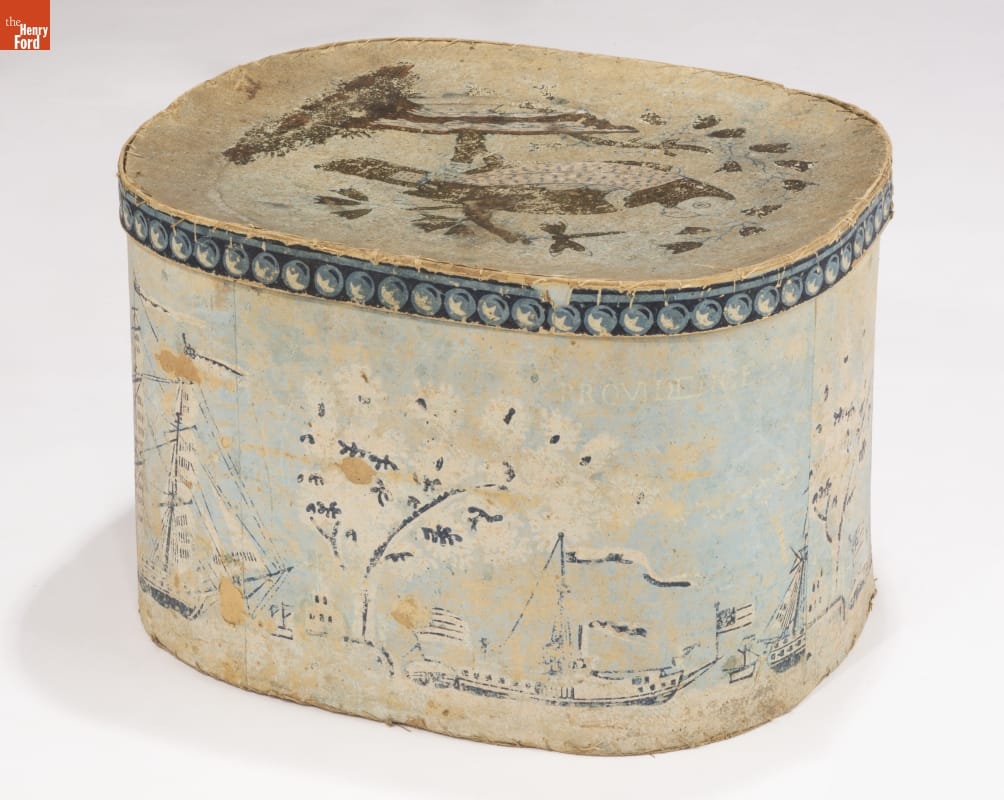
- circa 1835
- Collections - Artifact
Bandbox, circa 1835
In the early 1800s, Americans used bandboxes to store clothing, accessories, and other small items. Bandboxes were handy containers in the home or when traveling by stage, boat, or rail. Manufacturers covered these inexpensive pasteboard or wooden boxes with colorful papers. This bandbox's paper depicts two ships -- a steamship and a fully rigged sailing ship -- plying the waters of the Providence River in Rhode Island.
- Platter, 1826-1838 -
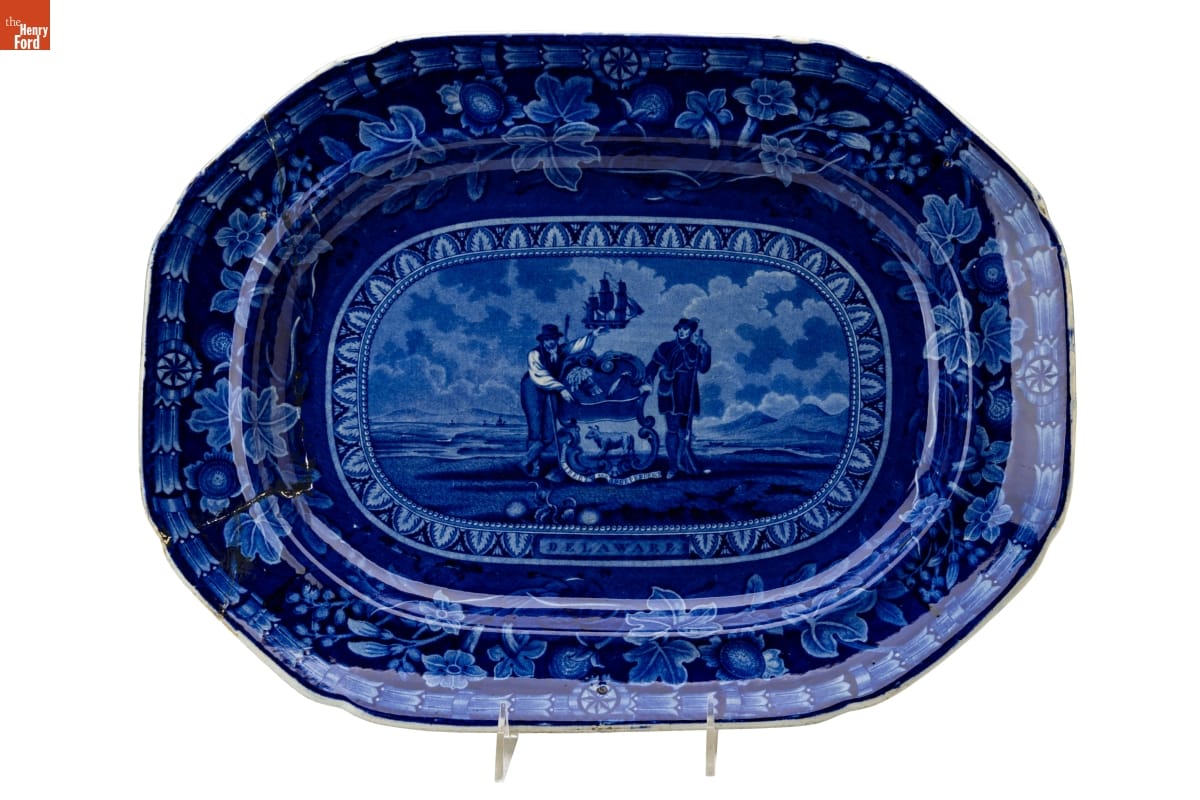
- 1826-1838
- Collections - Artifact
Platter, 1826-1838