
Search
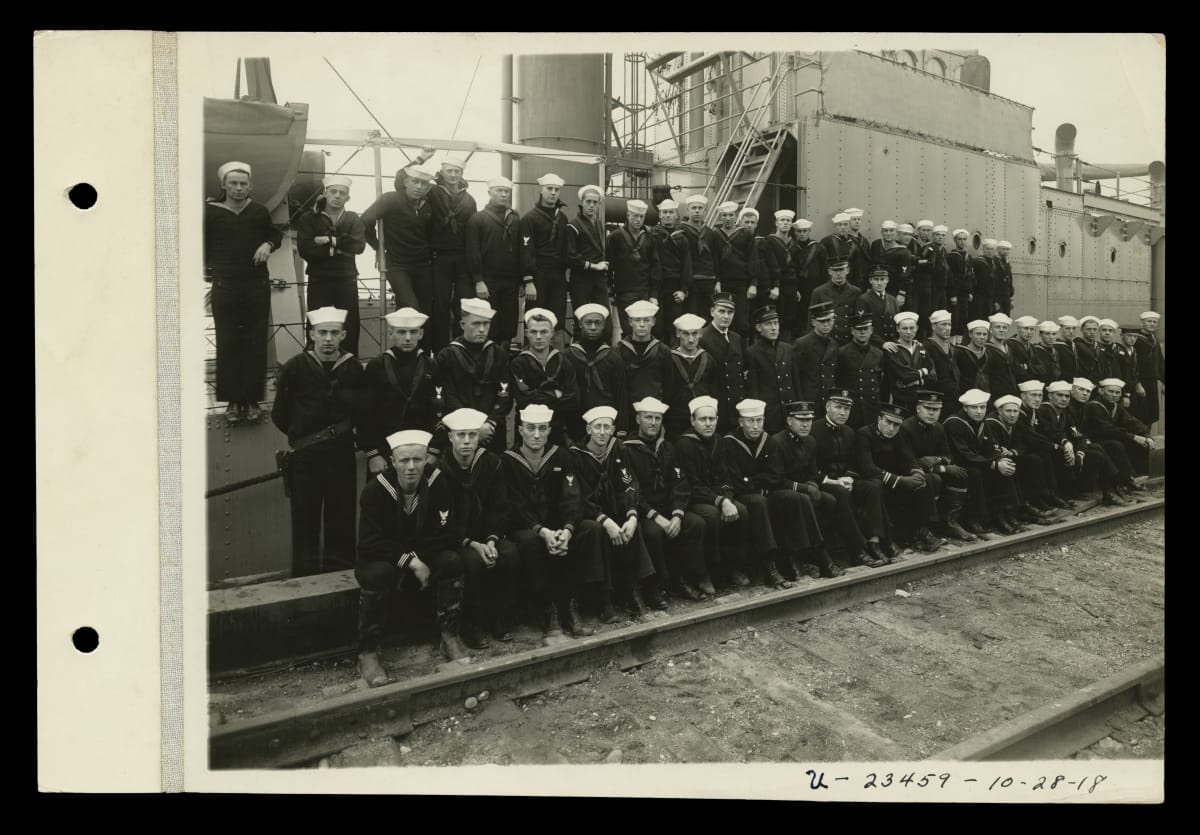
- Crew of World War I Eagle Boat, 1918 - To combat German submarine attacks on U.S. cargo ships during World War I, Henry Ford suggested the mass production of submarine chasers. Ford Motor Company accepted a government contract to build these "Eagle Boats" and began production at its partially developed industrial complex along the Rouge River in 1918. By late 1919, Ford had completed 60 Eagle Boats for the U.S. Navy.
- 1918
- Collections - Artifact
Crew of World War I Eagle Boat, 1918
To combat German submarine attacks on U.S. cargo ships during World War I, Henry Ford suggested the mass production of submarine chasers. Ford Motor Company accepted a government contract to build these "Eagle Boats" and began production at its partially developed industrial complex along the Rouge River in 1918. By late 1919, Ford had completed 60 Eagle Boats for the U.S. Navy.
- Hatbox, 1917-1920 -
- 1917-1920
- Collections - Artifact
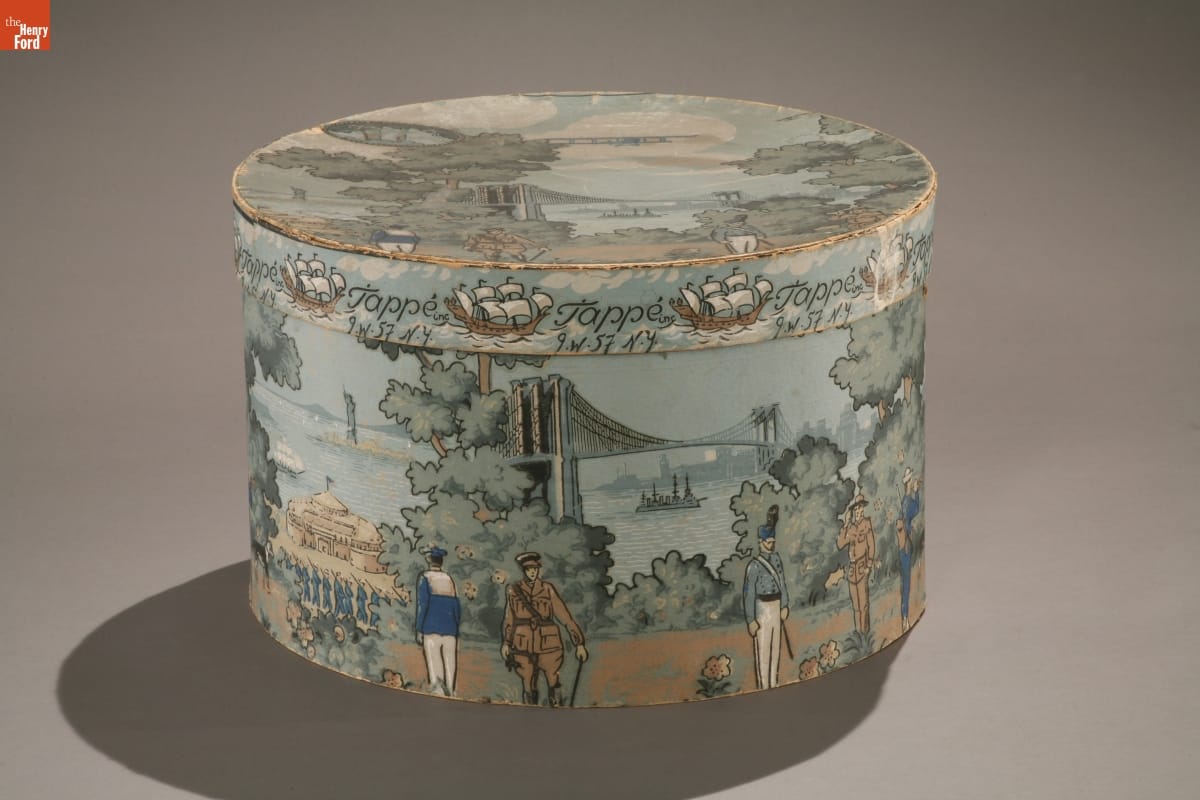
Hatbox, 1917-1920
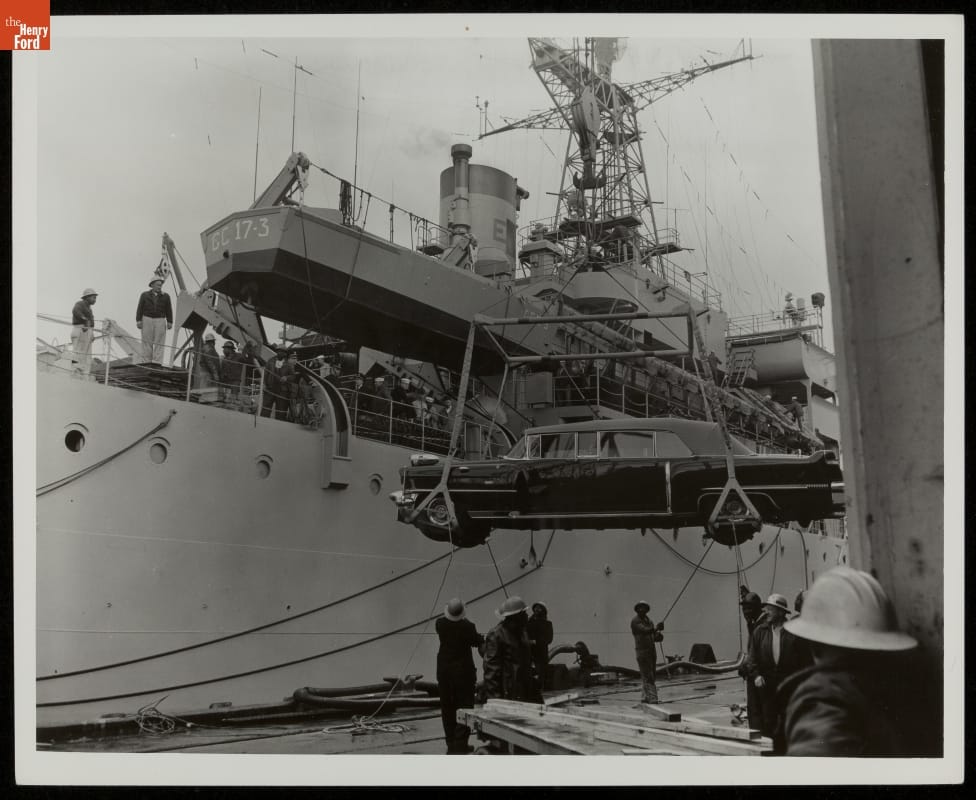
- Loading the 1956 Cadillac Presidential Automobile onto USS Taconic, March 1957 - When the President travels abroad, United States Secret Service agents ensure that state cars arrive ahead of him. In this photograph, USS <EM>Taconic</EM> takes on President Dwight D. Eisenhower's Cadillac for a visit in Bermuda with British Prime Minister Harold MacMillan. The Secret Service began using transport aircraft to carry presidential vehicles a few years later.
- March 01, 1957
- Collections - Artifact
Loading the 1956 Cadillac Presidential Automobile onto USS Taconic, March 1957
When the President travels abroad, United States Secret Service agents ensure that state cars arrive ahead of him. In this photograph, USS Taconic takes on President Dwight D. Eisenhower's Cadillac for a visit in Bermuda with British Prime Minister Harold MacMillan. The Secret Service began using transport aircraft to carry presidential vehicles a few years later.
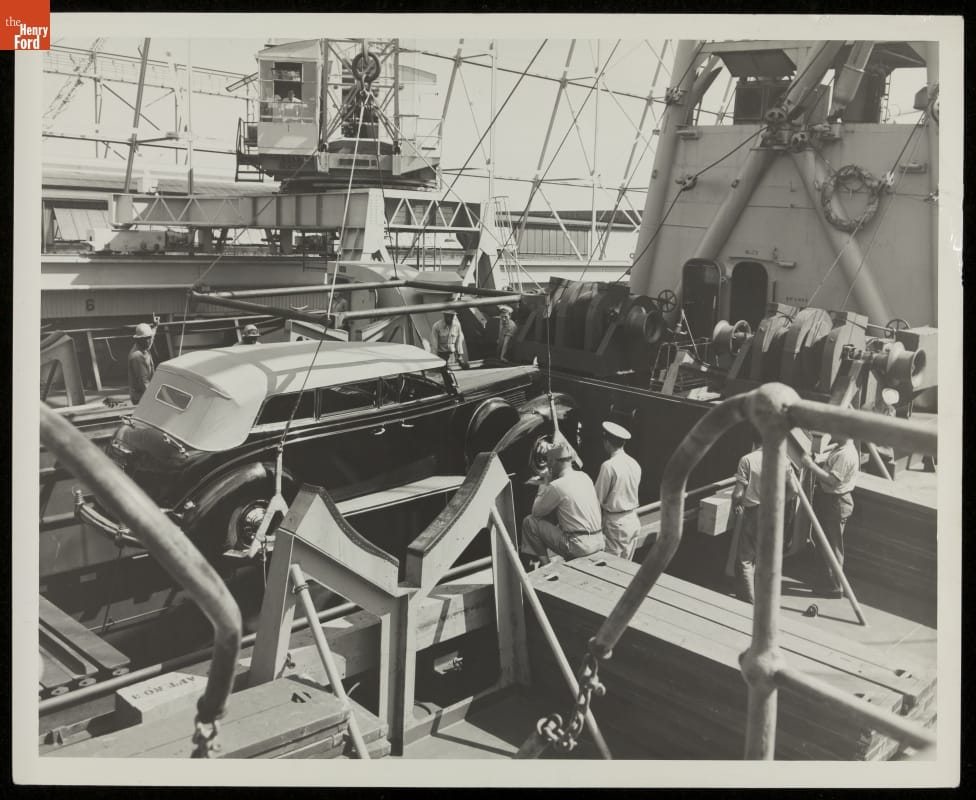
- 1939 Lincoln Presidential Automobile "Sunshine Special" aboard Military Transport Ship, September 1947 - When the President travels abroad, United States Secret Service agents ensure that state cars arrive ahead of him. This military transport ship carried the "Sunshine Special" limousine overseas for one of President Harry S. Truman's international visits in 1947. Around 1960, the Secret Service began using transport aircraft to carry presidential vehicles.
- September 22, 1947
- Collections - Artifact
1939 Lincoln Presidential Automobile "Sunshine Special" aboard Military Transport Ship, September 1947
When the President travels abroad, United States Secret Service agents ensure that state cars arrive ahead of him. This military transport ship carried the "Sunshine Special" limousine overseas for one of President Harry S. Truman's international visits in 1947. Around 1960, the Secret Service began using transport aircraft to carry presidential vehicles.
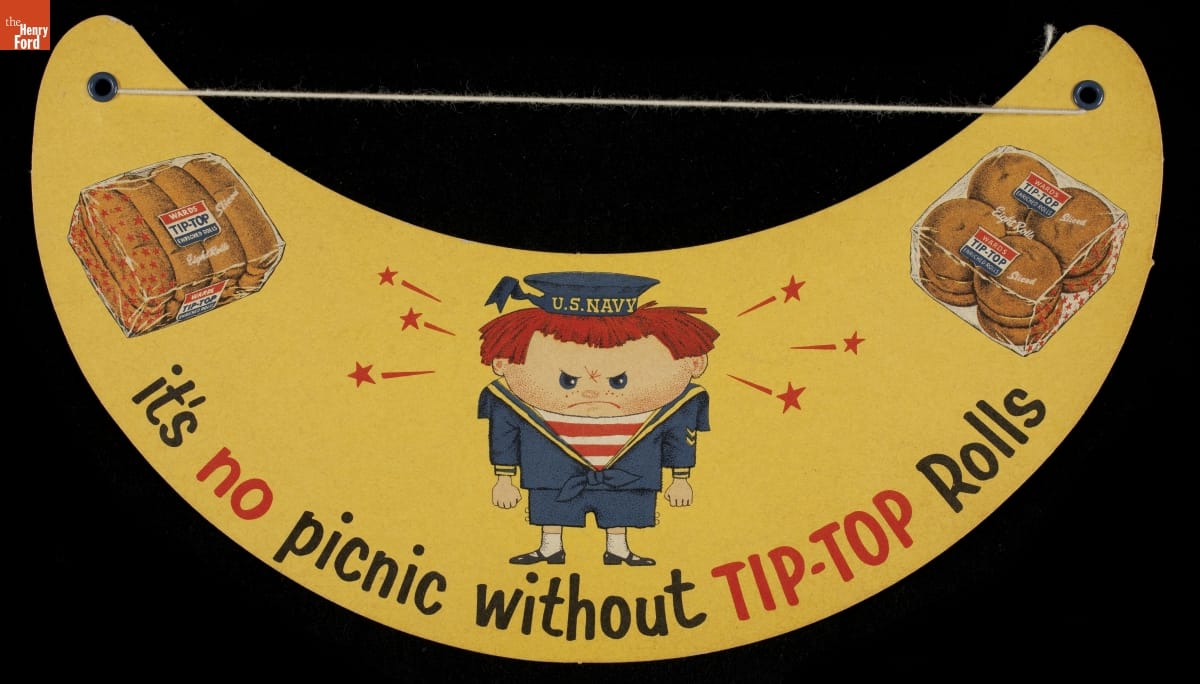
- Trade Card for Tip-Top Rolls, Ward Baking Co., 1956 -
- 1956
- Collections - Artifact
Trade Card for Tip-Top Rolls, Ward Baking Co., 1956
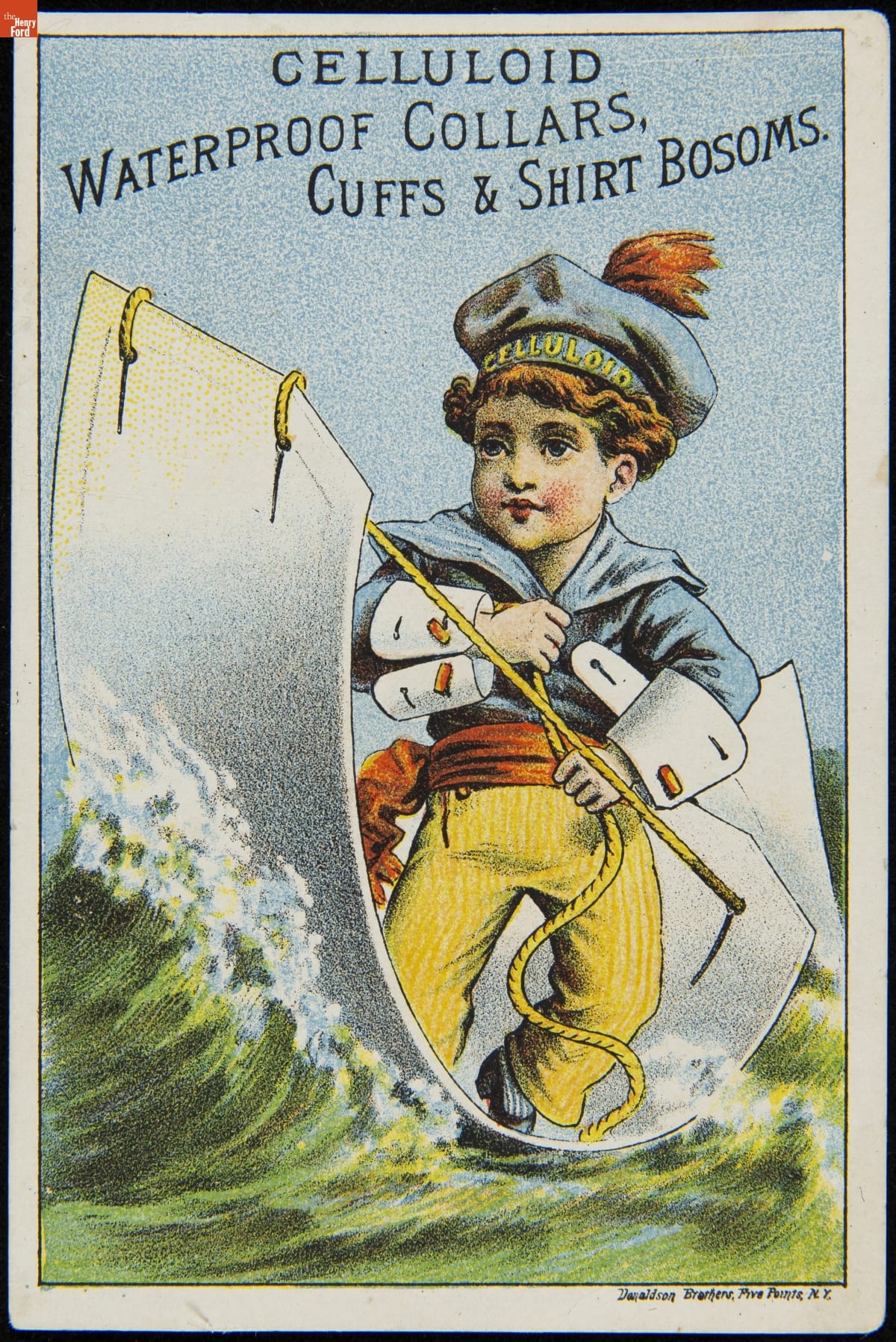
- Trade Card for Celluloid Waterproof Collars, Cuffs & Shirt Bosoms, 1870-1895 - As color printing gained momentum in the late 19th century, trade cards became a major means of advertising goods and services. Americans enjoyed and often saved the little advertisements found in product packages or distributed by local merchants. This trade card advertises Celluloid Waterproof Collars, Cuffs & Shirt Bosoms.
- 1870-1895
- Collections - Artifact
Trade Card for Celluloid Waterproof Collars, Cuffs & Shirt Bosoms, 1870-1895
As color printing gained momentum in the late 19th century, trade cards became a major means of advertising goods and services. Americans enjoyed and often saved the little advertisements found in product packages or distributed by local merchants. This trade card advertises Celluloid Waterproof Collars, Cuffs & Shirt Bosoms.
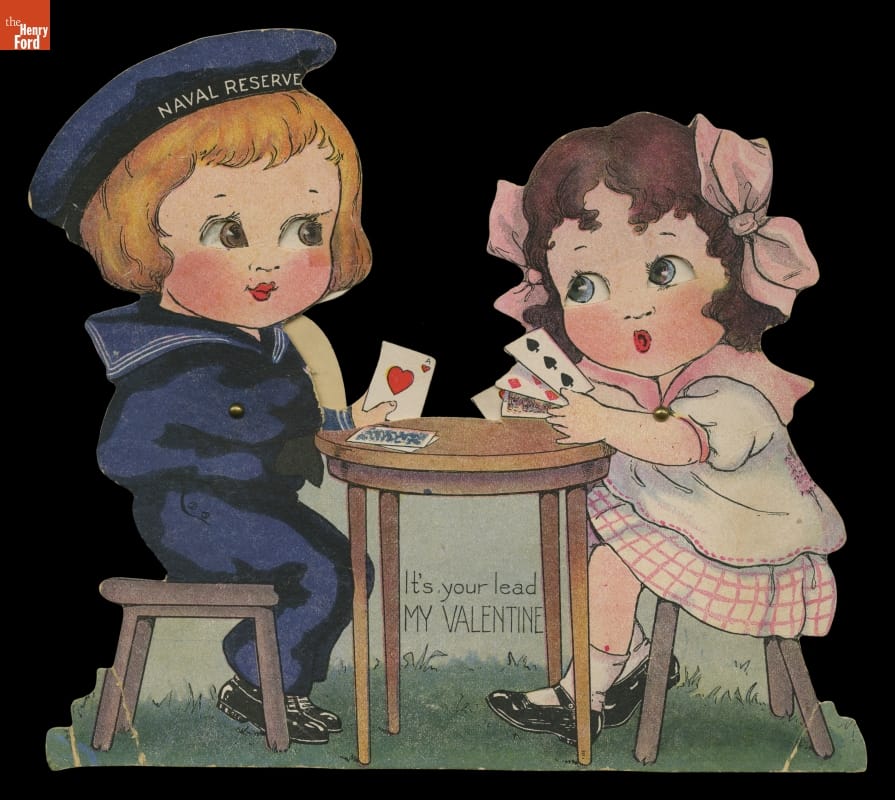
- Valentine Card, "It's Your Lead, My Valentine," circa 1925 - The custom of sending messages of affection on February 14 dates back to Roman times, when mid-February was a time to meet and court prospective mates. The earliest American valentines were labors of love, handmade by the sender. The spread of commercially produced valentines in the second half of the nineteenth century made sending and receiving Valentine's Day cards a more lighthearted activity.
- circa 1925
- Collections - Artifact
Valentine Card, "It's Your Lead, My Valentine," circa 1925
The custom of sending messages of affection on February 14 dates back to Roman times, when mid-February was a time to meet and court prospective mates. The earliest American valentines were labors of love, handmade by the sender. The spread of commercially produced valentines in the second half of the nineteenth century made sending and receiving Valentine's Day cards a more lighthearted activity.
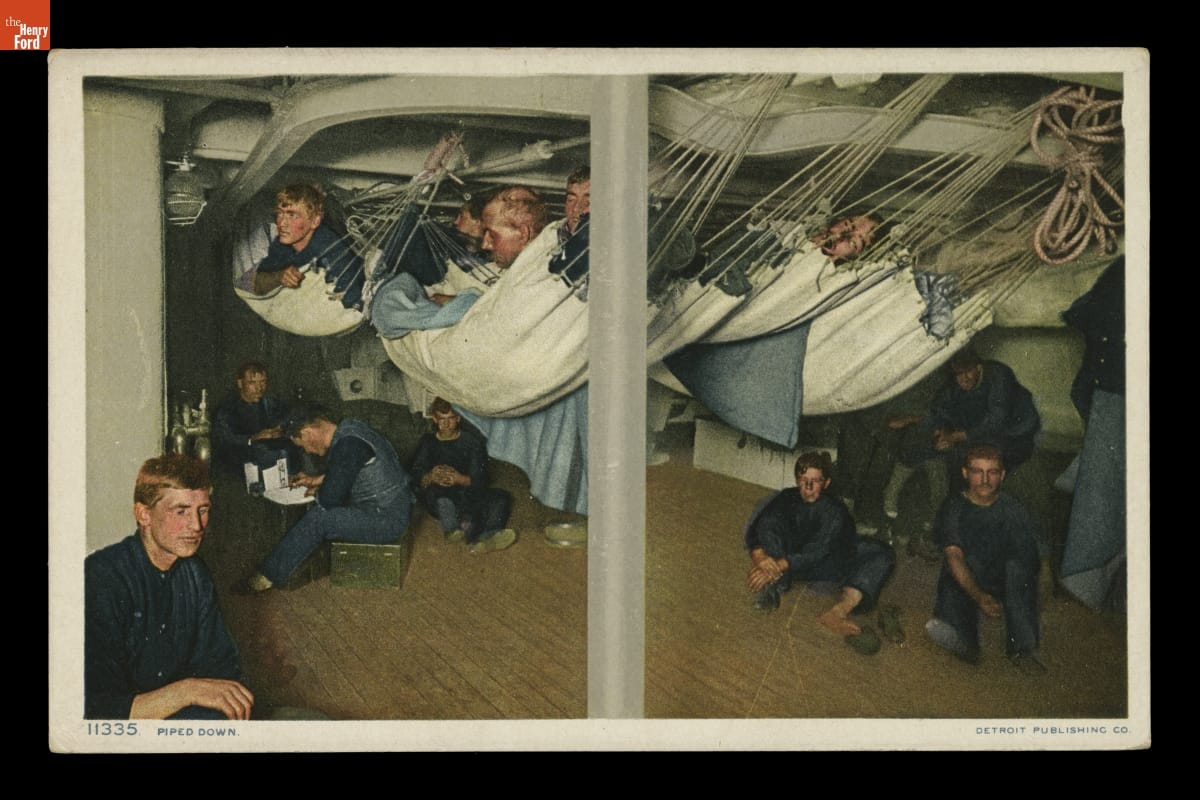
- "Piped Down," Sailors on the Berth Deck of the USS Massachusetts, 1896-1901 - From 1895 to 1924, the Detroit Publishing Company was one of the major image publishers in the world. It had a wide-ranging stock of original photographs, many of which were colored using the company's patented "Phostint" process. Popular "Phostint" postcards, the Detroit Publishing Company claimed, were delicately "executed in Nature's Coloring" to be truthful, tasteful, beautiful, and educational.
- 1896-1901
- Collections - Artifact
"Piped Down," Sailors on the Berth Deck of the USS Massachusetts, 1896-1901
From 1895 to 1924, the Detroit Publishing Company was one of the major image publishers in the world. It had a wide-ranging stock of original photographs, many of which were colored using the company's patented "Phostint" process. Popular "Phostint" postcards, the Detroit Publishing Company claimed, were delicately "executed in Nature's Coloring" to be truthful, tasteful, beautiful, and educational.
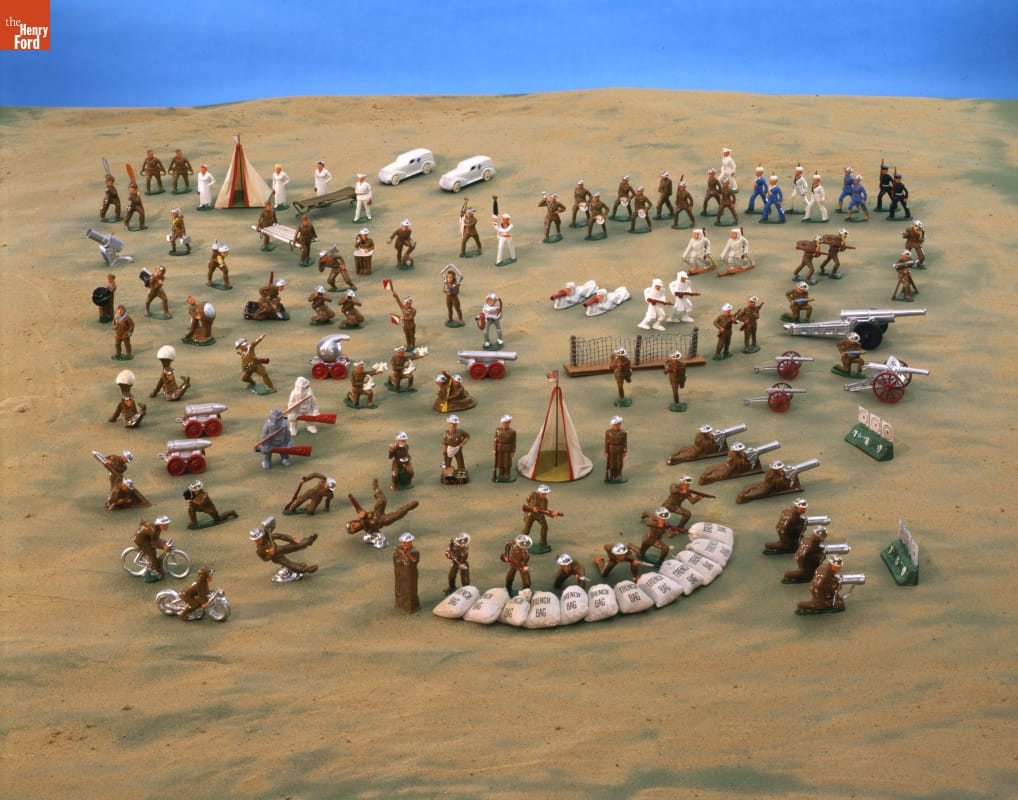
- Military Play Set, 1925-1940 -
- 1925-1940
- Collections - Artifact
Military Play Set, 1925-1940
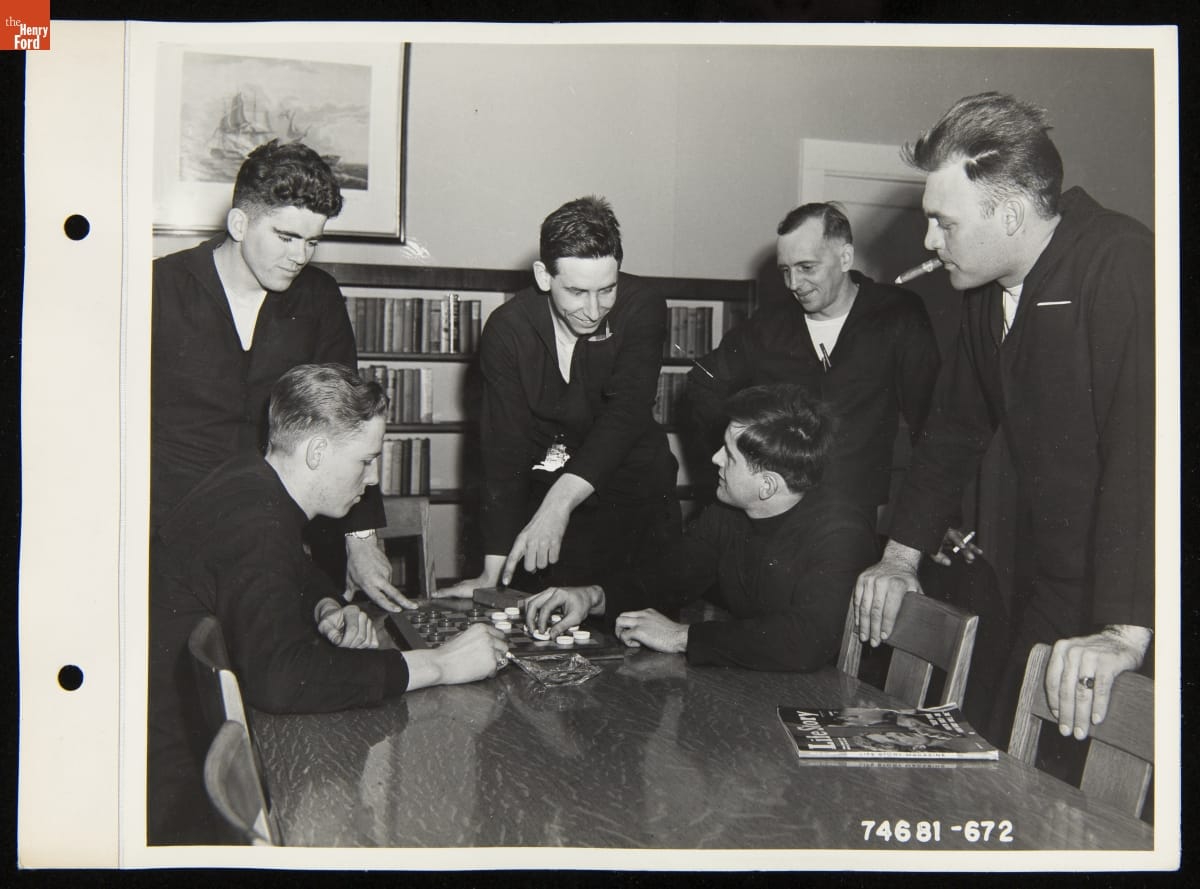
- Sailors Playing Checkers in the Library at the Navy Service School, Ford Rouge Plant, Dearborn, Michigan, 1941-1945 - The United States Navy Service School opened in Dearborn, Michigan, in early 1941. The school, built on land leased to the Navy at Ford's Rouge Plant, trained thousands of young recruits in skilled trades during World War II. Ford also provided housing and recreational facilities for the students. The library offered recruits a place to read and relax after hours in the classroom.
- 1941-1945
- Collections - Artifact
Sailors Playing Checkers in the Library at the Navy Service School, Ford Rouge Plant, Dearborn, Michigan, 1941-1945
The United States Navy Service School opened in Dearborn, Michigan, in early 1941. The school, built on land leased to the Navy at Ford's Rouge Plant, trained thousands of young recruits in skilled trades during World War II. Ford also provided housing and recreational facilities for the students. The library offered recruits a place to read and relax after hours in the classroom.