
Search
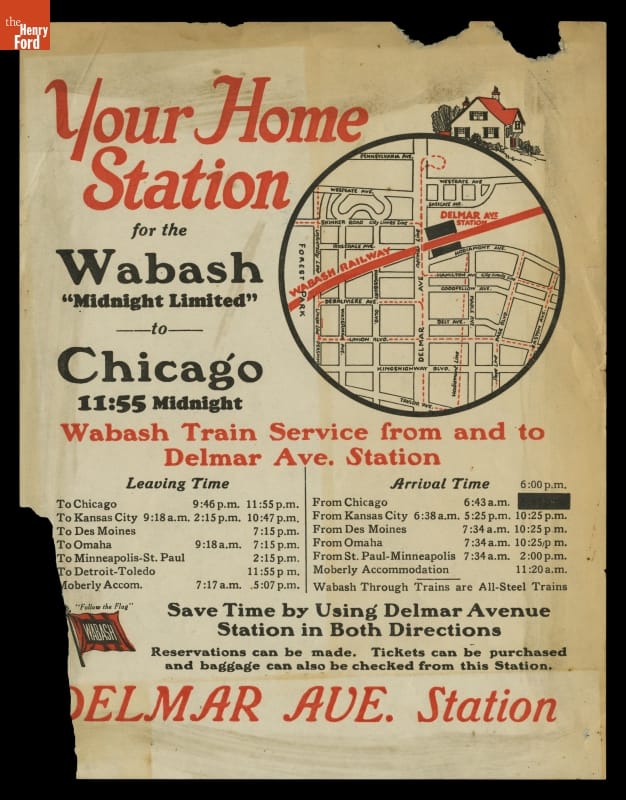
- Handbill and Timetable for Wabash Railway's "Midnight Limited," Leaving from Delmar Avenue Station, St. Louis, Missouri, 1929 - The Wabash Railway, with origins dating back to 1838, was a strong Midwestern carrier until Amtrak took over the national passenger railroad system in 1971. In 1928, the Wabash Railway erected the Delmar Avenue Station, providing west-end and suburban St. Louis residents -- particularly businessmen -- convenient access to their railroad system without having to go all the way downtown.
- 1929
- Collections - Artifact
Handbill and Timetable for Wabash Railway's "Midnight Limited," Leaving from Delmar Avenue Station, St. Louis, Missouri, 1929
The Wabash Railway, with origins dating back to 1838, was a strong Midwestern carrier until Amtrak took over the national passenger railroad system in 1971. In 1928, the Wabash Railway erected the Delmar Avenue Station, providing west-end and suburban St. Louis residents -- particularly businessmen -- convenient access to their railroad system without having to go all the way downtown.
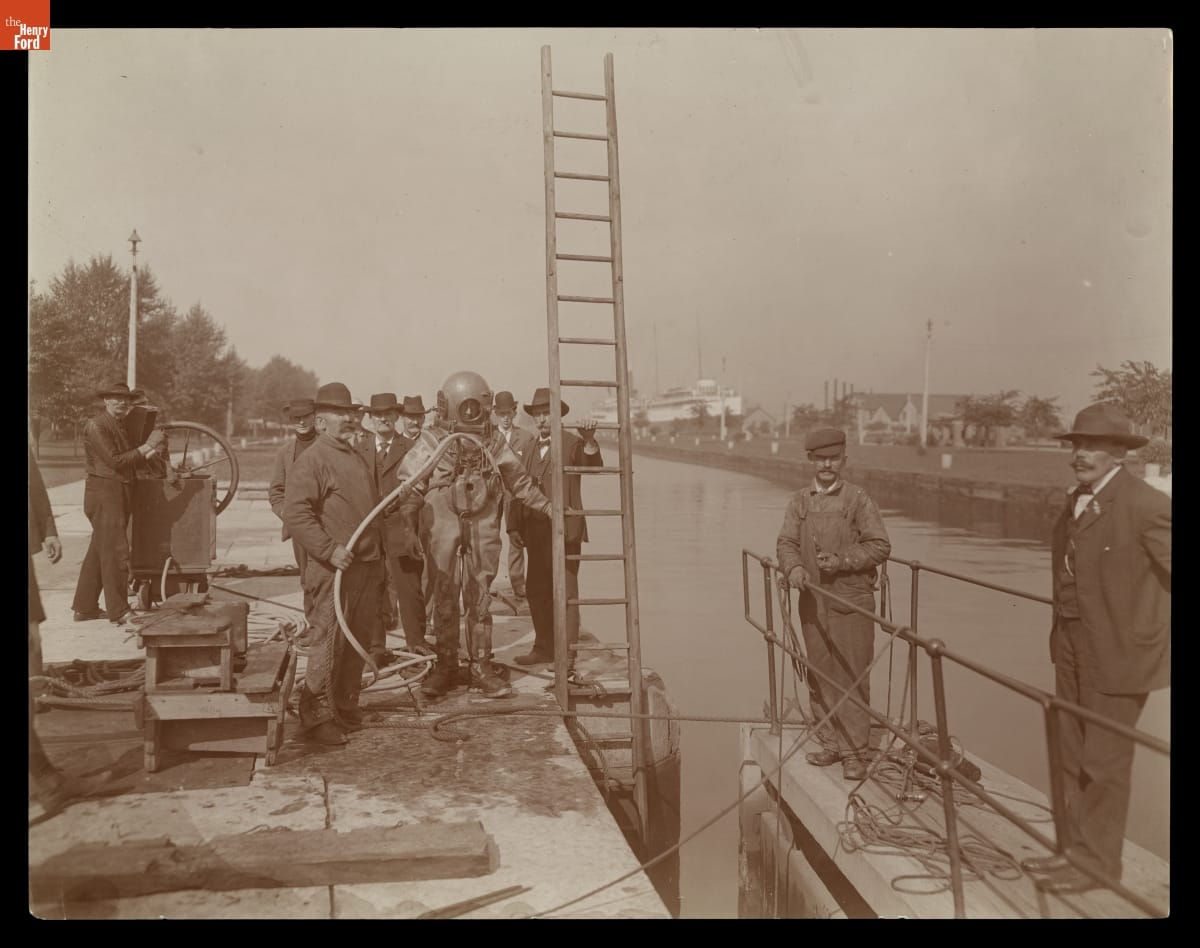
- Diver Repairing a Lock Gate at Sault Sainte Marie, Michigan, 1908 - The first lock at Sault Ste. Marie, Michigan, opened in 1855. It allowed boats to navigate the 21-foot climb from Lake Huron to Lake Superior along the St. Marys River. Over time, additional locks were built on the American and Canadian sides of the river. The Soo Locks became one of the world's busiest waterways -- despite being closed in winter.
- 1908
- Collections - Artifact
Diver Repairing a Lock Gate at Sault Sainte Marie, Michigan, 1908
The first lock at Sault Ste. Marie, Michigan, opened in 1855. It allowed boats to navigate the 21-foot climb from Lake Huron to Lake Superior along the St. Marys River. Over time, additional locks were built on the American and Canadian sides of the river. The Soo Locks became one of the world's busiest waterways -- despite being closed in winter.
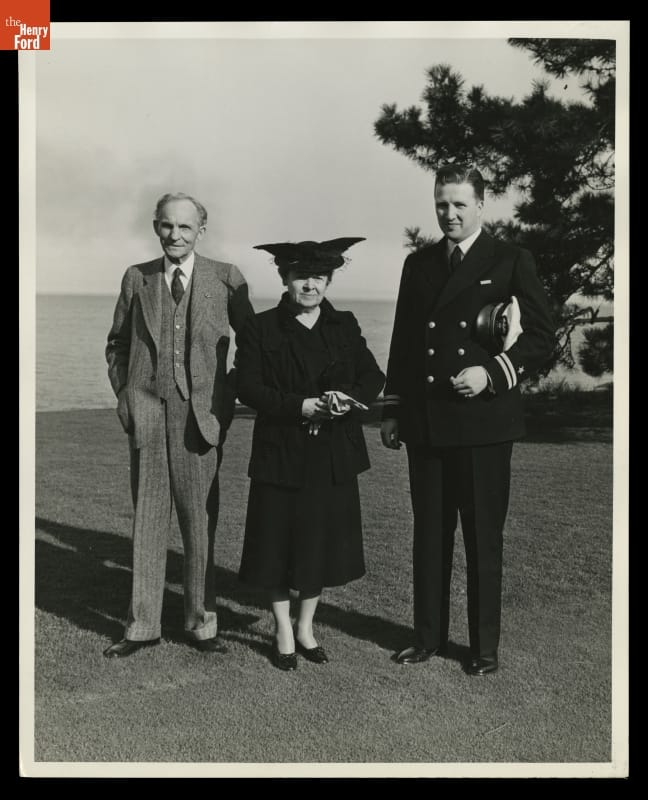
- Henry Ford, Clara Ford and Henry Ford II at Gaukler Point, Michigan, April 1943 - Henry Ford II posed with his grandparents, Henry and Clara Ford. The young Ford served in the U.S. Navy during World War II but, following the death of his father Edsel Ford in May 1943, he was released from duty to return to Ford Motor Company. Henry Ford II was appointed company president in September 1945, after his ailing grandfather resigned.
- April 01, 1943
- Collections - Artifact
Henry Ford, Clara Ford and Henry Ford II at Gaukler Point, Michigan, April 1943
Henry Ford II posed with his grandparents, Henry and Clara Ford. The young Ford served in the U.S. Navy during World War II but, following the death of his father Edsel Ford in May 1943, he was released from duty to return to Ford Motor Company. Henry Ford II was appointed company president in September 1945, after his ailing grandfather resigned.
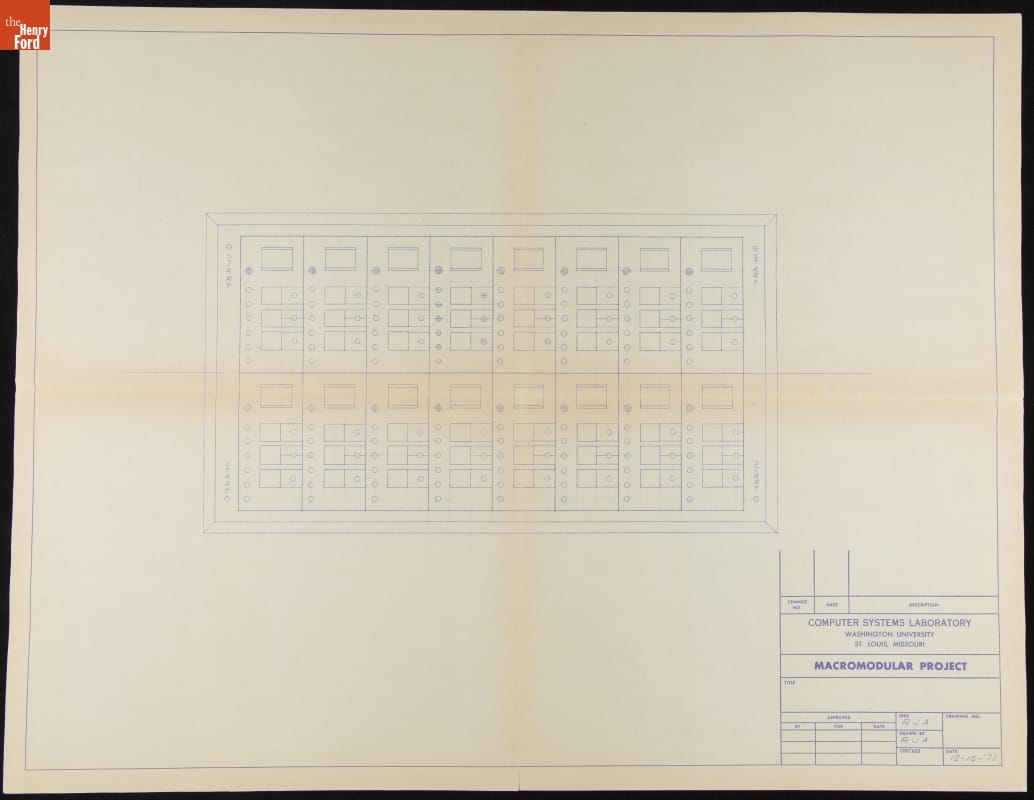
- Technical Drawing for the "TOWTMTEWP" Computer, December 1971 - In 1936, Alan Turing wrote about a theoretical universal computer now referred to as a "Turing Machine." In 1972, Washington University professors Wesley Clark and Bob Arnzen likely made the first physical version of Turing's machine. Clark used the TOWTMTEWP ("The Only Working Turing Machine There Ever Was Probably") as an educational tool, demonstrating basic computer theory for his students.
- December 15, 1971
- Collections - Artifact
Technical Drawing for the "TOWTMTEWP" Computer, December 1971
In 1936, Alan Turing wrote about a theoretical universal computer now referred to as a "Turing Machine." In 1972, Washington University professors Wesley Clark and Bob Arnzen likely made the first physical version of Turing's machine. Clark used the TOWTMTEWP ("The Only Working Turing Machine There Ever Was Probably") as an educational tool, demonstrating basic computer theory for his students.
- The Northlander: A Mimeographed Publication of the Fort Brady CCC District, March 1939 -
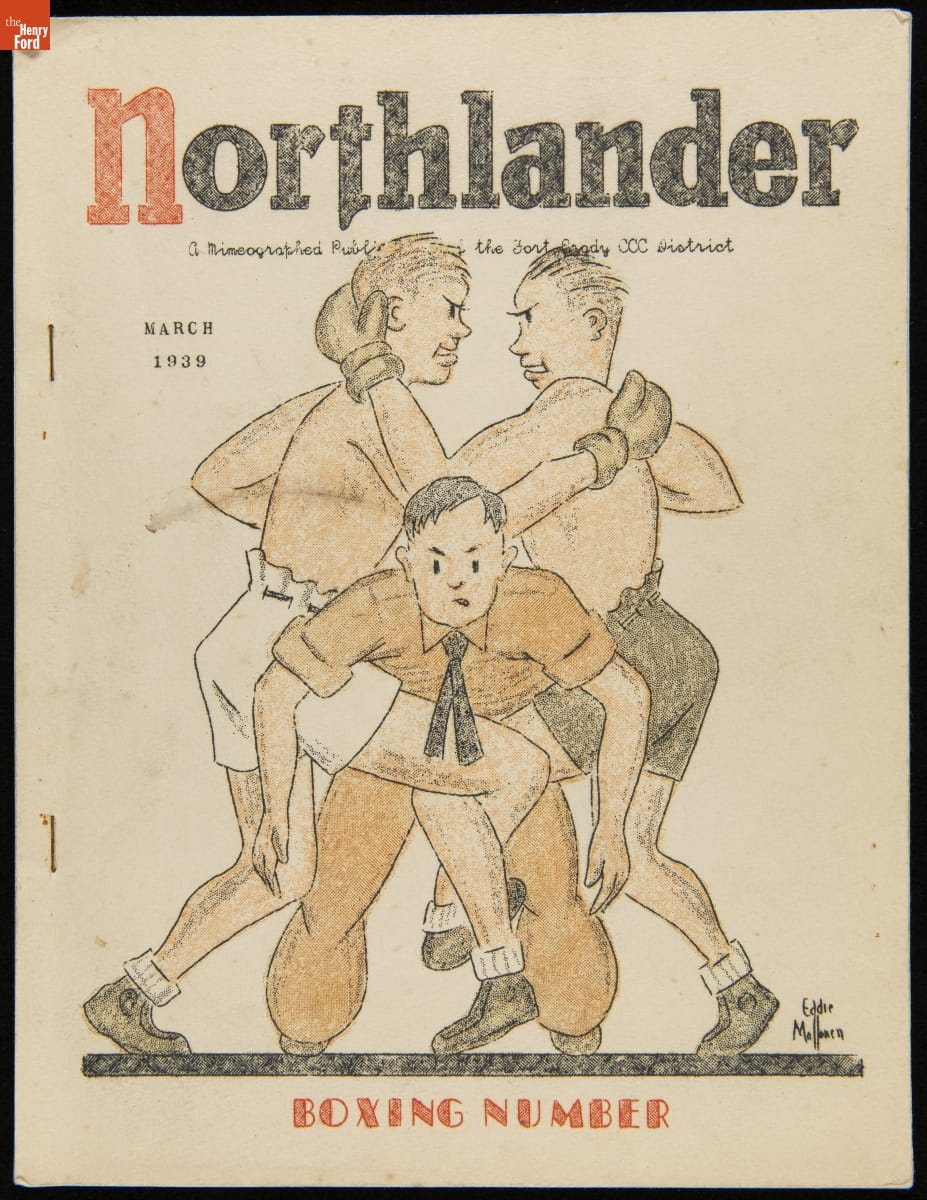
- March 01, 1939
- Collections - Artifact
The Northlander: A Mimeographed Publication of the Fort Brady CCC District, March 1939
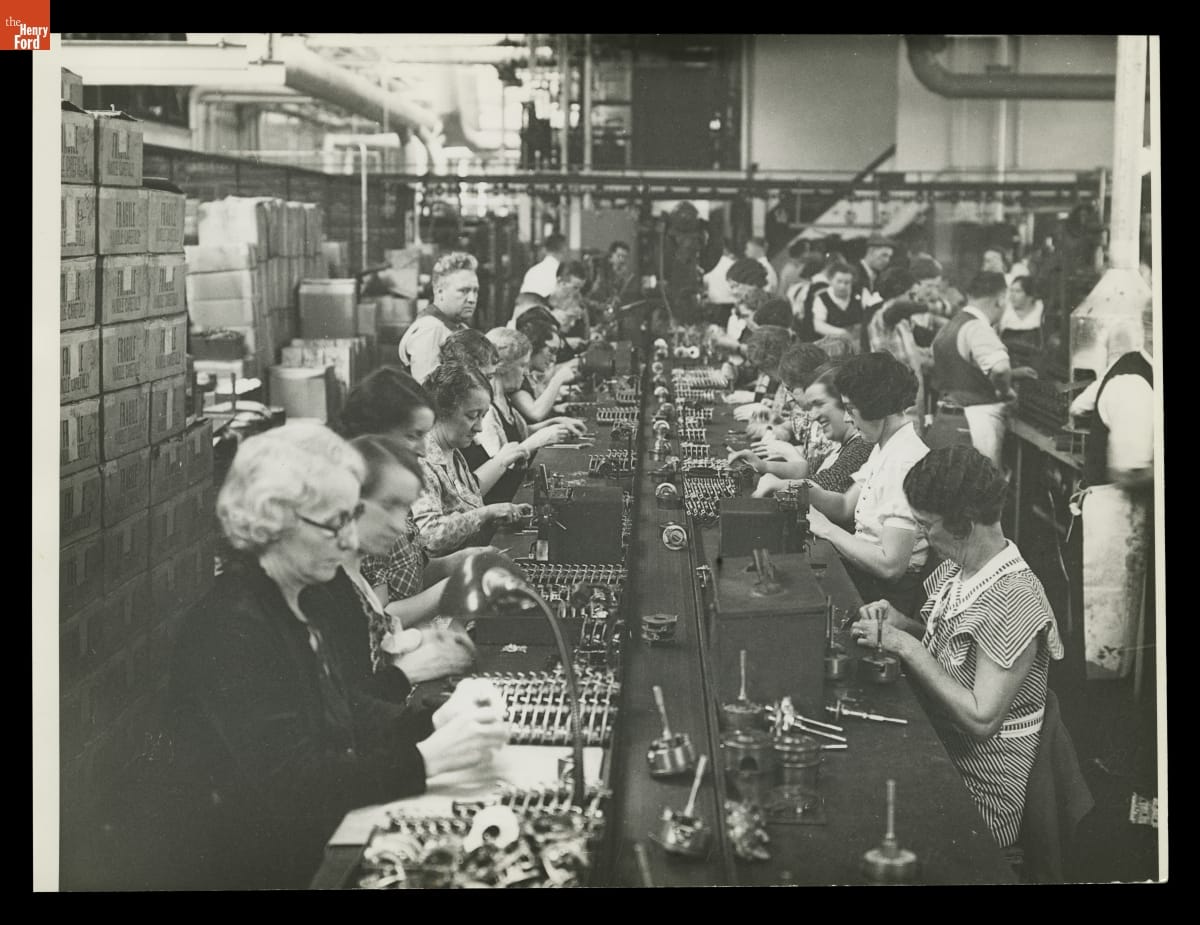
- Blind and Visually Impaired Workers at the Ford Rouge Plant, 1934 - Henry Ford believed in providing employment opportunities to individuals with disabilities. Workers who were blind or visually impaired could sort ammeter gauges or assemble valve bushings by feel, for example, while workers with amputations could operate push-button machines with no difficulty. It was estimated that Ford Motor Company employed as many as 13,000 people with disabilities in 1927.
- October 01, 1934
- Collections - Artifact
Blind and Visually Impaired Workers at the Ford Rouge Plant, 1934
Henry Ford believed in providing employment opportunities to individuals with disabilities. Workers who were blind or visually impaired could sort ammeter gauges or assemble valve bushings by feel, for example, while workers with amputations could operate push-button machines with no difficulty. It was estimated that Ford Motor Company employed as many as 13,000 people with disabilities in 1927.
- Bathers on the Dock at The Old Club, St. Clair Flats, Michigan, circa 1916 - From 1895 to 1924, the Detroit Publishing Company was one of the major image publishers in the world. The company's wide-ranging stock of original photographs documented life and landscapes from across the nation and around the globe. From the tens of thousands of negatives, the company created prints, postcards, lantern slides, panoramas, and other merchandise for sale to educators, businessmen, advertisers, homeowners and travelers.

- circa 1916
- Collections - Artifact
Bathers on the Dock at The Old Club, St. Clair Flats, Michigan, circa 1916
From 1895 to 1924, the Detroit Publishing Company was one of the major image publishers in the world. The company's wide-ranging stock of original photographs documented life and landscapes from across the nation and around the globe. From the tens of thousands of negatives, the company created prints, postcards, lantern slides, panoramas, and other merchandise for sale to educators, businessmen, advertisers, homeowners and travelers.
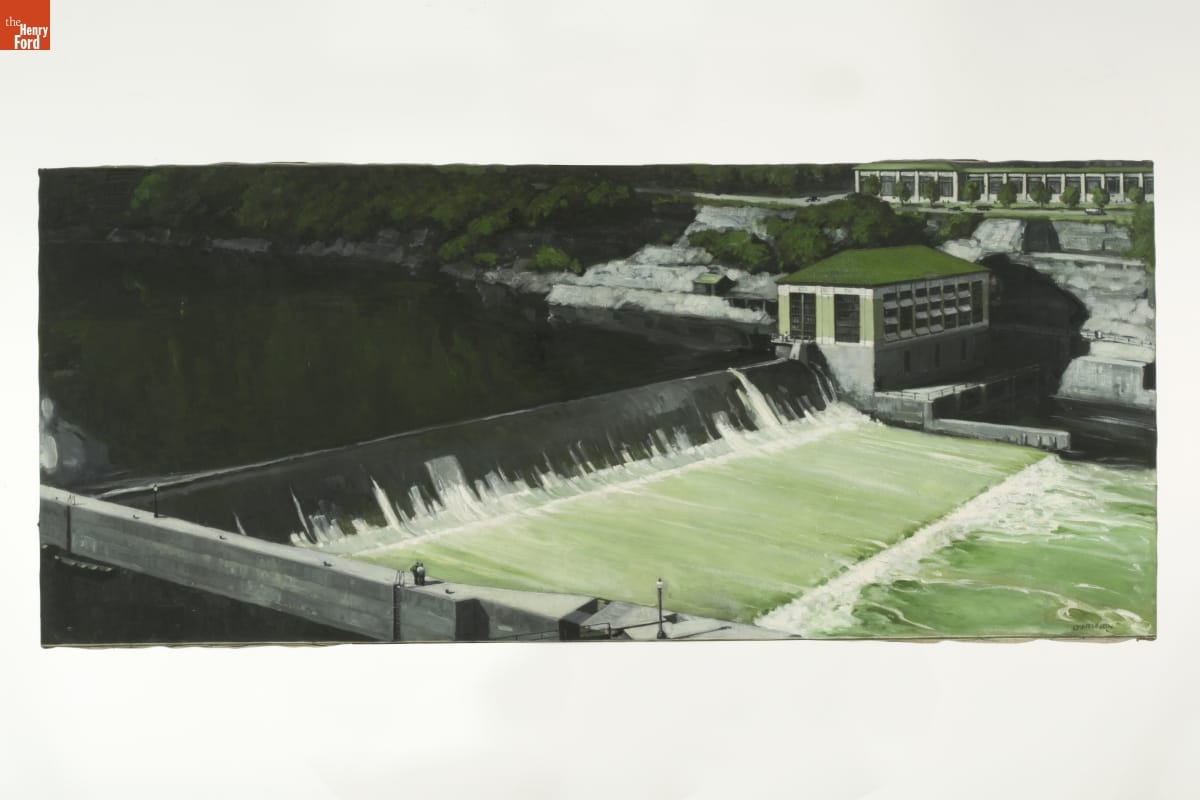
- Powerhouse, River, and Dam, 1924 - In 1924-25 the Ford Motor Company ran a series of sixteen dramatic advertisements in the <EM>Saturday Evening Post</EM> and <EM>Country Gentleman</EM> magazines. The effectiveness of the ads was due in large part to the specially commissioned artwork that accompanied the descriptive text. The restricted palette employed in the original art was imposed by the "duotone" process used for color reproduction.
- 1924
- Collections - Artifact
Powerhouse, River, and Dam, 1924
In 1924-25 the Ford Motor Company ran a series of sixteen dramatic advertisements in the Saturday Evening Post and Country Gentleman magazines. The effectiveness of the ads was due in large part to the specially commissioned artwork that accompanied the descriptive text. The restricted palette employed in the original art was imposed by the "duotone" process used for color reproduction.
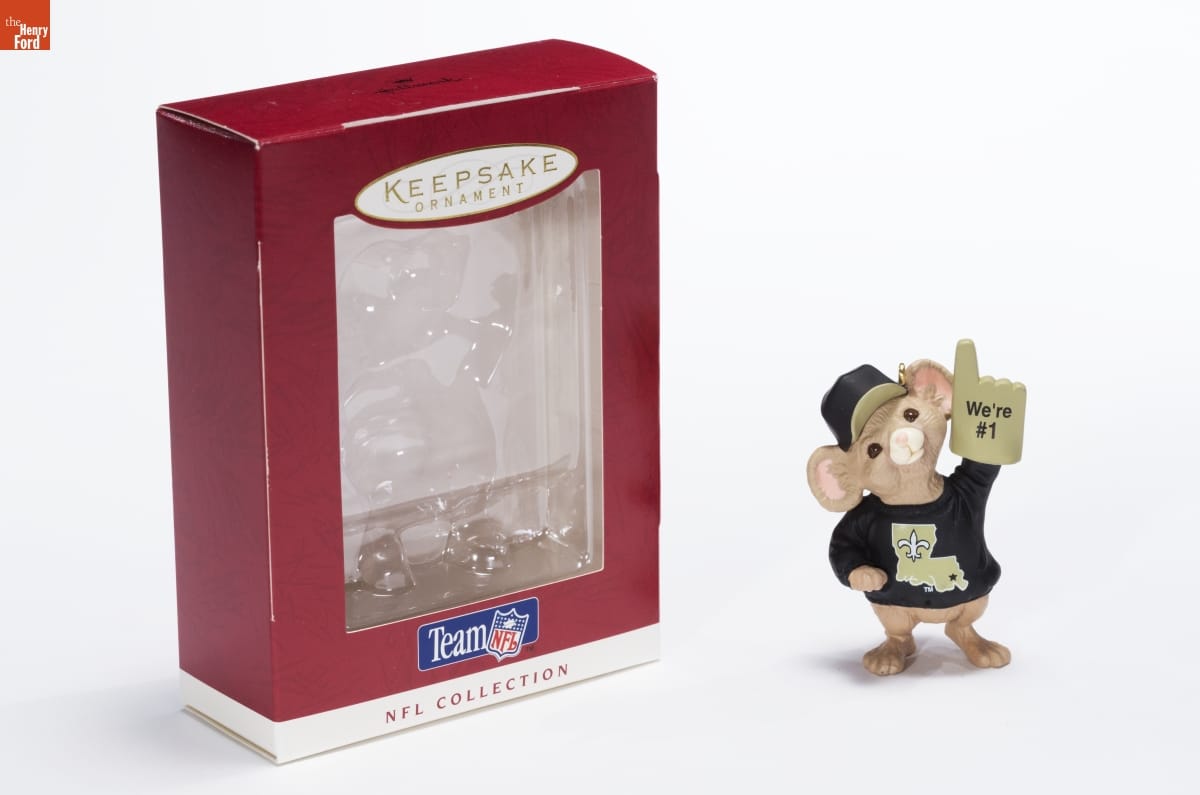
- Hallmark "NFL Collection: New Orleans Saints" Christmas Ornament, 1996 - Already known for greeting cards, Hallmark introduced a line of Christmas ornaments in 1973. The company's annual release of an increasing array of ornaments revolutionized Christmas decorating, appealing to customers' interest in marking memories and milestones as well as expressing one's personality and unique tastes.
- 1996
- Collections - Artifact
Hallmark "NFL Collection: New Orleans Saints" Christmas Ornament, 1996
Already known for greeting cards, Hallmark introduced a line of Christmas ornaments in 1973. The company's annual release of an increasing array of ornaments revolutionized Christmas decorating, appealing to customers' interest in marking memories and milestones as well as expressing one's personality and unique tastes.
- Hallmark "The Gift Bringers Series: St. Lucia" Christmas Ornament, 1990 - Already known for greeting cards, Hallmark introduced a line of Christmas ornaments in 1973. The company's annual release of an increasing array of ornaments revolutionized Christmas decorating, appealing to customers' interest in marking memories and milestones as well as expressing one's personality and unique tastes.

- 1990
- Collections - Artifact
Hallmark "The Gift Bringers Series: St. Lucia" Christmas Ornament, 1990
Already known for greeting cards, Hallmark introduced a line of Christmas ornaments in 1973. The company's annual release of an increasing array of ornaments revolutionized Christmas decorating, appealing to customers' interest in marking memories and milestones as well as expressing one's personality and unique tastes.