
Search
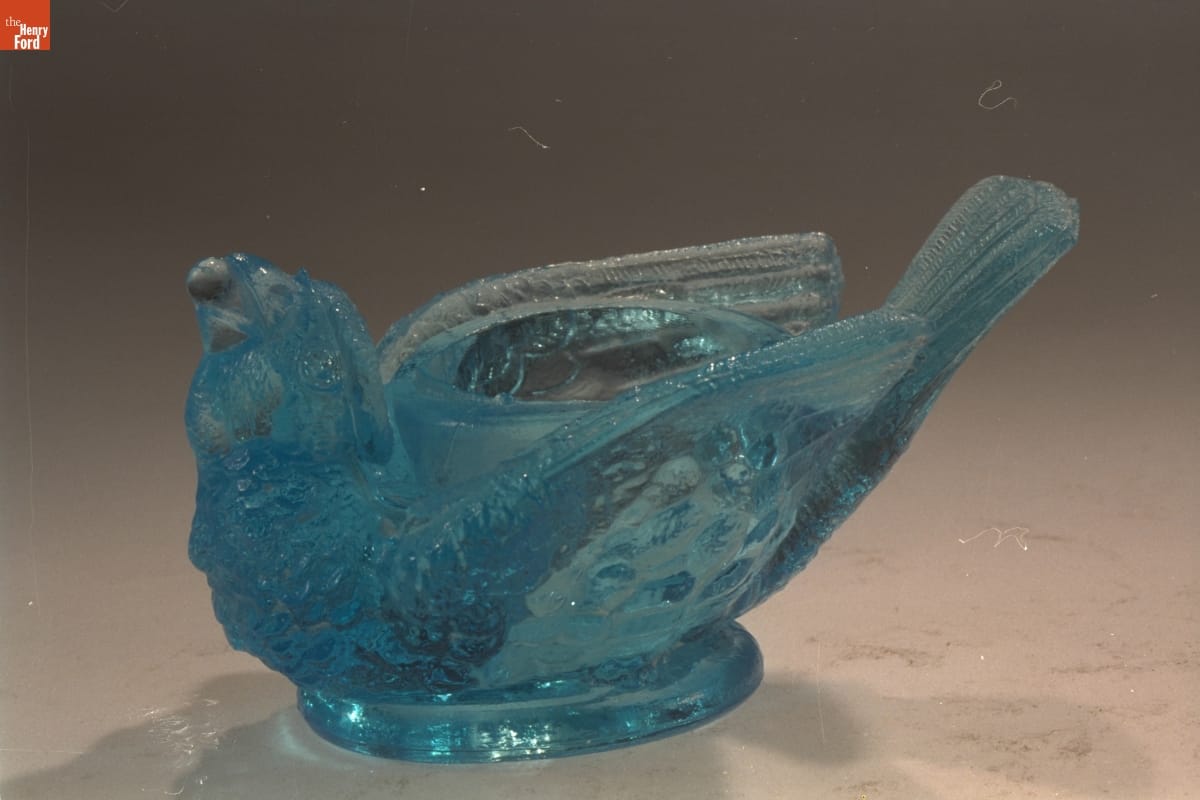
- Salt, 1870-1900 - Small, open dishes filled with salt graced Americans' dining tables into the 20th century -- before the introduction of free-flowing salt and the acceptance of shakers. Diners usually found a large master salt near the head of the table or smaller versions closer to their plate. Novelty-shaped, pressed glass salts, like this bird with seed, appeared in the late 1800s.
- 1870-1900
- Collections - Artifact
Salt, 1870-1900
Small, open dishes filled with salt graced Americans' dining tables into the 20th century -- before the introduction of free-flowing salt and the acceptance of shakers. Diners usually found a large master salt near the head of the table or smaller versions closer to their plate. Novelty-shaped, pressed glass salts, like this bird with seed, appeared in the late 1800s.
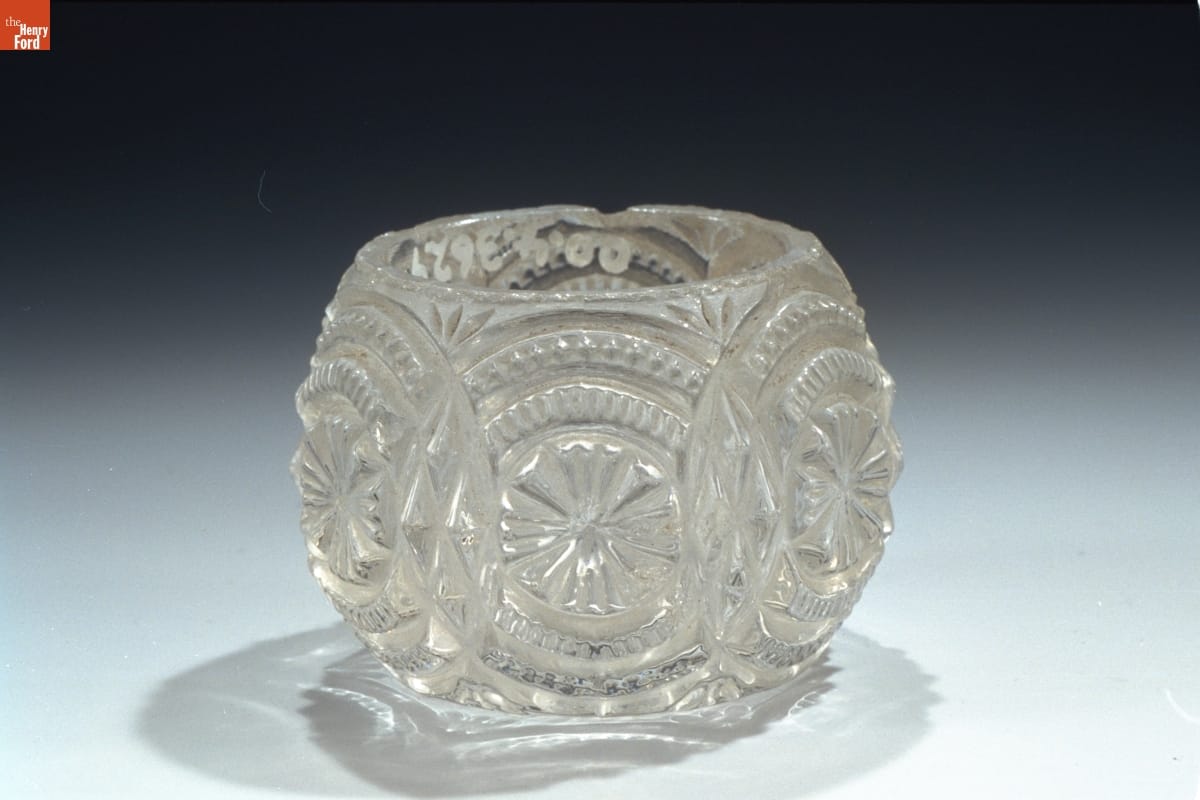
- Salt, 1905-1910 -
- 1905-1910
- Collections - Artifact
Salt, 1905-1910
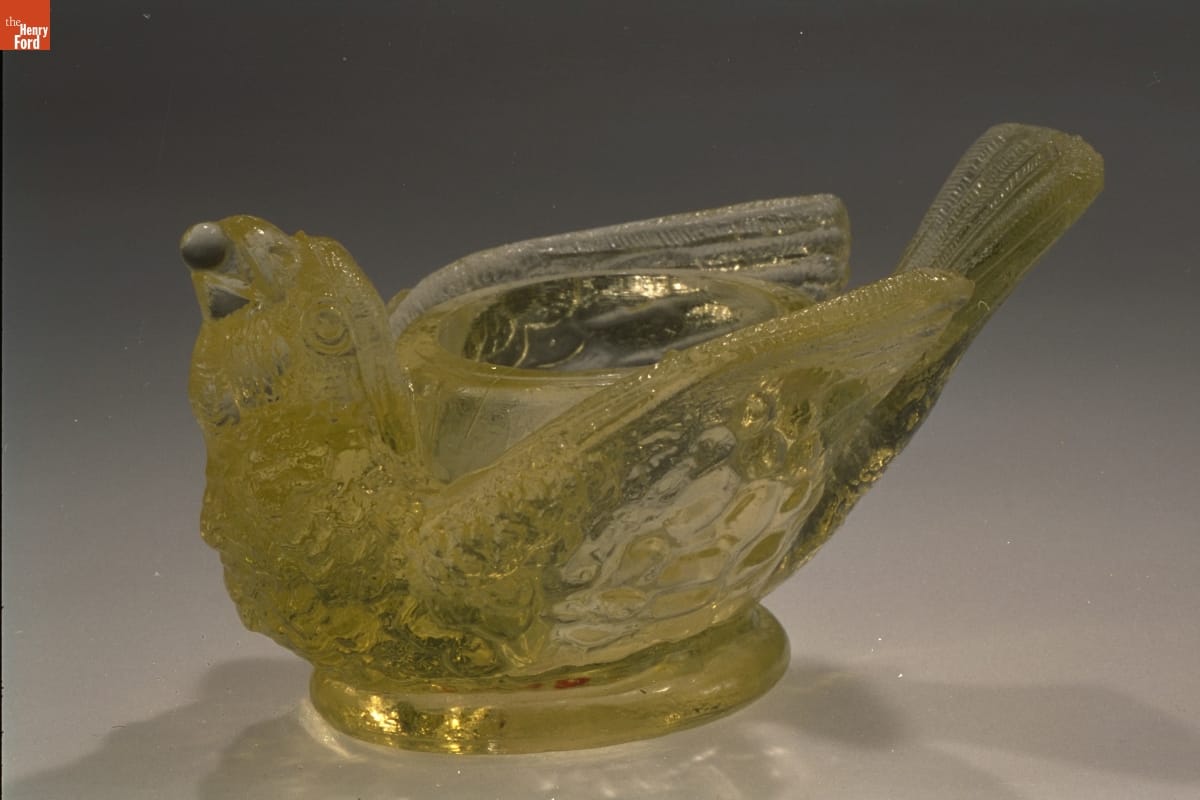
- Salt, 1870-1900 - Small, open dishes filled with salt graced Americans' dining tables into the 20th century -- before the introduction of free-flowing salt and the acceptance of shakers. Diners usually found a large master salt near the head of the table or smaller versions closer to their plate. Novelty-shaped, pressed glass salts, like this bird with seed, appeared in the late 1800s.
- 1870-1900
- Collections - Artifact
Salt, 1870-1900
Small, open dishes filled with salt graced Americans' dining tables into the 20th century -- before the introduction of free-flowing salt and the acceptance of shakers. Diners usually found a large master salt near the head of the table or smaller versions closer to their plate. Novelty-shaped, pressed glass salts, like this bird with seed, appeared in the late 1800s.
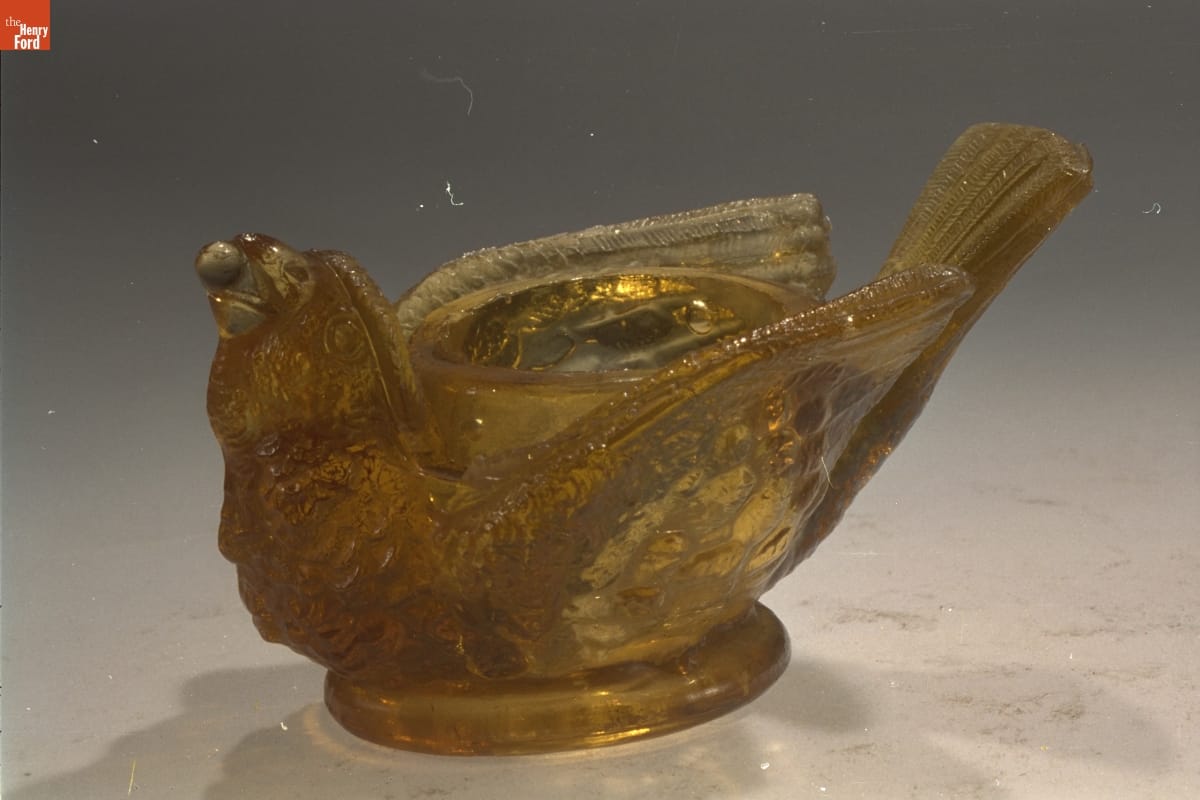
- Salt, 1870-1900 - Small, open dishes filled with salt graced Americans' dining tables into the 20th century -- before the introduction of free-flowing salt and the acceptance of shakers. Diners usually found a large master salt near the head of the table or smaller versions closer to their plate. Novelty-shaped, pressed glass salts, like this bird with seed, appeared in the late 1800s.
- 1870-1900
- Collections - Artifact
Salt, 1870-1900
Small, open dishes filled with salt graced Americans' dining tables into the 20th century -- before the introduction of free-flowing salt and the acceptance of shakers. Diners usually found a large master salt near the head of the table or smaller versions closer to their plate. Novelty-shaped, pressed glass salts, like this bird with seed, appeared in the late 1800s.
- Salt, 1827-1840 - Small, open dishes filled with salt graced Americans' dining tables well into the 20th century -- before the introduction of free-flowing salt and the acceptance of shakers. Around 1830, glass factories began creating inexpensive pressed glass salts that imitated more expensive cut glass. The array of small raised dots that created a lace-like pattern scattered light and covered flaws found in early pressed glass production.
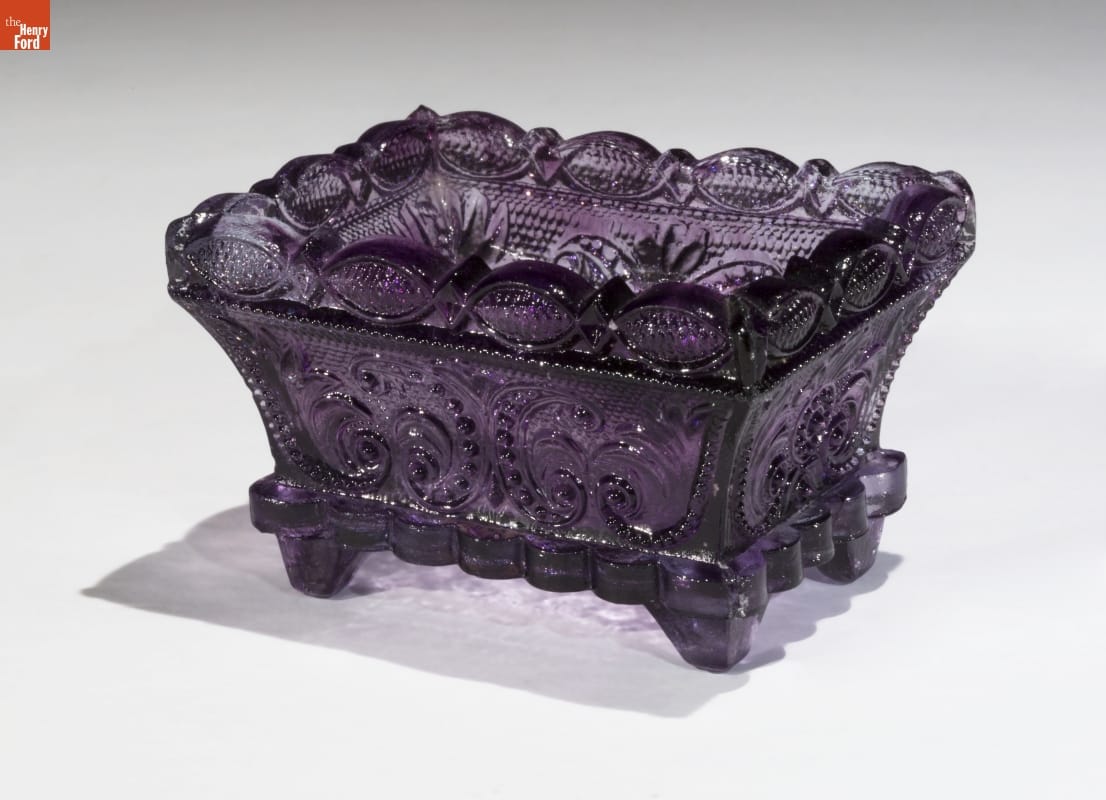
- 1827-1840
- Collections - Artifact
Salt, 1827-1840
Small, open dishes filled with salt graced Americans' dining tables well into the 20th century -- before the introduction of free-flowing salt and the acceptance of shakers. Around 1830, glass factories began creating inexpensive pressed glass salts that imitated more expensive cut glass. The array of small raised dots that created a lace-like pattern scattered light and covered flaws found in early pressed glass production.
- Salt, 1835-1850 - Small, open dishes filled with salt graced Americans' dining tables well into the 20th century -- before the introduction of free-flowing salt and the acceptance of shakers. Around 1830, glass factories began creating inexpensive pressed glass salts that imitated more expensive cut glass. The array of small raised dots that created a lace-like pattern scattered light and covered flaws found in early pressed glass production.
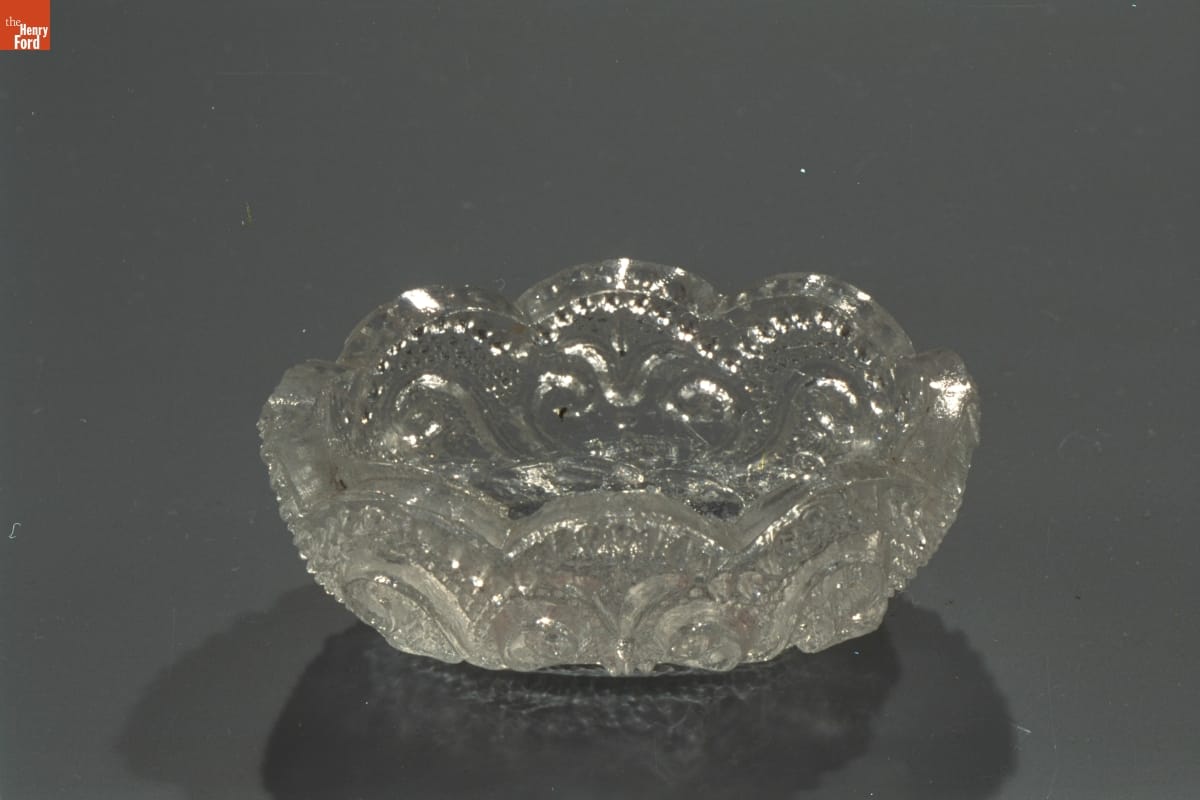
- 1835-1850
- Collections - Artifact
Salt, 1835-1850
Small, open dishes filled with salt graced Americans' dining tables well into the 20th century -- before the introduction of free-flowing salt and the acceptance of shakers. Around 1830, glass factories began creating inexpensive pressed glass salts that imitated more expensive cut glass. The array of small raised dots that created a lace-like pattern scattered light and covered flaws found in early pressed glass production.
- Salt, 1870-1900 - Small, open dishes filled with salt graced Americans' dining tables into the 20th century -- before the introduction of free-flowing salt and the acceptance of shakers. Diners usually found a large master salt near the head of the table or smaller versions closer to their plate. Novelty-shaped, pressed glass salts, like this bird with seed, appeared in the late 1800s.
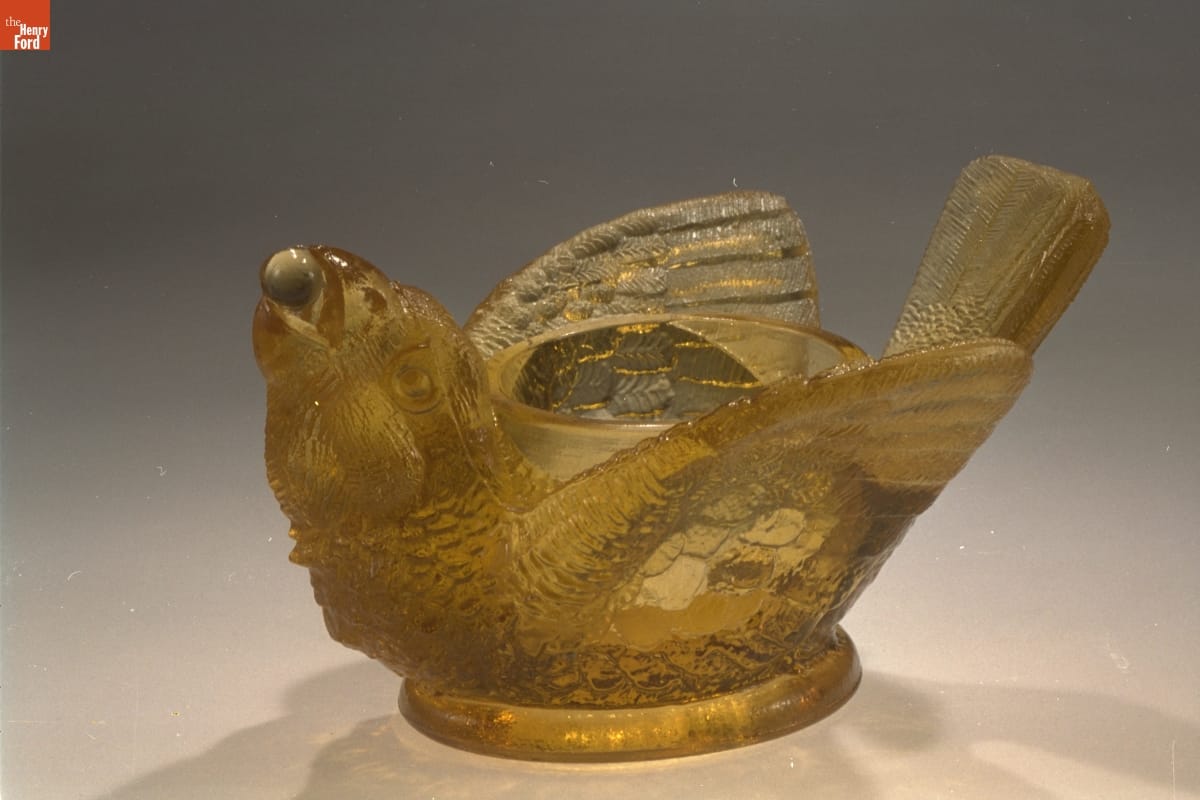
- 1870-1900
- Collections - Artifact
Salt, 1870-1900
Small, open dishes filled with salt graced Americans' dining tables into the 20th century -- before the introduction of free-flowing salt and the acceptance of shakers. Diners usually found a large master salt near the head of the table or smaller versions closer to their plate. Novelty-shaped, pressed glass salts, like this bird with seed, appeared in the late 1800s.
- Salt, 1870-1900 - Small, open dishes filled with salt graced Americans' dining tables into the 20th century -- before the introduction of free-flowing salt and the acceptance of shakers. Diners usually found a large master salt near the head of the table or smaller versions closer to their plate. Novelty-shaped, pressed glass salts, like this bird with seed, appeared in the late 1800s.
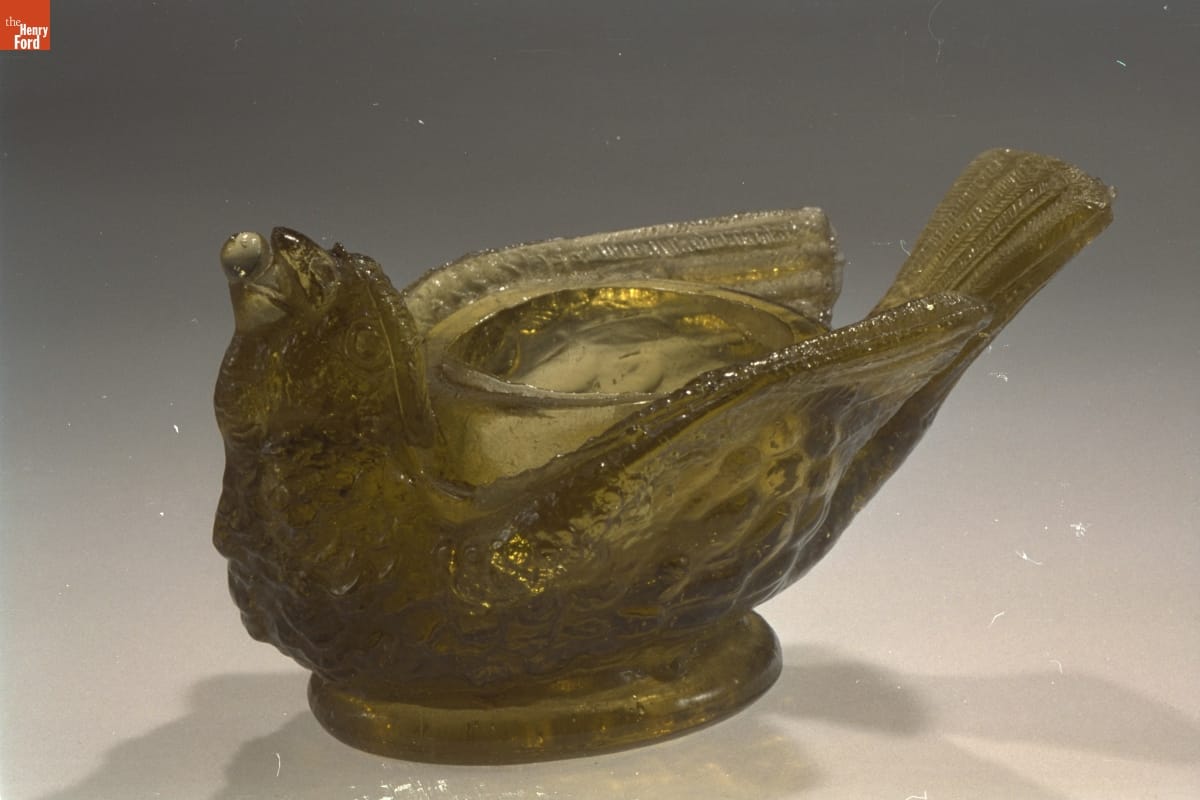
- 1870-1900
- Collections - Artifact
Salt, 1870-1900
Small, open dishes filled with salt graced Americans' dining tables into the 20th century -- before the introduction of free-flowing salt and the acceptance of shakers. Diners usually found a large master salt near the head of the table or smaller versions closer to their plate. Novelty-shaped, pressed glass salts, like this bird with seed, appeared in the late 1800s.
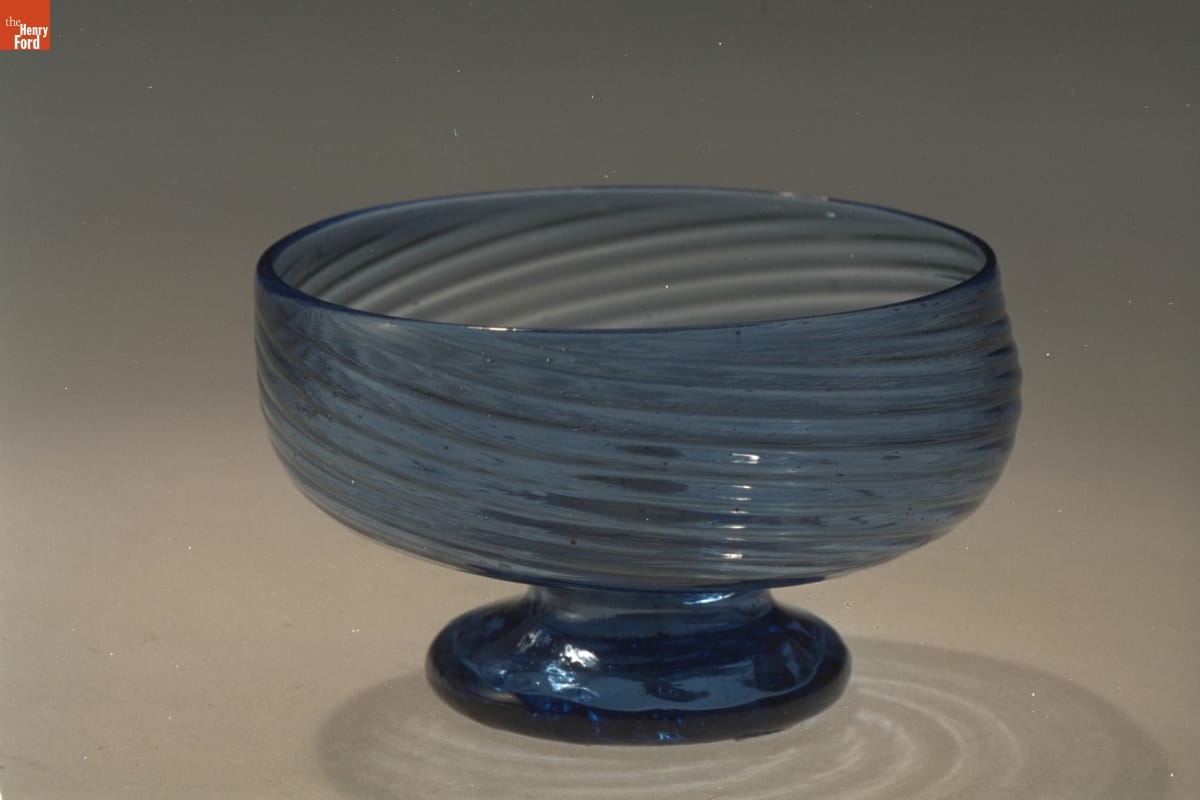
- Salt, 1800-1840 - Prior to the early 20th century, Americans would have put several small, open dishes filled with salt on their dining tables. These "salts" placed the necessary seasoning within easy reach of family and guests. In the early 1800s, pattern-molded or hand-blown "salts" became affordable to the general public from a growing number of regional American glass factories.
- 1800-1840
- Collections - Artifact
Salt, 1800-1840
Prior to the early 20th century, Americans would have put several small, open dishes filled with salt on their dining tables. These "salts" placed the necessary seasoning within easy reach of family and guests. In the early 1800s, pattern-molded or hand-blown "salts" became affordable to the general public from a growing number of regional American glass factories.
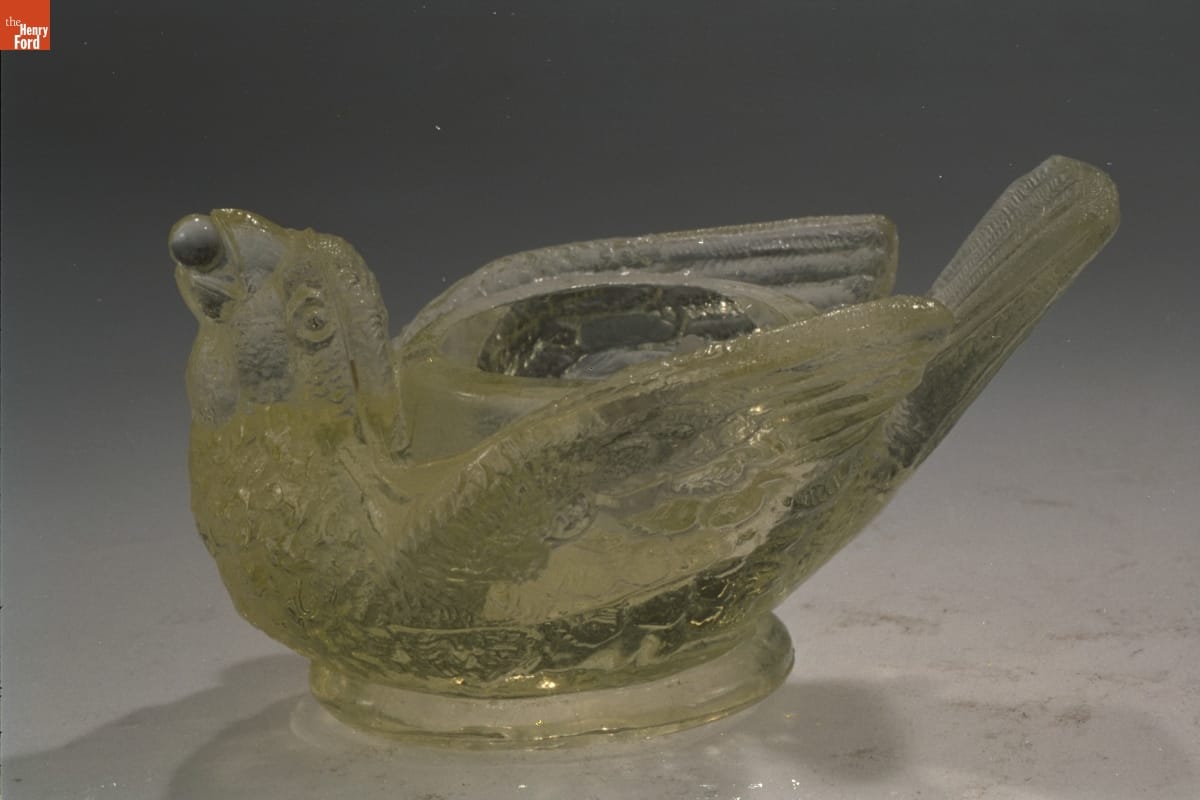
- Salt, 1870-1900 - Small, open dishes filled with salt graced Americans' dining tables into the 20th century -- before the introduction of free-flowing salt and the acceptance of shakers. Diners usually found a large master salt near the head of the table or smaller versions closer to their plate. Novelty-shaped, pressed glass salts, like this bird with seed, appeared in the late 1800s.
- 1870-1900
- Collections - Artifact
Salt, 1870-1900
Small, open dishes filled with salt graced Americans' dining tables into the 20th century -- before the introduction of free-flowing salt and the acceptance of shakers. Diners usually found a large master salt near the head of the table or smaller versions closer to their plate. Novelty-shaped, pressed glass salts, like this bird with seed, appeared in the late 1800s.