
Search
- Herman Miller Textiles Swatches, "13 Graph," 1964 - Early modernist design was starkly minimal, but mid-century modern designer Alexander Girard's work challenged and expanded the movement. Girard humanized modernism through his colorful and whimsical textile, furniture, graphic, and interior designs. As the Director of Design in Herman Miller's Textile Division from 1952 until 1973, Girard designed over 300 textiles, often using bold color combinations and abstract patterns.
- 1964
- Collections - Artifact
Herman Miller Textiles Swatches, "13 Graph," 1964
Early modernist design was starkly minimal, but mid-century modern designer Alexander Girard's work challenged and expanded the movement. Girard humanized modernism through his colorful and whimsical textile, furniture, graphic, and interior designs. As the Director of Design in Herman Miller's Textile Division from 1952 until 1973, Girard designed over 300 textiles, often using bold color combinations and abstract patterns.
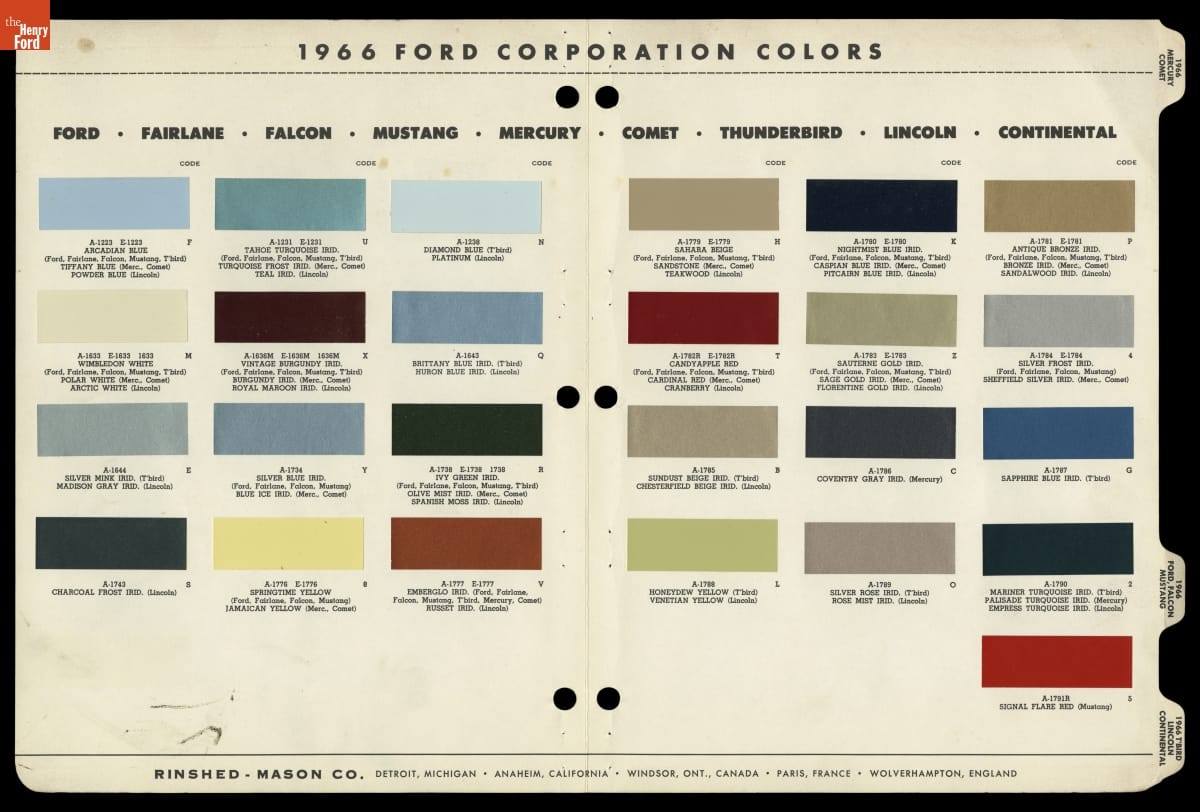
- Paint Color Sample Card for Ford, Lincoln and Mercury Cars, "1966 Ford Corporate Colors" - Fred Rinshed and Herbert Mason formed Rinshed-Mason Company in Detroit, Michigan, in 1919. Mr. Mason previously made hunting decoys, and his decoys had developed a reputation for long-lasting paint finishes. Rinshed-Mason soon became the largest paint supplier to Detroit's booming automotive industry. In 1931, the company introduced the first metallic finish for automobiles.
- 1966
- Collections - Artifact
Paint Color Sample Card for Ford, Lincoln and Mercury Cars, "1966 Ford Corporate Colors"
Fred Rinshed and Herbert Mason formed Rinshed-Mason Company in Detroit, Michigan, in 1919. Mr. Mason previously made hunting decoys, and his decoys had developed a reputation for long-lasting paint finishes. Rinshed-Mason soon became the largest paint supplier to Detroit's booming automotive industry. In 1931, the company introduced the first metallic finish for automobiles.
- Herman Miller Textiles Swatches, "19 Flame Resistant Casements," 1964 - Early modernist design was starkly minimal, but mid-century modern designer Alexander Girard's work challenged and expanded the movement. Girard humanized modernism through his colorful and whimsical textile, furniture, graphic, and interior designs. As the Director of Design in Herman Miller's Textile Division from 1952 until 1973, Girard designed over 300 textiles, often using bold color combinations and abstract patterns.
- 1964
- Collections - Artifact
Herman Miller Textiles Swatches, "19 Flame Resistant Casements," 1964
Early modernist design was starkly minimal, but mid-century modern designer Alexander Girard's work challenged and expanded the movement. Girard humanized modernism through his colorful and whimsical textile, furniture, graphic, and interior designs. As the Director of Design in Herman Miller's Textile Division from 1952 until 1973, Girard designed over 300 textiles, often using bold color combinations and abstract patterns.
- Herman Miller Textiles Swatches, "20 Super Wool," 1964 - Early modernist design was starkly minimal, but mid-century modern designer Alexander Girard's work challenged and expanded the movement. Girard humanized modernism through his colorful and whimsical textile, furniture, graphic, and interior designs. As the Director of Design in Herman Miller's Textile Division from 1952 until 1973, Girard designed over 300 textiles, often using bold color combinations and abstract patterns.
- 1964
- Collections - Artifact
Herman Miller Textiles Swatches, "20 Super Wool," 1964
Early modernist design was starkly minimal, but mid-century modern designer Alexander Girard's work challenged and expanded the movement. Girard humanized modernism through his colorful and whimsical textile, furniture, graphic, and interior designs. As the Director of Design in Herman Miller's Textile Division from 1952 until 1973, Girard designed over 300 textiles, often using bold color combinations and abstract patterns.
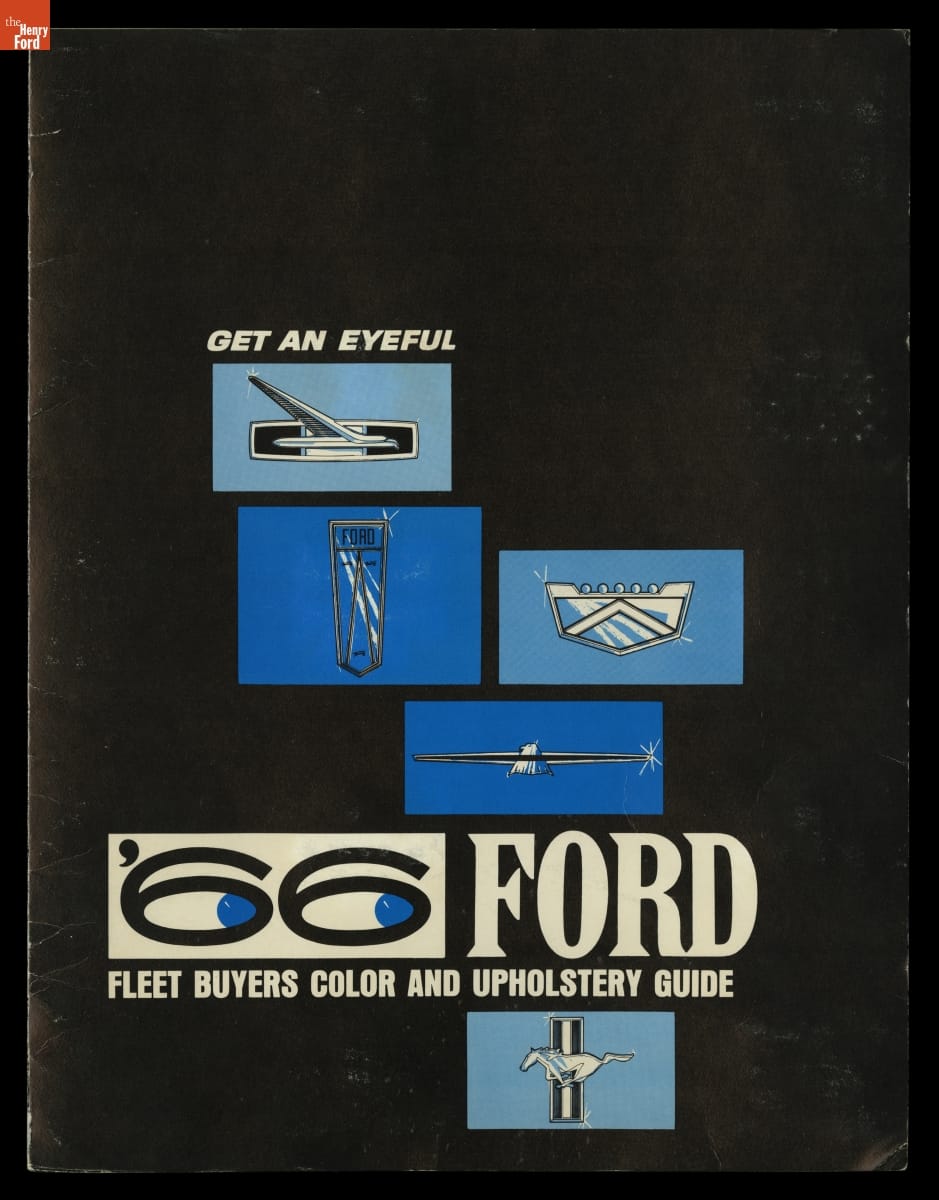
- "Get an Eyeful, '66 Ford Fleet Buyers Color and Upholstery Guide" - Ford Motor Company's color and upholstery guides provided dealers and customers with a look at exterior and interior color options for Ford automobiles. The brochures contained paint samples of available exterior finishes, and fabric samples of cloth, vinyl and leather interior upholsteries. Options presented in early-release advanced guides were always subject to change.
- 1966
- Collections - Artifact
"Get an Eyeful, '66 Ford Fleet Buyers Color and Upholstery Guide"
Ford Motor Company's color and upholstery guides provided dealers and customers with a look at exterior and interior color options for Ford automobiles. The brochures contained paint samples of available exterior finishes, and fabric samples of cloth, vinyl and leather interior upholsteries. Options presented in early-release advanced guides were always subject to change.
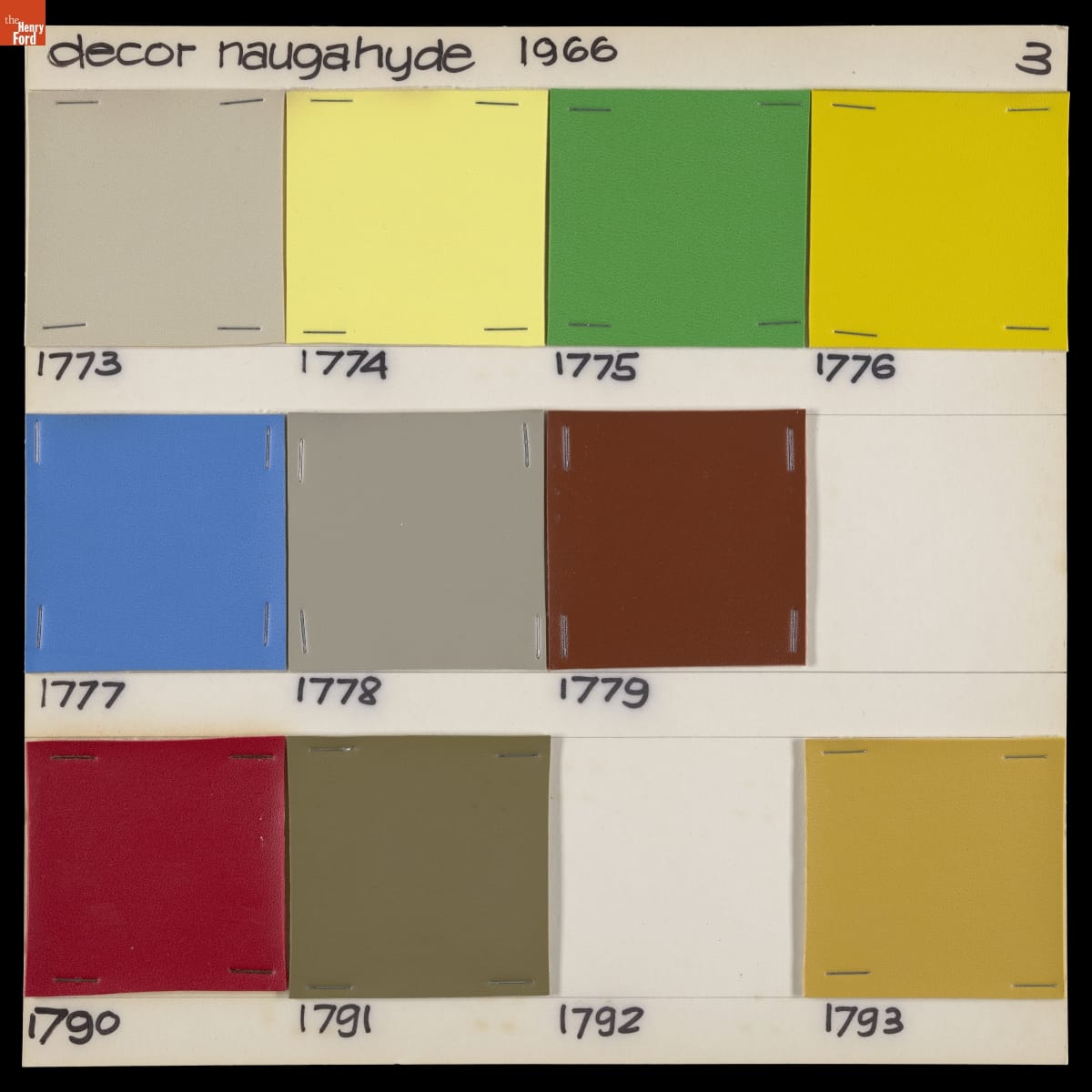
- Textile Swatch Card, "Decor Naugahyde," 1966 -
- 1966
- Collections - Artifact
Textile Swatch Card, "Decor Naugahyde," 1966
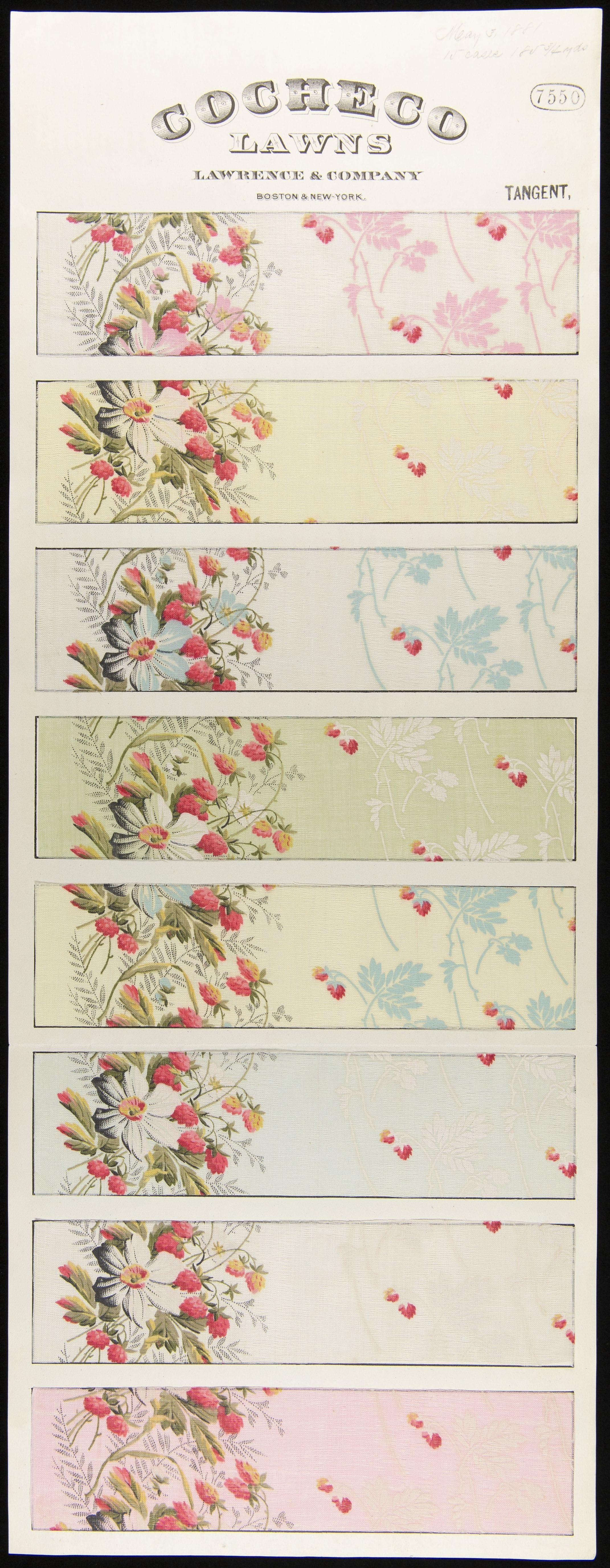
- Sample Card for Textile Fabric Style No. 7550, "Tangent," Cocheco Mfg. Co., May 3, 1881 - During the 19th century, New England textile mills manufactured billions of yards of fabric for the mass market, producing roller-printed cottons using increasingly complex mechanized processes. Colorful cotton prints, like those made by Cocheco Manufacturing Company, became affordable to almost everyone.
- May 03, 1881
- Collections - Artifact
Sample Card for Textile Fabric Style No. 7550, "Tangent," Cocheco Mfg. Co., May 3, 1881
During the 19th century, New England textile mills manufactured billions of yards of fabric for the mass market, producing roller-printed cottons using increasingly complex mechanized processes. Colorful cotton prints, like those made by Cocheco Manufacturing Company, became affordable to almost everyone.
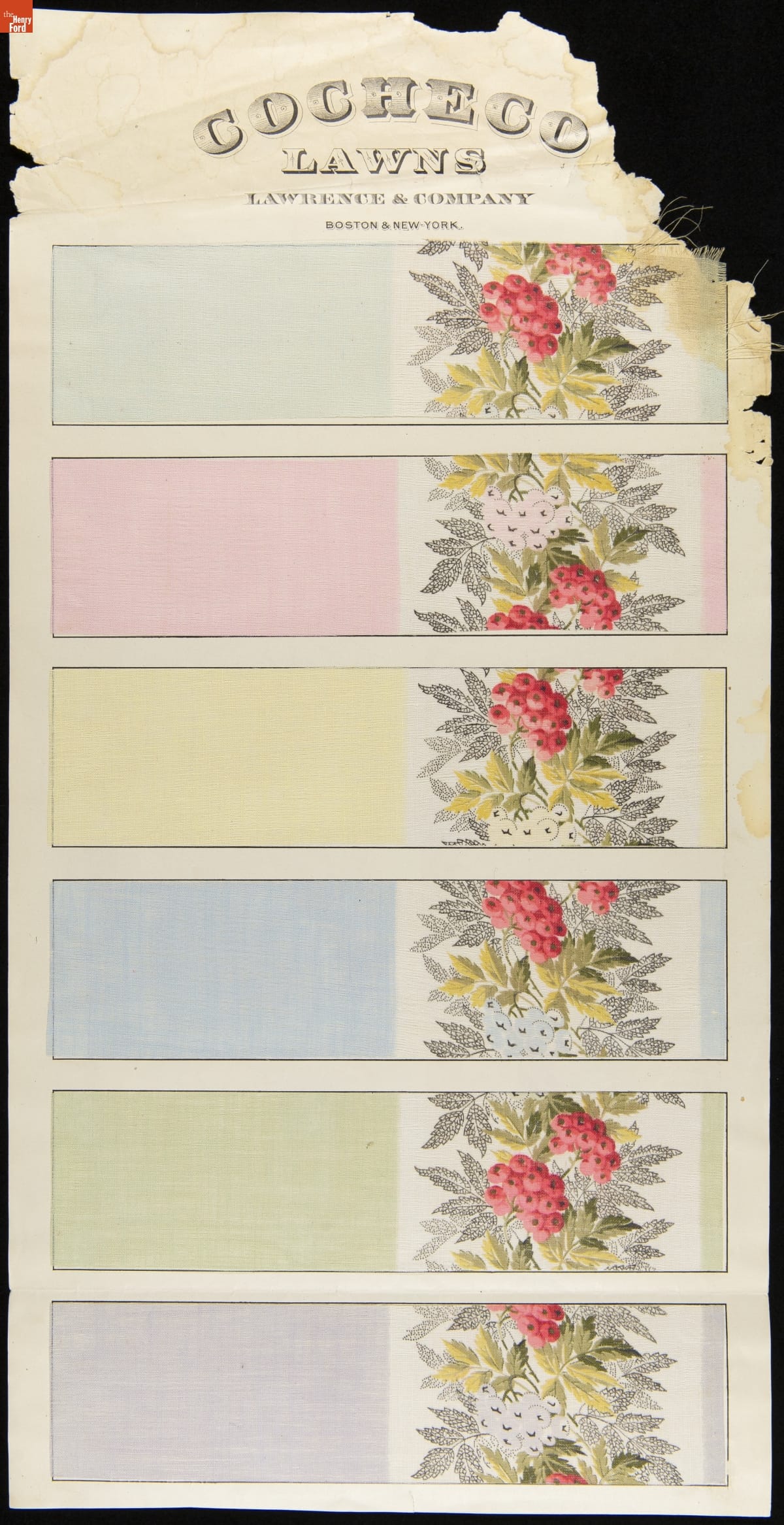
- Sample Card for Cocheco Manufacturing Company, 1881 - During the 19th century, New England textile mills manufactured billions of yards of fabric for the mass market, producing roller-printed cottons using increasingly complex mechanized processes. Colorful cotton prints, like those made by Cocheco Manufacturing Company, became affordable to almost everyone.
- 1881
- Collections - Artifact
Sample Card for Cocheco Manufacturing Company, 1881
During the 19th century, New England textile mills manufactured billions of yards of fabric for the mass market, producing roller-printed cottons using increasingly complex mechanized processes. Colorful cotton prints, like those made by Cocheco Manufacturing Company, became affordable to almost everyone.
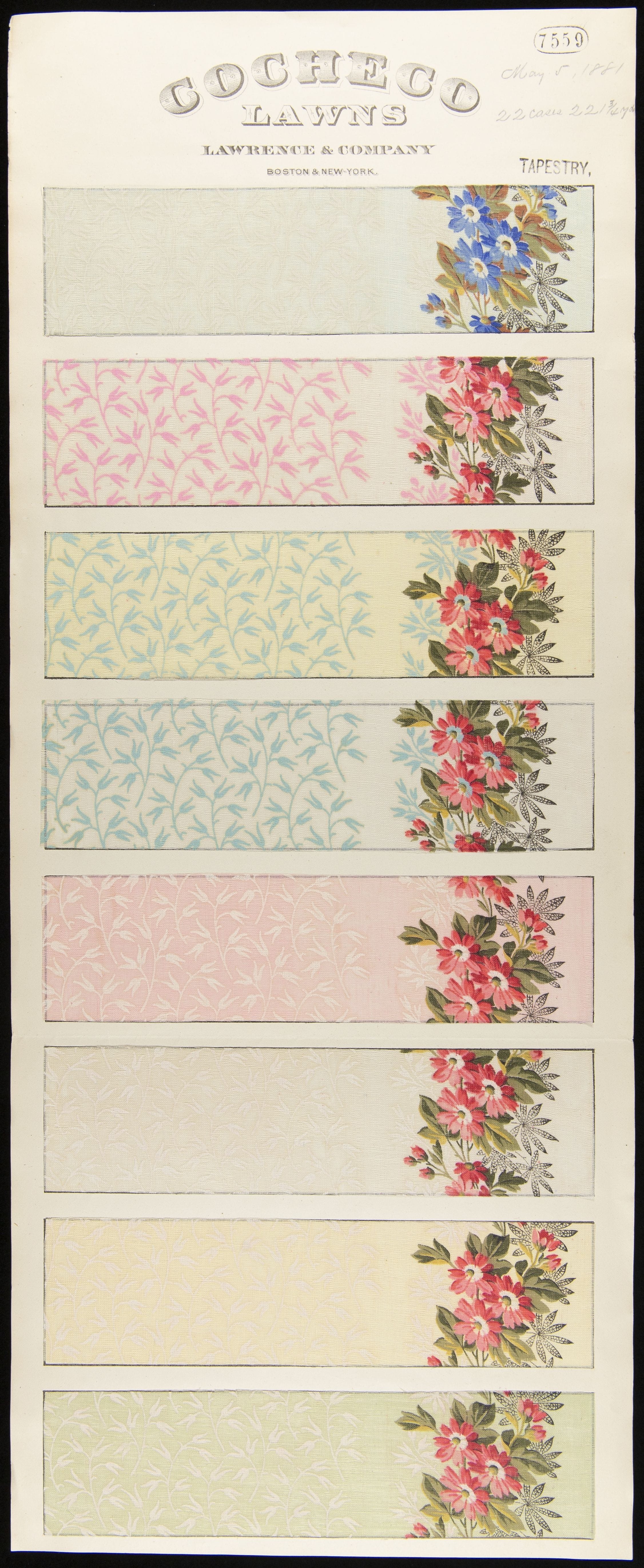
- Sample Card for Textile Fabric Style No. 7559, "Tapestry," Cocheco Mfg. Co., May 5, 1881 - During the 19th century, New England textile mills manufactured billions of yards of fabric for the mass market, producing roller-printed cottons using increasingly complex mechanized processes. Colorful cotton prints, like those made by Cocheco Manufacturing Company, became affordable to almost everyone.
- May 05, 1881
- Collections - Artifact
Sample Card for Textile Fabric Style No. 7559, "Tapestry," Cocheco Mfg. Co., May 5, 1881
During the 19th century, New England textile mills manufactured billions of yards of fabric for the mass market, producing roller-printed cottons using increasingly complex mechanized processes. Colorful cotton prints, like those made by Cocheco Manufacturing Company, became affordable to almost everyone.
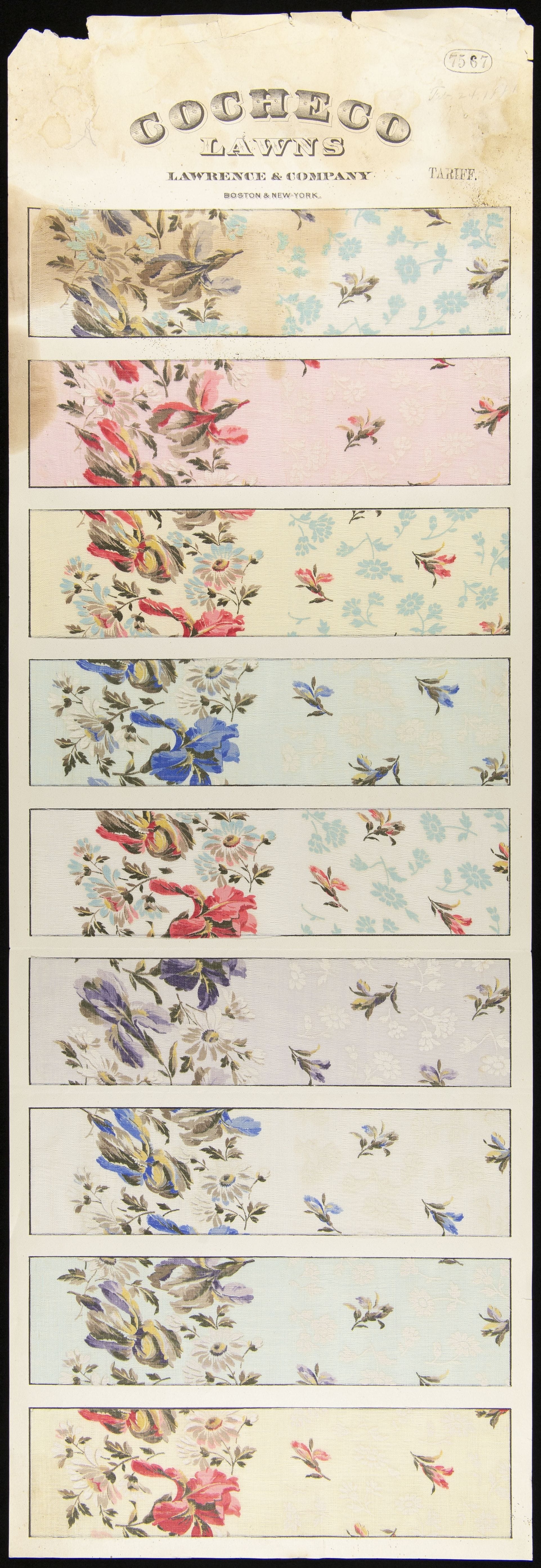
- Sample Card for Textile Fabric Style No. 7567, "Tariff," Cocheco Mfg. Co., February 24, 1881 - During the 19th century, New England textile mills manufactured billions of yards of fabric for the mass market, producing roller-printed cottons using increasingly complex mechanized processes. Colorful cotton prints, like those made by Cocheco Manufacturing Company, became affordable to almost everyone.
- February 24, 1881
- Collections - Artifact
Sample Card for Textile Fabric Style No. 7567, "Tariff," Cocheco Mfg. Co., February 24, 1881
During the 19th century, New England textile mills manufactured billions of yards of fabric for the mass market, producing roller-printed cottons using increasingly complex mechanized processes. Colorful cotton prints, like those made by Cocheco Manufacturing Company, became affordable to almost everyone.