
Search
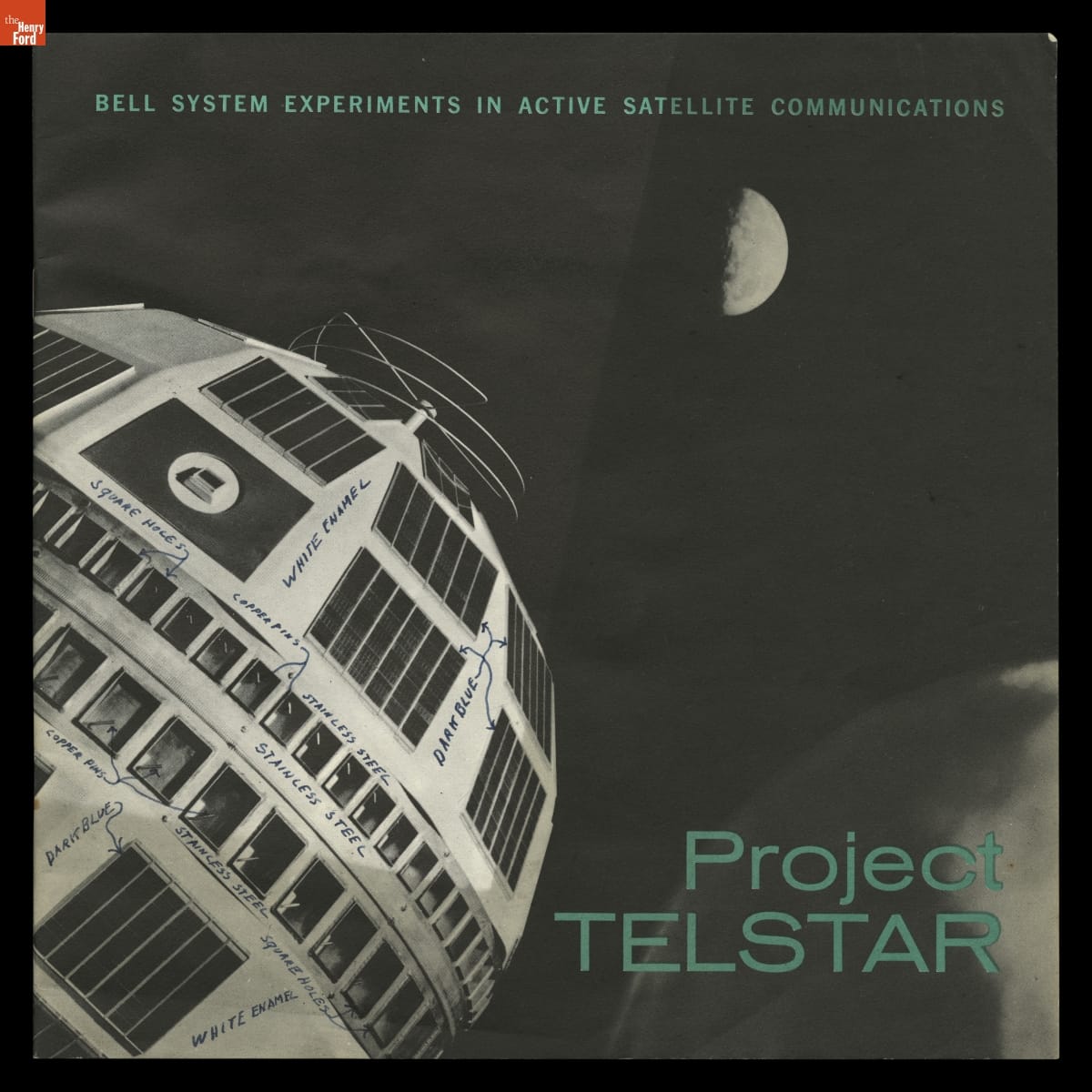
- Brochure, "Project Telstar: Bell System Experiments in Active Satellite Communications," 1962 -
- 1962
- Collections - Artifact
Brochure, "Project Telstar: Bell System Experiments in Active Satellite Communications," 1962
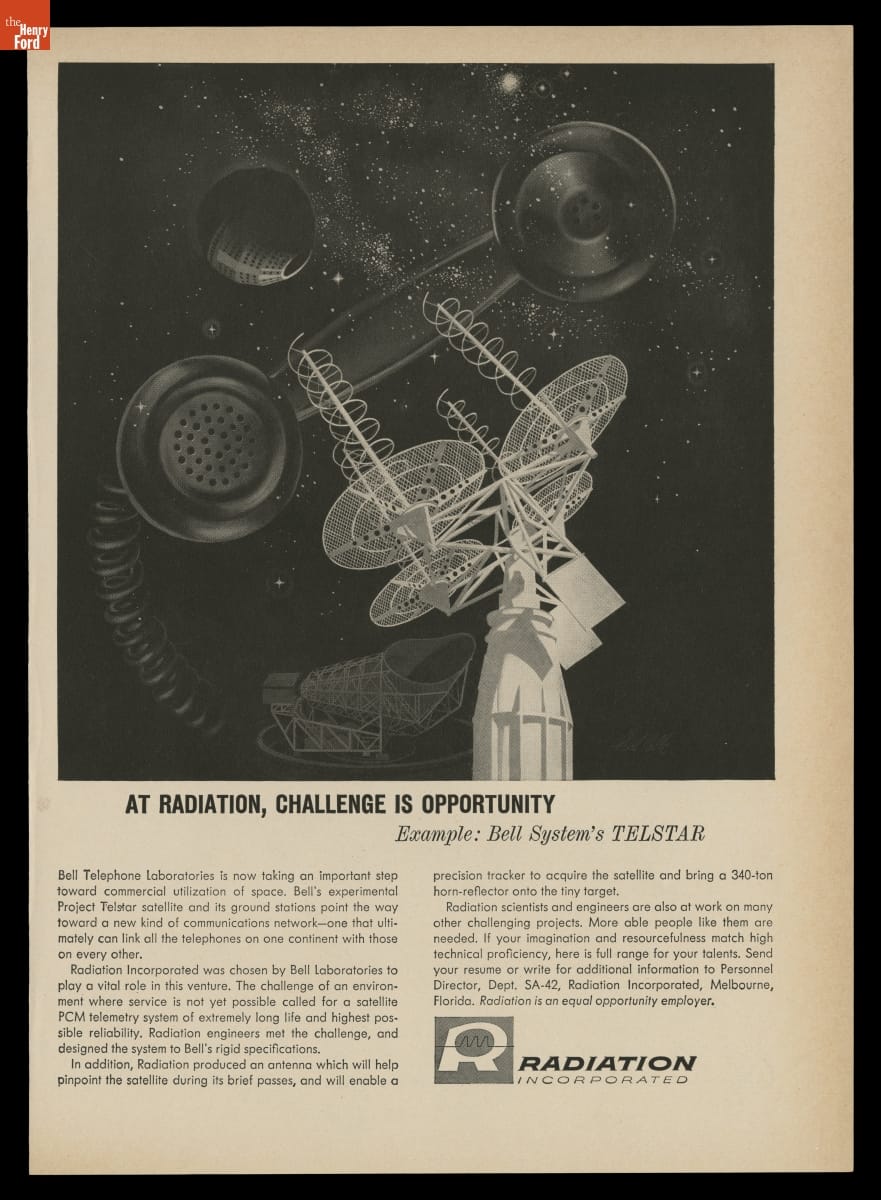
- "At Radiation, Challenge is Opportunity, Example: Bell System's TELSTAR," Radiation Incorporated Advertisement, 1962 -
- 1962
- Collections - Artifact
"At Radiation, Challenge is Opportunity, Example: Bell System's TELSTAR," Radiation Incorporated Advertisement, 1962
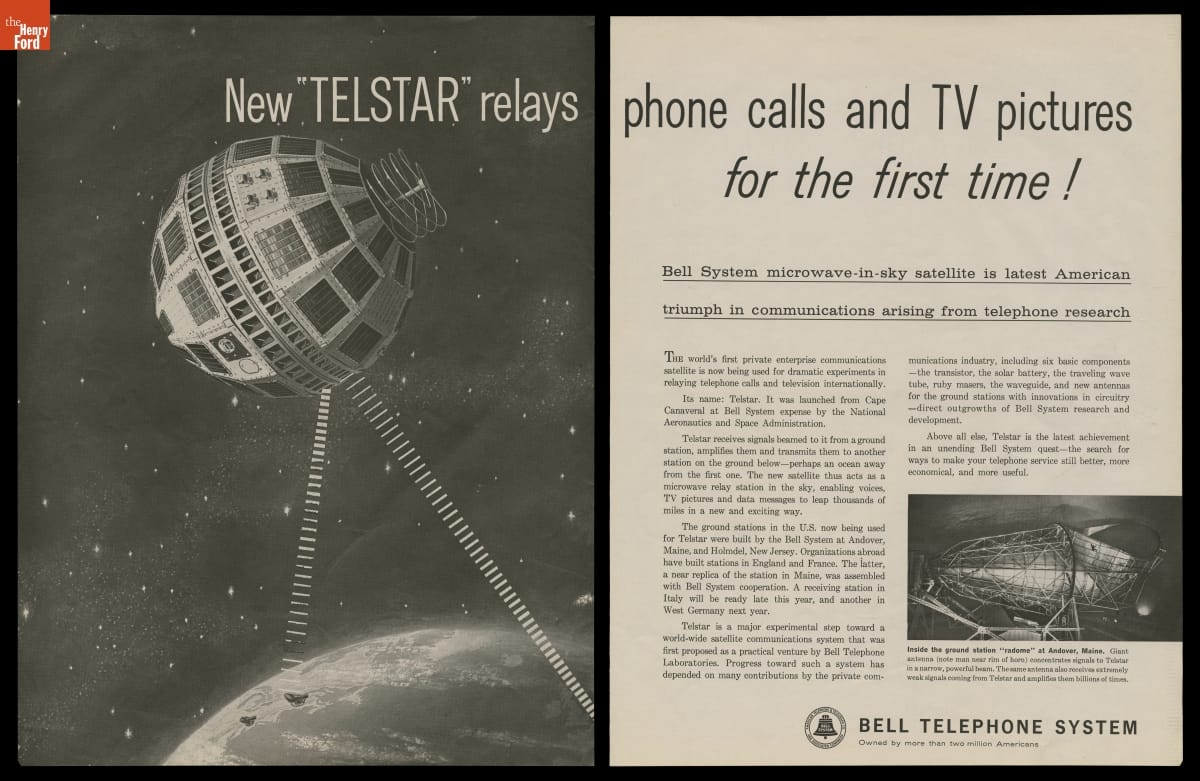
- "New TELSTAR Relays," Bell Telephone System Advertisement, 1962 -
- 11 August 1962-18 August 1962
- Collections - Artifact
"New TELSTAR Relays," Bell Telephone System Advertisement, 1962
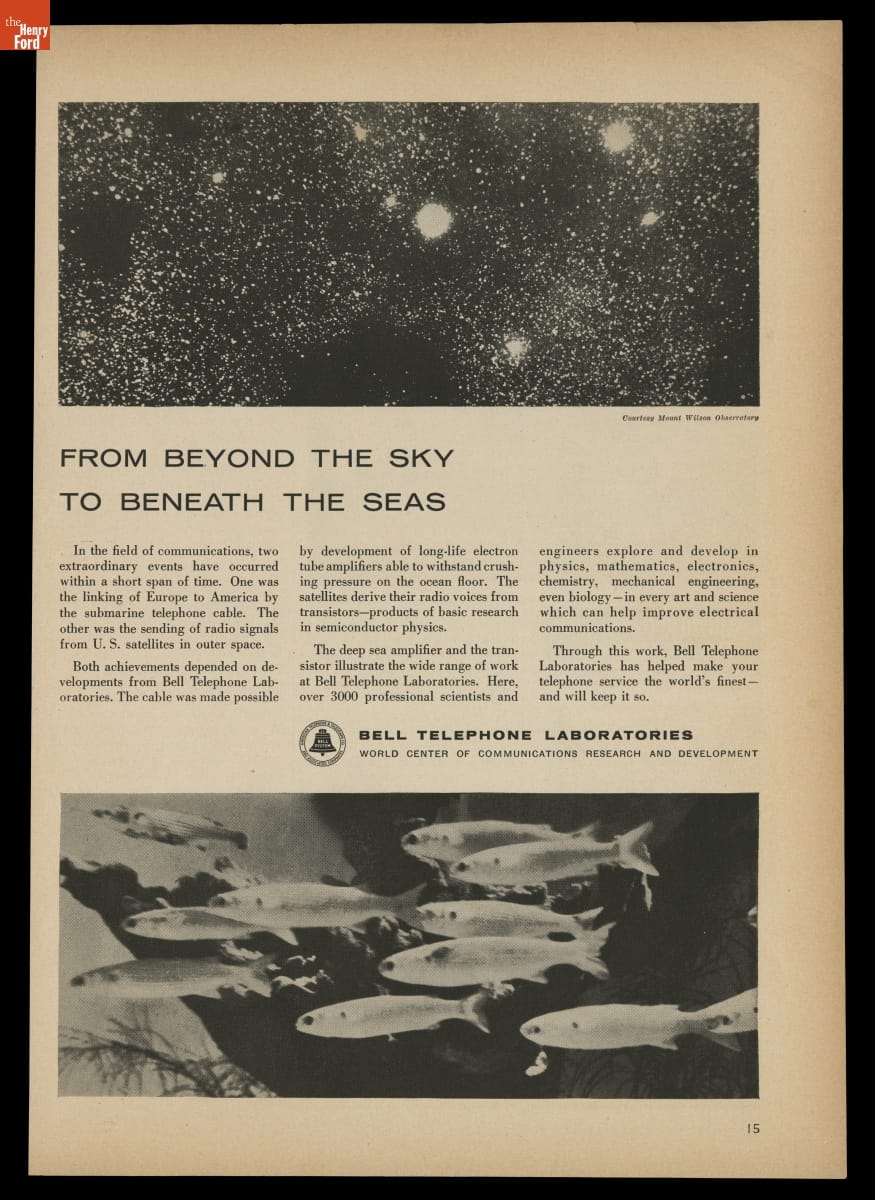
- "From Beyond the Sky to Beneath the Seas," Bell Telephone Laboratories Advertisement, 1958 -
- 1958
- Collections - Artifact
"From Beyond the Sky to Beneath the Seas," Bell Telephone Laboratories Advertisement, 1958
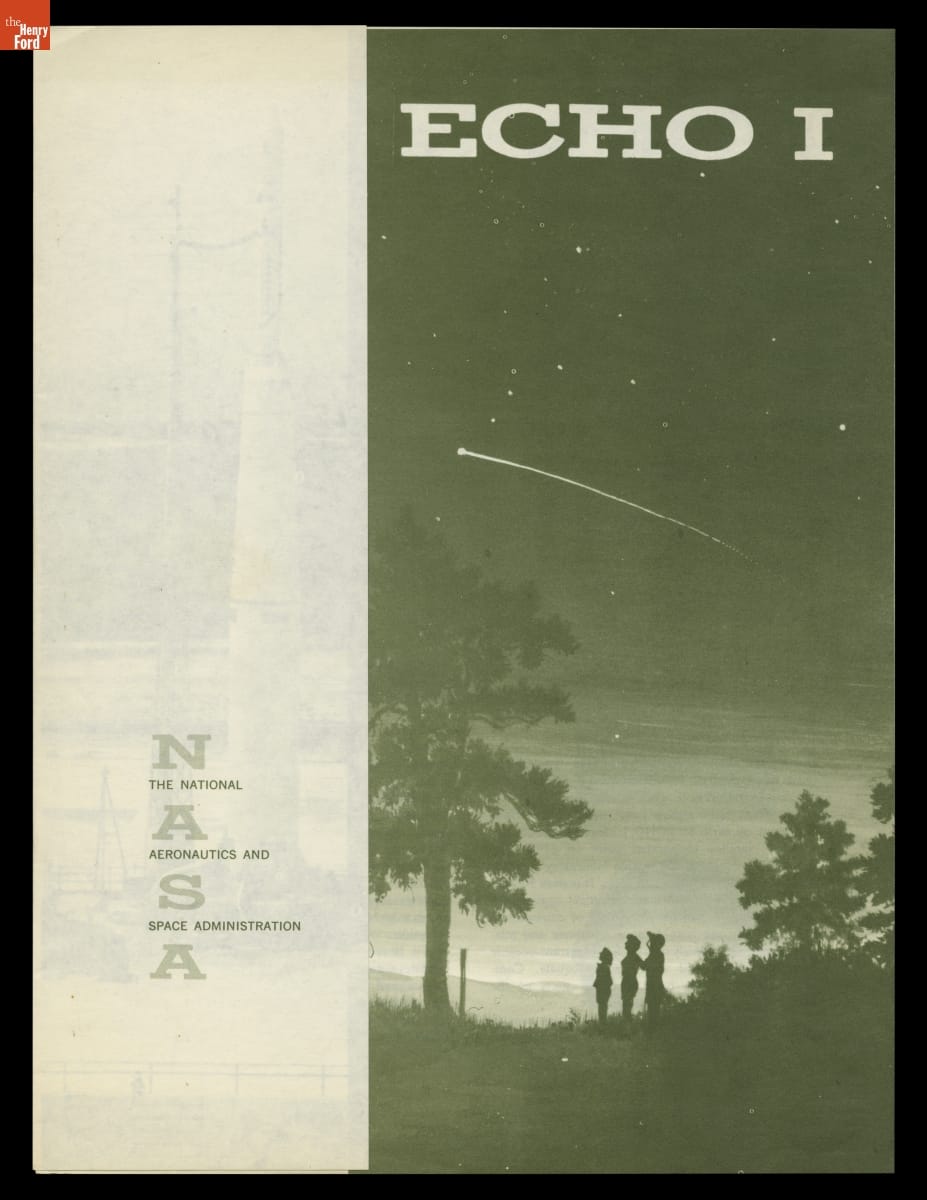
- Brochure, "ECHO I Communication Satellite," 1961 -
- 1961
- Collections - Artifact
Brochure, "ECHO I Communication Satellite," 1961
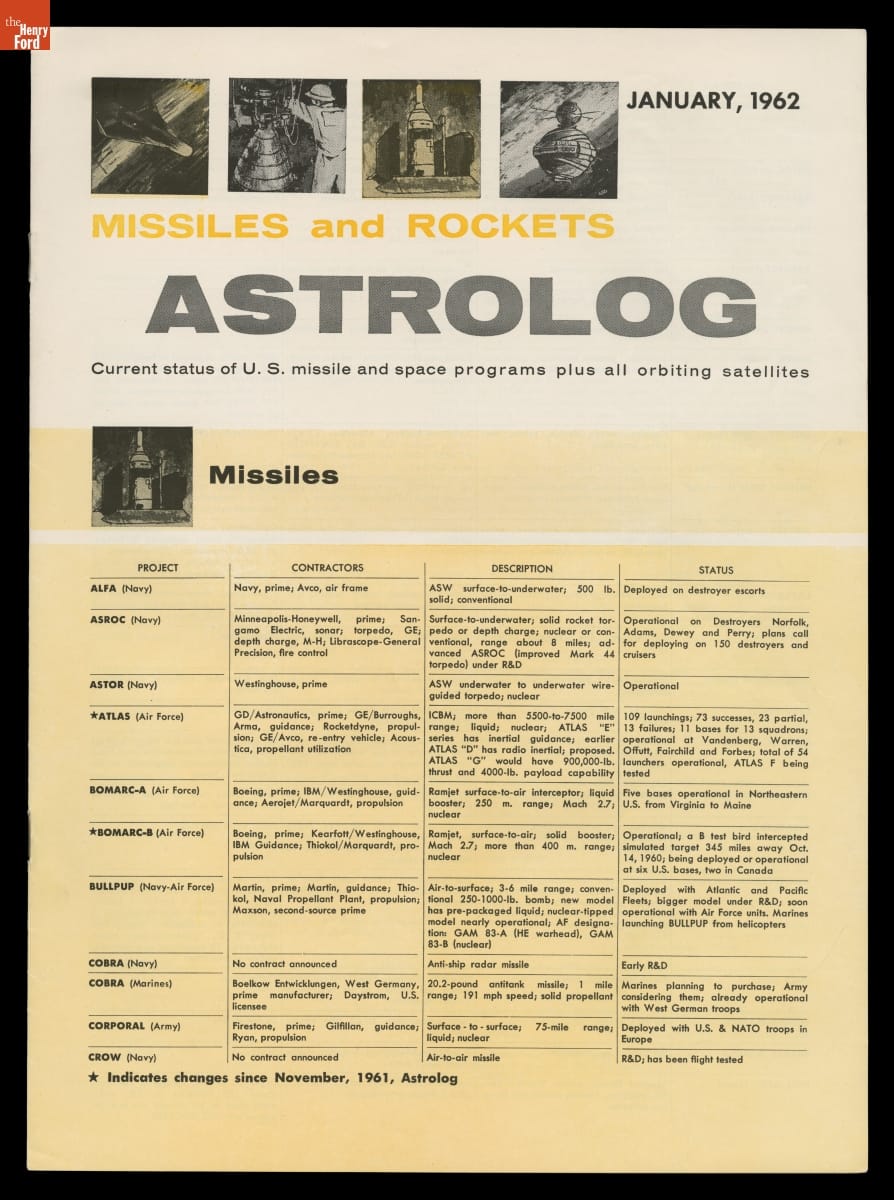
- Brochure, "Missiles and Rockets Astrolog," January 1962 -
- January 01, 1962
- Collections - Artifact
Brochure, "Missiles and Rockets Astrolog," January 1962
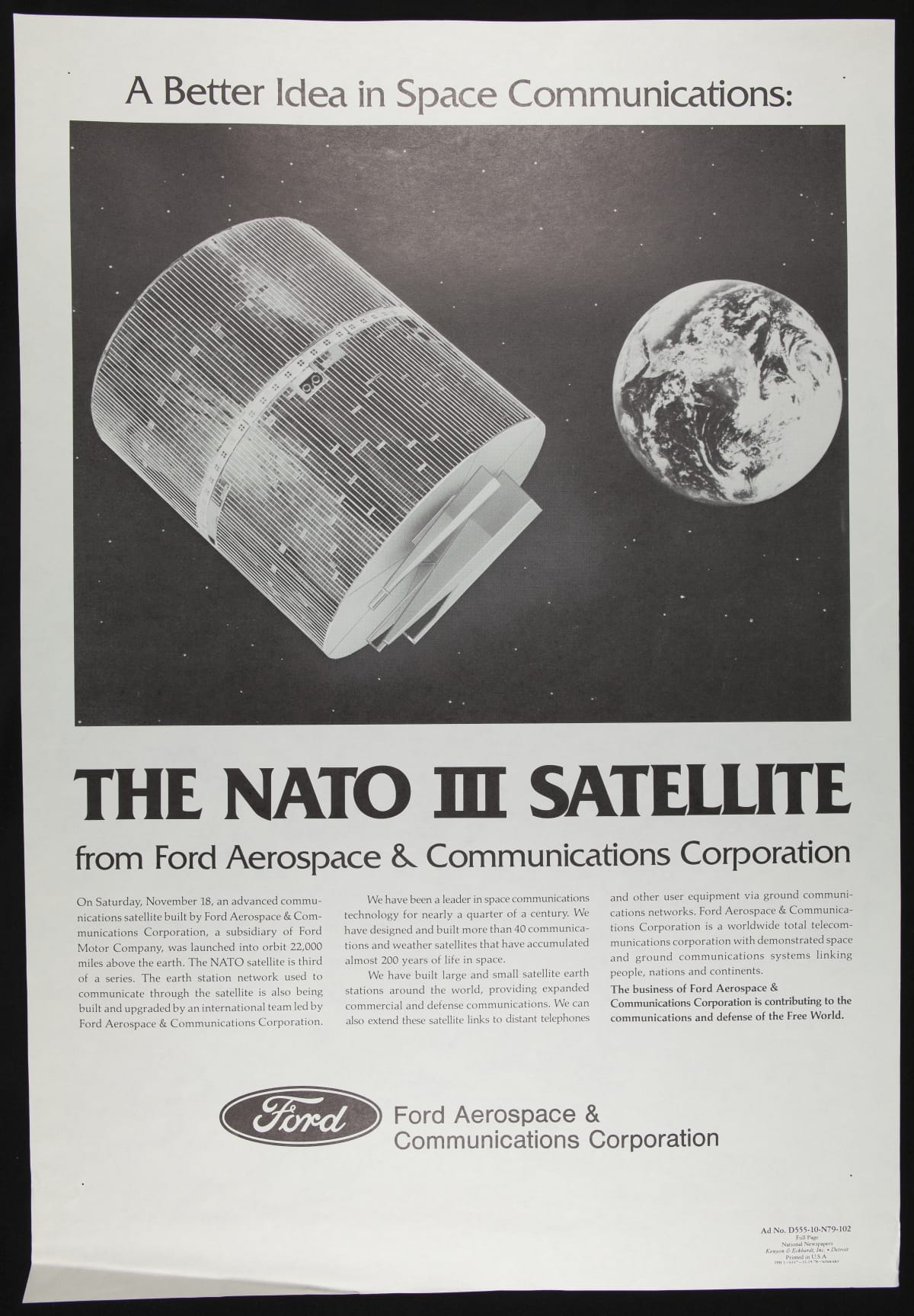
- Ford Advertisement, "A Better Idea in Space Communications: The NATO III Satellite from Ford Aerospace & Communications Corporation," 1979 - Ford Motor Company established the core of its aerospace division in 1956. Based in Newport Beach, California, the division and its subsidiaries manufactured satellites, missiles, and defense systems. It also played an important role in developing the Mission Control facility near Houston, Texas, that directed NASA's Gemini and Apollo space missions. Ford sold its aerospace division in 1990.
- 1979
- Collections - Artifact
Ford Advertisement, "A Better Idea in Space Communications: The NATO III Satellite from Ford Aerospace & Communications Corporation," 1979
Ford Motor Company established the core of its aerospace division in 1956. Based in Newport Beach, California, the division and its subsidiaries manufactured satellites, missiles, and defense systems. It also played an important role in developing the Mission Control facility near Houston, Texas, that directed NASA's Gemini and Apollo space missions. Ford sold its aerospace division in 1990.
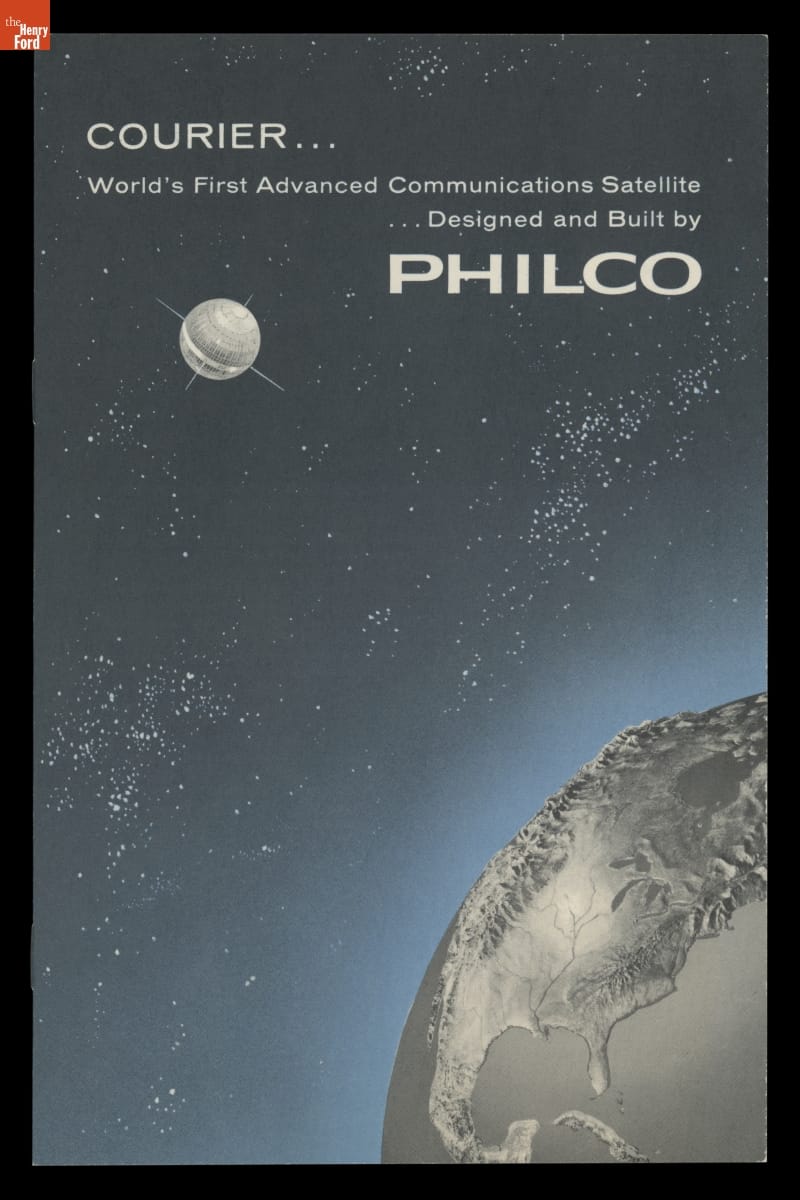
- Brochure, "Courier... World's First Advanced Communications Satellite... Designed and Built by Philco," circa 1962 -
- circa 1962
- Collections - Artifact
Brochure, "Courier... World's First Advanced Communications Satellite... Designed and Built by Philco," circa 1962
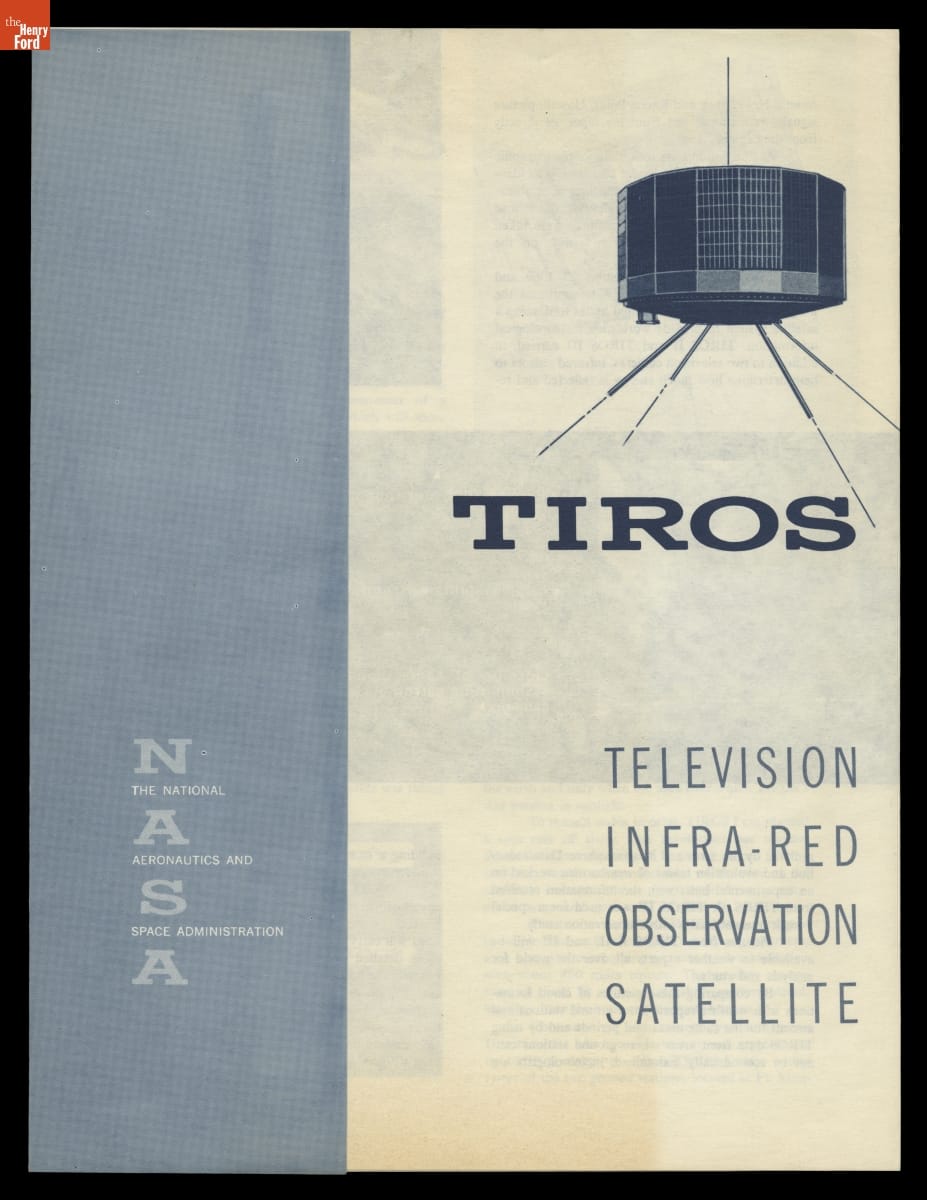
- Brochure, "TIROS: Television Infra-Red Observation Satellite," 1961 -
- 1961
- Collections - Artifact
Brochure, "TIROS: Television Infra-Red Observation Satellite," 1961
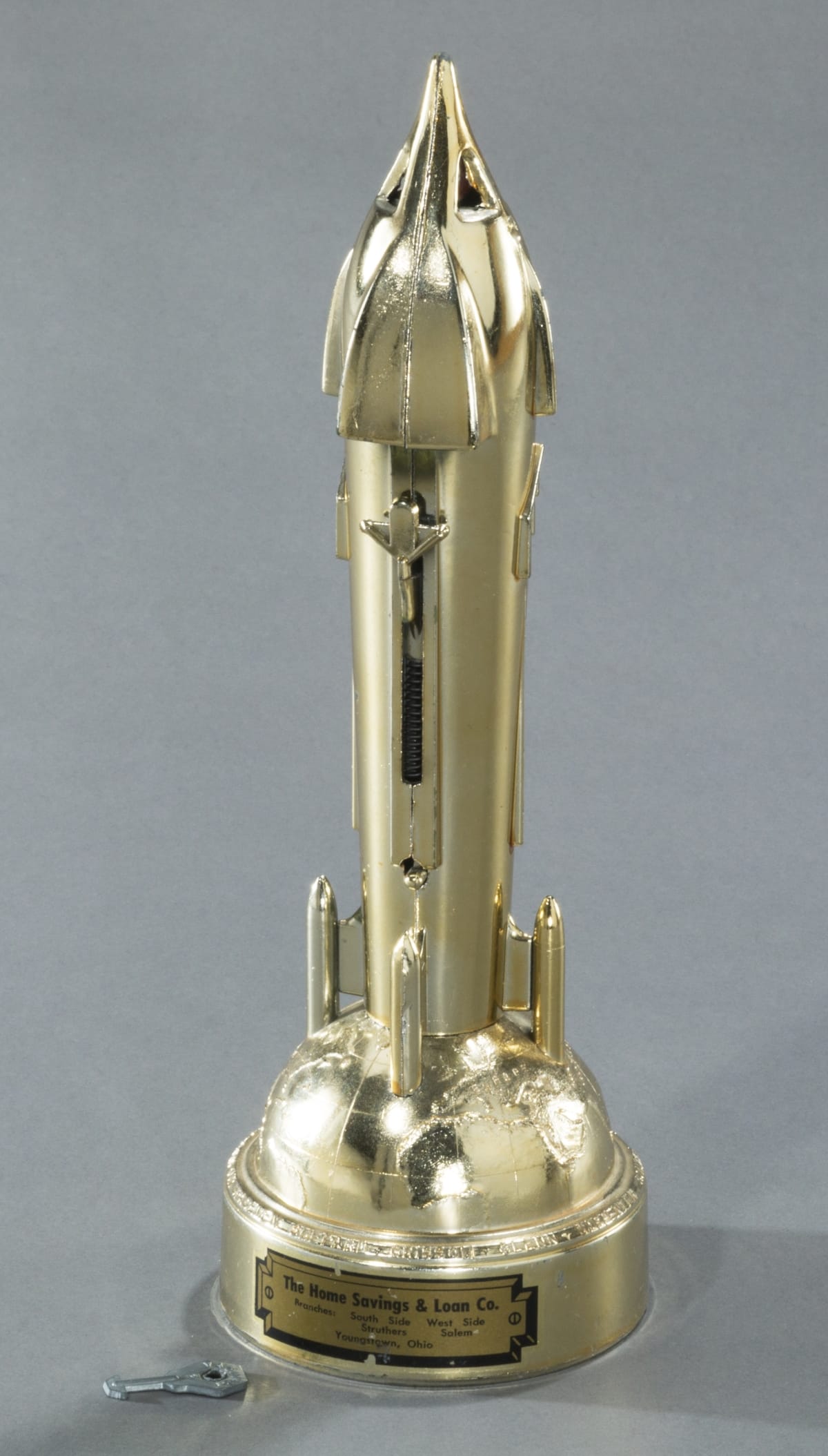
- "The Satellite Bank", circa 1961 - Many early space toys depicted outer space as a futuristic fantasy world. But when space travel became possible, these toys became more realistic-looking. This bank, made about 1961, resembles rocket ships that launched people into orbit. It also commemorates the six U.S. astronauts chosen to be the first Americans in space.
- circa 1961
- Collections - Artifact
"The Satellite Bank", circa 1961
Many early space toys depicted outer space as a futuristic fantasy world. But when space travel became possible, these toys became more realistic-looking. This bank, made about 1961, resembles rocket ships that launched people into orbit. It also commemorates the six U.S. astronauts chosen to be the first Americans in space.