
Search
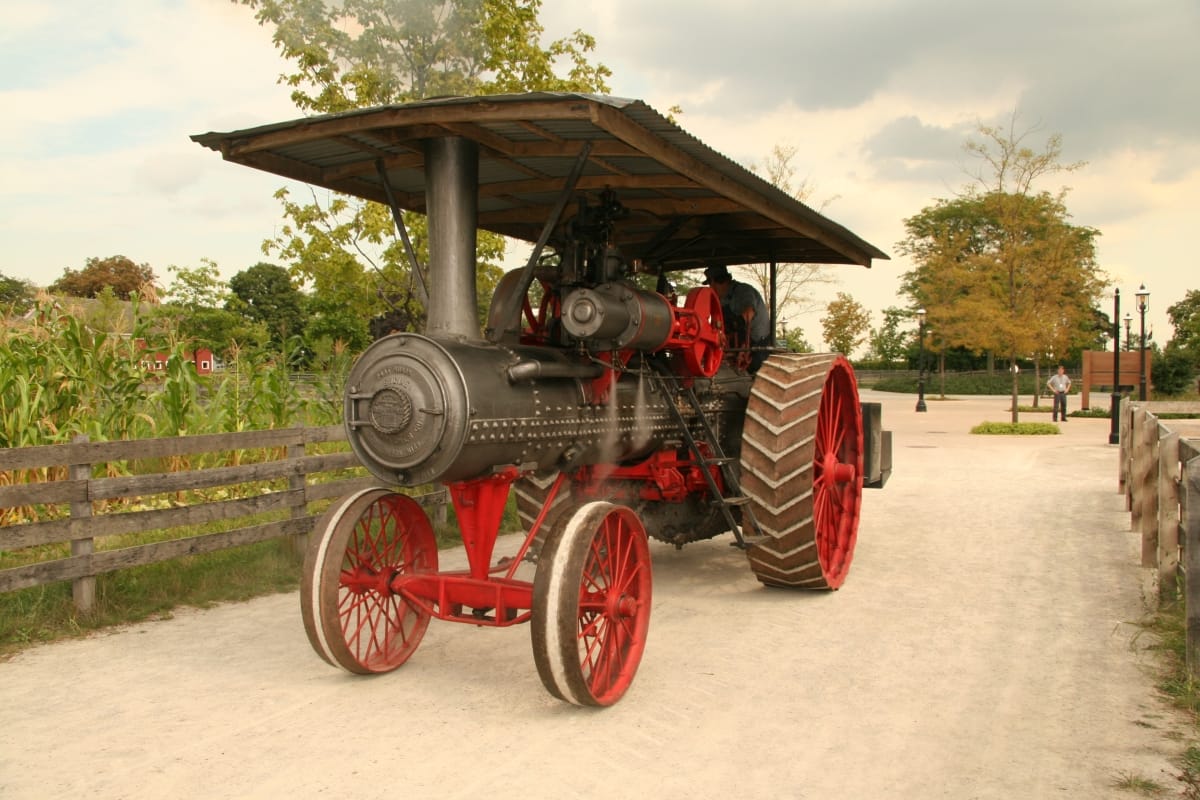
- Port Huron Steam Traction Engine, "Longfellow," 1916 - The late 19th to early 20th centuries saw huge steam engines like this used for threshing grain. They could move over the roads under their own power. Individual farmers generally did not own such machines. Rather, men made a business of moving from farm to farm, threshing grain during harvest time. Joseph Freund of Westphalia, Michigan, bought this machine in 1917 and used it to power a Port Huron "Rusher" thresher-separator in Clinton and Ionia Counties, Michigan.
- December 22, 1916
- Collections - Artifact
Port Huron Steam Traction Engine, "Longfellow," 1916
The late 19th to early 20th centuries saw huge steam engines like this used for threshing grain. They could move over the roads under their own power. Individual farmers generally did not own such machines. Rather, men made a business of moving from farm to farm, threshing grain during harvest time. Joseph Freund of Westphalia, Michigan, bought this machine in 1917 and used it to power a Port Huron "Rusher" thresher-separator in Clinton and Ionia Counties, Michigan.
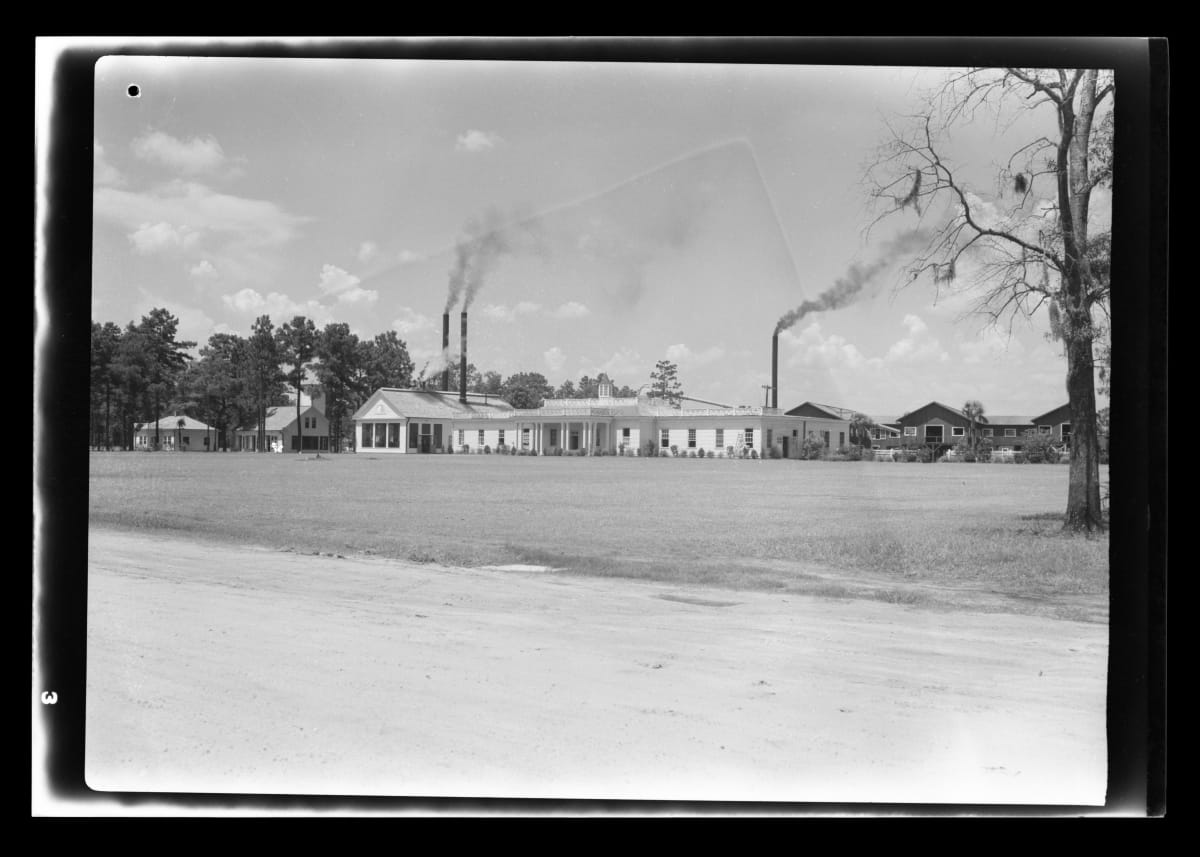
- Power House, Farm Repair Shop, and Sawmill, Richmond Hill, Georgia, July 1940 - Henry Ford purchased vast amounts of land around present-day Richmond Hill, Georgia, beginning in the 1920s. Here, Ford dabbled in agricultural experimentation and in the late 1930s he built a winter residence. Ford also built a number of buildings to support his farming operations and the surrounding community. The sawmill supplied lumber from many of the buildings erected around Richmond Hill.
- July 31, 1940
- Collections - Artifact
Power House, Farm Repair Shop, and Sawmill, Richmond Hill, Georgia, July 1940
Henry Ford purchased vast amounts of land around present-day Richmond Hill, Georgia, beginning in the 1920s. Here, Ford dabbled in agricultural experimentation and in the late 1930s he built a winter residence. Ford also built a number of buildings to support his farming operations and the surrounding community. The sawmill supplied lumber from many of the buildings erected around Richmond Hill.
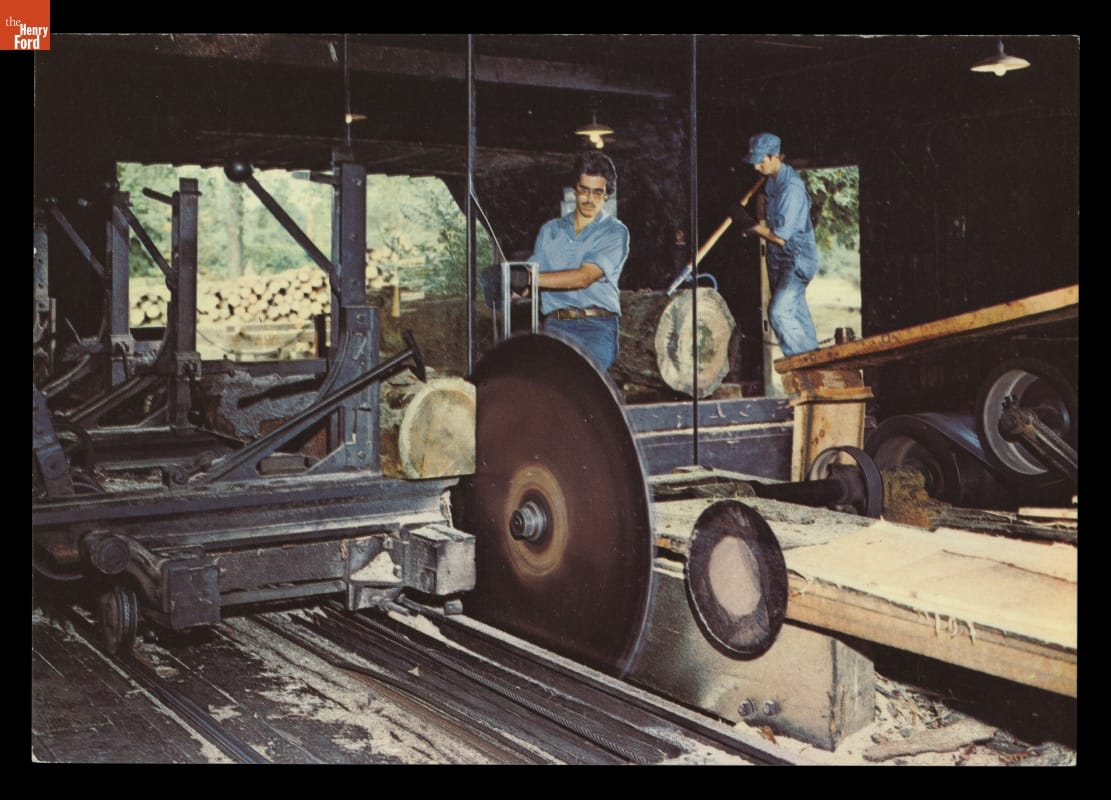
- Circular Sawmill in Greenfield Village, circa 1983 -
- circa 1983
- Collections - Artifact
Circular Sawmill in Greenfield Village, circa 1983
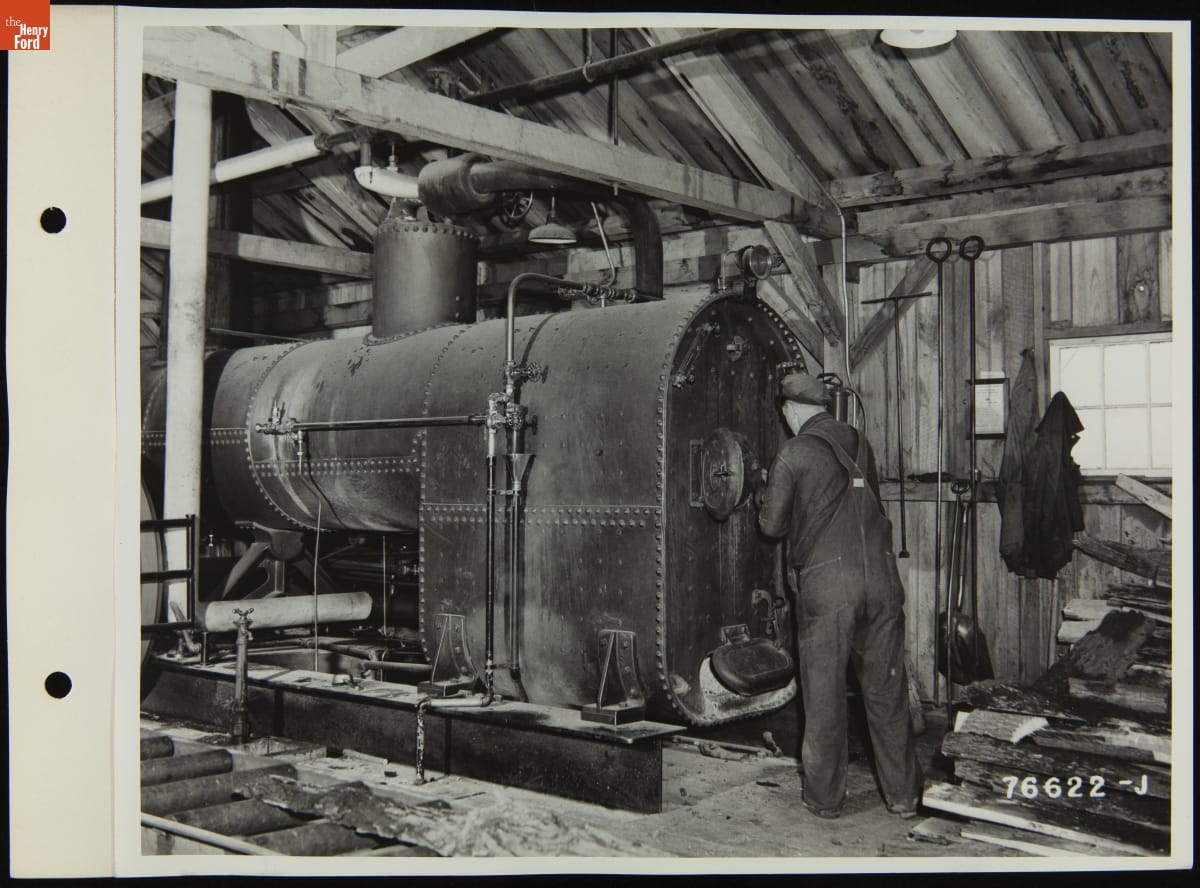
- Worker inside the Sawmill at the Willow Run Bomber Plant, March 5, 1942 - During World War II, Ford Motor Company built B-24 bomber airplanes at its Willow Run plant, located 35 miles west of Detroit. Work on the factory's buildings started in March 1941. As trees were cleared, Ford erected an on-site sawmill that processed them into lumber. Much of that lumber went into temporary structures and housing at the rising factory.
- March 05, 1942
- Collections - Artifact
Worker inside the Sawmill at the Willow Run Bomber Plant, March 5, 1942
During World War II, Ford Motor Company built B-24 bomber airplanes at its Willow Run plant, located 35 miles west of Detroit. Work on the factory's buildings started in March 1941. As trees were cleared, Ford erected an on-site sawmill that processed them into lumber. Much of that lumber went into temporary structures and housing at the rising factory.
- Old Saw-Mill, L. I., circa 1855 -
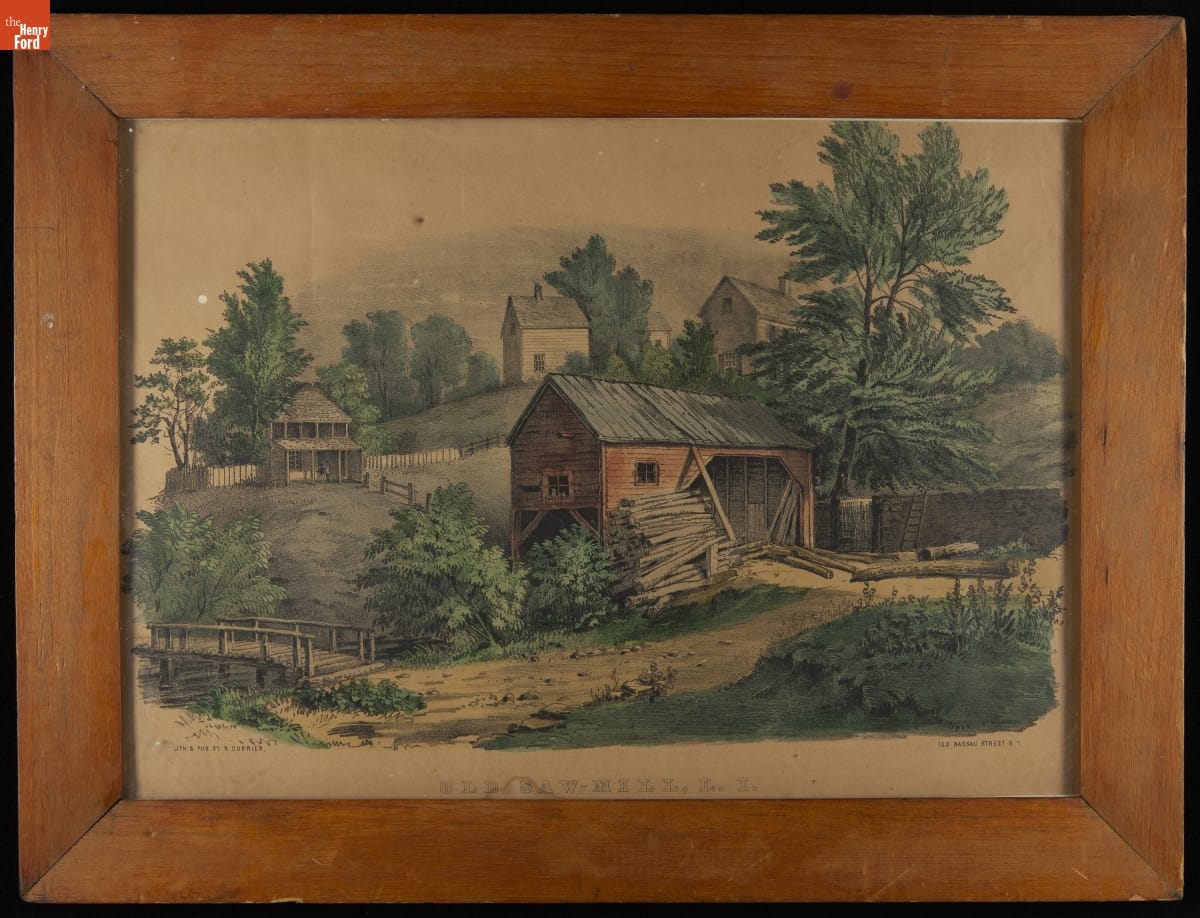
- circa 1855
- Collections - Artifact
Old Saw-Mill, L. I., circa 1855
- Workers and Horse-drawn Wagons at a Sawmill, 1880-1900 - Tintypes, the popular "instant photographs" of the 19th century, could be produced in a matter of minutes at a price most people could afford. At first, outdoor tintypes were rare. But after a new, more convenient process for making tintypes was introduced in the 1880s, photographs of outdoor scenes became more common.
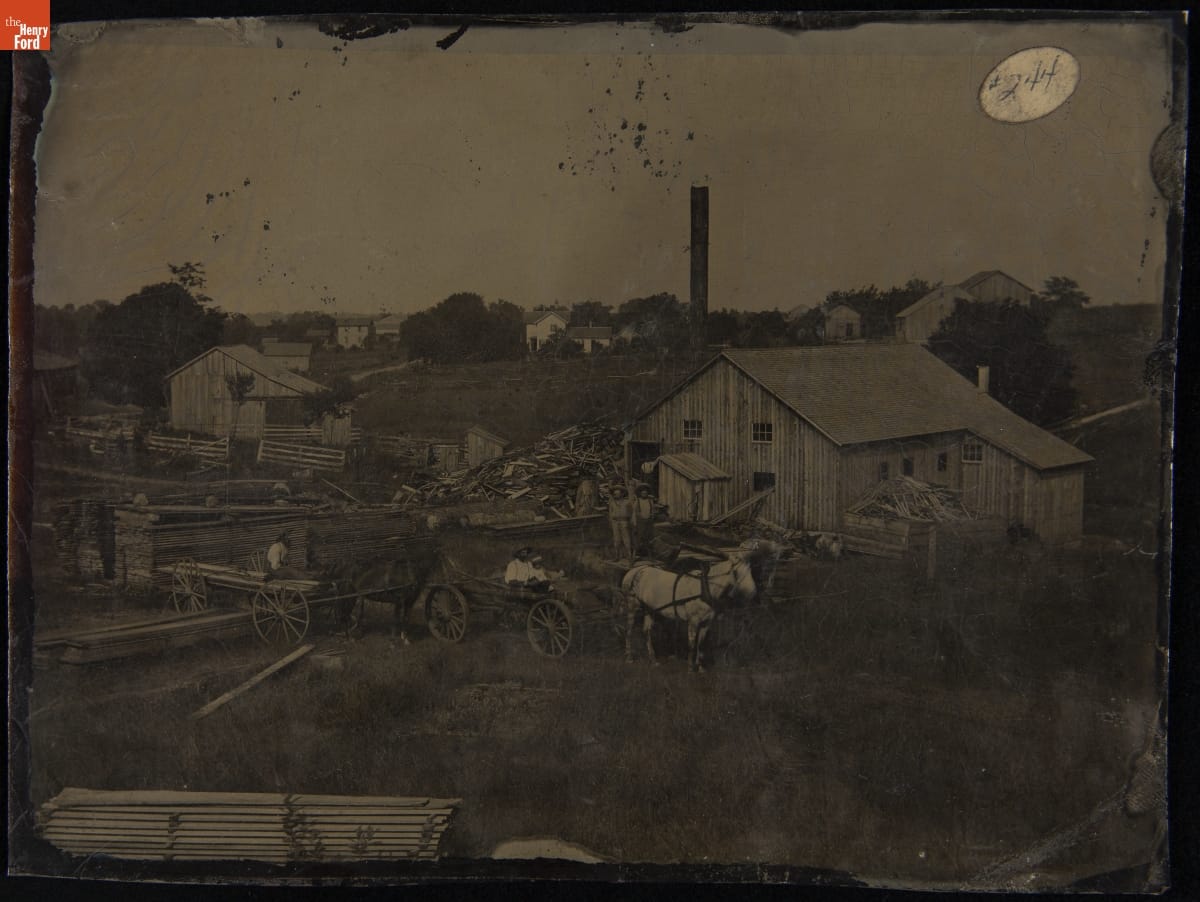
- 1880-1900
- Collections - Artifact
Workers and Horse-drawn Wagons at a Sawmill, 1880-1900
Tintypes, the popular "instant photographs" of the 19th century, could be produced in a matter of minutes at a price most people could afford. At first, outdoor tintypes were rare. But after a new, more convenient process for making tintypes was introduced in the 1880s, photographs of outdoor scenes became more common.
- Aerial View of Ford Motor Company Sawmill, L'Anse, Michigan, August 1946 - In pursuit of self-sufficient automobile manufacture, Henry Ford and Ford Motor Company purchased over 313,000 acres of timberland for logging in the Upper Peninsula of Michigan. Ford established several remote milling sites, including this one at L'Anse on Keweenaw Bay. Lumber produced here was shipped to a plant at Iron Mountain and made into parts for Ford automobiles.
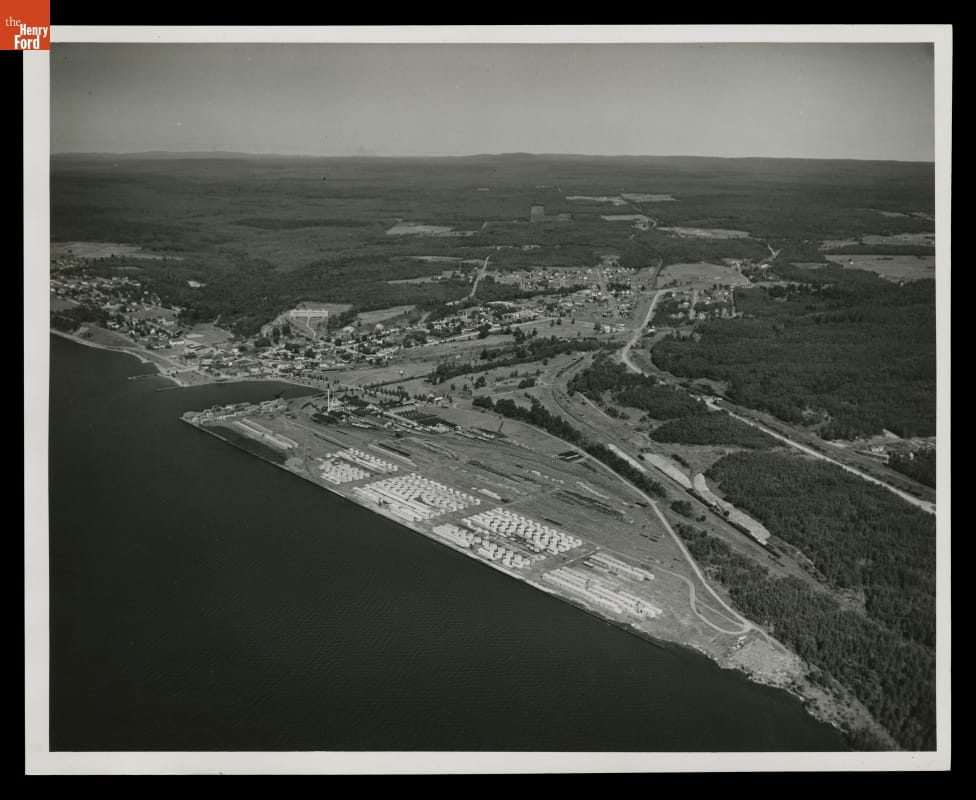
- August 06, 1946
- Collections - Artifact
Aerial View of Ford Motor Company Sawmill, L'Anse, Michigan, August 1946
In pursuit of self-sufficient automobile manufacture, Henry Ford and Ford Motor Company purchased over 313,000 acres of timberland for logging in the Upper Peninsula of Michigan. Ford established several remote milling sites, including this one at L'Anse on Keweenaw Bay. Lumber produced here was shipped to a plant at Iron Mountain and made into parts for Ford automobiles.
- Stoney Creek Sawmill in Greenfield Village, June 2002 - By 2000, Greenfield Village began showing its age. Buildings and crumbling infrastructure desperately needed repair. Museum planners envisioned a revitalized village. They created themed "Historic Districts" by relocating and refurbishing the historic structures. Workers repaved streets and upgraded water, sewer, electric, and gas lines. The restoration took only nine months to complete. This image shows the Village in 2002, as the project began.
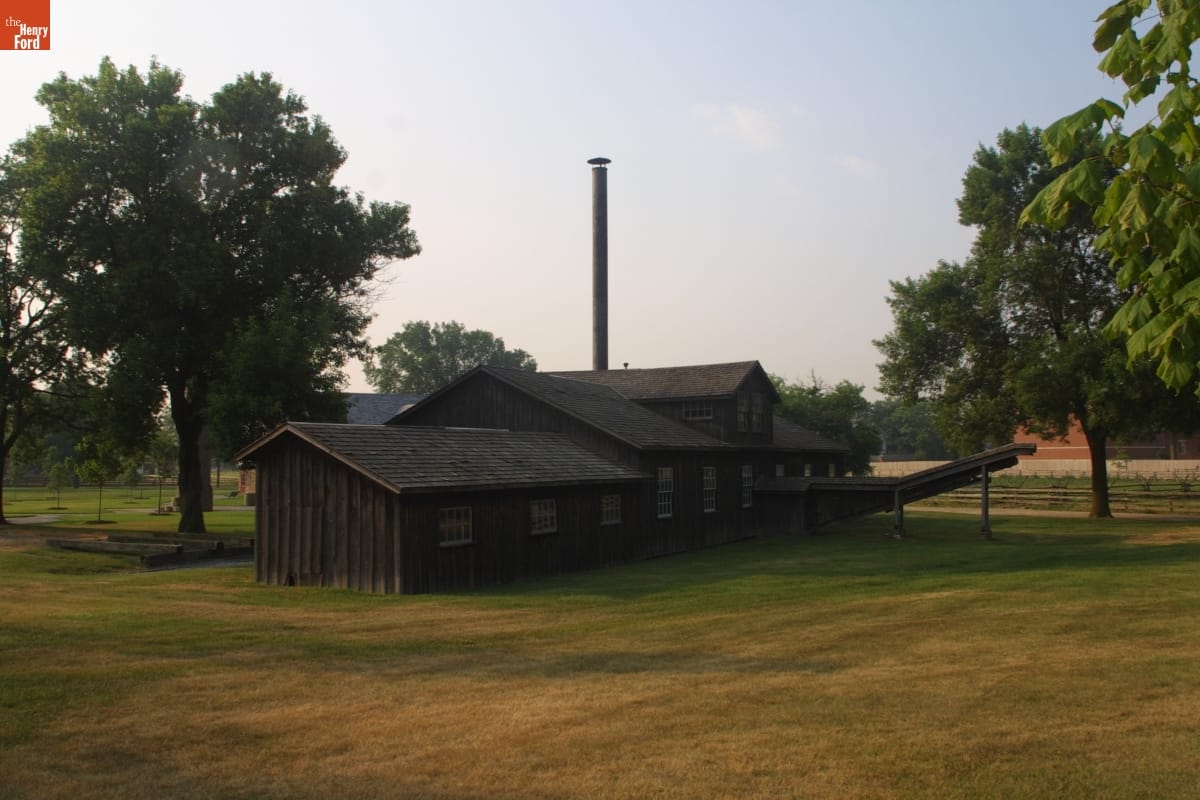
- June 25, 2002
- Collections - Artifact
Stoney Creek Sawmill in Greenfield Village, June 2002
By 2000, Greenfield Village began showing its age. Buildings and crumbling infrastructure desperately needed repair. Museum planners envisioned a revitalized village. They created themed "Historic Districts" by relocating and refurbishing the historic structures. Workers repaved streets and upgraded water, sewer, electric, and gas lines. The restoration took only nine months to complete. This image shows the Village in 2002, as the project began.
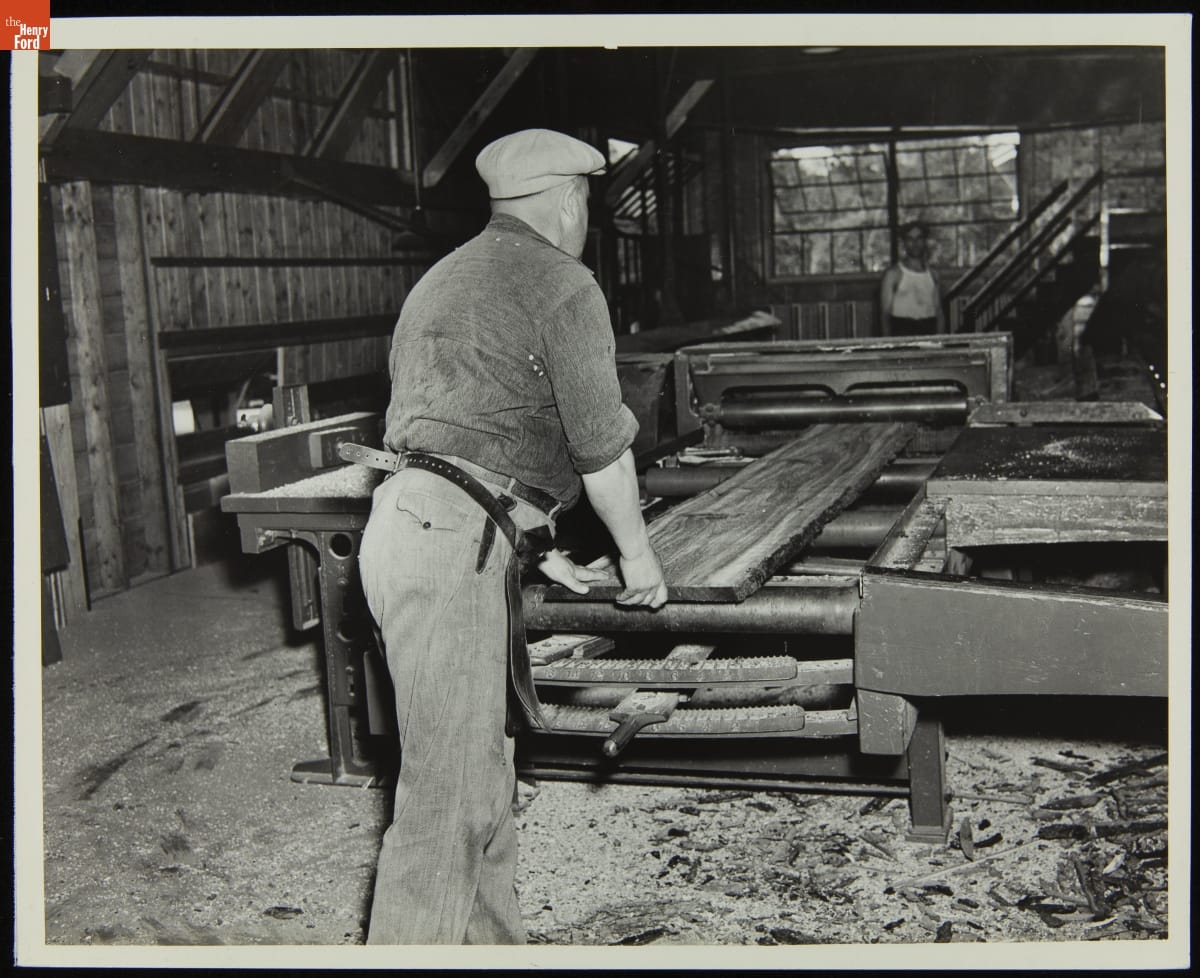
- Men Working at a Sawmill in Alberta, Michigan, 1937 - Ford Motor Company had several facilities in Michigan's Upper Peninsula. Ford built a sawmill and established a company town in Alberta, Michigan, in 1935. More a public-relations effort than a vital industry, Ford operated the Alberta mill until 1954. The company then donated the facility and 1,700 acres of surrounding forest land to Michigan Technological University.
- August 06, 1937
- Collections - Artifact
Men Working at a Sawmill in Alberta, Michigan, 1937
Ford Motor Company had several facilities in Michigan's Upper Peninsula. Ford built a sawmill and established a company town in Alberta, Michigan, in 1935. More a public-relations effort than a vital industry, Ford operated the Alberta mill until 1954. The company then donated the facility and 1,700 acres of surrounding forest land to Michigan Technological University.
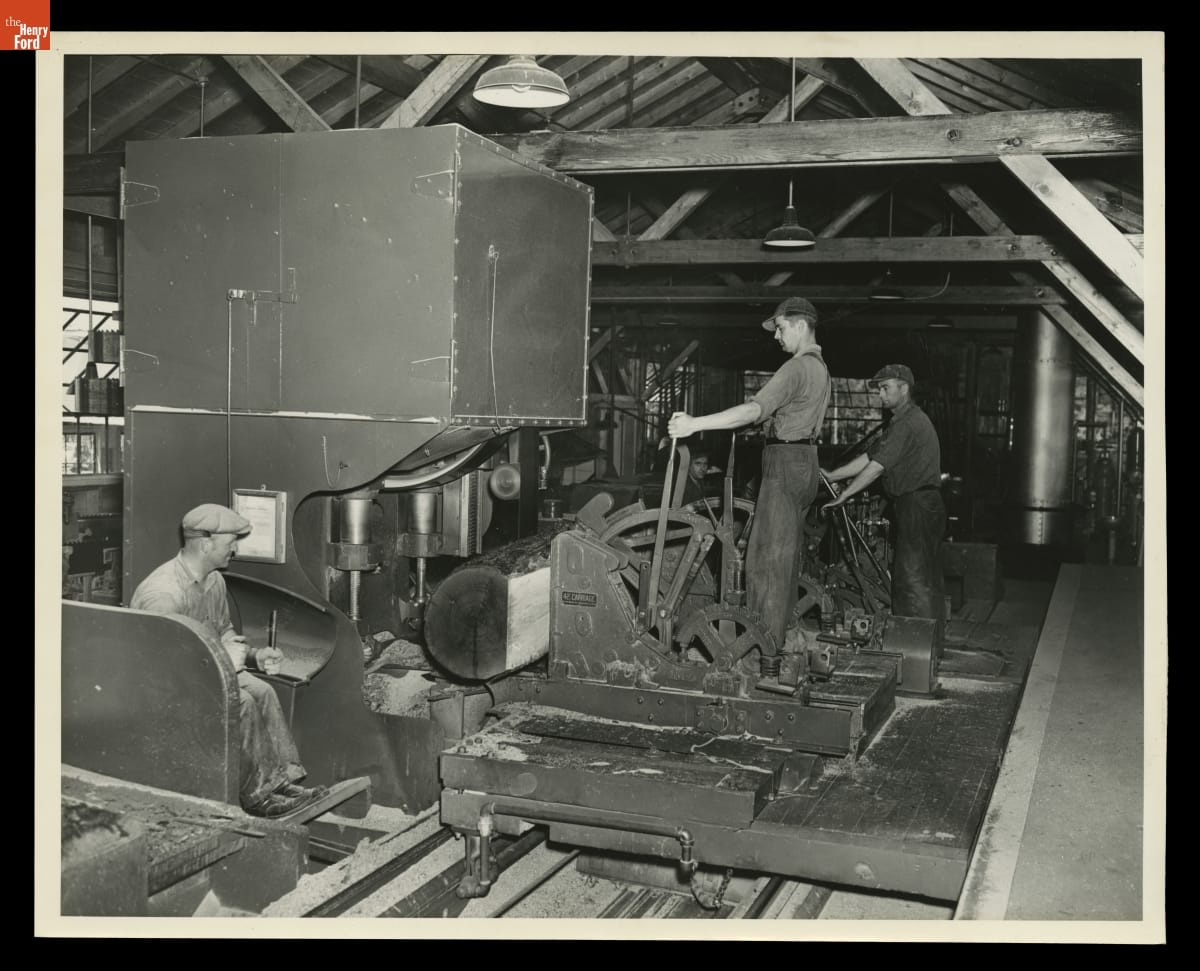
- Workers Operate a Log Carriage inside a Sawmill in Alberta, Michigan, 1937 - Ford Motor Company had several facilities in Michigan's Upper Peninsula. Ford built a sawmill and established a company town in Alberta, Michigan, in 1935. More a public-relations effort than a vital industry, Ford operated the Alberta mill until 1954. The company then donated the facility and 1,700 acres of surrounding forest land to Michigan Technological University.
- August 06, 1937
- Collections - Artifact
Workers Operate a Log Carriage inside a Sawmill in Alberta, Michigan, 1937
Ford Motor Company had several facilities in Michigan's Upper Peninsula. Ford built a sawmill and established a company town in Alberta, Michigan, in 1935. More a public-relations effort than a vital industry, Ford operated the Alberta mill until 1954. The company then donated the facility and 1,700 acres of surrounding forest land to Michigan Technological University.