
Search
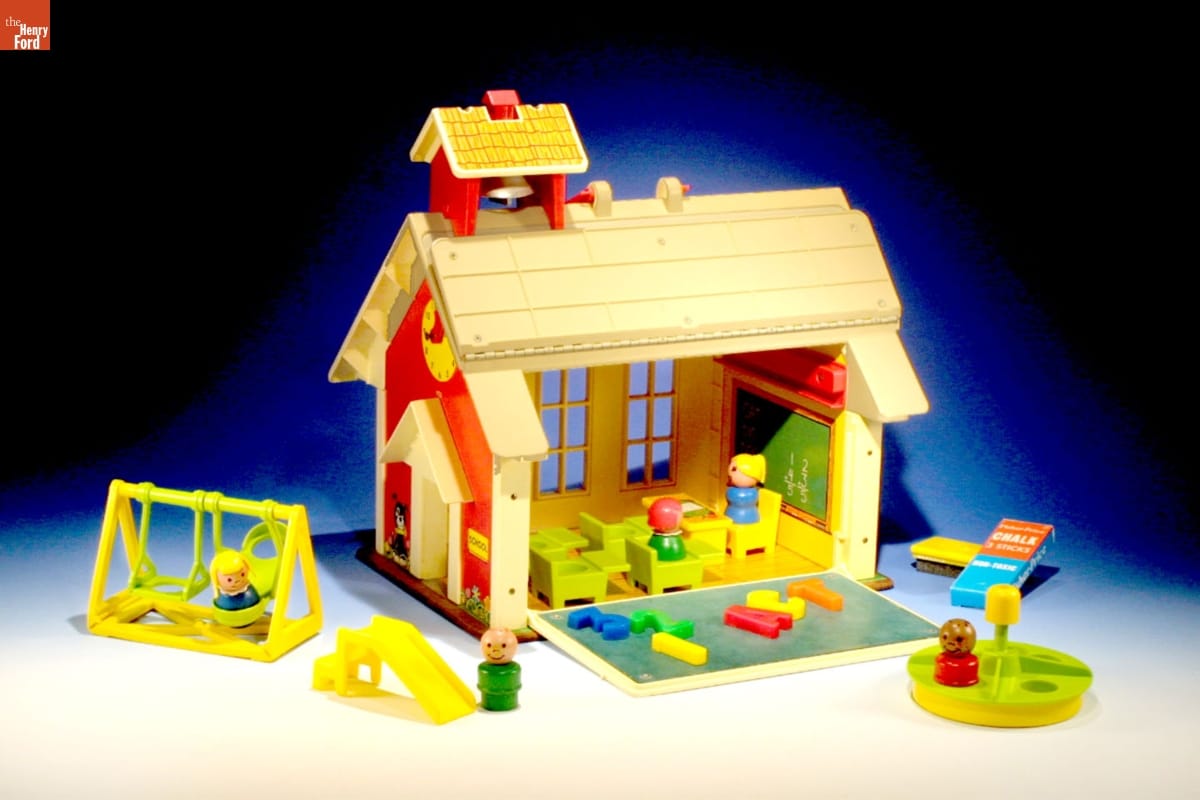
- Fisher-Price Play Family School, 1971-1975 - The Civil Rights movement, as well as the emerging woman's movement, created a whole new world for kids growing up in the 1970s. As social barriers and traditional gender stereotypes began to break down, kids were encouraged to appreciate diversity. This popular toy was one of the first playthings to include an African-American toy figure.
- 1971-1975
- Collections - Artifact
Fisher-Price Play Family School, 1971-1975
The Civil Rights movement, as well as the emerging woman's movement, created a whole new world for kids growing up in the 1970s. As social barriers and traditional gender stereotypes began to break down, kids were encouraged to appreciate diversity. This popular toy was one of the first playthings to include an African-American toy figure.
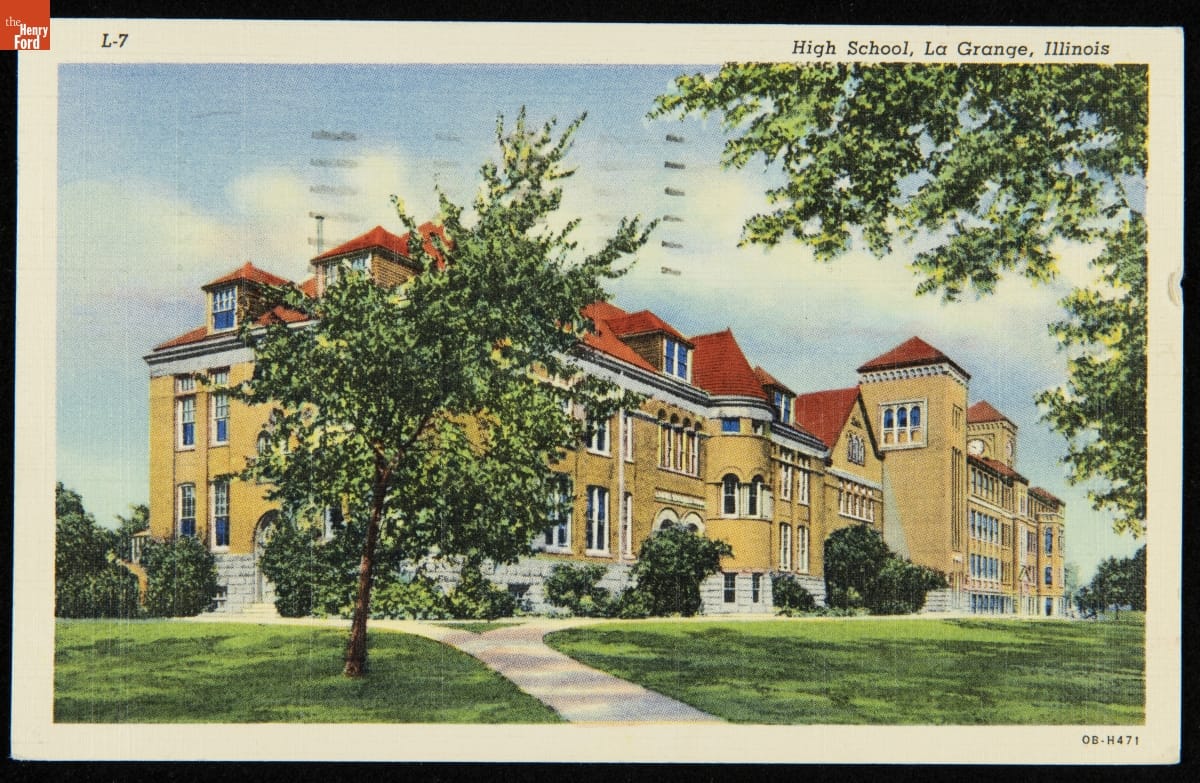
- High School, La Grange, Illinois, circa 1940 - Public high schools built in the late-19th and early-20th centuries not only provided education for children but also served the needs of the community. Besides classrooms, high schools usually included athletic facilities and auditoriums--spaces used by students and local citizens alike. High schools became a symbol of a community's progress and were proudly depicted on postcards sent to family and friends.
- circa 1940
- Collections - Artifact
High School, La Grange, Illinois, circa 1940
Public high schools built in the late-19th and early-20th centuries not only provided education for children but also served the needs of the community. Besides classrooms, high schools usually included athletic facilities and auditoriums--spaces used by students and local citizens alike. High schools became a symbol of a community's progress and were proudly depicted on postcards sent to family and friends.
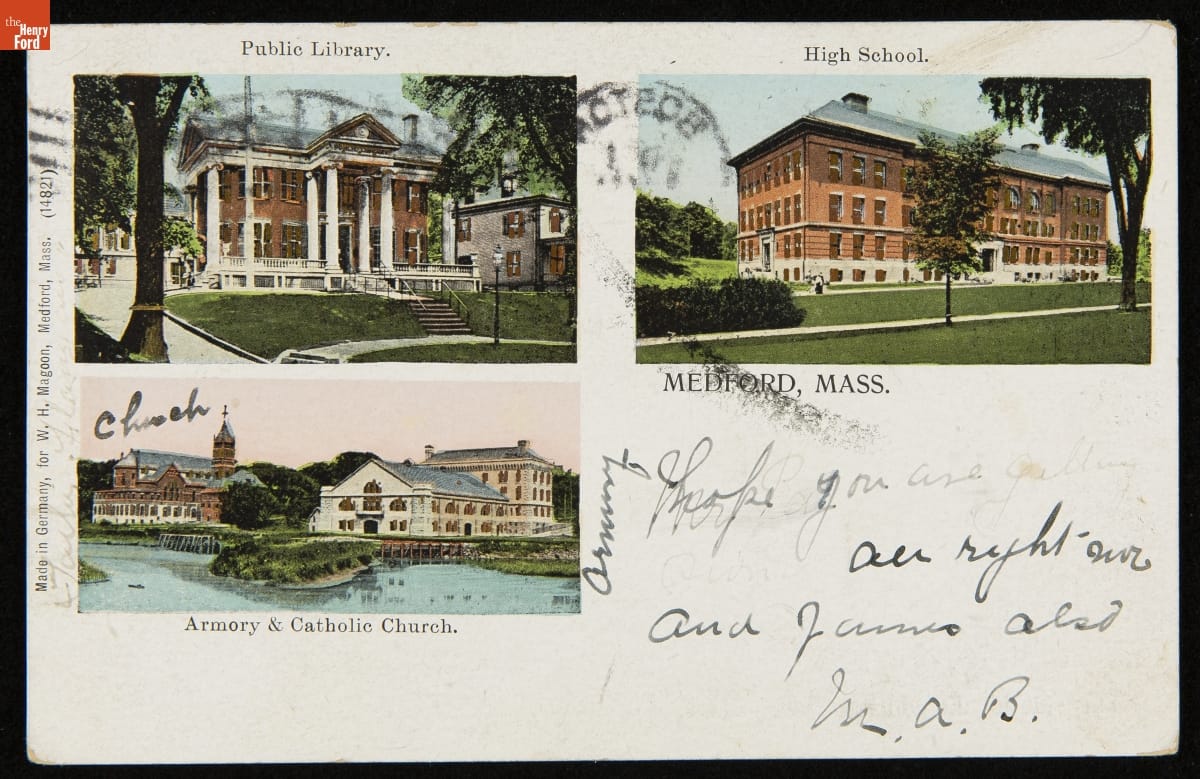
- Postcard, Views of Medford, Massacusetts, circa 1908 -
- circa 1908
- Collections - Artifact
Postcard, Views of Medford, Massacusetts, circa 1908
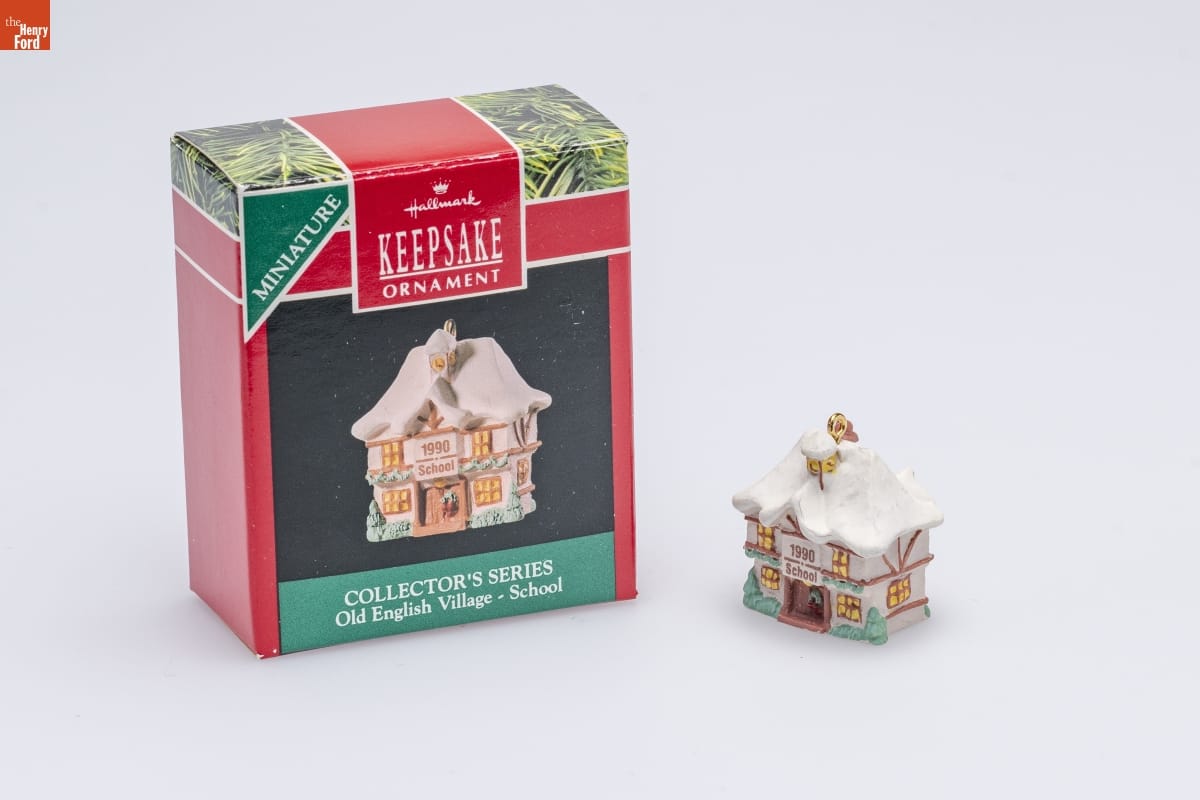
- Hallmark "Old English Village Series: School" Miniature Christmas Ornament, 1990 - Already known for greeting cards, Hallmark introduced a line of Christmas ornaments in 1973. The company's annual release of an increasing array of ornaments revolutionized Christmas decorating, appealing to customers' interest in marking memories and milestones as well as expressing one's personality and unique tastes.
- 1990
- Collections - Artifact
Hallmark "Old English Village Series: School" Miniature Christmas Ornament, 1990
Already known for greeting cards, Hallmark introduced a line of Christmas ornaments in 1973. The company's annual release of an increasing array of ornaments revolutionized Christmas decorating, appealing to customers' interest in marking memories and milestones as well as expressing one's personality and unique tastes.
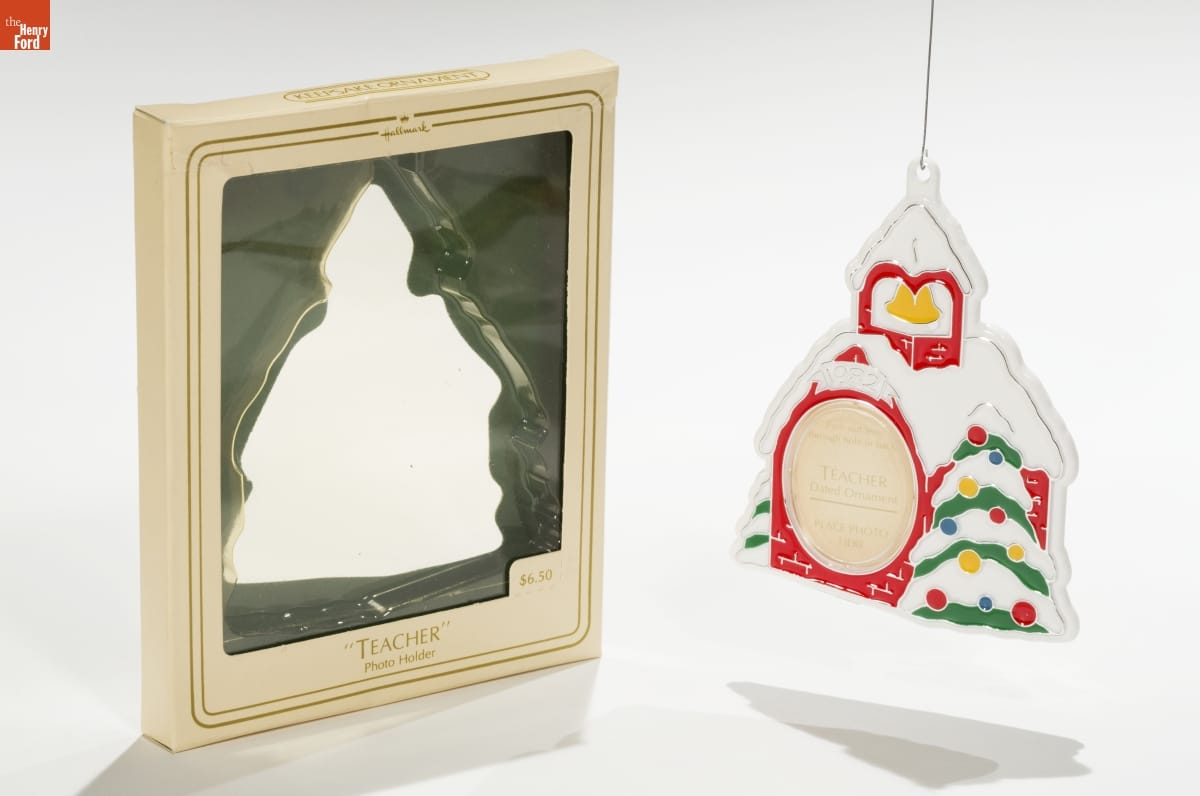
- Hallmark "Holiday Treasures: Teacher" Christmas Ornament, 1982 - Already known for greeting cards, Hallmark introduced a line of Christmas ornaments in 1973. The company's annual release of an increasing array of ornaments revolutionized Christmas decorating, appealing to customers' interest in marking memories and milestones as well as expressing one's personality and unique tastes.
- 1982
- Collections - Artifact
Hallmark "Holiday Treasures: Teacher" Christmas Ornament, 1982
Already known for greeting cards, Hallmark introduced a line of Christmas ornaments in 1973. The company's annual release of an increasing array of ornaments revolutionized Christmas decorating, appealing to customers' interest in marking memories and milestones as well as expressing one's personality and unique tastes.
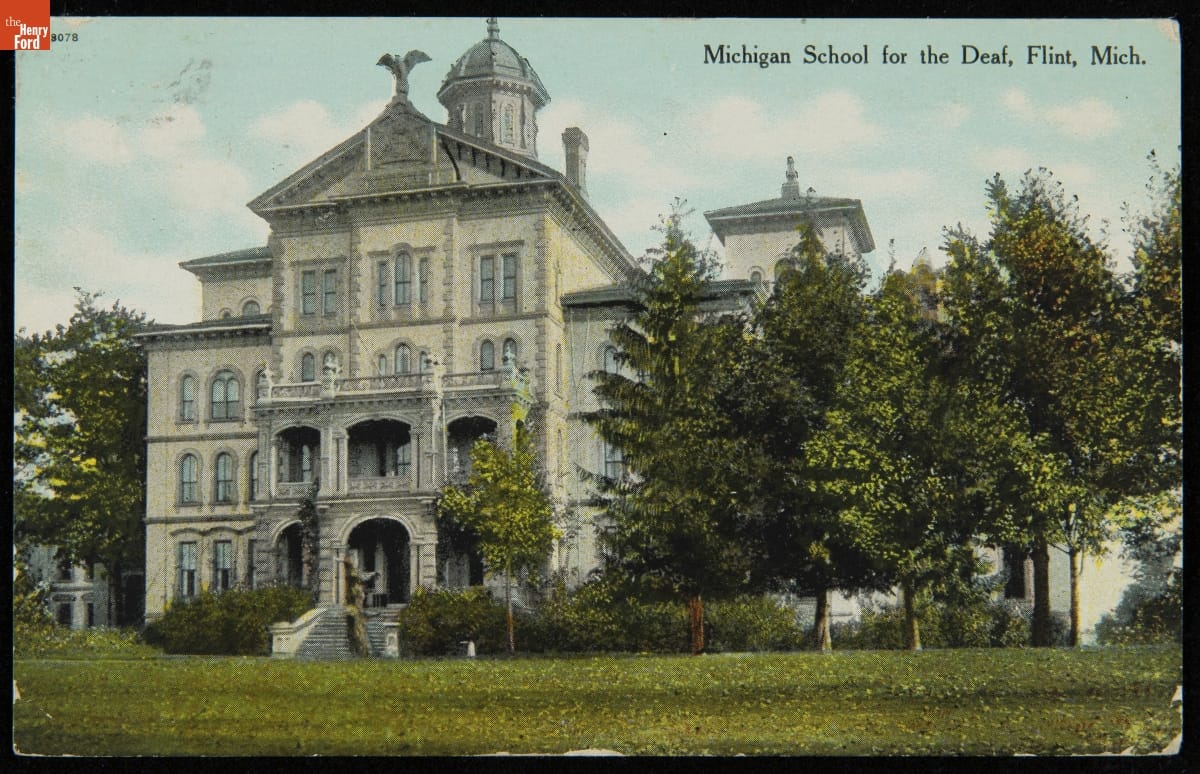
- Michigan School for the Deaf, Flint, Michigan, circa 1909 -
- circa 1909
- Collections - Artifact
Michigan School for the Deaf, Flint, Michigan, circa 1909
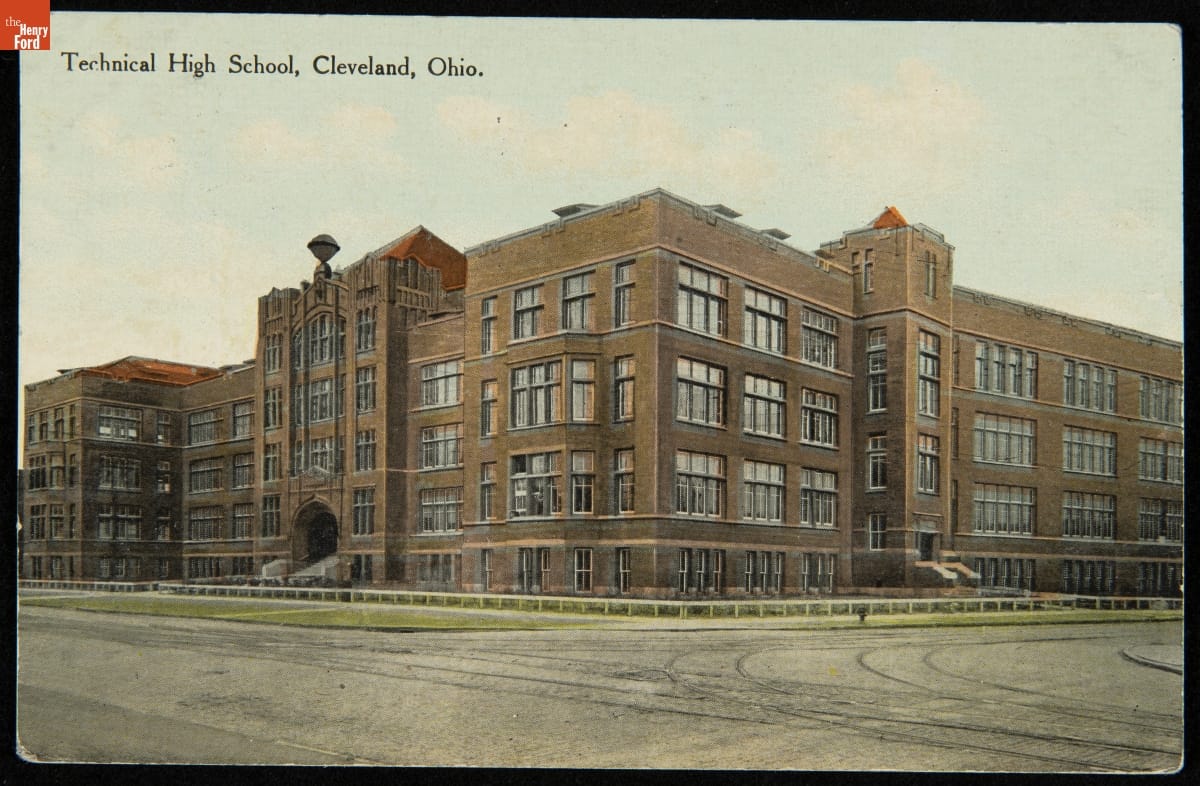
- Technical High School, Cleveland, Ohio, 1908-1910 -
- 1908-1910
- Collections - Artifact
Technical High School, Cleveland, Ohio, 1908-1910
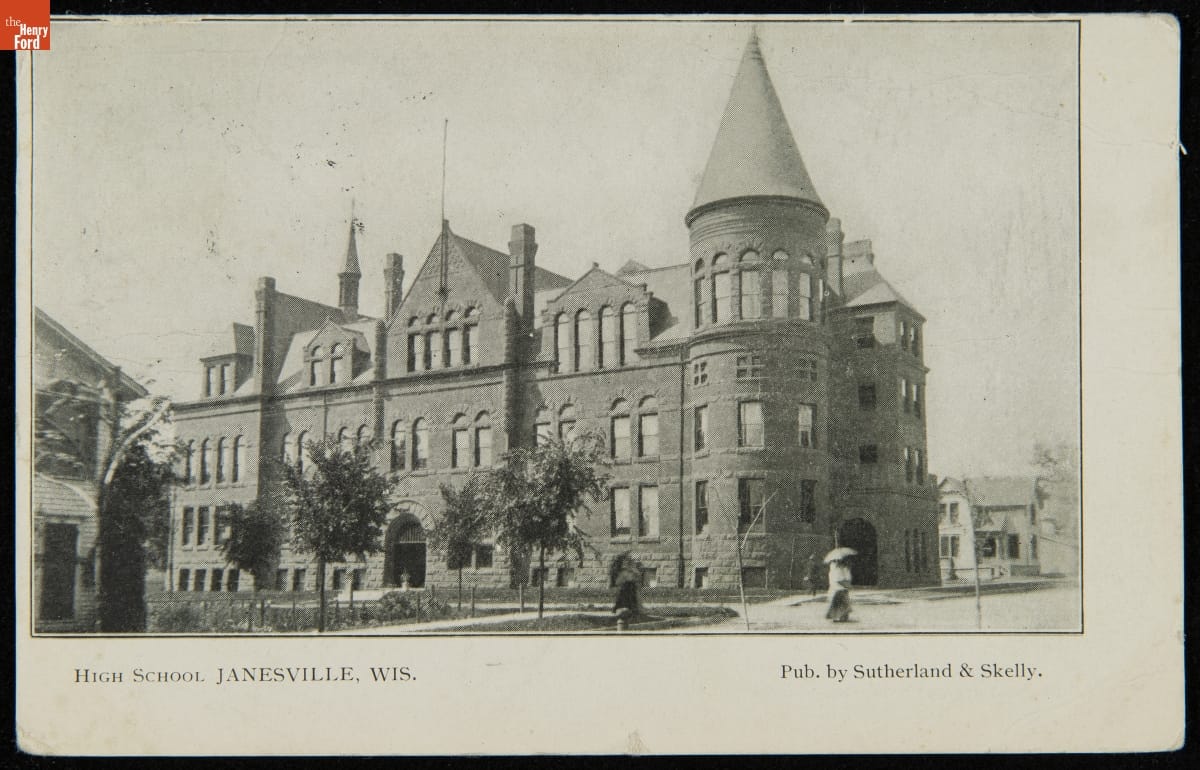
- High School, Janesville, Wisconsin, circa 1910 - The first high school in Janesville, Wisconsin, was organized in 1856. By the end of the century, Janesville residents had built this new, larger facility to house classrooms, laboratories, and a manual training department for more than 450 students. The building served as a high school until a new facility opened in 1923 and was later demolished.
- circa 1910
- Collections - Artifact
High School, Janesville, Wisconsin, circa 1910
The first high school in Janesville, Wisconsin, was organized in 1856. By the end of the century, Janesville residents had built this new, larger facility to house classrooms, laboratories, and a manual training department for more than 450 students. The building served as a high school until a new facility opened in 1923 and was later demolished.
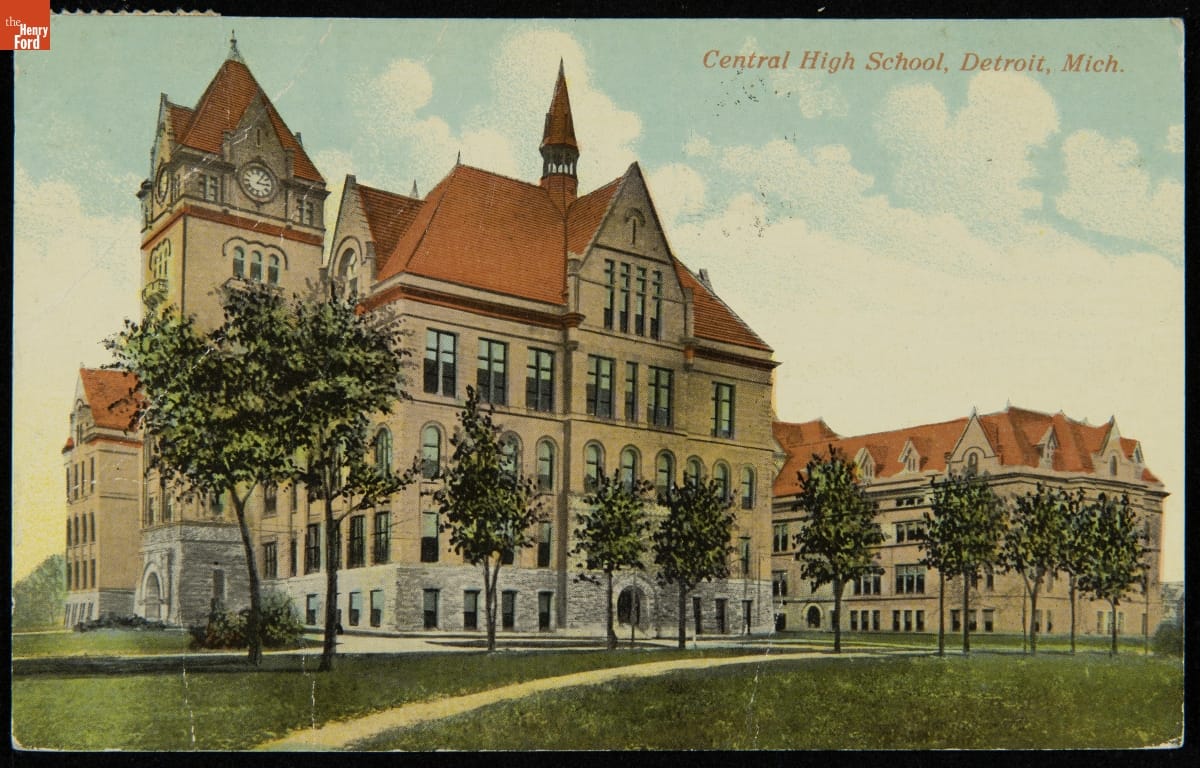
- Central High School, Detroit, Michigan, circa 1912 - Public high schools built in the late-19th and early-20th centuries not only provided education for children but also served the needs of the community. Besides classrooms, high schools usually included athletic facilities and auditoriums--spaces used by students and local citizens alike. High schools became a symbol of a community's progress and were proudly depicted on postcards sent to family and friends.
- circa 1912
- Collections - Artifact
Central High School, Detroit, Michigan, circa 1912
Public high schools built in the late-19th and early-20th centuries not only provided education for children but also served the needs of the community. Besides classrooms, high schools usually included athletic facilities and auditoriums--spaces used by students and local citizens alike. High schools became a symbol of a community's progress and were proudly depicted on postcards sent to family and friends.
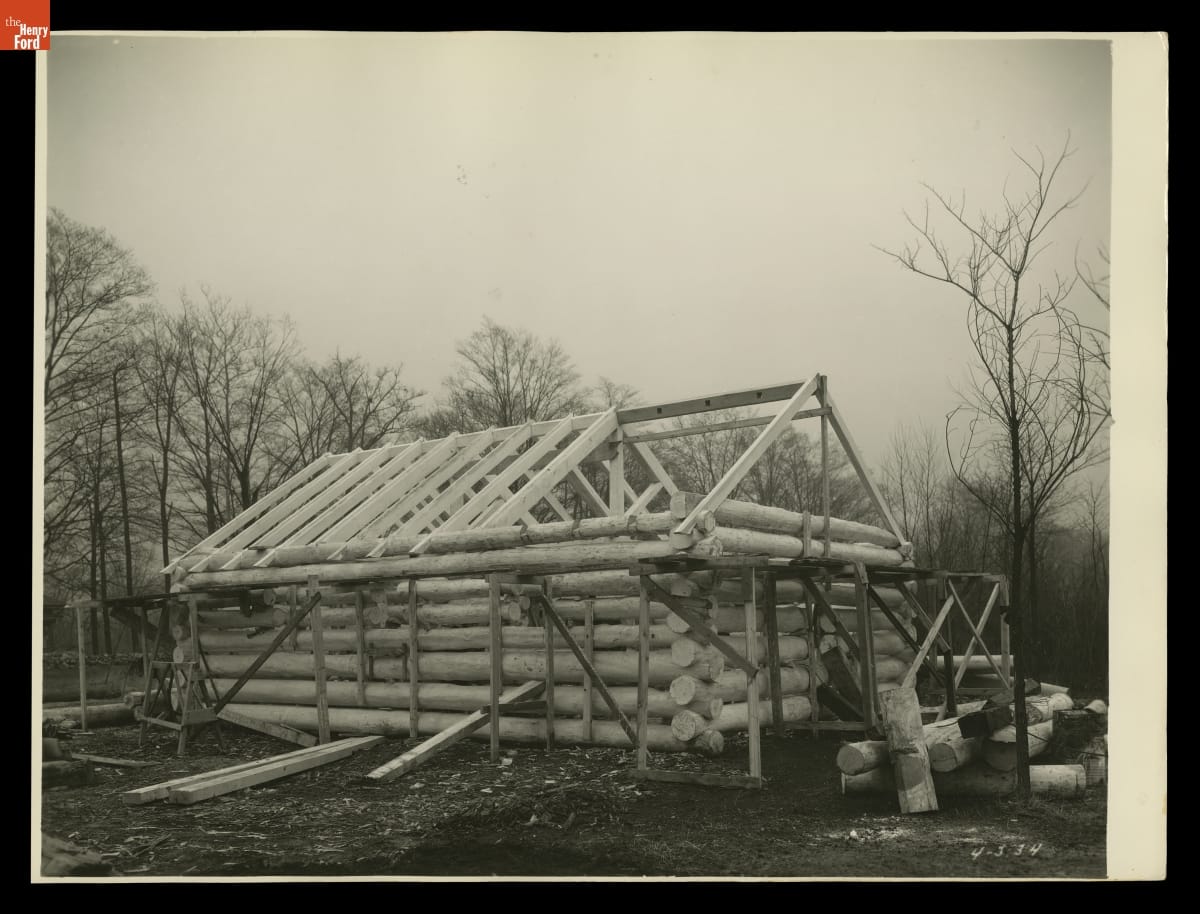
- Construction Progress, William Holmes McGuffey School in Greenfield Village, April 1934 -
- April 03, 1934
- Collections - Artifact
Construction Progress, William Holmes McGuffey School in Greenfield Village, April 1934