
Search
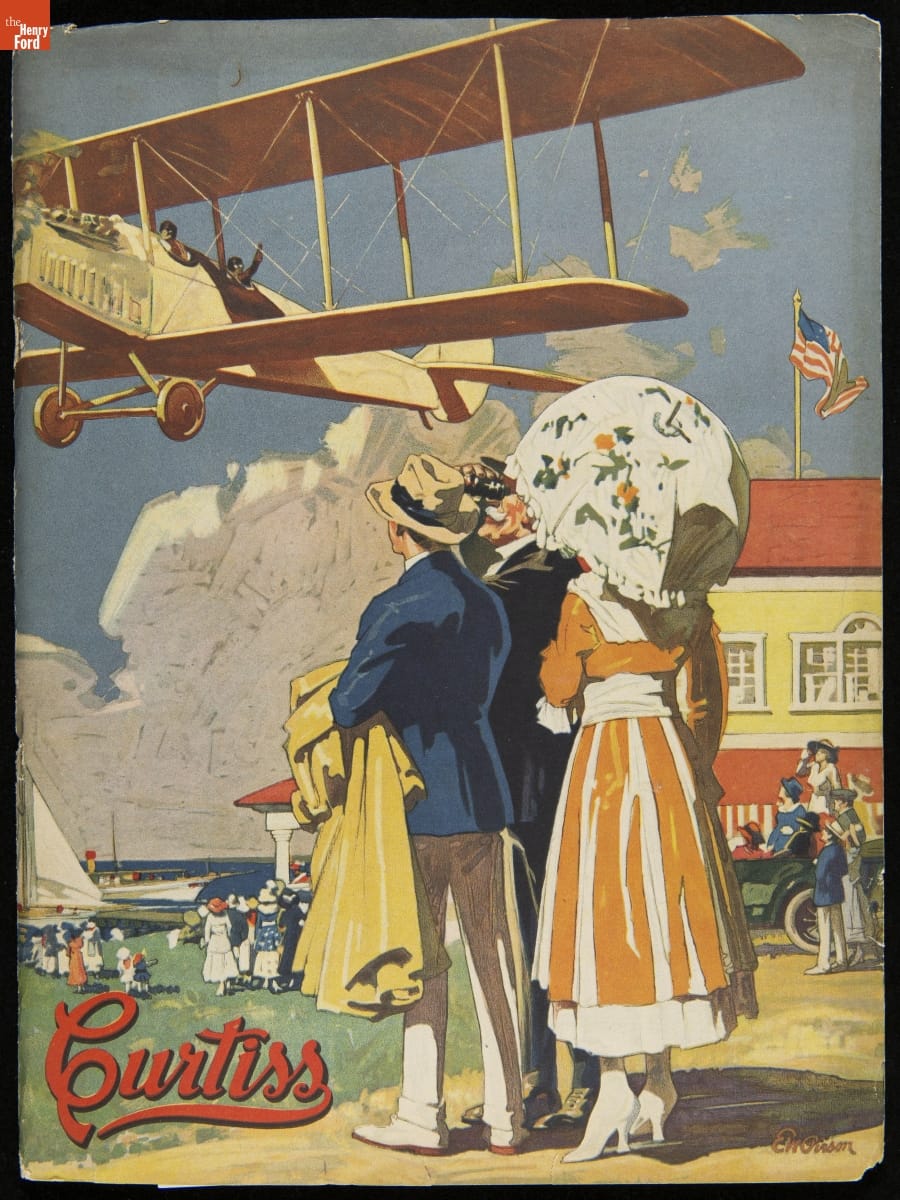
- Curtiss Aeroplane Co. Trade Catalog, "Curtiss Flying Boats, Aeronautical Motors, Aeroplanes, Hydroaeroplanes," 1917 - Glenn Curtiss established what would become the Curtiss Aeroplane and Motor Company in his hometown of Hammondsport, New York, in 1909. As military orders soared during World War I, Curtiss relocated the company to Buffalo, New York, in 1916. Curtiss's firm was acquired by Willys-Overland the following year, and it merged with the Wright Company in 1929.
- 1917
- Collections - Artifact
Curtiss Aeroplane Co. Trade Catalog, "Curtiss Flying Boats, Aeronautical Motors, Aeroplanes, Hydroaeroplanes," 1917
Glenn Curtiss established what would become the Curtiss Aeroplane and Motor Company in his hometown of Hammondsport, New York, in 1909. As military orders soared during World War I, Curtiss relocated the company to Buffalo, New York, in 1916. Curtiss's firm was acquired by Willys-Overland the following year, and it merged with the Wright Company in 1929.
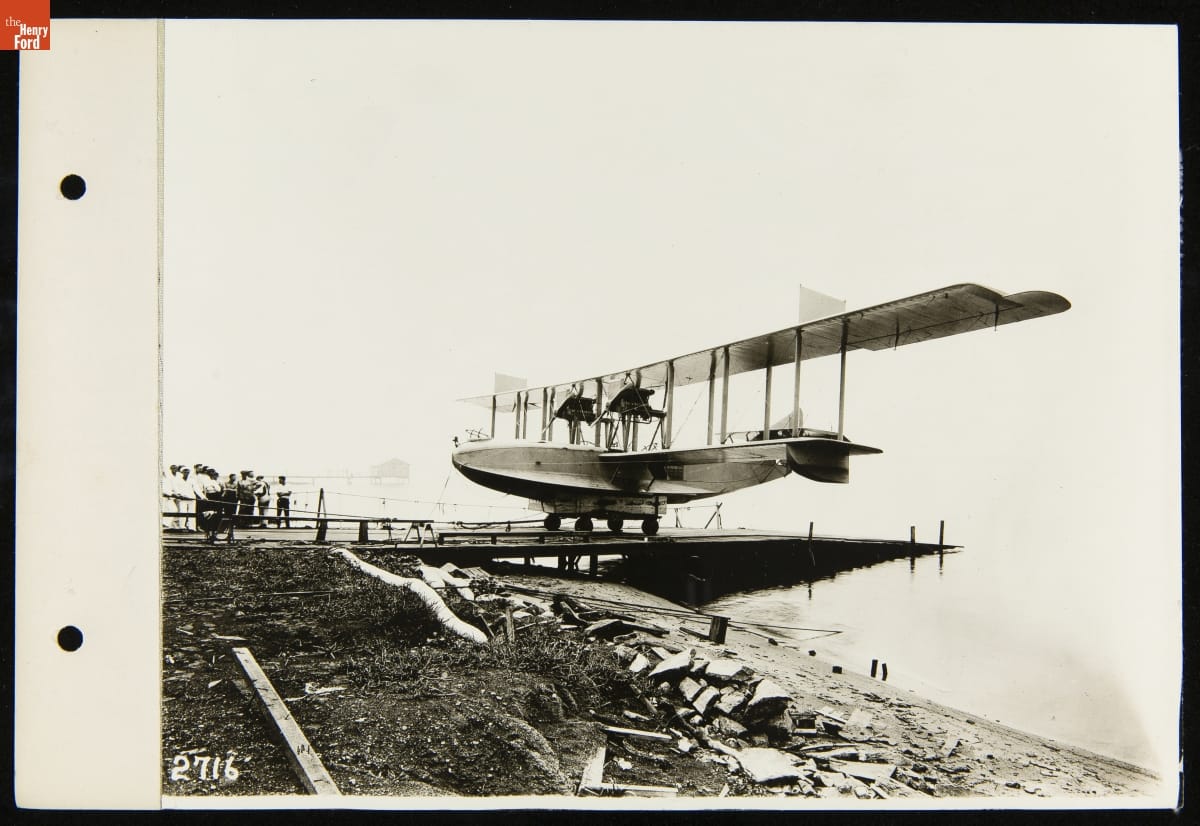
- Curtiss Flying Boat, 1920-1925 - Seaplanes were especially practical at a time when airstrips were rare and airports were all but nonexistent. By building the airplane's fuselage in the form of a boat hull or mounting a set of pontoon floats on the landing gear, any sufficiently large body of water became a runway.
- 1920-1925
- Collections - Artifact
Curtiss Flying Boat, 1920-1925
Seaplanes were especially practical at a time when airstrips were rare and airports were all but nonexistent. By building the airplane's fuselage in the form of a boat hull or mounting a set of pontoon floats on the landing gear, any sufficiently large body of water became a runway.
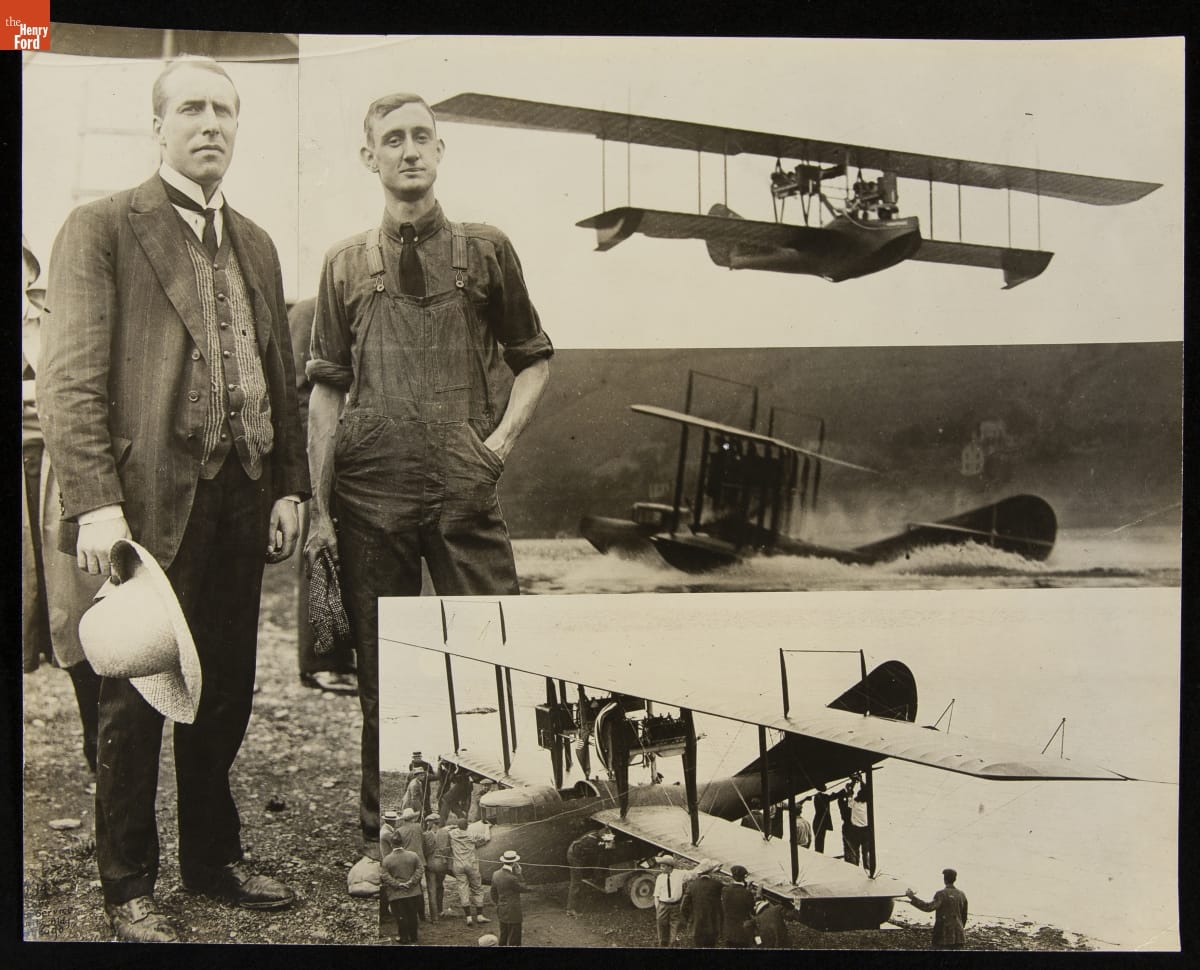
- Lieutenant John Cyril Porte and George Hallet with the Curtiss Aero-Hydroplane "America," 1914 - This photograph advertised what might have been the first flight across the Atlantic Ocean by airplane. In 1914, British lieutenant John Cyril Porte and American mechanic George E. A. Hallett planned to set out on a transatlantic trip aboard the specially designed seaplane, <em>America</em>. The outbreak of World War I intervened, and the <em>America</em> instead joined the British Royal Naval Air Service.
- 1914
- Collections - Artifact
Lieutenant John Cyril Porte and George Hallet with the Curtiss Aero-Hydroplane "America," 1914
This photograph advertised what might have been the first flight across the Atlantic Ocean by airplane. In 1914, British lieutenant John Cyril Porte and American mechanic George E. A. Hallett planned to set out on a transatlantic trip aboard the specially designed seaplane, America. The outbreak of World War I intervened, and the America instead joined the British Royal Naval Air Service.
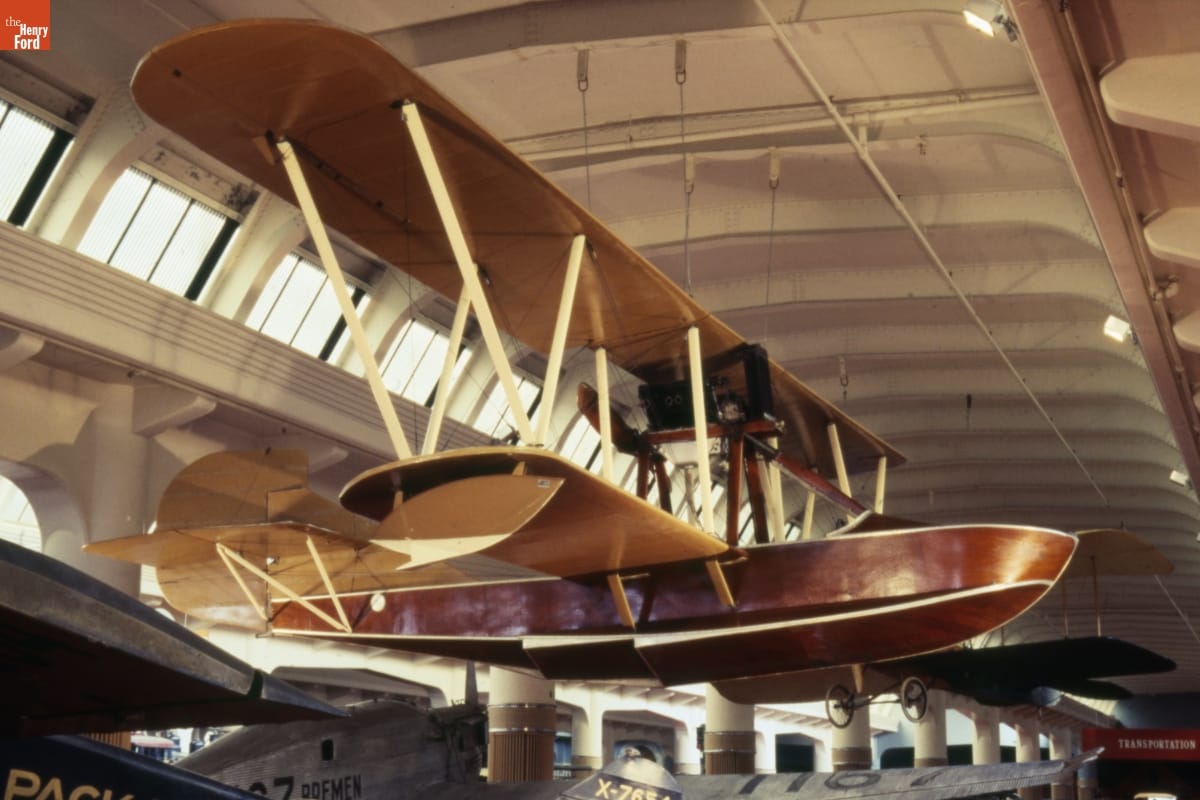
- 1916 Curtiss Model F "Seagull" Flying Boat Biplane - The Model F "Seagull," developed by Glenn Curtiss, was among the first successful flying boats made in the United States. More than 150 of the craft were built, with many seeing service in the U.S. Navy. At a time when landing strips were rare but lakes were plentiful, floating aircraft were practical alternatives to wheeled planes.
- 1916
- Collections - Artifact
1916 Curtiss Model F "Seagull" Flying Boat Biplane
The Model F "Seagull," developed by Glenn Curtiss, was among the first successful flying boats made in the United States. More than 150 of the craft were built, with many seeing service in the U.S. Navy. At a time when landing strips were rare but lakes were plentiful, floating aircraft were practical alternatives to wheeled planes.
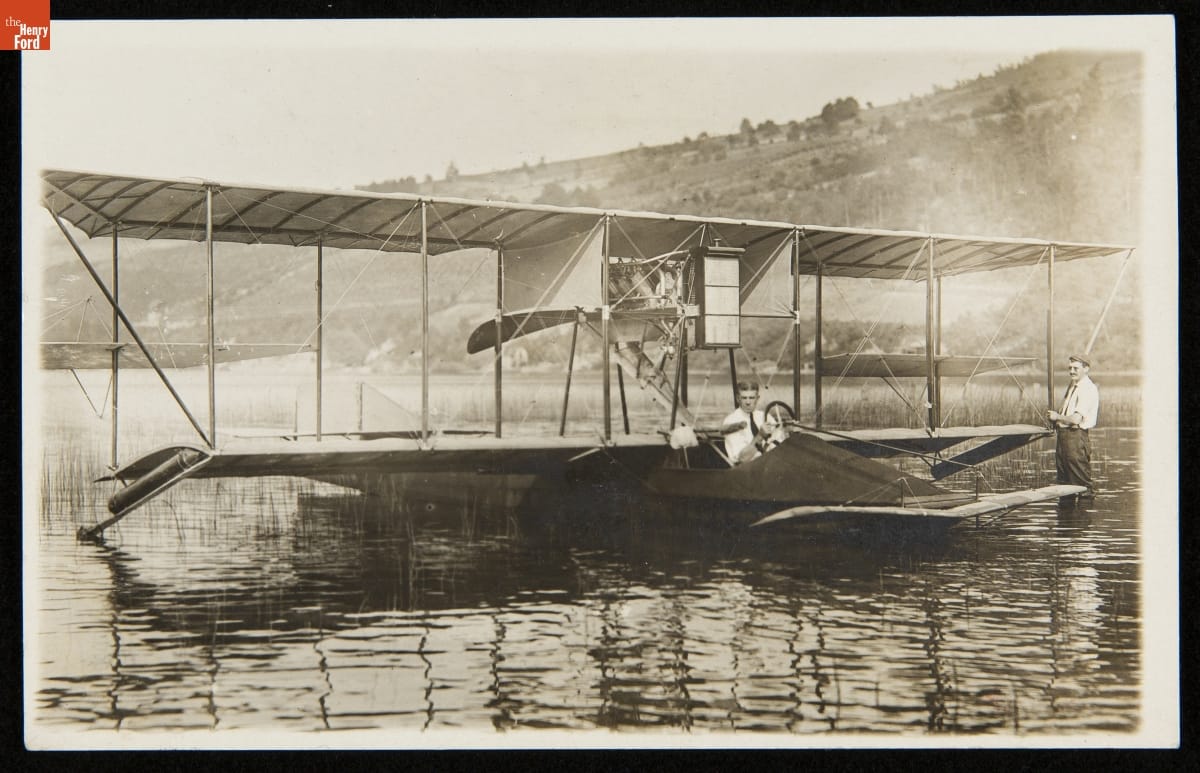
- Two Men with a Curtiss Flying Boat, 1912 - In addition to his pioneering work with aileron control surfaces, Glenn Curtiss designed and built some of the earliest seaplanes in the United States. His first experiments involved little more than strapping a canoe to the bottom of a standard airplane. But by 1911, the potential of Curtiss's flying boats had earned him a contract with the U.S. Navy.
- 1912
- Collections - Artifact
Two Men with a Curtiss Flying Boat, 1912
In addition to his pioneering work with aileron control surfaces, Glenn Curtiss designed and built some of the earliest seaplanes in the United States. His first experiments involved little more than strapping a canoe to the bottom of a standard airplane. But by 1911, the potential of Curtiss's flying boats had earned him a contract with the U.S. Navy.
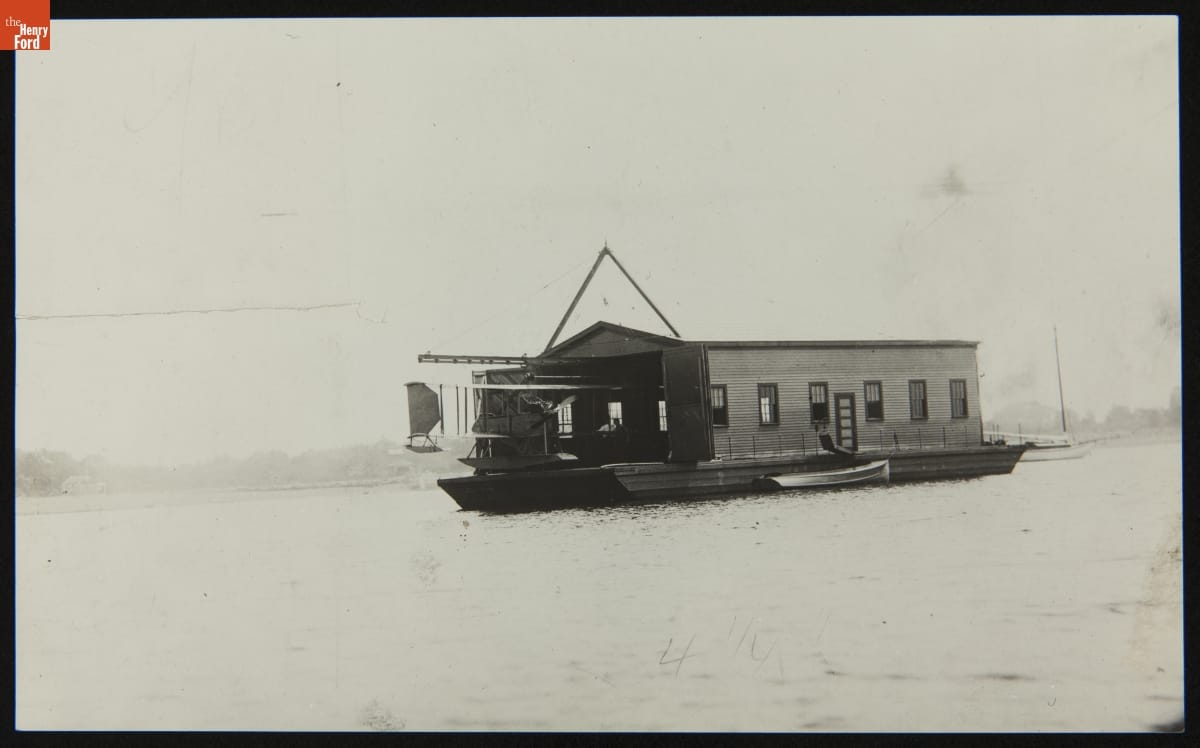
- Hoisting Vincent Astor's Burgess-Dunne Seaplane into Its Floating Hangar, 1914-1915 - Vincent Astor inherited a fortune when his father, John Jacob Astor IV, died on the <em>Titanic</em> in 1912. The younger Astor devoted much of his wealth to charitable causes. Vincent Astor also had an interest in aviation. He was one of several philanthropists and business leaders who provided funding for Richard Byrd's polar flights in the 1920s.
- circa 1911
- Collections - Artifact
Hoisting Vincent Astor's Burgess-Dunne Seaplane into Its Floating Hangar, 1914-1915
Vincent Astor inherited a fortune when his father, John Jacob Astor IV, died on the Titanic in 1912. The younger Astor devoted much of his wealth to charitable causes. Vincent Astor also had an interest in aviation. He was one of several philanthropists and business leaders who provided funding for Richard Byrd's polar flights in the 1920s.
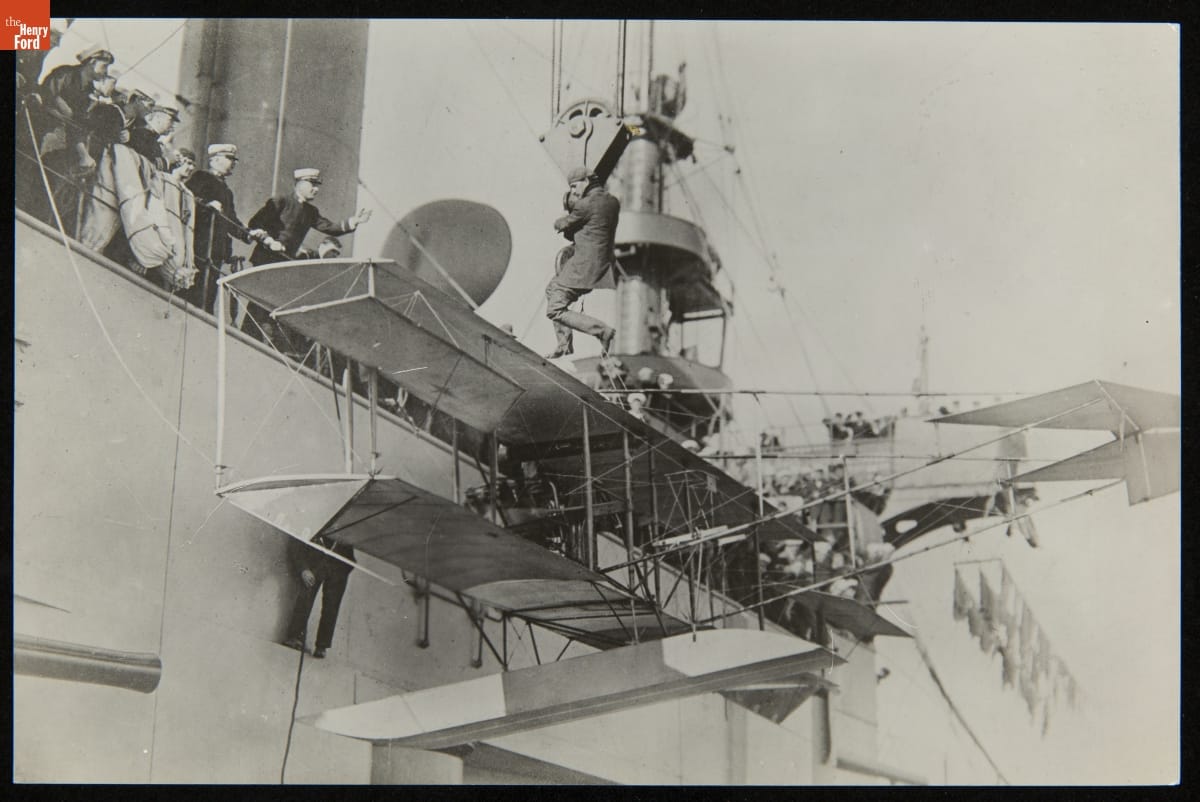
- Glenn Curtiss and His Hydroaeroplane Being Hoisted Aboard the Armored Cruiser Pennsylvania, February 17, 1911 - On February 17, 1911, Glenn Curtiss demonstrated the practicality of naval aviation when he flew a hydroaeroplane out to the armored cruiser <em>Pennsylvania</em> in San Diego Bay. Curtiss landed nearby, and he and his aircraft were hoisted aboard the ship. After meeting with officers, Curtiss and his seaplane were lowered back into the water, and the pioneering aviator flew away.
- February 17, 1911
- Collections - Artifact
Glenn Curtiss and His Hydroaeroplane Being Hoisted Aboard the Armored Cruiser Pennsylvania, February 17, 1911
On February 17, 1911, Glenn Curtiss demonstrated the practicality of naval aviation when he flew a hydroaeroplane out to the armored cruiser Pennsylvania in San Diego Bay. Curtiss landed nearby, and he and his aircraft were hoisted aboard the ship. After meeting with officers, Curtiss and his seaplane were lowered back into the water, and the pioneering aviator flew away.
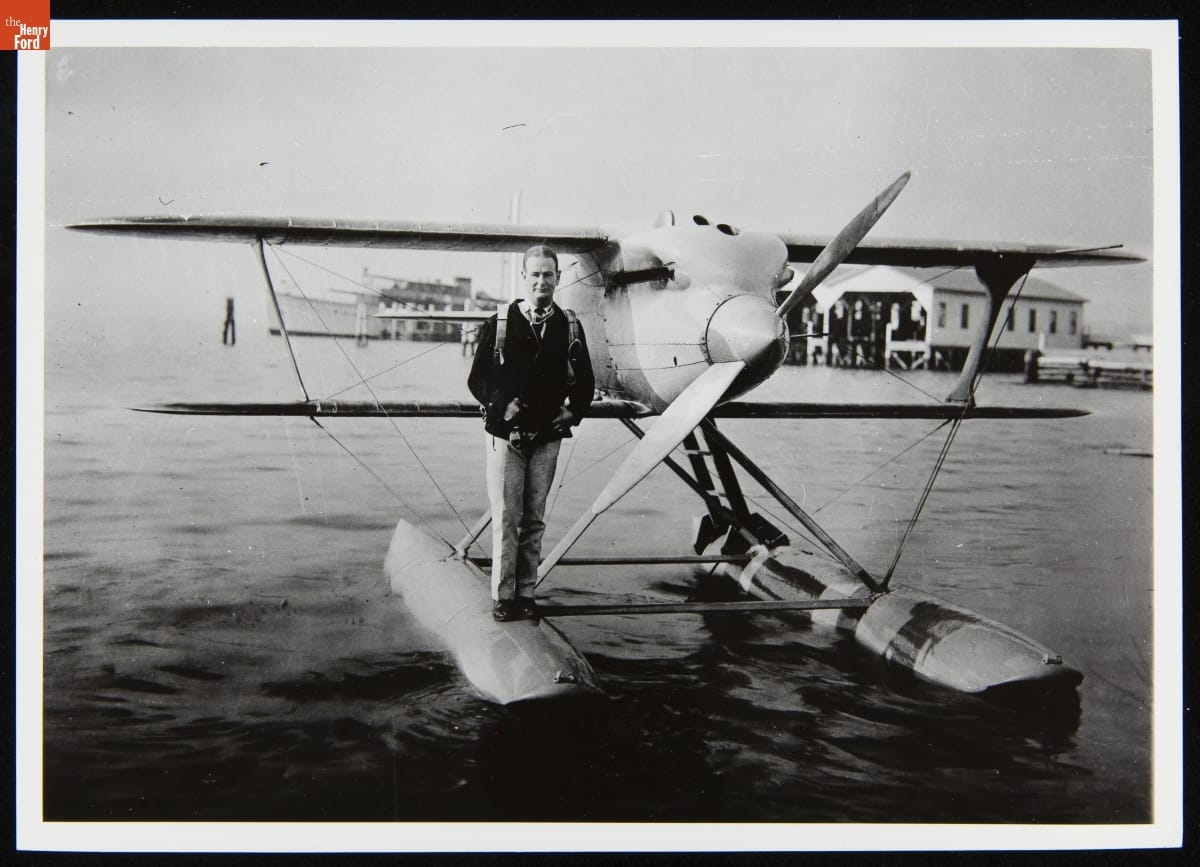
- Man Standing on the Pontoon of a Seaplane, 1920-1930 - Seaplanes were especially practical at a time when airstrips were rare and airports were all but nonexistent. By building the airplane's fuselage in the form of a boat hull or mounting a set of pontoon floats on the landing gear, any sufficiently large body of water became a runway.
- 1920-1930
- Collections - Artifact
Man Standing on the Pontoon of a Seaplane, 1920-1930
Seaplanes were especially practical at a time when airstrips were rare and airports were all but nonexistent. By building the airplane's fuselage in the form of a boat hull or mounting a set of pontoon floats on the landing gear, any sufficiently large body of water became a runway.
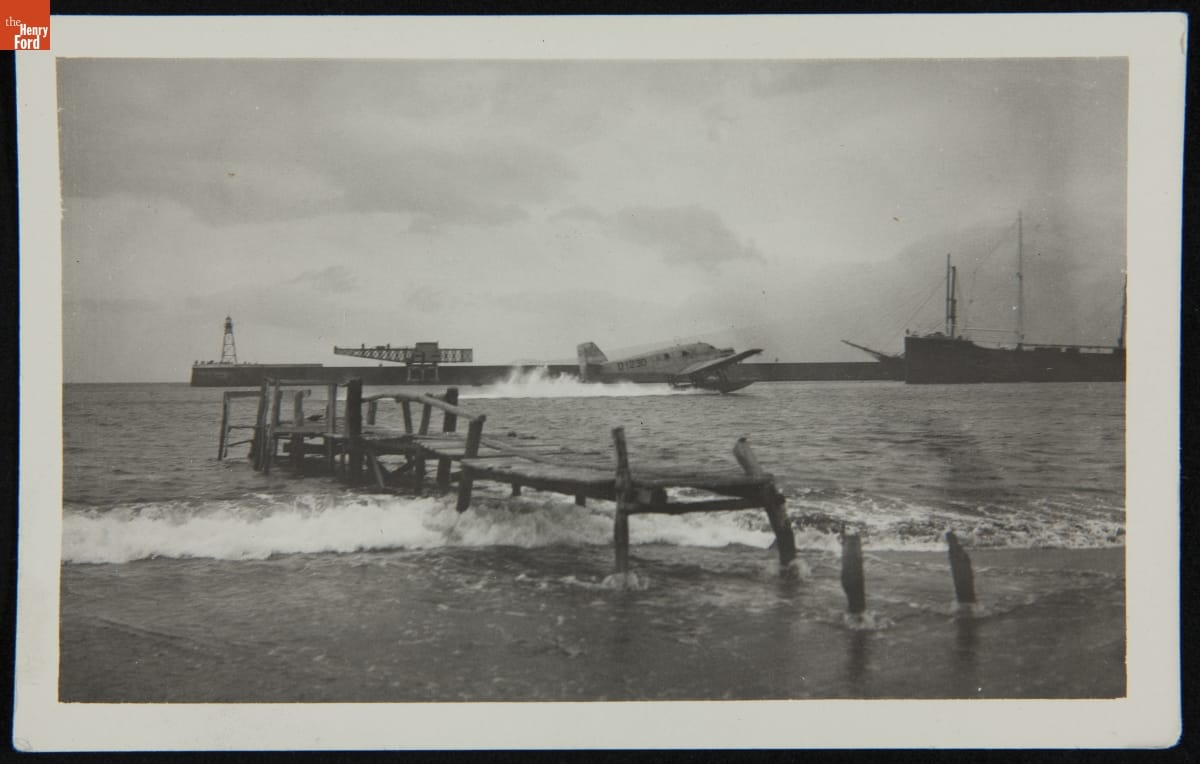
- Lilli Dillenz's Junkers D-1230 Seaplane Lands in the Bay of Horta, Azores, 1927 - Ruth Elder and co-pilot George Haldeman arrived in the Azores after their unsuccessful transatlantic flight attempt in October of 1927. Lilli Dillenz, a Viennese actress, was also in Azores at the time of Elder and Haldeman's arrival. Dillenz, a passenger of pilot Frederick Loose, was preparing for a westward attempt to be the first woman to fly across the Atlantic.<BR>
- October 14, 1927
- Collections - Artifact
Lilli Dillenz's Junkers D-1230 Seaplane Lands in the Bay of Horta, Azores, 1927
Ruth Elder and co-pilot George Haldeman arrived in the Azores after their unsuccessful transatlantic flight attempt in October of 1927. Lilli Dillenz, a Viennese actress, was also in Azores at the time of Elder and Haldeman's arrival. Dillenz, a passenger of pilot Frederick Loose, was preparing for a westward attempt to be the first woman to fly across the Atlantic.
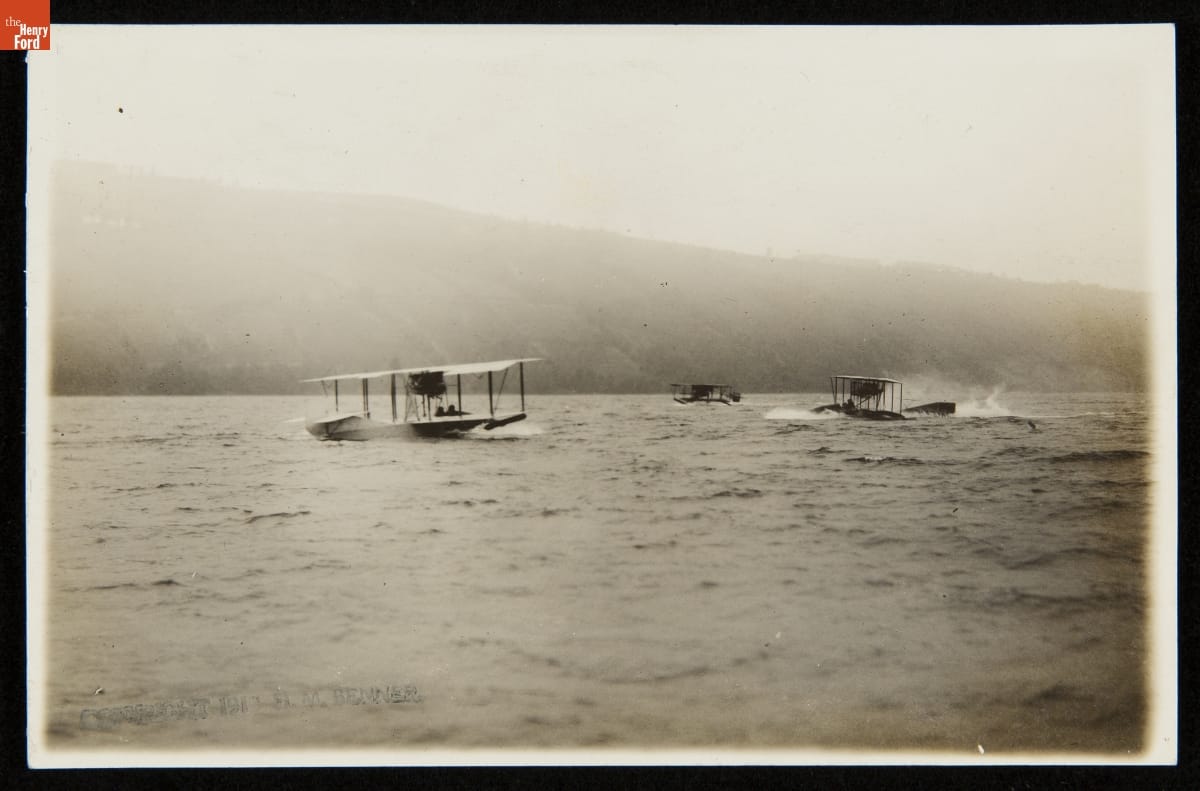
- Curtiss Aircraft at Keuka Lake, New York, 1910-1912 - In addition to his pioneering work with aileron control surfaces, Glenn Curtiss designed and built some of the earliest seaplanes in the United States. His first experiments involved little more than strapping a canoe to the bottom of a standard airplane. But by 1911, the potential of Curtiss's flying boats had earned him a contract with the U.S. Navy.
- 1912
- Collections - Artifact
Curtiss Aircraft at Keuka Lake, New York, 1910-1912
In addition to his pioneering work with aileron control surfaces, Glenn Curtiss designed and built some of the earliest seaplanes in the United States. His first experiments involved little more than strapping a canoe to the bottom of a standard airplane. But by 1911, the potential of Curtiss's flying boats had earned him a contract with the U.S. Navy.