
Search
- Model of Self-Raking Reaper, circa 1880 - Farm implement manufacturers competed to sell horse-drawn, self-rake reapers beginning in the 1860s. Though costly, these reapers found a ready market among farmers looking to save time and money otherwise spent on wages. Dealers and traveling salesmen often used models like this one to demonstrate the mechanism and encourage farmers to buy these popular harvesting machines.
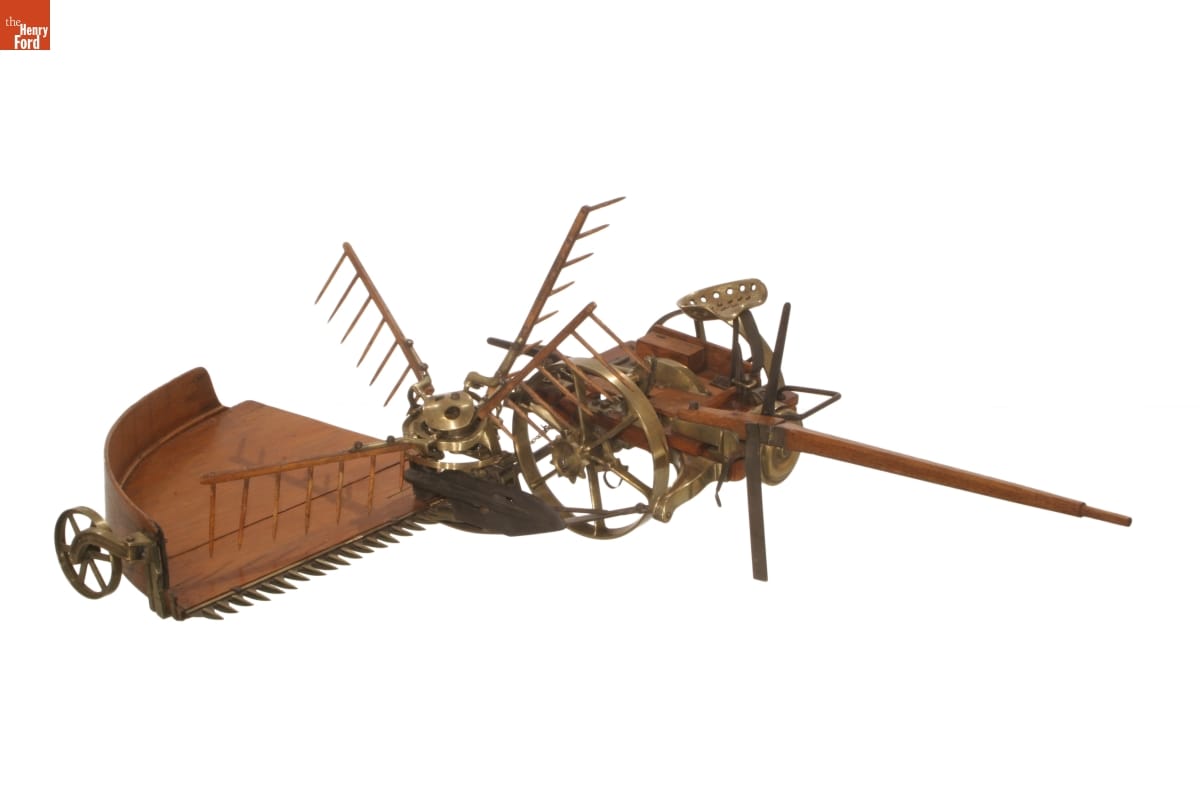
- circa 1880
- Collections - Artifact
Model of Self-Raking Reaper, circa 1880
Farm implement manufacturers competed to sell horse-drawn, self-rake reapers beginning in the 1860s. Though costly, these reapers found a ready market among farmers looking to save time and money otherwise spent on wages. Dealers and traveling salesmen often used models like this one to demonstrate the mechanism and encourage farmers to buy these popular harvesting machines.
- Catalog for the Triumph Reaper and Empire State Mower, D. S. Morgan & Co., 1875 -
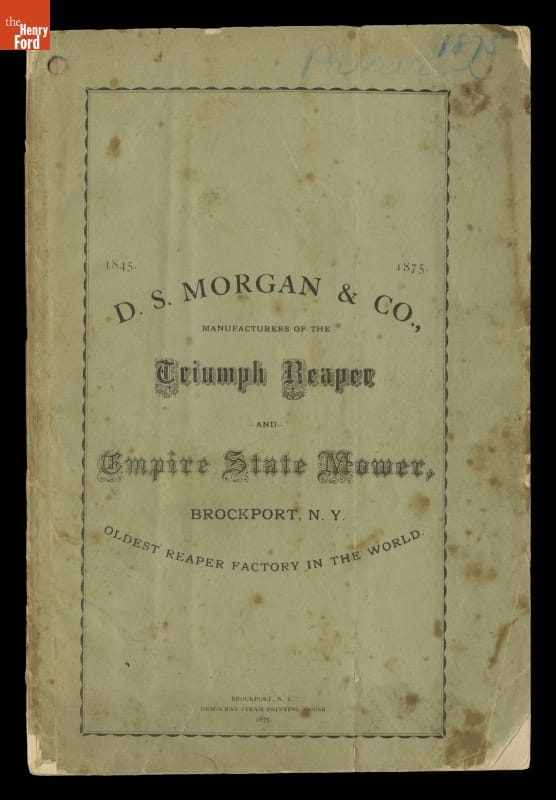
- 1875
- Collections - Artifact
Catalog for the Triumph Reaper and Empire State Mower, D. S. Morgan & Co., 1875
- Perry Royce Reaper, circa 1881 -
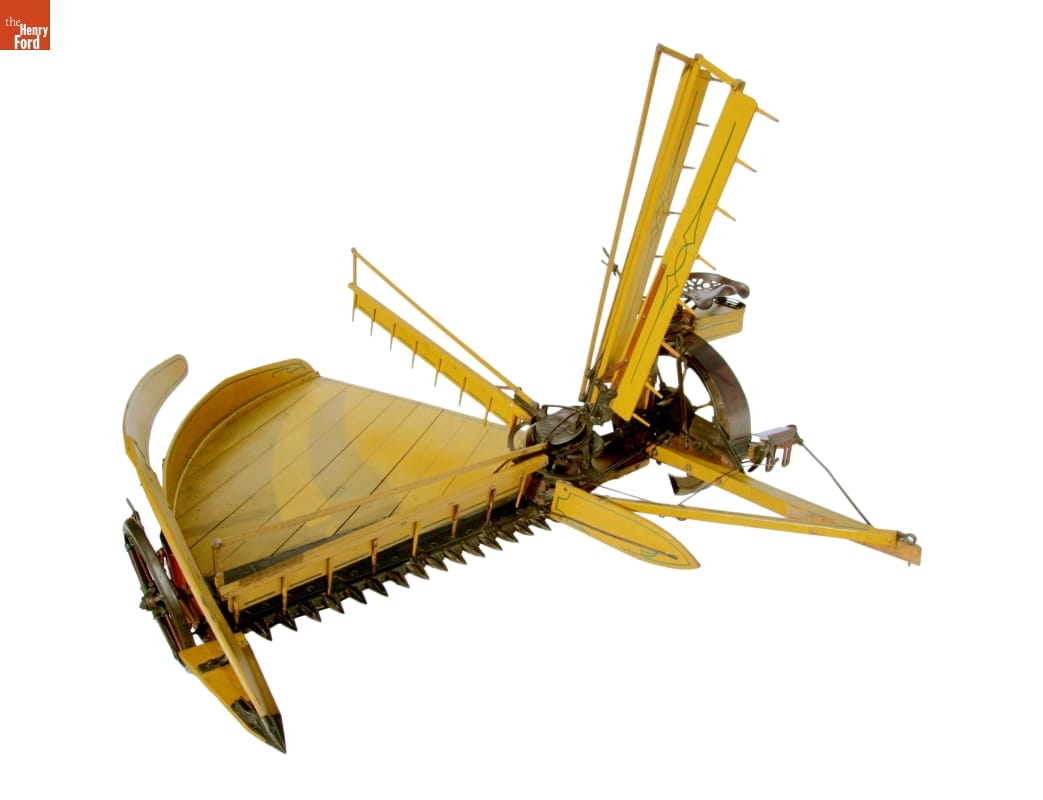
- circa 1881
- Collections - Artifact
Perry Royce Reaper, circa 1881
- Self-Rake Reaper outside Ford Home (Henry Ford's Birthplace) at Its Original Site, Dearborn, Michigan, 1931 - Henry Ford began restoration of his Dearborn, Michigan, birthplace in 1919. He repaired or replaced the farm buildings and filled the small, white clapboard house with original or similar furnishings he remembered from his boyhood. He dedicated the restoration to the memory of his beloved mother, Mary Litogot Ford, who died in 1876. In 1944, the house and outbuildings were moved to Greenfield Village.
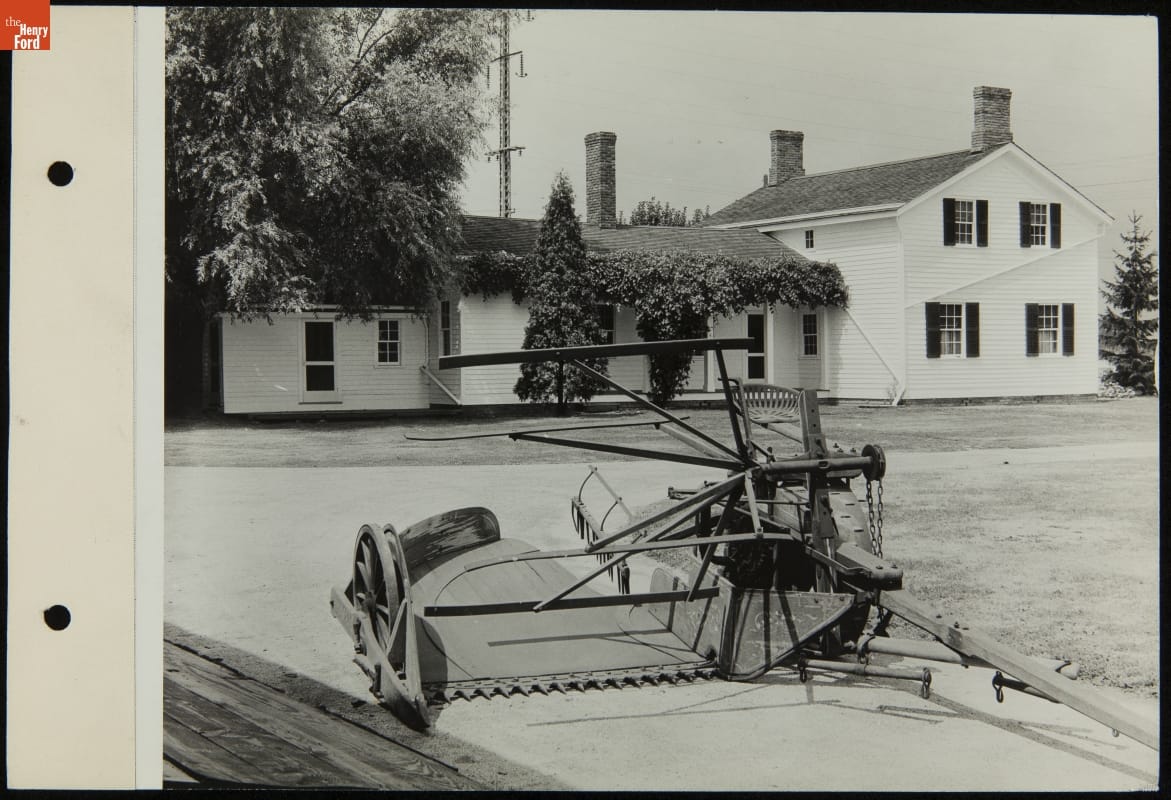
- July 31, 1931
- Collections - Artifact
Self-Rake Reaper outside Ford Home (Henry Ford's Birthplace) at Its Original Site, Dearborn, Michigan, 1931
Henry Ford began restoration of his Dearborn, Michigan, birthplace in 1919. He repaired or replaced the farm buildings and filled the small, white clapboard house with original or similar furnishings he remembered from his boyhood. He dedicated the restoration to the memory of his beloved mother, Mary Litogot Ford, who died in 1876. In 1944, the house and outbuildings were moved to Greenfield Village.
- Trade Catalog, "Reapers and Mowers, Manufactured by the Johnston Harvester Co., Brockport, N.Y.," 1876 -
- 1876
- Collections - Artifact
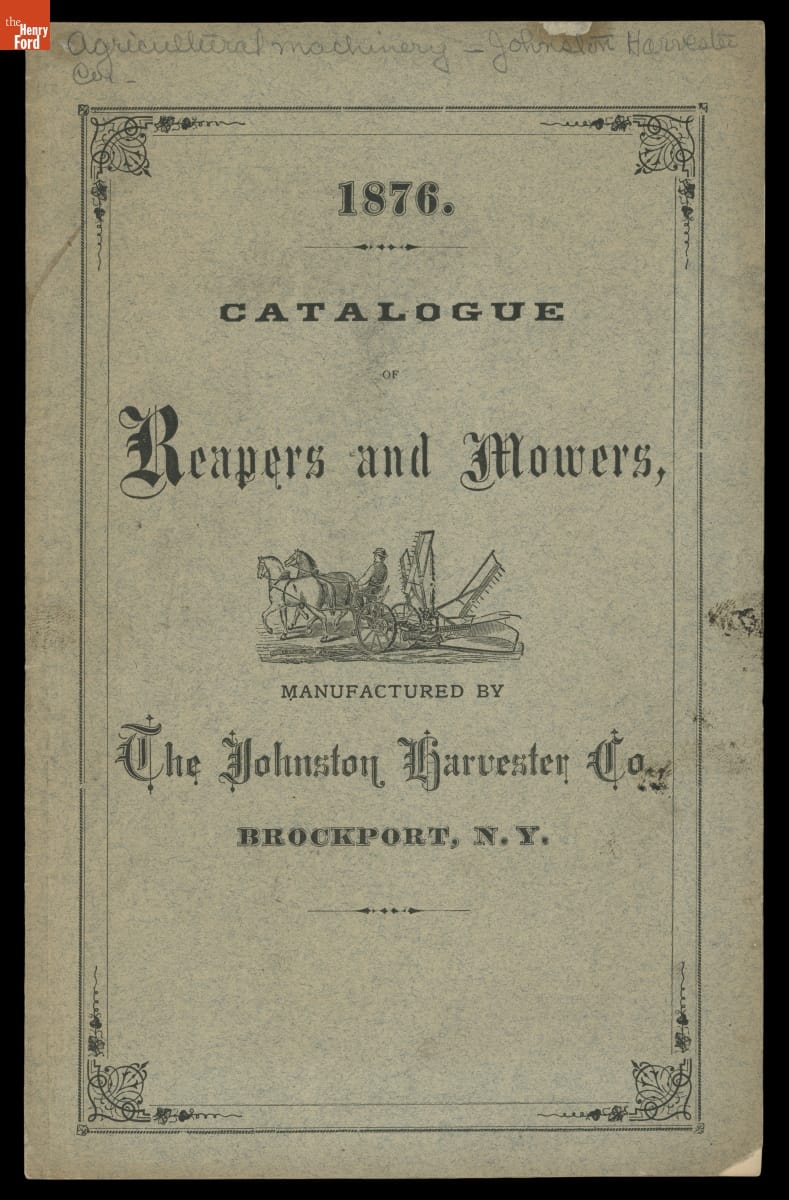
Trade Catalog, "Reapers and Mowers, Manufactured by the Johnston Harvester Co., Brockport, N.Y.," 1876
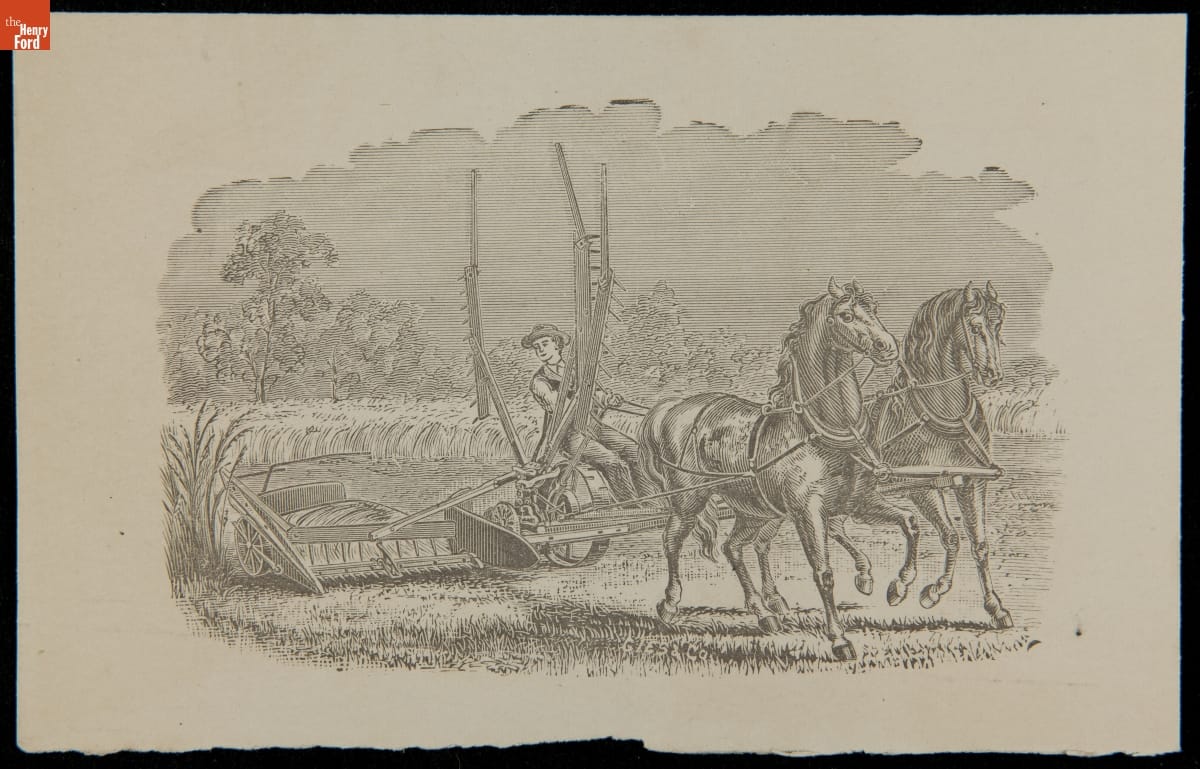
- Trade Card for New Success Mowers, Central Manufacturing Co., circa 1885 - As farm implements became larger and more expensive, manufacturers relied on trade cards to promote their products. This card advertises a mower that could cut hay or grain. It conveys lots of important information for a farmer - it could be operated by one person, pulled easily by two horses, and raked grain neatly so that it could be easily bundled.
- circa 1885
- Collections - Artifact
Trade Card for New Success Mowers, Central Manufacturing Co., circa 1885
As farm implements became larger and more expensive, manufacturers relied on trade cards to promote their products. This card advertises a mower that could cut hay or grain. It conveys lots of important information for a farmer - it could be operated by one person, pulled easily by two horses, and raked grain neatly so that it could be easily bundled.
- Wheat Threshing, circa 1868 -
- circa 1868
- Collections - Artifact
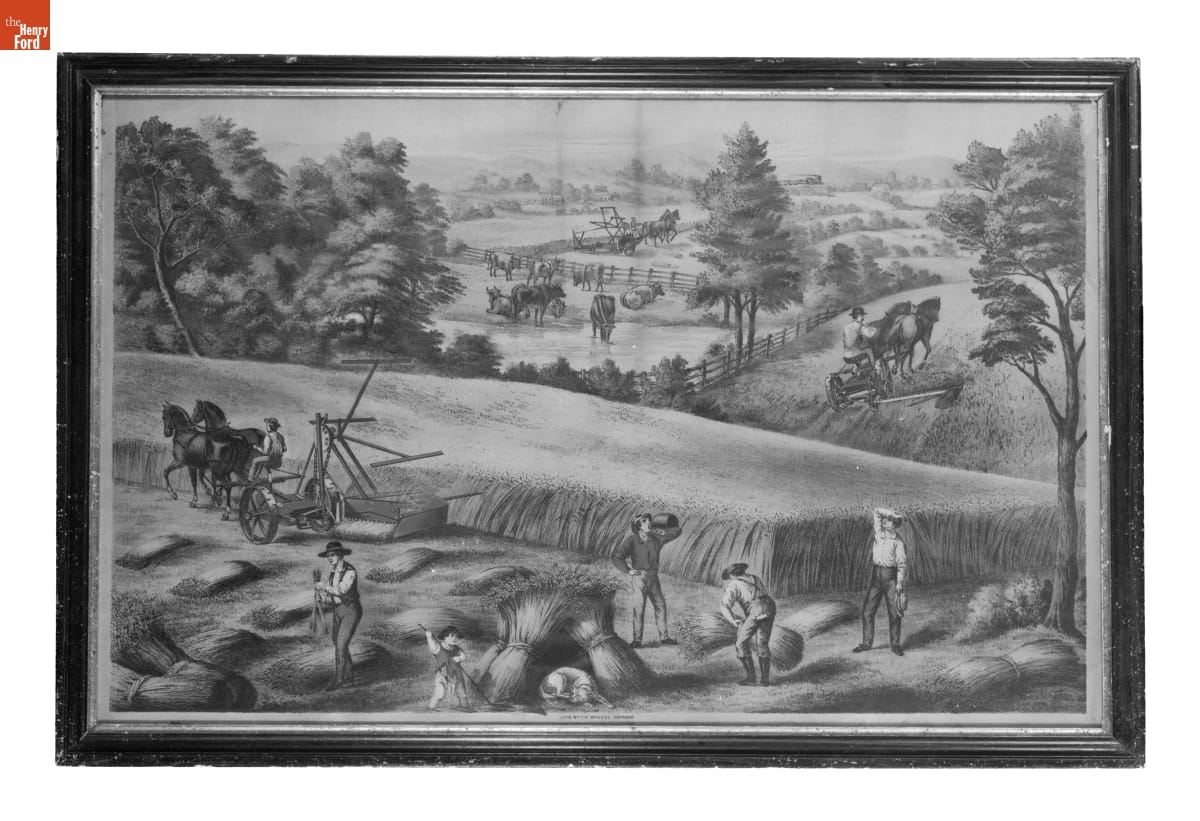
Wheat Threshing, circa 1868
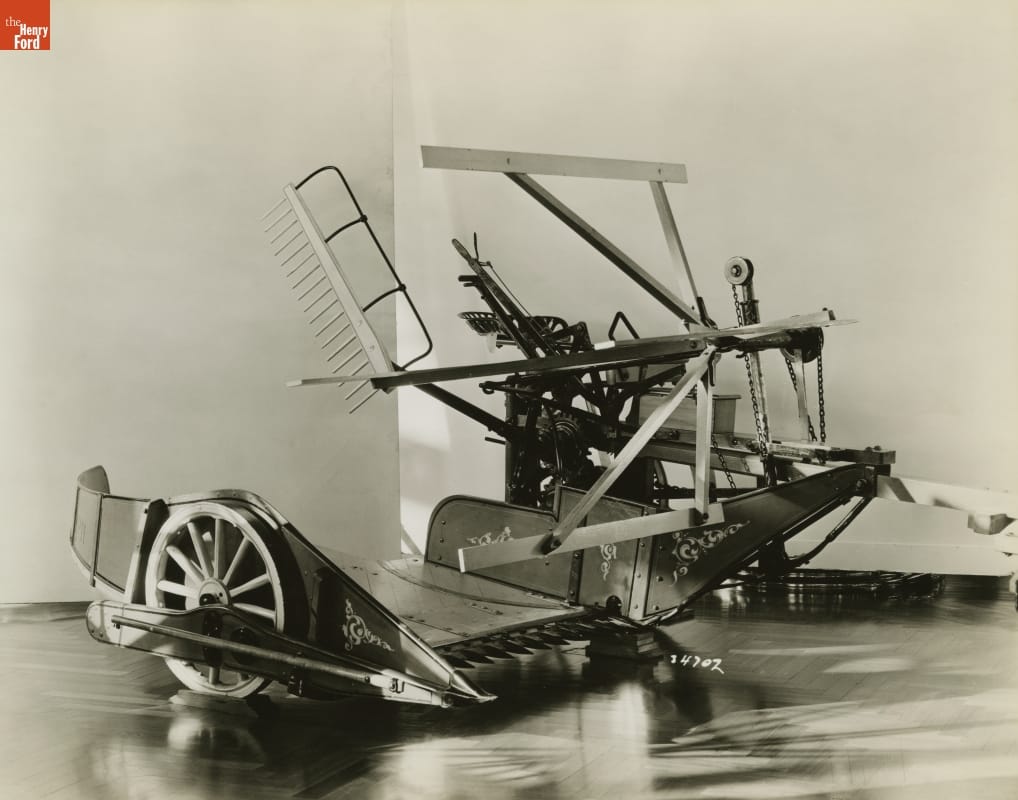
- "Triumph" Self-Raking Reaper, circa 1876 - Self-rake reapers needed only one operator instead of two required for reapers. The "Triumph," was an improved version of Seymour & Morgan's first successful self-rake reaper from 1853. A rotating reel moved the uncut grain into the cutting mechanism and deposited the cut grain on the platform. A separate rake regularly swept the platform, depositing the cut grain on the ground.
- circa 1876
- Collections - Artifact
"Triumph" Self-Raking Reaper, circa 1876
Self-rake reapers needed only one operator instead of two required for reapers. The "Triumph," was an improved version of Seymour & Morgan's first successful self-rake reaper from 1853. A rotating reel moved the uncut grain into the cutting mechanism and deposited the cut grain on the platform. A separate rake regularly swept the platform, depositing the cut grain on the ground.
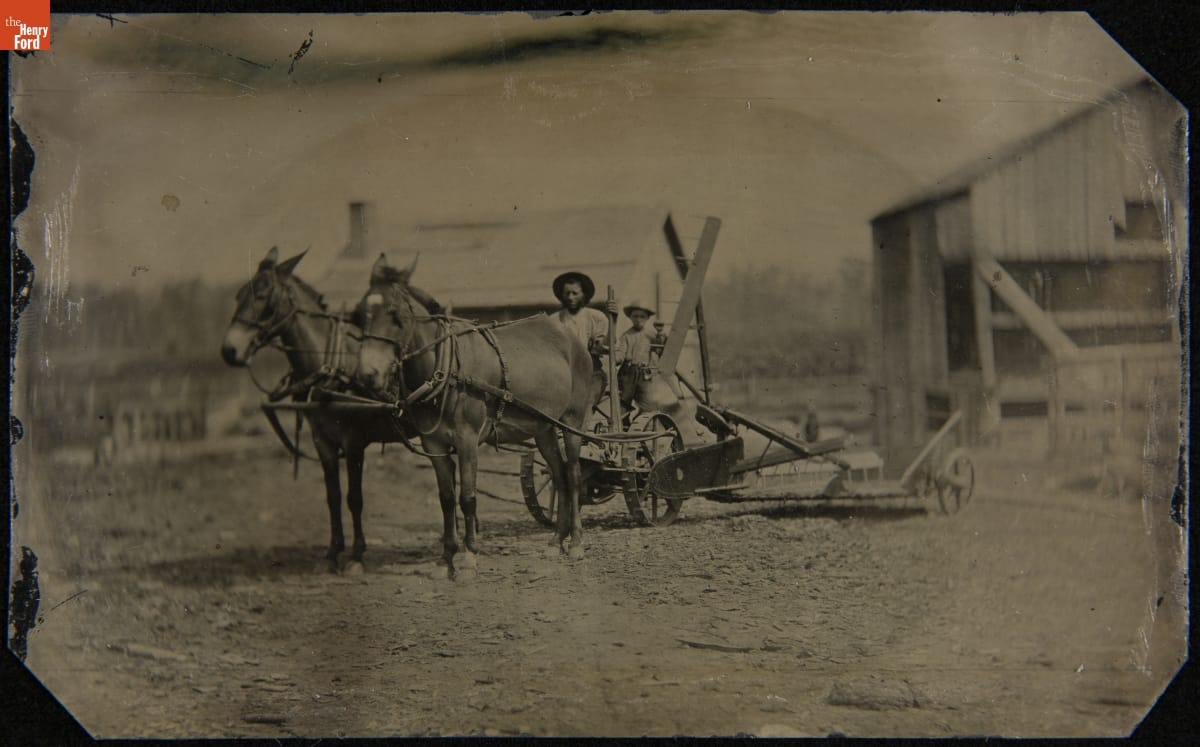
- Man and Child Using a Mule-Drawn Reaper, 1875-1900 - Tintypes, the popular "instant photographs" of the 19th century, could be produced in a matter of minutes at a price most people could afford. At first, outdoor tintypes were rare. But after a new, more convenient process for making tintypes was introduced in the 1880s, photographs of outdoor scenes became more common.
- 1875-1900
- Collections - Artifact
Man and Child Using a Mule-Drawn Reaper, 1875-1900
Tintypes, the popular "instant photographs" of the 19th century, could be produced in a matter of minutes at a price most people could afford. At first, outdoor tintypes were rare. But after a new, more convenient process for making tintypes was introduced in the 1880s, photographs of outdoor scenes became more common.
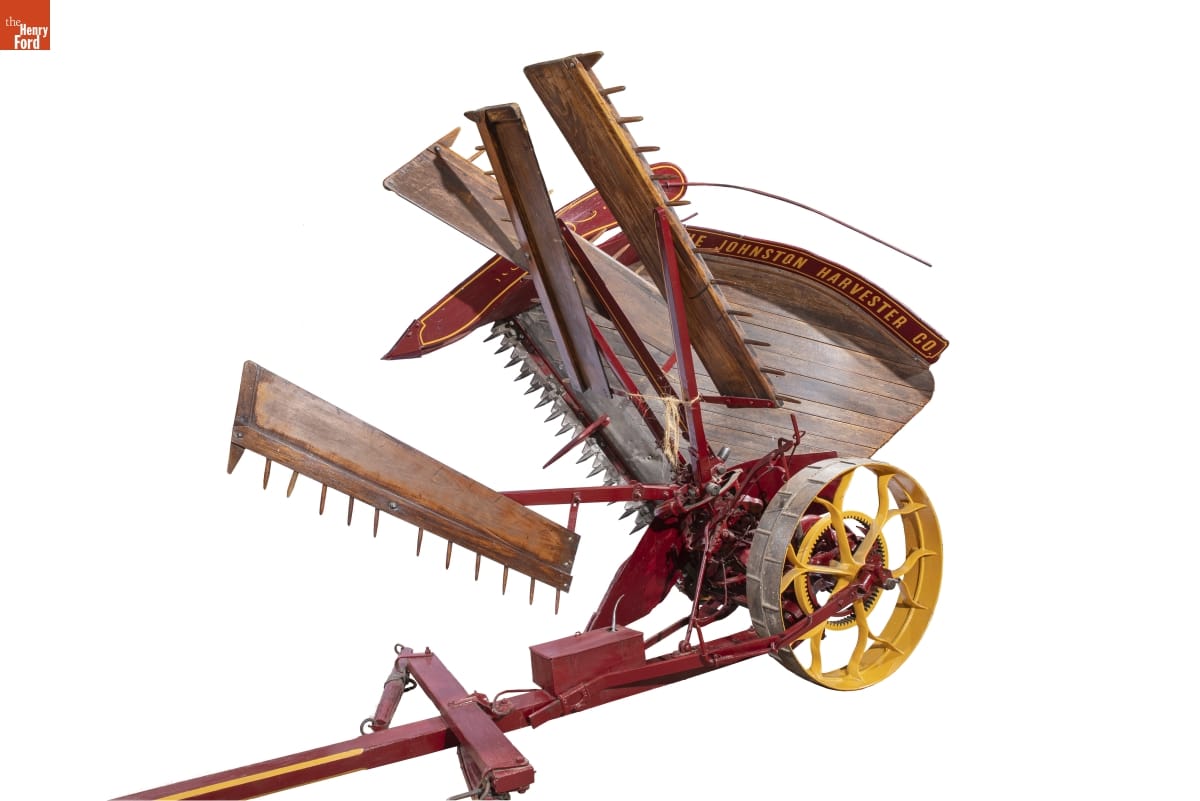
- Johnston Harvester Co. Self-Rake Reaper, 1878-1900 - Farmers in the late 1800s saved time and labor by using horse-drawn, self-rake reapers to harvest grain crops. These machines had revolving arms that raked the cut grain off the reaper table and into a neat pile on the ground. Workers trailed behind the reaper, binding the piled grain and stacking the sheaves so they could dry before threshing.
- 1878-1900
- Collections - Artifact
Johnston Harvester Co. Self-Rake Reaper, 1878-1900
Farmers in the late 1800s saved time and labor by using horse-drawn, self-rake reapers to harvest grain crops. These machines had revolving arms that raked the cut grain off the reaper table and into a neat pile on the ground. Workers trailed behind the reaper, binding the piled grain and stacking the sheaves so they could dry before threshing.