
Search
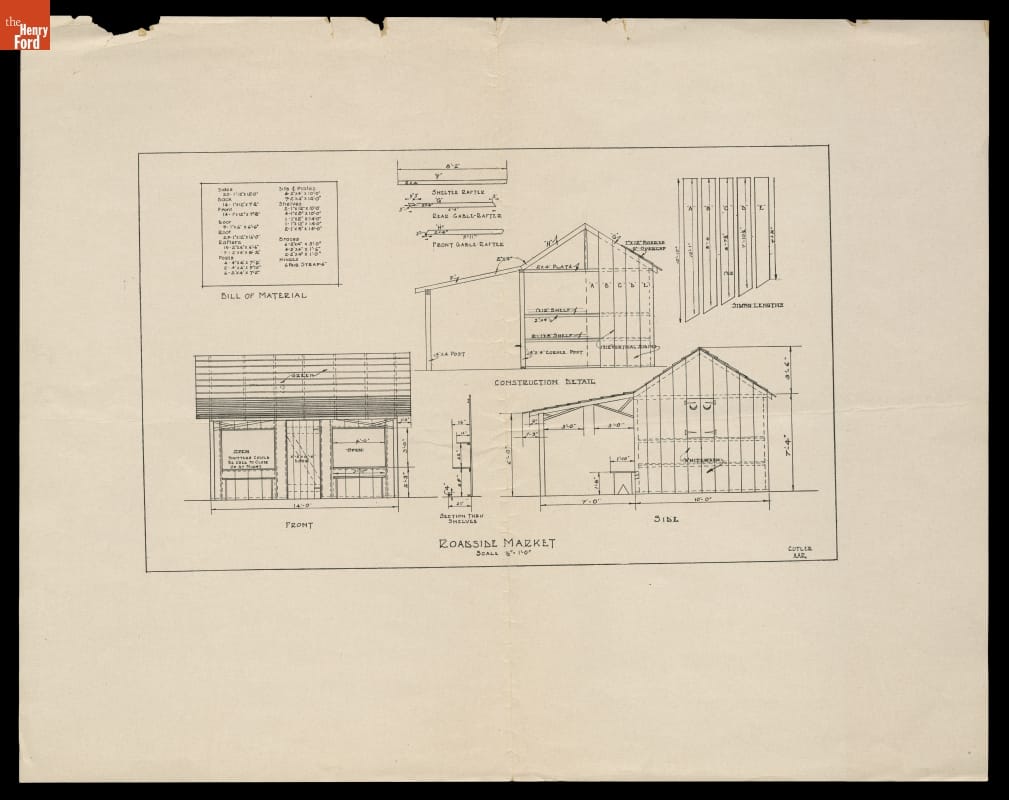
- Building Plans for a Roadside Market, for Selling Produce Grown by Greenfield Village School Students, 1930 - Clara Ford tried to help rural farm women during her presidency of the National Women's Farm & Garden Association. She developed a design for a neat but inexpensive roadside market building that could show off fresh farm produce. She had Edward Cutler, the Historical Architect of Greenfield Village, draw up these plans for the building.
- 1930
- Collections - Artifact
Building Plans for a Roadside Market, for Selling Produce Grown by Greenfield Village School Students, 1930
Clara Ford tried to help rural farm women during her presidency of the National Women's Farm & Garden Association. She developed a design for a neat but inexpensive roadside market building that could show off fresh farm produce. She had Edward Cutler, the Historical Architect of Greenfield Village, draw up these plans for the building.
- "Merchandising Ideas," Instruction Booklet for Heinz Product and Advertising Displays, H. J. Heinz Company, circa 1935 - The H.J. Heinz Company's advertising strategy was a recipe for success. Elaborate and creative displays and signage encouraged customers to buy Heinz products. This booklet provided grocers with suggestions for counter, floor, and window displays, explained how to set-up a "Saturday sampling" table, and included an extensive selection of advertising designs available for purchase.
- circa 1935
- Collections - Artifact
"Merchandising Ideas," Instruction Booklet for Heinz Product and Advertising Displays, H. J. Heinz Company, circa 1935
The H.J. Heinz Company's advertising strategy was a recipe for success. Elaborate and creative displays and signage encouraged customers to buy Heinz products. This booklet provided grocers with suggestions for counter, floor, and window displays, explained how to set-up a "Saturday sampling" table, and included an extensive selection of advertising designs available for purchase.
- Product Catalogue of F. & J. Heinz Company, circa 1878 - After H.J. Heinz lost his first business to bankruptcy, he persuaded his brother and cousin to form the F. & J. Heinz Company in 1876 -- the precursor to the H.J. Heinz Company. Working with them, Heinz helped the company gain a reputation for high-quality pickled foods and condiments. This catalogue shows the many varieties of products the company offered in 1878.
- circa 1878
- Collections - Artifact
Product Catalogue of F. & J. Heinz Company, circa 1878
After H.J. Heinz lost his first business to bankruptcy, he persuaded his brother and cousin to form the F. & J. Heinz Company in 1876 -- the precursor to the H.J. Heinz Company. Working with them, Heinz helped the company gain a reputation for high-quality pickled foods and condiments. This catalogue shows the many varieties of products the company offered in 1878.
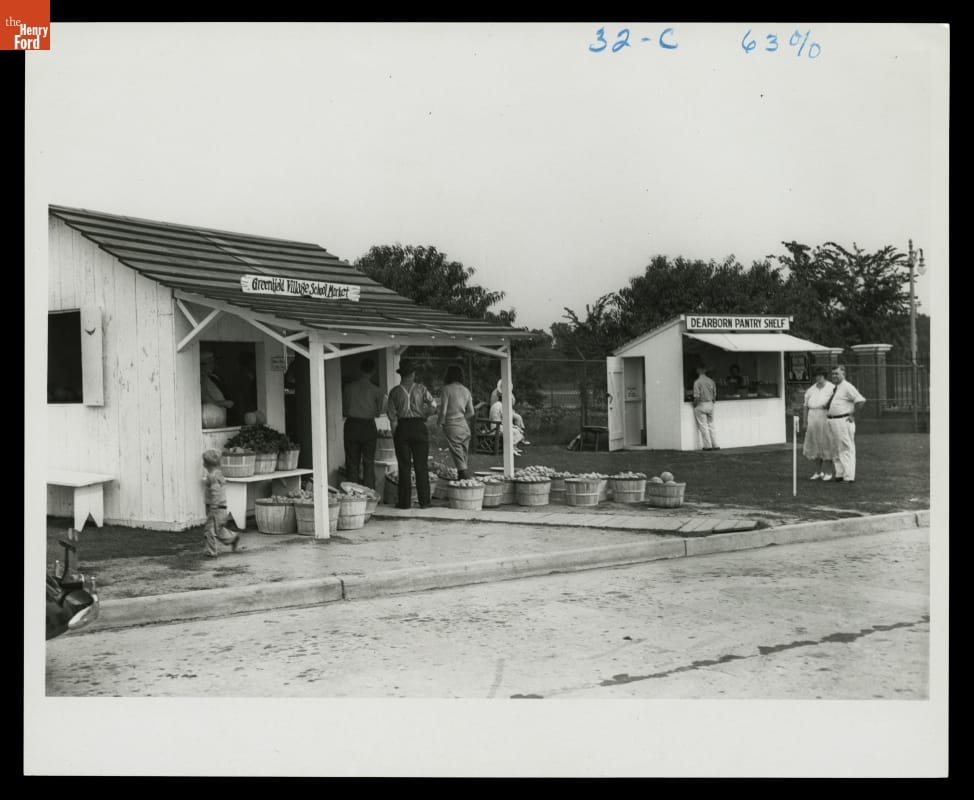
- Roadside Market Stand Selling Produce Grown by Greenfield Village School Students, 1934 - Clara Ford tried to help rural farm women during her presidency of the National Women's Farm & Garden Association. She developed a design for a neat but inexpensive roadside market building that could show off fresh farm produce. This market, of her design, was run by Greenfield Village School students, who sold the produce of their school gardens.
- September 03, 1938
- Collections - Artifact
Roadside Market Stand Selling Produce Grown by Greenfield Village School Students, 1934
Clara Ford tried to help rural farm women during her presidency of the National Women's Farm & Garden Association. She developed a design for a neat but inexpensive roadside market building that could show off fresh farm produce. This market, of her design, was run by Greenfield Village School students, who sold the produce of their school gardens.
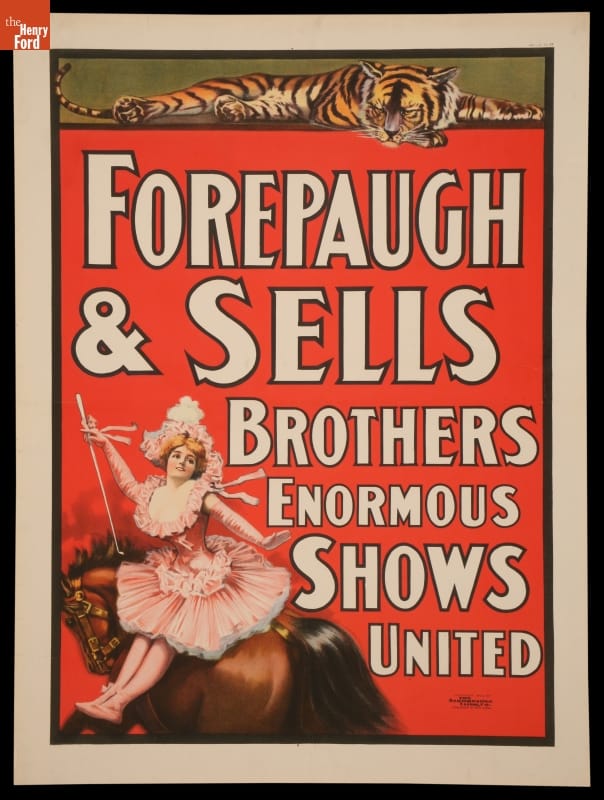
- Circus Poster, "Forepaugh & Sells Brothers Circus Enormous Shows United," 1902 - In the late nineteenth century, printers developed a lithograph method that produced brightly colored posters. In advance of a circus coming to town, general agents glued these eye-catching generic posters to building walls, fences, and in window displays. To announce when and where the performances would happen, local printers sometimes provided letterpress paper date strips to paste onto the posters' lower margin.
- 1902
- Collections - Artifact
Circus Poster, "Forepaugh & Sells Brothers Circus Enormous Shows United," 1902
In the late nineteenth century, printers developed a lithograph method that produced brightly colored posters. In advance of a circus coming to town, general agents glued these eye-catching generic posters to building walls, fences, and in window displays. To announce when and where the performances would happen, local printers sometimes provided letterpress paper date strips to paste onto the posters' lower margin.
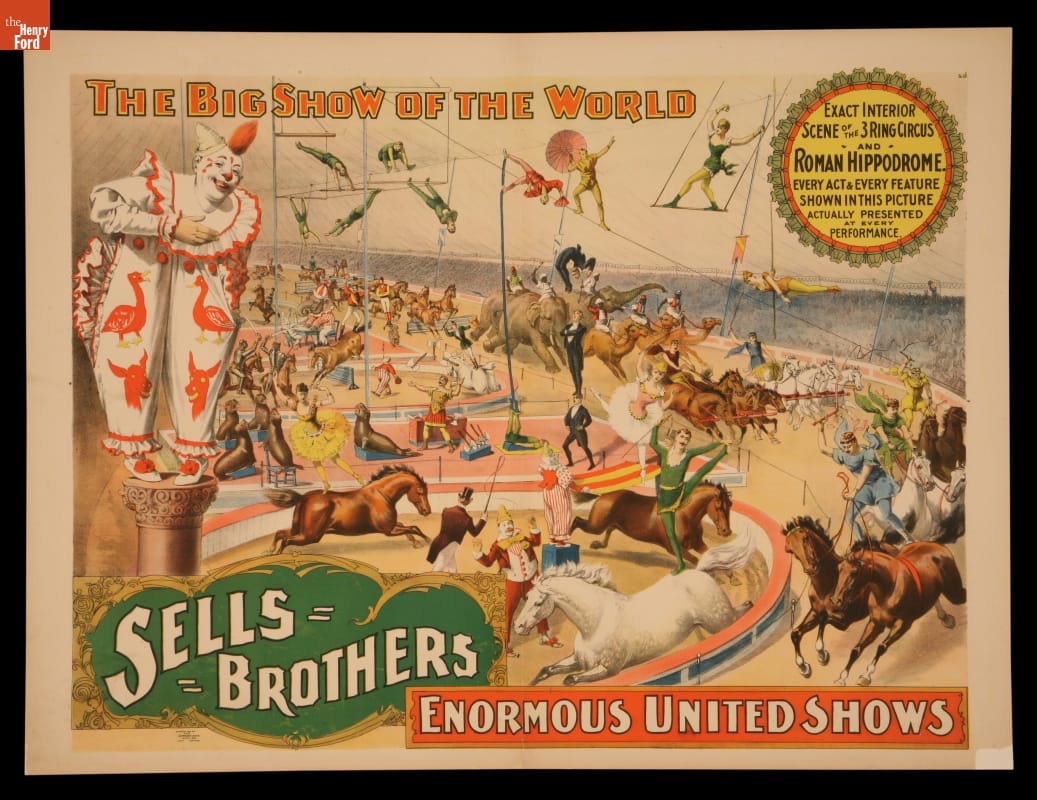
- Circus Poster, "Sells Brothers Enormous United Shows," 1893 - In the late nineteenth century, printers developed a lithograph method that produced brightly colored posters. In advance of a circus coming to town, general agents glued these eye-catching generic posters to building walls, fences, and in window displays. To announce when and where the performances would happen, local printers sometimes provided letterpress paper date strips to paste onto the posters' lower margin.
- 1893
- Collections - Artifact
Circus Poster, "Sells Brothers Enormous United Shows," 1893
In the late nineteenth century, printers developed a lithograph method that produced brightly colored posters. In advance of a circus coming to town, general agents glued these eye-catching generic posters to building walls, fences, and in window displays. To announce when and where the performances would happen, local printers sometimes provided letterpress paper date strips to paste onto the posters' lower margin.
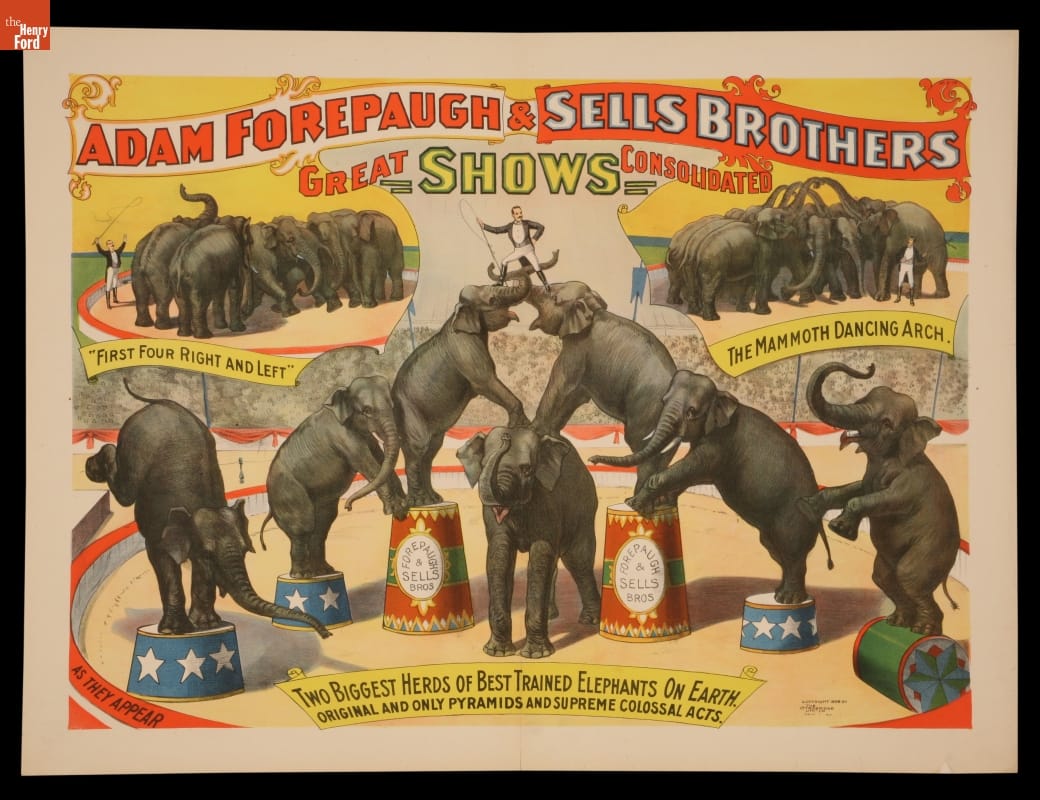
- Circus Poster, Adam Forepaugh & Sells Brothers Circus Presents the "Biggest Herds of Best Trained Elephants on Earth," 1896 - In the late nineteenth century, printers developed a lithograph method that produced brightly colored posters. In advance of a circus coming to town, general agents glued these eye-catching generic posters to building walls, fences, and in window displays. To announce when and where the performances would happen, local printers sometimes provided letterpress paper date strips to paste onto the posters' lower margin.
- 1896
- Collections - Artifact
Circus Poster, Adam Forepaugh & Sells Brothers Circus Presents the "Biggest Herds of Best Trained Elephants on Earth," 1896
In the late nineteenth century, printers developed a lithograph method that produced brightly colored posters. In advance of a circus coming to town, general agents glued these eye-catching generic posters to building walls, fences, and in window displays. To announce when and where the performances would happen, local printers sometimes provided letterpress paper date strips to paste onto the posters' lower margin.
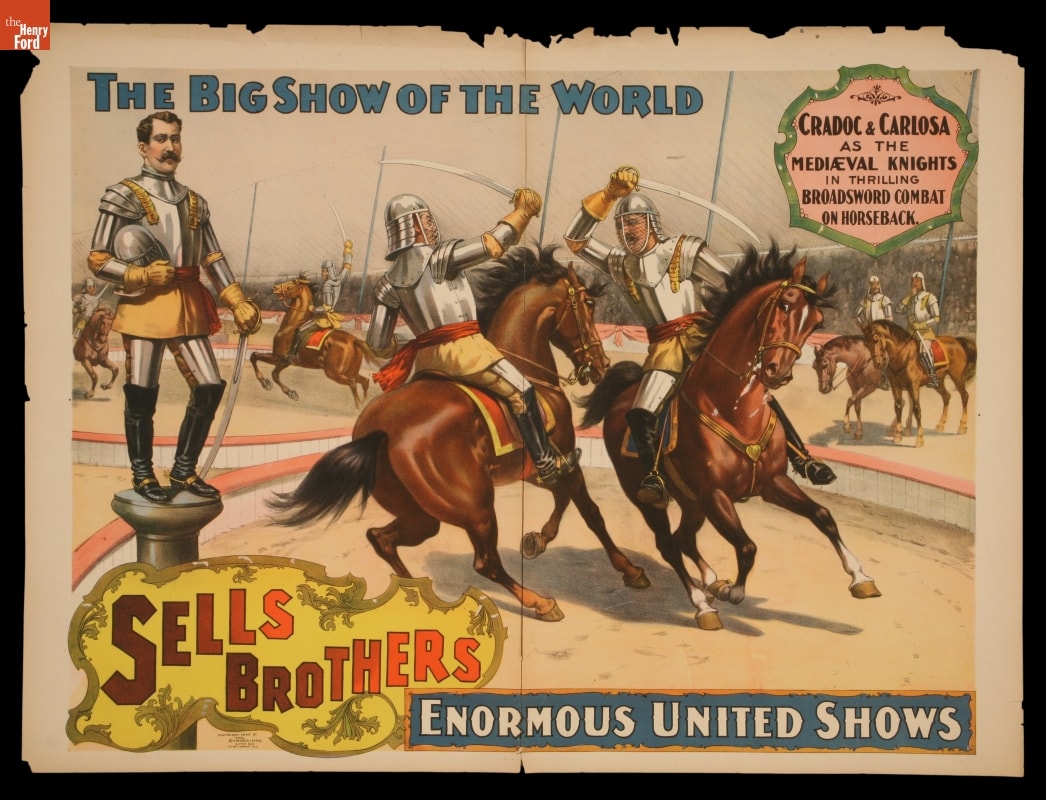
- Circus Poster, Sells Brothers, "Cradoc & Carlosa as the Medieval Knights," 1895 -
- 1895
- Collections - Artifact
Circus Poster, Sells Brothers, "Cradoc & Carlosa as the Medieval Knights," 1895
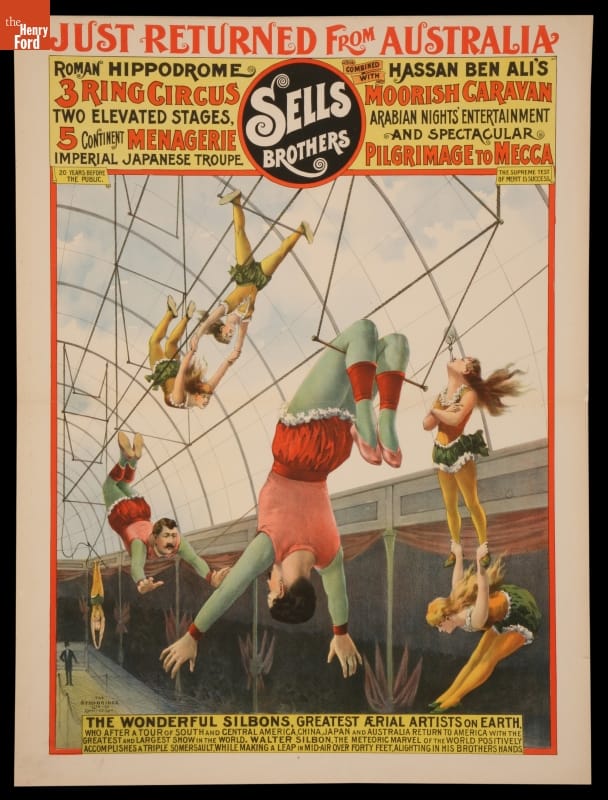
- Circus Poster, Sells Brothers Circus Presents "The Wonderful Silbons, Greatest Aerial Artists on Earth," circa 1892 - In the late nineteenth century, printers developed a lithograph method that produced brightly colored posters. In advance of a circus coming to town, general agents glued these eye-catching generic posters to building walls, fences, and in window displays. To announce when and where the performances would happen, local printers sometimes provided letterpress paper date strips to paste onto the posters' lower margin.
- circa 1892
- Collections - Artifact
Circus Poster, Sells Brothers Circus Presents "The Wonderful Silbons, Greatest Aerial Artists on Earth," circa 1892
In the late nineteenth century, printers developed a lithograph method that produced brightly colored posters. In advance of a circus coming to town, general agents glued these eye-catching generic posters to building walls, fences, and in window displays. To announce when and where the performances would happen, local printers sometimes provided letterpress paper date strips to paste onto the posters' lower margin.
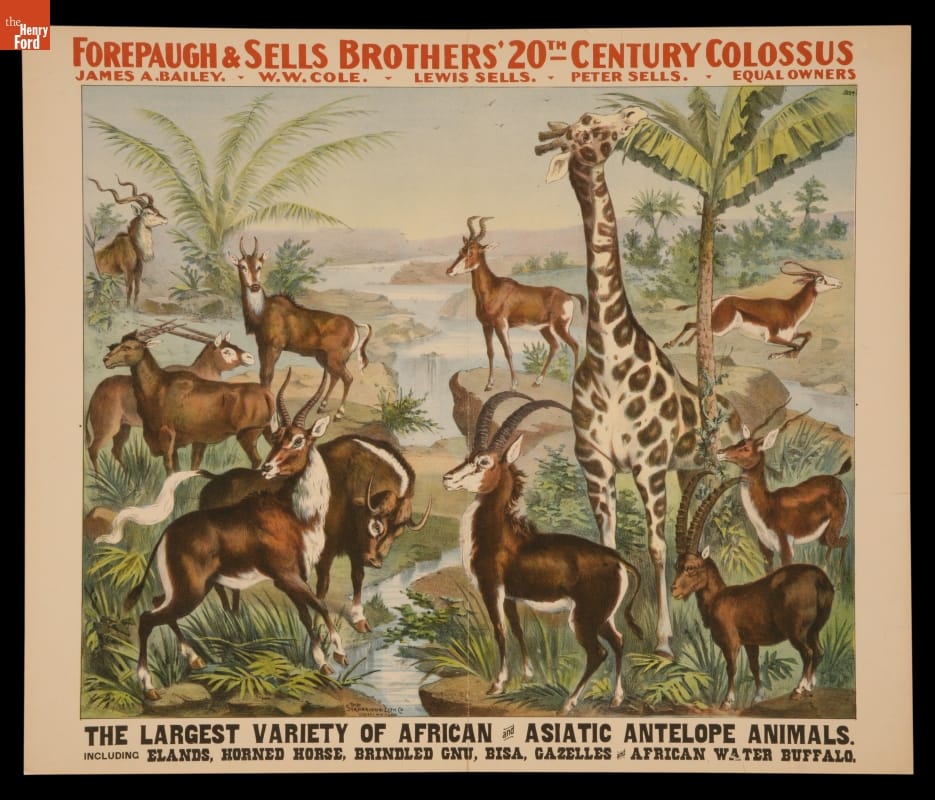
- Circus Poster, Adam Forepaugh & Sells Brothers Circus, "The Largest Variety of African and Asiatic Antelope Animals," circa 1900 - In the late nineteenth century, printers developed a lithograph method that produced brightly colored posters. In advance of a circus coming to town, general agents glued these eye-catching generic posters to building walls, fences, and in window displays. To announce when and where the performances would happen, local printers sometimes provided letterpress paper date strips to paste onto the posters' lower margin.
- circa 1900
- Collections - Artifact
Circus Poster, Adam Forepaugh & Sells Brothers Circus, "The Largest Variety of African and Asiatic Antelope Animals," circa 1900
In the late nineteenth century, printers developed a lithograph method that produced brightly colored posters. In advance of a circus coming to town, general agents glued these eye-catching generic posters to building walls, fences, and in window displays. To announce when and where the performances would happen, local printers sometimes provided letterpress paper date strips to paste onto the posters' lower margin.