
Search
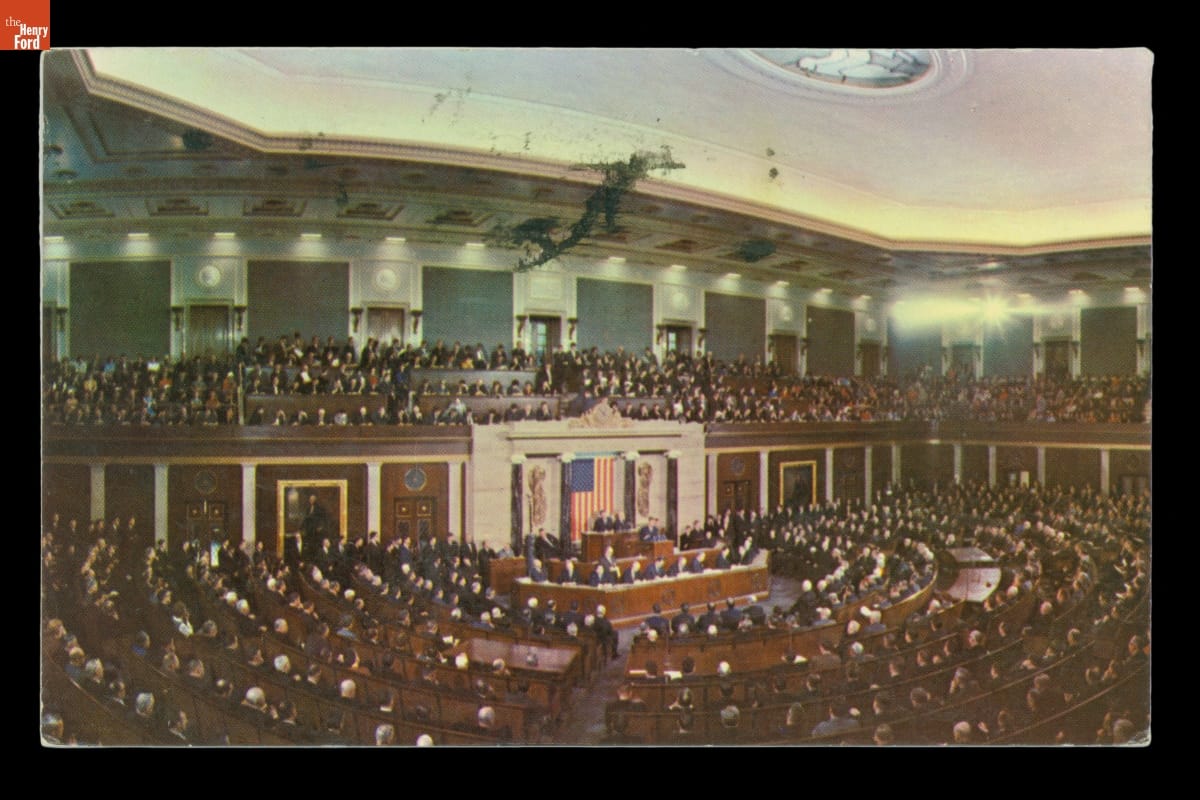
- President Kennedy Addressing a Joint Session of Congress, 1962 or 1963 - This picture postcard -- published by the United States Capitol Historical Society -- depicts President John F. Kennedy delivering a State of the Union message in a Joint Session of Congress during January of 1962 or 1963. It was mailed by Mr. and Mrs. Don Andrews on August 3, 1968, during a two-week vacation to Pennsylvania, Maryland, and Washington, D.C.
- 1962-1963
- Collections - Artifact
President Kennedy Addressing a Joint Session of Congress, 1962 or 1963
This picture postcard -- published by the United States Capitol Historical Society -- depicts President John F. Kennedy delivering a State of the Union message in a Joint Session of Congress during January of 1962 or 1963. It was mailed by Mr. and Mrs. Don Andrews on August 3, 1968, during a two-week vacation to Pennsylvania, Maryland, and Washington, D.C.
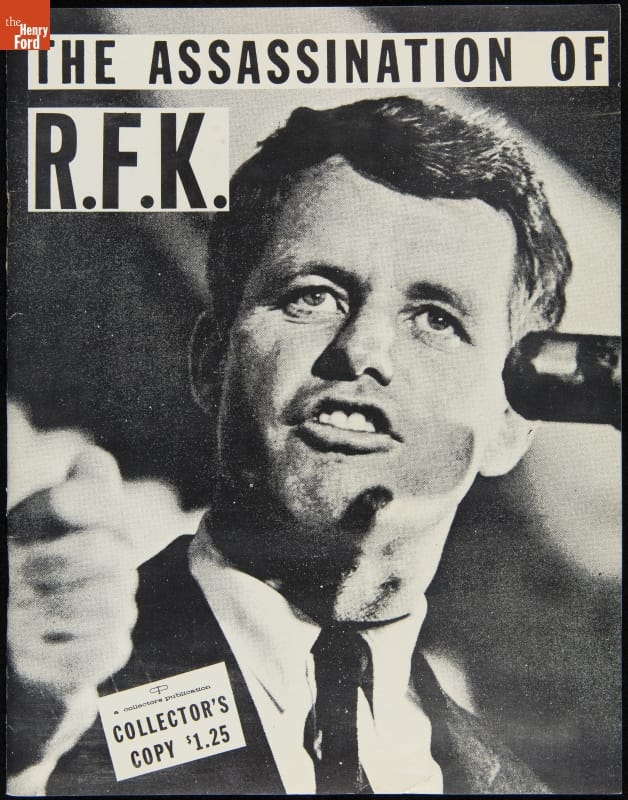
- Commemorative Book, "The Assassination of R.F.K.," 1968 - In 1968, many Americans asked themselves "What is happening to our country?" In June, Americans -- still reeling from the recent assassination of Martin Luther King, Jr. -- learned that Democratic Presidential candidate Robert "Bobby" Kennedy had been shot and mortally wounded. Many had hoped the brother of slain-President John F. Kennedy could restore faith in a country seemingly slipping into social and political turmoil.
- 1968
- Collections - Artifact
Commemorative Book, "The Assassination of R.F.K.," 1968
In 1968, many Americans asked themselves "What is happening to our country?" In June, Americans -- still reeling from the recent assassination of Martin Luther King, Jr. -- learned that Democratic Presidential candidate Robert "Bobby" Kennedy had been shot and mortally wounded. Many had hoped the brother of slain-President John F. Kennedy could restore faith in a country seemingly slipping into social and political turmoil.
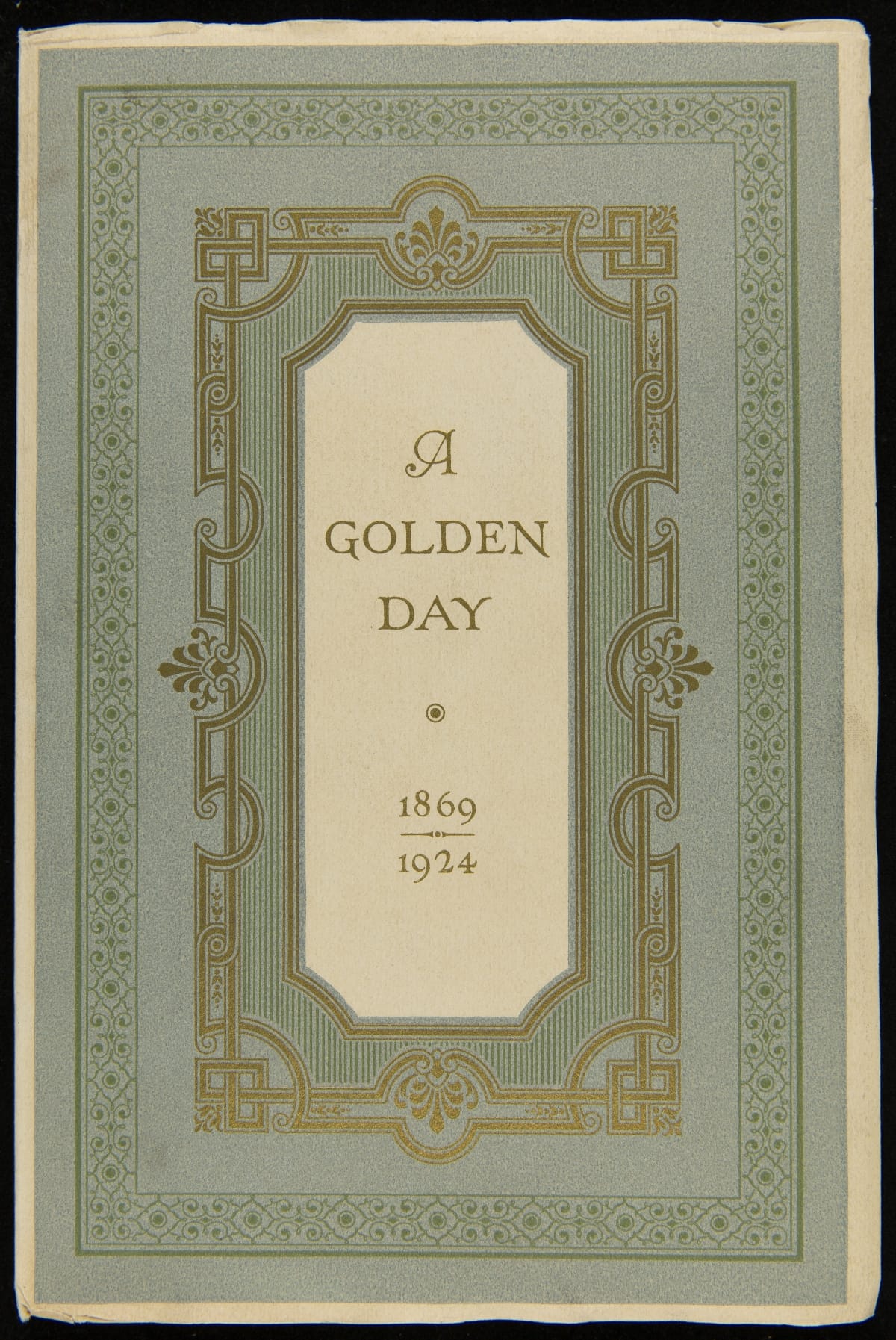
- H. J. Heinz Memorial Statue Dedication, "A Golden Day," at Heinz Main Plant, Pittsburgh, Pennsylvania, October 11, 1924 - H.J. Heinz valued a strong relationship between his company and its employees. This resulted in a world-class employee welfare program which included amenities, programs, and policies with consideration for employees' well-being. In 1924, to commemorate the company's 55th anniversary, employees erected a memorial statue as a token of their gratitude for their employer. This is a program from the celebration, called "A Golden Day."
- 1925
- Collections - Artifact
H. J. Heinz Memorial Statue Dedication, "A Golden Day," at Heinz Main Plant, Pittsburgh, Pennsylvania, October 11, 1924
H.J. Heinz valued a strong relationship between his company and its employees. This resulted in a world-class employee welfare program which included amenities, programs, and policies with consideration for employees' well-being. In 1924, to commemorate the company's 55th anniversary, employees erected a memorial statue as a token of their gratitude for their employer. This is a program from the celebration, called "A Golden Day."
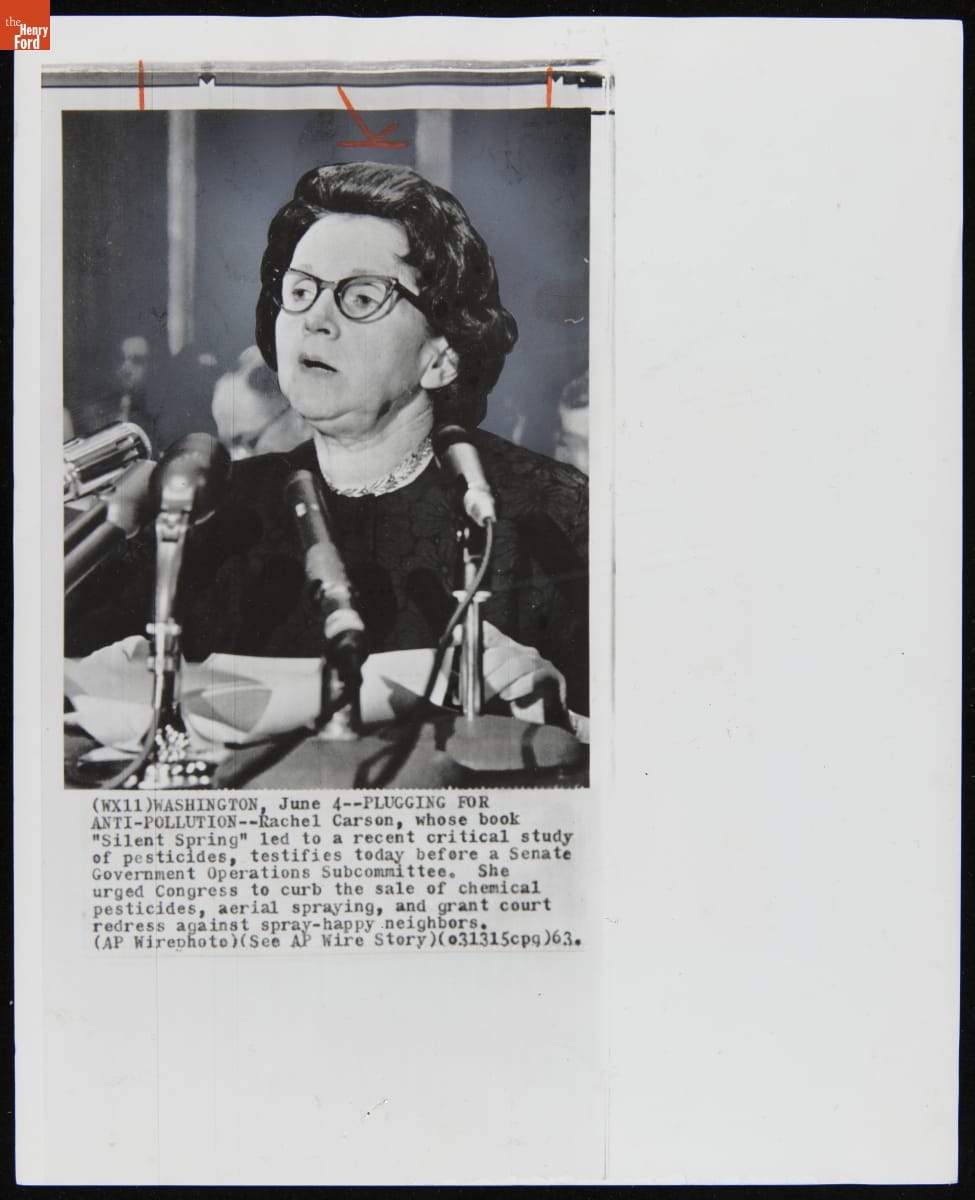
- Rachel Carson Testifying before a Senate Government Operations Subcommittee, June 1963 - Marine biologist Rachel Carson's book, <em>Silent Spring</em>, helped spark the 1960s environmental movement. Carson stressed the detrimental effects of pesticide use, including DDT, on natural ecosystems and human health. Her testimony before the U.S. Congress and other evidence led to national legislation to mitigate environmental damage including the creation of the U.S. Environmental Protection Agency (1970) and banning DDT (1972).
- June 04, 1963
- Collections - Artifact
Rachel Carson Testifying before a Senate Government Operations Subcommittee, June 1963
Marine biologist Rachel Carson's book, Silent Spring, helped spark the 1960s environmental movement. Carson stressed the detrimental effects of pesticide use, including DDT, on natural ecosystems and human health. Her testimony before the U.S. Congress and other evidence led to national legislation to mitigate environmental damage including the creation of the U.S. Environmental Protection Agency (1970) and banning DDT (1972).
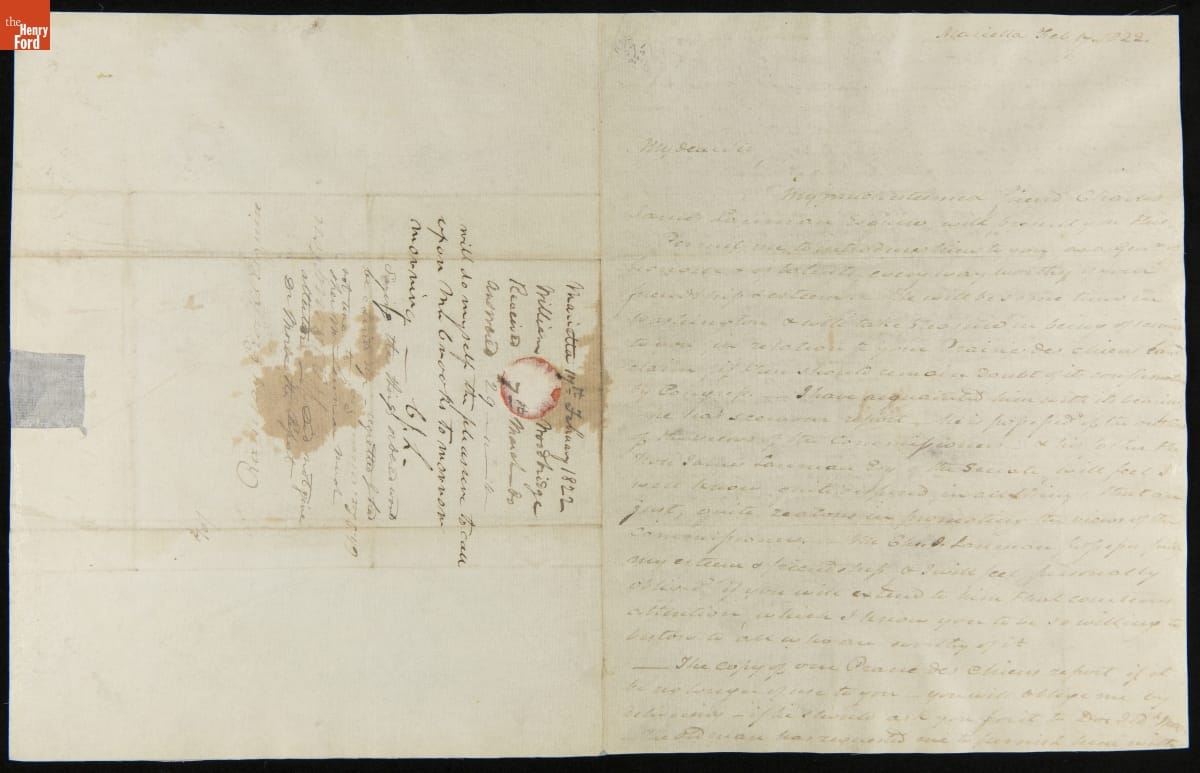
- Letter from William Woodbridge to Ramsay Crooks, February 17, 1822 -
- February 17, 1822
- Collections - Artifact
Letter from William Woodbridge to Ramsay Crooks, February 17, 1822
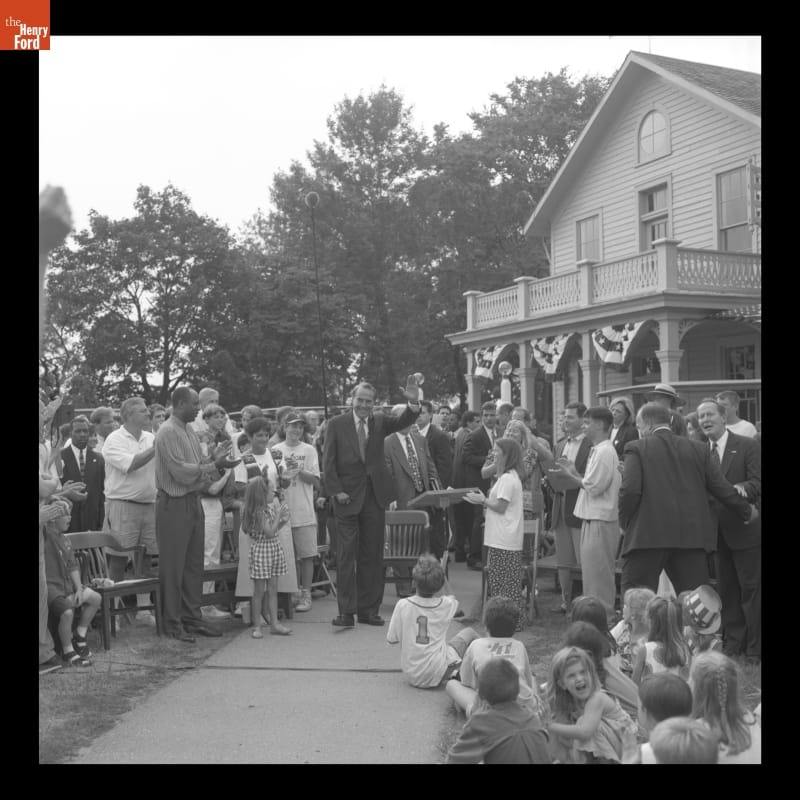
- Bob Dole Visiting Greenfield Village, July 18, 1996 - Senator Bob Dole of Kansas, Republican candidate for President of the United States in 1996, visited Greenfield Village that summer. He came to participate in an "Innovations in Education" forum organized by Michigan Governor John Engler. Dole and running mate Jack Kemp lost their bid against incumbent President Bill Clinton and Vice President Al Gore.
- July 18, 1996
- Collections - Artifact
Bob Dole Visiting Greenfield Village, July 18, 1996
Senator Bob Dole of Kansas, Republican candidate for President of the United States in 1996, visited Greenfield Village that summer. He came to participate in an "Innovations in Education" forum organized by Michigan Governor John Engler. Dole and running mate Jack Kemp lost their bid against incumbent President Bill Clinton and Vice President Al Gore.
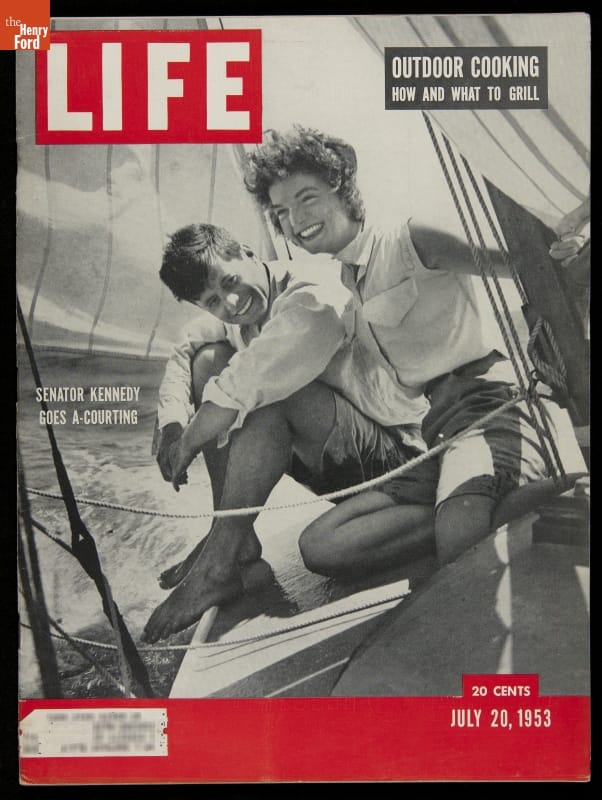
- Life Magazine for July 20, 1953, "Senator Kennedy Goes A-Courting" - Even before John F. Kennedy was President, the youthful images of Kennedy and Jacqueline Bouvier Kennedy could attract attention and sell magazines. This was the first <EM>Life</EM> magazine cover to feature Jacqueline Bouvier. The couple was married on September 12, 1953.
- July 20, 1953
- Collections - Artifact
Life Magazine for July 20, 1953, "Senator Kennedy Goes A-Courting"
Even before John F. Kennedy was President, the youthful images of Kennedy and Jacqueline Bouvier Kennedy could attract attention and sell magazines. This was the first Life magazine cover to feature Jacqueline Bouvier. The couple was married on September 12, 1953.
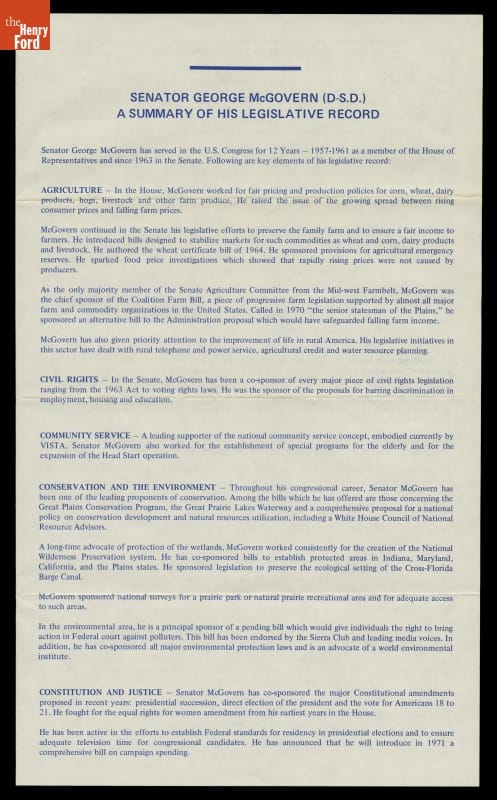
- Brochure, "Senator George McGovern, A Summary of His Legislative Record, 1972 - Democrats nominated South Dakota Senator George McGovern for president in 1972. McGovern relied on grassroots support and won key primaries on his way to the Democratic nomination, campaigning for the immediate end of the war in Vietnam and liberal social and economic programs. His presidential run, however, was plagued with setbacks, and he lost in a landslide to incumbent Republican president Richard Nixon.
- 1972
- Collections - Artifact
Brochure, "Senator George McGovern, A Summary of His Legislative Record, 1972
Democrats nominated South Dakota Senator George McGovern for president in 1972. McGovern relied on grassroots support and won key primaries on his way to the Democratic nomination, campaigning for the immediate end of the war in Vietnam and liberal social and economic programs. His presidential run, however, was plagued with setbacks, and he lost in a landslide to incumbent Republican president Richard Nixon.
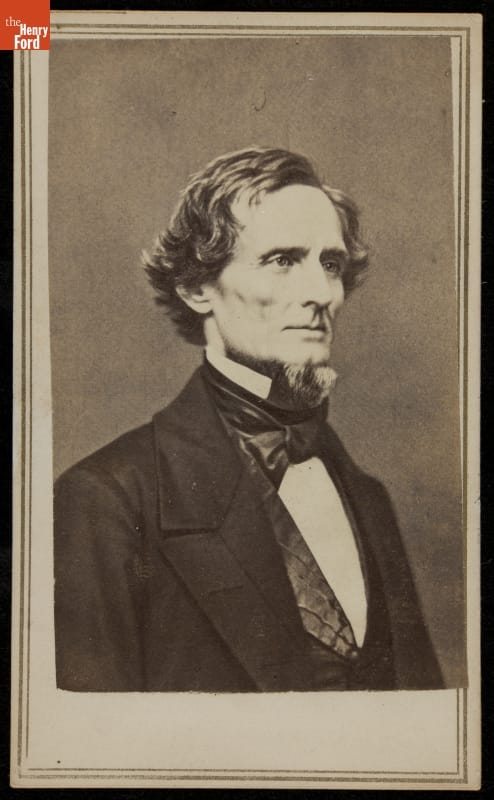
- U.S. Senator Jefferson Davis, 1858-1860 - U.S. Congressman Jefferson Davis of Mississippi posed for this portrait at Mathew Brady's Washington, D.C., studio. In early 1861, Davis resigned from the Senate, becoming president of the newly formed Confederate States of America. During the Civil War, a New York firm sold Brady photographs of military figures, battlefields, and politicians -- as well as this image of Jefferson Davis.
- 1858-1860
- Collections - Artifact
U.S. Senator Jefferson Davis, 1858-1860
U.S. Congressman Jefferson Davis of Mississippi posed for this portrait at Mathew Brady's Washington, D.C., studio. In early 1861, Davis resigned from the Senate, becoming president of the newly formed Confederate States of America. During the Civil War, a New York firm sold Brady photographs of military figures, battlefields, and politicians -- as well as this image of Jefferson Davis.
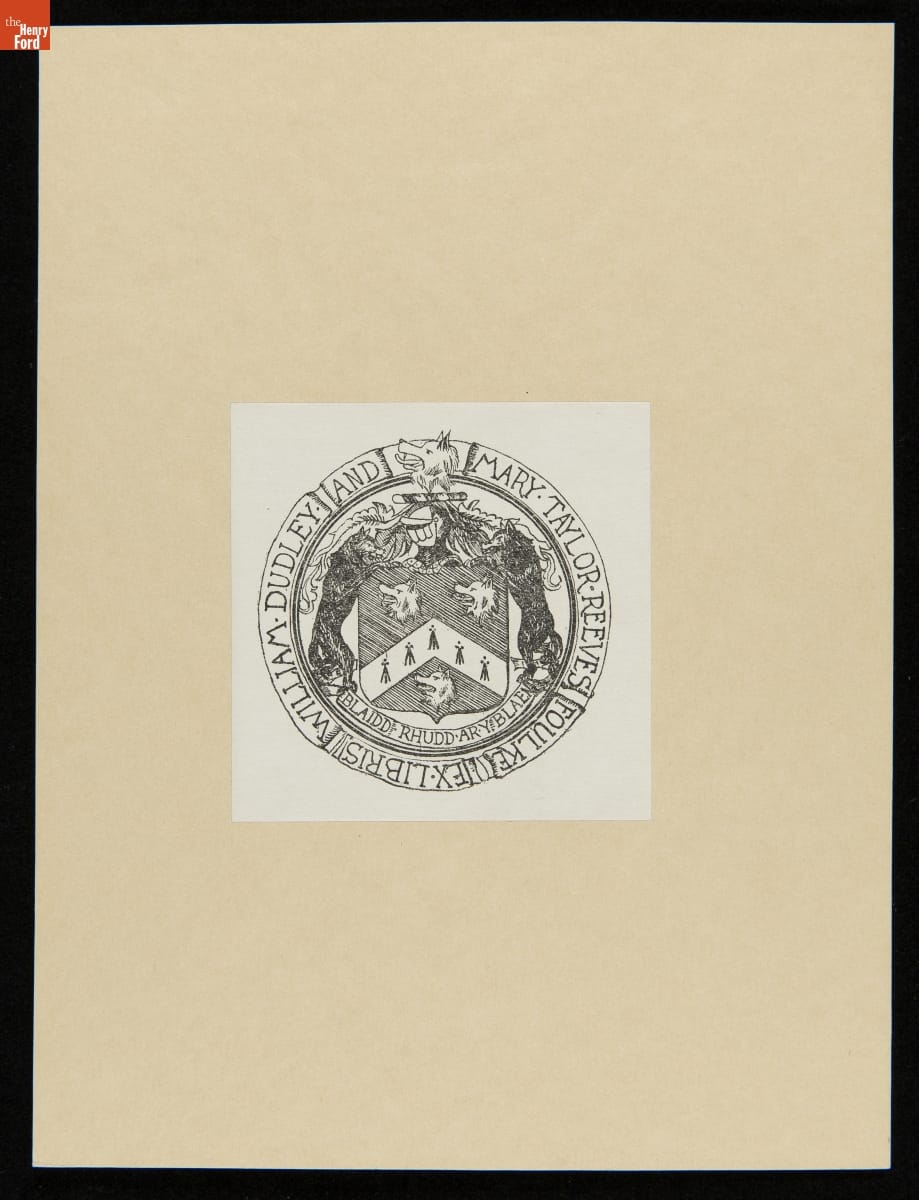
- Bookplate of William Dudley Foulke and Mary Taylor Reeves Foulke, circa 1880 - Bookplates show ownership, but they can also tell us more. Often pasted on the inside of a book's front cover or endpaper, these printed labels contain the owner's name and sometimes the words "ex-libris" (Latin for "from the library of"). Coats of arms, crests, other decorative images, poems, mottoes, and even font type provide insight into the beliefs, passions, and interests of the book's owner.
- circa 1880
- Collections - Artifact
Bookplate of William Dudley Foulke and Mary Taylor Reeves Foulke, circa 1880
Bookplates show ownership, but they can also tell us more. Often pasted on the inside of a book's front cover or endpaper, these printed labels contain the owner's name and sometimes the words "ex-libris" (Latin for "from the library of"). Coats of arms, crests, other decorative images, poems, mottoes, and even font type provide insight into the beliefs, passions, and interests of the book's owner.