
Search
- Memorial Painting for Elijah and Lucy White, circa 1826 -
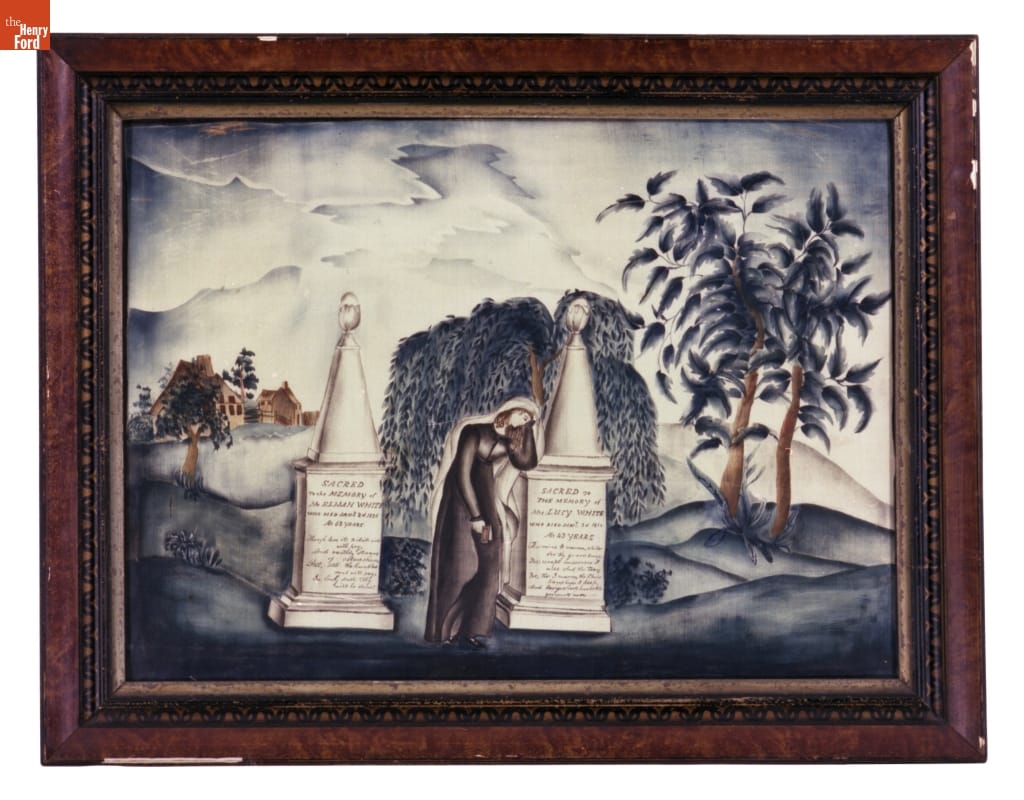
- circa 1826
- Collections - Artifact
Memorial Painting for Elijah and Lucy White, circa 1826
- Mourning Pendant, 1780-1800 - Before the 20th century, death came early and often. One way people coped was to wear jewelry as memorials to their loved ones. Over the centuries, mourning jewelry followed the prevailing fashions. Shortly after independence, Americans favored illuminated, miniature brooches and pendants painted on ivory. These featured shapes derived from classical design, symbols such as urns and weeping women dressed as ancient Romans.
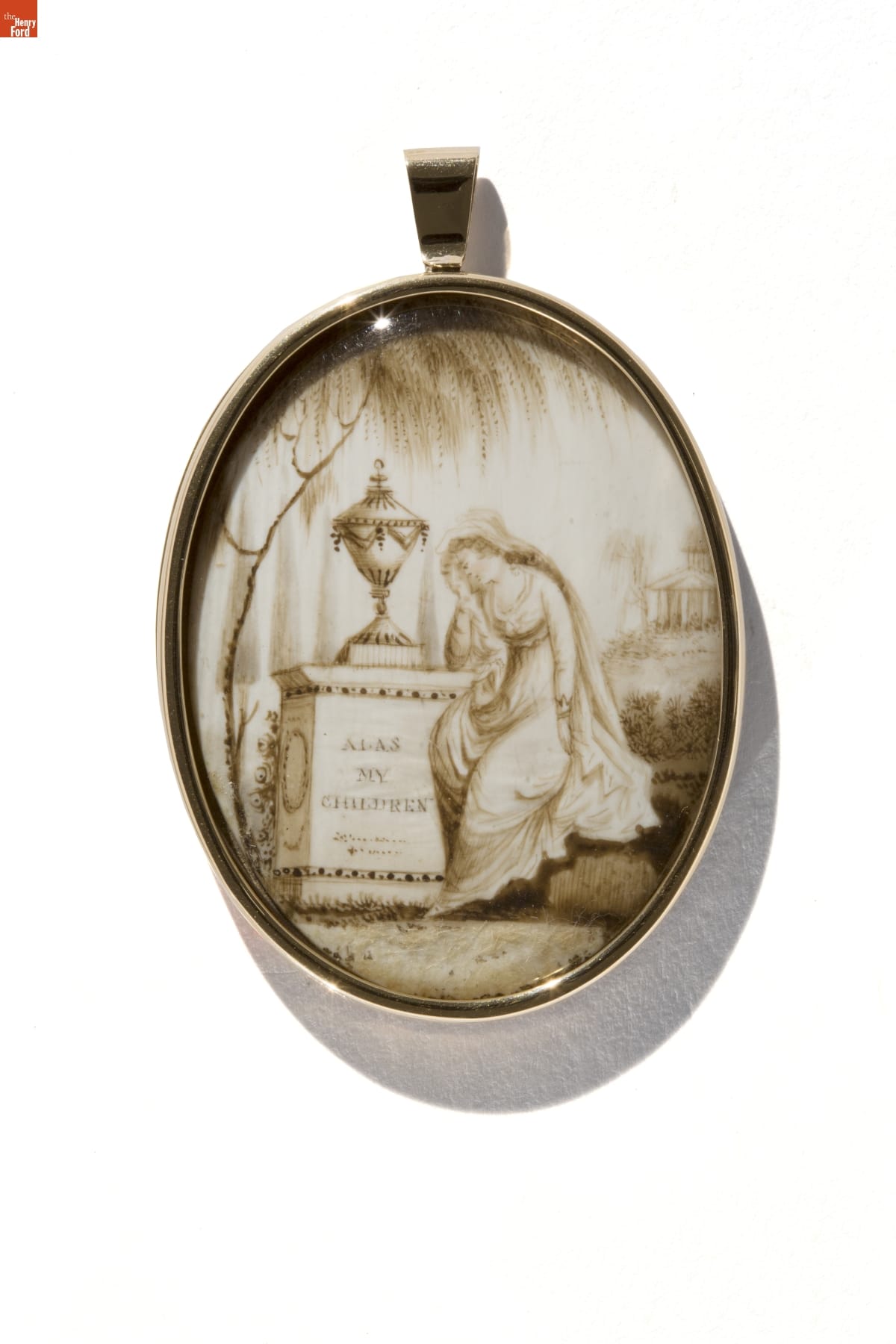
- 1780-1800
- Collections - Artifact
Mourning Pendant, 1780-1800
Before the 20th century, death came early and often. One way people coped was to wear jewelry as memorials to their loved ones. Over the centuries, mourning jewelry followed the prevailing fashions. Shortly after independence, Americans favored illuminated, miniature brooches and pendants painted on ivory. These featured shapes derived from classical design, symbols such as urns and weeping women dressed as ancient Romans.
- Mourning Pendant for William Oliphant, 1790 - Before the 20th century, death came early and often. One way people coped was to wear jewelry as memorials to their loved ones. Over the centuries, mourning jewelry followed the prevailing fashions. Shortly after independence, Americans favored illuminated, miniature brooches and pendants painted on ivory. These featured shapes derived from classical design, symbols such as urns and weeping women dressed as ancient Romans.
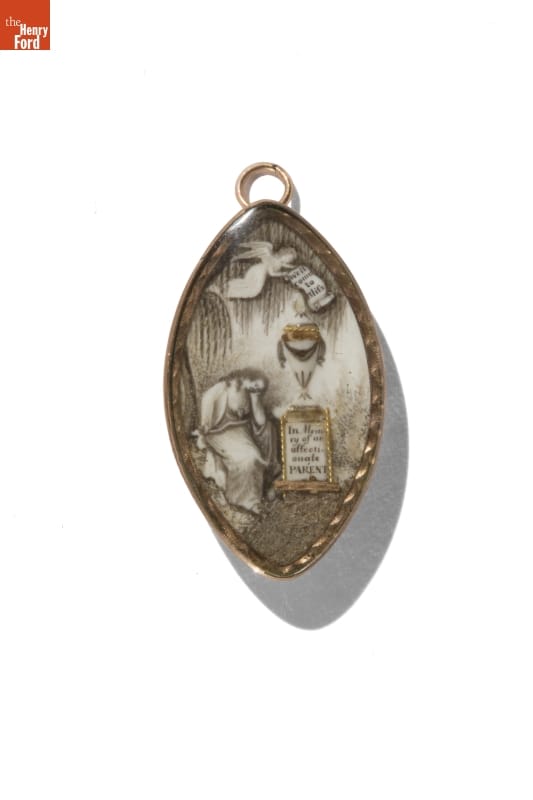
- April 10, 1790
- Collections - Artifact
Mourning Pendant for William Oliphant, 1790
Before the 20th century, death came early and often. One way people coped was to wear jewelry as memorials to their loved ones. Over the centuries, mourning jewelry followed the prevailing fashions. Shortly after independence, Americans favored illuminated, miniature brooches and pendants painted on ivory. These featured shapes derived from classical design, symbols such as urns and weeping women dressed as ancient Romans.
- Mourning Pendant, 1790-1810 - Before the 20th century, death came early and often. One way people coped was to wear jewelry as memorials to their loved ones. Over the centuries, mourning jewelry followed the prevailing fashions. Shortly after independence, Americans favored illuminated, miniature brooches and pendants painted on ivory. These featured shapes derived from classical design, symbols such as urns and weeping women dressed as ancient Romans.
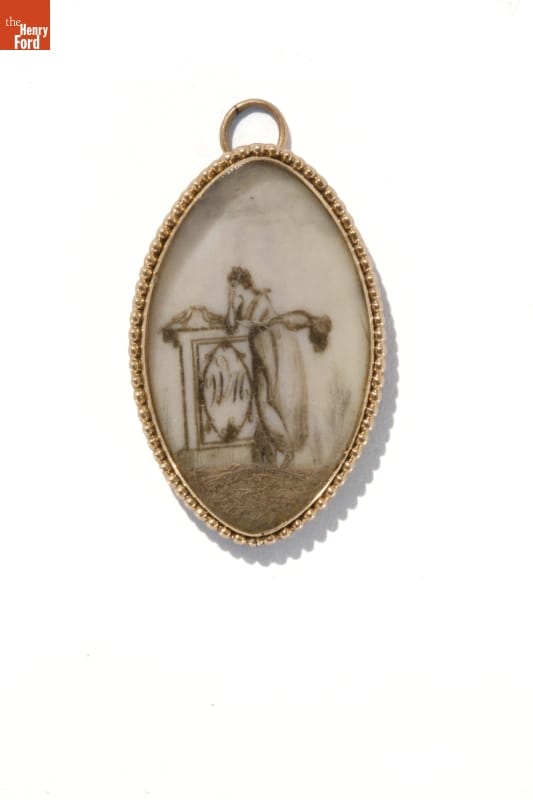
- 1790-1810
- Collections - Artifact
Mourning Pendant, 1790-1810
Before the 20th century, death came early and often. One way people coped was to wear jewelry as memorials to their loved ones. Over the centuries, mourning jewelry followed the prevailing fashions. Shortly after independence, Americans favored illuminated, miniature brooches and pendants painted on ivory. These featured shapes derived from classical design, symbols such as urns and weeping women dressed as ancient Romans.
- Mourning Pendant, 1790-1810 - Before the 20th century, death came early and often. One way people coped was to wear jewelry as memorials to their loved ones. Over the centuries, mourning jewelry followed the prevailing fashions. Shortly after independence, Americans favored illuminated, miniature brooches and pendants painted on ivory. These featured shapes derived from classical design, symbols such as urns and weeping women dressed as ancient Romans.
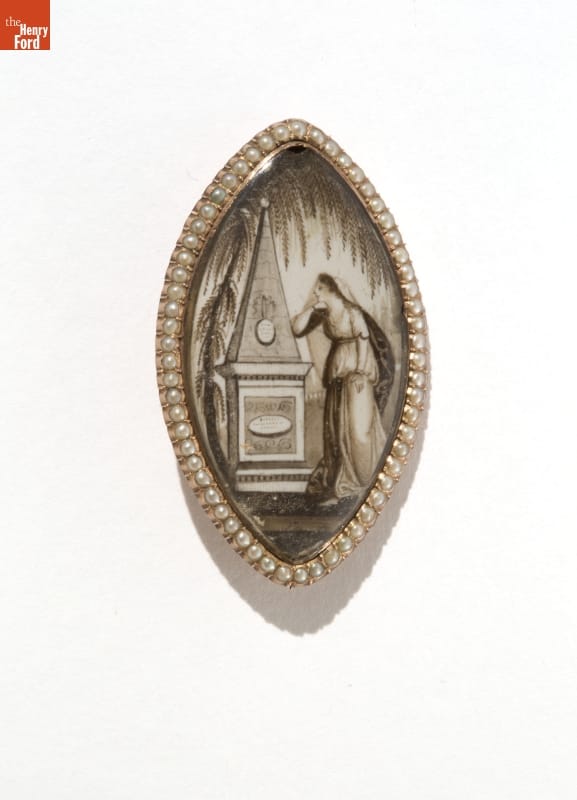
- 1790-1810
- Collections - Artifact
Mourning Pendant, 1790-1810
Before the 20th century, death came early and often. One way people coped was to wear jewelry as memorials to their loved ones. Over the centuries, mourning jewelry followed the prevailing fashions. Shortly after independence, Americans favored illuminated, miniature brooches and pendants painted on ivory. These featured shapes derived from classical design, symbols such as urns and weeping women dressed as ancient Romans.
- Mourning Brooch, 1780-1800 - Before the 20th century, death came early and often. One way people coped was to wear jewelry as memorials to their loved ones. Over the centuries, mourning jewelry followed the prevailing fashions. Shortly after independence, Americans favored illuminated, miniature brooches and pendants painted on ivory. These featured shapes derived from classical design, symbols such as urns and weeping women dressed as ancient Romans.
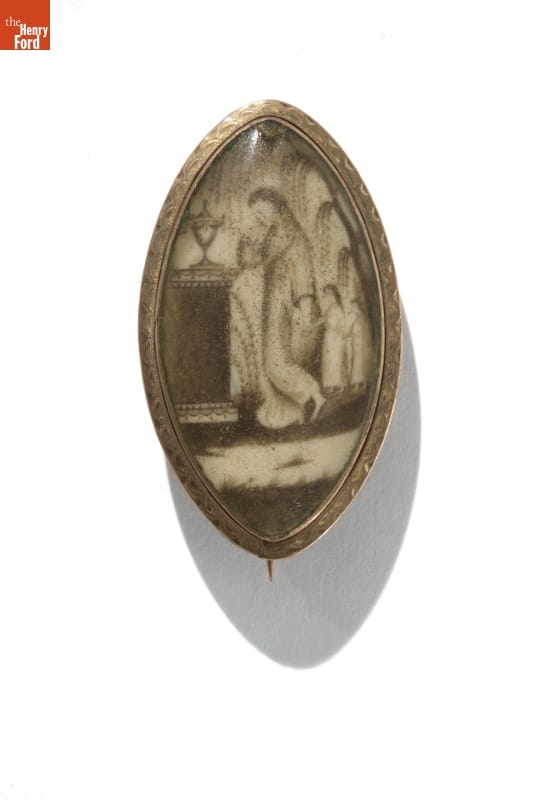
- 1780-1800
- Collections - Artifact
Mourning Brooch, 1780-1800
Before the 20th century, death came early and often. One way people coped was to wear jewelry as memorials to their loved ones. Over the centuries, mourning jewelry followed the prevailing fashions. Shortly after independence, Americans favored illuminated, miniature brooches and pendants painted on ivory. These featured shapes derived from classical design, symbols such as urns and weeping women dressed as ancient Romans.
- Mourning Pendant for Percival Barker, 1786 - Before the 20th century, death came early and often. One way people coped was to wear jewelry as memorials to their loved ones. Over the centuries, mourning jewelry followed the prevailing fashions. Shortly after independence, Americans favored illuminated, miniature brooches and pendants painted on ivory. These featured shapes derived from classical design, symbols such as urns and weeping women dressed as ancient Romans.
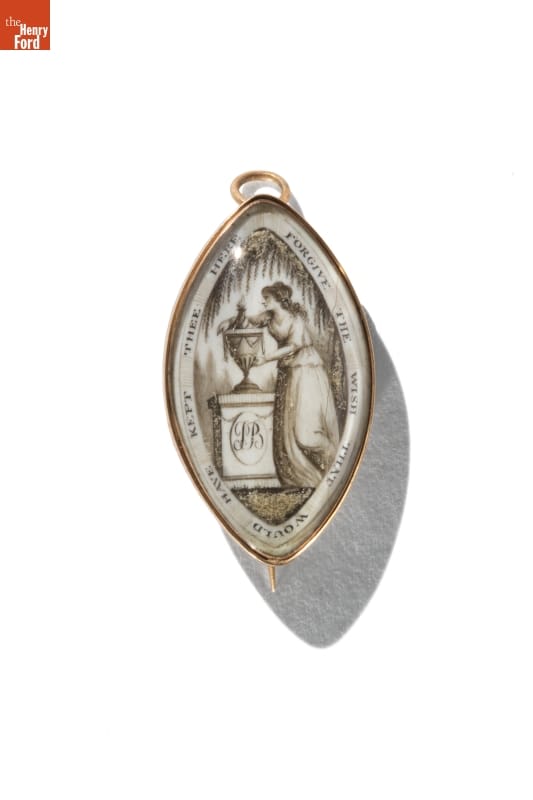
- June 26, 1786
- Collections - Artifact
Mourning Pendant for Percival Barker, 1786
Before the 20th century, death came early and often. One way people coped was to wear jewelry as memorials to their loved ones. Over the centuries, mourning jewelry followed the prevailing fashions. Shortly after independence, Americans favored illuminated, miniature brooches and pendants painted on ivory. These featured shapes derived from classical design, symbols such as urns and weeping women dressed as ancient Romans.
- Henry Ford, John Burroughs and Frank Sanborn at Thoreau's Grave, Concord, Massachusetts, September 1913 - In 1913, naturalist John Burroughs and industrialist Henry Ford visited Concord, Massachusetts, where two of Burroughs's early literary influences -- Ralph Waldo Emerson and Henry David Thoreau -- once resided. Ford, Burroughs and their traveling companions visited Emerson's home, Walden Pond and the gravesites of the two 19th-century Transcendentalists. Frank Sanborn, a Burroughs acquaintance and friend of Emerson and Thoreau, served as guide for the distinguished visitors.
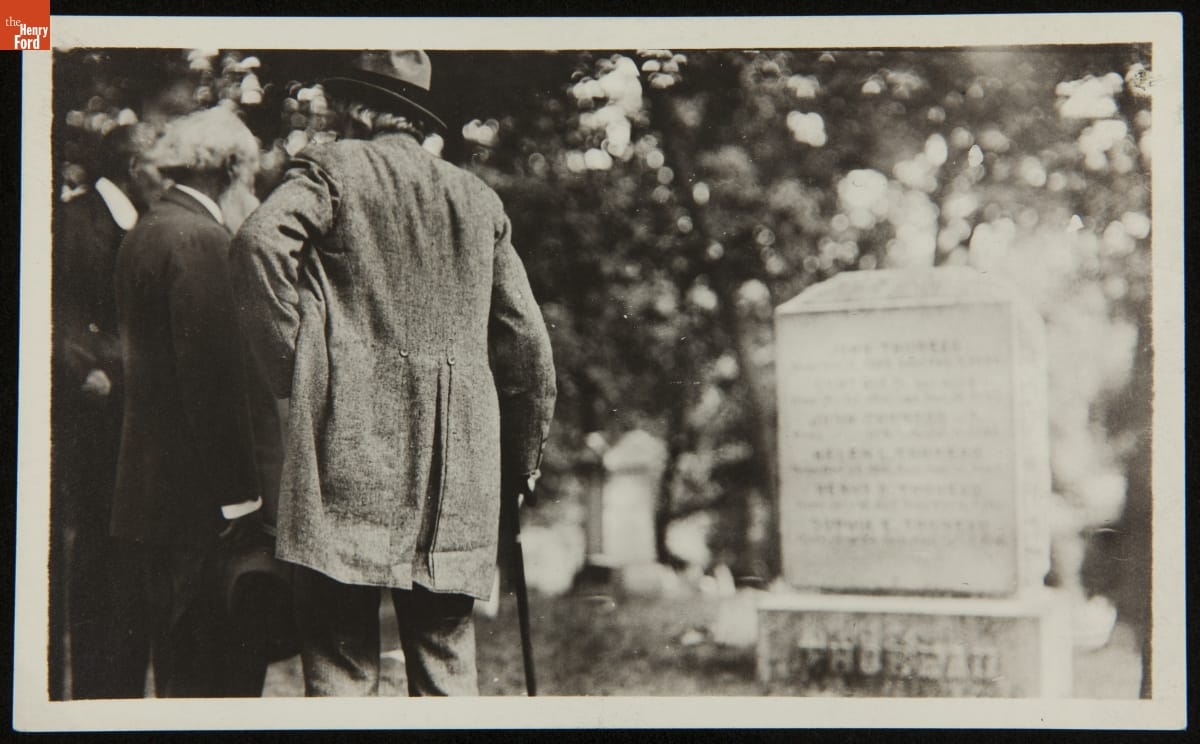
- September 01, 1913
- Collections - Artifact
Henry Ford, John Burroughs and Frank Sanborn at Thoreau's Grave, Concord, Massachusetts, September 1913
In 1913, naturalist John Burroughs and industrialist Henry Ford visited Concord, Massachusetts, where two of Burroughs's early literary influences -- Ralph Waldo Emerson and Henry David Thoreau -- once resided. Ford, Burroughs and their traveling companions visited Emerson's home, Walden Pond and the gravesites of the two 19th-century Transcendentalists. Frank Sanborn, a Burroughs acquaintance and friend of Emerson and Thoreau, served as guide for the distinguished visitors.
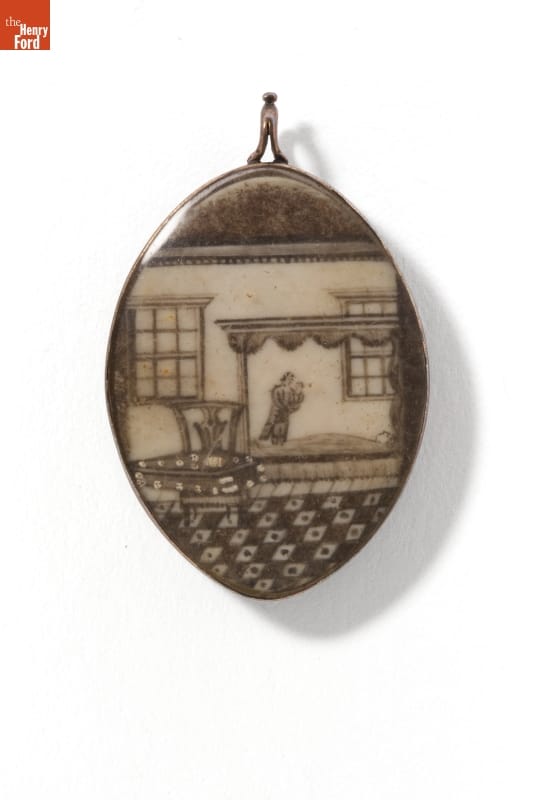
- Mourning Pendant, 1783 - Before the 20th century, death came early and often. One way people coped was to wear jewelry as memorials to their loved ones. Over the centuries, mourning jewelry followed the prevailing fashions. Shortly after independence, Americans favored illuminated, miniature brooches and pendants painted on ivory. These featured shapes derived from classical design, symbols such as urns and weeping women dressed as ancient Romans.
- 1783
- Collections - Artifact
Mourning Pendant, 1783
Before the 20th century, death came early and often. One way people coped was to wear jewelry as memorials to their loved ones. Over the centuries, mourning jewelry followed the prevailing fashions. Shortly after independence, Americans favored illuminated, miniature brooches and pendants painted on ivory. These featured shapes derived from classical design, symbols such as urns and weeping women dressed as ancient Romans.
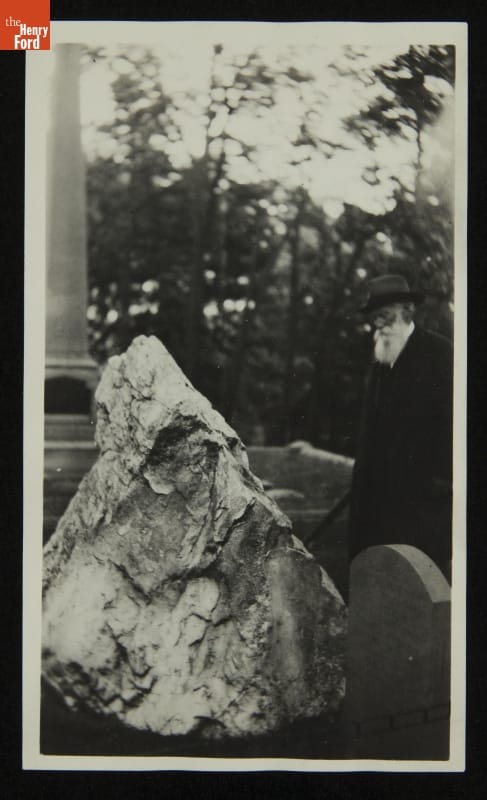
- John Burroughs at Ralph Waldo Emerson's Grave, 1917 - Ralph Waldo Emerson (1803-1882) greatly influenced John Burroughs. Burroughs first read Emerson's works in 1856 when Burroughs was a 19-year-old preparatory school student. A few years later, Burroughs's first significant essay was mistakenly attributed to Emerson. Other writers knew and shaped the budding naturalist, but Emerson remained his spiritual father. This photo shows the aged Burroughs visiting Emerson's grave in Concord, Massachusetts.
- October 02, 1917
- Collections - Artifact
John Burroughs at Ralph Waldo Emerson's Grave, 1917
Ralph Waldo Emerson (1803-1882) greatly influenced John Burroughs. Burroughs first read Emerson's works in 1856 when Burroughs was a 19-year-old preparatory school student. A few years later, Burroughs's first significant essay was mistakenly attributed to Emerson. Other writers knew and shaped the budding naturalist, but Emerson remained his spiritual father. This photo shows the aged Burroughs visiting Emerson's grave in Concord, Massachusetts.