
Search
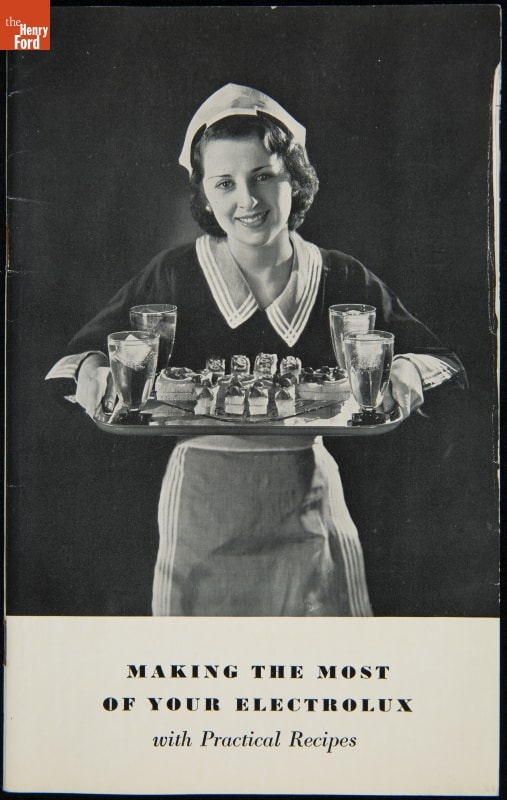
- "Making the Most of Your Electrolux with Practical Recipes," 1932 -
- 1932
- Collections - Artifact
"Making the Most of Your Electrolux with Practical Recipes," 1932
- "In Nature's Laboratory : Commemorating Our Vacation Trip of 1916, August 28th to September 9th" - The Vagabonds -- Henry Ford, Thomas Edison, Harvey Firestone, and John Burroughs -- enjoyed their annual camping trips taken from 1916 to 1924. Burroughs chronicled the group's 1916 journey in the elaborate scrapbook <em>In Nature's Laboratory</em>. Burroughs, Edison, and Firestone traveled through the Adirondack Mountains and Vermont. Ford couldn't make the trip that year.
- 28 August 1916-09 September 1916
- Collections - Artifact
"In Nature's Laboratory : Commemorating Our Vacation Trip of 1916, August 28th to September 9th"
The Vagabonds -- Henry Ford, Thomas Edison, Harvey Firestone, and John Burroughs -- enjoyed their annual camping trips taken from 1916 to 1924. Burroughs chronicled the group's 1916 journey in the elaborate scrapbook In Nature's Laboratory. Burroughs, Edison, and Firestone traveled through the Adirondack Mountains and Vermont. Ford couldn't make the trip that year.
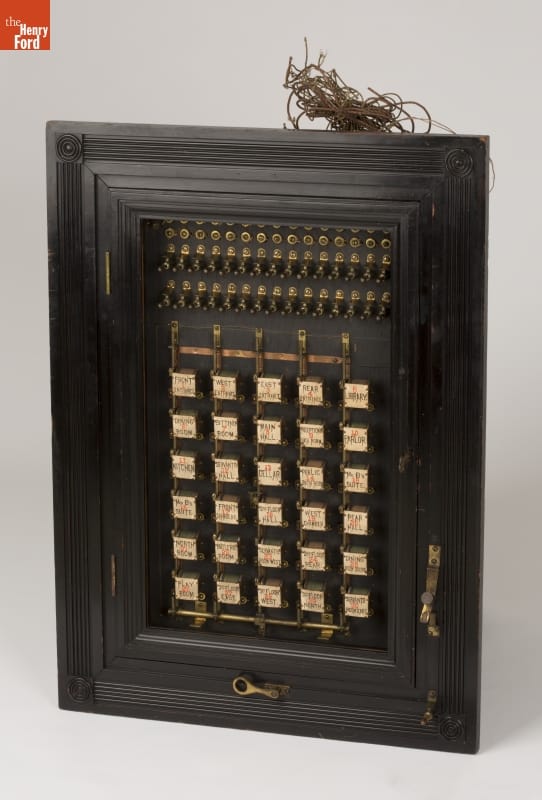
- Servant Call System from the Charles F. Brush Residence, Cleveland, Ohio, circa 1885 - Annunciators were call systems that alerted servants to the needs of the household in which they worked. Each room contained a button to trigger the annunciator housed in servant's quarters. Primitive 18th-century bell systems evolved with the rise of battery power, telegraphy, and home electrification. This device was from the Charles F. Brush mansion, inventor of the arc lamp.
- circa 1885
- Collections - Artifact
Servant Call System from the Charles F. Brush Residence, Cleveland, Ohio, circa 1885
Annunciators were call systems that alerted servants to the needs of the household in which they worked. Each room contained a button to trigger the annunciator housed in servant's quarters. Primitive 18th-century bell systems evolved with the rise of battery power, telegraphy, and home electrification. This device was from the Charles F. Brush mansion, inventor of the arc lamp.
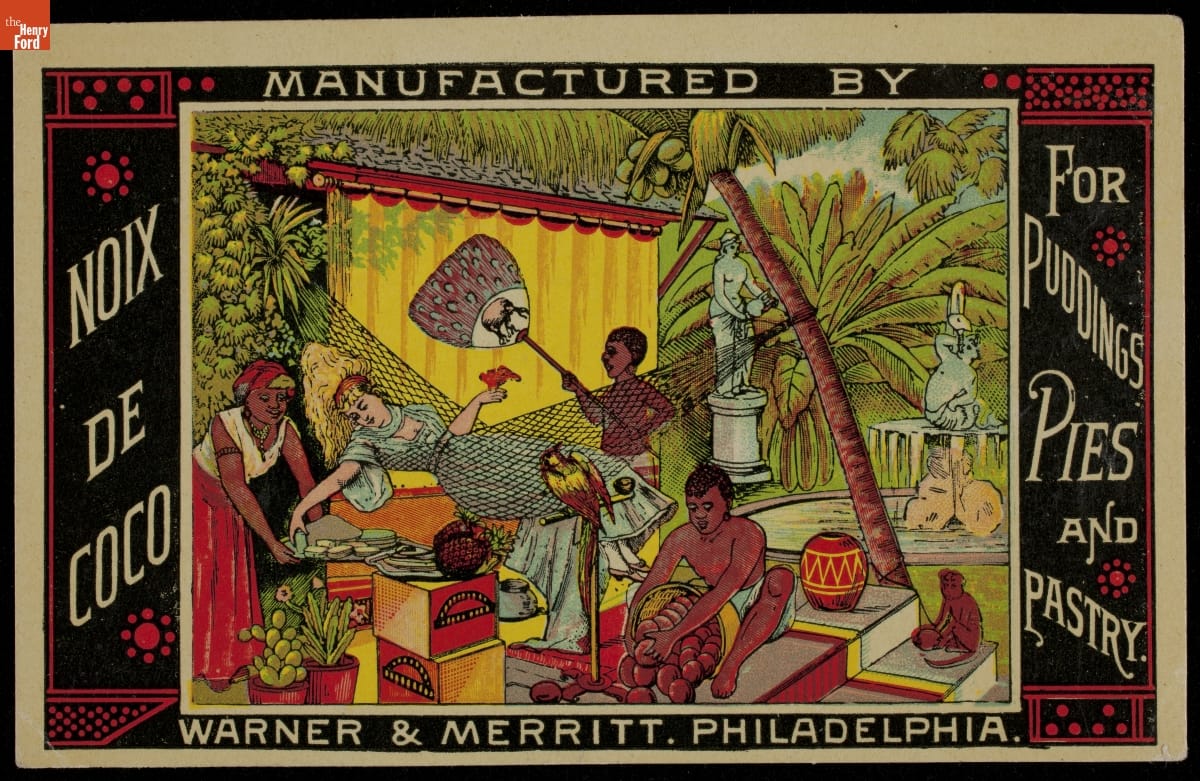
- Trade Card for Noix de Coco, Warner & Merritt, 1870-1900 - In the last third of the nineteenth century, an unprecedented variety of consumer goods and services flooded the American market. Advertisers, armed with new methods of color printing, bombarded potential customers with trade cards. Americans enjoyed and often saved the vibrant little advertisements found in product packages or distributed by local merchants. Many survive as historical records of commercialism in the United States.
- circa 1884
- Collections - Artifact
Trade Card for Noix de Coco, Warner & Merritt, 1870-1900
In the last third of the nineteenth century, an unprecedented variety of consumer goods and services flooded the American market. Advertisers, armed with new methods of color printing, bombarded potential customers with trade cards. Americans enjoyed and often saved the vibrant little advertisements found in product packages or distributed by local merchants. Many survive as historical records of commercialism in the United States.
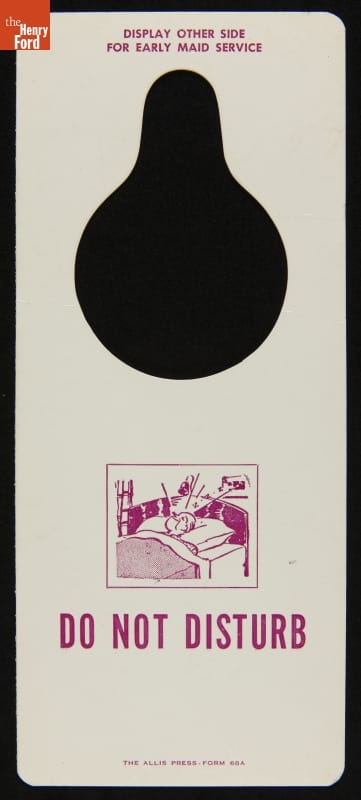
- Two-sided Sign, "Do Not Disturb" or "Early Morning Maid Service," 1955-1970 - Like today, proprietors of mid-20th century hotels, motels and inns provided "Do Not Disturb" signs for weary travelers who wanted a restful stay. Guests placed the sign outside on their door to alert staff to be quiet and not enter. This sign also allowed guests to request maid service; they just flipped the sign over.
- 1955-1970
- Collections - Artifact
Two-sided Sign, "Do Not Disturb" or "Early Morning Maid Service," 1955-1970
Like today, proprietors of mid-20th century hotels, motels and inns provided "Do Not Disturb" signs for weary travelers who wanted a restful stay. Guests placed the sign outside on their door to alert staff to be quiet and not enter. This sign also allowed guests to request maid service; they just flipped the sign over.
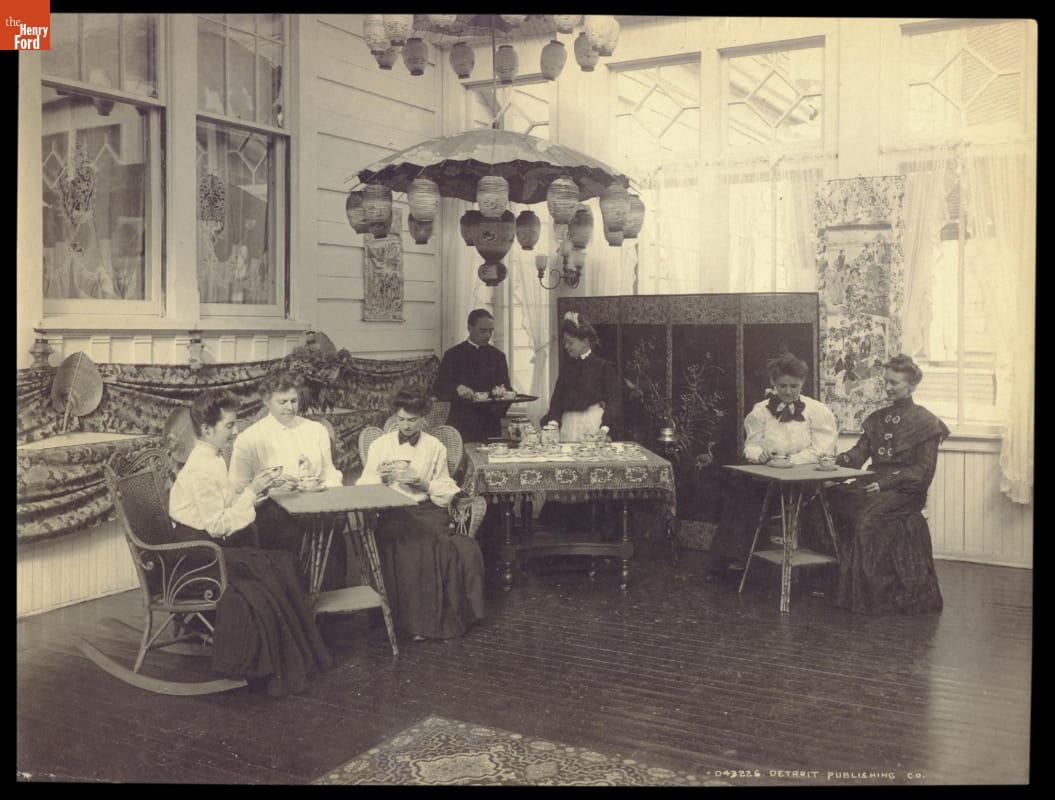
- Tea Time, circa 1905 - From 1895 to 1924, the Detroit Publishing Company was one of the major image publishers in the world. The company's wide-ranging stock of original photographs documented life and landscapes from across the nation and around the globe. From the tens of thousands of negatives, the company created prints, postcards, lantern slides, panoramas, and other merchandise for sale to educators, businessmen, advertisers, homeowners and travelers.
- circa 1905
- Collections - Artifact
Tea Time, circa 1905
From 1895 to 1924, the Detroit Publishing Company was one of the major image publishers in the world. The company's wide-ranging stock of original photographs documented life and landscapes from across the nation and around the globe. From the tens of thousands of negatives, the company created prints, postcards, lantern slides, panoramas, and other merchandise for sale to educators, businessmen, advertisers, homeowners and travelers.
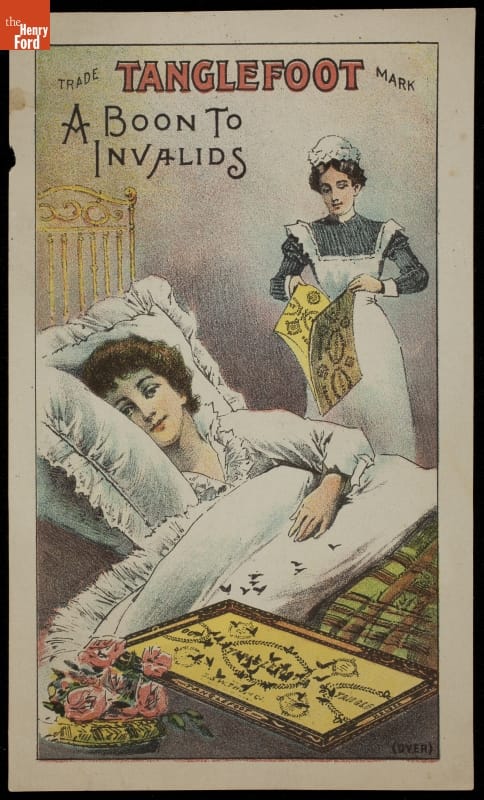
- Trade Card for Tanglefoot Sticky Fly Paper, O. & W. Thum Co., circa 1900 - In this trade card advertising Tanglefoot flypaper as "a boon to invalids," a frail patient is saved from further disease and annoyance by the strip of flypaper on her bed, bristling with dead flies. During the turn-of-the-century heyday of America's interest in newly discovered germ theory, Tanglefoot advertised that their nontoxic flypaper (as opposed to common arsenic flypaper) caught "the germ with the fly."
- circa 1900
- Collections - Artifact
Trade Card for Tanglefoot Sticky Fly Paper, O. & W. Thum Co., circa 1900
In this trade card advertising Tanglefoot flypaper as "a boon to invalids," a frail patient is saved from further disease and annoyance by the strip of flypaper on her bed, bristling with dead flies. During the turn-of-the-century heyday of America's interest in newly discovered germ theory, Tanglefoot advertised that their nontoxic flypaper (as opposed to common arsenic flypaper) caught "the germ with the fly."
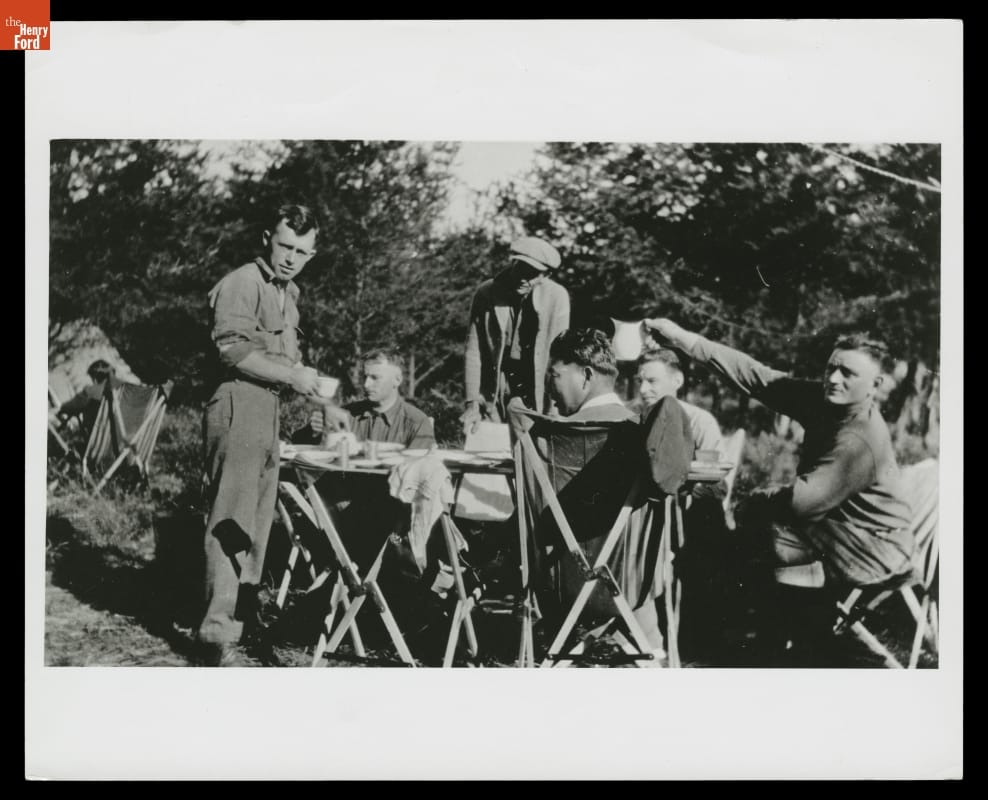
- The Service Crew Eating a Meal on a "Vagabonds" Camping Trip in Massachusetts, 1924 - In 1924, Henry Ford, Thomas Edison and Harvey Firestone embarked on one of their famous camping trips, this time visiting President Coolidge in Massachusetts. Various support staff were needed to maintain camp including Ford's personal driver George Burns, (standing left) and foreman, Ray Dahlinger (sitting right). Ford's personal chef, Thomas Sato (sitting front), had accompanied Ford on many of his previous excursions.
- 1924
- Collections - Artifact
The Service Crew Eating a Meal on a "Vagabonds" Camping Trip in Massachusetts, 1924
In 1924, Henry Ford, Thomas Edison and Harvey Firestone embarked on one of their famous camping trips, this time visiting President Coolidge in Massachusetts. Various support staff were needed to maintain camp including Ford's personal driver George Burns, (standing left) and foreman, Ray Dahlinger (sitting right). Ford's personal chef, Thomas Sato (sitting front), had accompanied Ford on many of his previous excursions.
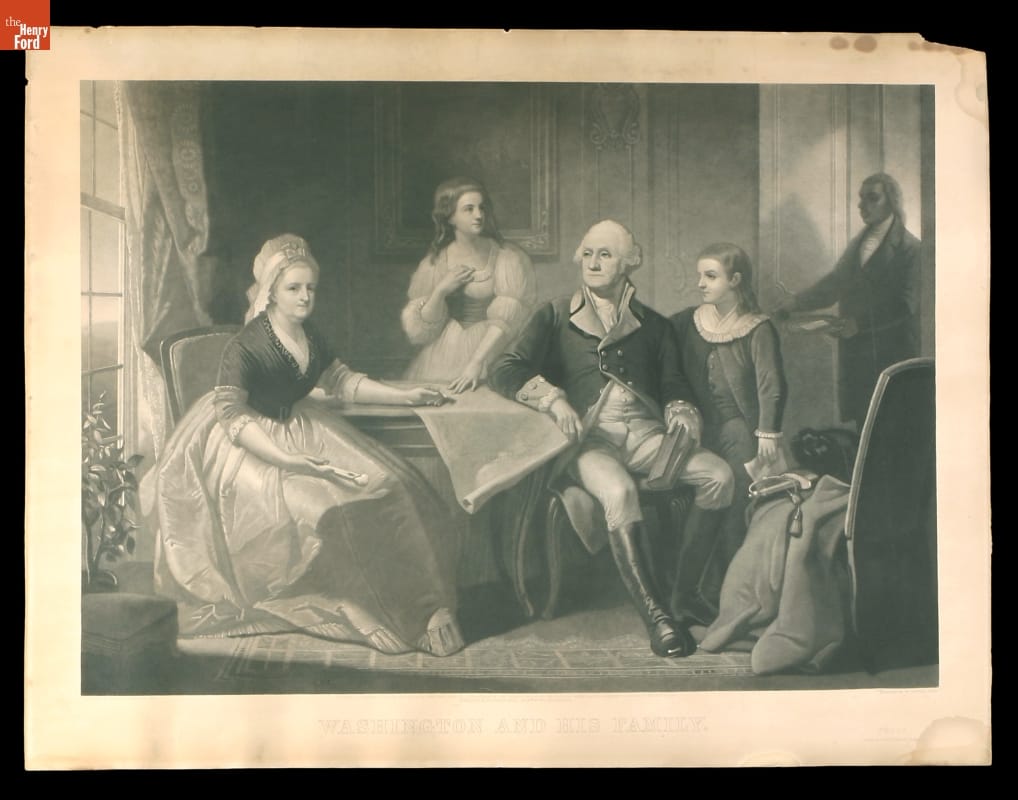
- Engraving, "Washington and His Family," 1864 -
- 1864
- Collections - Artifact
Engraving, "Washington and His Family," 1864
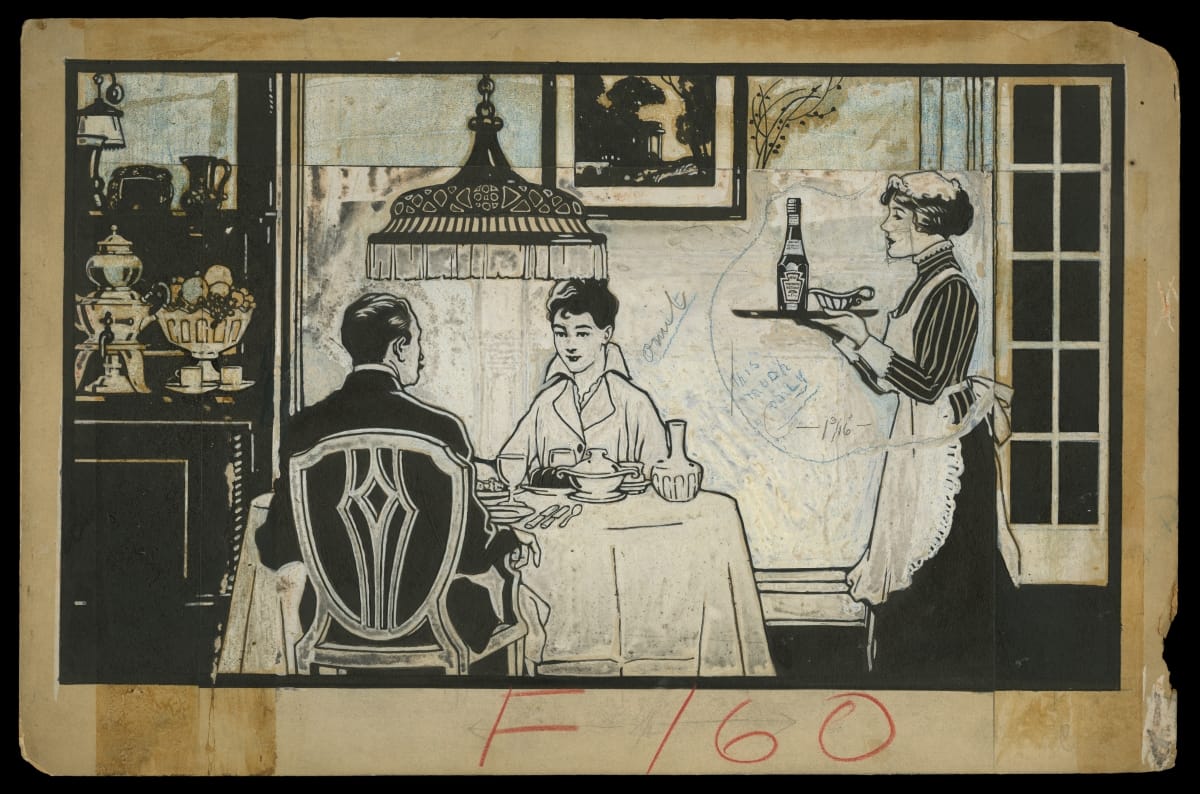
- Illustration for Heinz Product Advertising, circa 1925 - The H.J. Heinz Company employed ambitious and comprehensive advertising strategies to meet consumers at home, in stores, and everywhere in between. Product marketing strongly targeted housewives and women, assuring them that Heinz products were superior. These advertisements, like the one seen here, typically featured a woman purchasing, preparing, cooking, or serving Heinz products to their families.
- circa 1925
- Collections - Artifact
Illustration for Heinz Product Advertising, circa 1925
The H.J. Heinz Company employed ambitious and comprehensive advertising strategies to meet consumers at home, in stores, and everywhere in between. Product marketing strongly targeted housewives and women, assuring them that Heinz products were superior. These advertisements, like the one seen here, typically featured a woman purchasing, preparing, cooking, or serving Heinz products to their families.