
Search
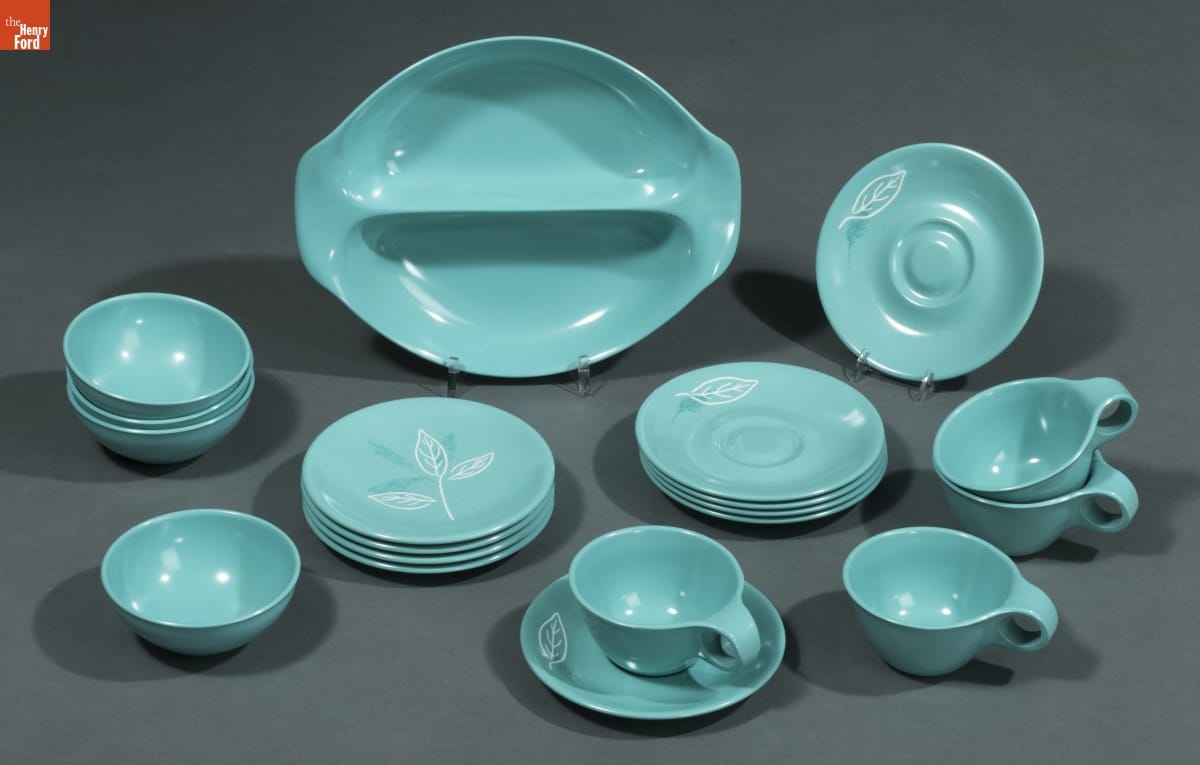
- Set of Melamine Tableware, 1950-1960 - During the early 1950s, plastic dinnerware in the form of melamine was introduced to the American market. By 1956, twenty-five percent of Americans owned at least a pair of these plates. Industrial designers Russel and Mary Wright were famous for producing aesthetically pleasing ceramic dinnerware as early as the 1930s. This set, in fashionable turquoise, was the Wrights' first design in plastic.
- 1950-1960
- Collections - Artifact
Set of Melamine Tableware, 1950-1960
During the early 1950s, plastic dinnerware in the form of melamine was introduced to the American market. By 1956, twenty-five percent of Americans owned at least a pair of these plates. Industrial designers Russel and Mary Wright were famous for producing aesthetically pleasing ceramic dinnerware as early as the 1930s. This set, in fashionable turquoise, was the Wrights' first design in plastic.
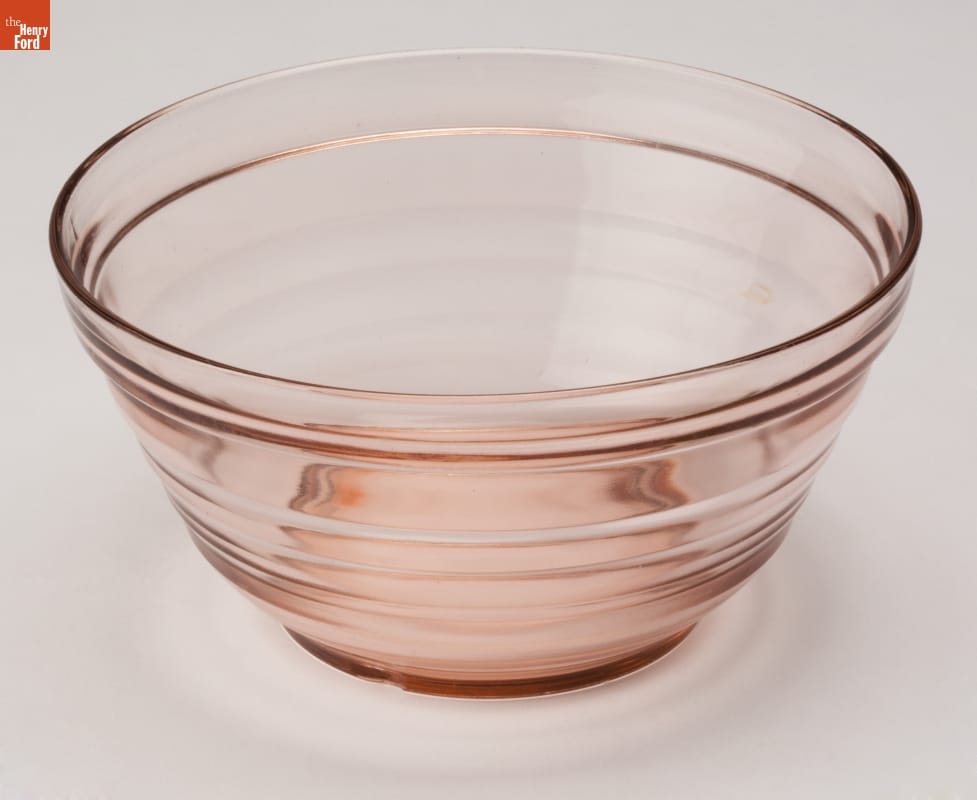
- Serving Bowl, 1934-1952 - During the 1930s, some American glass manufacturers produced inexpensive, pressed glass serving ware. The glassware, which came in a variety of colors and scores of distinct patterns, could be bought at many lower-end retailers as well as through catalogue merchants. Movie theaters and other businesses also gave it away -- intending to lure the cash-strapped Depression-era public inside.
- 1934-1952
- Collections - Artifact
Serving Bowl, 1934-1952
During the 1930s, some American glass manufacturers produced inexpensive, pressed glass serving ware. The glassware, which came in a variety of colors and scores of distinct patterns, could be bought at many lower-end retailers as well as through catalogue merchants. Movie theaters and other businesses also gave it away -- intending to lure the cash-strapped Depression-era public inside.
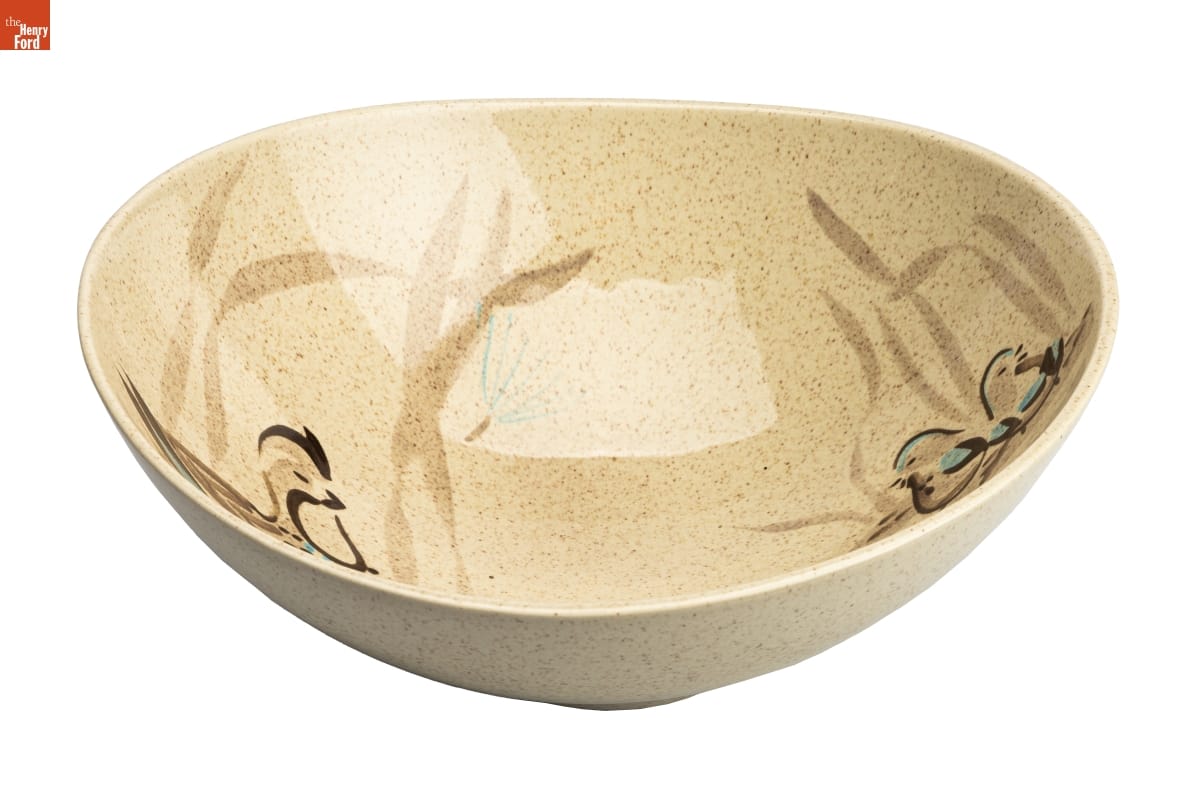
- Red Wing "Bob White" Serving Bowl, 1955 -
- 1955
- Collections - Artifact
Red Wing "Bob White" Serving Bowl, 1955
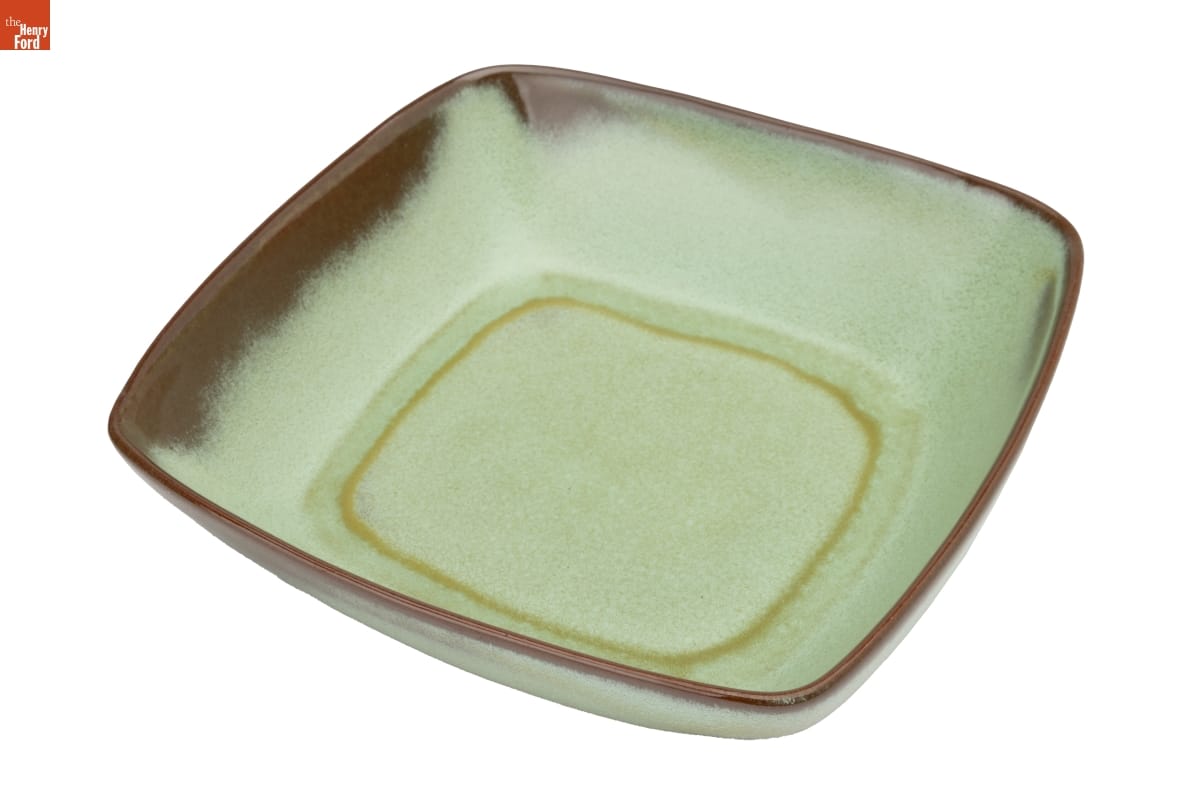
- Frankoma "Plainsman" Serving Bowl, 1960-1990 - The native clays of Oklahoma provided a foundation for the decorative ceramics and dinnerware produced by Frankoma Pottery. John Frank, who headed the ceramics department at the University of Oklahoma, and his wife Grace Lee began the business in 1933. They moved to Sapulpa, Oklahoma, in 1938 and sold their Southwestern-inspired wares coated with prairie-colored glazes at an affordable price. The pottery remained family-owned until 1990.
- 1960-1990
- Collections - Artifact
Frankoma "Plainsman" Serving Bowl, 1960-1990
The native clays of Oklahoma provided a foundation for the decorative ceramics and dinnerware produced by Frankoma Pottery. John Frank, who headed the ceramics department at the University of Oklahoma, and his wife Grace Lee began the business in 1933. They moved to Sapulpa, Oklahoma, in 1938 and sold their Southwestern-inspired wares coated with prairie-colored glazes at an affordable price. The pottery remained family-owned until 1990.
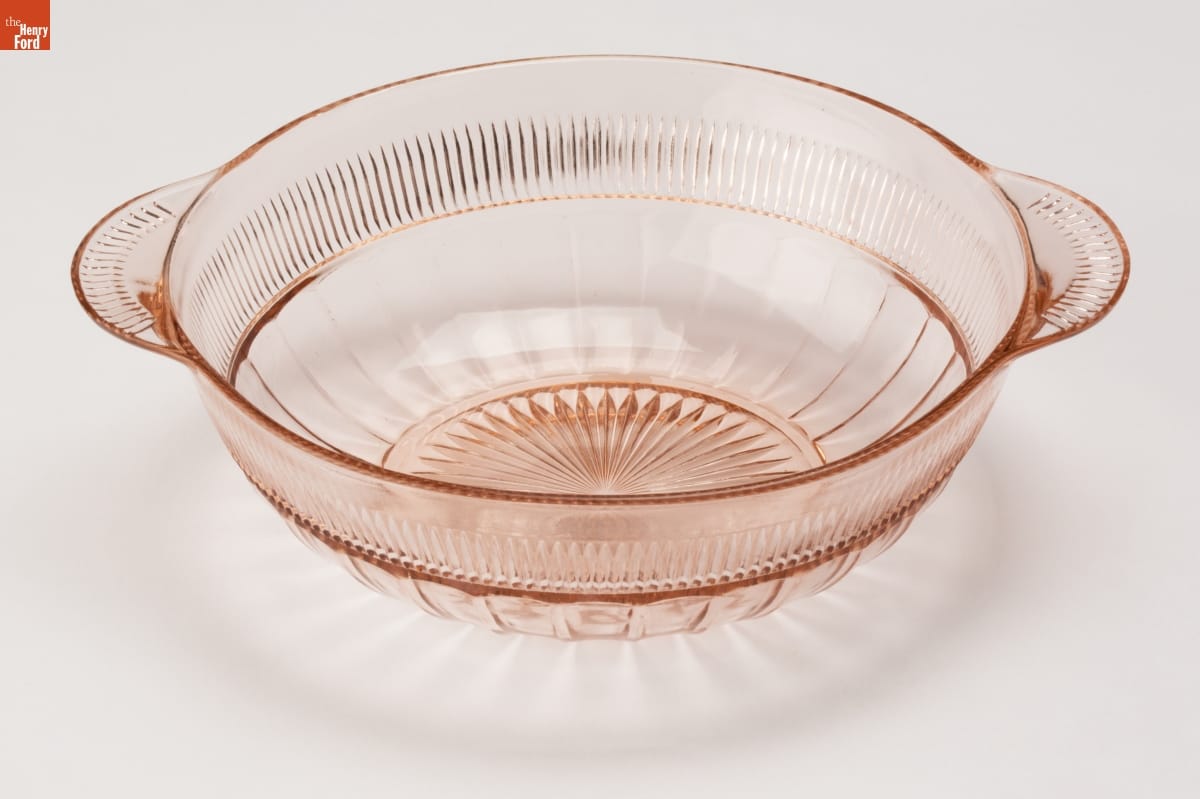
- Serving Bowl, 1936-1940 - During the 1930s, some American glass manufacturers produced inexpensive, pressed glass serving ware. The glassware, which came in a variety of colors and scores of distinct patterns, could be bought at many lower-end retailers as well as through catalogue merchants. Movie theaters and other businesses also gave it away -- intending to lure the cash-strapped Depression-era public inside.
- 1936-1940
- Collections - Artifact
Serving Bowl, 1936-1940
During the 1930s, some American glass manufacturers produced inexpensive, pressed glass serving ware. The glassware, which came in a variety of colors and scores of distinct patterns, could be bought at many lower-end retailers as well as through catalogue merchants. Movie theaters and other businesses also gave it away -- intending to lure the cash-strapped Depression-era public inside.
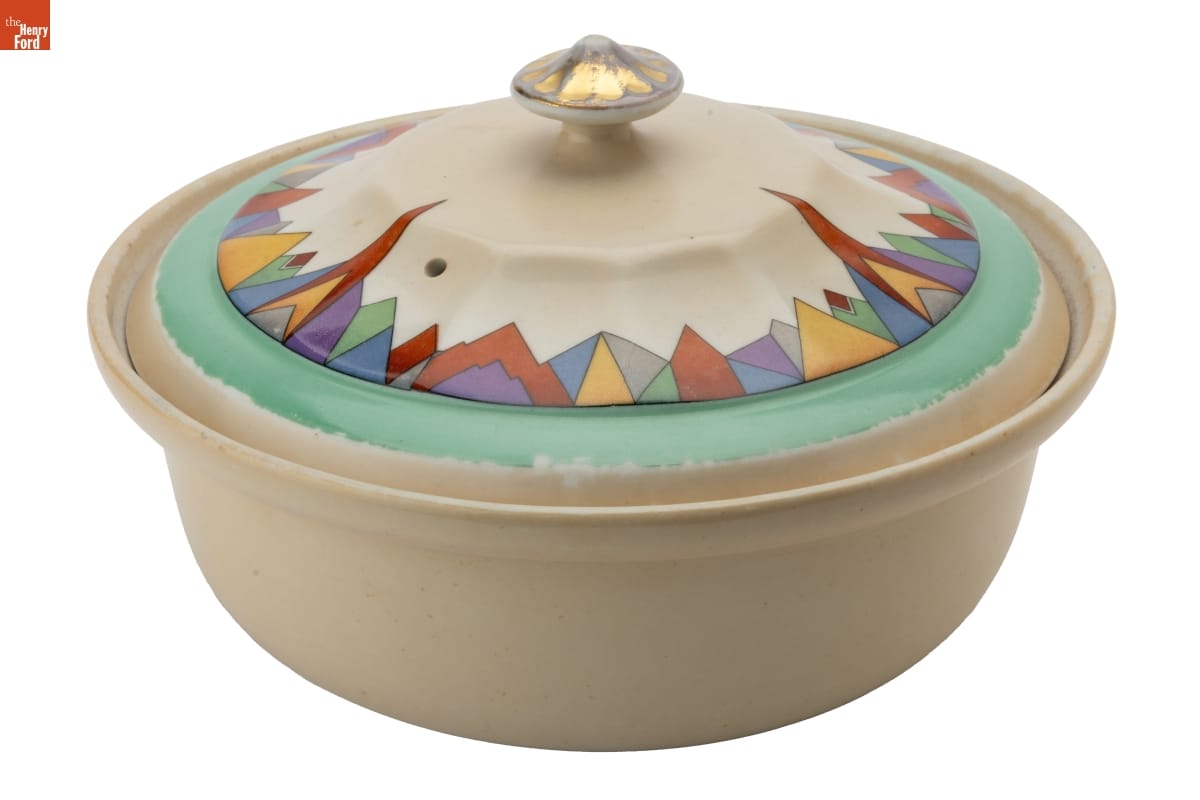
- Covered Serving Bowl, 1928-1938 -
- 1928-1938
- Collections - Artifact
Covered Serving Bowl, 1928-1938
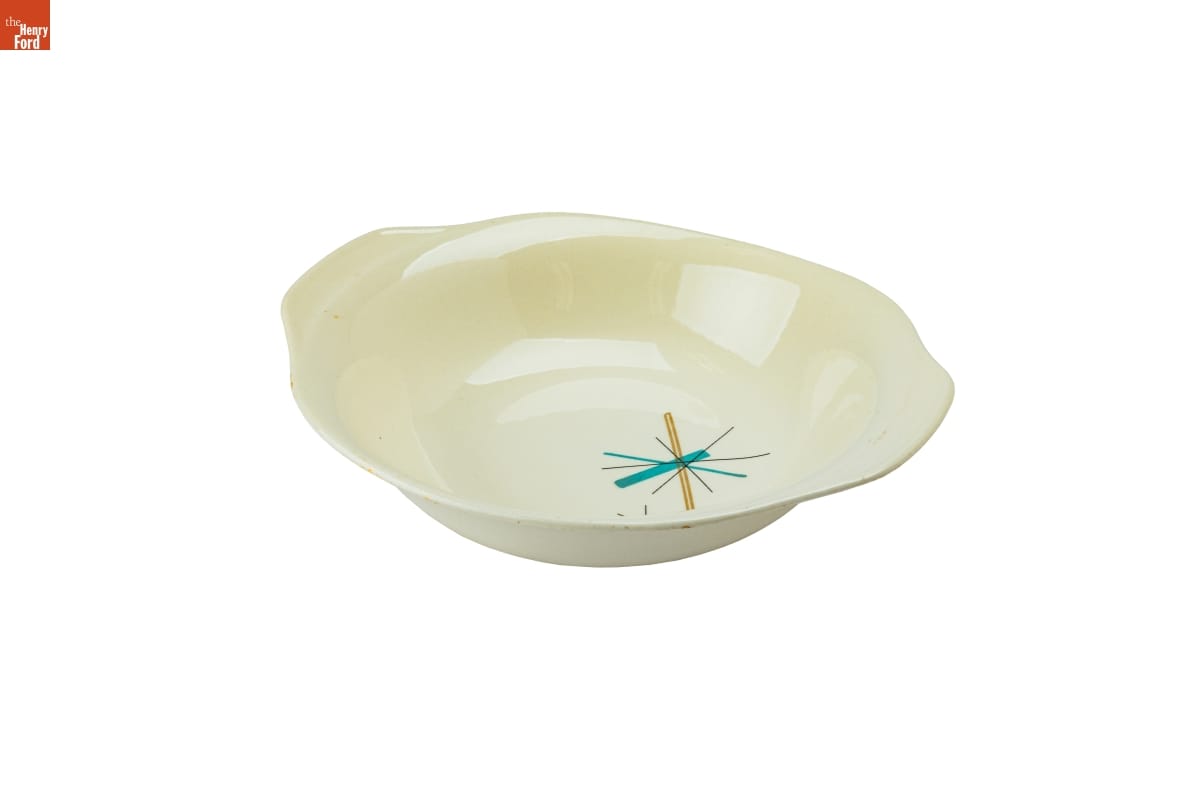
- North Star Serving Bowl, 1964 - Industrial designer Victor Schreckengost created "Hopscotch" pattern dinnerware for the Salem China Company in the mid-1950s. Though fashionable, it was expensive to produce, and sales lagged. The Ohio-based company simplified the design and renamed it "North Star." Sold from 1957 to 1967 in retail stores and wholesaled to supermarket chains as a promotional item, "North Star" is emblematic of modern middle-class tastes of the time.
- 1964
- Collections - Artifact
North Star Serving Bowl, 1964
Industrial designer Victor Schreckengost created "Hopscotch" pattern dinnerware for the Salem China Company in the mid-1950s. Though fashionable, it was expensive to produce, and sales lagged. The Ohio-based company simplified the design and renamed it "North Star." Sold from 1957 to 1967 in retail stores and wholesaled to supermarket chains as a promotional item, "North Star" is emblematic of modern middle-class tastes of the time.
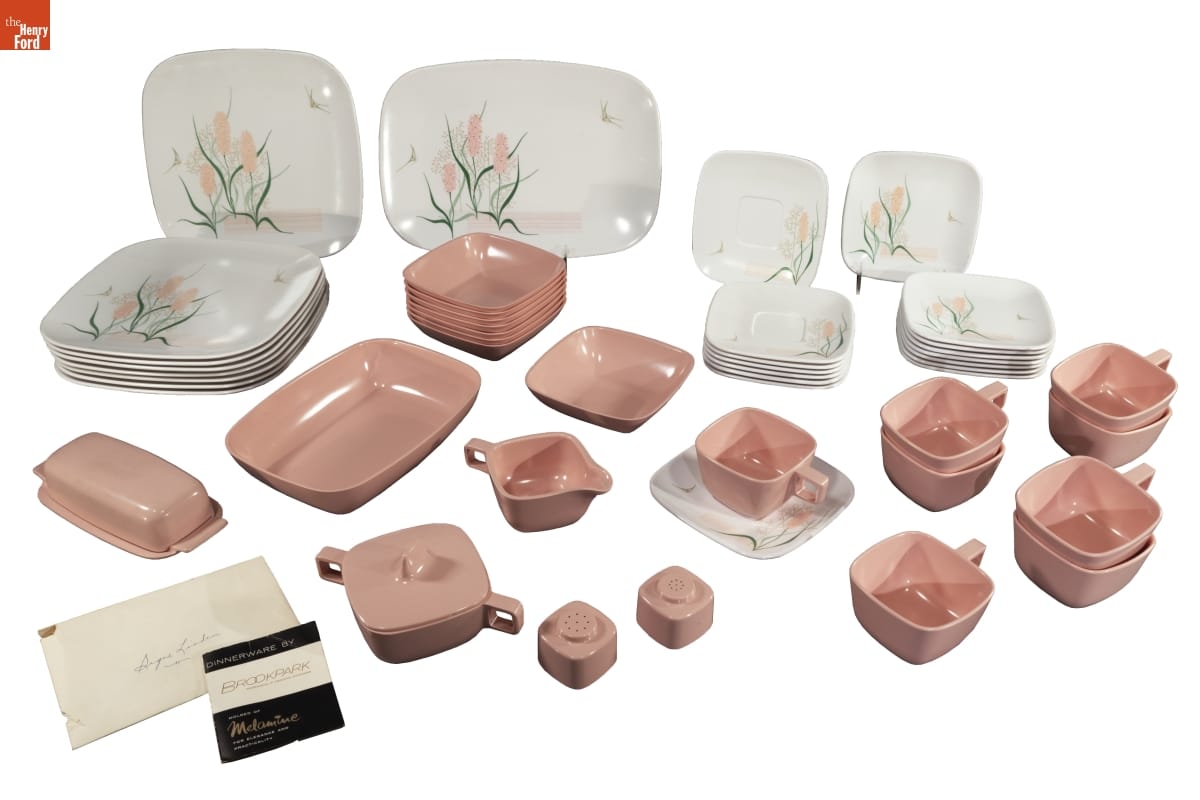
- Brookpark "Pink Hyacinth" Dinnerware Set, 1955-1965 -
- 1955-1965
- Collections - Artifact
Brookpark "Pink Hyacinth" Dinnerware Set, 1955-1965
- Set of Red Wing "Golden Viking" Tableware -
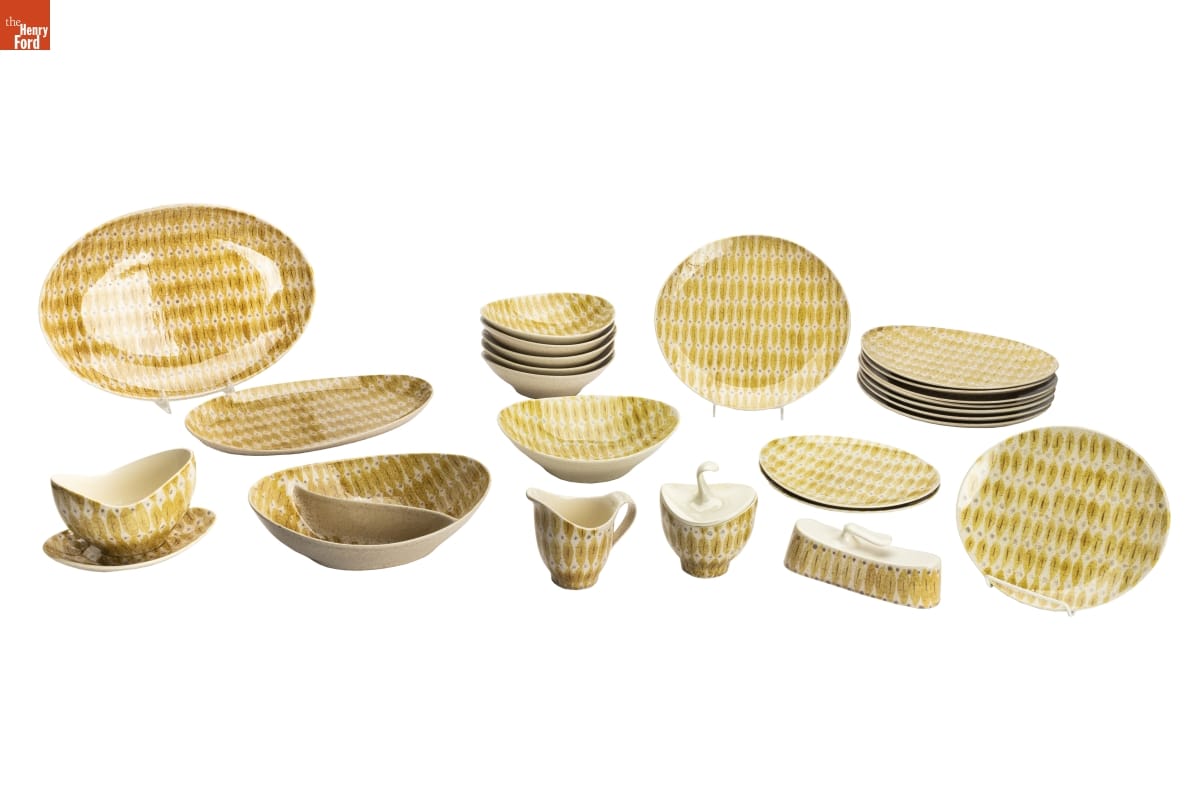
- Collections - Artifact
Set of Red Wing "Golden Viking" Tableware
- North Star Serving Bowl, 1964 - Industrial designer Victor Schreckengost created "Hopscotch" pattern dinnerware for the Salem China Company in the mid-1950s. Though fashionable, it was expensive to produce, and sales lagged. The Ohio-based company simplified the design and renamed it "North Star." Sold from 1957 to 1967 in retail stores and wholesaled to supermarket chains as a promotional item, "North Star" is emblematic of modern middle-class tastes of the time.
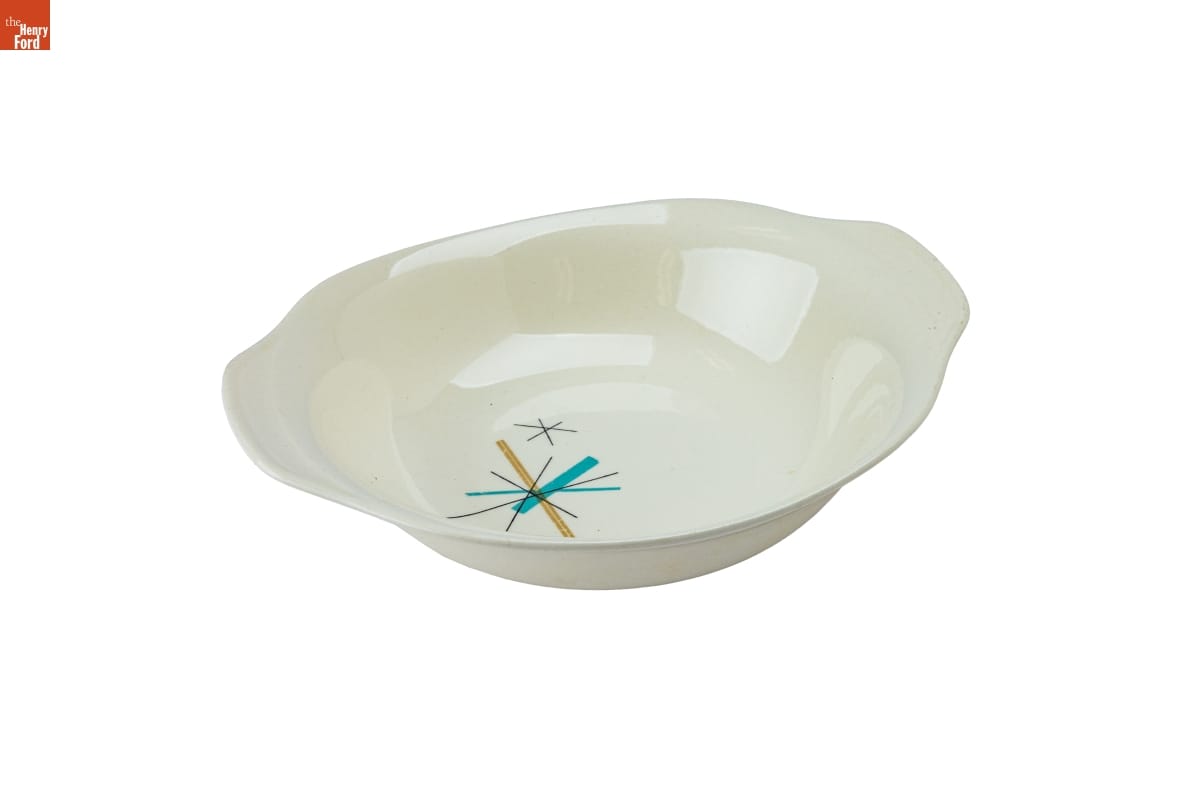
- 1964
- Collections - Artifact
North Star Serving Bowl, 1964
Industrial designer Victor Schreckengost created "Hopscotch" pattern dinnerware for the Salem China Company in the mid-1950s. Though fashionable, it was expensive to produce, and sales lagged. The Ohio-based company simplified the design and renamed it "North Star." Sold from 1957 to 1967 in retail stores and wholesaled to supermarket chains as a promotional item, "North Star" is emblematic of modern middle-class tastes of the time.